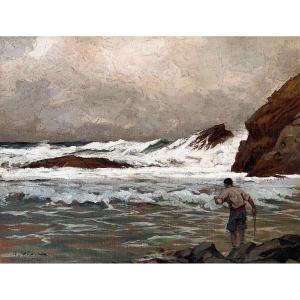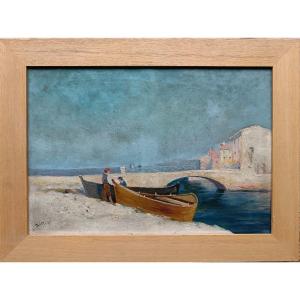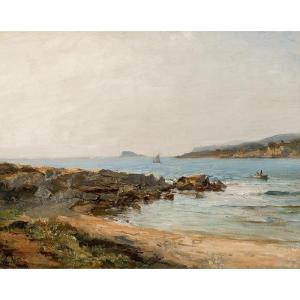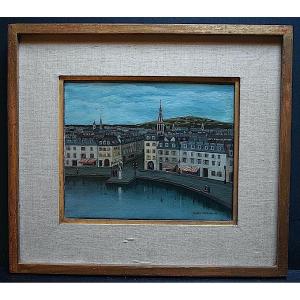


Thomas Luny (st. Ewe 1759 – 1837 Teignmouth)
Artist: Thomas Luny
Thomas LUNY (St. Ewe 1759 – 1837
Teignmouth)
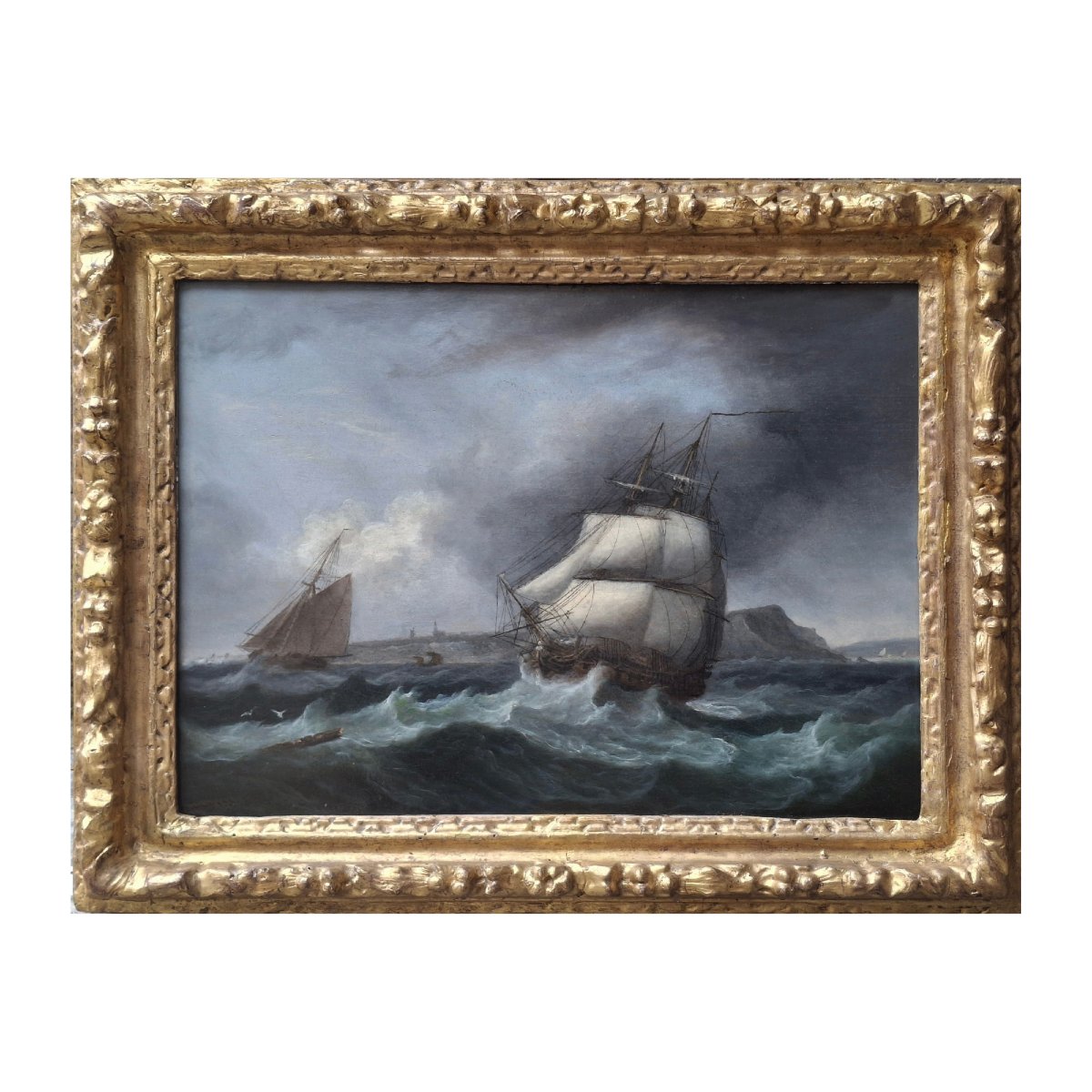
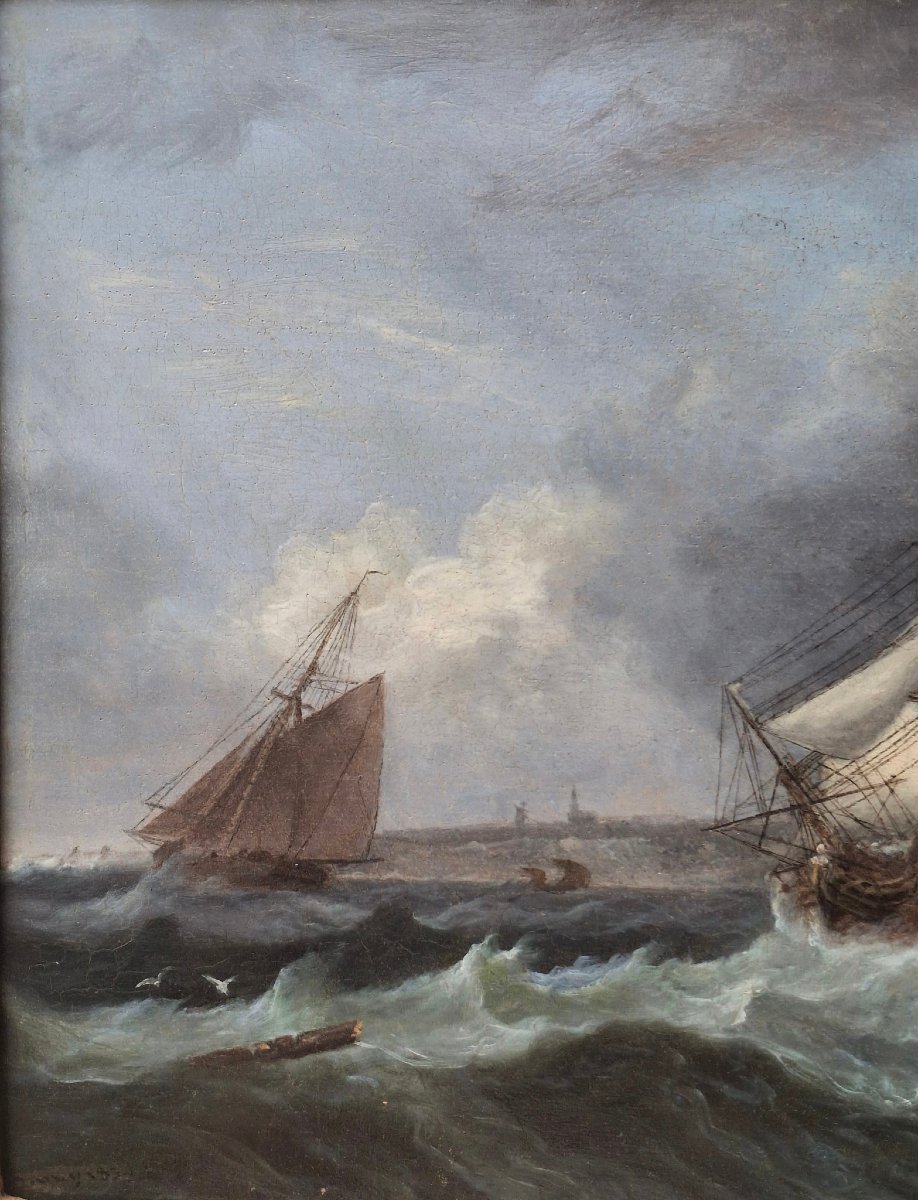
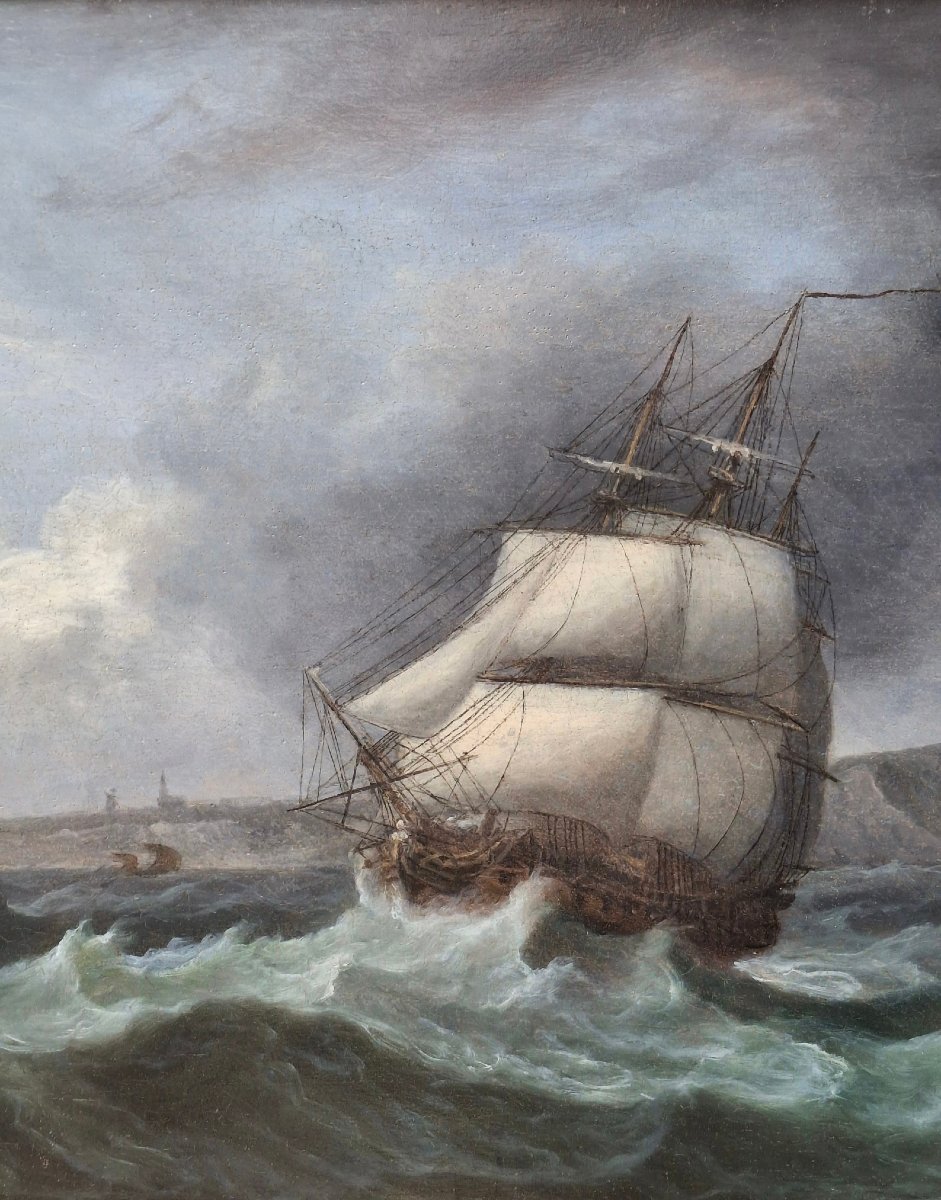
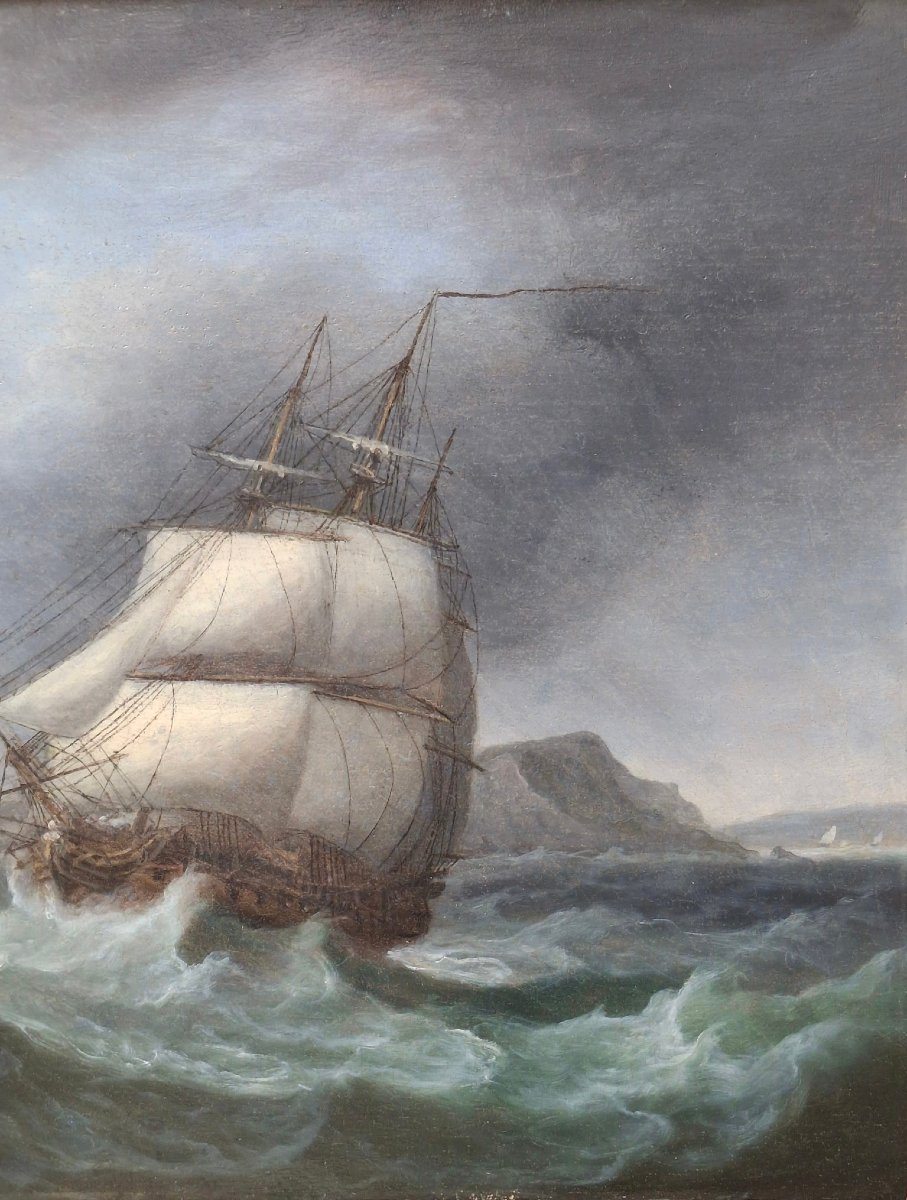
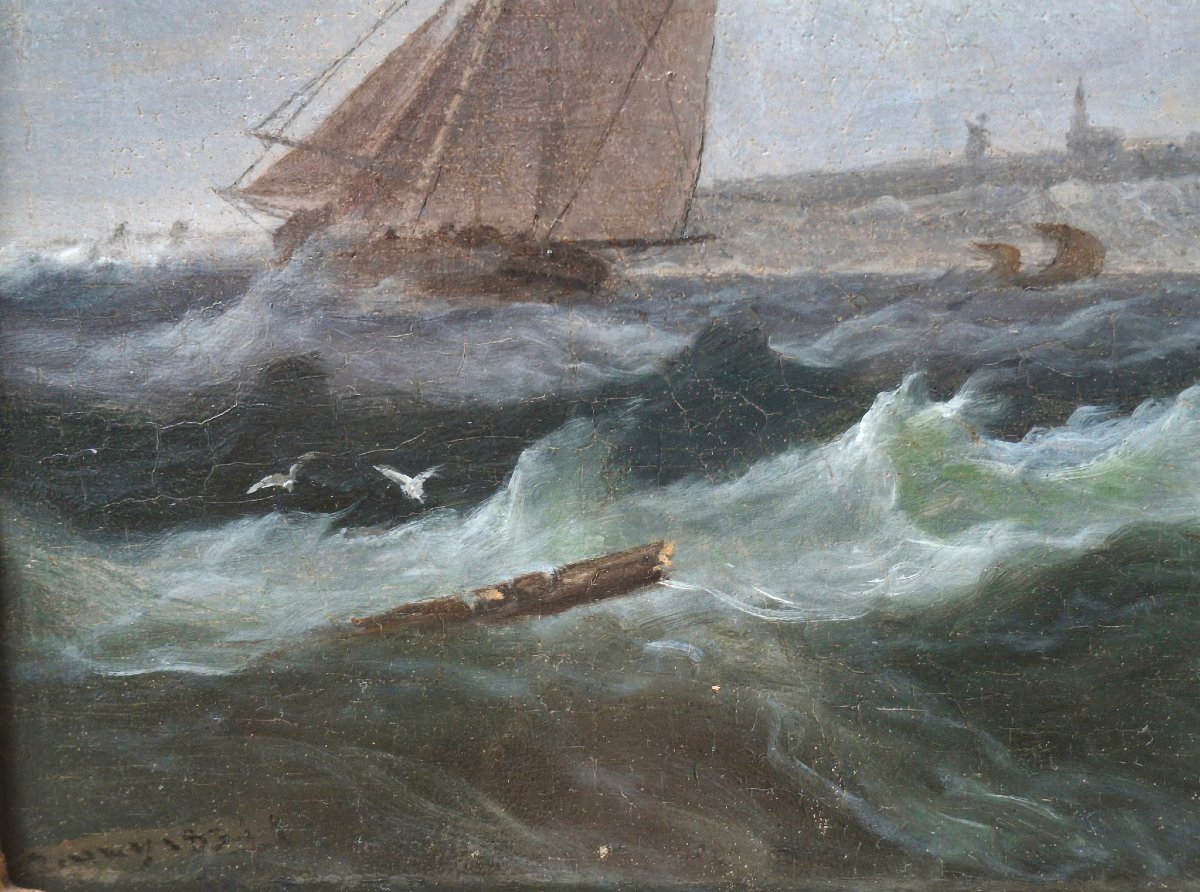
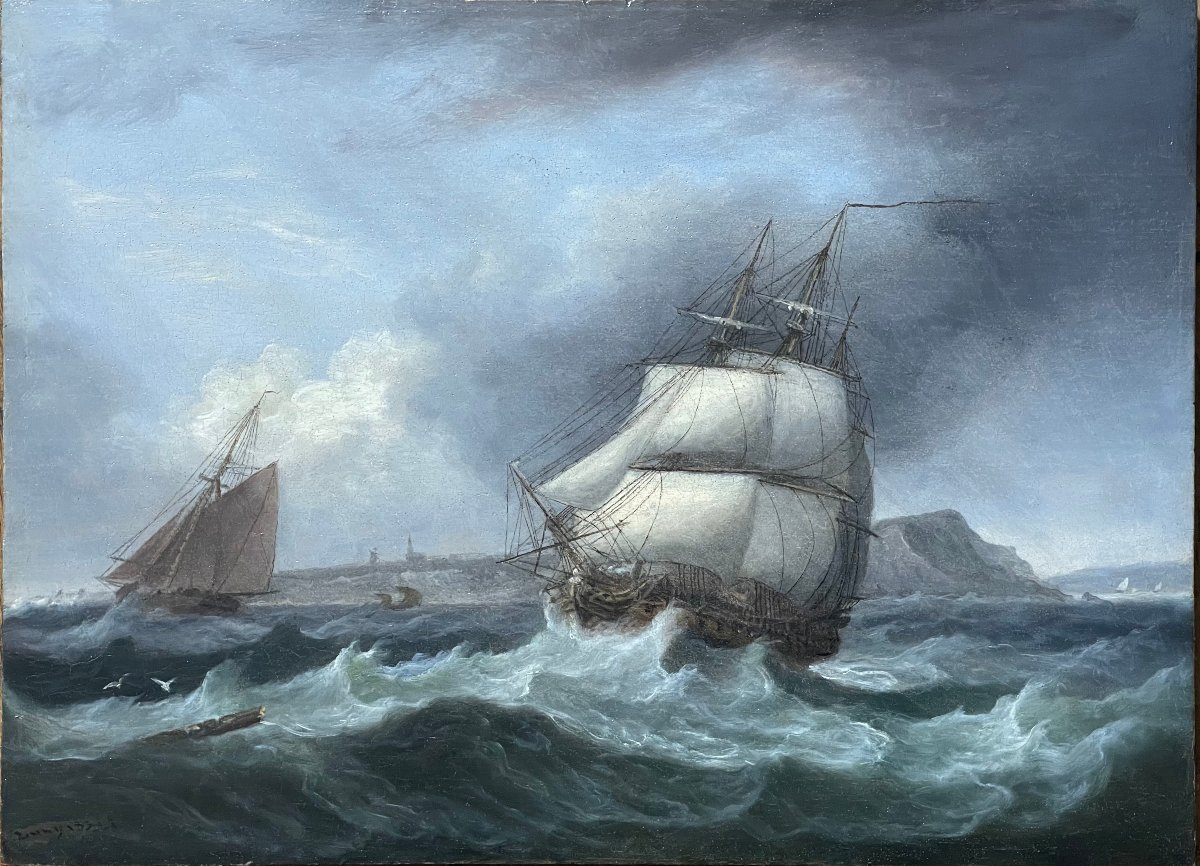
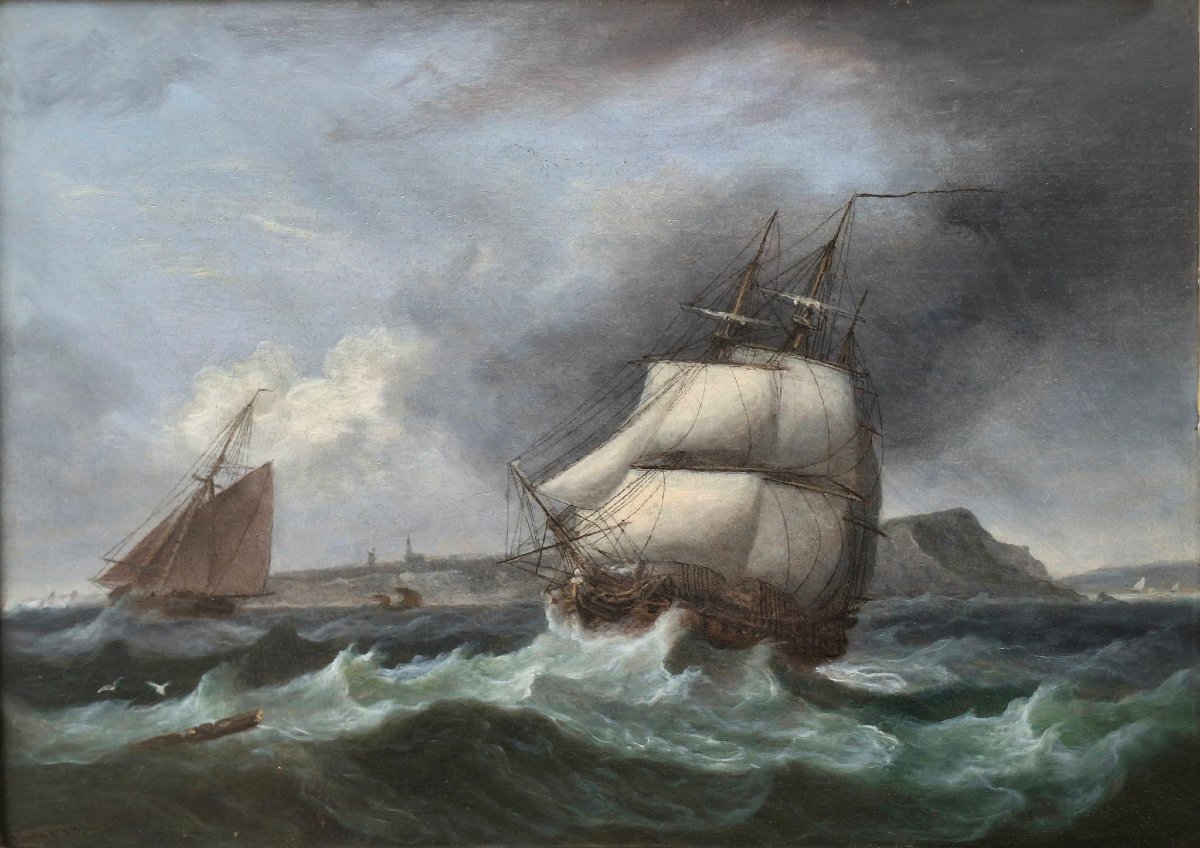
Ships in Rough Seas
Signed “Luny” and dated 1834 in the lower left corner
Oil on canvas, 30 x 40 cm
THE ARTIST
LUNY was born in Cornwall, probably in St. Ewe, in 1759. At the age of eleven, he
left Cornwall to settle in London. There he became an apprentice to Francis Holman, a
marine painter who would have a significant and lasting artistic influence on Luny. Luny remained
in Holman’s London studio until 1780; it was first located on Broad Street in St. George’s,
and later moved to Old Gravel Lane.
In September 1777, Luny temporarily left Holman’s studio to travel to France.
During this trip, it is almost certain that Luny ventured beyond France itself;
his first painting exhibited in London, shown at the Society of Artists that same year, bore
2
the title *A Distant View of the Island of Madeira and Porto Santo*, suggesting that an engraving
had inspired his choice of subject. Similarly, it is unlikely that Luny was present for
the Battle of the Nile in 1798 and the bombardment of Algiers in 1816, two events he depicted
with dramatic atmosphere and credible realism.
Luny left Holman’s studio in 1780 and set up his own studio on Leadenhall Street in 1783. It was during this
period that Luny exhibited frequently at the Royal Academy, participating in a total of twenty-nine
exhibitions between 1780 and 1802. On Leadenhall Street, Luny met a “Mr. Merle
,” a art dealer and picture framer, who promoted Luny’s paintings for
more than twenty years, with great success. Luny also found a rich source of business
on Leadenhall Street, where the headquarters of the British East India Company was located; its
officers commissioned numerous paintings and portraits from Luny. This relationship between the
Company and Luny also had several non-monetary benefits for Luny; it seems
likely that, given the great detail and realistic quality of his sketches of
places such as Naples, Gibraltar, and Charleston, South Carolina, Luny was
occasionally invited aboard the Company’s ships for special occasions and
voyages.
A few years later, in 1807, Luny decided to move again, this time to
Teignmouth in Devon. There he received a number of commissions (mainly
from former sailors, the local nobility, etc.) and continued to enjoy the same success as he had in
London. At that time, Luny was suffering from arthritis in both hands. This had no
obvious impact on the quality or pace of his artistic work. In fact, of the more than 3,000 works
he produced during his lifetime, more than 2,200 were created between 1807 and his death; he
died on September 30, 1837.
Teignmouth)
Ships in Rough Seas
Signed “Luny” and dated 1834 in the lower left corner
Oil on canvas, 30 x 40 cm
THE ARTIST
LUNY was born in Cornwall, probably in St. Ewe, in 1759. At the age of eleven, he
left Cornwall to settle in London. There he became an apprentice to Francis Holman, a
marine painter who would have a significant and lasting artistic influence on Luny. Luny remained
in Holman’s London studio until 1780; it was first located on Broad Street in St. George’s,
and later moved to Old Gravel Lane.
In September 1777, Luny temporarily left Holman’s studio to travel to France.
During this trip, it is almost certain that Luny ventured beyond France itself;
his first painting exhibited in London, shown at the Society of Artists that same year, bore
2
the title *A Distant View of the Island of Madeira and Porto Santo*, suggesting that an engraving
had inspired his choice of subject. Similarly, it is unlikely that Luny was present for
the Battle of the Nile in 1798 and the bombardment of Algiers in 1816, two events he depicted
with dramatic atmosphere and credible realism.
Luny left Holman’s studio in 1780 and set up his own studio on Leadenhall Street in 1783. It was during this
period that Luny exhibited frequently at the Royal Academy, participating in a total of twenty-nine
exhibitions between 1780 and 1802. On Leadenhall Street, Luny met a “Mr. Merle
,” a art dealer and picture framer, who promoted Luny’s paintings for
more than twenty years, with great success. Luny also found a rich source of business
on Leadenhall Street, where the headquarters of the British East India Company was located; its
officers commissioned numerous paintings and portraits from Luny. This relationship between the
Company and Luny also had several non-monetary benefits for Luny; it seems
likely that, given the great detail and realistic quality of his sketches of
places such as Naples, Gibraltar, and Charleston, South Carolina, Luny was
occasionally invited aboard the Company’s ships for special occasions and
voyages.
A few years later, in 1807, Luny decided to move again, this time to
Teignmouth in Devon. There he received a number of commissions (mainly
from former sailors, the local nobility, etc.) and continued to enjoy the same success as he had in
London. At that time, Luny was suffering from arthritis in both hands. This had no
obvious impact on the quality or pace of his artistic work. In fact, of the more than 3,000 works
he produced during his lifetime, more than 2,200 were created between 1807 and his death; he
died on September 30, 1837.
3 200 €
Period: 19th century
Style: Other Style
Condition: Good condition
Material: Oil painting
Reference (ID): 1782547
Availability: In stock
Print