

Pierre Almès(1880-1944) Béziers – Saint-jean-de-luz Vue De Laplace Puget, à Toulon Cadre Bouche
Pierre Almès (1880-1944, Béziers – Saint-Jean-de-Luz)
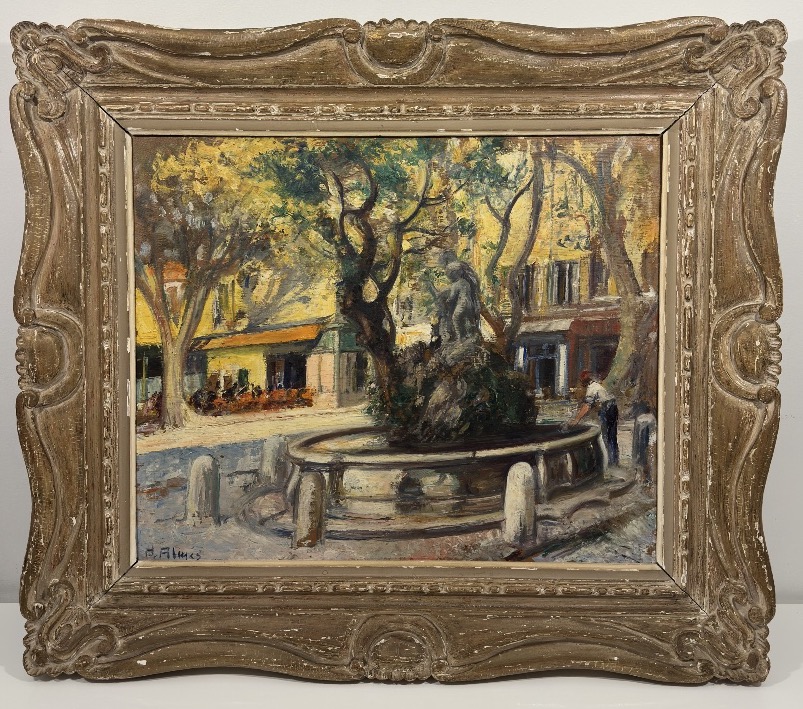
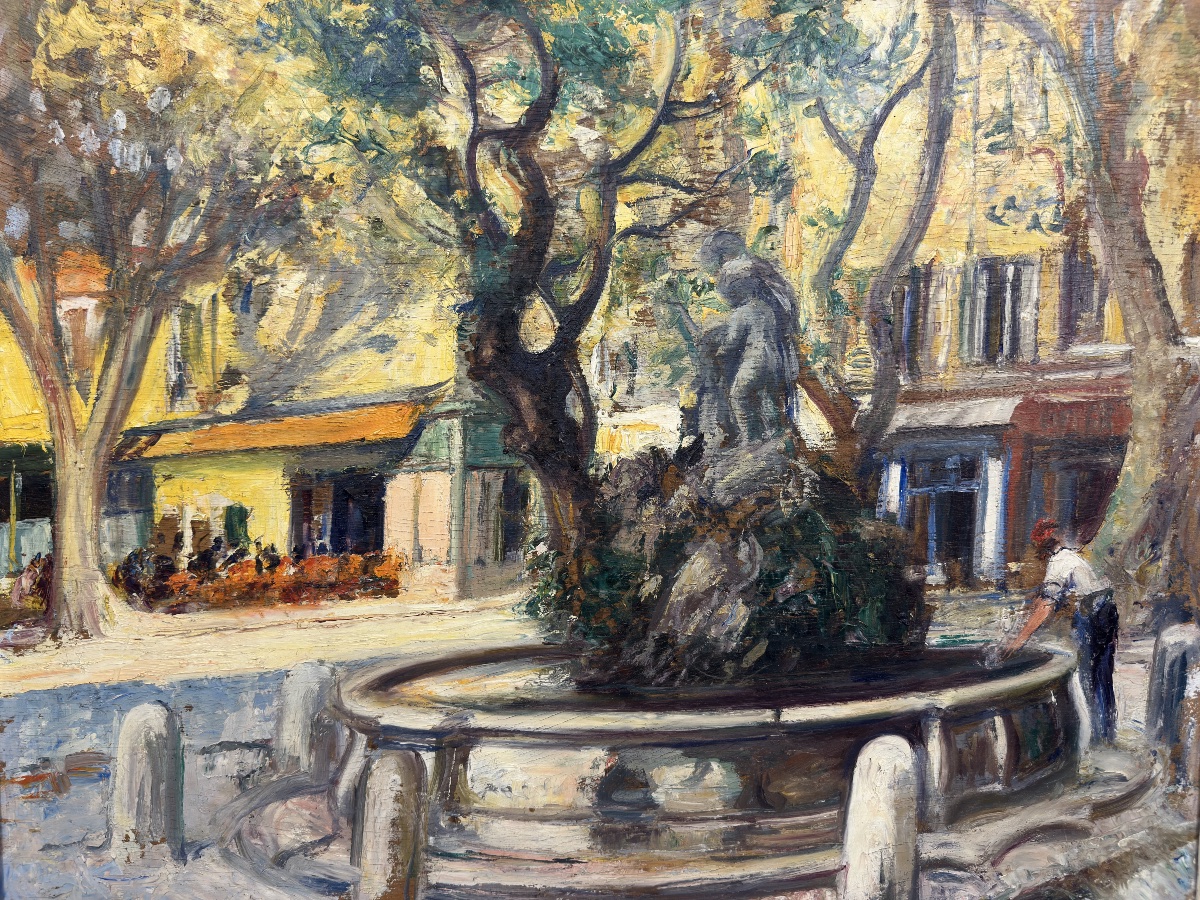
The Fountain of the Three Dolphins, Place Puget, Toulon (proposed identification)
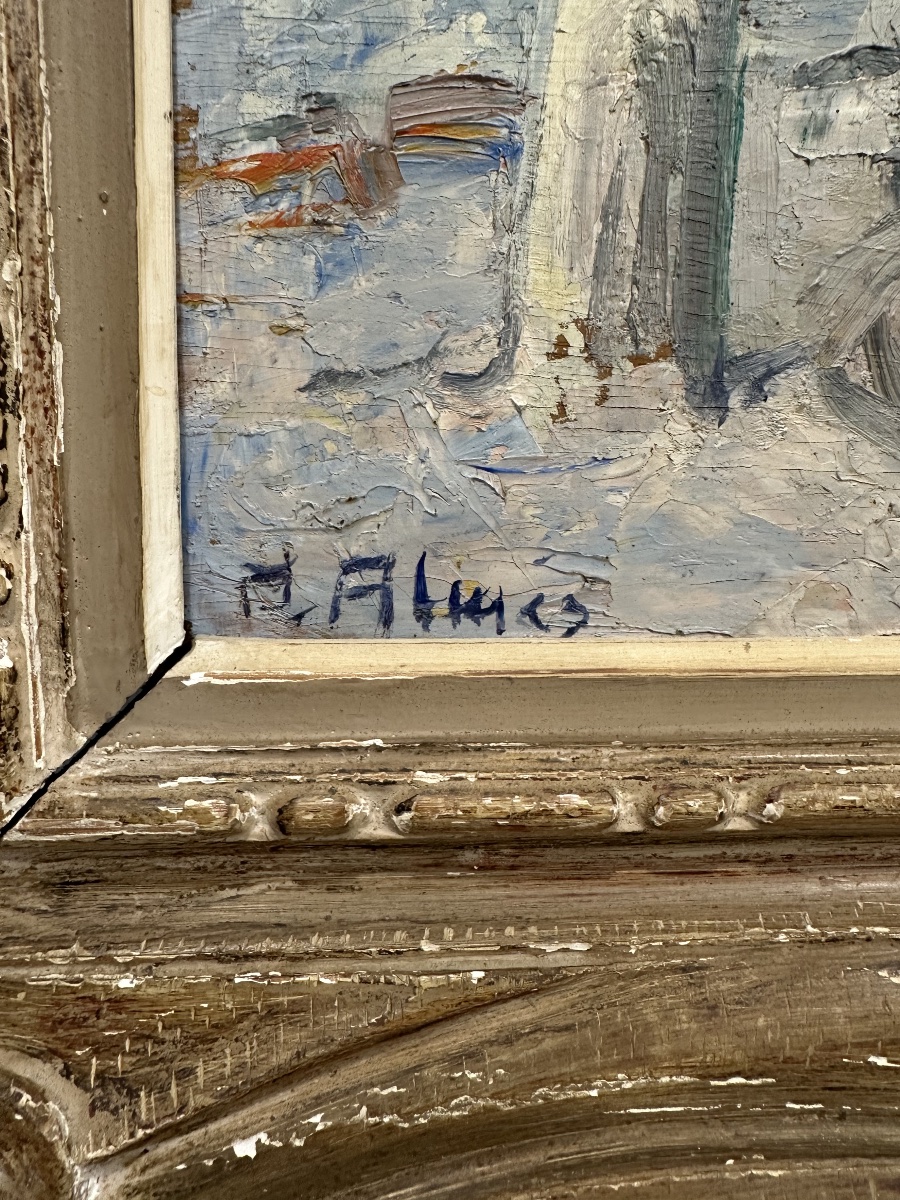
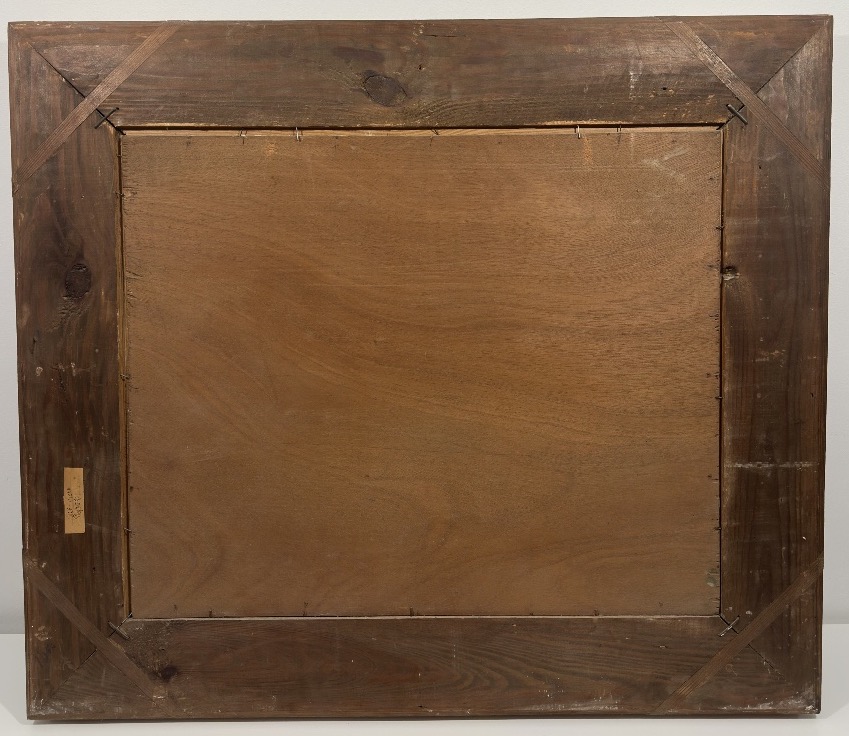
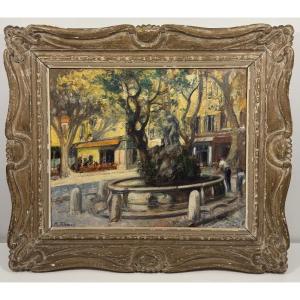
Oil on panel, signed lower left, 49 x 60 cm — Frame: 73 x 83 cm
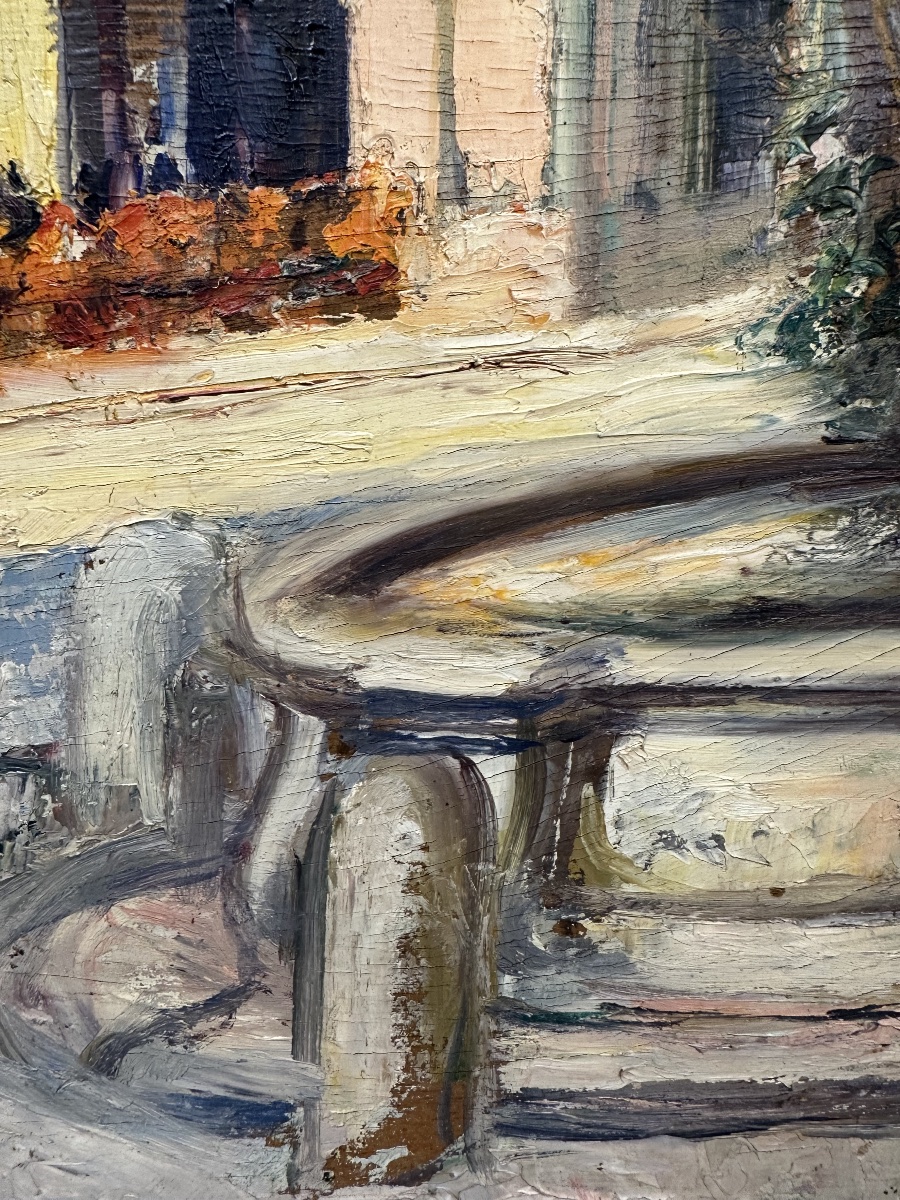
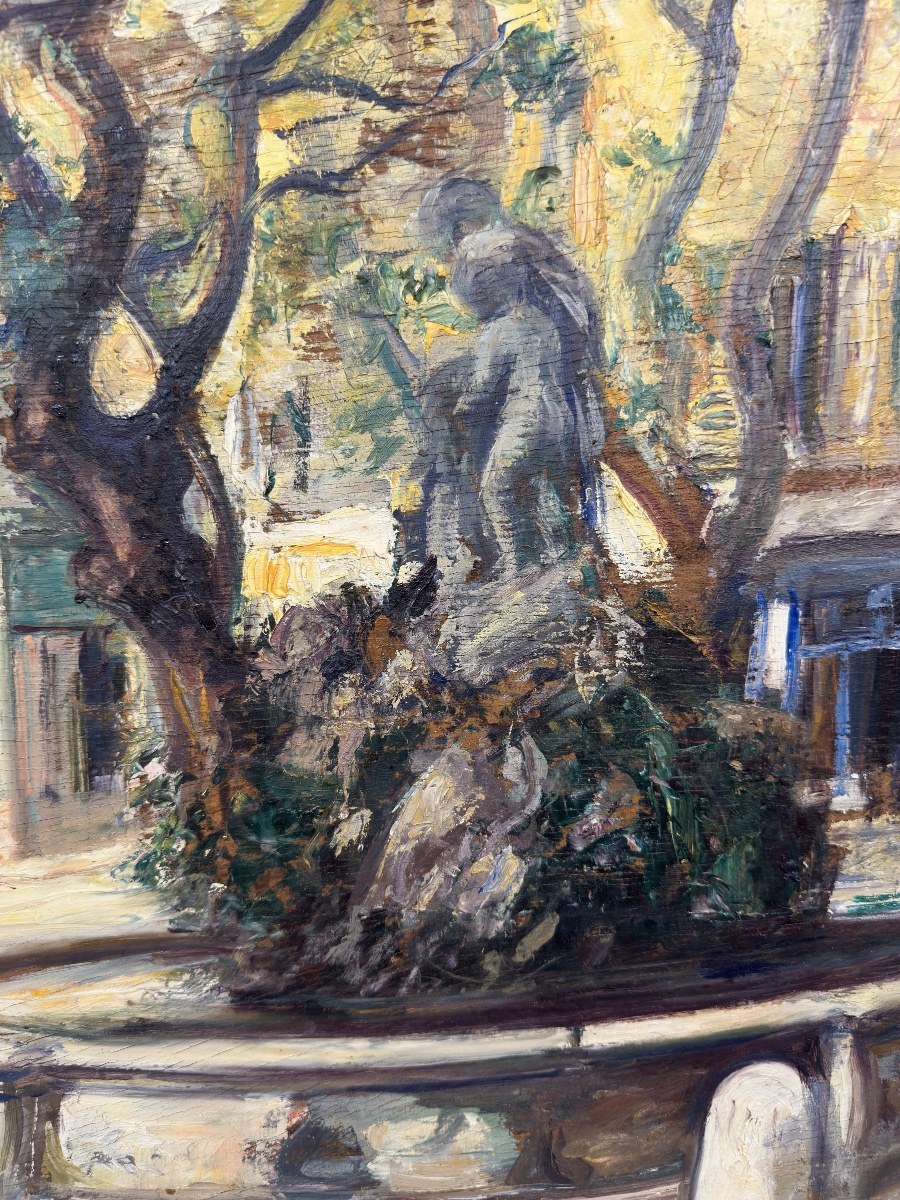
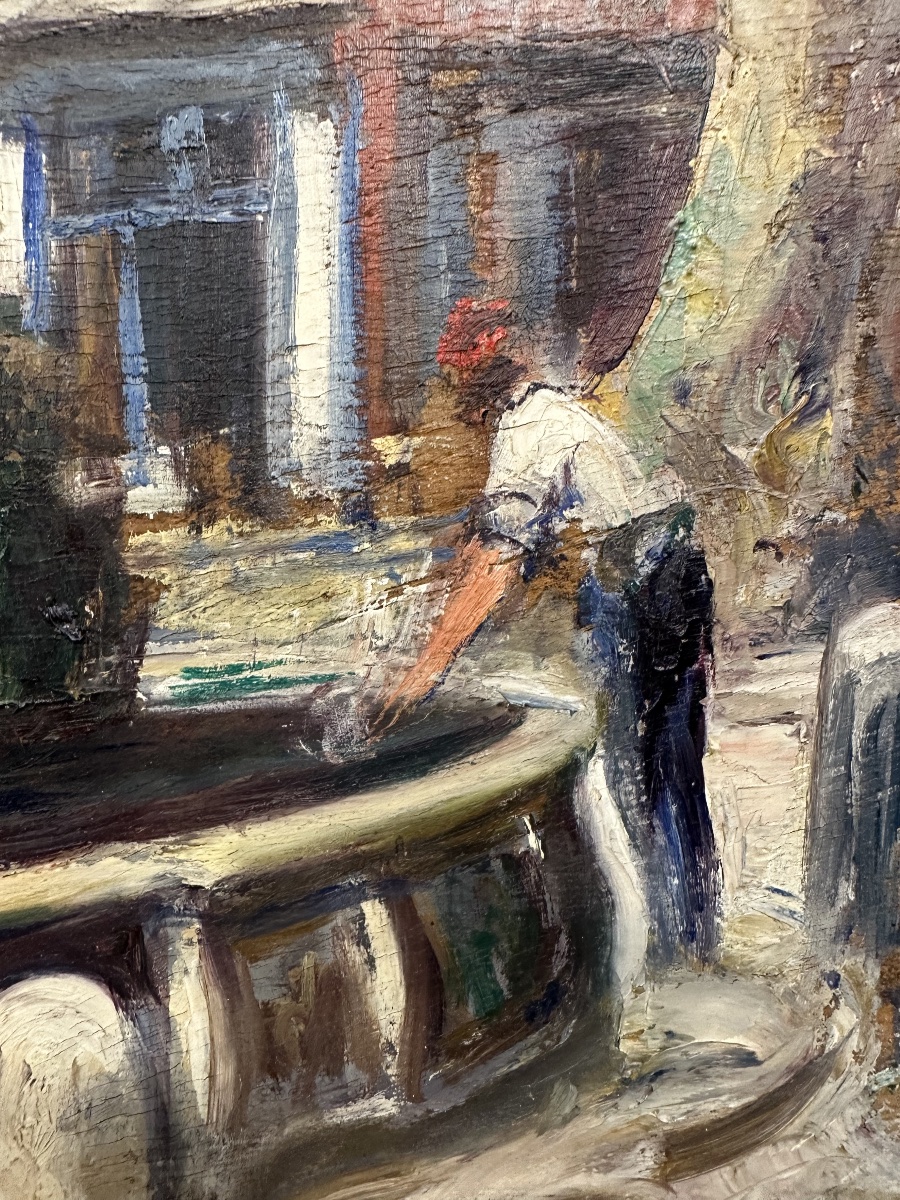
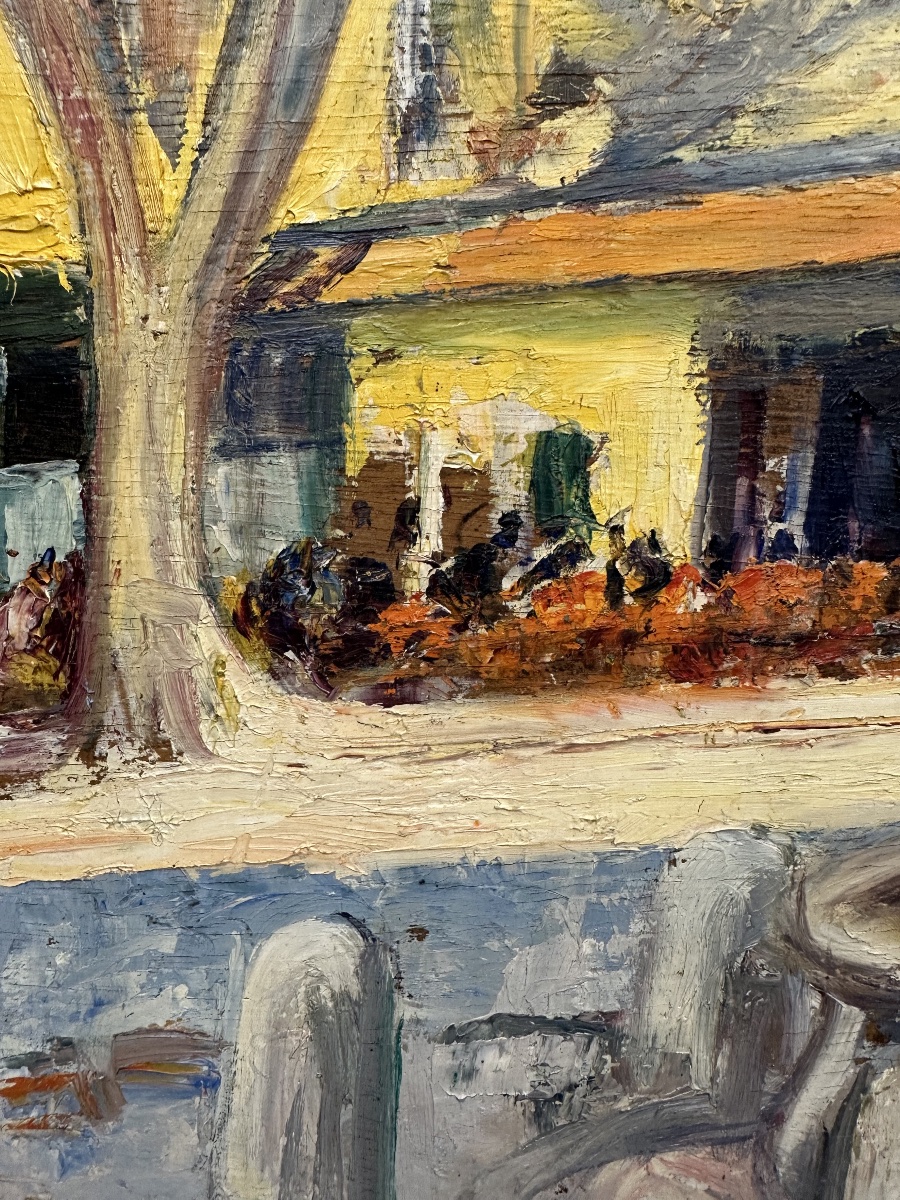
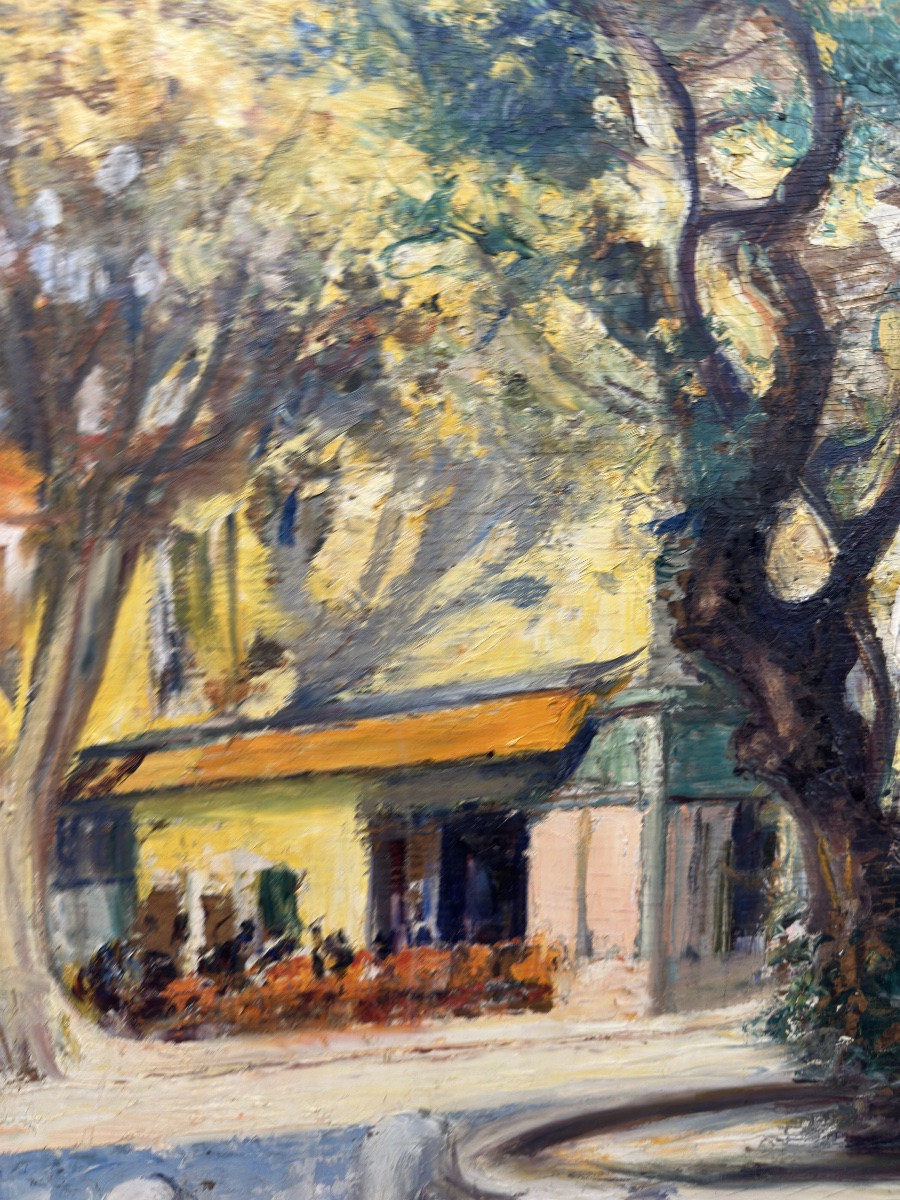
The composition depicts a square shaded by tall plane trees, animated by a circular fountain ringed with stone bollards, its central basin overtaken by dense vegetation. On the left, a café terrace with an orange awning occupies the ground floor of a building, while a figure stands near the edge of the basin on the right. Light filtering through the foliage bathes the facades in a golden tone.
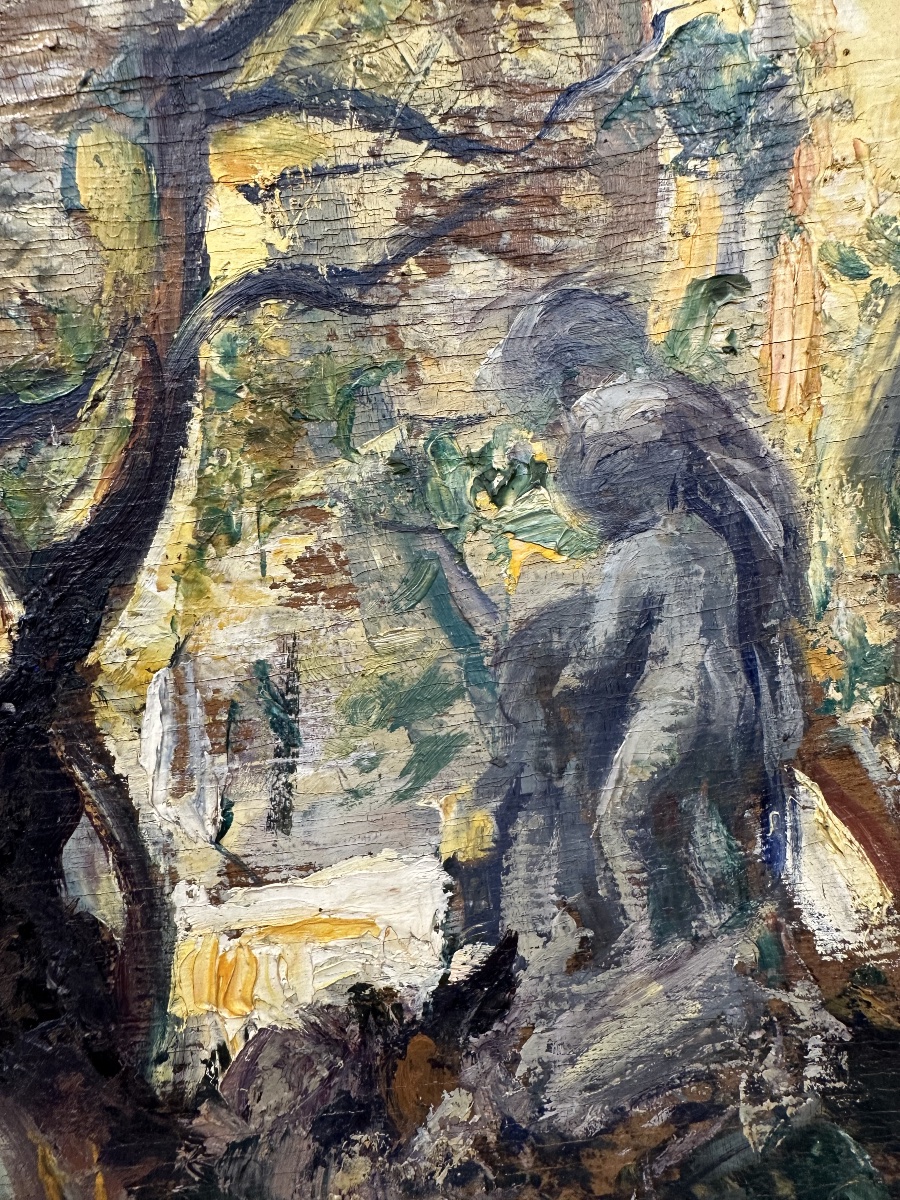
The scene bears strong similarities to the Fountain of the Three Dolphins on Place Puget in Toulon: an 18th-century circular basin ringed with bollards, vegetation almost entirely covering the fountain, centuries-old plane trees, and a square traditionally lined with cafés and restaurants in Toulon's old town. This identification remains a proposal, as the location is not explicitly stated on the work.
Pierre Edmond Guillaume Almès was born in Béziers on 10 November 1880 and died in Saint-Jean-de-Luz on 17 December 1944. A pupil of Fernand Cormon, he became a member ("sociétaire") of the Salon des artistes français, where he received a silver medal. He exhibited in Toulon, Cannes, Nice, Bayonne and Saint-Jean-de-Luz. A painter and watercolourist of Mediterranean landscapes, he also produced views of the Basque Country and worked as a ceramics decorator, notably for the Poterie de Ciboure in the 1930s.
His thick, textured brushwork and his interest in light filtering through foliage place him within the tradition of early 20th-century painters of southern French scenes, in the post-Impressionist current then represented at the Salon des artistes français.
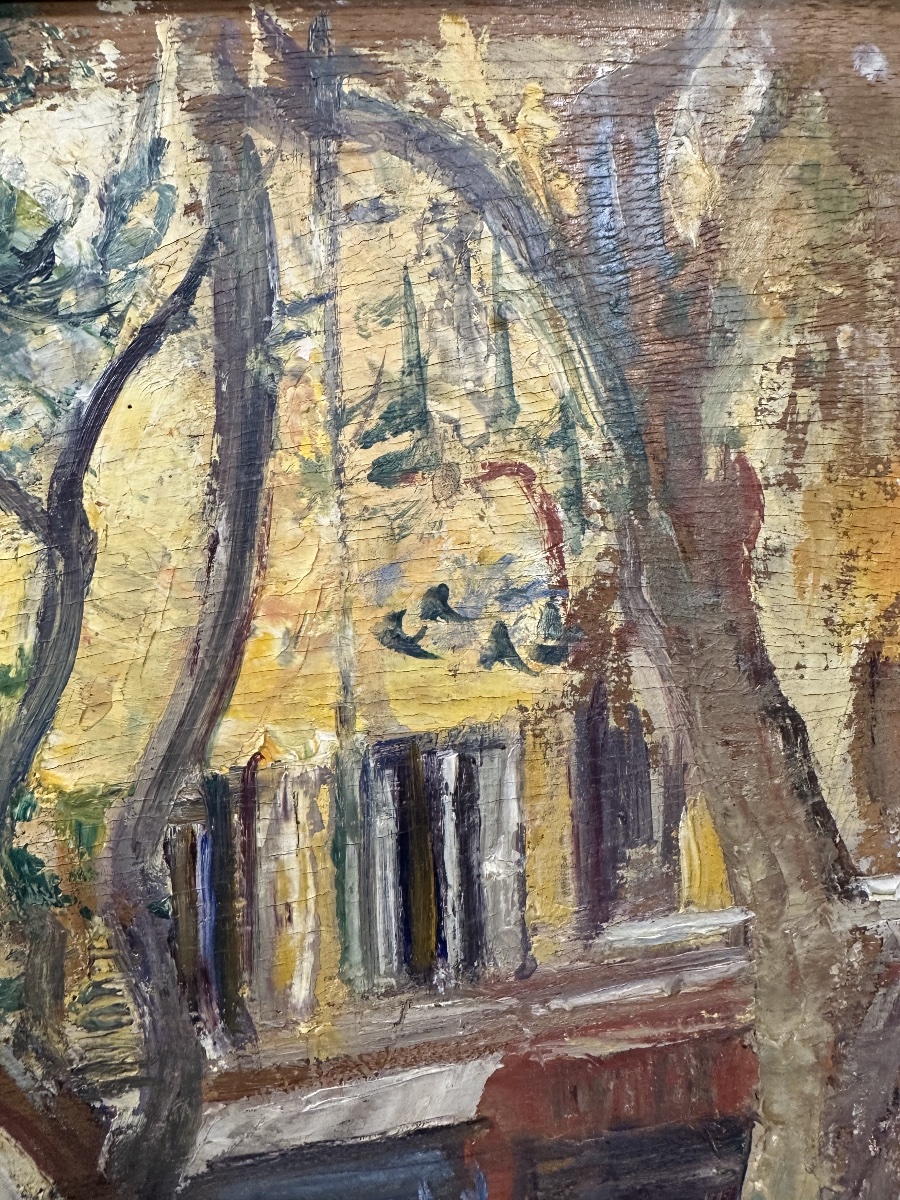
The paint surface shows a fine network of craquelure, visible particularly around the signature. The carved, patinated wooden frame shows some wear and losses, notably at the lower left corner.
Objektbeschreibung (Deutsch)Pierre Almès (1880-1944, Béziers – Saint-Jean-de-Luz)
Der Brunnen der drei Delfine, Place Puget, Toulon (vorgeschlagene Identifizierung)
Öl auf Holz, unten links signiert, 49 x 60 cm — Rahmen: 73 x 83 cm
Die Komposition zeigt einen von hohen Platanen beschatteten Platz mit einem runden, von Steinpollern umgebenen Brunnen, dessen zentrales Becken von üppiger Vegetation überwuchert ist. Links befindet sich eine Café-Terrasse mit orangefarbener Markise im Erdgeschoss eines Gebäudes, während rechts eine Figur am Beckenrand steht. Das durch das Laub gefilterte Licht taucht die Fassaden in einen goldenen Ton.
Das Gesamtbild weist starke Ähnlichkeiten mit dem Brunnen der drei Delfine auf der Place Puget in Toulon auf: ein rundes Becken aus dem 18. Jahrhundert, umgeben von Pollern, eine fast vollständig überwucherte Fassung, jahrhundertealte Platanen sowie ein Platz, der traditionell von Cafés und Restaurants der Toulonner Altstadt gesäumt wird. Diese Identifizierung bleibt ein Vorschlag, da der Ort auf dem Werk nicht ausdrücklich angegeben ist.
Pierre Edmond Guillaume Almès wurde am 10. November 1880 in Béziers geboren und starb am 17. Dezember 1944 in Saint-Jean-de-Luz. Als Schüler von Fernand Cormon wurde er Mitglied ("sociétaire") des Salon des artistes français, wo er eine Silbermedaille erhielt. Er stellte in Toulon, Cannes, Nizza, Bayonne und Saint-Jean-de-Luz aus. Als Maler und Aquarellist mediterraner Landschaften schuf er auch Ansichten des Baskenlands und arbeitete als Keramikdekorateur, unter anderem in den 1930er Jahren für die Poterie de Ciboure.
Sein pastoser Pinselduktus und sein Interesse am durch Laub gefilterten Licht ordnen ihn in die Tradition der Maler südfranzösischer Szenen des frühen 20. Jahrhunderts ein, im postimpressionistischen Umfeld, das damals im Salon des artistes français vertreten war.
Die Malschicht zeigt ein feines Craquelé-Netz, besonders sichtbar im Bereich der Signatur. Der geschnitzte, patinierte Holzrahmen weist einige Gebrauchsspuren und Fehlstellen auf, insbesondere in der unteren linken Ecke.
Scheda (Italiano)Pierre Almès (1880-1944, Béziers – Saint-Jean-de-Luz)
La fontana dei Tre Delfini, Place Puget, a Tolone (identificazione proposta)
Olio su pannello, firmato in basso a sinistra, 49 x 60 cm — Cornice: 73 x 83 cm
La composizione raffigura una piazza ombreggiata da alti platani, animata da una fontana circolare cinta da paletti in pietra, il cui bacino centrale è invaso da una vegetazione rigogliosa. A sinistra, una terrazza di caffè con tenda arancione occupa il piano terra di un edificio, mentre a destra una figura sosta vicino al bordo della vasca. La luce filtrata dal fogliame avvolge le facciate in una tonalità dorata.
L'insieme presenta forti analogie con la fontana dei Tre Delfini, Place Puget, a Tolone: bacino circolare del XVIII secolo circondato da paletti, vegetazione che ricopre quasi interamente la vasca, platani secolari, piazza tradizionalmente fiancheggiata da caffè e ristoranti nel centro storico tolonese. Questa identificazione resta un'ipotesi, poiché il luogo non è esplicitamente indicato sull'opera.
Pierre Edmond Guillaume Almès nacque a Béziers il 10 novembre 1880 e morì a Saint-Jean-de-Luz il 17 dicembre 1944. Allievo di Fernand Cormon, divenne socio ("sociétaire") del Salon des artistes français, dove ottenne una medaglia d'argento. Espose a Tolone, Cannes, Nizza, Bayonne e Saint-Jean-de-Luz. Pittore e acquarellista di paesaggi mediterranei, realizzò anche vedute dei Paesi Baschi e lavorò come decoratore ceramista, in particolare per la Poterie de Ciboure negli anni Trenta.
La sua pennellata materica e la ricerca della luce filtrata attraverso il fogliame lo collocano nella tradizione dei pittori di scene meridionali dell'inizio del XX secolo, nella corrente postimpressionista allora rappresentata al Salon des artistes français.
La pellicola pittorica presenta una fine rete di craquelure, visibile in particolare attorno alla firma. La cornice in legno intagliato e patinato mostra alcuni segni d'uso e piccole mancanze, in particolare all'angolo inferiore sinistro.
Period: 20th century
Style: Other Style
Condition: Excellent condition
Material: Oil painting on wood
Reference (ID): 1777758
Availability: In stock