

Louis XVI Clock By Frédéric Duval
Artist: Frédéric Duval
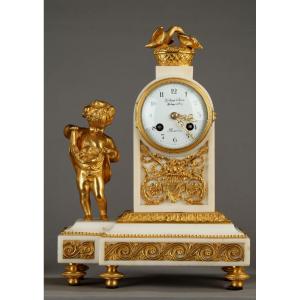
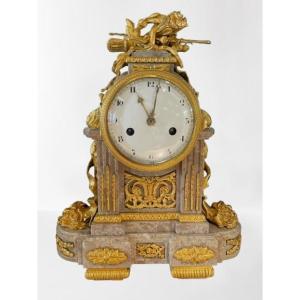
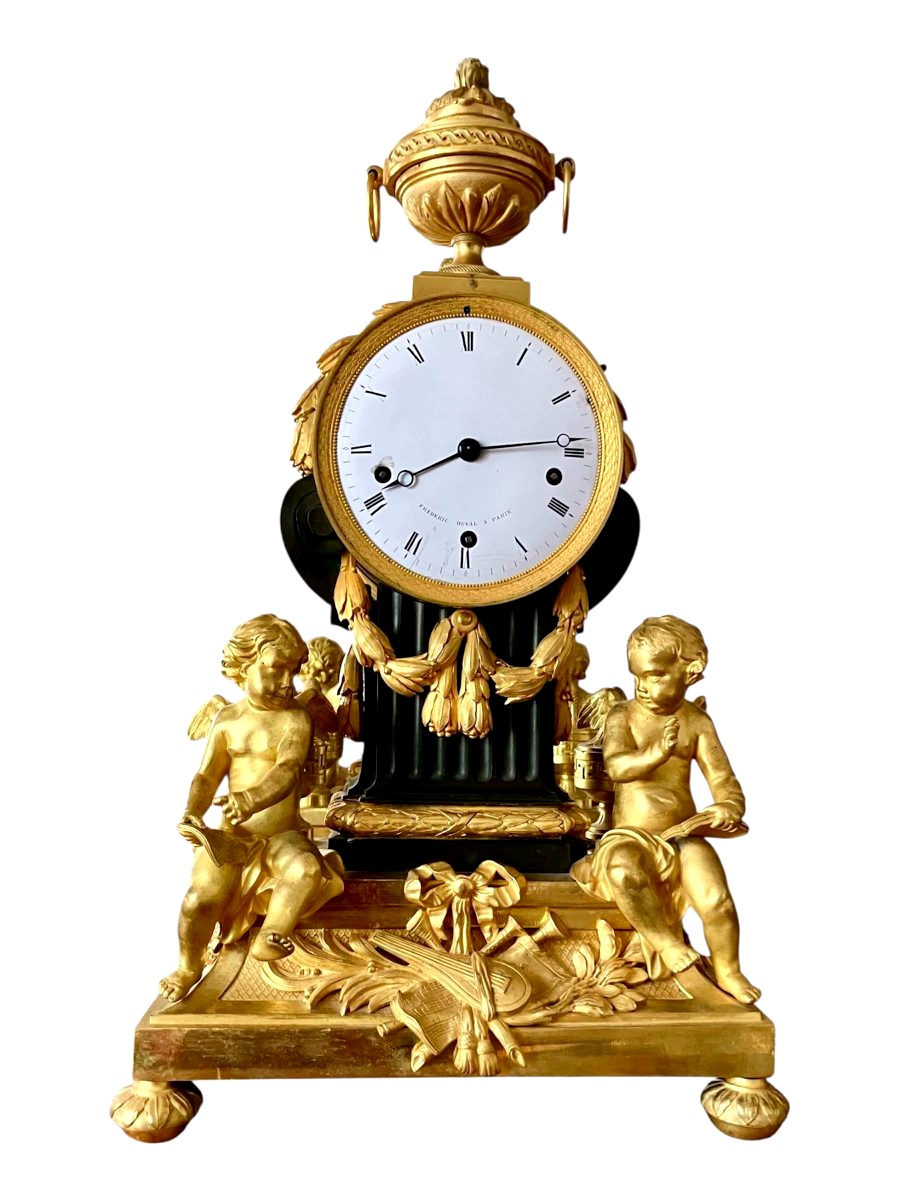
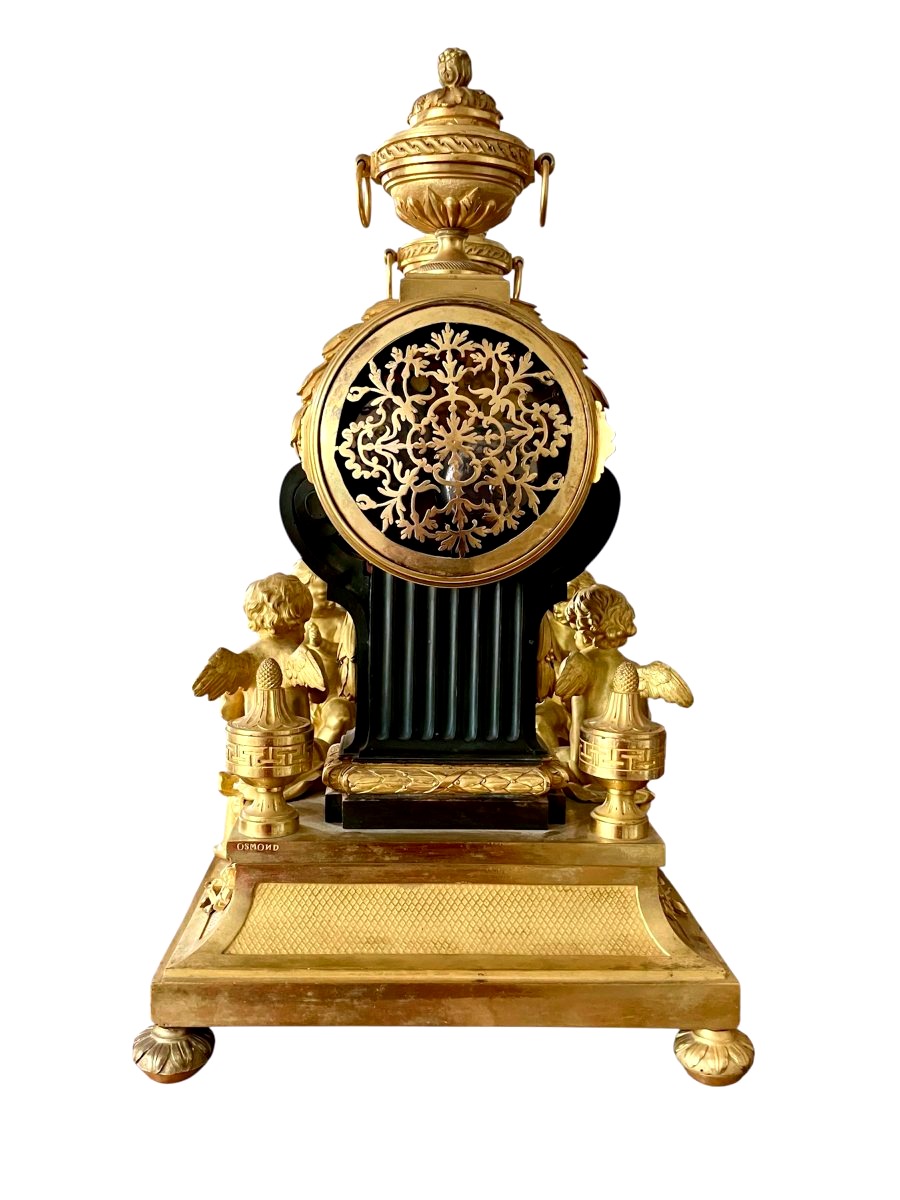
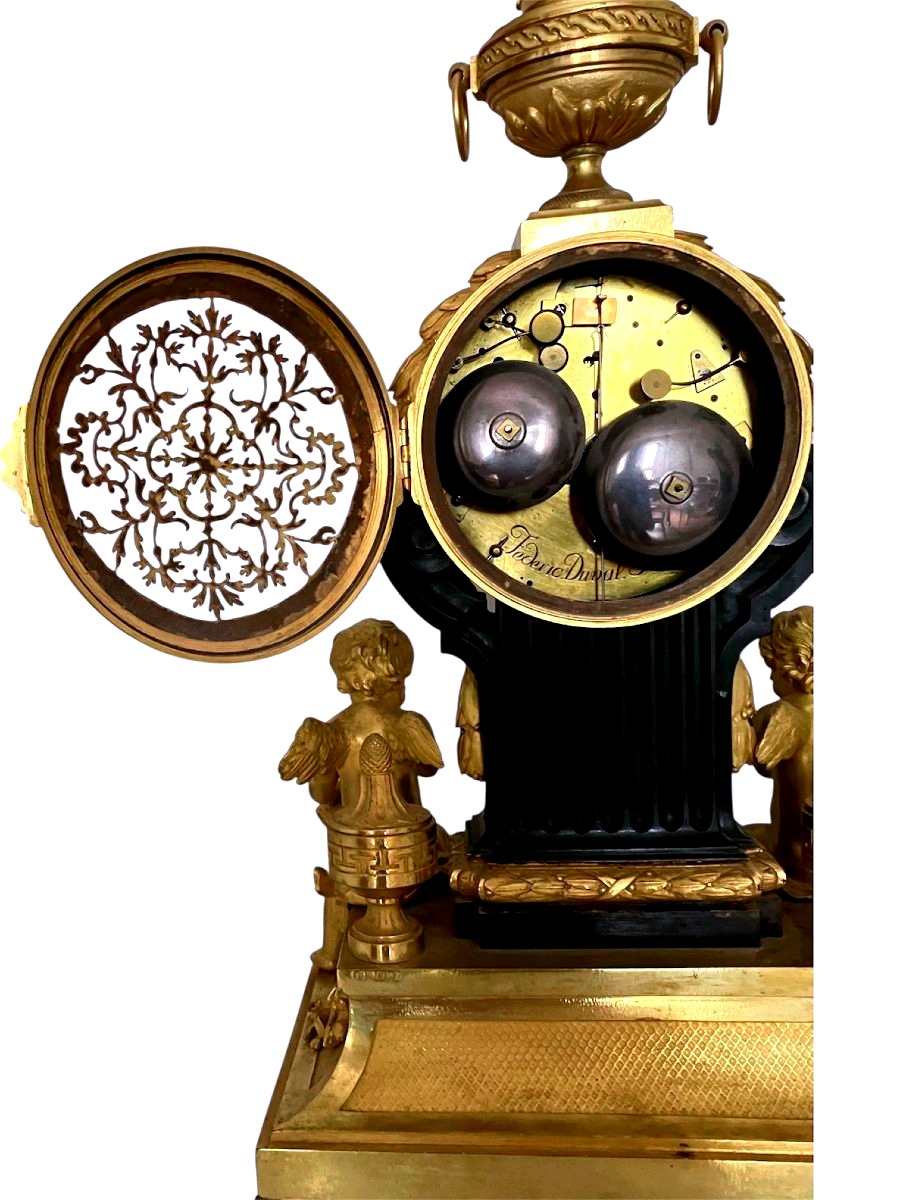
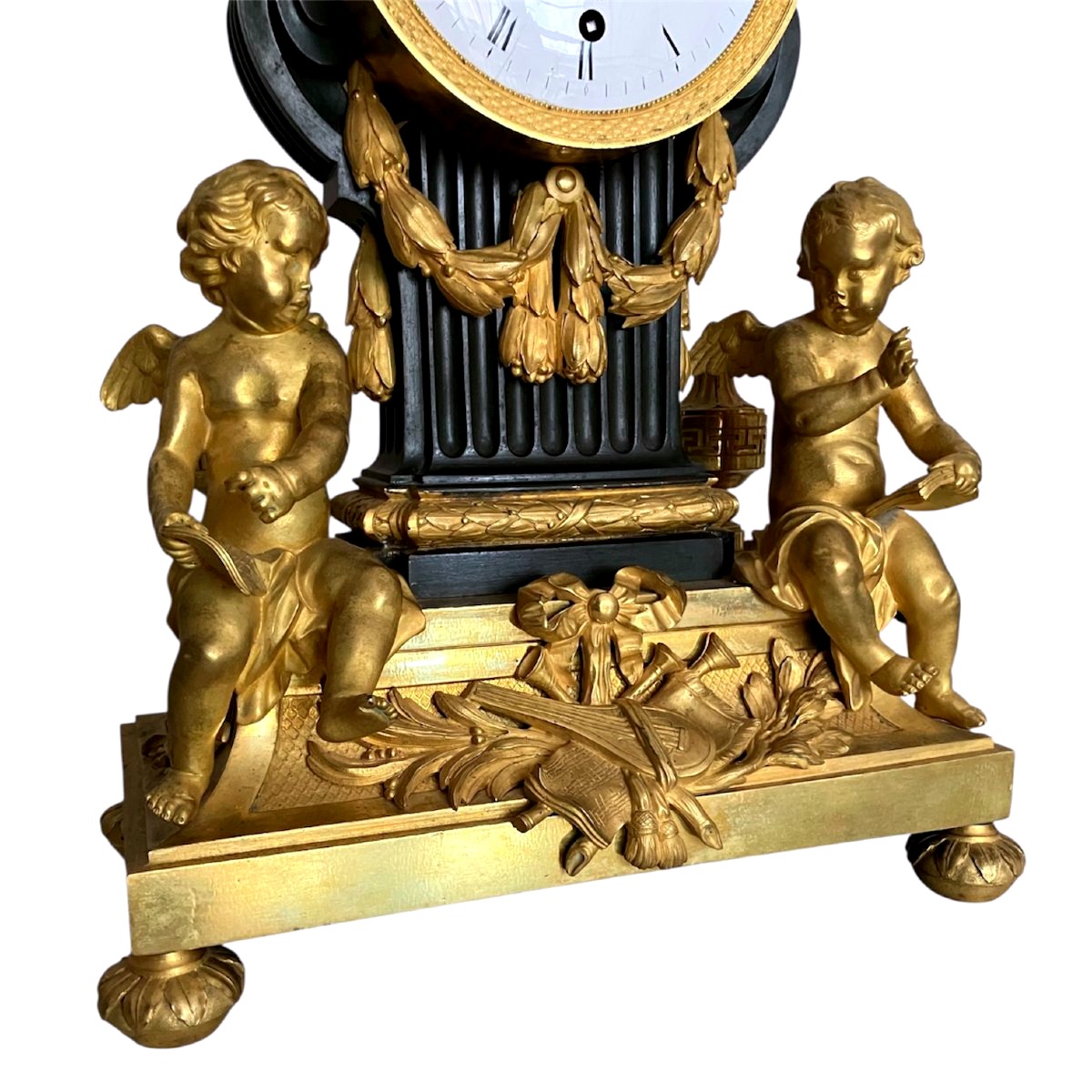
A Louis XVI period clock, signed by Frédérique Duval, a clockmaker and artist renowned for his talent in creating exceptional objects during the 18th century. This gilt bronze clock exemplifies the elegance and stylistic rigor characteristic of the end of Louis XVI's reign, a period when Neoclassical art imposed its pure forms and refined decorative language.
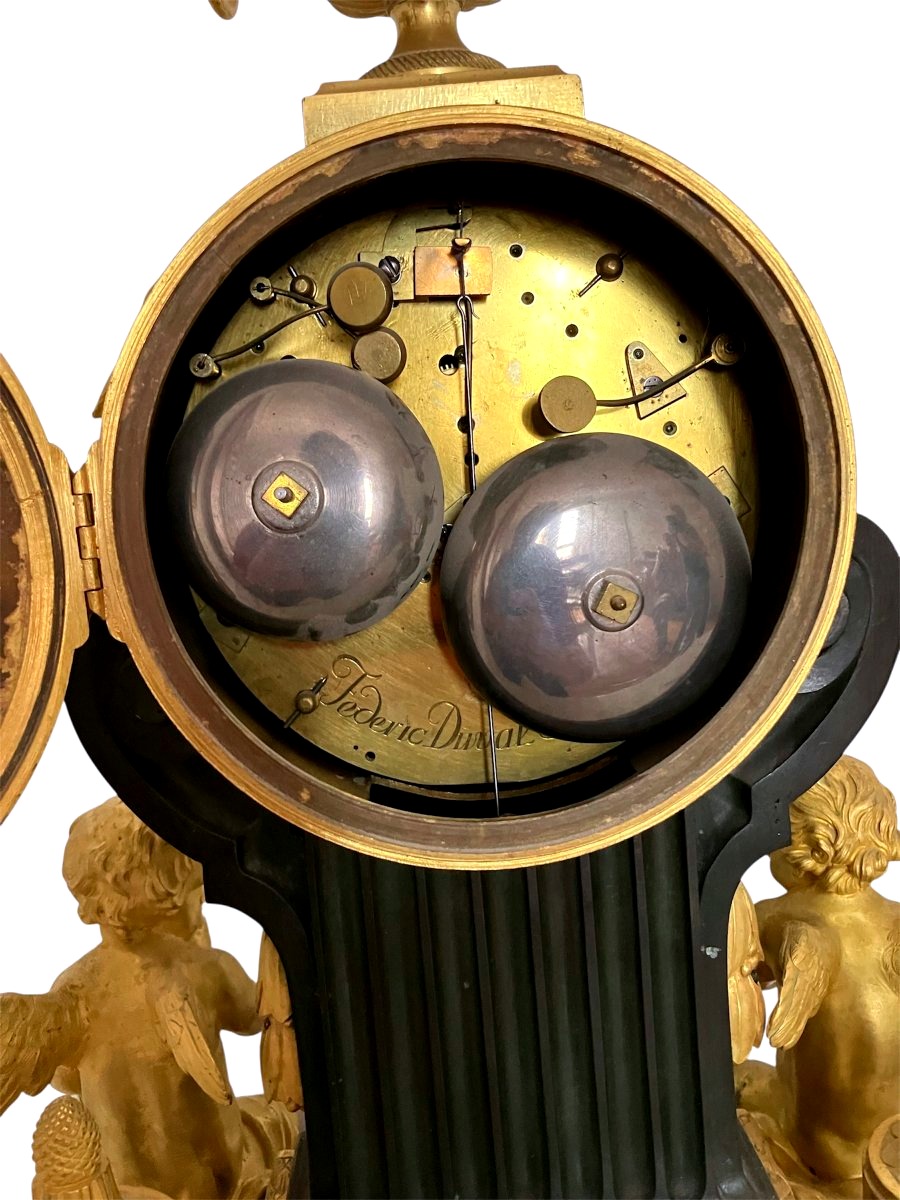
It strikes the quarter hours. With key. Adapted and secure international shipping.
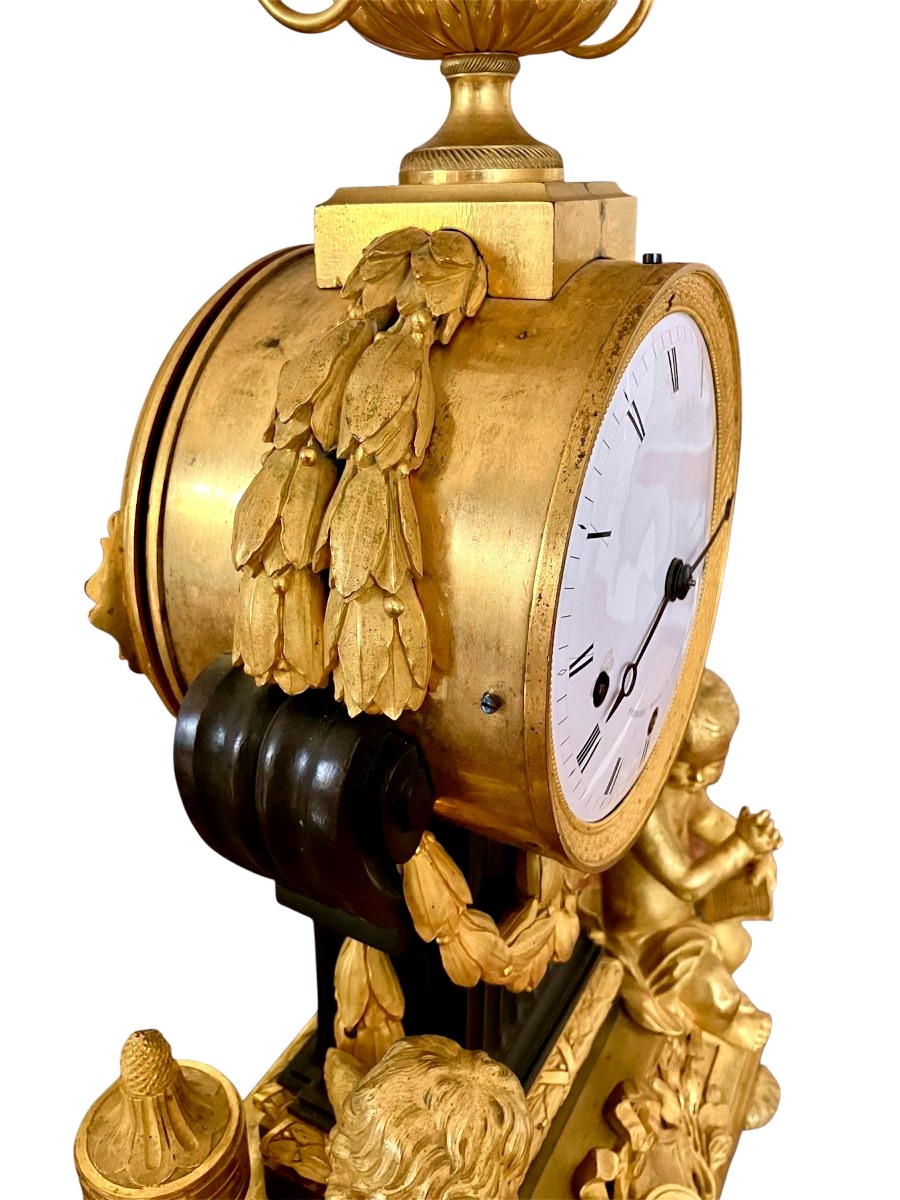
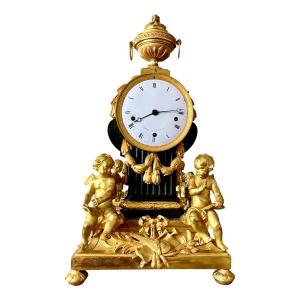
The piece has harmonious dimensions, with a height of 57 cm, a length of 33.5 cm, and a depth of 22 cm, for a total weight of 18.5 kg. The 16 cm diameter white enamel dial is delicately signed by Frédérique Duval, attesting to the piece's authenticity and provenance. The dial, marked with classic Roman numerals and two slender hands, combines legibility and simplicity, reflecting the formal rigor typical of the period.
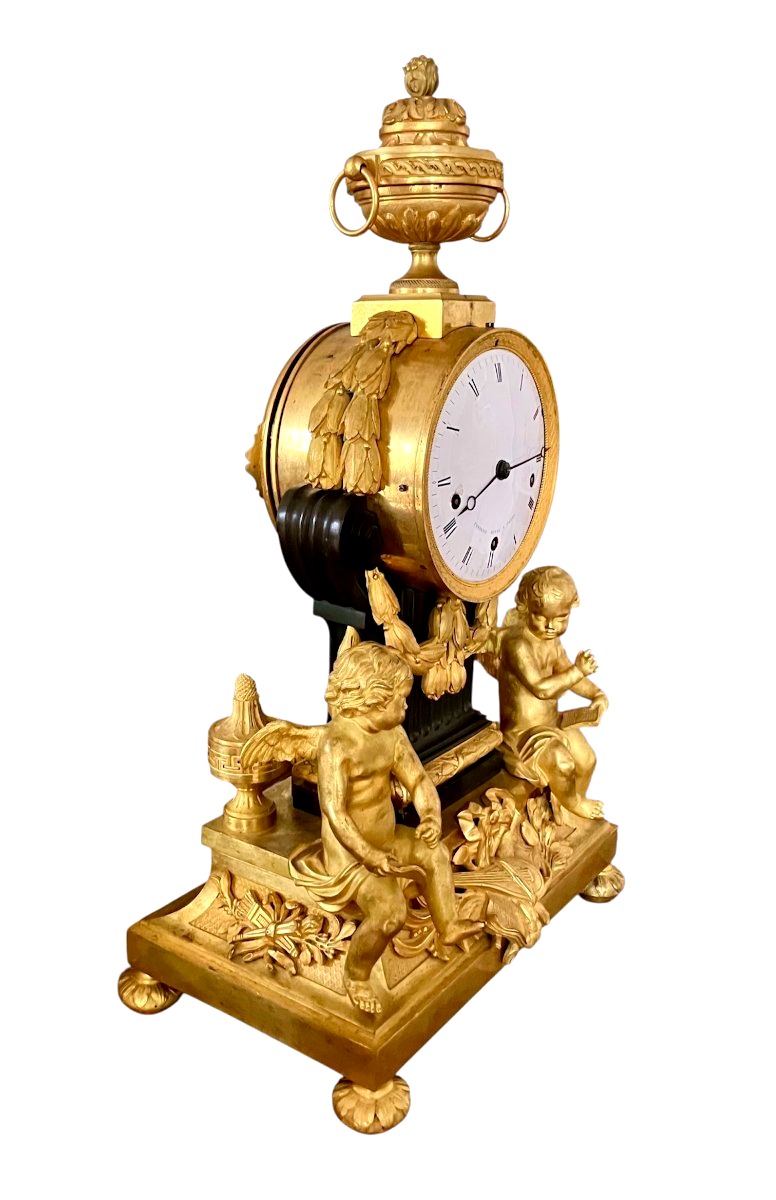
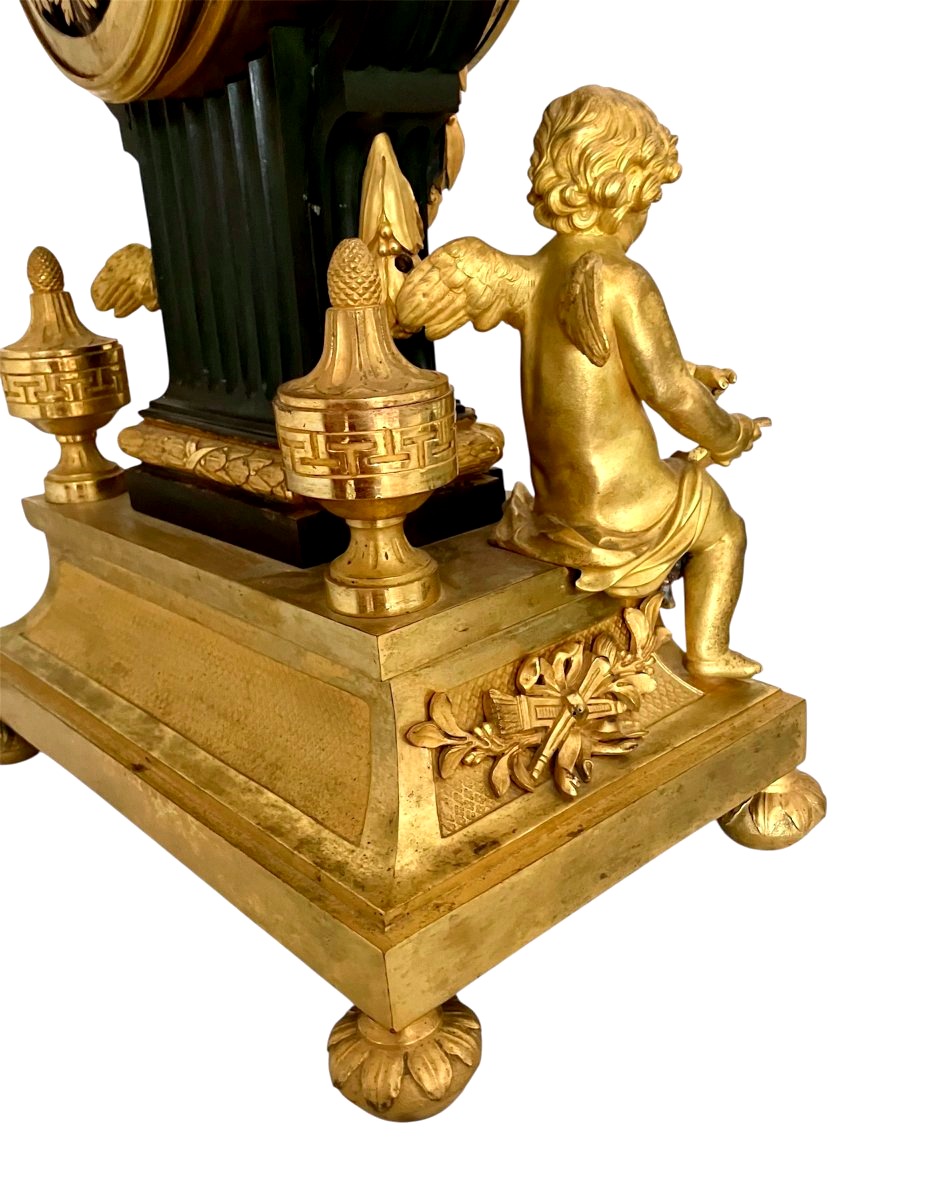
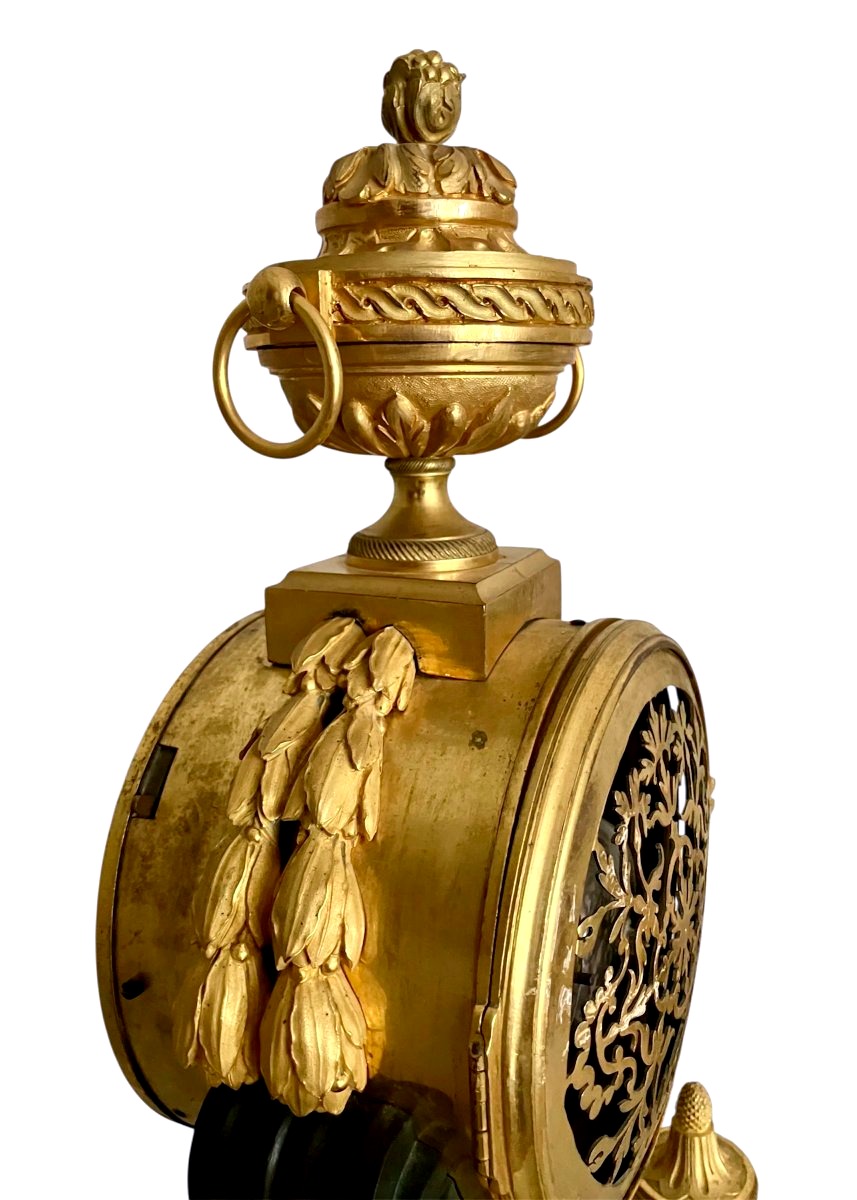
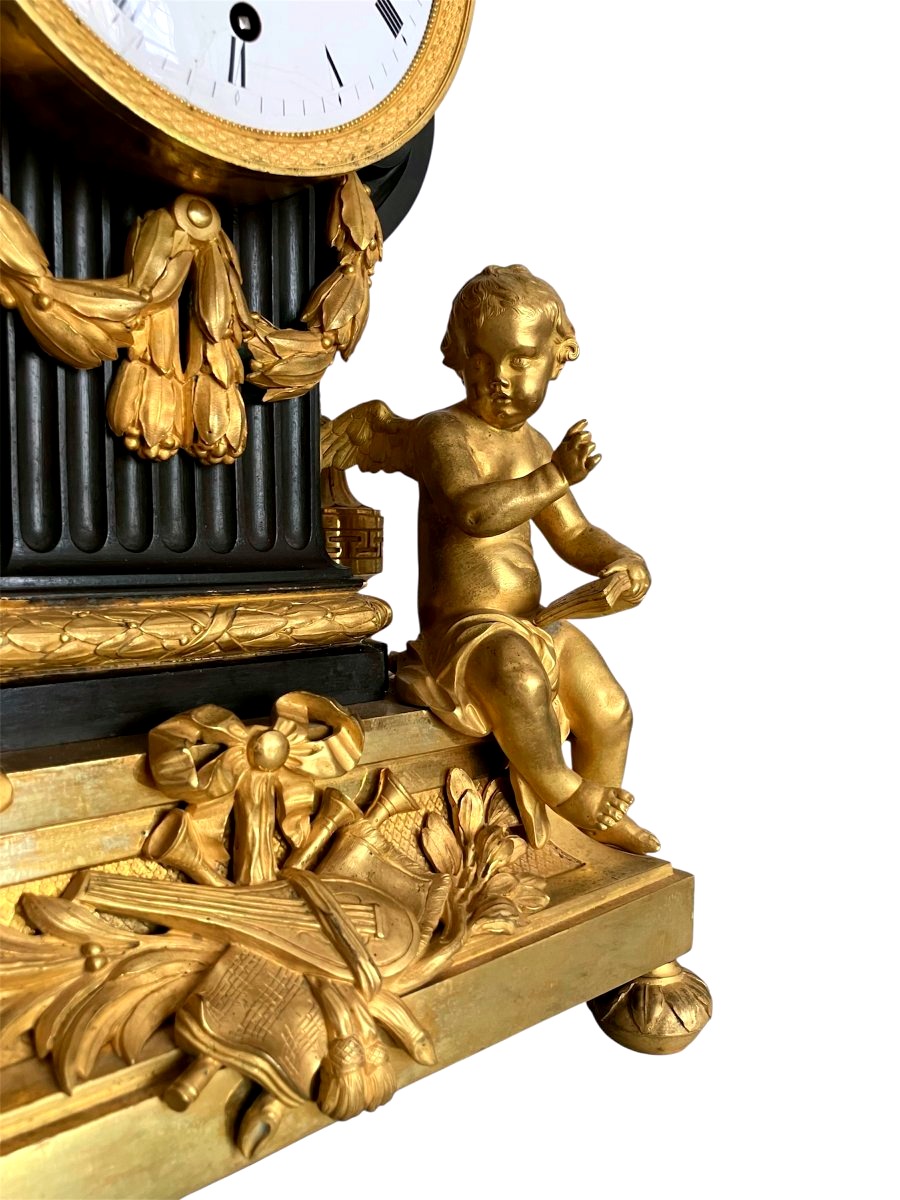
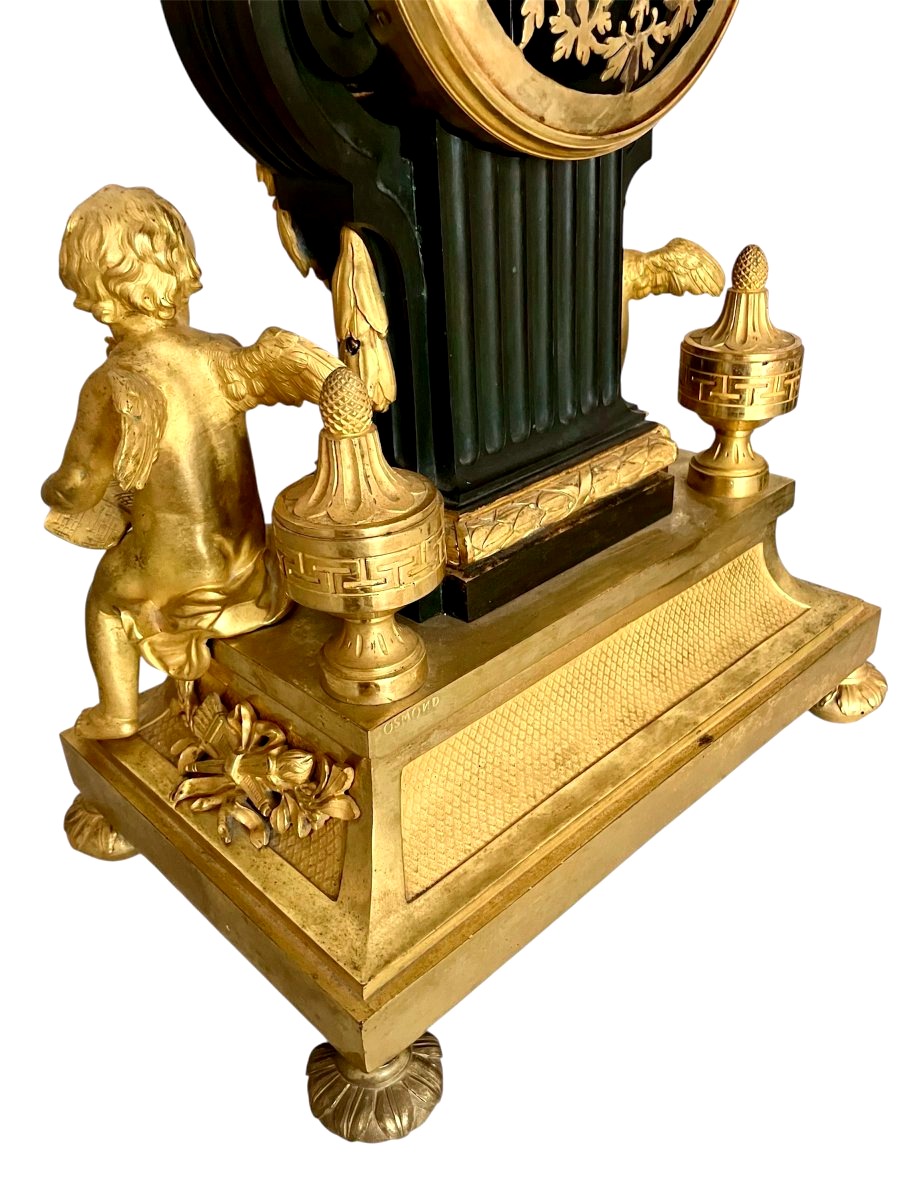
Frédérique Duval is distinguished by his precise attention to ornamental detail and his technical skill in working with gilt bronze. The clock is adorned with finely chiseled motifs, including winged putti, floral ornaments, and laurel wreaths, as well as architectural elements such as fluted columns and stylized urns, emblematic of the Neoclassical repertoire. These elements are harmoniously arranged to balance the volume while highlighting the nobility of the material.
The luminosity of the gilt bronze reveals a mastery of fine gold gilding, lending the whole an impression of richness and delicacy. The natural patina, subtly nuanced by time, adds to the object's aesthetic depth, accentuating the relief of the sculptures and the fineness of the details. This clock, at the crossroads of art and craftsmanship, perfectly illustrates Frédérique Duval's virtuosity in decorative horology, embodying the spirit of the Louis XVI style where functionality and sculptural beauty intertwine harmoniously.
Frédéric Duval, French clockmaker active in the late 18th century, renowned for his Louis XVI style clocks. Trained in the workshop of François Béliard, he worked as an independent craftsman for about ten years. He is recorded on Rue Mazarine in 1778 and on Rue Jacob in 1781, using clock cases supplied by renowned bronze casters such as Saint-Germain, Morlay, Poisson, and Osmond. His business appears to have ceased around the mid-1780s. The Duke of Choiseul, a great connoisseur of rare timepieces, was probably one of his most important clients.
It strikes the quarter hours. With key. Adapted and secure international shipping.
The piece has harmonious dimensions, with a height of 57 cm, a length of 33.5 cm, and a depth of 22 cm, for a total weight of 18.5 kg. The 16 cm diameter white enamel dial is delicately signed by Frédérique Duval, attesting to the piece's authenticity and provenance. The dial, marked with classic Roman numerals and two slender hands, combines legibility and simplicity, reflecting the formal rigor typical of the period.
Frédérique Duval is distinguished by his precise attention to ornamental detail and his technical skill in working with gilt bronze. The clock is adorned with finely chiseled motifs, including winged putti, floral ornaments, and laurel wreaths, as well as architectural elements such as fluted columns and stylized urns, emblematic of the Neoclassical repertoire. These elements are harmoniously arranged to balance the volume while highlighting the nobility of the material.
The luminosity of the gilt bronze reveals a mastery of fine gold gilding, lending the whole an impression of richness and delicacy. The natural patina, subtly nuanced by time, adds to the object's aesthetic depth, accentuating the relief of the sculptures and the fineness of the details. This clock, at the crossroads of art and craftsmanship, perfectly illustrates Frédérique Duval's virtuosity in decorative horology, embodying the spirit of the Louis XVI style where functionality and sculptural beauty intertwine harmoniously.
Frédéric Duval, French clockmaker active in the late 18th century, renowned for his Louis XVI style clocks. Trained in the workshop of François Béliard, he worked as an independent craftsman for about ten years. He is recorded on Rue Mazarine in 1778 and on Rue Jacob in 1781, using clock cases supplied by renowned bronze casters such as Saint-Germain, Morlay, Poisson, and Osmond. His business appears to have ceased around the mid-1780s. The Duke of Choiseul, a great connoisseur of rare timepieces, was probably one of his most important clients.
8 500 €
Period: 18th century
Style: Louis 16th, Directory
Condition: Excellent condition
Material: Bronze
Width: 33.5
Height: 57
Depth: 22
Reference (ID): 1770952
Availability: In stock
Print