



Set Of Antique Entomological Frames – Exotic And European Butterflies, Late 19th Century
Set of entomological frames - Exotic and European butterflies - France, late 19th century.
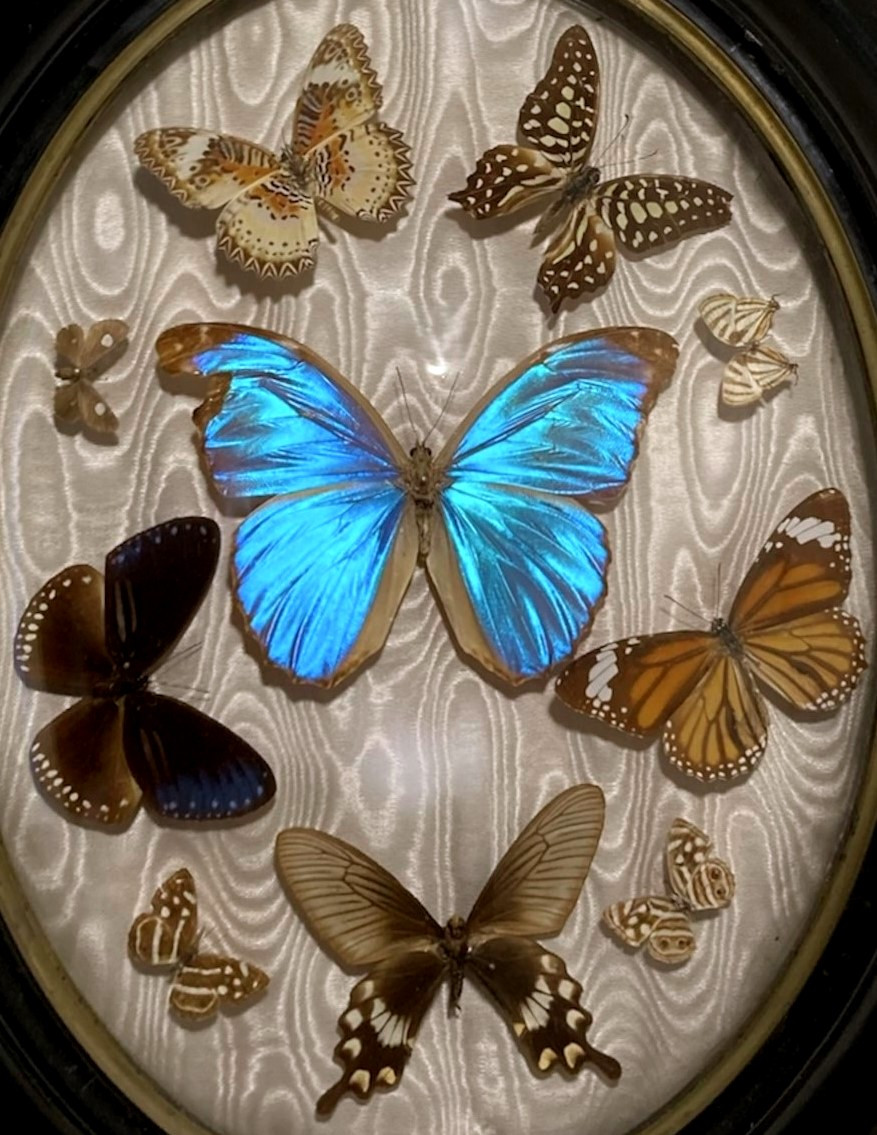
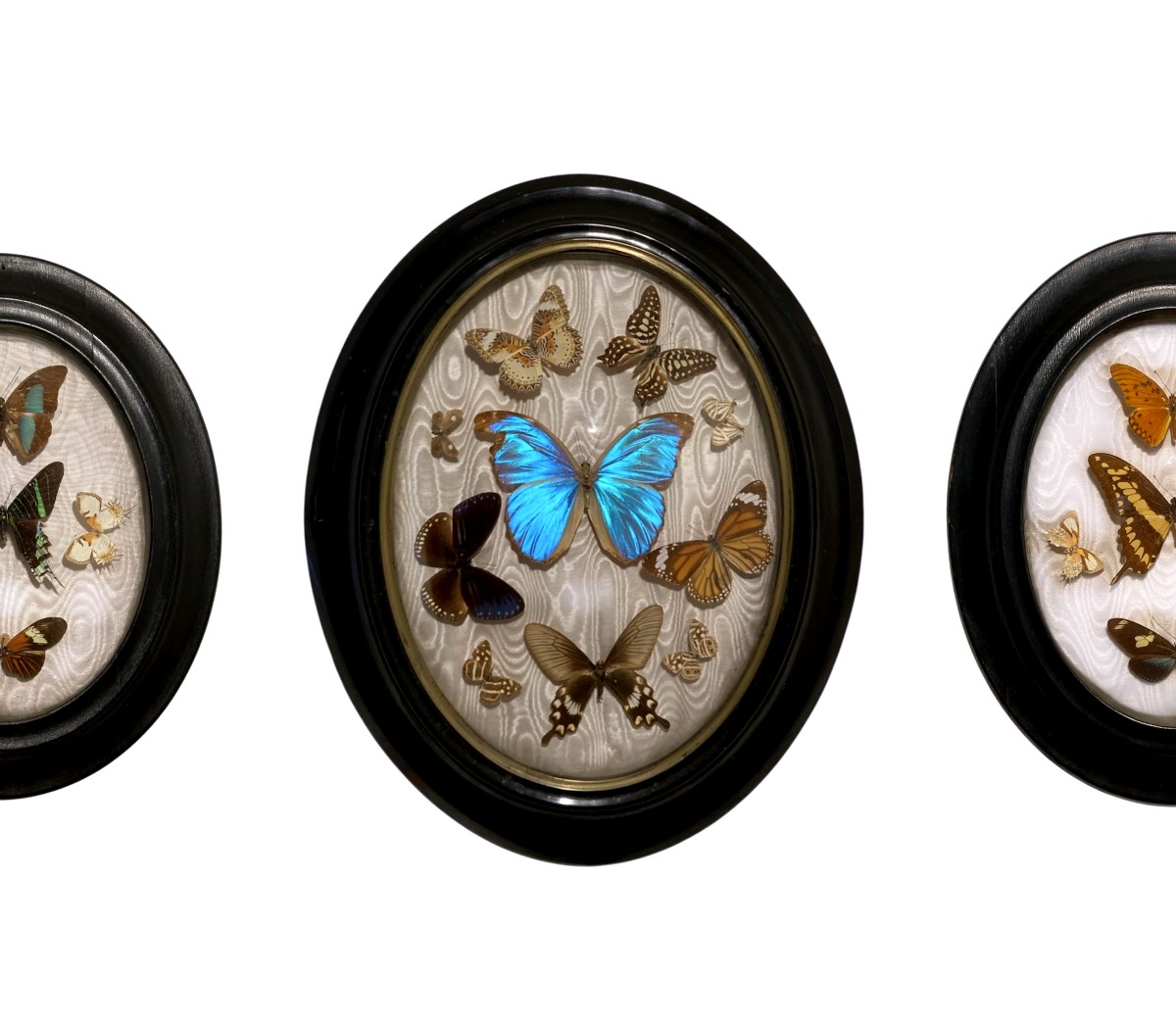
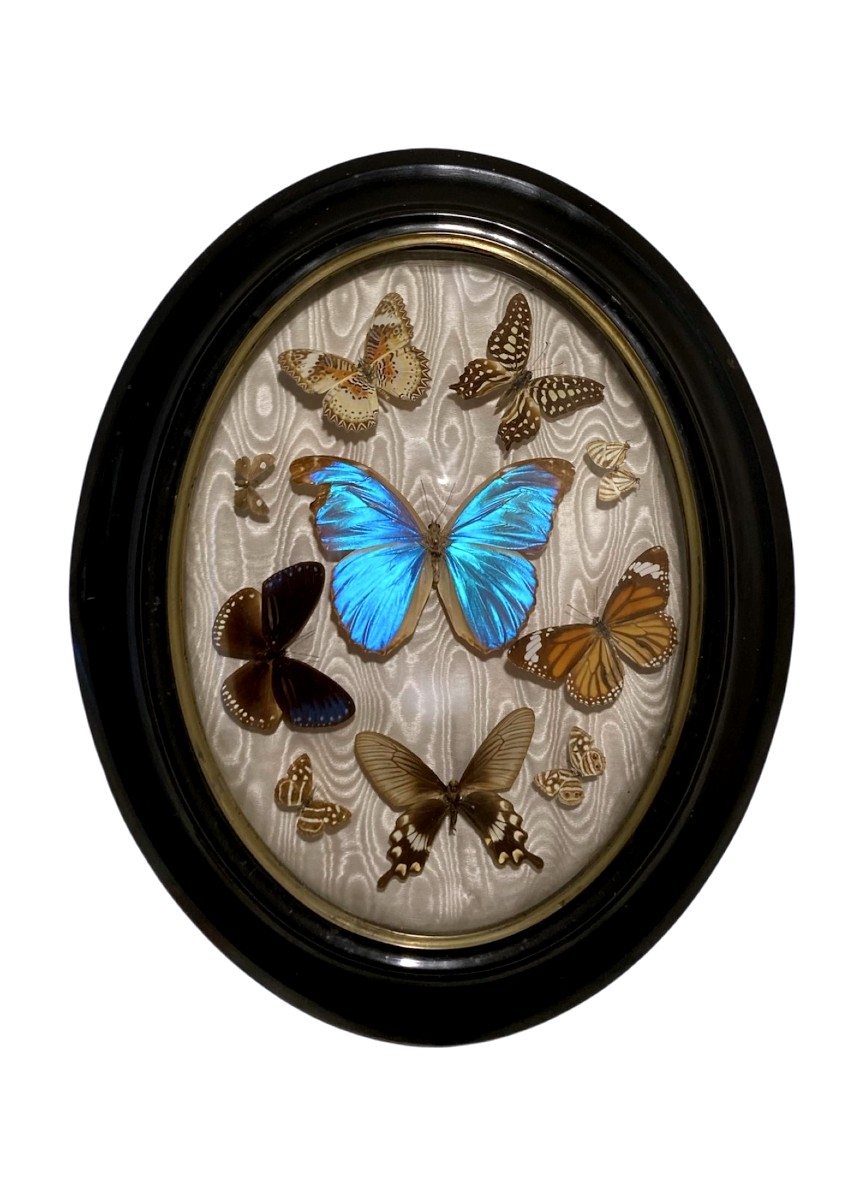
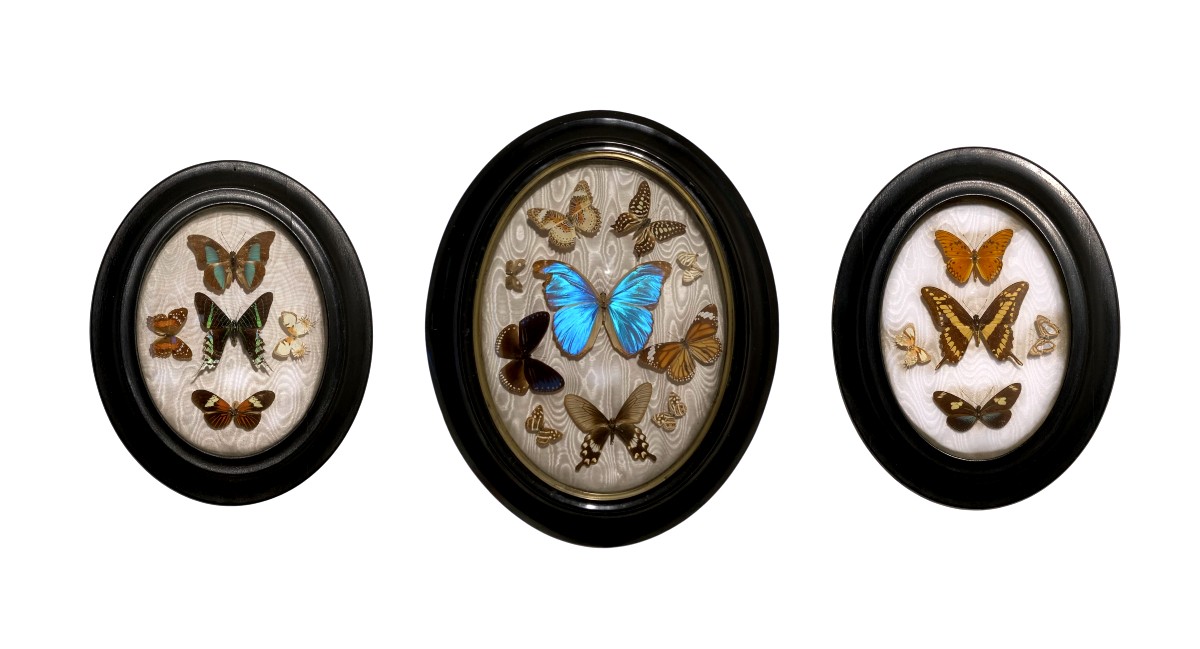
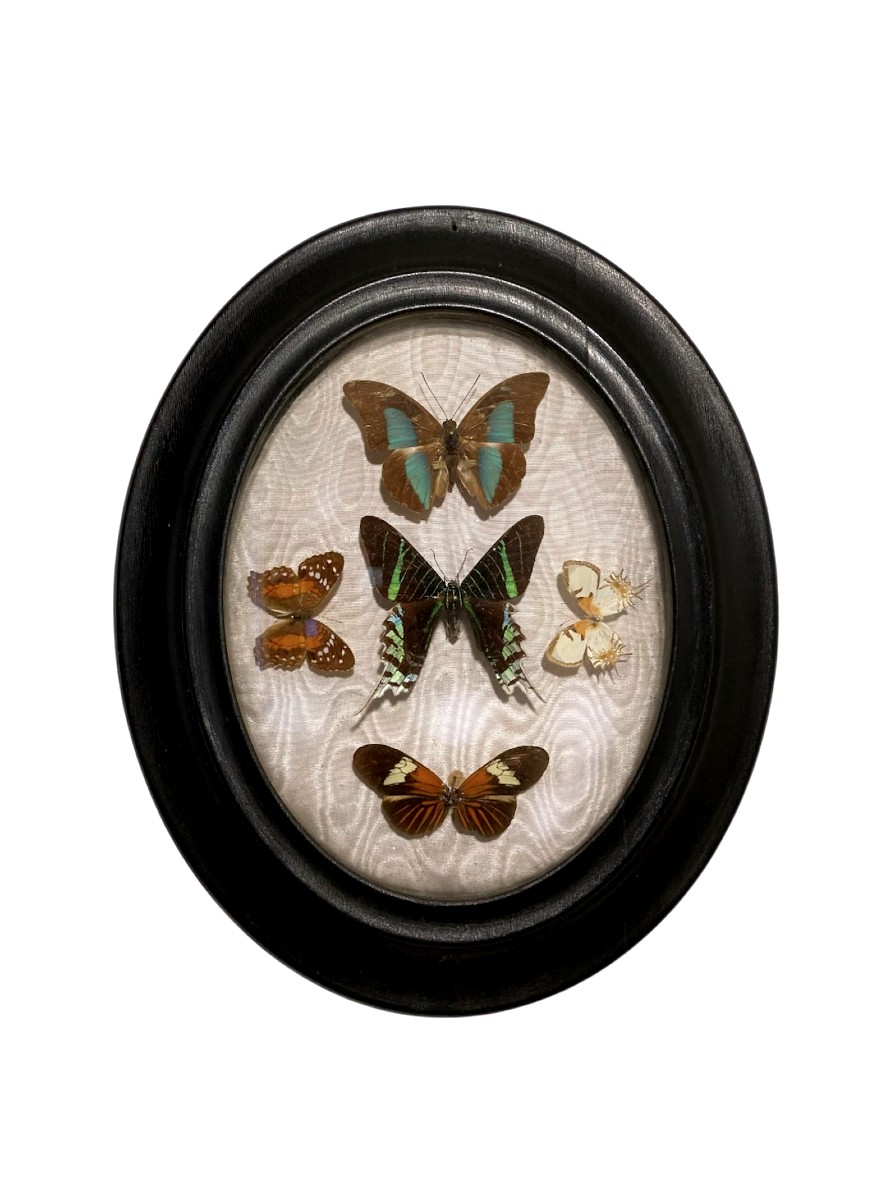
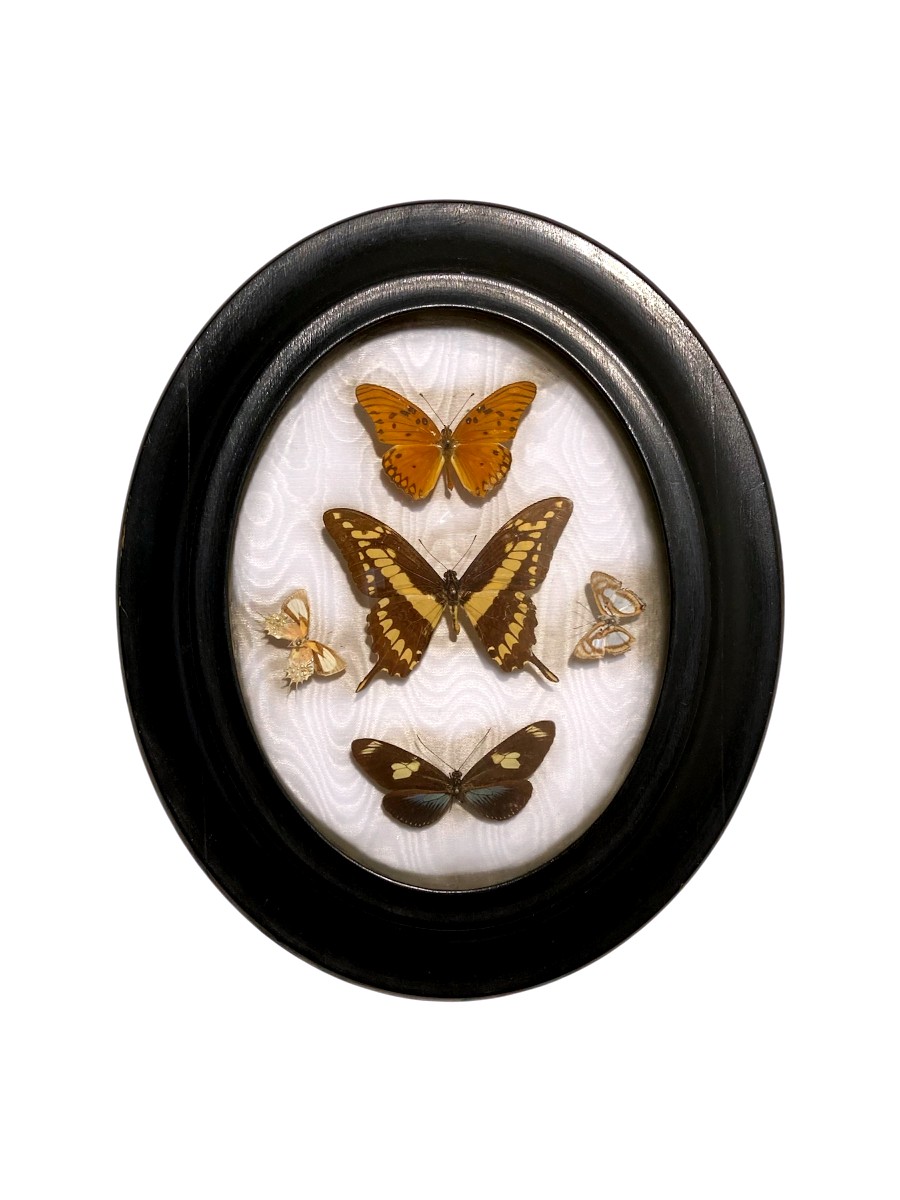
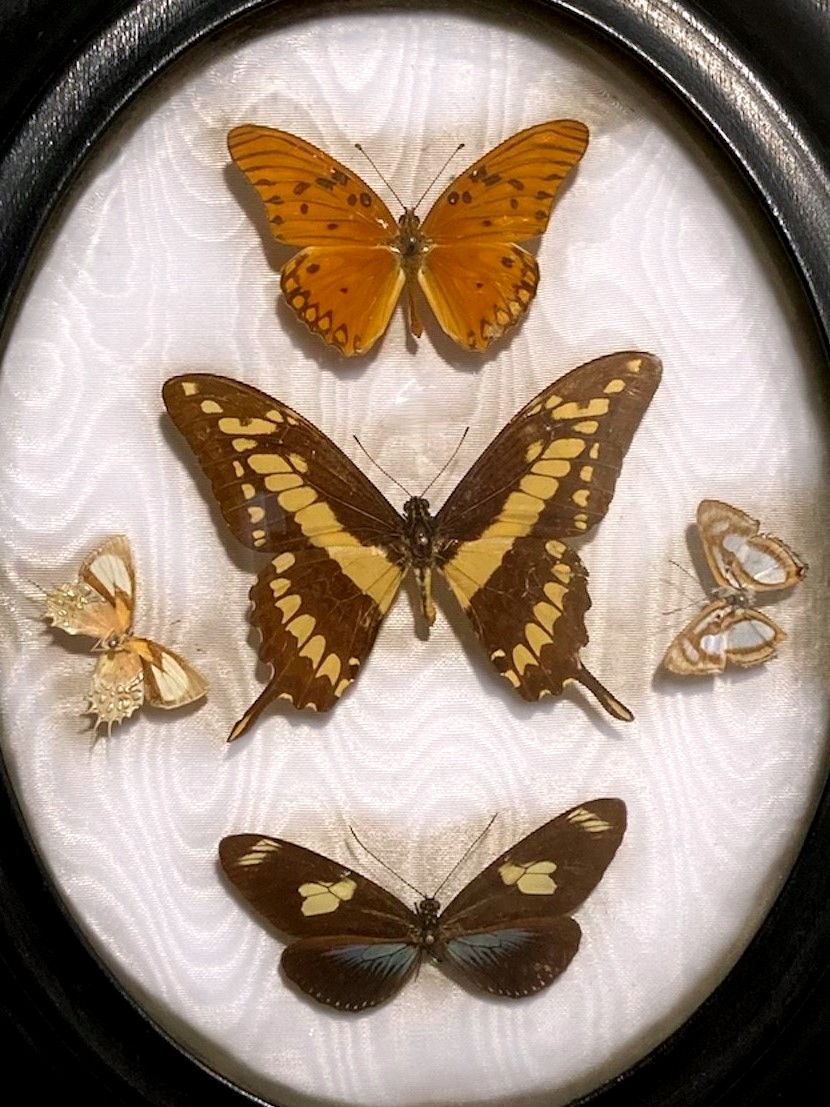
Set of three antique oval frames in molded blackened wood, each closed by an original curved glass. The compositions are mounted on a putty-colored moiré fabric background, providing a subtle contrast to the shimmering hues of the wings.
Each frame presents a harmonious arrangement of butterflies, arranged in an axial and balanced composition, typical of 19th-century naturalist displays.
The specimens, meticulously pinned and preserved, belong to diverse geographical origins, illustrating the entomological diversity sought in scholarly and decorative collections of the time.
Among the identified species are: Urania leilus (South America), remarkable for its iridescent green wings and rapid flight; Morpho menelaus, native to the tropical forests of South America, whose intense metallic blue wings became emblematic of 19th-century collections. Papilio garamas, known as the Schaus's Macaon, a large butterfly from Central and South America with black and yellow wings. Archaeoprepona demophon, with turquoise and brown highlights, is found in tropical America. And Papilio helenus, or Pitman's Helen, an Asian species remarkable for its light bands on a deep brown background.
During the 19th century, the creation of entomological collections experienced considerable growth, stimulated by voyages of exploration and the spread of scientific knowledge. Butterflies, due to the diversity of their shapes and colors, became favored objects of contemplation and study.
Frames such as this one are at the intersection of science and the decorative arts: they illustrate the rigor of taxidermy and classification while reflecting a Victorian aesthetic ideal that showcases nature.
Entomological compositions adorned natural history cabinets, bourgeois salons, and emerging provincial museums alike. They reflect the fascination with the exotic and fragile beauty of the natural world, in a century marked by encyclopedic curiosity.
Provenance: Château du Maine-et-Loire. Late 19th century (circa 1880–1900).
Dimensions: Large model: Height: 41 cm - Width: 33.5 cm - Two small models: Height: 33 cm - Width: 27.5 cm.
Good overall condition. Original glass intact; stable mounts and well-preserved butterflies. Some slight wear consistent with the age and nature of the material.
Through their balanced composition and the quality of preservation of the specimens, these frames represent a representative example of entomological and decorative practices of the late 19th century. They embody the spirit of the late cabinet of curiosities, at the crossroads between scientific study, private collection, and decorative art object.
Set of three antique oval frames in molded blackened wood, each closed by an original curved glass. The compositions are mounted on a putty-colored moiré fabric background, providing a subtle contrast to the shimmering hues of the wings.
Each frame presents a harmonious arrangement of butterflies, arranged in an axial and balanced composition, typical of 19th-century naturalist displays.
The specimens, meticulously pinned and preserved, belong to diverse geographical origins, illustrating the entomological diversity sought in scholarly and decorative collections of the time.
Among the identified species are: Urania leilus (South America), remarkable for its iridescent green wings and rapid flight; Morpho menelaus, native to the tropical forests of South America, whose intense metallic blue wings became emblematic of 19th-century collections. Papilio garamas, known as the Schaus's Macaon, a large butterfly from Central and South America with black and yellow wings. Archaeoprepona demophon, with turquoise and brown highlights, is found in tropical America. And Papilio helenus, or Pitman's Helen, an Asian species remarkable for its light bands on a deep brown background.
During the 19th century, the creation of entomological collections experienced considerable growth, stimulated by voyages of exploration and the spread of scientific knowledge. Butterflies, due to the diversity of their shapes and colors, became favored objects of contemplation and study.
Frames such as this one are at the intersection of science and the decorative arts: they illustrate the rigor of taxidermy and classification while reflecting a Victorian aesthetic ideal that showcases nature.
Entomological compositions adorned natural history cabinets, bourgeois salons, and emerging provincial museums alike. They reflect the fascination with the exotic and fragile beauty of the natural world, in a century marked by encyclopedic curiosity.
Provenance: Château du Maine-et-Loire. Late 19th century (circa 1880–1900).
Dimensions: Large model: Height: 41 cm - Width: 33.5 cm - Two small models: Height: 33 cm - Width: 27.5 cm.
Good overall condition. Original glass intact; stable mounts and well-preserved butterflies. Some slight wear consistent with the age and nature of the material.
Through their balanced composition and the quality of preservation of the specimens, these frames represent a representative example of entomological and decorative practices of the late 19th century. They embody the spirit of the late cabinet of curiosities, at the crossroads between scientific study, private collection, and decorative art object.
650 €
Period: 19th century
Style: Other Style
Condition: Excellent condition
Width: 33.5 et 27.5
Height: 41 et 33
Reference (ID): 1584331
Availability: In stock
Print