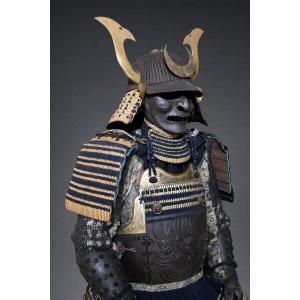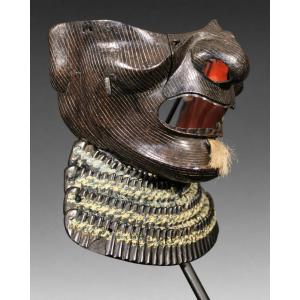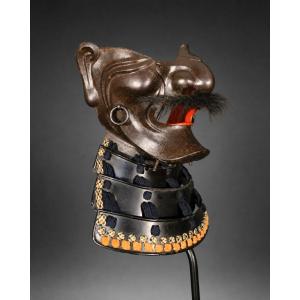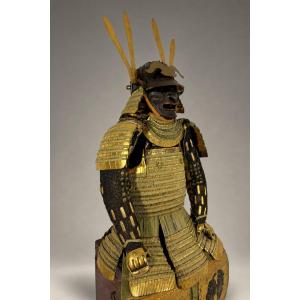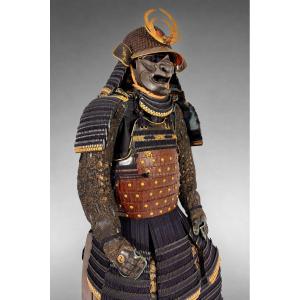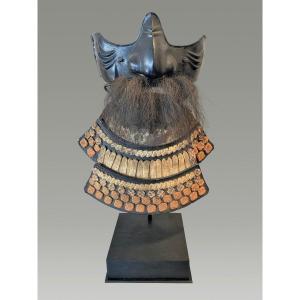
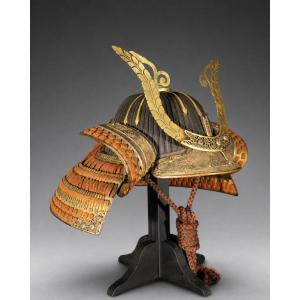


Suji Bachi Kabuto Kabuto - Myochin School , Edo
Suji bachi kabuto atrib. Myochin, Edo period (1603 - 1868)
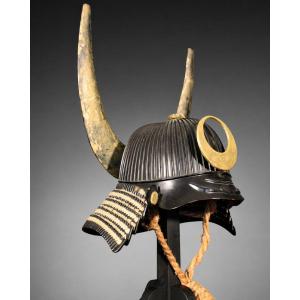
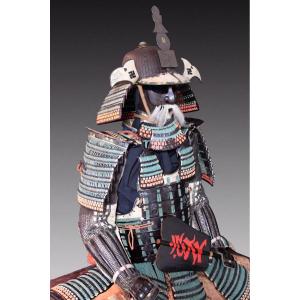
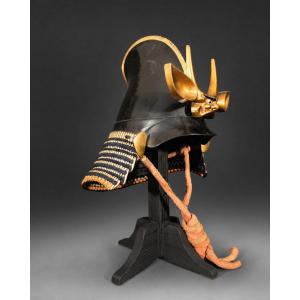
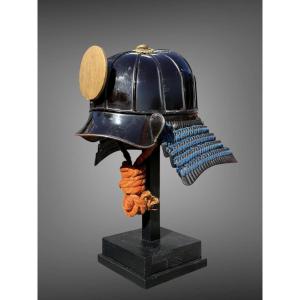
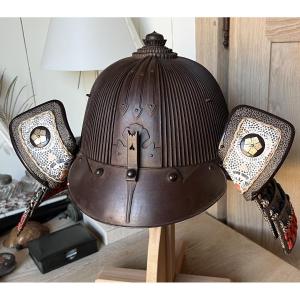
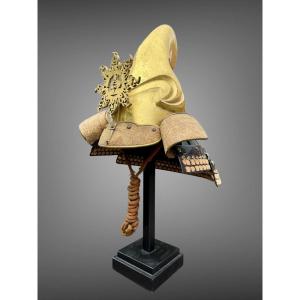
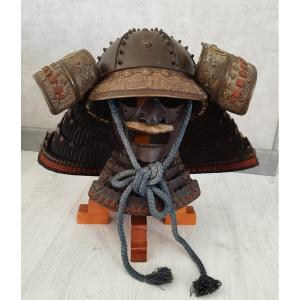
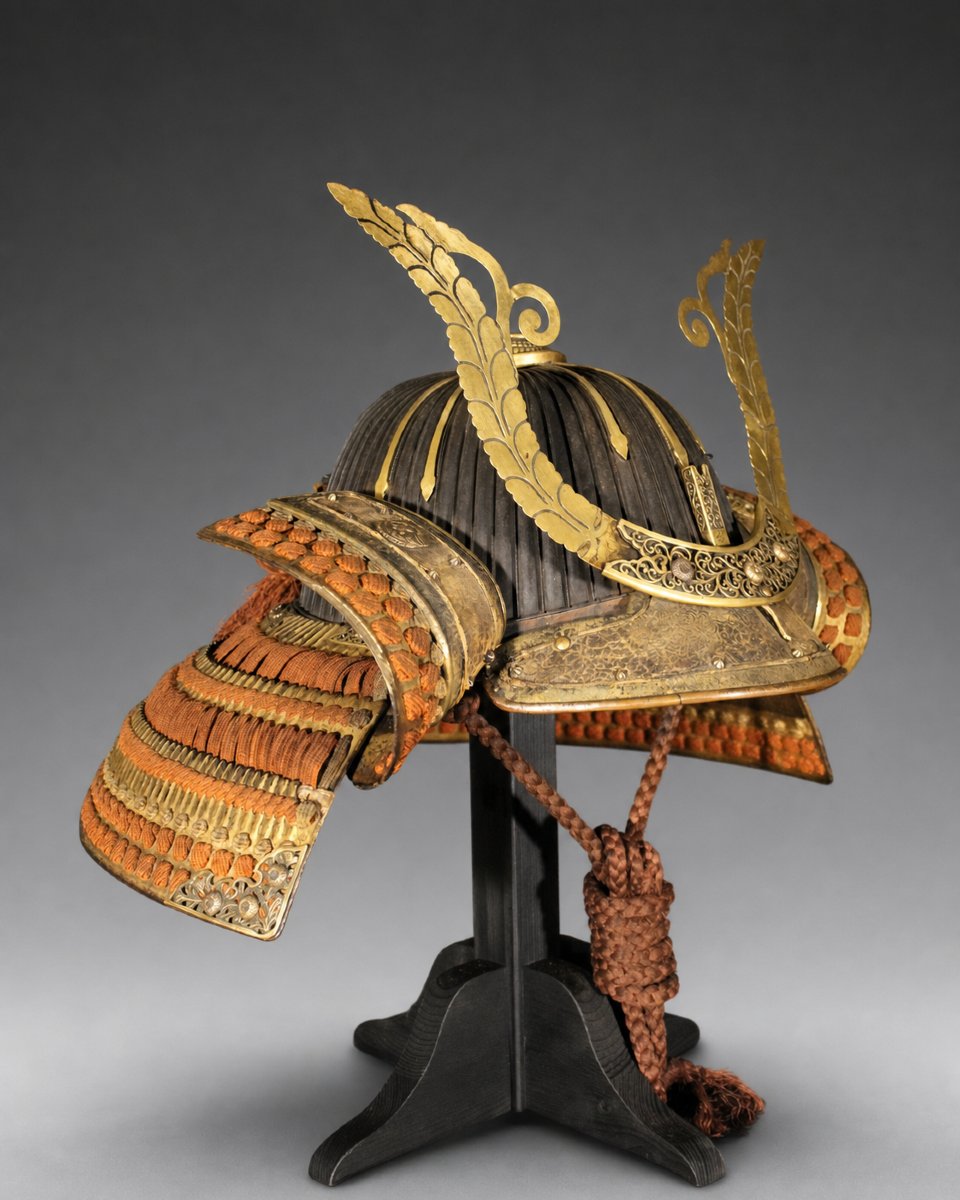
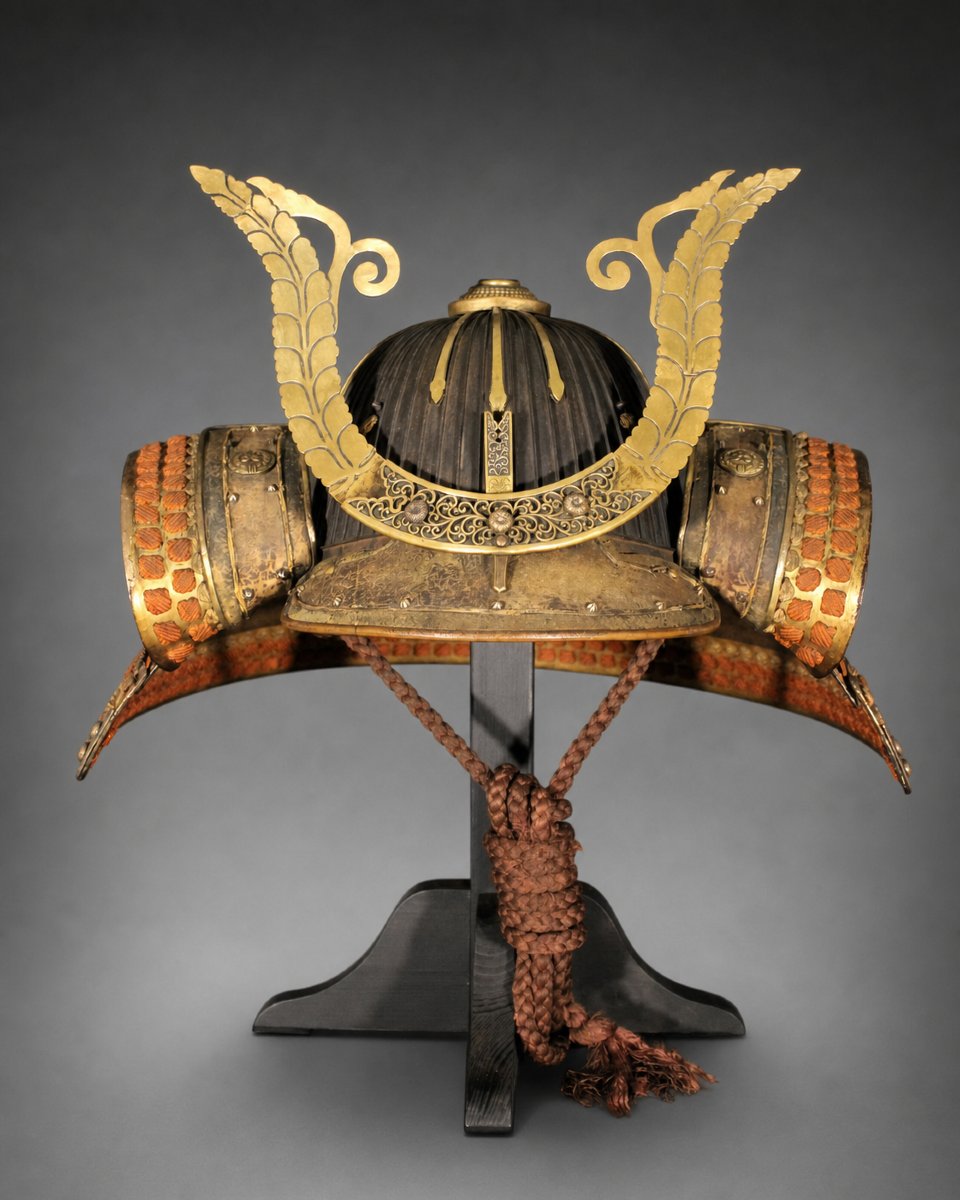
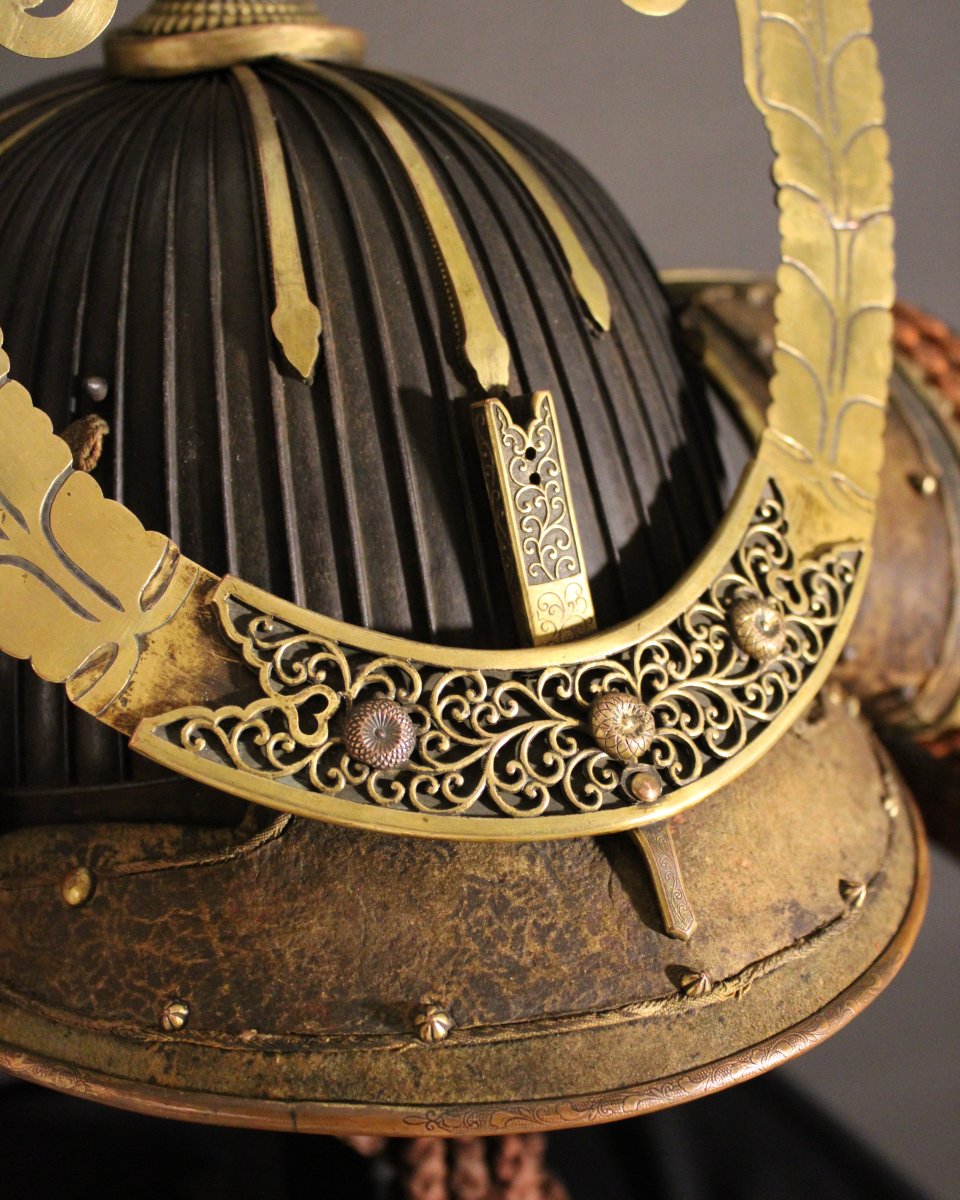
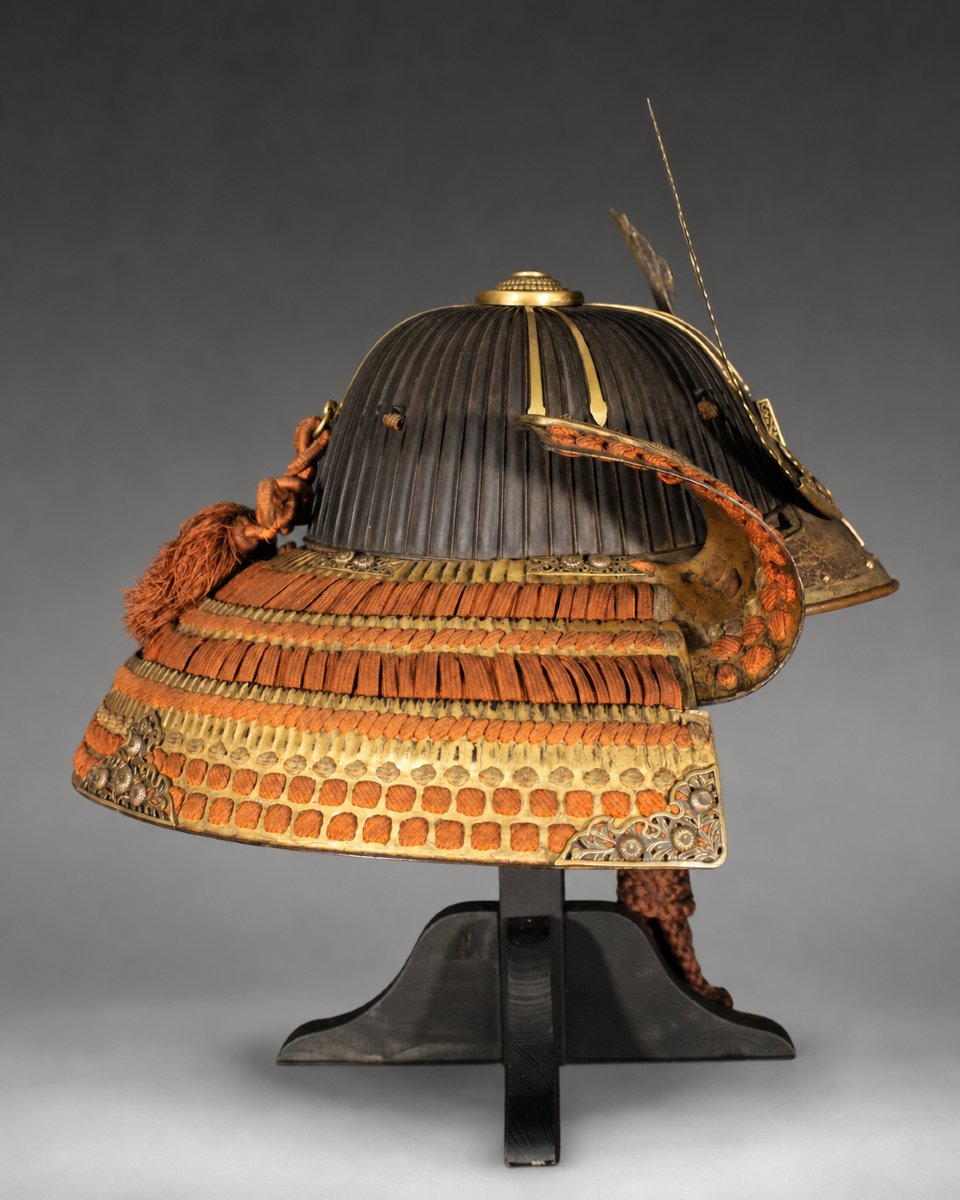
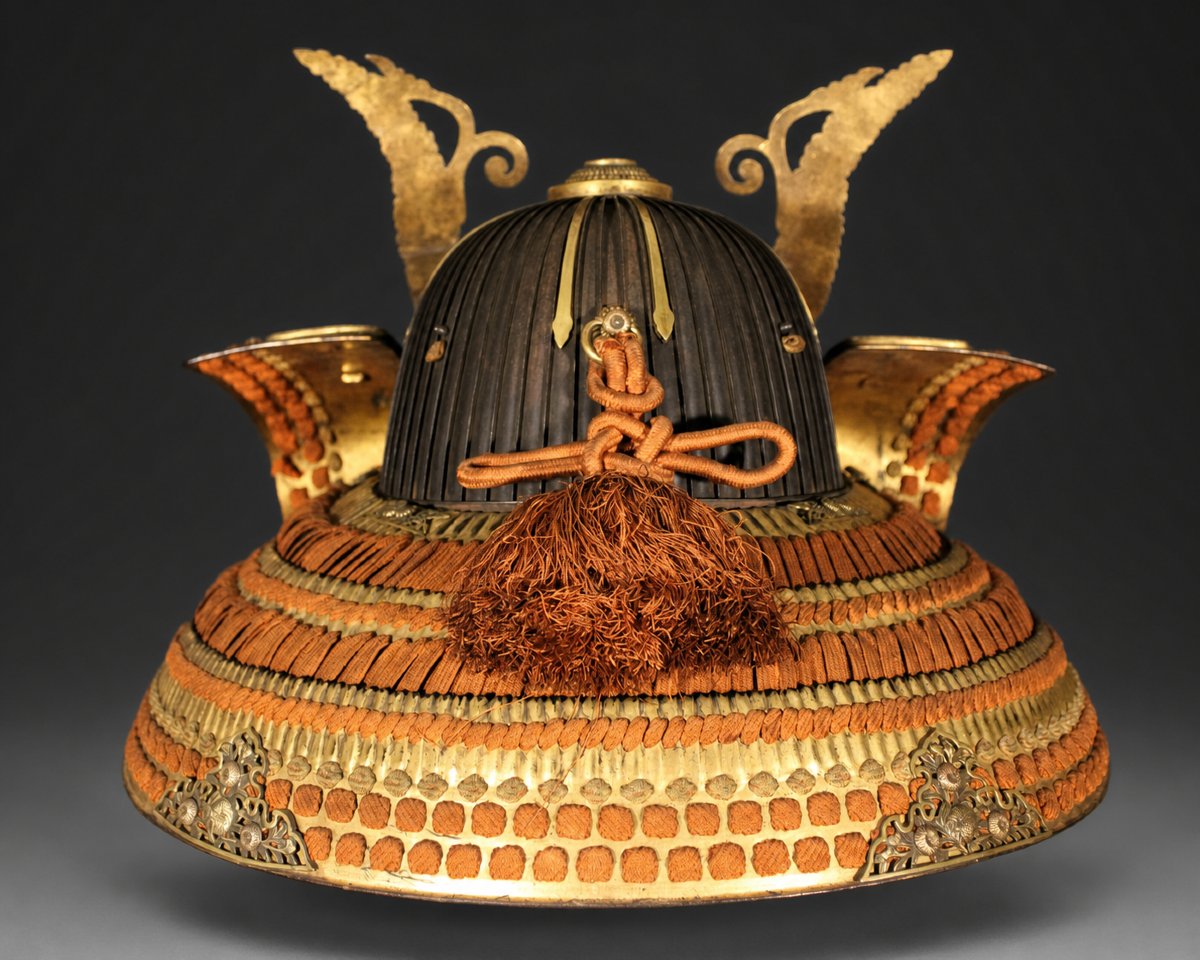
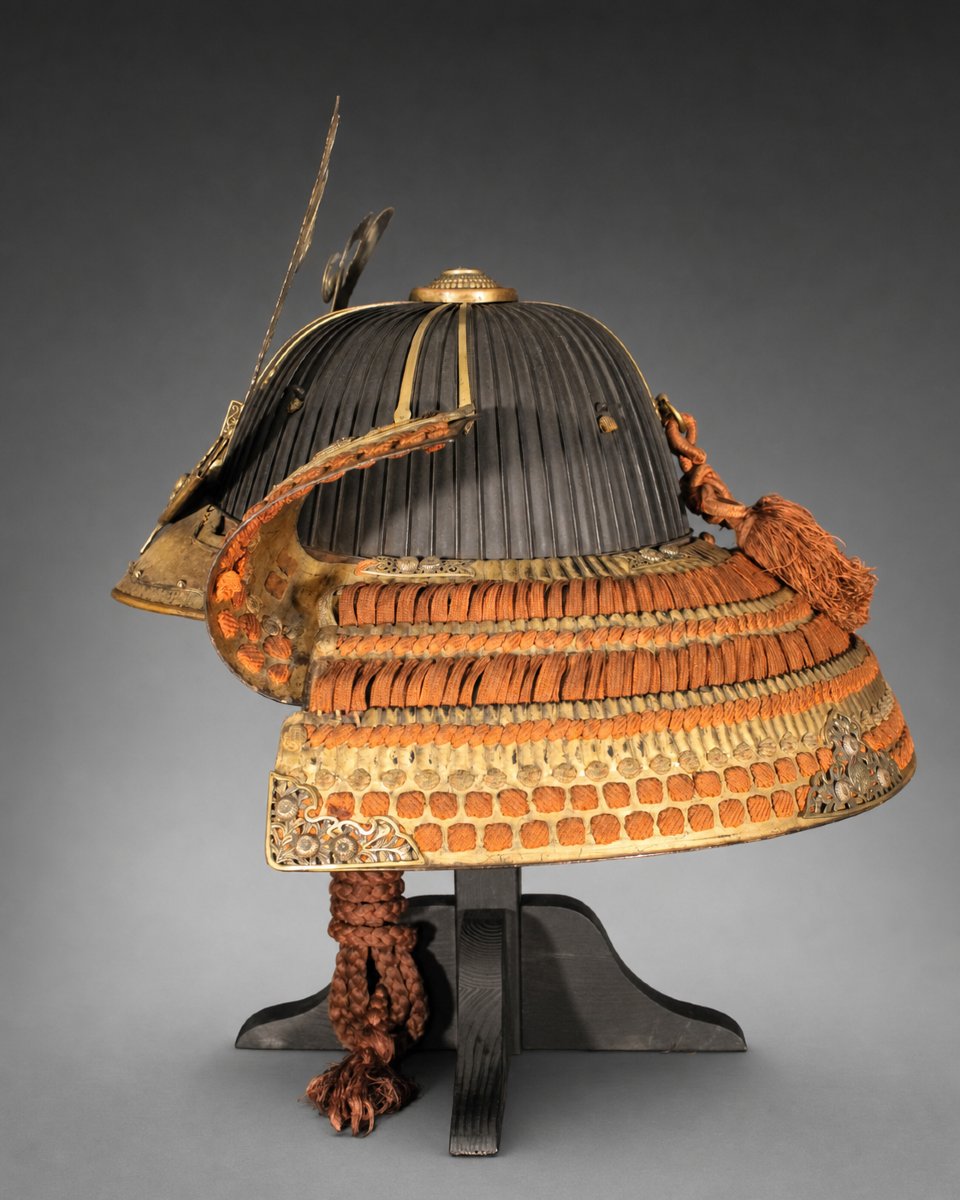
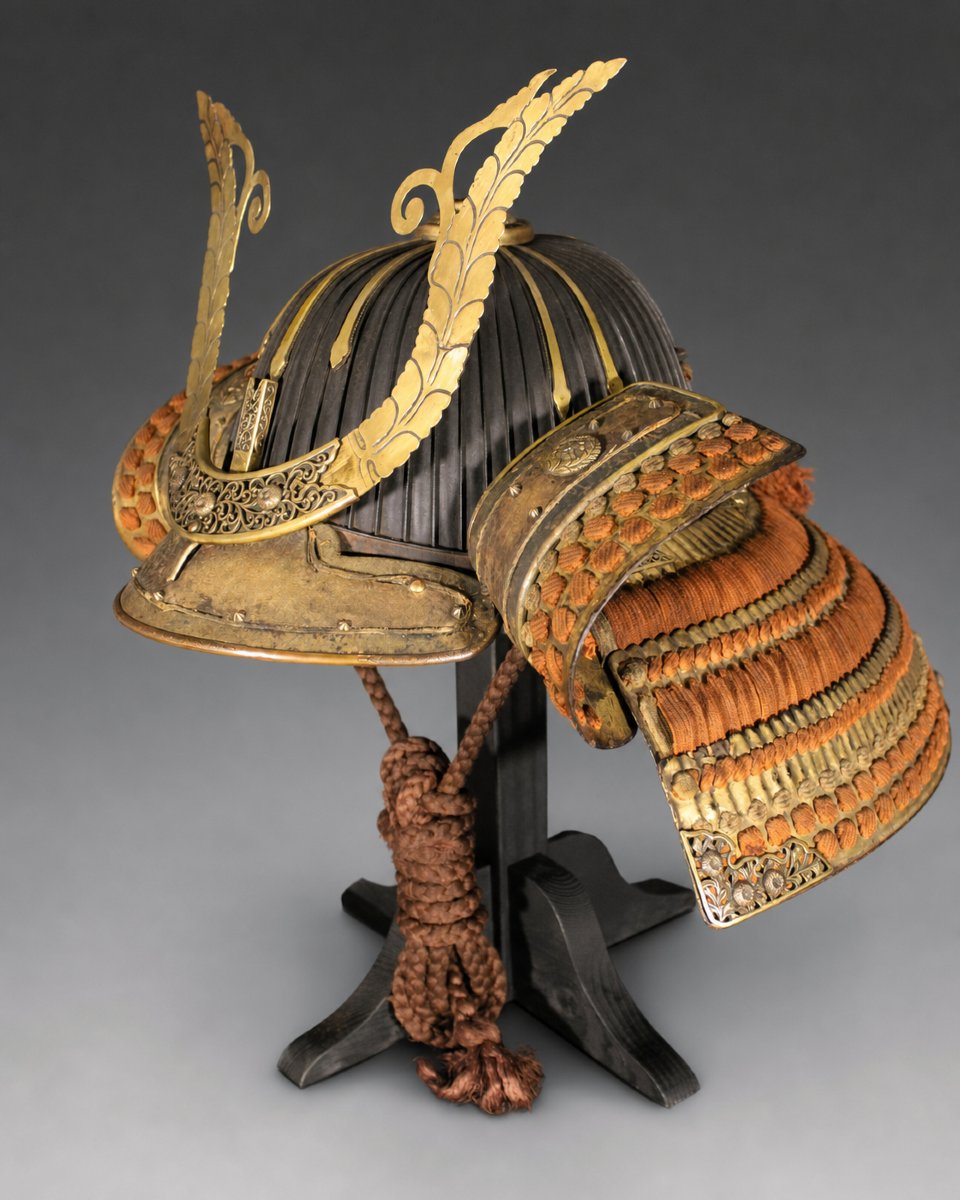
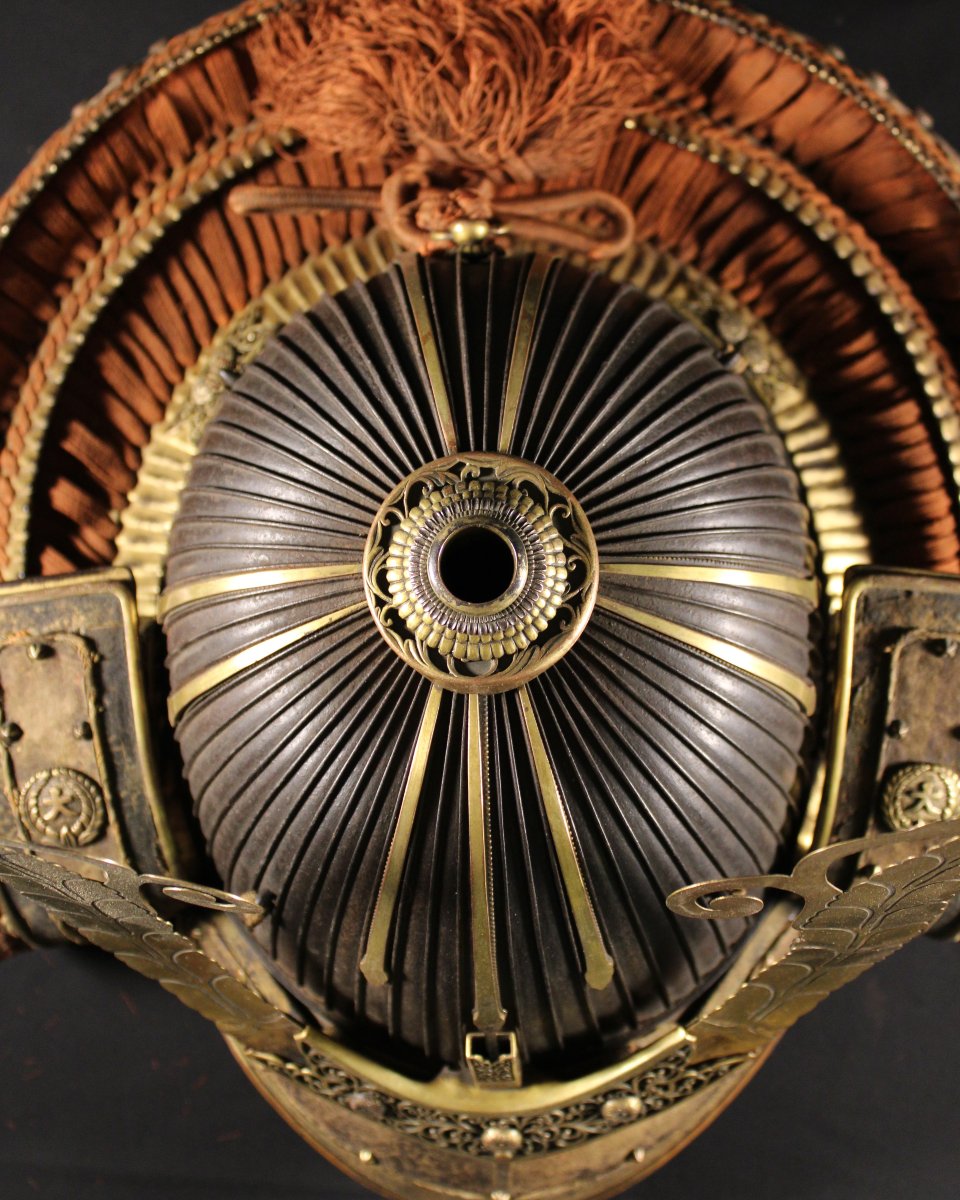
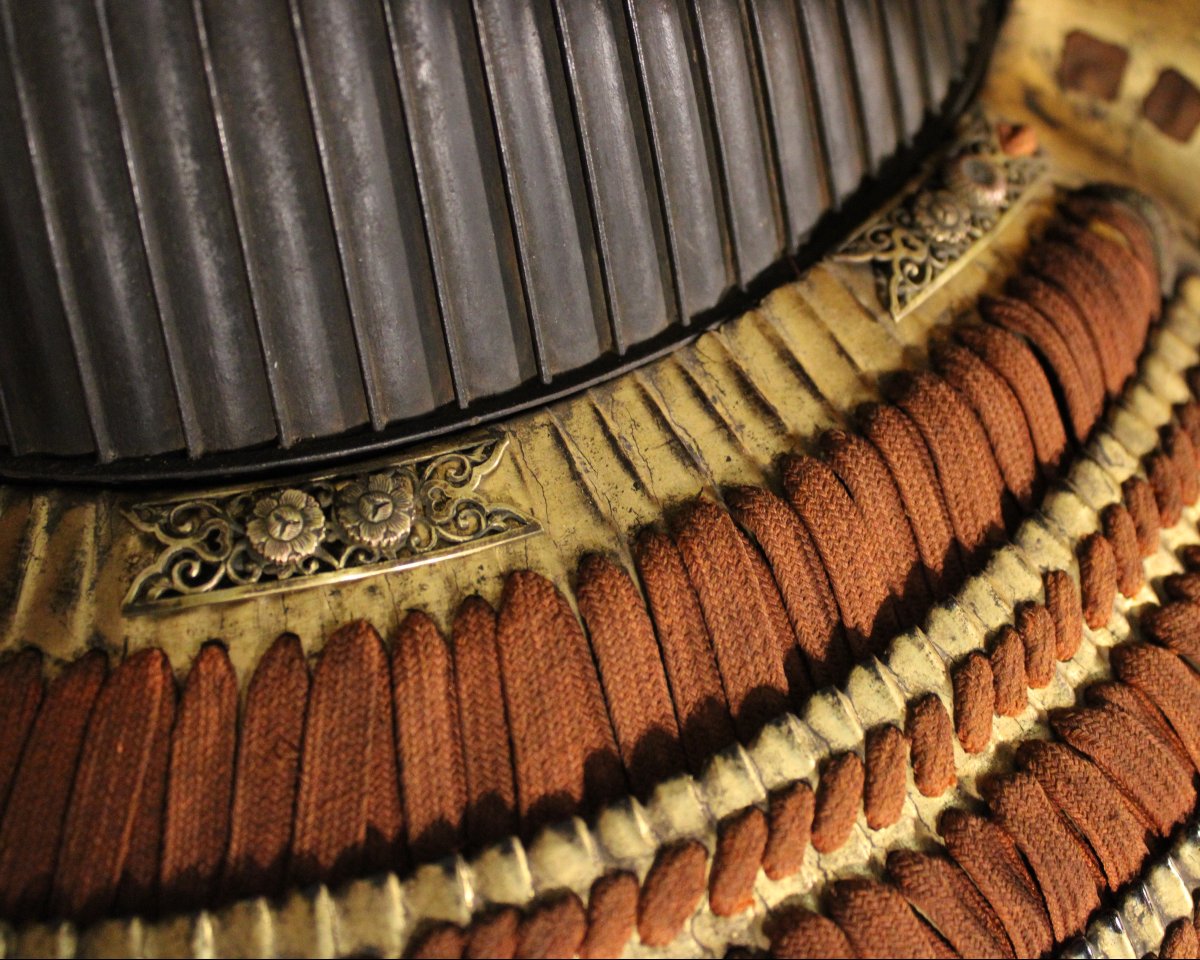
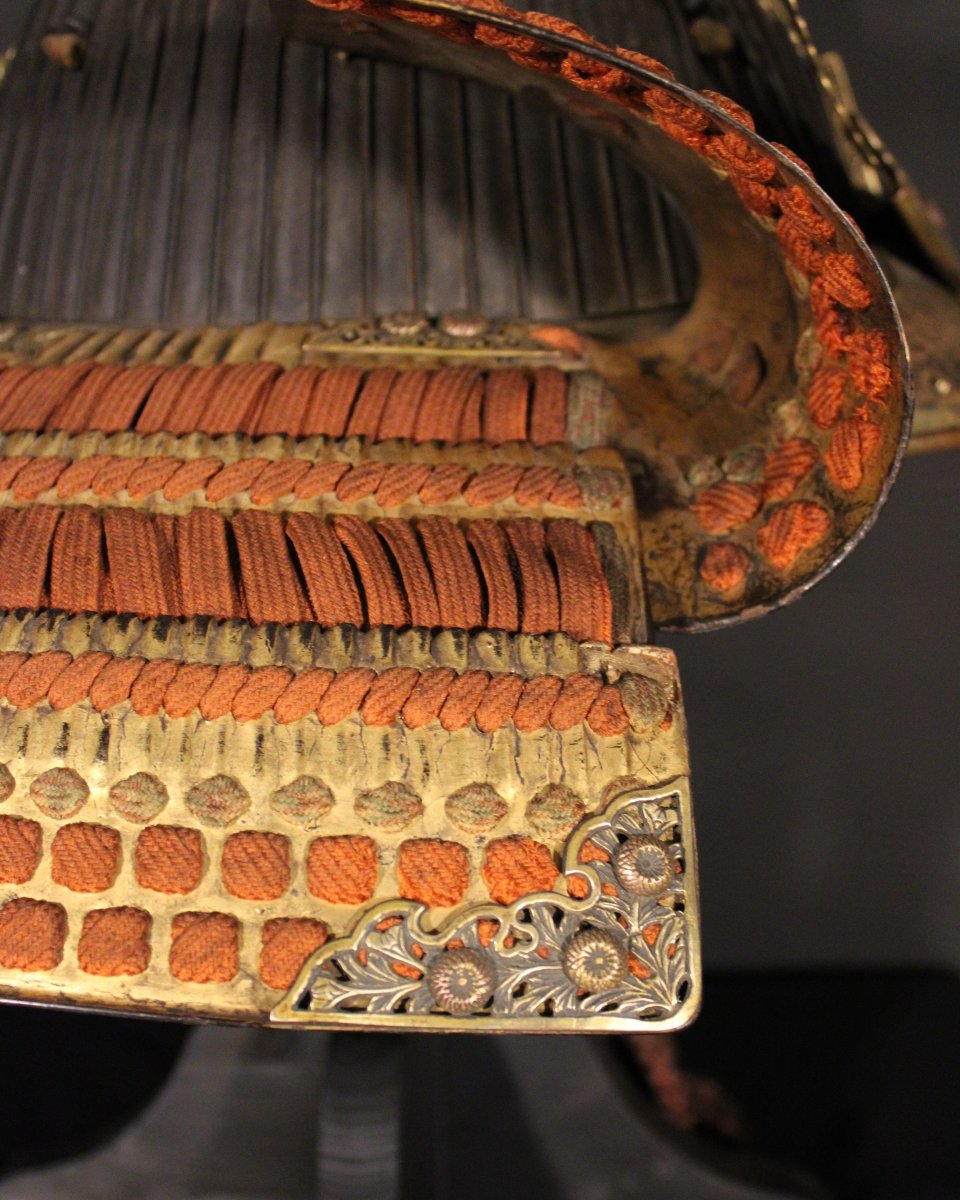
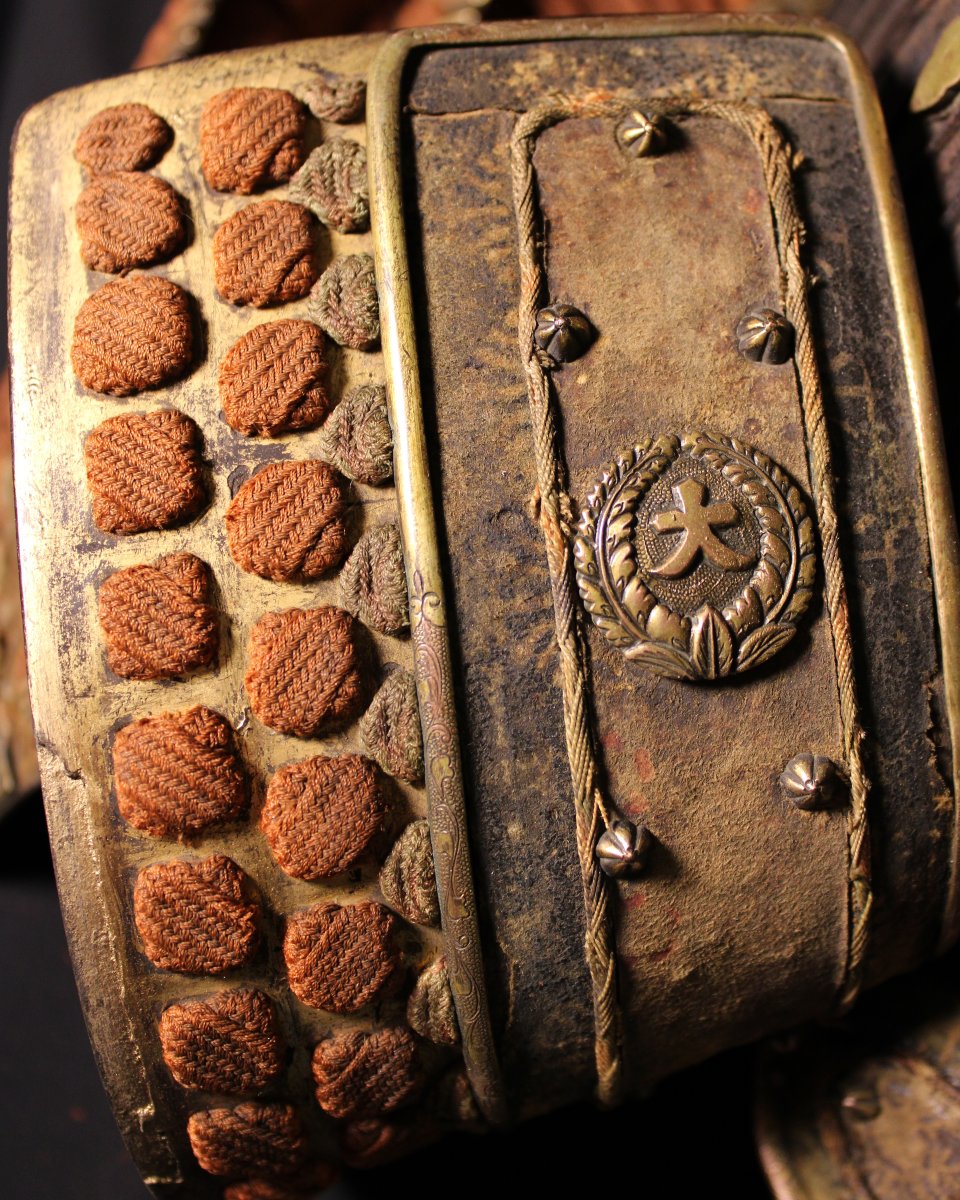
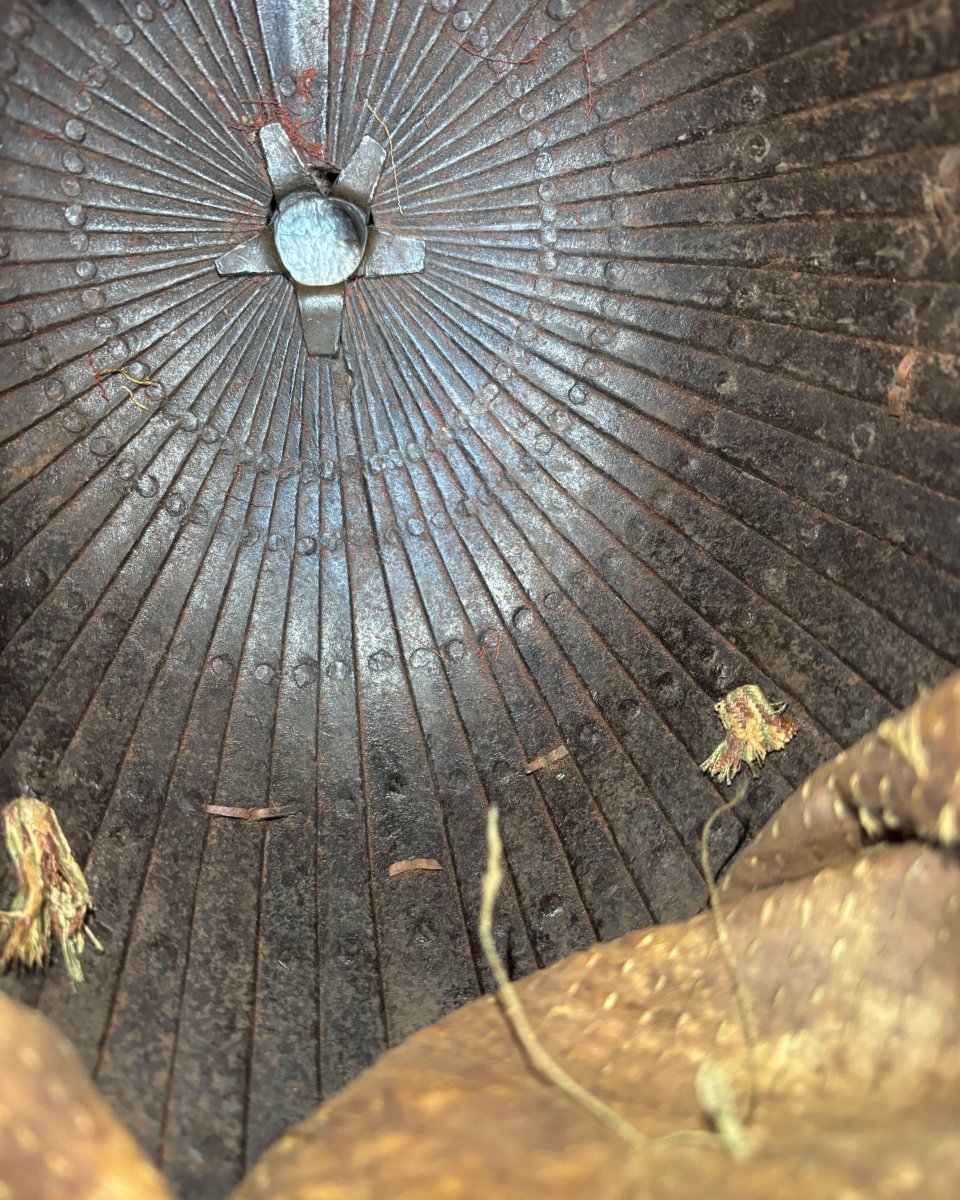
This is a very heavy helmet, precisely made for true battle . In fact, it is the heaviest kabuto ever found in the Samurai gallery. The bowl in the form of heichōzan bachi is in the sabiji design and is made of 62 plates, complemented by a nice tehen kanamono and nine gilded shinodare on four sides of the bowl. The fukigaeshi and mabizashi are made with a decorative brass fukurin edge with partial printed egawa deerskin. The partially gilded fukigaeshi also features decorative mimi ito lacing and two pairs of finely chiseled metal plaques with the family crest kamon "agari fuji no daimonji" in the form of wisterias Fuji and the character "Dai" 大 meaning "large". This coat of arms was used as an alternative kamon by the Ōkubo 大久保 family from the Odawara domain in Sagami province. The family crest also corresponds to the maedate made of profiled and hammered brass in the form of wisteria grape blossoms.
The helmet decoration (mitsu kuwagata dai) is decorated with openwork (sukashi) in the form of "Chinese grasses" karakusa and "wild boar's eye" inome.
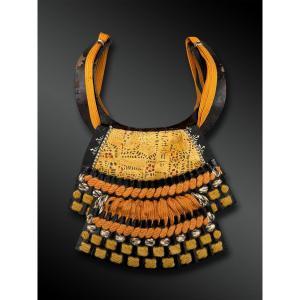
The four-piece shikoro of majestic appearance made of fluted surface parts is gilded and densely laced with odoshi ito and mimi ito of reddish orange color. It has four pieces of decorative fukurin fittings.
Period: 18th century
Style: Asian art
Condition: En l'etat
Material: Wrought iron
Reference (ID): 1770387
Availability: In stock