

Tetsu Kuro Urashi Nuri Gomaidō Gusoku Japanese Weapon, Edo Era, Mid-19th Century.
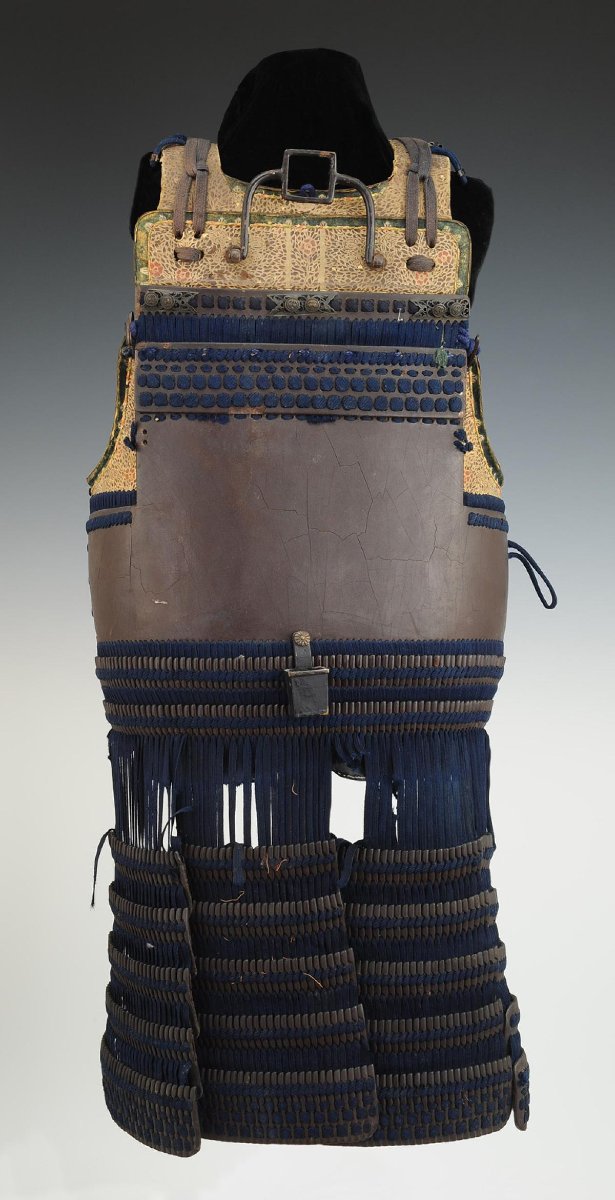
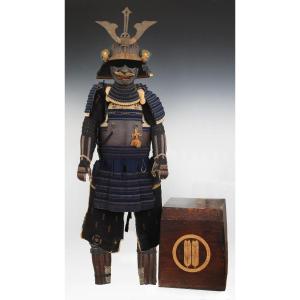
JAPANESE ARMOUR OF TYPE TETSU KURO URASHI NURI GOMAIDŌ GUSOKU WITH THE ARMS OF THE “MARU NI NARABI TAKANOHA” FAMILY, EDO PERIOD, Mid-19th century. 33678
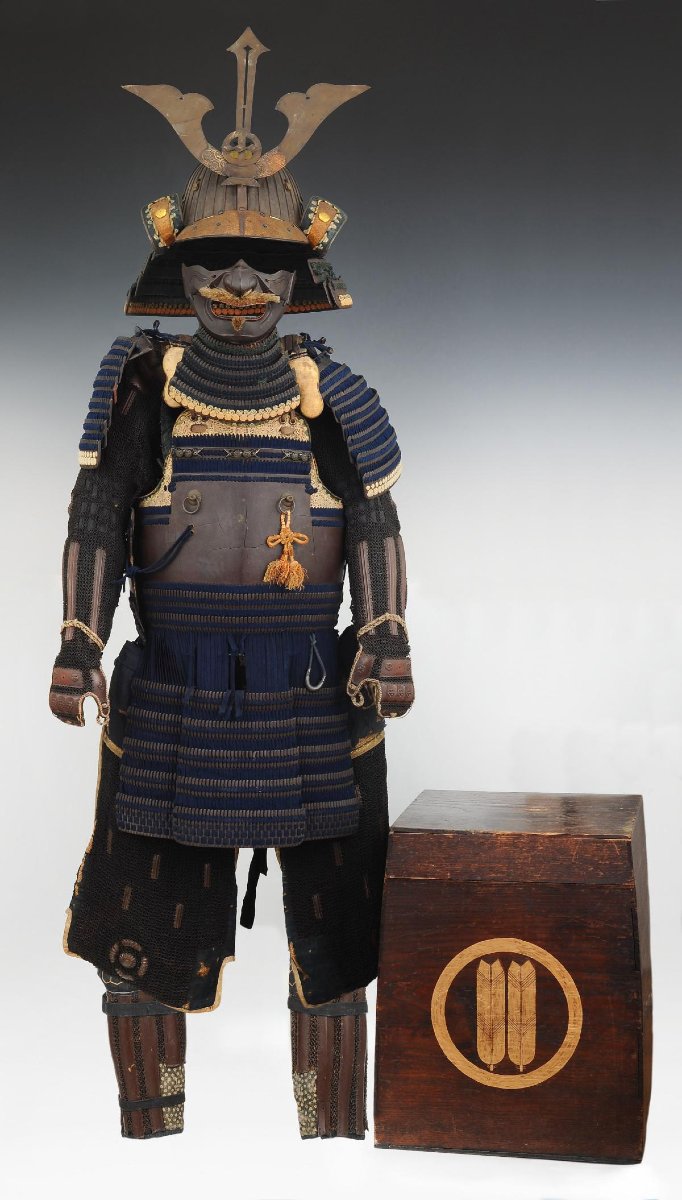
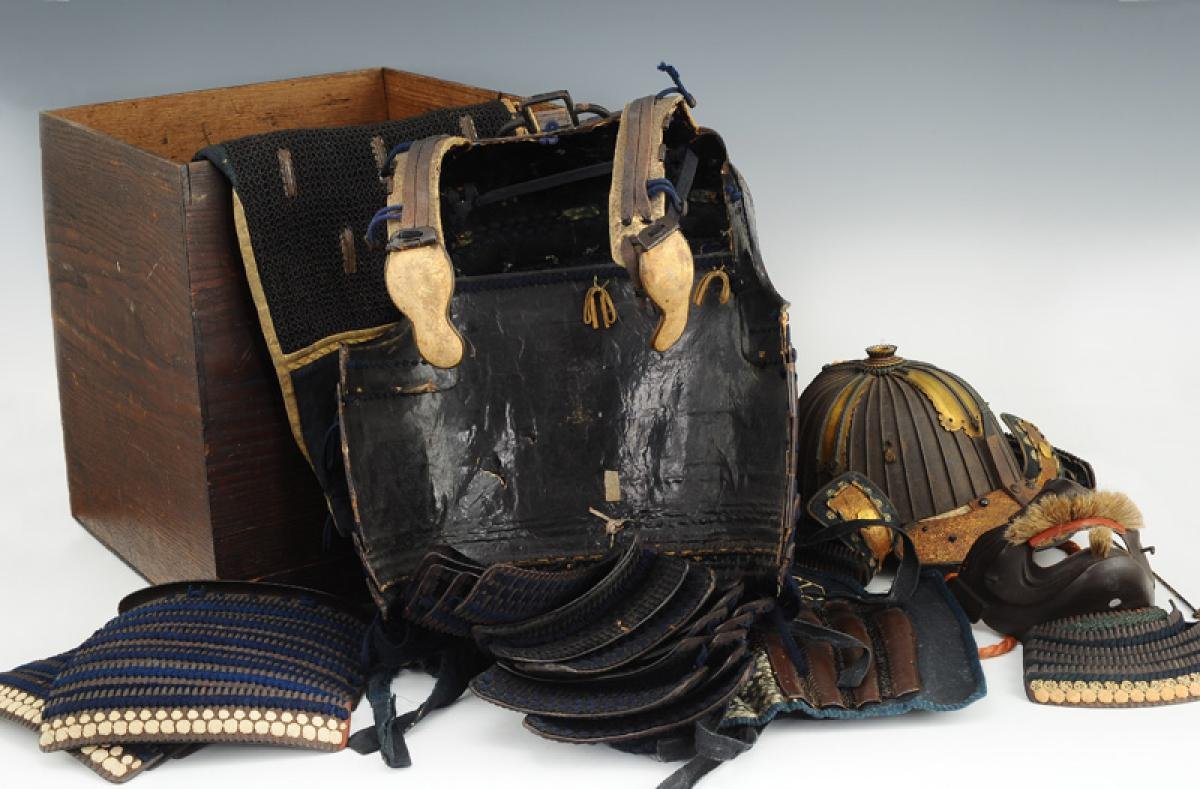
Set including helmet (Kabuto) and its ornament (Kuwagata), mask (Menpō), cuirass (Dō), apron with two reinforced thigh guards (Haidate Kawara), shoulder guards (Sōde), pair of arm covers (Yoshitsune Kōte), and knee guards (Sune Ate).
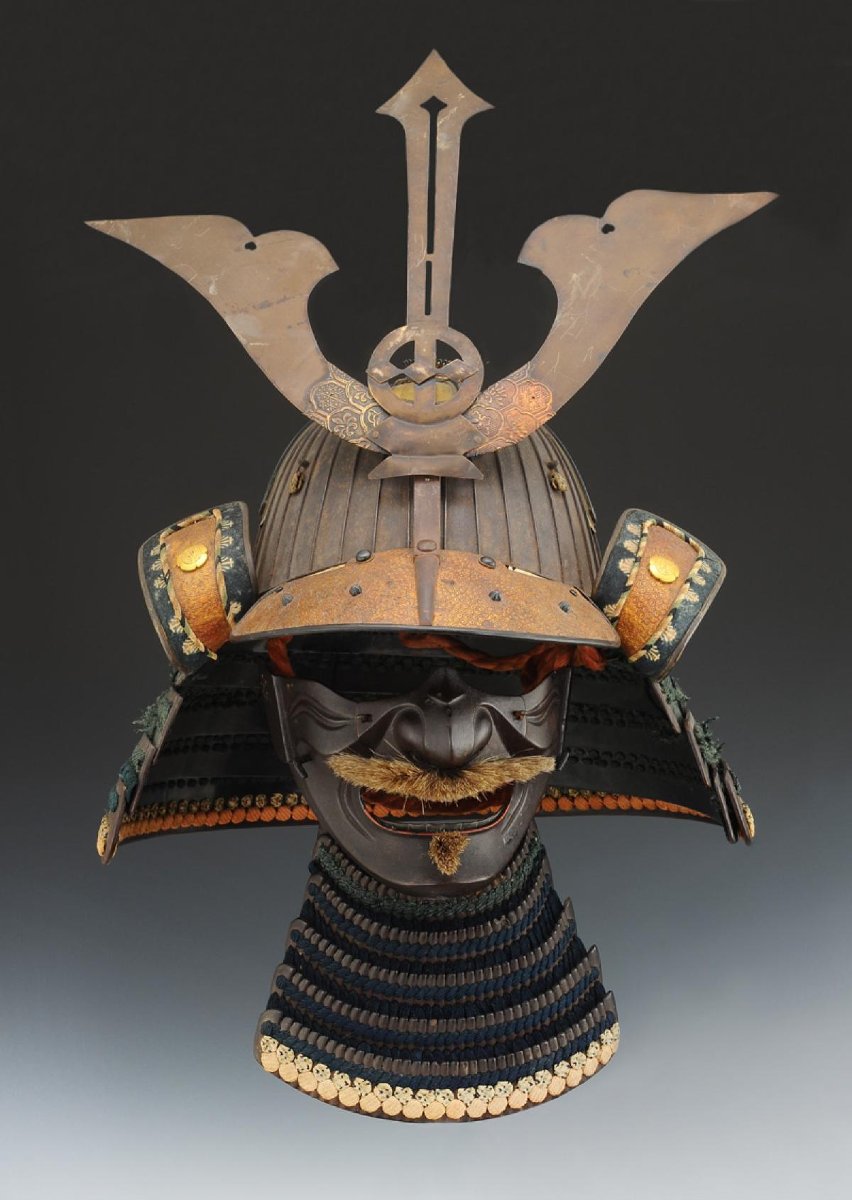
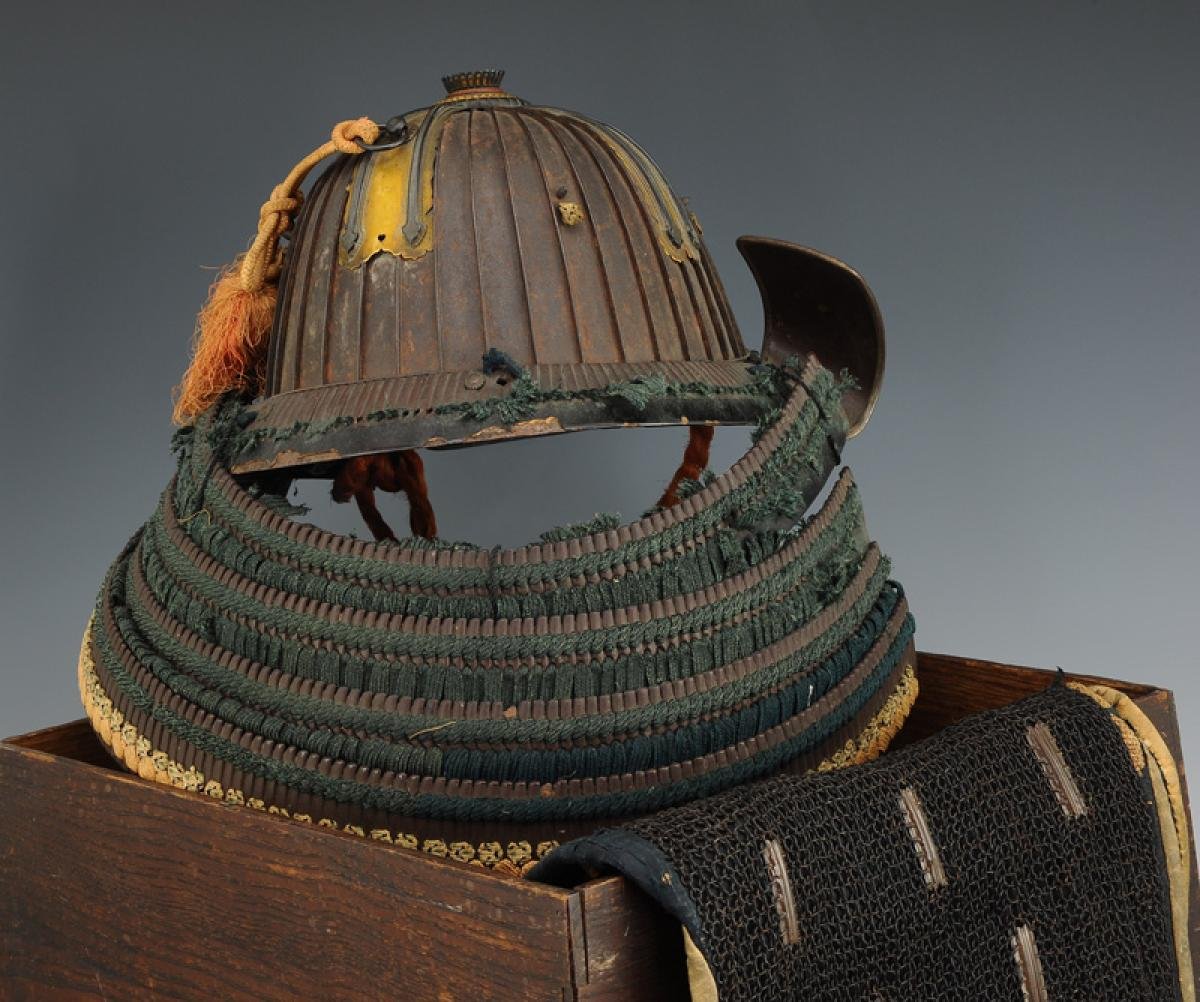
Helmet of rokujuni ken tetsu sabiji sujibachi Kabuto type with a crest (bashi) forged from 36 steel plates with converging edges at its opening (Tehen), retaining its internal lining of cloth bordered with leather. The visor (mabisashi) is made of steel covered with a thin copper plate onto which a piece for attaching a central ornament (maedate) is fixed. Front ornament depicting stylized horns, Kuwagata. Allusion to divine messenger deer, its base adorned with a high relief “shichi ressei”. Shinodare metal applied to the plates at the front.
The neck guard (shikoro) consists of five lacquered black plates that are held and articulated by a navy blue kebiki lacing style known as Saotome lesada. Ear guards (fukigaeshi), adorned with cherry blossom flowers crafted in copper. Includes a padded fabric interior and a chin strap made of orange silk thread for retention. The red lacquer inscription under the fabric is that of the owner, a well-known martial arts specialist from the late 19th century (Momoi Naomasa).
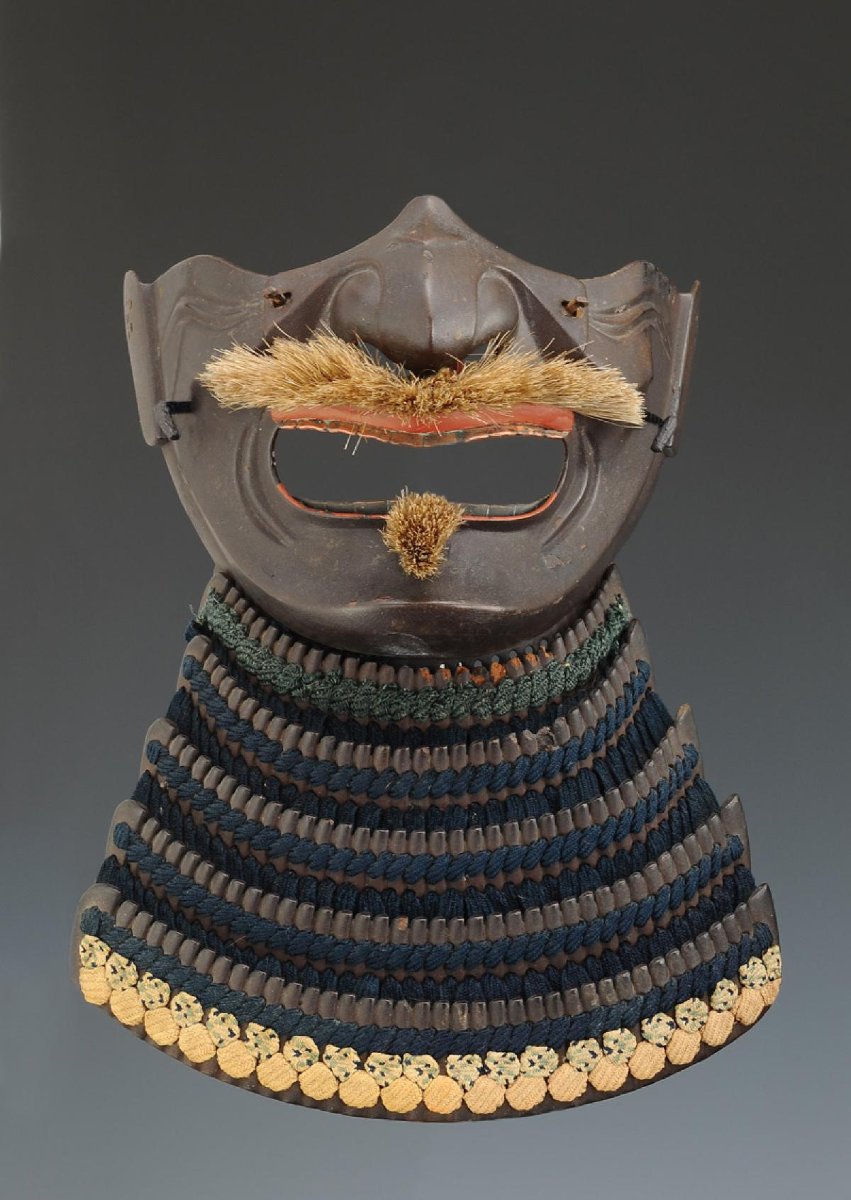
Menpō of ressei type, made of lacquered iron imitating rusted iron. Nose secured by two staples. Red lacquered interior of the mask. Throat guard (yo-dare kake) laced with dark blue silk.
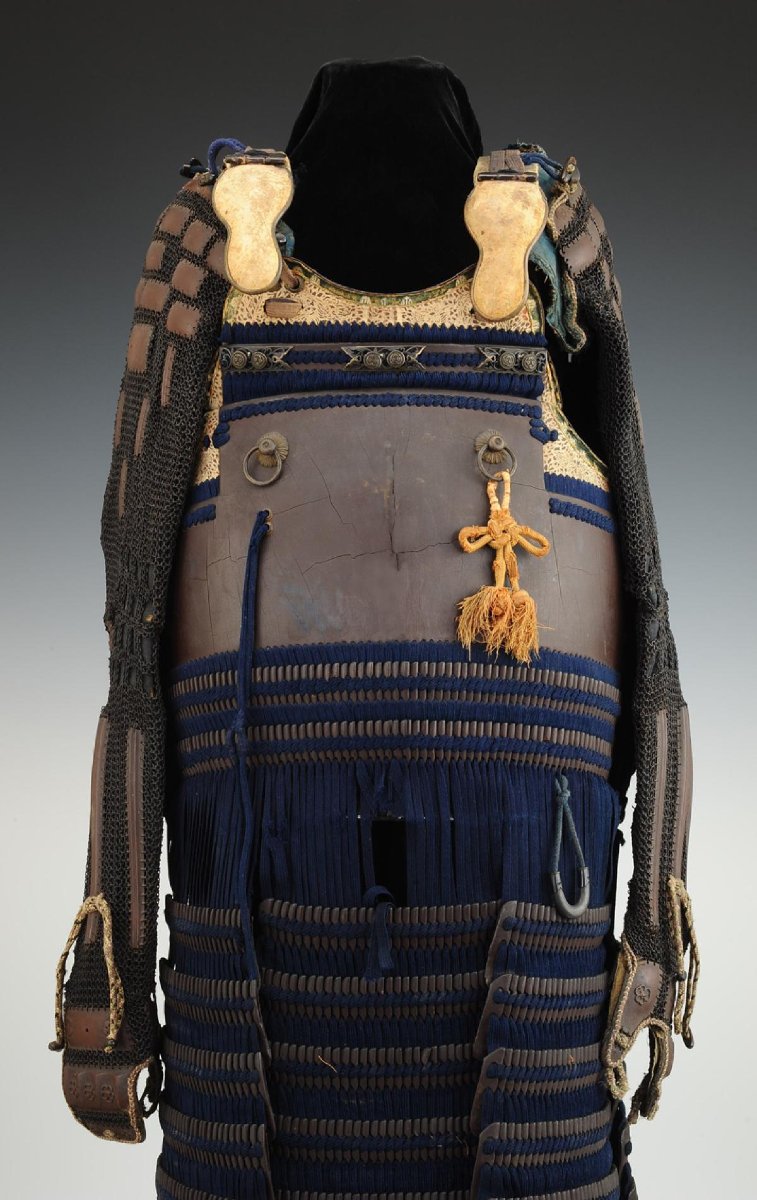
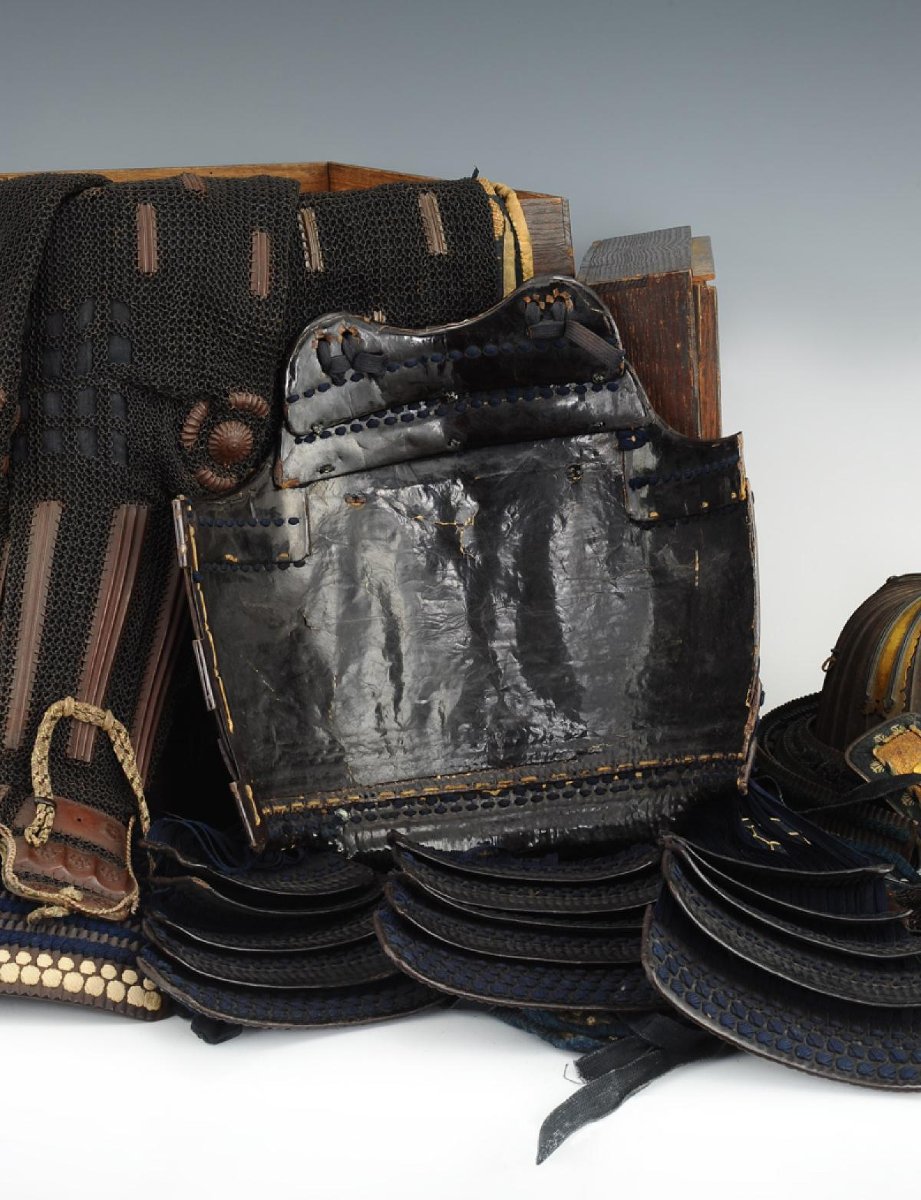
Cuirass of yokohagi okegawa dō type held by rigid straps covered with interlocking plate fabrics, black lacquered, flexible and lightweight, connected by dark blue silk lacing. Skirt (kusazuri) of black lacquered plates laced together with dark blue silk cords.
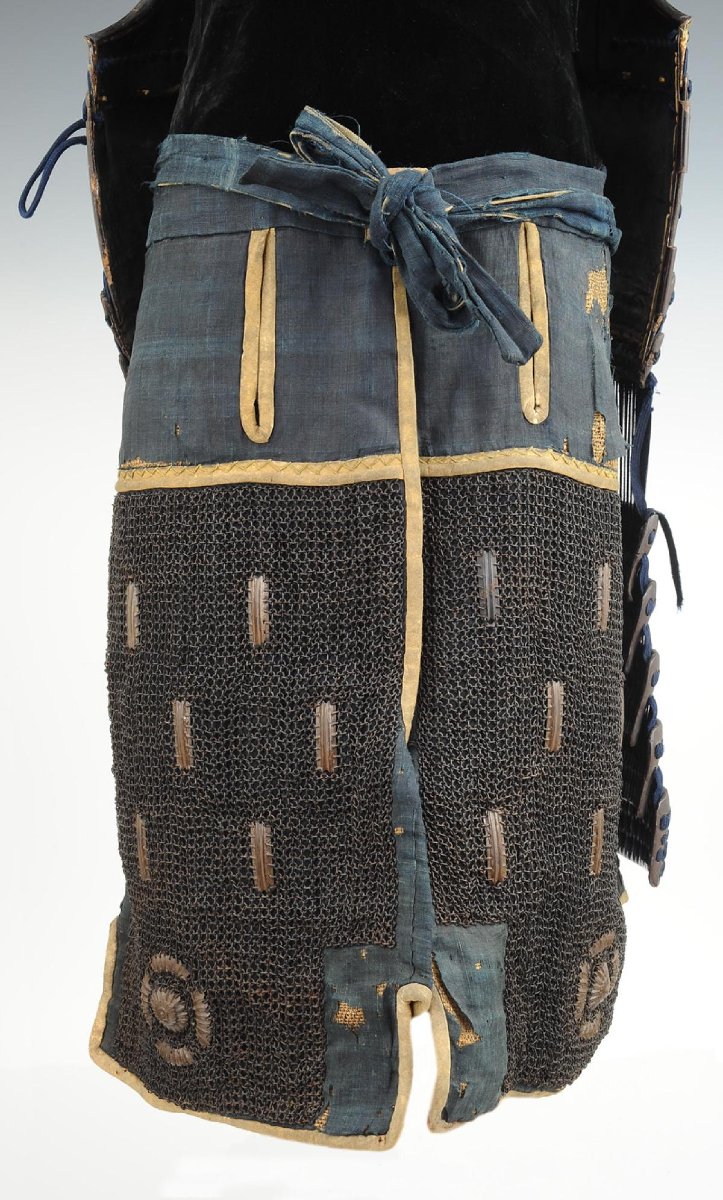
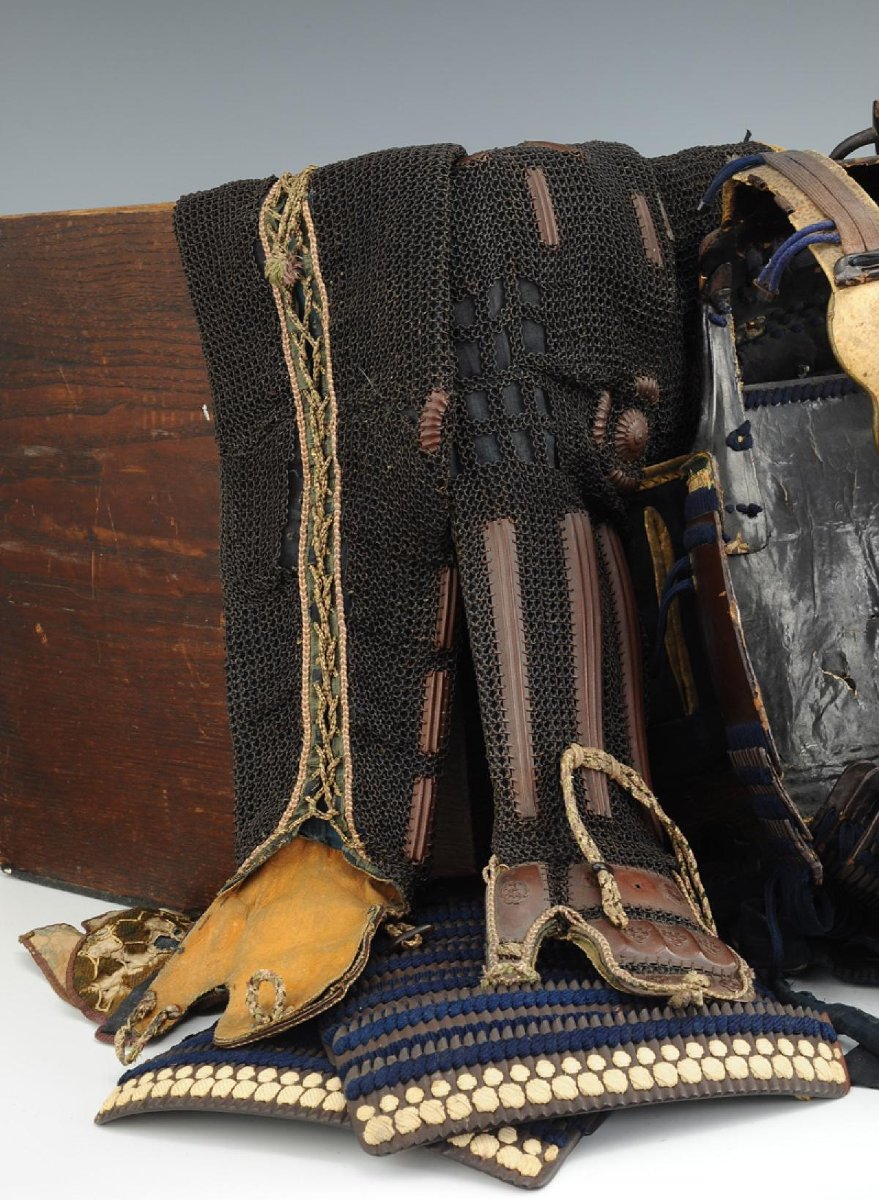
Apron with two reinforced thigh guards (Haidate Kawara) consisting of panels covering the left and right thighs, made of wide strips of silk fabric with a thick canvas lining covered with a metal mesh. At the upper part of the panels, approximately 10cm long notches called “Muchisashi” are made in the middle of each section for the positioning of other armor elements, bordered equidistantly by two printed tan leather bands, called “Egawa”, here without specific motifs known as “Kanji”. At the lower part, secured to the mail, there are small curved rectangular lacquered metal plates structured like traditional roof tiles called “Kawara”, of identical shapes and sizes. Fastened around the waist with a string, “Koshi himo”.
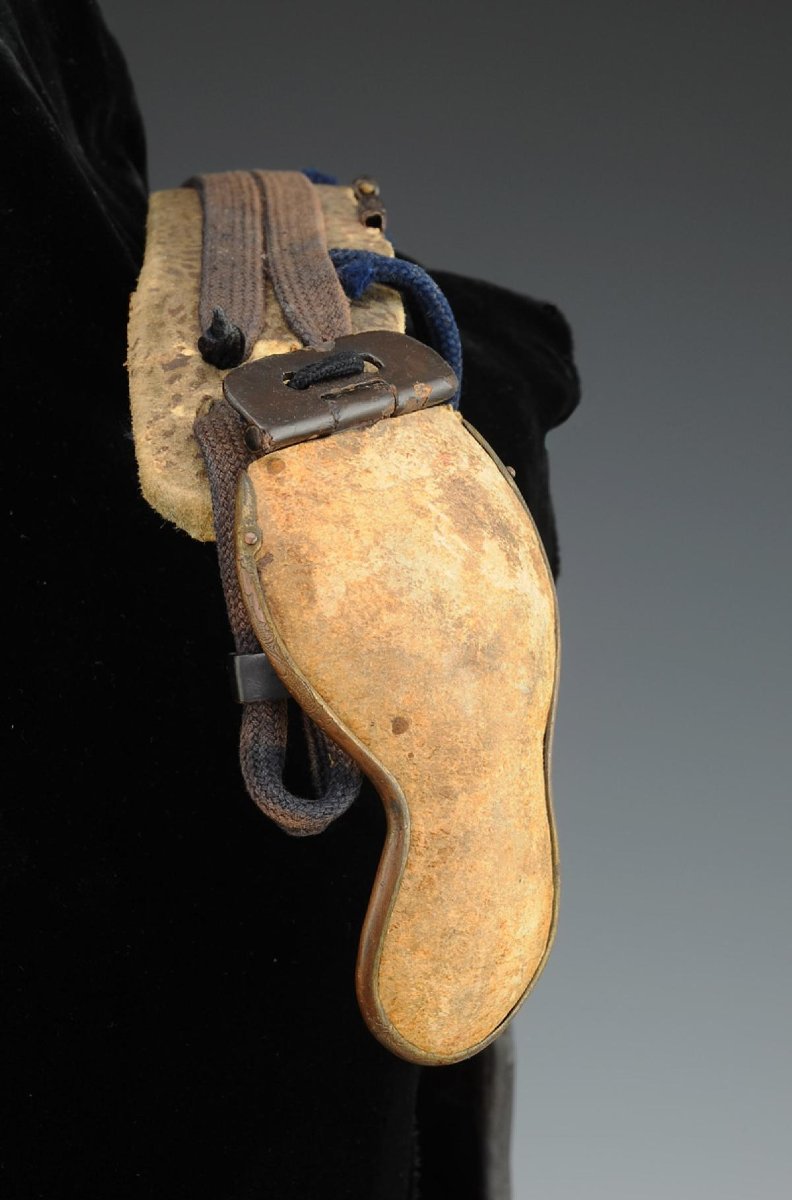
Shoulder guards (Tosei Sōde), including an upper plate known as “Kanmuri Ita” crown plate. Plate bordered by a decorative “Fukurin” band, here made of waved plates. At the back, a leather strap connects the “Sode” to the “Watagami” straps. Then metal plates coated with lacquer called “Kozane”, with the last plate adorned with rows of round fabric dots. Each plate connected by broader silk cord links forming a “Sugake” style lacing for good articulation.
Arm covers (Yoshitsune Kōte), originally worn in memory of Minamoto no Yoshitsune, samurai and general from the Heian and Kamakura period, 1159-1189.
Large and long dark blue silk fabric strip. The inner side of the trim is pierced with small holes for the passage of a silk cord to connect the two flaps and secure them on the forearm. The outer side is covered with a fine metal mesh of “kagomegata-gusari” type, made of hundreds of small brown lacquered steel circles linked together to form multiple squares. This type of “Kote” is characterized by metal protection plates on the forearm in the form of splints known as “Shino-kote”, here with three of such splints, plus smaller 5cm long splints on the upper arm called “Ikada” arranged in a staggered manner, all widely spaced and closely fastened. Elbow disk, in the shape of a gourd known as “Hyôtan Gane” or gourd plate, composed of a bent and ribbed metal plate framed by four similarly bent and ribbed rectangular pieces called “Ikada”.
D-shaped protection for the knuckles known as “Tekkô”.
At the upper part, a lacquered steel plate “Kanmuri ita”, pierced with two holes for the passage of a cord and two horn toggles known as “Kohaze” for attachment to the shoulder guards “Watagami”. Links to the wrists.
Knee guards (Sune Ate), wide dark blue silk fabric strip with metal protection plates in the form of splints called “Shino-kote”, linked by a fine metal mesh of “kagomegata-gusari” type, made of hundreds of small brown lacquered steel circles linked together to form squares. A decorative strip on the upper edge, here made of brown felt with printed motifs.
Imperial Japan.
Edo Period, circa 1860-1880.
Good overall condition for most elements, with exceptions of broken cords at some parts of the skirt, and especially at the upper plates of the helmet's neck guard.
Helmet in good condition, with the lacing of the upper part of plates broken along the whole length and retained by added ties, requiring restoration. Broken shinodare. Menpō in very good condition.
Cuirass in good condition, some broken silk cords, one of the attachments of the right strap broken. Skirt in good condition. Apron in good condition, with missing parts and tears in the silk on the upper left.
Arm covers in very good condition. Shoulder guards in very good condition. Knee guards in very good condition.
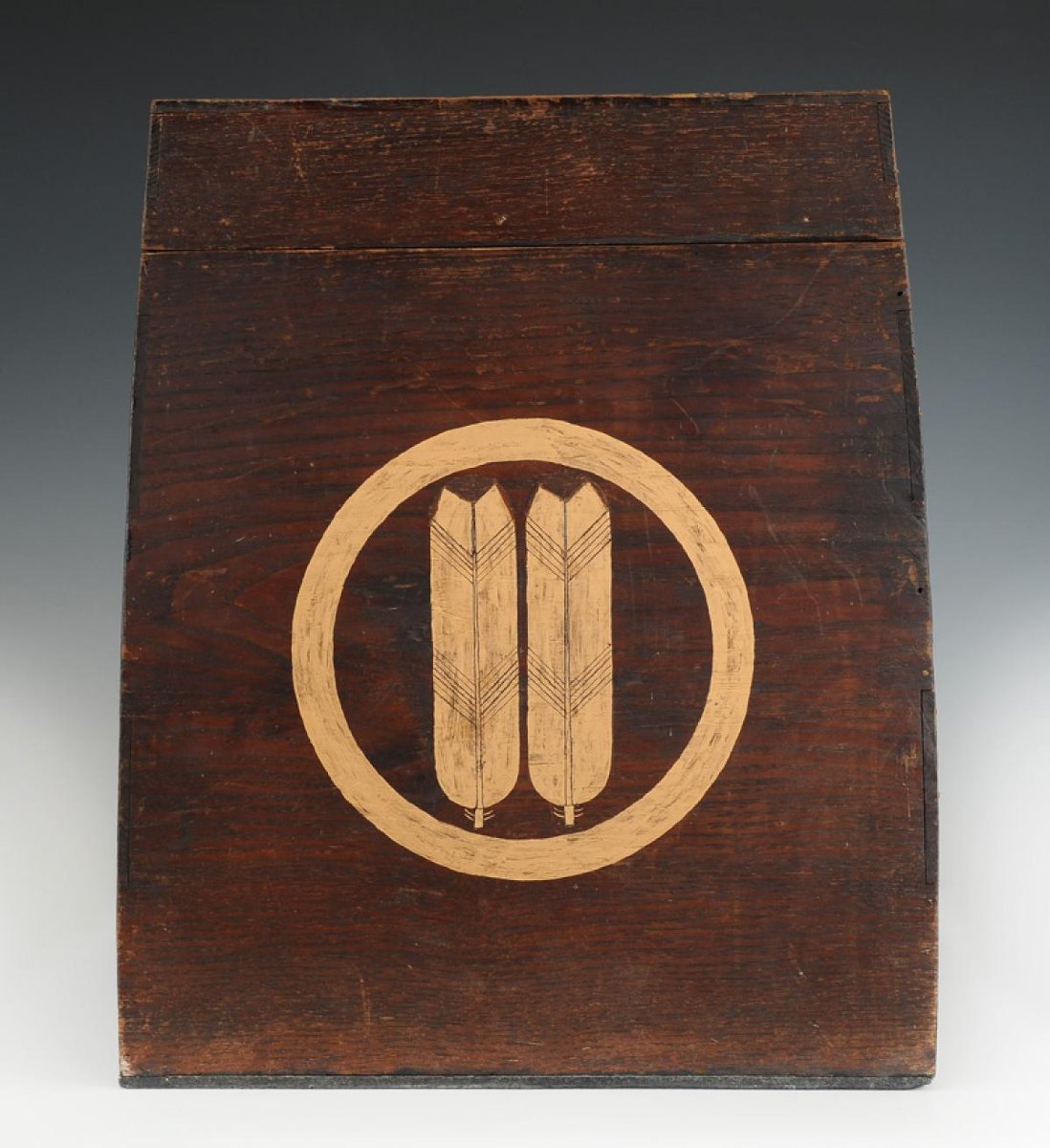
Wooden transport crate in a lightly tapered trunk pyramid shape decreasing in dimensions, 50x40x35 cm.
On one side, two falcon feathered arrow ends on a pierced disc corresponding to the “MARU NI NARABI TAKANOHA” family from the early 17th century.
Very good condition.
Set including helmet (Kabuto) and its ornament (Kuwagata), mask (Menpō), cuirass (Dō), apron with two reinforced thigh guards (Haidate Kawara), shoulder guards (Sōde), pair of arm covers (Yoshitsune Kōte), and knee guards (Sune Ate).
Helmet of rokujuni ken tetsu sabiji sujibachi Kabuto type with a crest (bashi) forged from 36 steel plates with converging edges at its opening (Tehen), retaining its internal lining of cloth bordered with leather. The visor (mabisashi) is made of steel covered with a thin copper plate onto which a piece for attaching a central ornament (maedate) is fixed. Front ornament depicting stylized horns, Kuwagata. Allusion to divine messenger deer, its base adorned with a high relief “shichi ressei”. Shinodare metal applied to the plates at the front.
The neck guard (shikoro) consists of five lacquered black plates that are held and articulated by a navy blue kebiki lacing style known as Saotome lesada. Ear guards (fukigaeshi), adorned with cherry blossom flowers crafted in copper. Includes a padded fabric interior and a chin strap made of orange silk thread for retention. The red lacquer inscription under the fabric is that of the owner, a well-known martial arts specialist from the late 19th century (Momoi Naomasa).
Menpō of ressei type, made of lacquered iron imitating rusted iron. Nose secured by two staples. Red lacquered interior of the mask. Throat guard (yo-dare kake) laced with dark blue silk.
Cuirass of yokohagi okegawa dō type held by rigid straps covered with interlocking plate fabrics, black lacquered, flexible and lightweight, connected by dark blue silk lacing. Skirt (kusazuri) of black lacquered plates laced together with dark blue silk cords.
Apron with two reinforced thigh guards (Haidate Kawara) consisting of panels covering the left and right thighs, made of wide strips of silk fabric with a thick canvas lining covered with a metal mesh. At the upper part of the panels, approximately 10cm long notches called “Muchisashi” are made in the middle of each section for the positioning of other armor elements, bordered equidistantly by two printed tan leather bands, called “Egawa”, here without specific motifs known as “Kanji”. At the lower part, secured to the mail, there are small curved rectangular lacquered metal plates structured like traditional roof tiles called “Kawara”, of identical shapes and sizes. Fastened around the waist with a string, “Koshi himo”.
Shoulder guards (Tosei Sōde), including an upper plate known as “Kanmuri Ita” crown plate. Plate bordered by a decorative “Fukurin” band, here made of waved plates. At the back, a leather strap connects the “Sode” to the “Watagami” straps. Then metal plates coated with lacquer called “Kozane”, with the last plate adorned with rows of round fabric dots. Each plate connected by broader silk cord links forming a “Sugake” style lacing for good articulation.
Arm covers (Yoshitsune Kōte), originally worn in memory of Minamoto no Yoshitsune, samurai and general from the Heian and Kamakura period, 1159-1189.
Large and long dark blue silk fabric strip. The inner side of the trim is pierced with small holes for the passage of a silk cord to connect the two flaps and secure them on the forearm. The outer side is covered with a fine metal mesh of “kagomegata-gusari” type, made of hundreds of small brown lacquered steel circles linked together to form multiple squares. This type of “Kote” is characterized by metal protection plates on the forearm in the form of splints known as “Shino-kote”, here with three of such splints, plus smaller 5cm long splints on the upper arm called “Ikada” arranged in a staggered manner, all widely spaced and closely fastened. Elbow disk, in the shape of a gourd known as “Hyôtan Gane” or gourd plate, composed of a bent and ribbed metal plate framed by four similarly bent and ribbed rectangular pieces called “Ikada”.
D-shaped protection for the knuckles known as “Tekkô”.
At the upper part, a lacquered steel plate “Kanmuri ita”, pierced with two holes for the passage of a cord and two horn toggles known as “Kohaze” for attachment to the shoulder guards “Watagami”. Links to the wrists.
Knee guards (Sune Ate), wide dark blue silk fabric strip with metal protection plates in the form of splints called “Shino-kote”, linked by a fine metal mesh of “kagomegata-gusari” type, made of hundreds of small brown lacquered steel circles linked together to form squares. A decorative strip on the upper edge, here made of brown felt with printed motifs.
Imperial Japan.
Edo Period, circa 1860-1880.
Good overall condition for most elements, with exceptions of broken cords at some parts of the skirt, and especially at the upper plates of the helmet's neck guard.
Helmet in good condition, with the lacing of the upper part of plates broken along the whole length and retained by added ties, requiring restoration. Broken shinodare. Menpō in very good condition.
Cuirass in good condition, some broken silk cords, one of the attachments of the right strap broken. Skirt in good condition. Apron in good condition, with missing parts and tears in the silk on the upper left.
Arm covers in very good condition. Shoulder guards in very good condition. Knee guards in very good condition.
Wooden transport crate in a lightly tapered trunk pyramid shape decreasing in dimensions, 50x40x35 cm.
On one side, two falcon feathered arrow ends on a pierced disc corresponding to the “MARU NI NARABI TAKANOHA” family from the early 17th century.
Very good condition.
10 000 €
Period: 18th century
Style: Other Style
Condition: Good condition
Reference (ID): 1763879
Availability: In stock
Print