

Kpm Berlin Soup Plate Urbino Service With Celadon Rim Design Trude Petri 1931
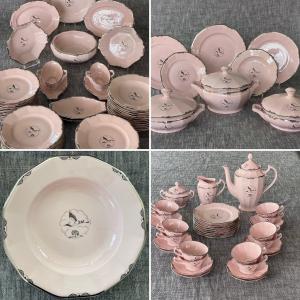
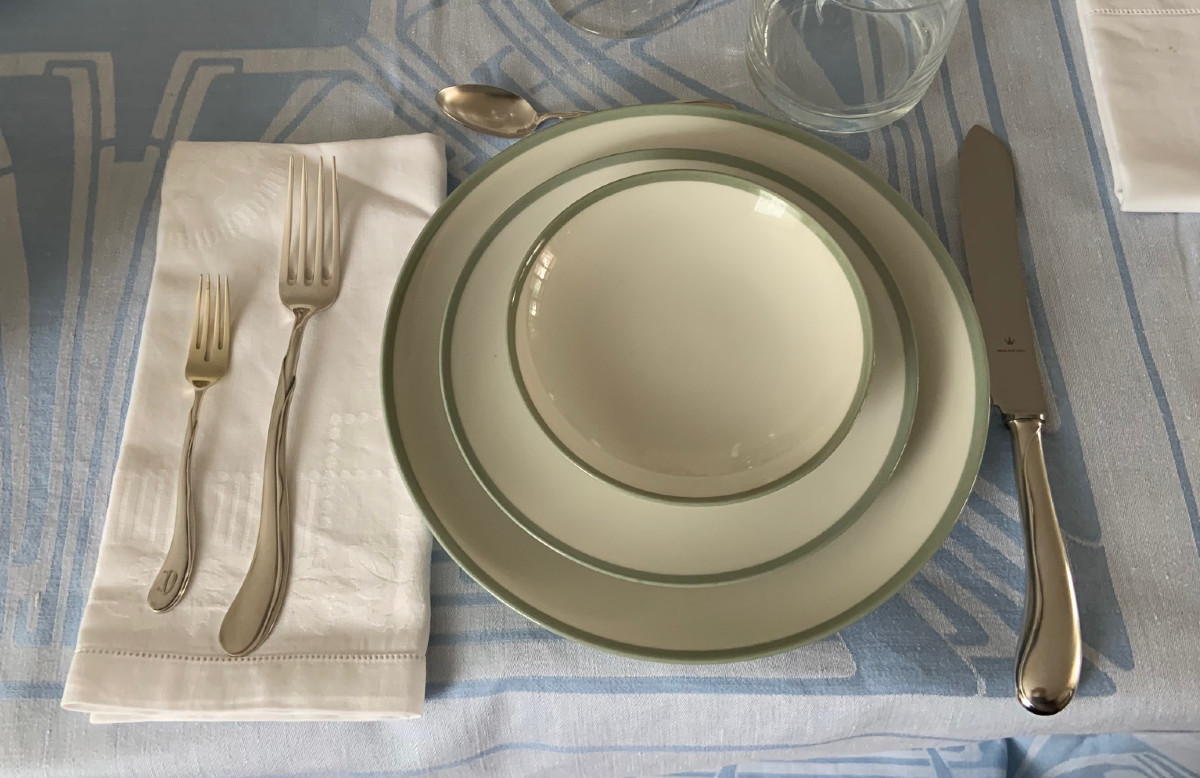
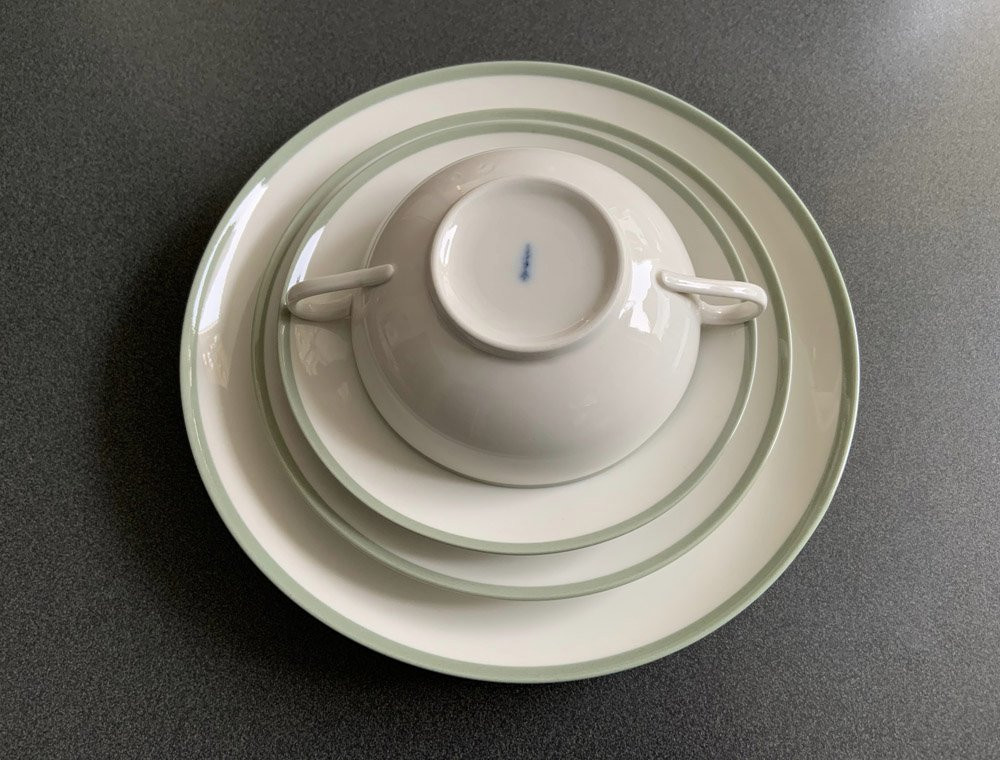
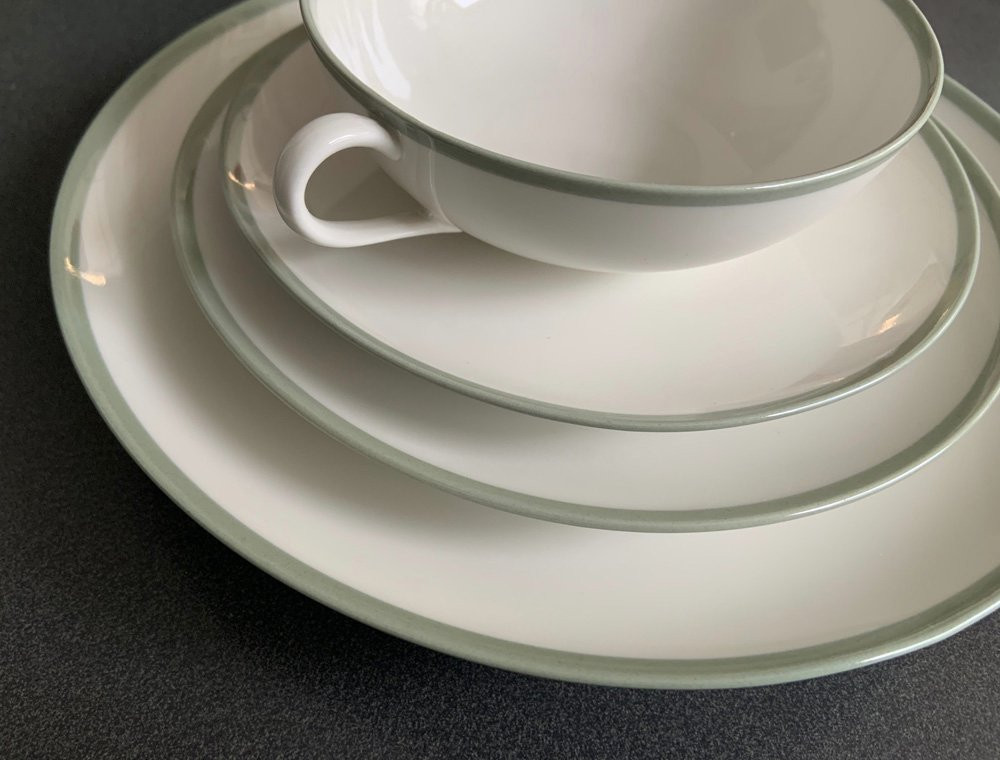
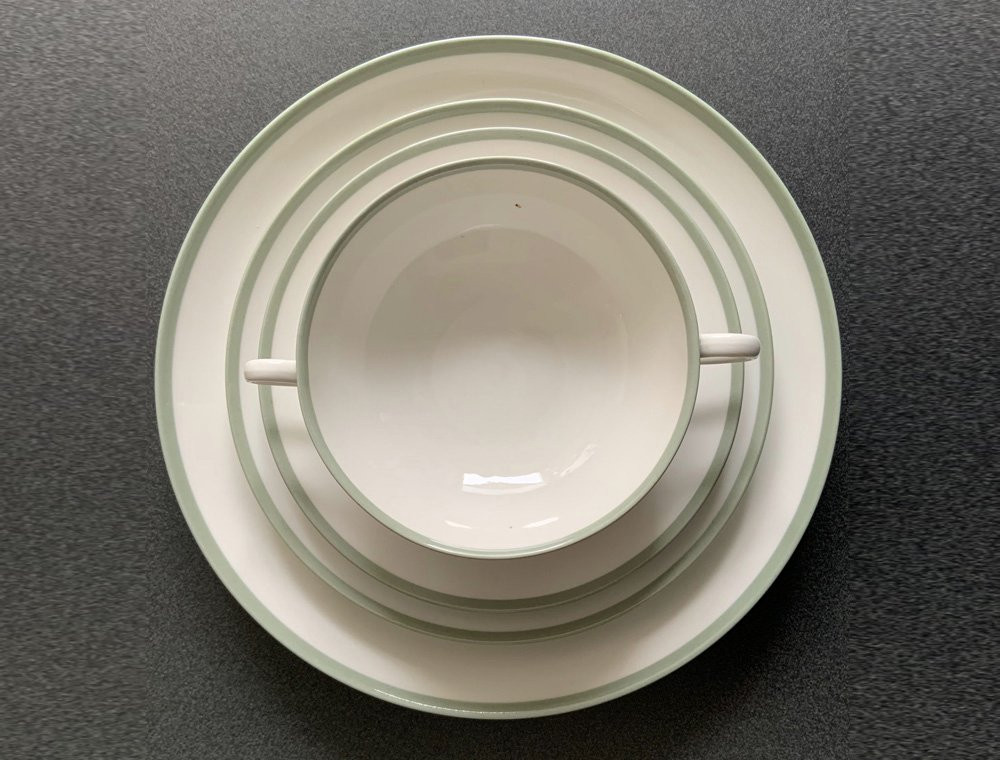
KPM Berlin, plate, URBINO service with celadon rim, Trude Petri design 1931. Blue scepter mark, First quality
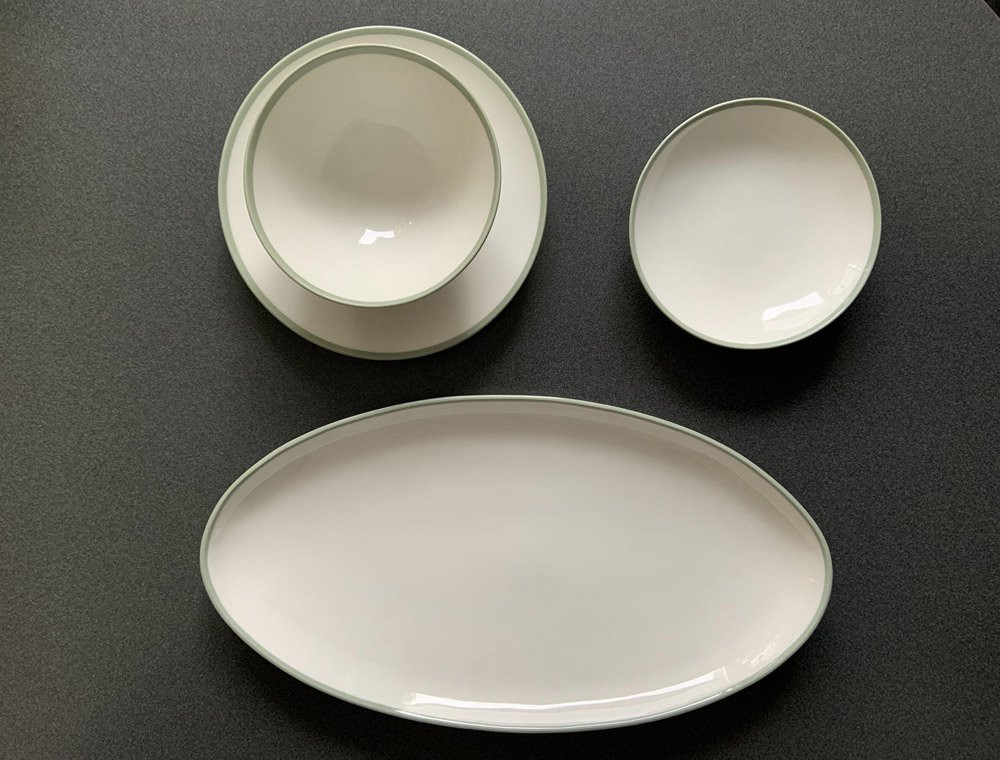
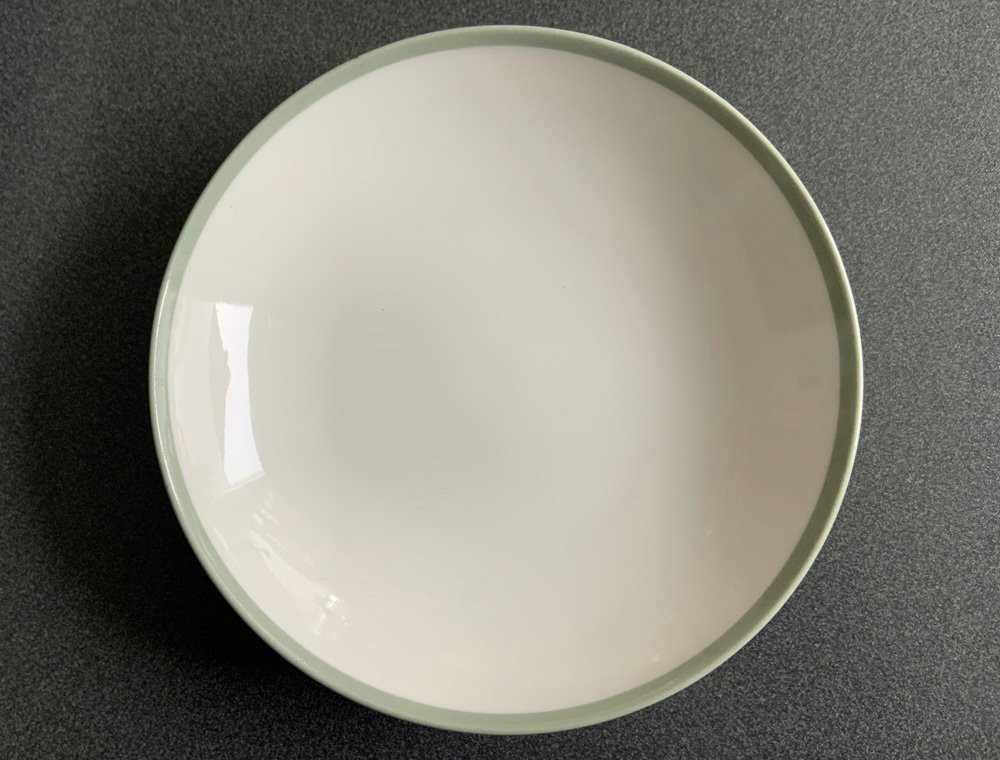
A soup plate from the URBINO service with celadon rim (Festrand), designed by Trude Petri in 1931. Executed by the Königliche Porzellan-Manufaktur Berlin. Marked with a blue scepter. Diameter approx. 24 cm. First quality.
The celadon rim, a thin matte green border, is the only colorist statement the URBINO service allows itself. It connects the formal reduction of the Bauhaus with the elegance of classic Berlin table culture, making this service one of the most enduringly relevant German porcelain designs of the 20th century.
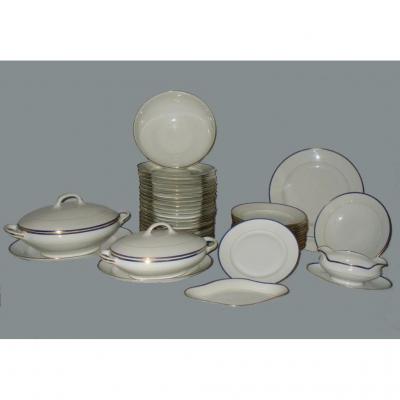
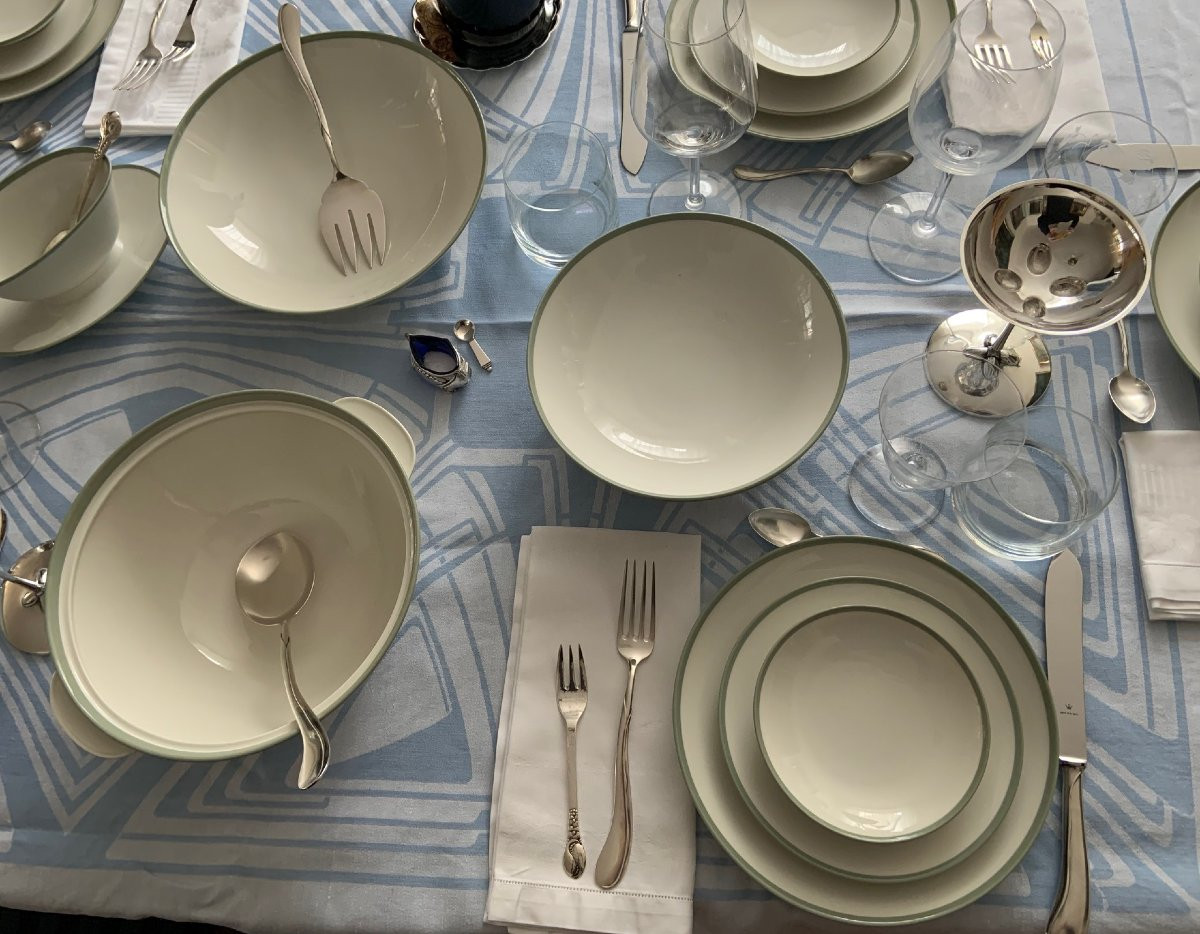
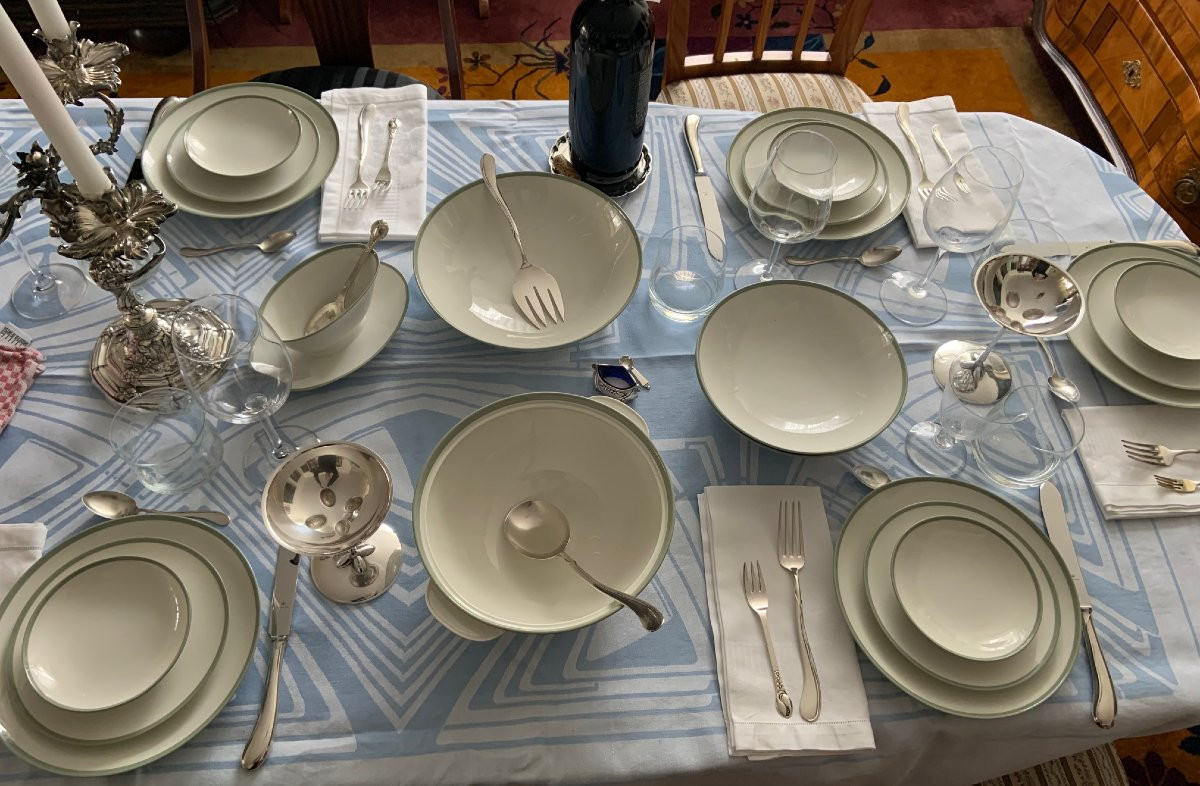
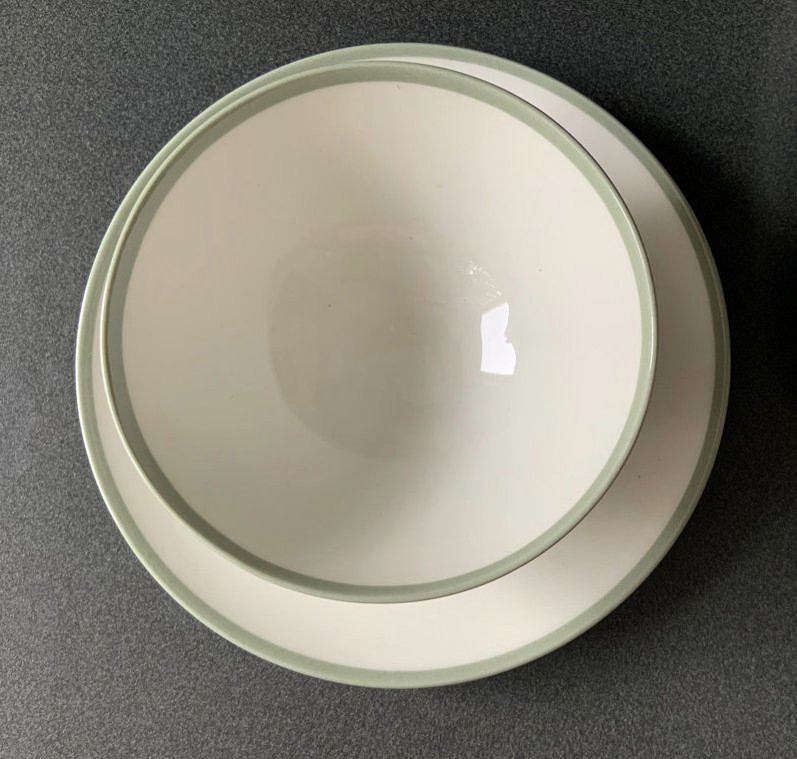
Other pieces of this service are available: plates, cups, terrines, sauce boats and other shapes. Please contact us with your individual requirements.
Marks: Blue scepter mark (Königliche Porzellan-Manufaktur Berlin). First quality.
Dimensions; Diameter: approx. 24.0 cm (9.4 inches)
Condition: Very good condition. Slightly used. Complete and even celadon rim. No chips, cracks or restorations.
Historical background:
The URBINO service was designed by Trude Petri in 1931 and presented to the public for the first time in 1932 at the Leipzig Autumn Fair - alongside Marguerite Friedlaender's Burg Giebichenstein service, in what constitutes the most significant presentation of German reform porcelain of the interwar period.
The formal logic of the URBINO service is the same as that of the Burg Giebichenstein service.
The formal logic of the service is consistently derived from the spherical segment: no wings, applied ornamentation or decorative borders. Petri's inspiration came from two sources: the wingless Renaissance ceramic plates of Northern Italy, which gave her name to the town of Urbino, and the ceramic tradition of East Asia, whose formal clarity she had absorbed during her training and professional environment in Berlin.
KPM Berlin was the first company to offer this service.
KPM Berlin was, with URBINO, the first major European manufacturer in the tradition to successfully launch an entirely undecorated service, a practical demonstration that the reform demands of the Deutscher Werkbund and Bauhaus for a form adapted to the material and the elimination of ornament had reached industrial production.
The service received a gold medal at the VI Triennale di Milano in 1936 and the Grand Prix at the Exposition Internationale de Paris in 1937. It is represented in the collections of the Museum of Modern Art, New York, and the Metropolitan Museum of Art, New York - one of the very few 20th-century German dinner services to be held simultaneously by both institutions.
The celadon rim, a distinctly applied technique requiring separate firing, belongs to the pre-war production period and the evacuation to Selb (1943-1954). When the factory returned to Berlin at the end of the 1950s, the program was rationalized and this pattern was not repeated. The celadon-edged pieces exclusively predate this break and are today the most sought-after variant of the URBINO service.
Trude Petri (Hamburg, 1906 - Vancouver, 1998) studied as a potter at the Hamburg School of Fine and Applied Arts, moved to Berlin in 1927 and was appointed designer at KPM by director Günther von Pechmann in 1929. The URBINO service was created at the start of a thirty-year collaboration with the manufactory. In 1950, she emigrated to Chicago after her marriage to American architect John Raben, while remaining linked to KPM as an independent designer.
Literature Bröhan, Karl H. (ed.): Porzellan. Kunst und Design 1889 bis 1939. Vom Jugendstil zum Funktionalismus. Bestandskatalog des Bröhan-Museums, vol. V/1. Berlin, 1993. P. 255 ff.Bröhan, Karl H. (ed.): Bestandskatalog des Bröhan-Museums, vol. V/2. Berlin, 1996.Gronert, Tim D.: Das Porzellan der KPM Berlin 1918-1988. 3 vols. Deutscher Kunstverlag, 2020. Vol. I, p. 344.Treskow, Irene von: Die Jugendstil-Porzellane der KPM. Munich, 1971.
Viewable by appointment at our gallery in Düsseldorf. Contact and full service inventory: www.denes-szy.com
Period: 20th century
Style: Art Deco
Condition: Excellent condition
Material: Porcelain
Diameter: 24
Reference (ID): 1761252
Availability: In stock