

The Spotter By Narcisse Diaz De La Peña (1807-1876)
Artist: Narcisse Diaz De La Peña (1807-1876)
The finder
NarcissusDiaz de la Peña (1807-1876)
Oil/Panel 35.5 x 23.5
Excellent condition
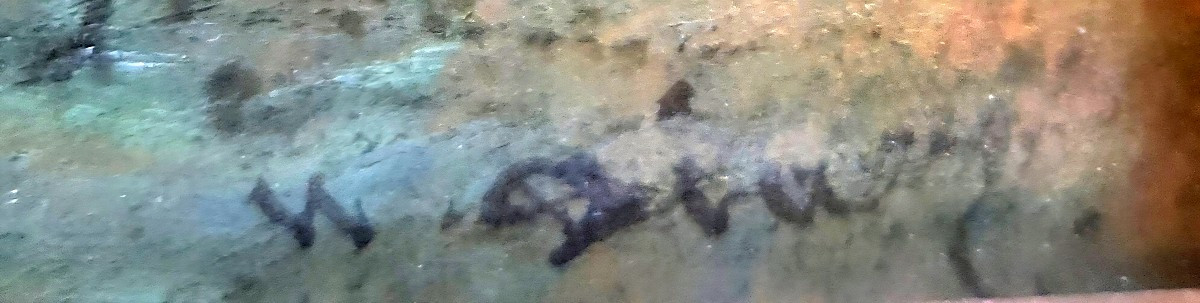
Signed lower left
Sold framed
Price : 2800 Euros
The Artist :
NarcisseDiaz de la Peña was born in Bordeaux on August 21, 1807and died on November 18, 1876 in Menton.
A family of exiles, Narcisse Diaz de la Peña was born in BordeauxSpanish parents who had fled political repression under Joseph Bonaparte.Bonaparte.
He had a "painful childhood". He wasorphaned at an early age, he grew up in difficult conditions and eveneven lost a leg to a snake bite or insect bite.
Contrary to the academic painters of his timetime, he is described as an "autodidact" and an "independent" man.
Recognized,celebrated and passionately collected, the work of Narcisse Diaz de la Peñahis most illustrious contemporaries: Delacroix, Renoir, Van Gogh, and today remainsremains a must for collectors of 19th-century works.of 19th-century works.
Diaz was one of the group leaders (along with Théodore Rousseau) of theSchool of Nature - known as the Barbizon School. The rise of large, inhuman citiespainters to escape civilization, they often found themselves in the smallto the small hamlet of Barbizon, on the edge of the forest of Fontainebleau.of the Fontainebleau forest, and produced their first "pieces of nature" oflandscape painting in France.
Diaz was the mainstay.For him, the word Paysage evokes the forest. He paintedmainly at three sites: Bas-Bréau, Apremont and places with ponds or clearings.offering ponds or clearings.
Admired by Monet and Monticelli, on whom he exerted an enormous fascinationfascination, Diaz, landscape painter, genre painter, painter of the Orient, Carnivalof the Orient, Carnival, the joy of light, the forest, nudes, flowers and dogs in the undergrowth.forest, nudes, flowers and dogs in the undergrowth.in circulation might suggest.
The artist, unexpected, self-taught, independent and wanderingmood, seeks joy - to compensate for a painful childhood - and can only find it byand can only find it by satisfying his own inclinations.
Like any true artist, Diaz is omnipresent in his work.
Each of his subjects evokes a part of his existence, his tastes,his hopes.
His hidden life, his anxieties, his whims, his disguises,and even his secrets permeate the canvases he paints.Pre-Impressionist, great virtuoso of the palette, Narcisse Diazdazzles the eye with all the seductions of light and the enchantment of a great colorist.
Purely a painter, he doesn't imitate, he creates.
The Work:
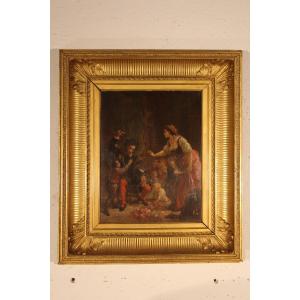
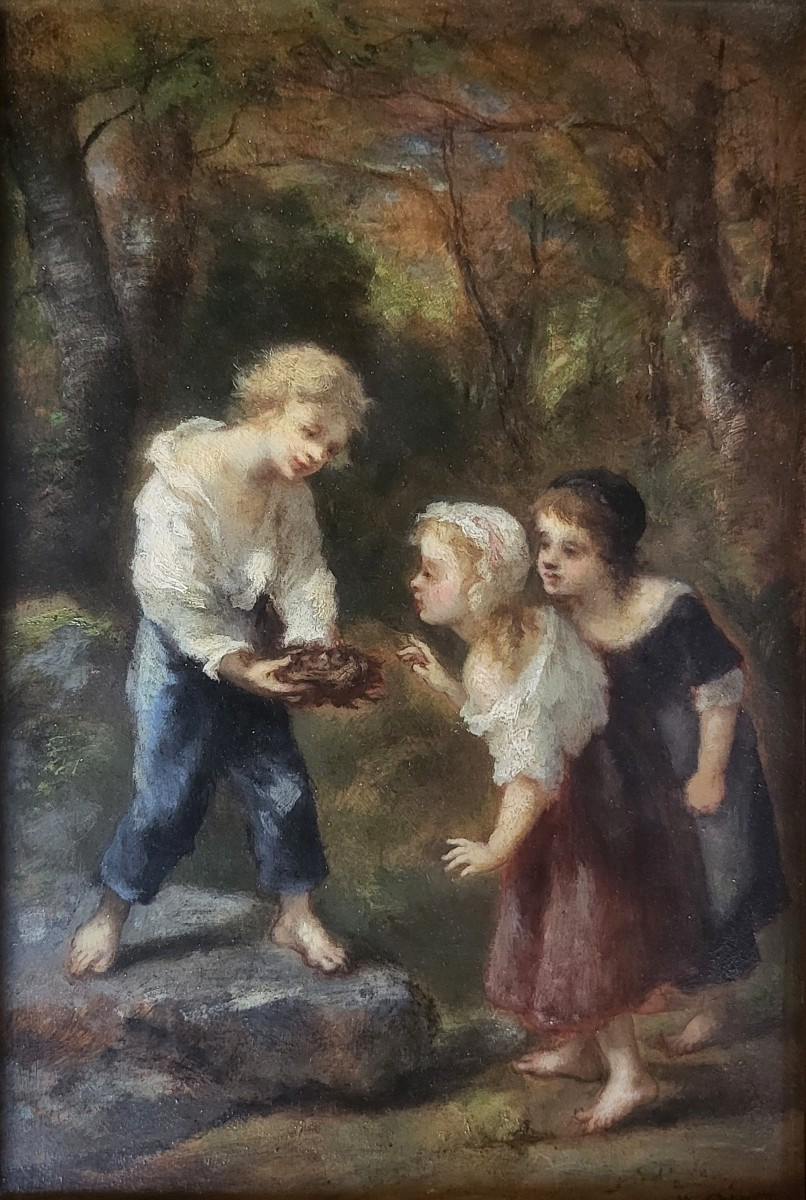
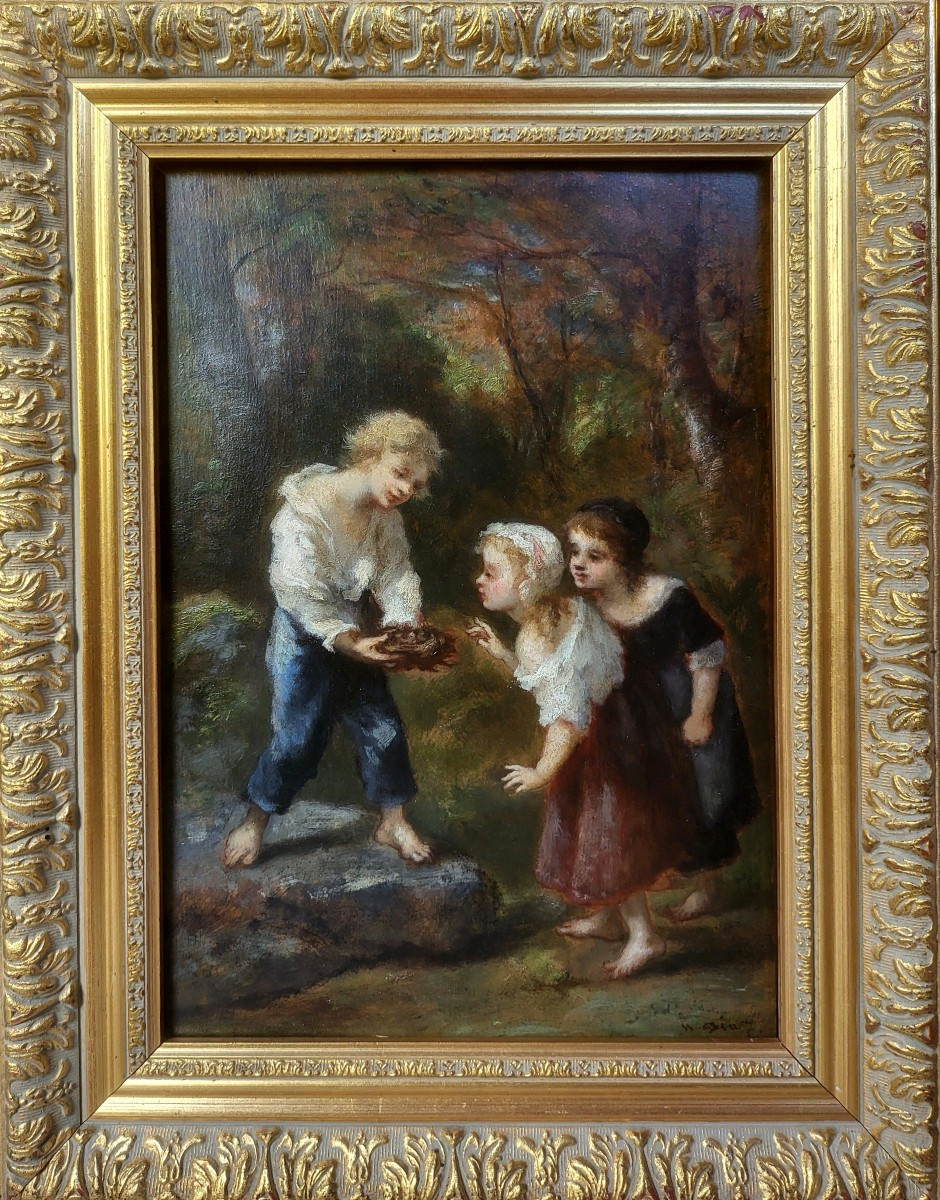
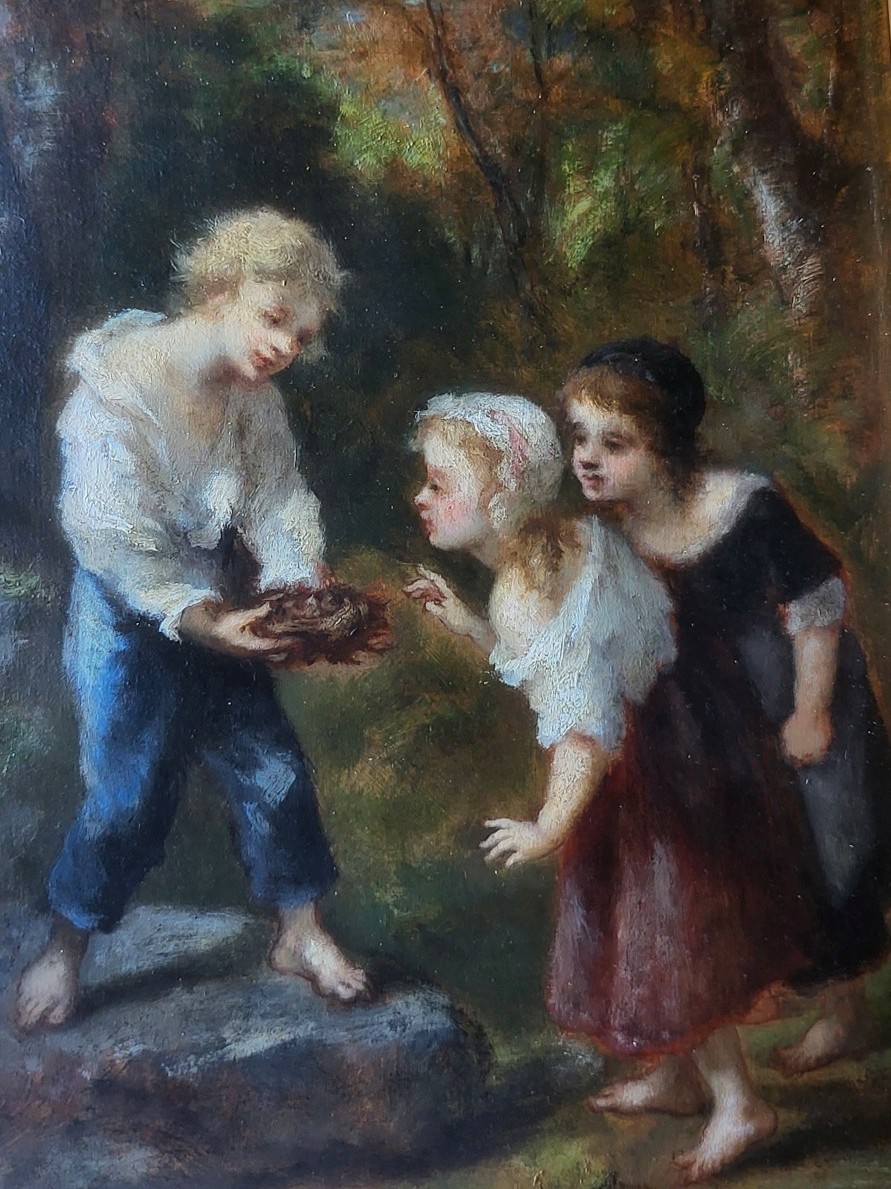
This touching work perfectly illustratesNarcisse Diaz de la Peña's favorite subject, the "fortune hunter".de la Peña.
His own son Émile is positively identified in the role of thethe scene takes on an intimate, familial dimension that is rare in his work.The first little girl is undoubtedly his sister Marie.Émile is situatedstanding on a rock, which raises him above the others.others.
He is wearing a bright white shirt and blue pants. His feet areare bare, reinforcing the pastoral aspect of the scene.
He carefully holds a bird's nestbird's nest in his hands, presenting it as a treasure to his cadets.The two youngesttwo younger children bend over curiously.
The little girl, probably Marie,wears a white headdress and a red-toned dress, while the other childwears a darker garment.
Their stooped posture and their fixed gazeson the nest create a dynamic movement towards the center of the painting.
The painting uses a strong contrast between the faceswhite faces and clothing (which catch the light) and the dark, dense forest background.This is Diaz's famous "dappled" lighting,evoking the sun breaking through the canopy of Fontainebleau.
The landscape is treated with a free, wispy touch.vaporous touch.
Birch trunks and wild vegetation envelop the children, creating an atmospherethe children, creating a protective yet mysterious atmosphere.mysterious atmosphere.
The work exudes great tenderness. The nest,a symbol of fragility and nature, serves as a point of connection between the children.
NarcissusDiaz de la Peña (1807-1876)
Oil/Panel 35.5 x 23.5
Excellent condition
Signed lower left
Sold framed
Price : 2800 Euros
The Artist :
NarcisseDiaz de la Peña was born in Bordeaux on August 21, 1807and died on November 18, 1876 in Menton.
A family of exiles, Narcisse Diaz de la Peña was born in BordeauxSpanish parents who had fled political repression under Joseph Bonaparte.Bonaparte.
He had a "painful childhood". He wasorphaned at an early age, he grew up in difficult conditions and eveneven lost a leg to a snake bite or insect bite.
Contrary to the academic painters of his timetime, he is described as an "autodidact" and an "independent" man.
Recognized,celebrated and passionately collected, the work of Narcisse Diaz de la Peñahis most illustrious contemporaries: Delacroix, Renoir, Van Gogh, and today remainsremains a must for collectors of 19th-century works.of 19th-century works.
Diaz was one of the group leaders (along with Théodore Rousseau) of theSchool of Nature - known as the Barbizon School. The rise of large, inhuman citiespainters to escape civilization, they often found themselves in the smallto the small hamlet of Barbizon, on the edge of the forest of Fontainebleau.of the Fontainebleau forest, and produced their first "pieces of nature" oflandscape painting in France.
Diaz was the mainstay.For him, the word Paysage evokes the forest. He paintedmainly at three sites: Bas-Bréau, Apremont and places with ponds or clearings.offering ponds or clearings.
Admired by Monet and Monticelli, on whom he exerted an enormous fascinationfascination, Diaz, landscape painter, genre painter, painter of the Orient, Carnivalof the Orient, Carnival, the joy of light, the forest, nudes, flowers and dogs in the undergrowth.forest, nudes, flowers and dogs in the undergrowth.in circulation might suggest.
The artist, unexpected, self-taught, independent and wanderingmood, seeks joy - to compensate for a painful childhood - and can only find it byand can only find it by satisfying his own inclinations.
Like any true artist, Diaz is omnipresent in his work.
Each of his subjects evokes a part of his existence, his tastes,his hopes.
His hidden life, his anxieties, his whims, his disguises,and even his secrets permeate the canvases he paints.Pre-Impressionist, great virtuoso of the palette, Narcisse Diazdazzles the eye with all the seductions of light and the enchantment of a great colorist.
Purely a painter, he doesn't imitate, he creates.
The Work:
This touching work perfectly illustratesNarcisse Diaz de la Peña's favorite subject, the "fortune hunter".de la Peña.
His own son Émile is positively identified in the role of thethe scene takes on an intimate, familial dimension that is rare in his work.The first little girl is undoubtedly his sister Marie.Émile is situatedstanding on a rock, which raises him above the others.others.
He is wearing a bright white shirt and blue pants. His feet areare bare, reinforcing the pastoral aspect of the scene.
He carefully holds a bird's nestbird's nest in his hands, presenting it as a treasure to his cadets.The two youngesttwo younger children bend over curiously.
The little girl, probably Marie,wears a white headdress and a red-toned dress, while the other childwears a darker garment.
Their stooped posture and their fixed gazeson the nest create a dynamic movement towards the center of the painting.
The painting uses a strong contrast between the faceswhite faces and clothing (which catch the light) and the dark, dense forest background.This is Diaz's famous "dappled" lighting,evoking the sun breaking through the canopy of Fontainebleau.
The landscape is treated with a free, wispy touch.vaporous touch.
Birch trunks and wild vegetation envelop the children, creating an atmospherethe children, creating a protective yet mysterious atmosphere.mysterious atmosphere.
The work exudes great tenderness. The nest,a symbol of fragility and nature, serves as a point of connection between the children.
2 800 €
Period: 19th century
Style: Other Style
Condition: Perfect condition
Material: Oil painting on wood
Length: 35,5
Width: 23,5
Reference (ID): 1759707
Availability: In stock
Print