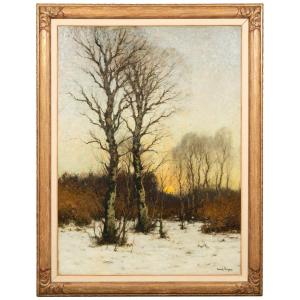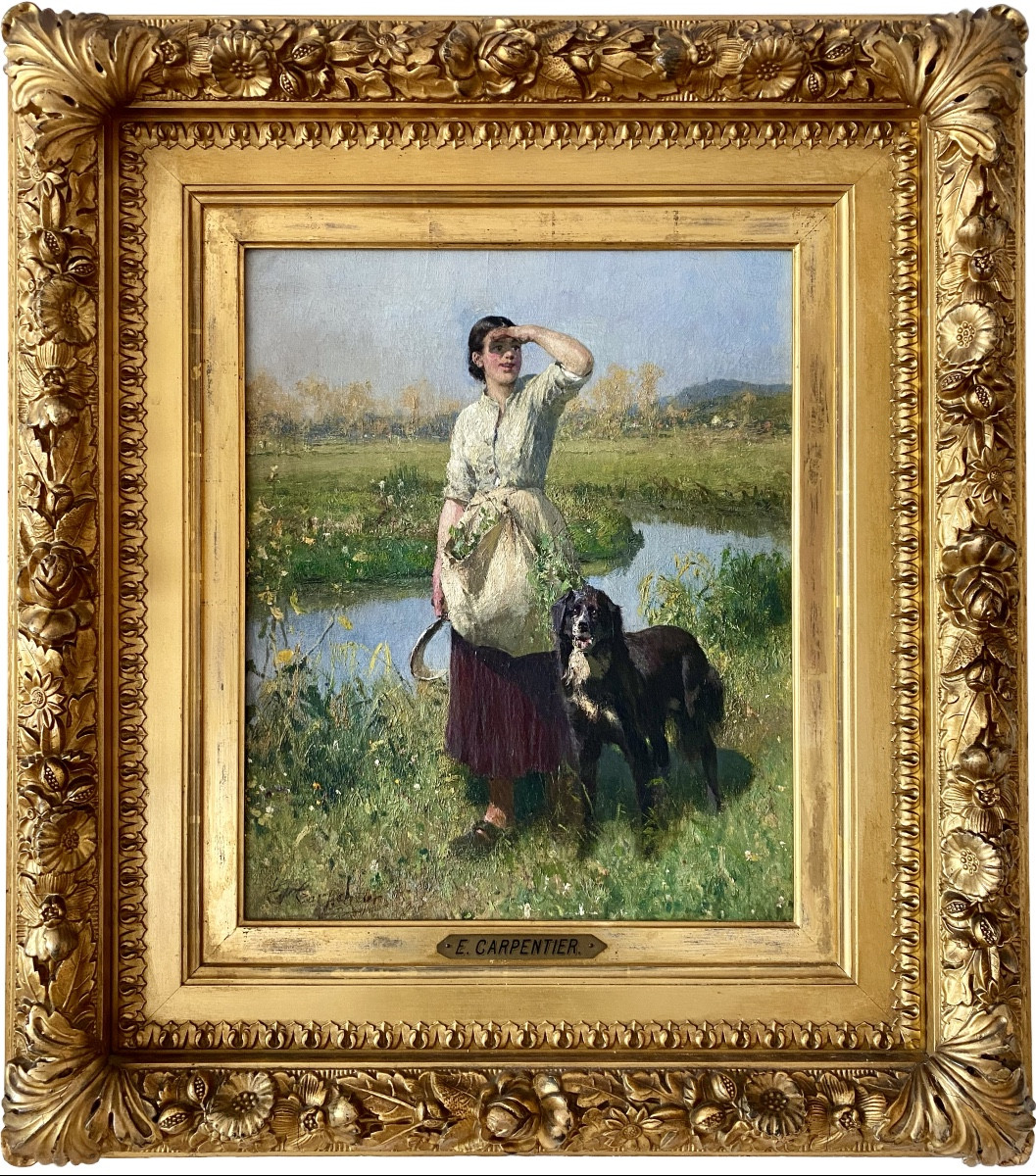
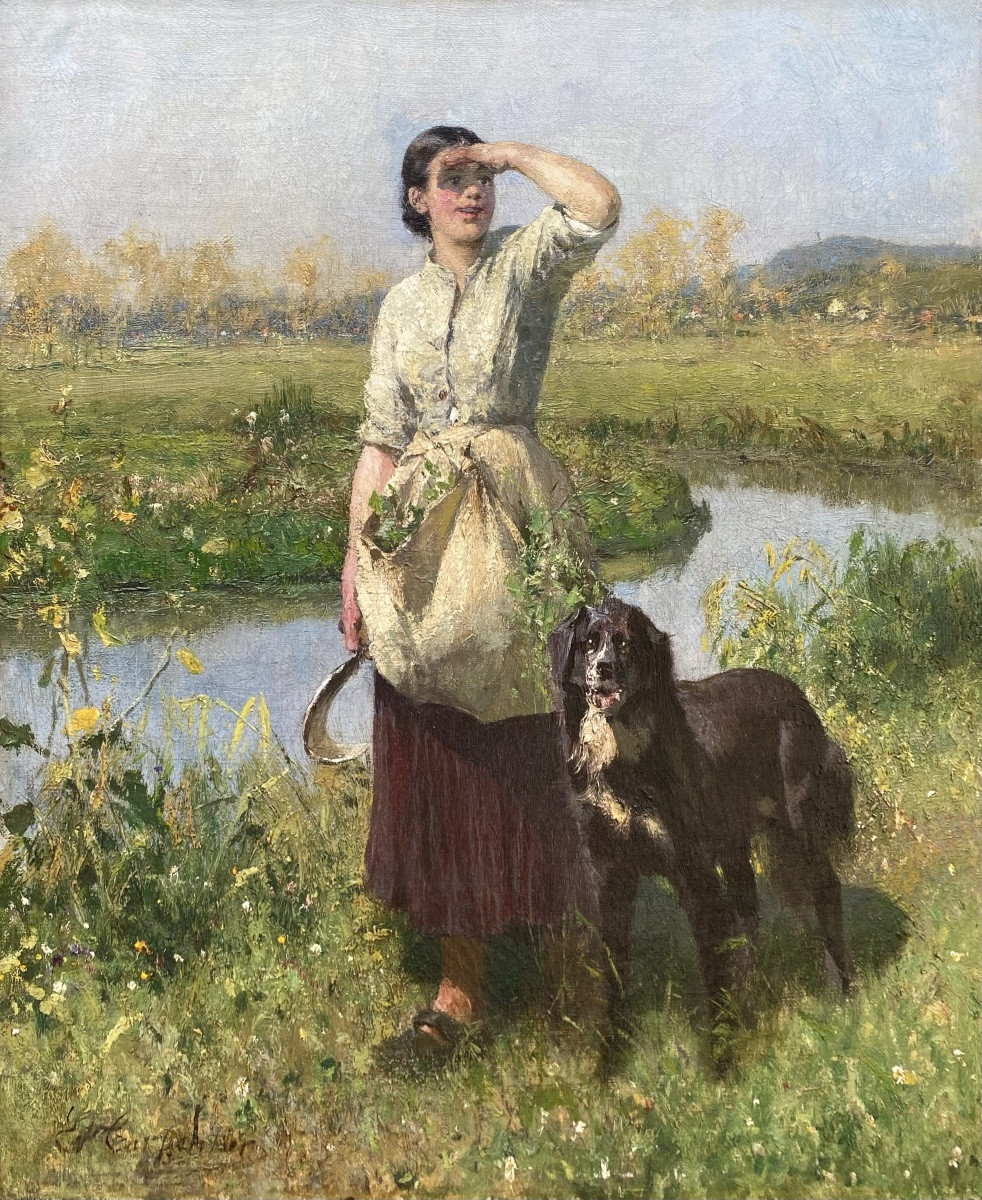
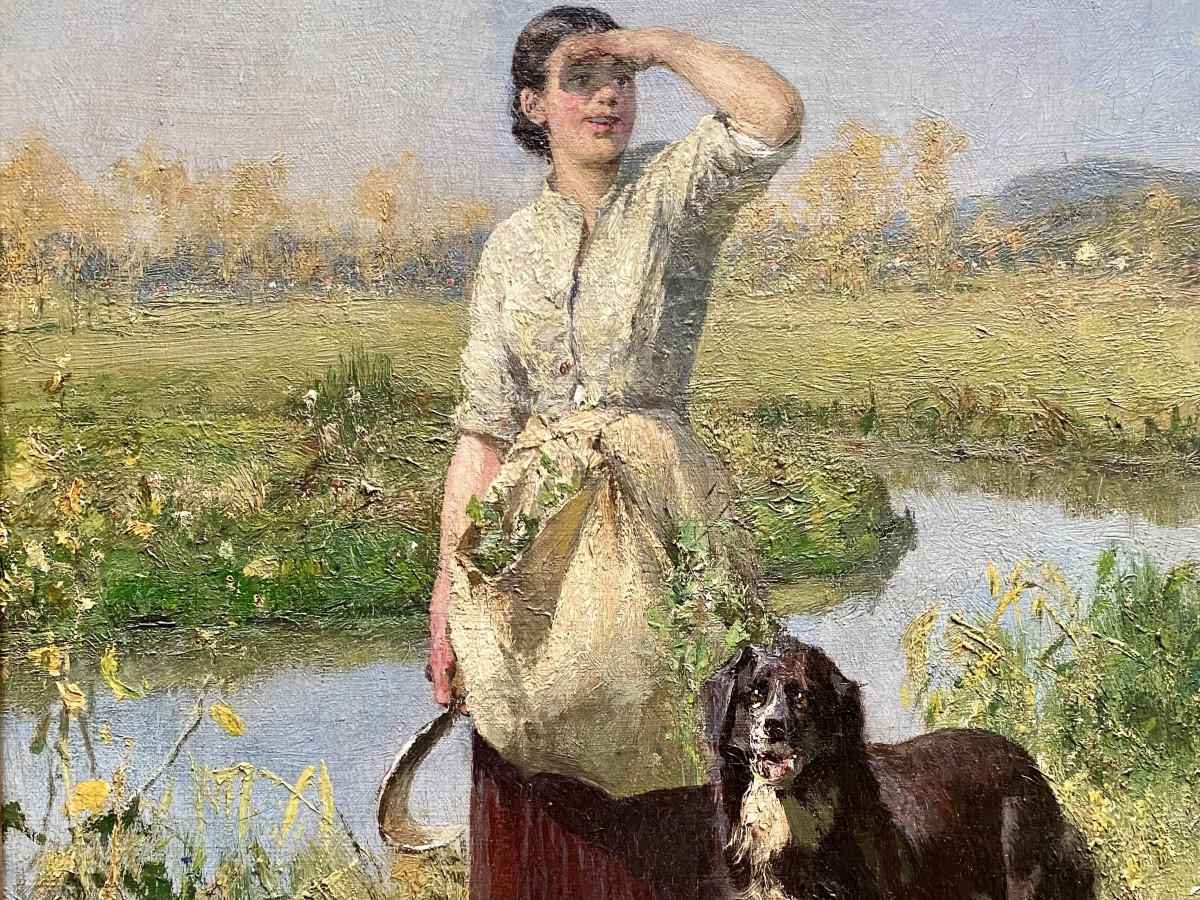
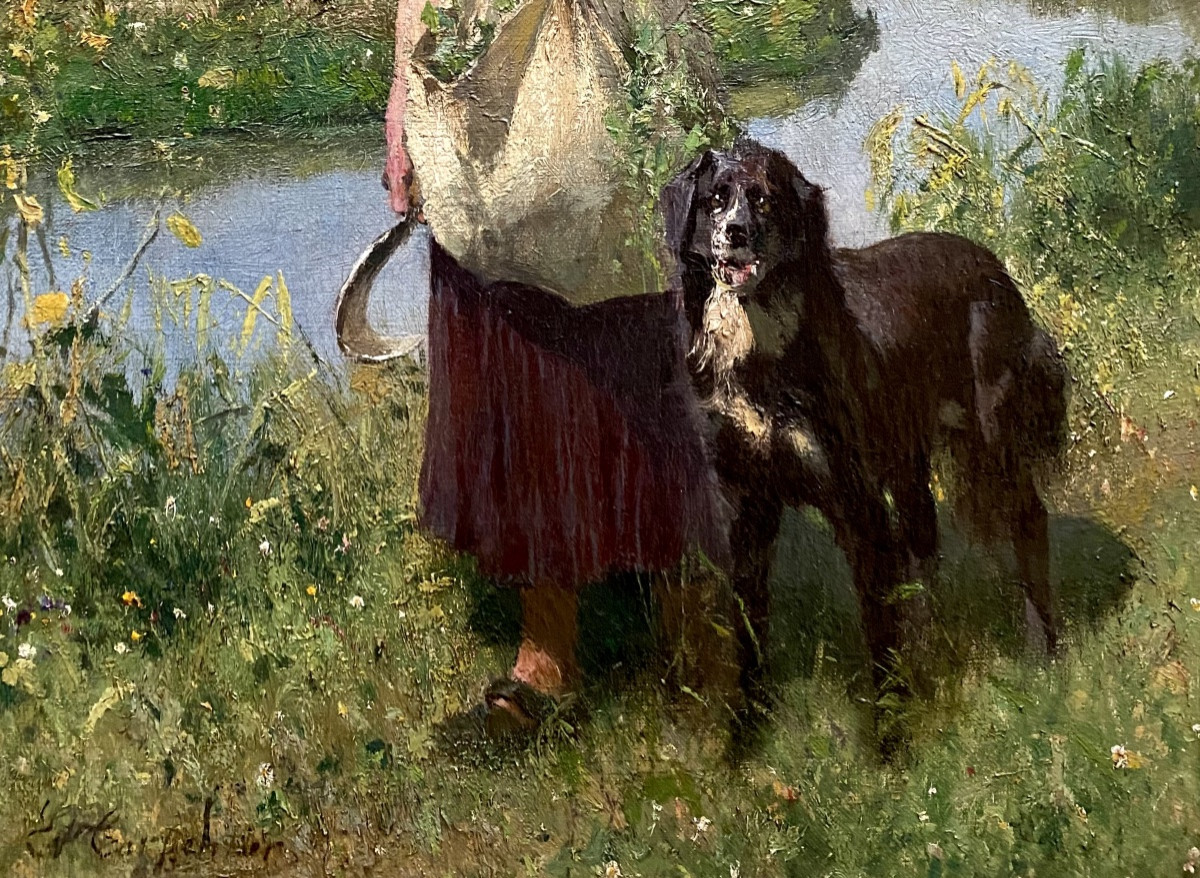
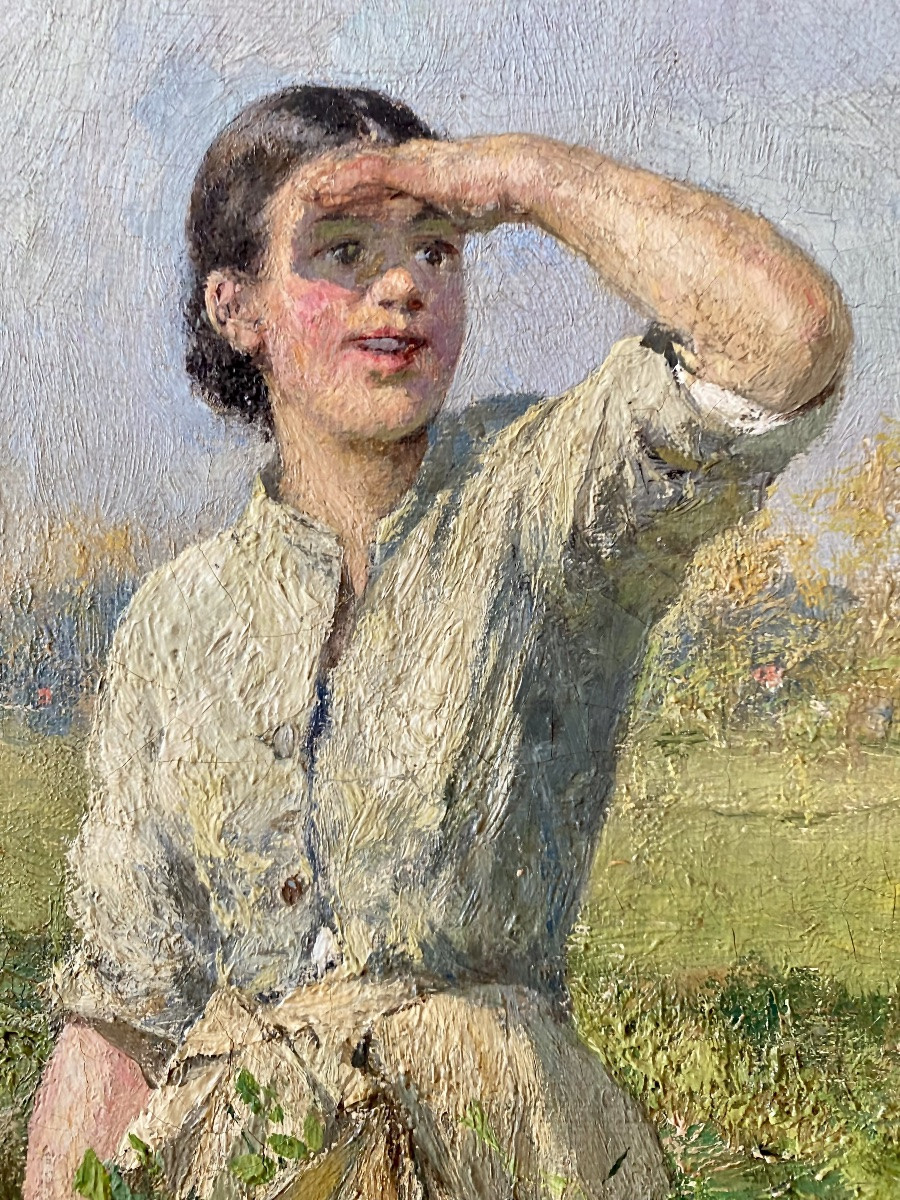
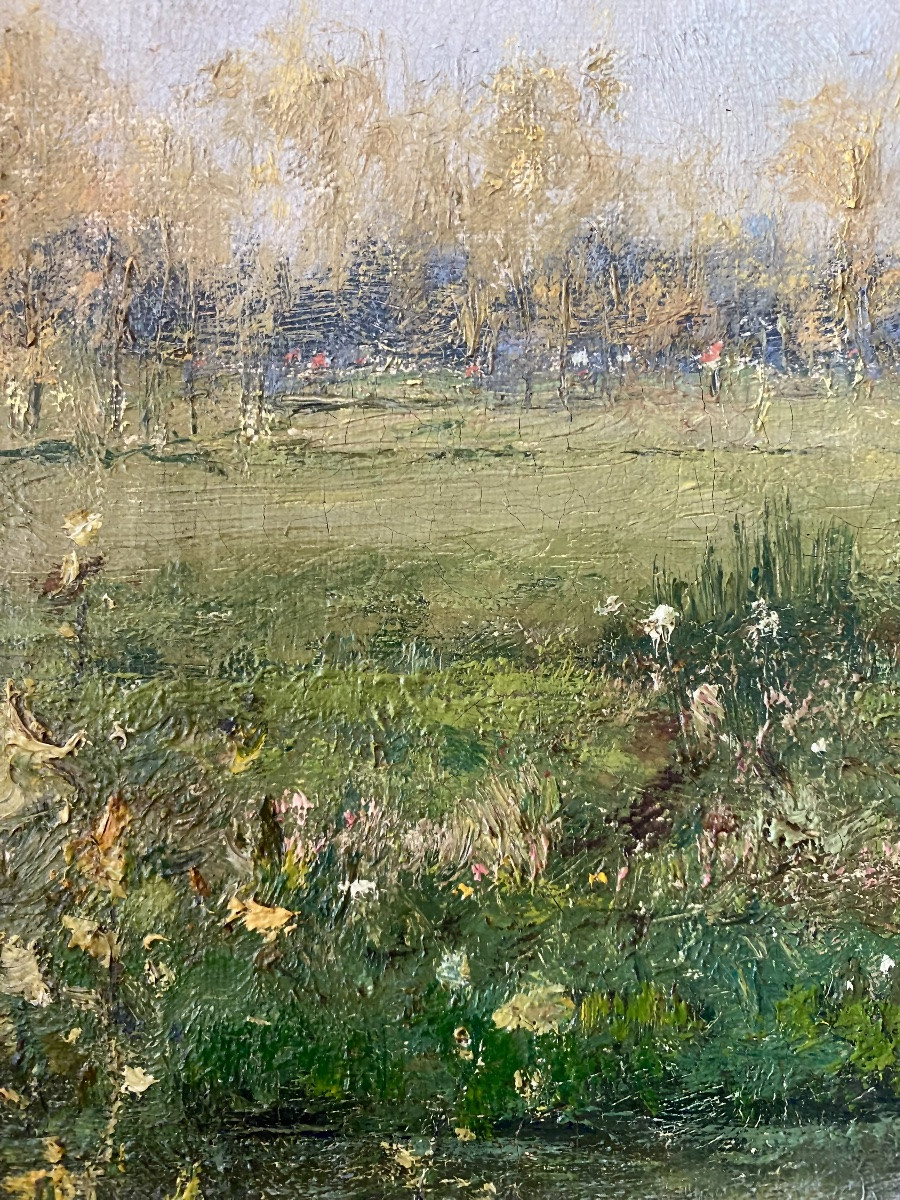
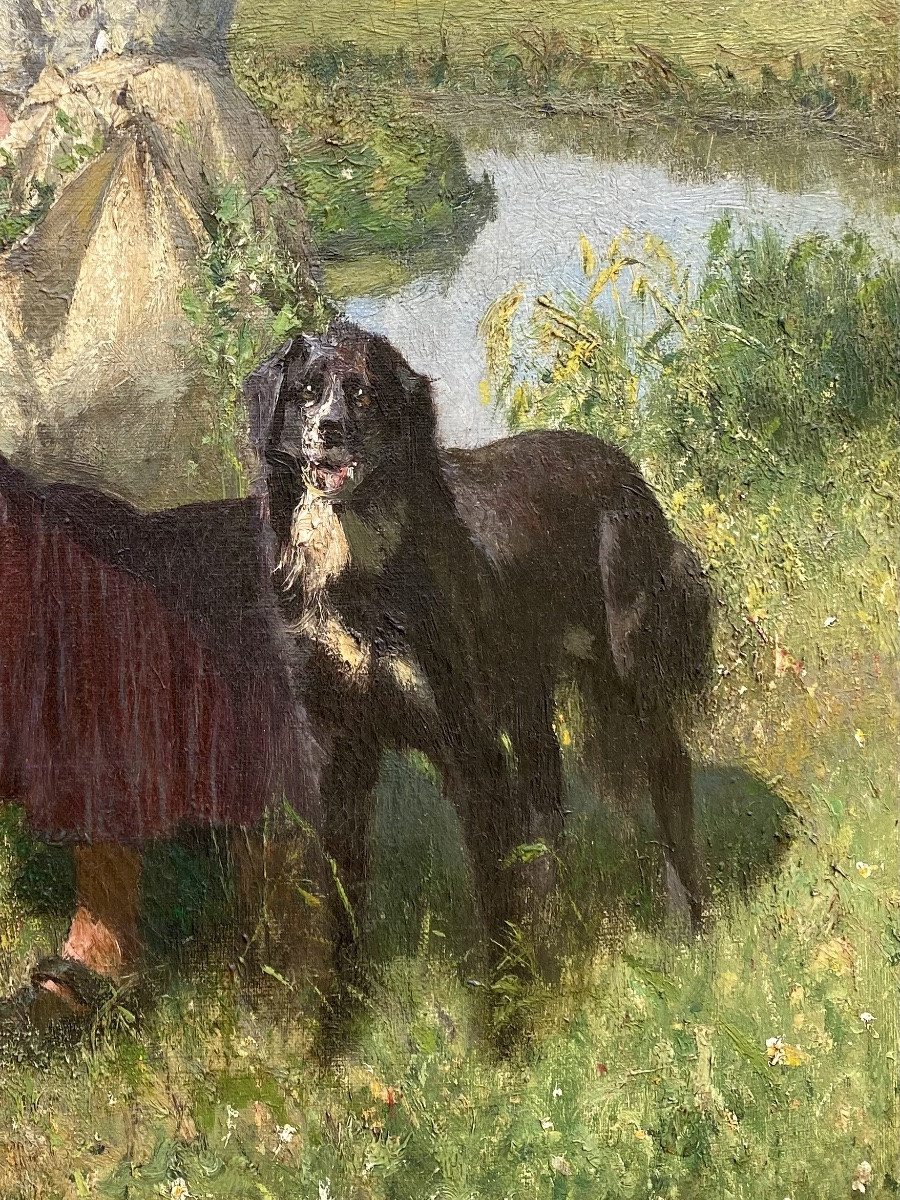
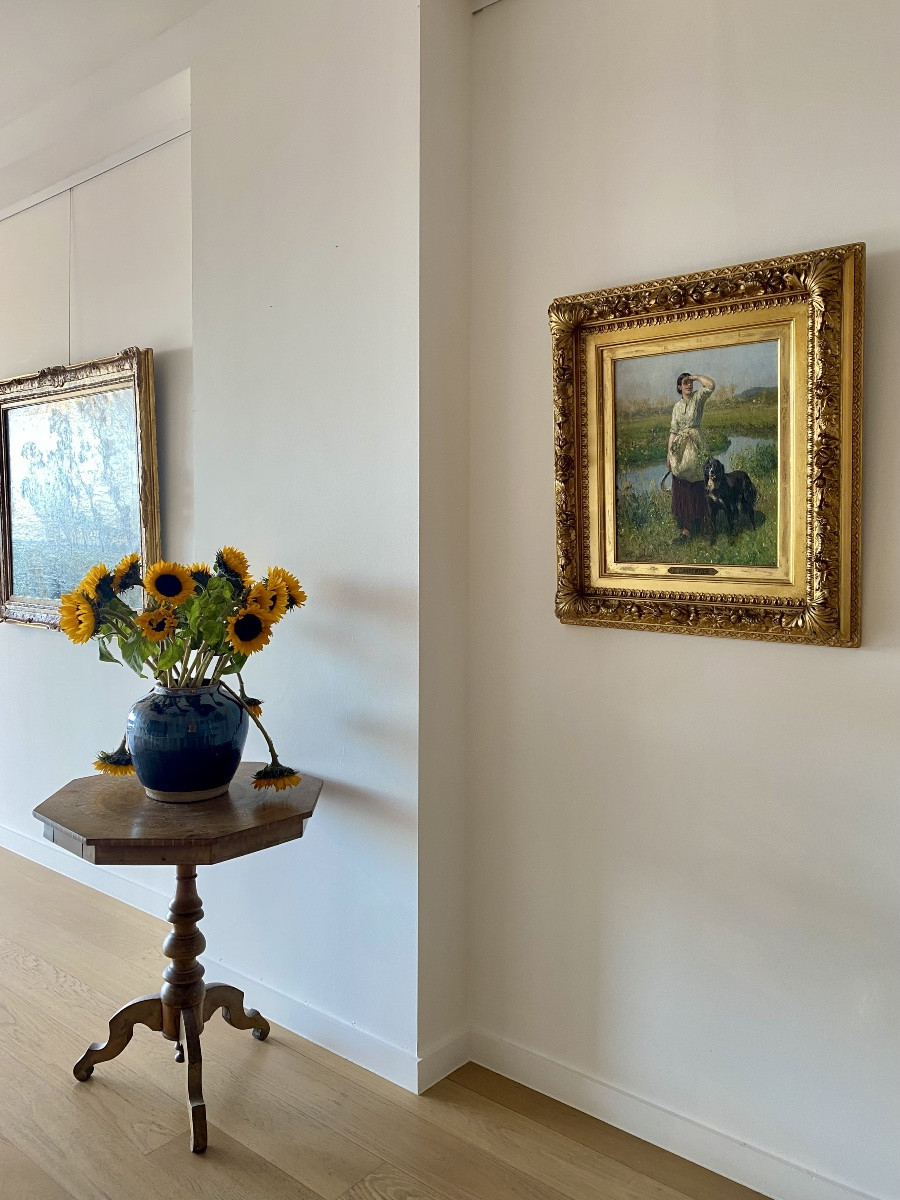
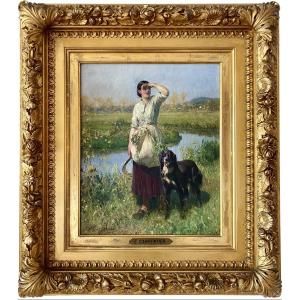


évariste Carpentier (kuurne 1845 – 1922 Liège) - 'returning From The Fields'
Artist: évariste Carpentier, Kuurne 1845 – 1922 Liège
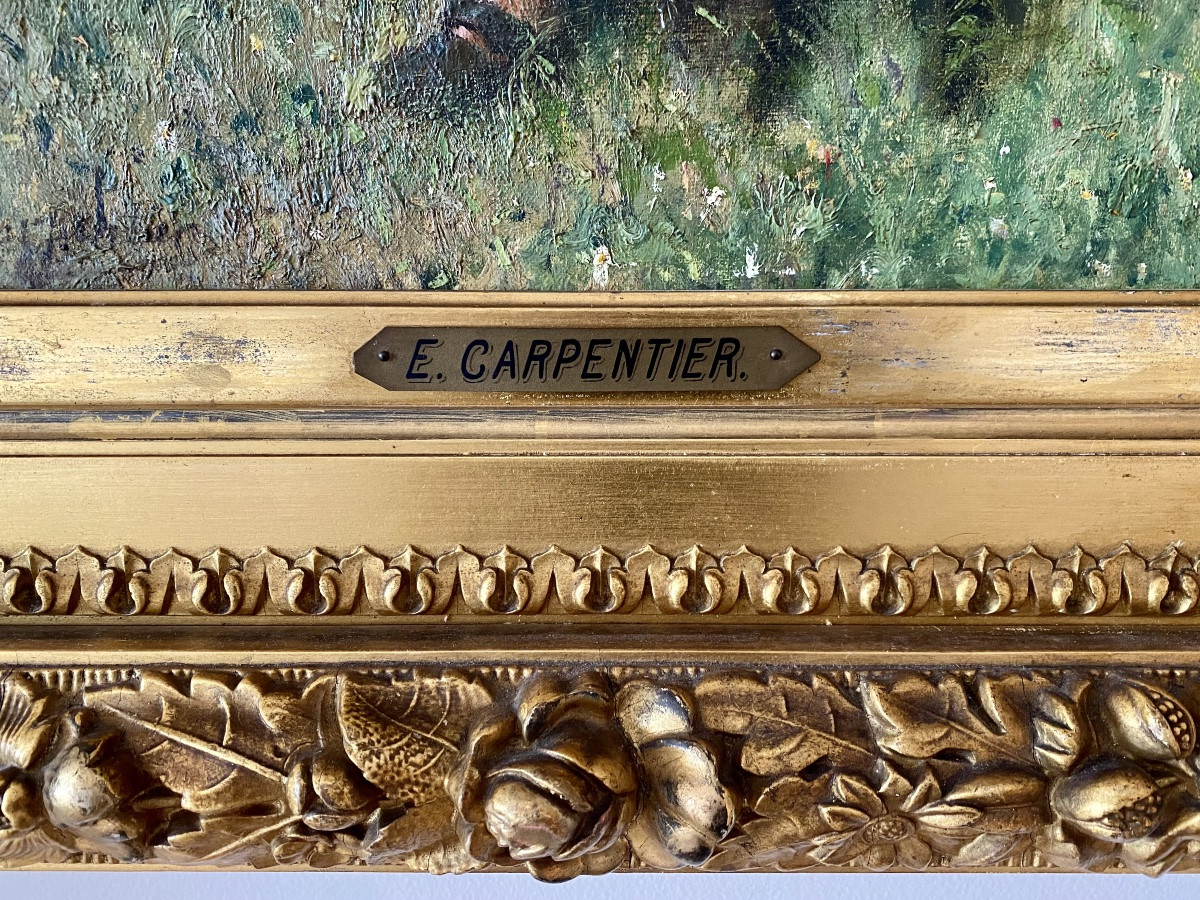
, Peintre Belge, Signature : Signée En Bas à Gauche « év Carpentier »
Évariste Carpentier
Kuurne 1845 – 1922 Liège
Belgian Painter
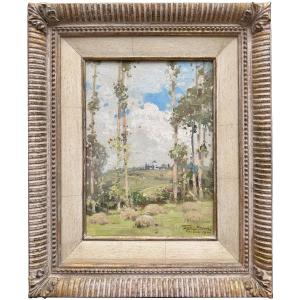
“Returning from the Fields”
Signature: signed lower left 'Év Carpentier'
Medium: oil on canvas
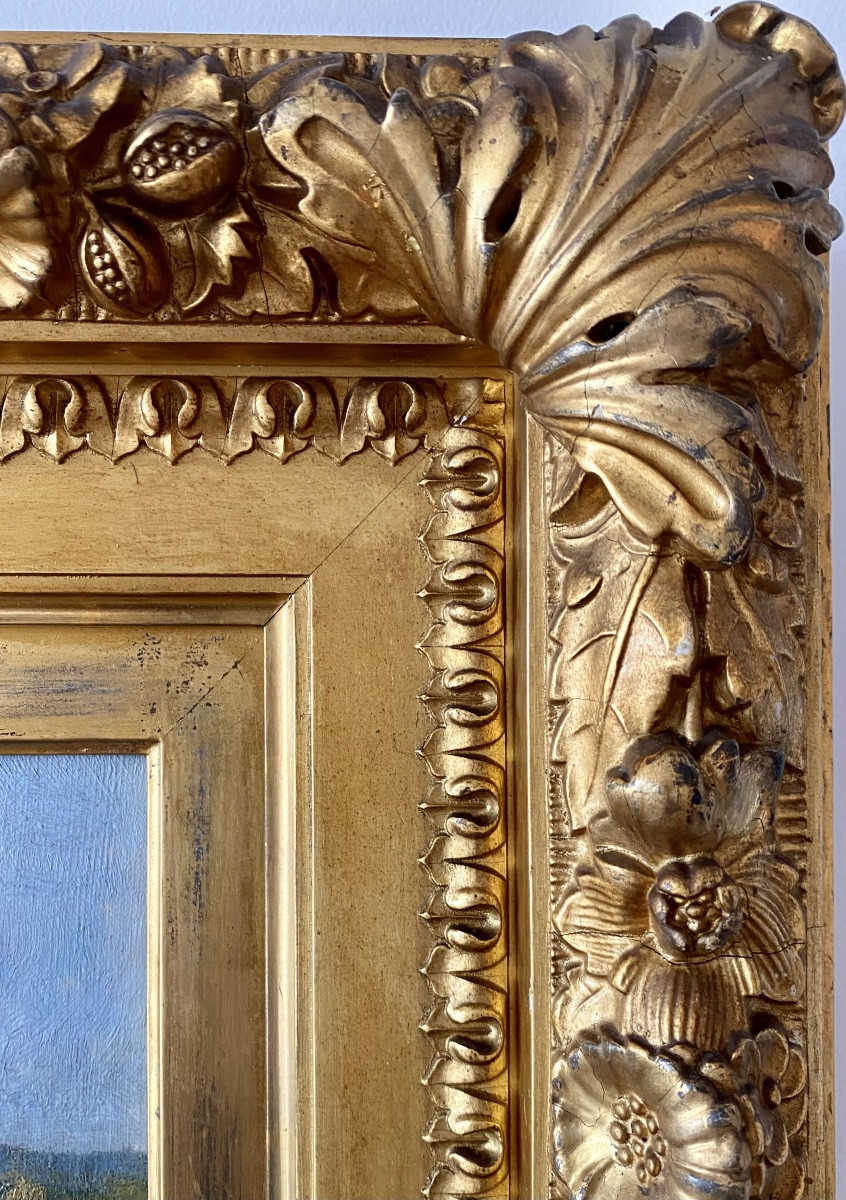
Dimensions: image size 47 x 38 cm, frame size 76 x 68 cm
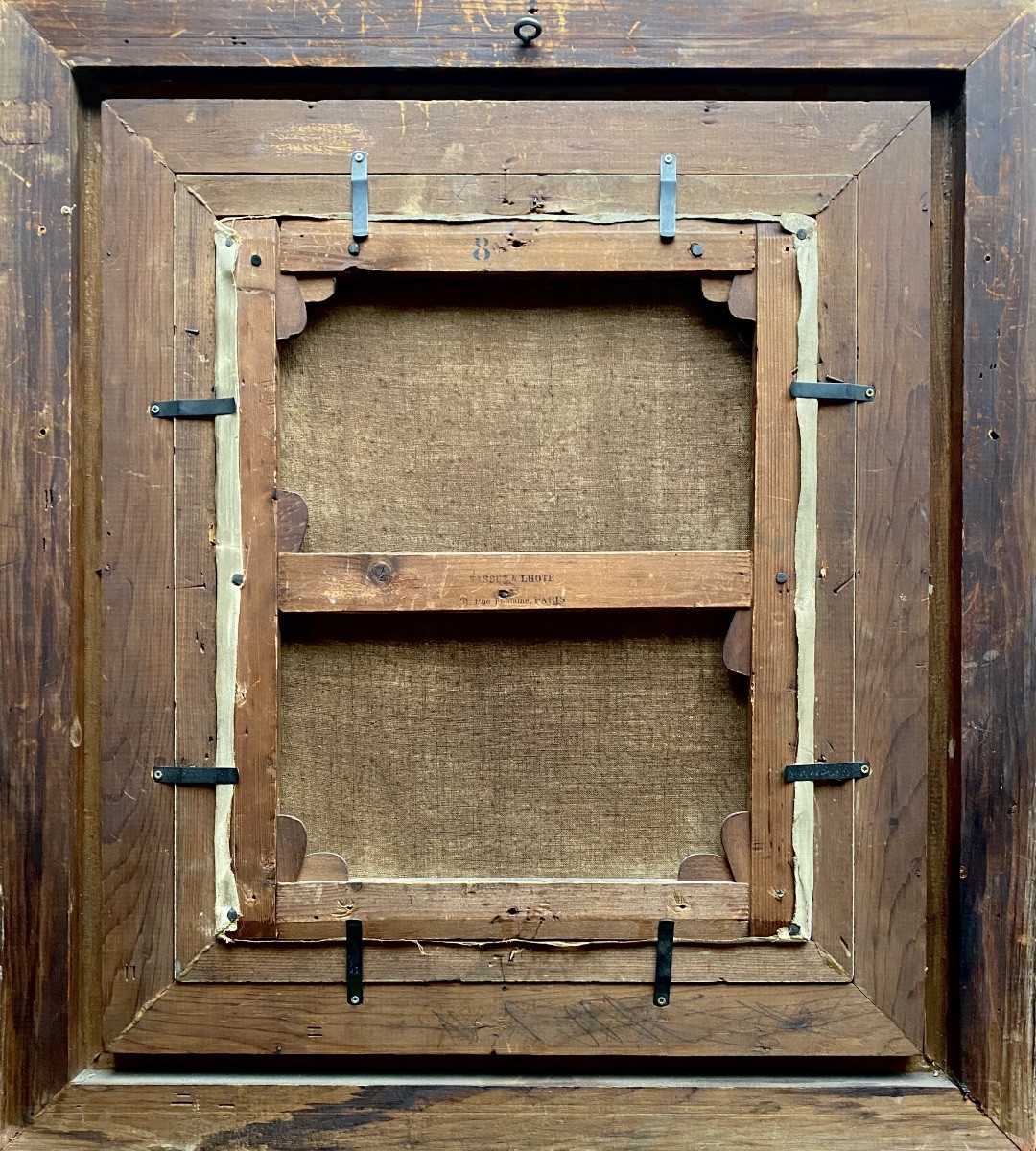
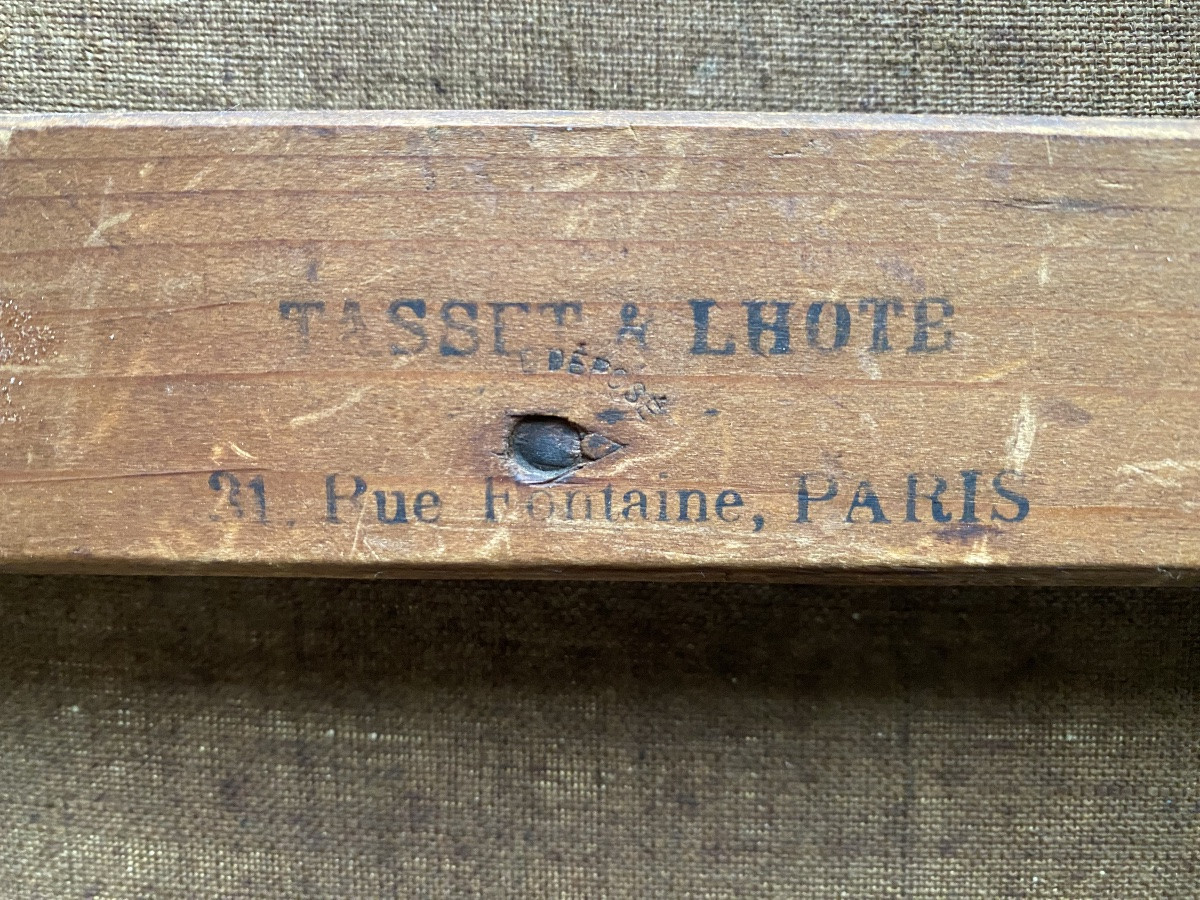
The stamp on revers of the painting: “Tasset et Lhote, 31 Rue Fontaine, Paris” refers to a well-known Parisian supplier of artists’ materials and photographic equipment active in the late 19th and early 20th centuries. The firm provided canvases and colours to numerous artists of the period, and its name also appears on the back of some paintings by Vincent van Gogh.
Notes: Born West Flanders, Évariste Carpentier began his career as a historical and academic painter, trained at the Royal Academy of Fine Arts in Antwerp. After a transformative period in Paris, he embraced plein-air painting and became a key figure in Belgian luminism, known for his light-filled rural scenes. As director of the Académie
des Beaux-Arts in Liège, he guided students toward modern, impressionist approaches. His legacy lives on in both his work and his influence on a new generation of Belgian artists.
Biography: Évariste Carpentier was born in 1845 in the village of Kuurne, in West Flanders, Belgium. Coming from a modest farming family, his artistic talent became evident at a young age. He began his formal training at the Academy of Courtrai and, in 1864, enrolled at the Royal Academy of Fine Arts in Antwerp. There, he excelled in historical and academic painting, earning recognition for his skill and discipline. His early works often focused on religious and historical themes, marked by a rigorous academic style.
In the 1870s, Carpentier formed friendships with fellow artists such as Émile Claus, Théodore Verstraete, and Jan Van Beers. These connections, particularly with Claus, would later influence his artistic development. After suffering from a serious knee condition in 1876, Carpentier left Antwerp and returned to Kuurne to recuperate. In 1880, seeking new inspiration and a change of environment, he moved to Paris, where he shared a studio with Jan Van Beers.
During his years in Paris, Carpentier continued to paint historical subjects, especially scenes from the French Revolution and the War in the Vendée. However, a turning point in his career came in the mid-1880s when he was introduced to the plein-air painting movement and the naturalist style of artists such as Jules Bastien-Lepage. Influenced by this approach, Carpentier gradually abandoned academic painting and embraced a more modern, light-filled style rooted in direct observation of nature.
He returned to Belgium in 1886 and began painting rural scenes with a focus on natural light and atmospheric effects. His technique became looser and more vibrant, aligning him with the Belgian luminist movement, a form of impressionism particularly concerned with light. His travels took him to the countryside of the Campine, Brittany, and other regions where he found endless inspiration in landscapes and rural life.
In 1904, Carpentier was appointed director of the Académie des Beaux-Arts in Liège. As a teacher and administrator, he played a key role in guiding the academy away from its academic traditions toward more modern and impressionist techniques. He influenced an entire generation of Liège painters, encouraging them to paint from life and embrace the natural world.
During World War I, Carpentier remained in Liège under German occupation and continued to paint, even documenting the atrocities he witnessed. His health declined in the postwar years, and he retired from the academy in 1919. Évariste Carpentier died in Liège on September 12, 1922.
His legacy endures through his luminous landscapes and rural genre scenes, as well as through the many artists he inspired as both a painter and teacher. Today, his works are housed in major Belgian museums and collections around the world.
Kuurne 1845 – 1922 Liège
Belgian Painter
“Returning from the Fields”
Signature: signed lower left 'Év Carpentier'
Medium: oil on canvas
Dimensions: image size 47 x 38 cm, frame size 76 x 68 cm
The stamp on revers of the painting: “Tasset et Lhote, 31 Rue Fontaine, Paris” refers to a well-known Parisian supplier of artists’ materials and photographic equipment active in the late 19th and early 20th centuries. The firm provided canvases and colours to numerous artists of the period, and its name also appears on the back of some paintings by Vincent van Gogh.
Notes: Born West Flanders, Évariste Carpentier began his career as a historical and academic painter, trained at the Royal Academy of Fine Arts in Antwerp. After a transformative period in Paris, he embraced plein-air painting and became a key figure in Belgian luminism, known for his light-filled rural scenes. As director of the Académie
des Beaux-Arts in Liège, he guided students toward modern, impressionist approaches. His legacy lives on in both his work and his influence on a new generation of Belgian artists.
Biography: Évariste Carpentier was born in 1845 in the village of Kuurne, in West Flanders, Belgium. Coming from a modest farming family, his artistic talent became evident at a young age. He began his formal training at the Academy of Courtrai and, in 1864, enrolled at the Royal Academy of Fine Arts in Antwerp. There, he excelled in historical and academic painting, earning recognition for his skill and discipline. His early works often focused on religious and historical themes, marked by a rigorous academic style.
In the 1870s, Carpentier formed friendships with fellow artists such as Émile Claus, Théodore Verstraete, and Jan Van Beers. These connections, particularly with Claus, would later influence his artistic development. After suffering from a serious knee condition in 1876, Carpentier left Antwerp and returned to Kuurne to recuperate. In 1880, seeking new inspiration and a change of environment, he moved to Paris, where he shared a studio with Jan Van Beers.
During his years in Paris, Carpentier continued to paint historical subjects, especially scenes from the French Revolution and the War in the Vendée. However, a turning point in his career came in the mid-1880s when he was introduced to the plein-air painting movement and the naturalist style of artists such as Jules Bastien-Lepage. Influenced by this approach, Carpentier gradually abandoned academic painting and embraced a more modern, light-filled style rooted in direct observation of nature.
He returned to Belgium in 1886 and began painting rural scenes with a focus on natural light and atmospheric effects. His technique became looser and more vibrant, aligning him with the Belgian luminist movement, a form of impressionism particularly concerned with light. His travels took him to the countryside of the Campine, Brittany, and other regions where he found endless inspiration in landscapes and rural life.
In 1904, Carpentier was appointed director of the Académie des Beaux-Arts in Liège. As a teacher and administrator, he played a key role in guiding the academy away from its academic traditions toward more modern and impressionist techniques. He influenced an entire generation of Liège painters, encouraging them to paint from life and embrace the natural world.
During World War I, Carpentier remained in Liège under German occupation and continued to paint, even documenting the atrocities he witnessed. His health declined in the postwar years, and he retired from the academy in 1919. Évariste Carpentier died in Liège on September 12, 1922.
His legacy endures through his luminous landscapes and rural genre scenes, as well as through the many artists he inspired as both a painter and teacher. Today, his works are housed in major Belgian museums and collections around the world.
15 500 €
Period: 19th century
Style: Other Style
Condition: Excellent condition
Material: Oil painting
Width: 76 cm
Height: 76 cm
Depth: 10 cm
Reference (ID): 1637858
Availability: In stock
Print