

Georges Jean-marie Haquette
Artist: Georges Jean-marie Haquette
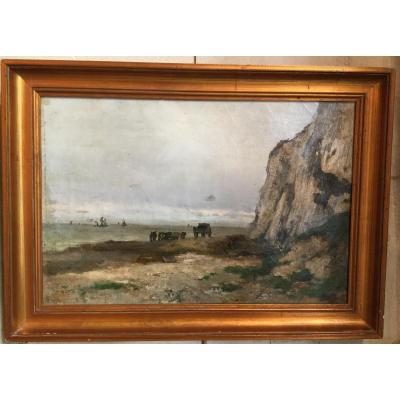
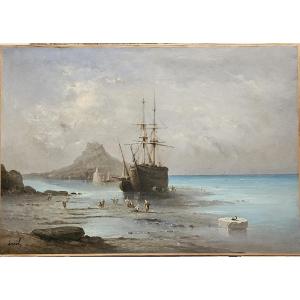
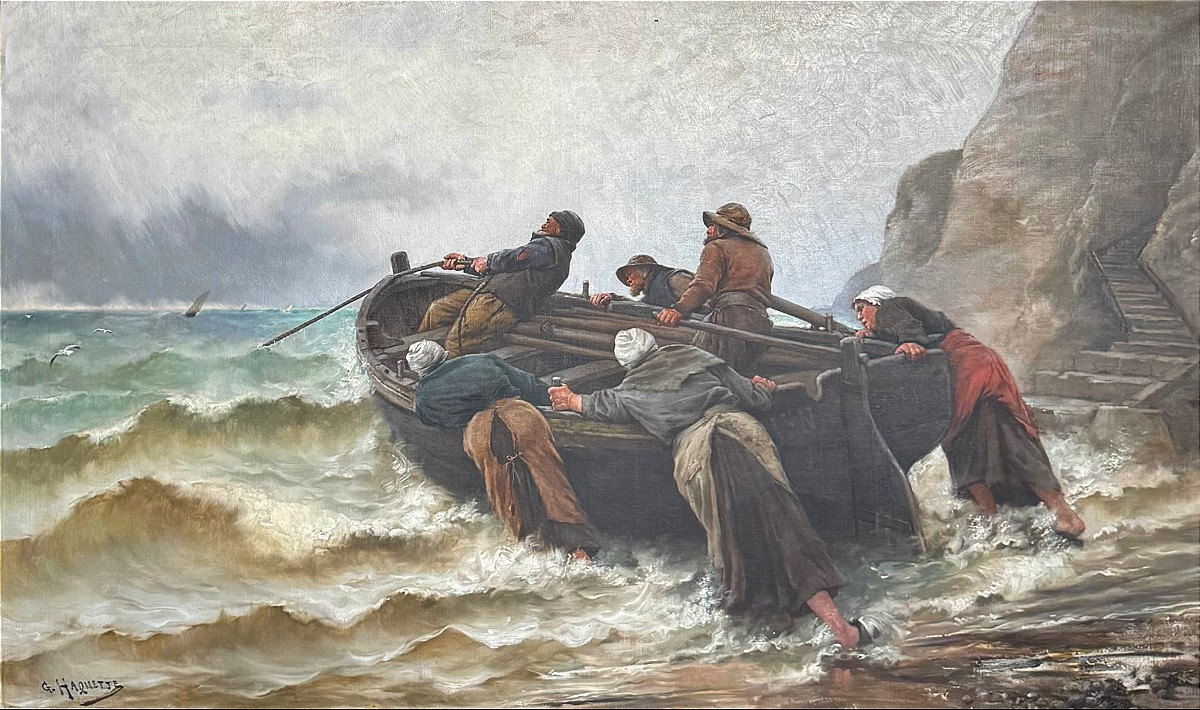
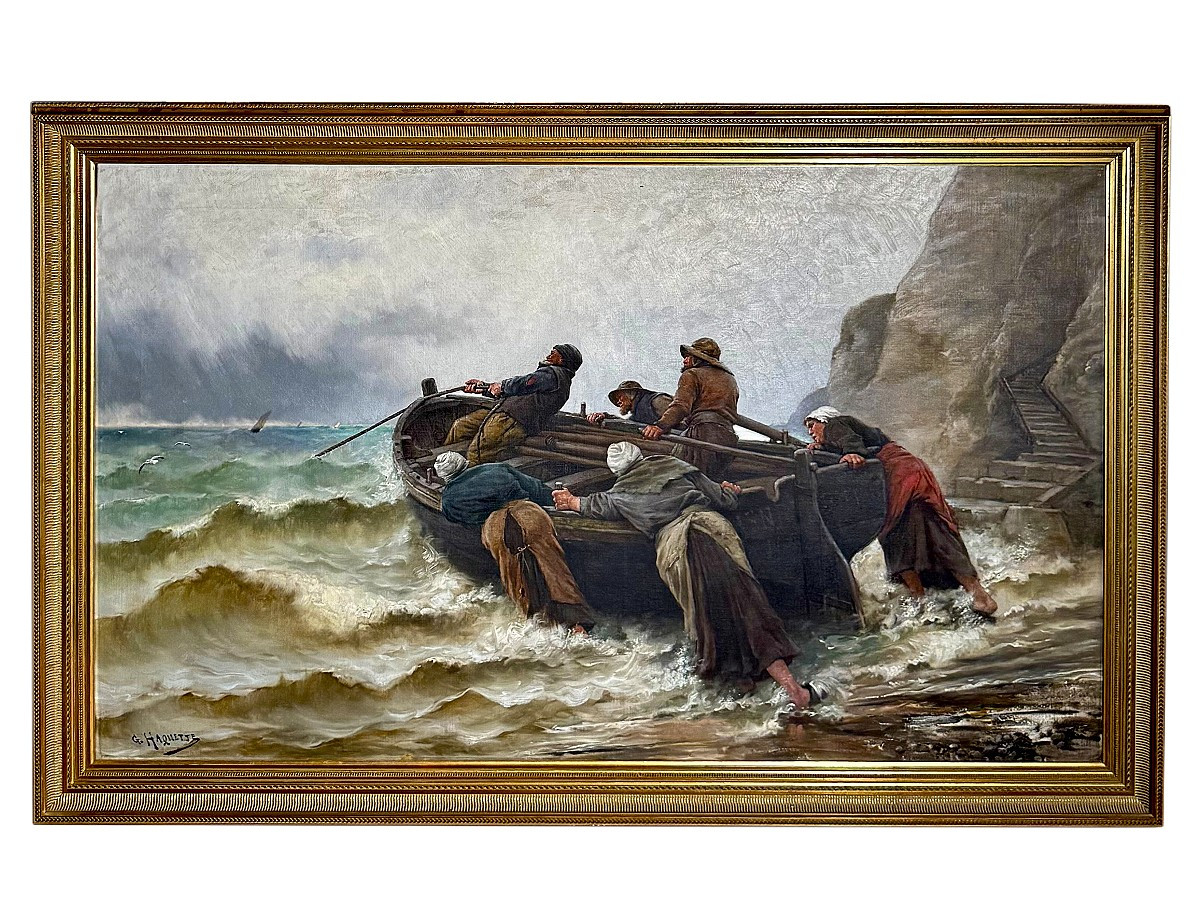
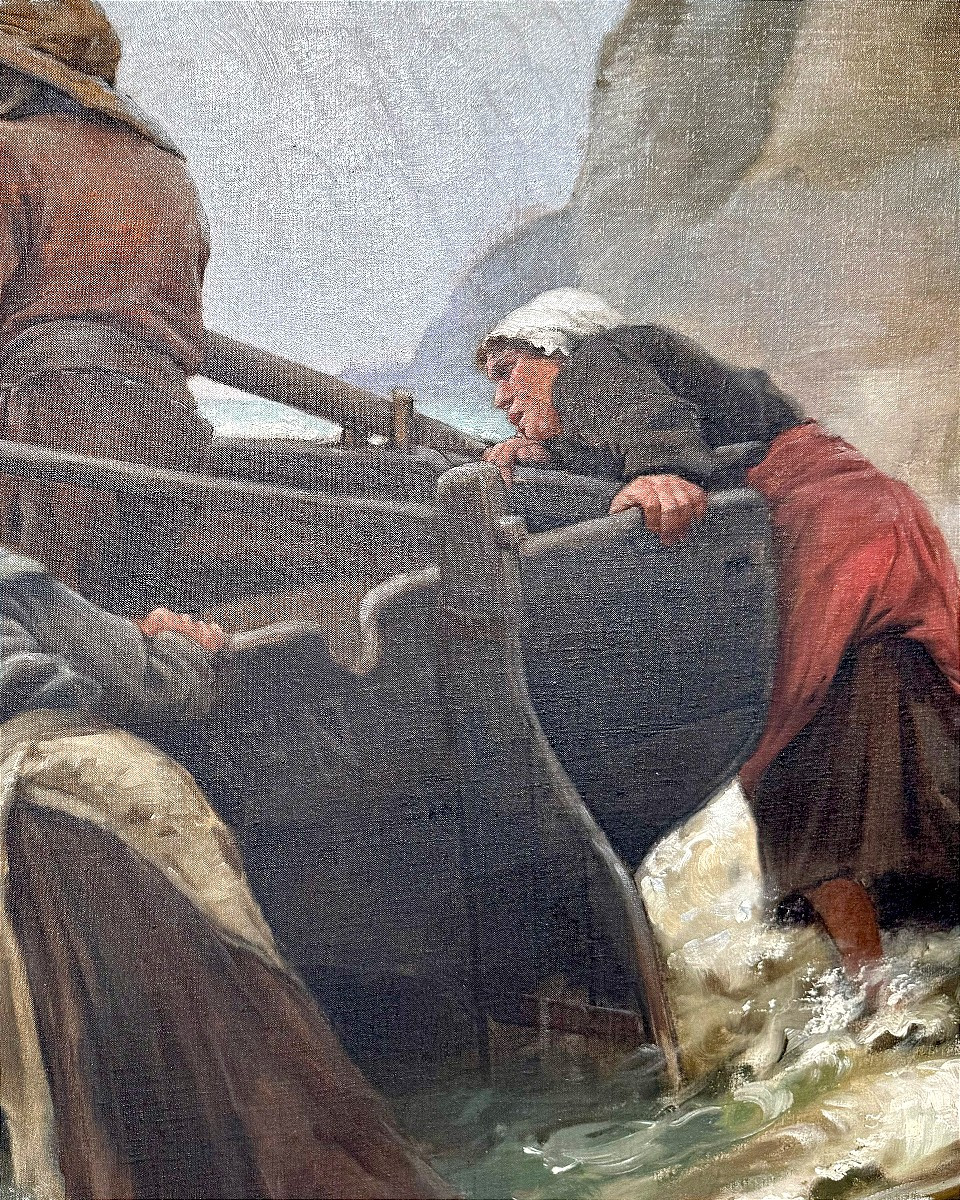
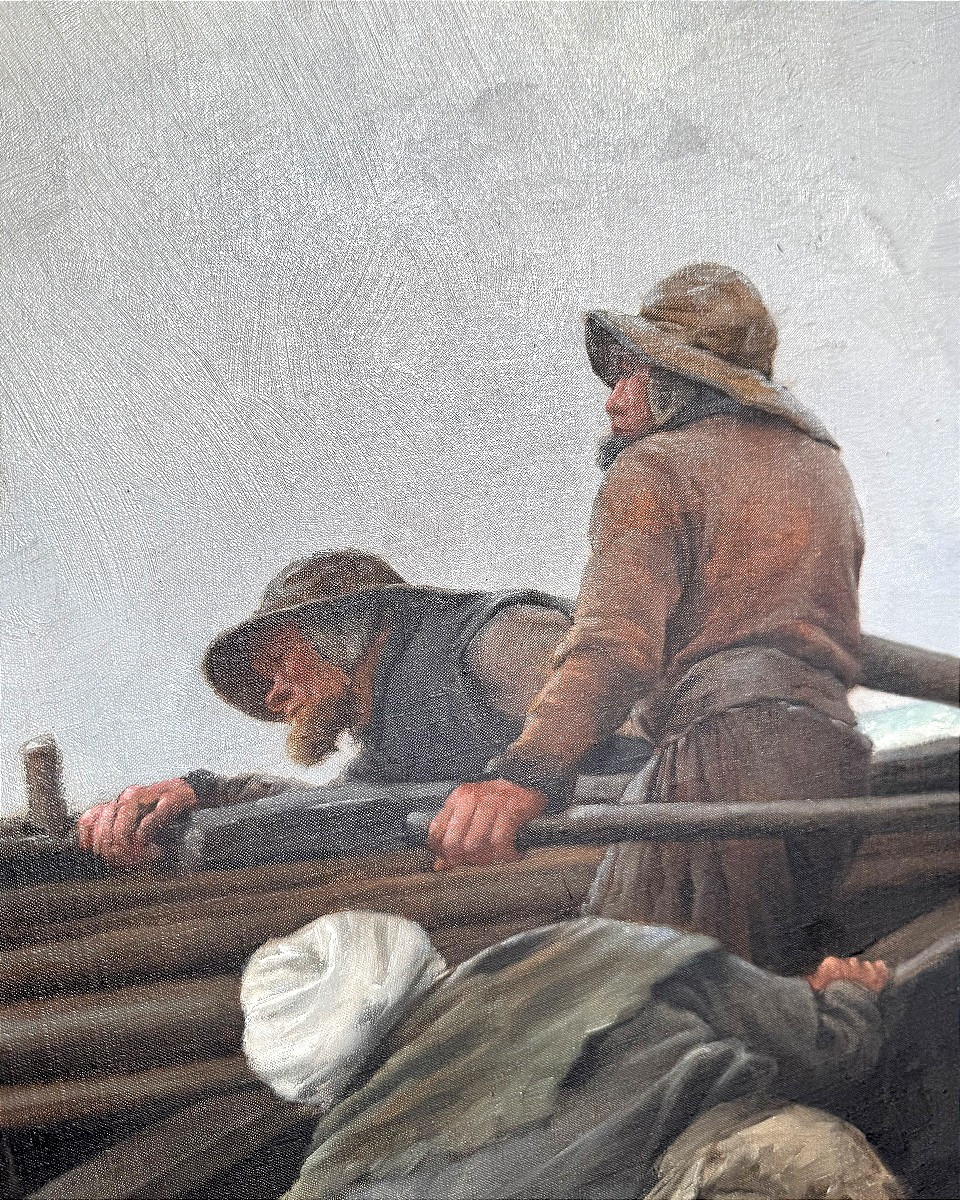
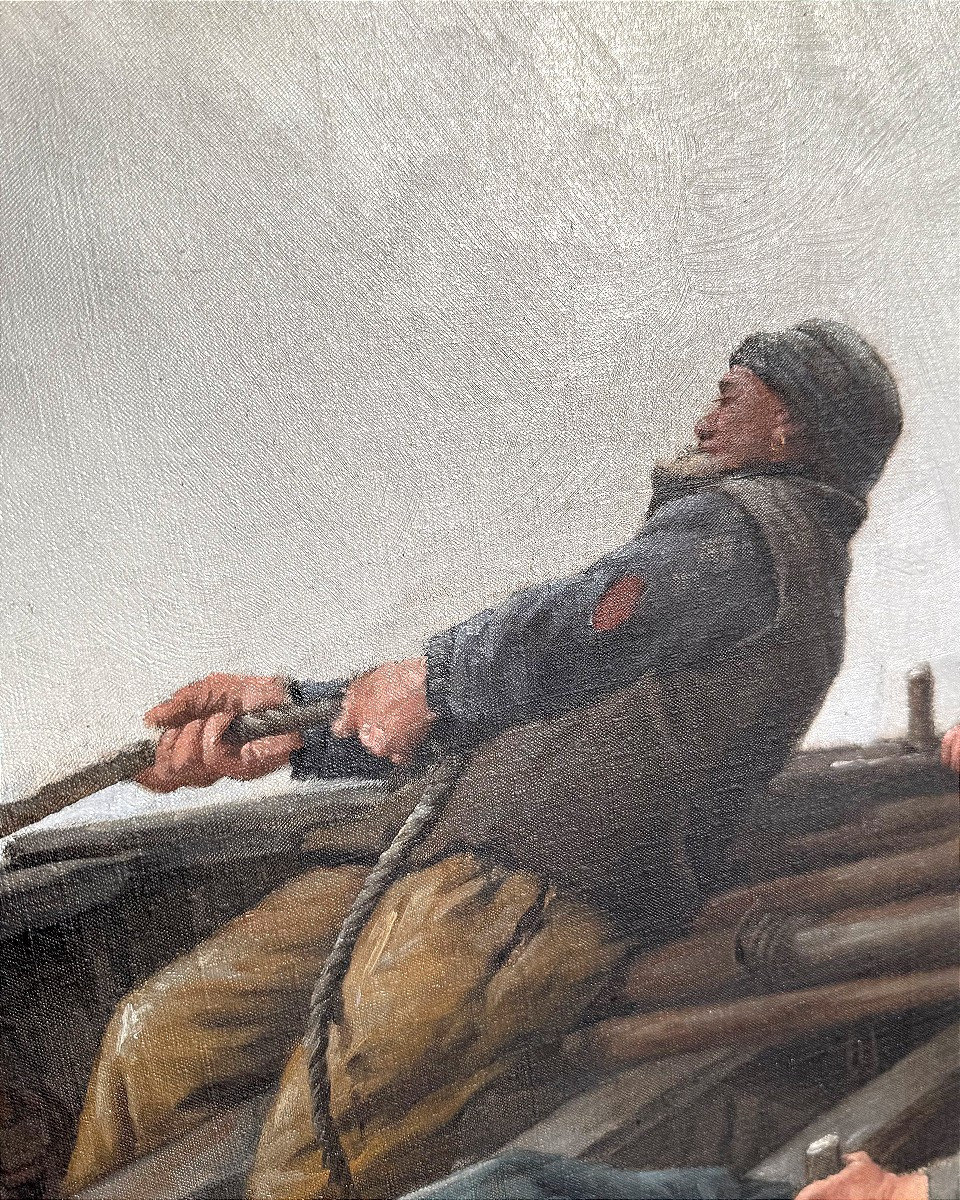
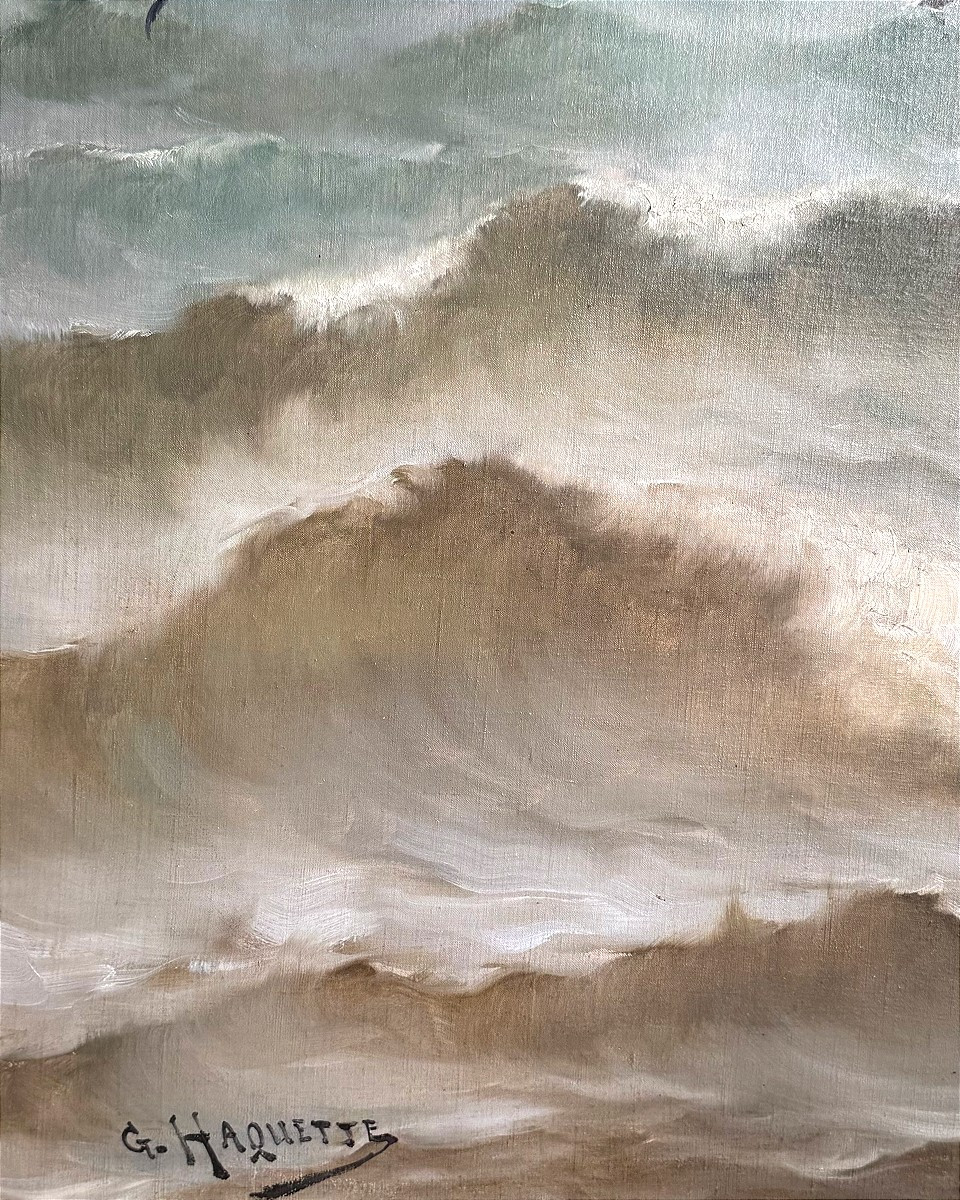
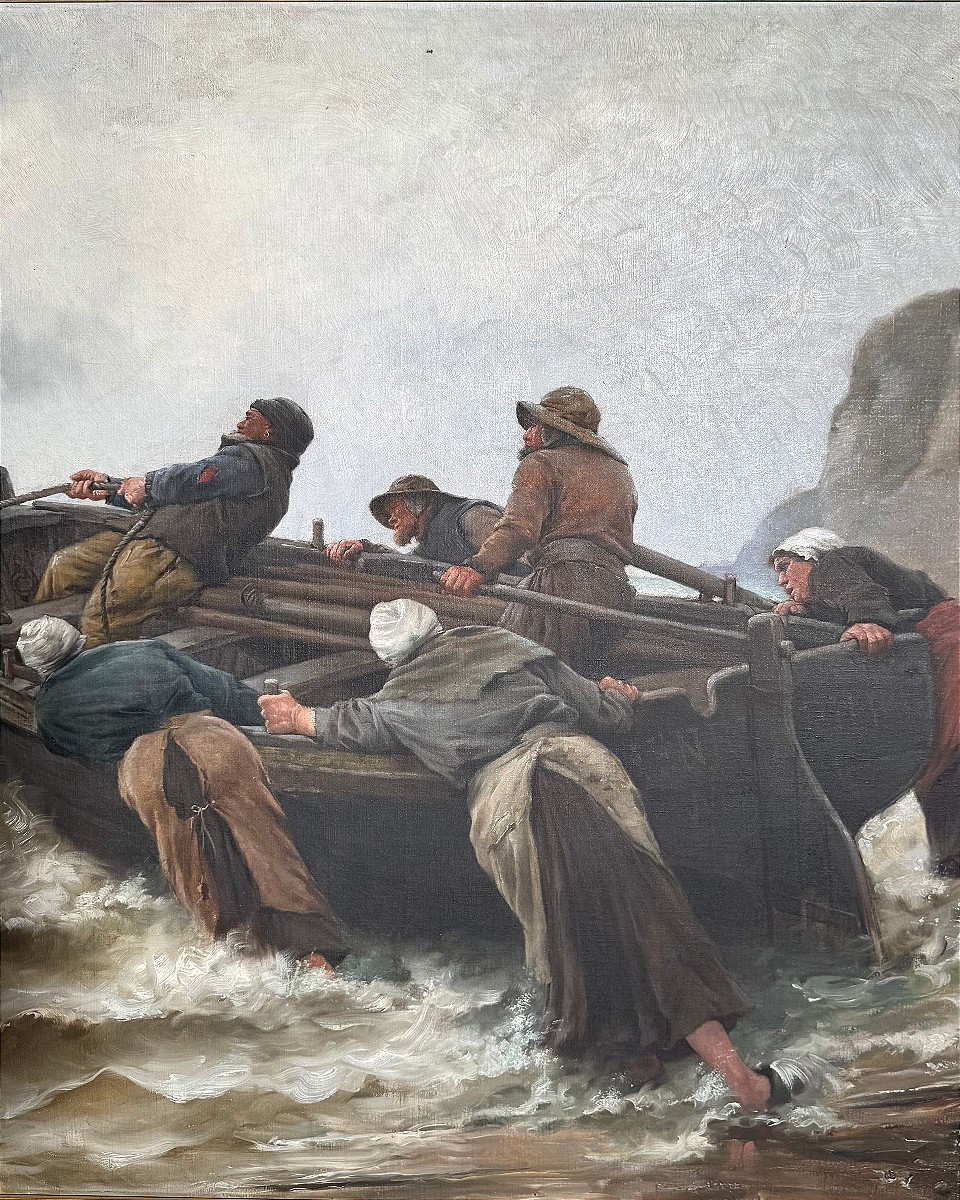
This oil on canvas by Georges Jean-Marie Haquette (1858-1906) is fully in keeping with the naturalist, maritime tradition of the late 19th century. It captures a moment of extreme tension: the departure of sailors facing rough seas at the foot of a cliff, a scene that is both everyday and heroic. This work reflects the accumulation of different situations.
- A scene of labor and solidarity: the work illustrates the collective work necessary for the survival of coastal communities. The presence of the women is essential: they are not spectators but actors in the departure.
- Man's struggle against nature: the sea is depicted as an indomitable force. the bent bodies, the tense gestures convey a physical resistance to the elements.
- A social realism: Haquette does not seek to idealize: he shows the harshness of maritime life, with an almost documentary precision. Here we find the influence of naturalism, close to the social concerns of the time.
- A dramatic dimension: the moment chosen, just before departure, is charged with tension. we feel urgency, danger and courage all at once. The immense staircase carved into the rock amplifies the feeling of harshness and materializes the descent towards the great elements.
Georges Jean-Marie Haquette, born on May 2, 1852 in Passy and died on August 7, 1906 in Dieppe, was a French painter trained at the École des Beaux-Arts in Paris, where he was a pupil of Alexandre Cabanel. He gained a reputation as a painter of fishermen. After his studies, he became a sailor, enabling him to capture the picturesque scenes that became the subject of his compositions and built his reputation. He took part in the Salon des Artistes Français, and owned a studio near the Pollet cliff in Dieppe. He was appointed Officier d'académie.
A restored tear is on the canvas.
Canvas 183cm x 116cm
- A scene of labor and solidarity: the work illustrates the collective work necessary for the survival of coastal communities. The presence of the women is essential: they are not spectators but actors in the departure.
- Man's struggle against nature: the sea is depicted as an indomitable force. the bent bodies, the tense gestures convey a physical resistance to the elements.
- A social realism: Haquette does not seek to idealize: he shows the harshness of maritime life, with an almost documentary precision. Here we find the influence of naturalism, close to the social concerns of the time.
- A dramatic dimension: the moment chosen, just before departure, is charged with tension. we feel urgency, danger and courage all at once. The immense staircase carved into the rock amplifies the feeling of harshness and materializes the descent towards the great elements.
Georges Jean-Marie Haquette, born on May 2, 1852 in Passy and died on August 7, 1906 in Dieppe, was a French painter trained at the École des Beaux-Arts in Paris, where he was a pupil of Alexandre Cabanel. He gained a reputation as a painter of fishermen. After his studies, he became a sailor, enabling him to capture the picturesque scenes that became the subject of his compositions and built his reputation. He took part in the Salon des Artistes Français, and owned a studio near the Pollet cliff in Dieppe. He was appointed Officier d'académie.
A restored tear is on the canvas.
Canvas 183cm x 116cm
6 800 €
Period: 19th century
Style: Napoleon 3rd
Condition: Fully restored
Material: Oil painting
Length: 163
Height: 99
Reference (ID): 1756051
Availability: In stock
Print