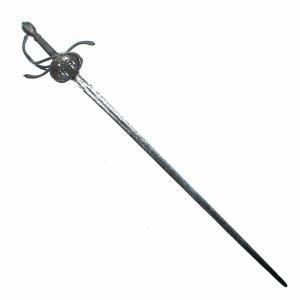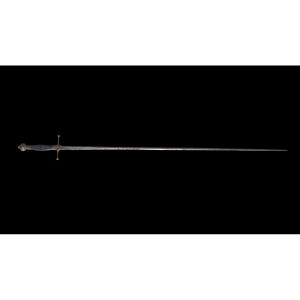
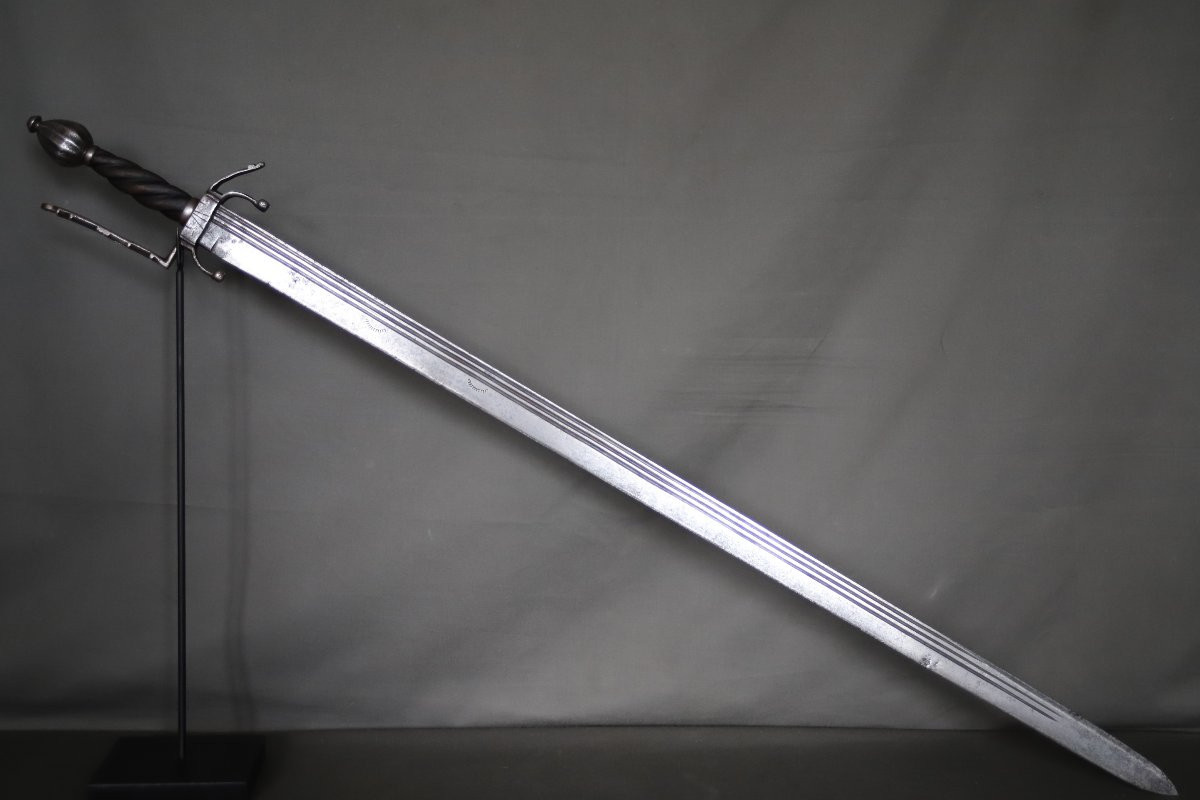
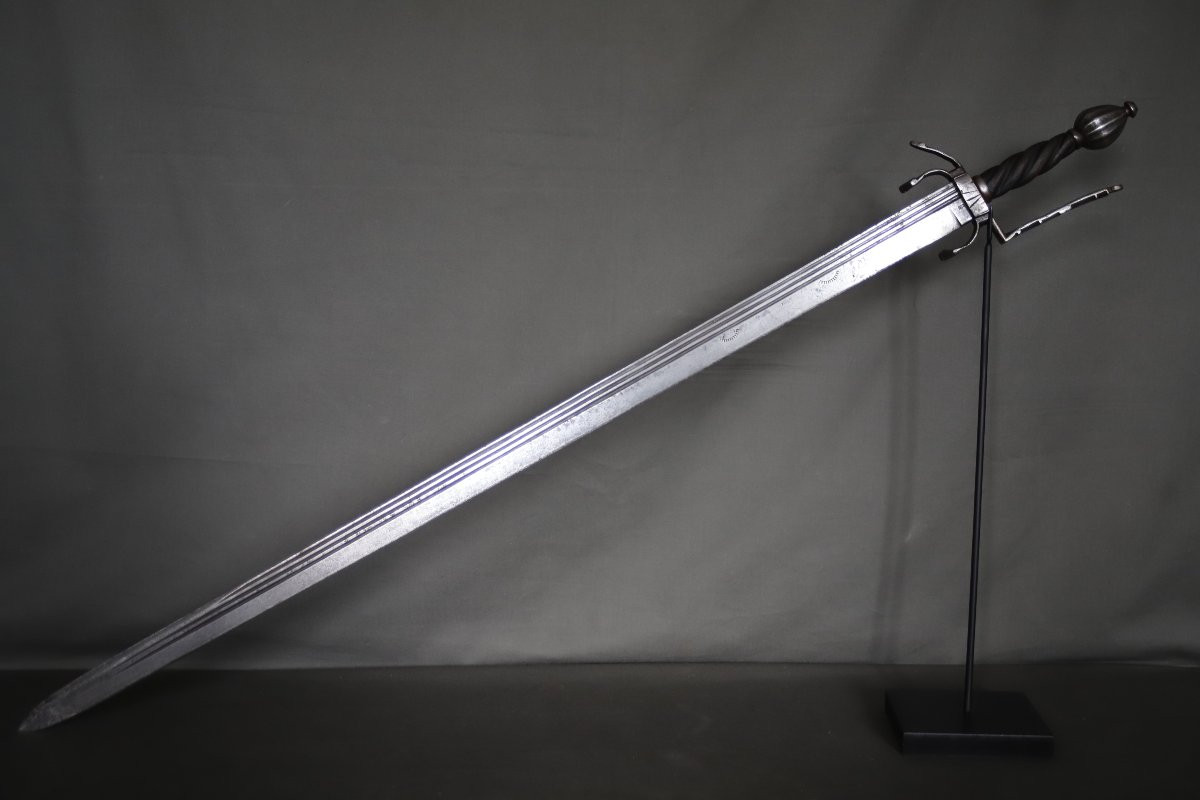


Rapier/nimcha Sword - Late 16th/early 17th Century
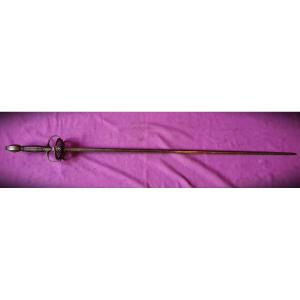
Rapier/nimcha sword - Late 16th/early 17th century
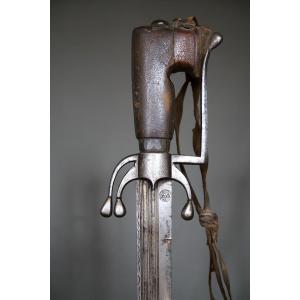
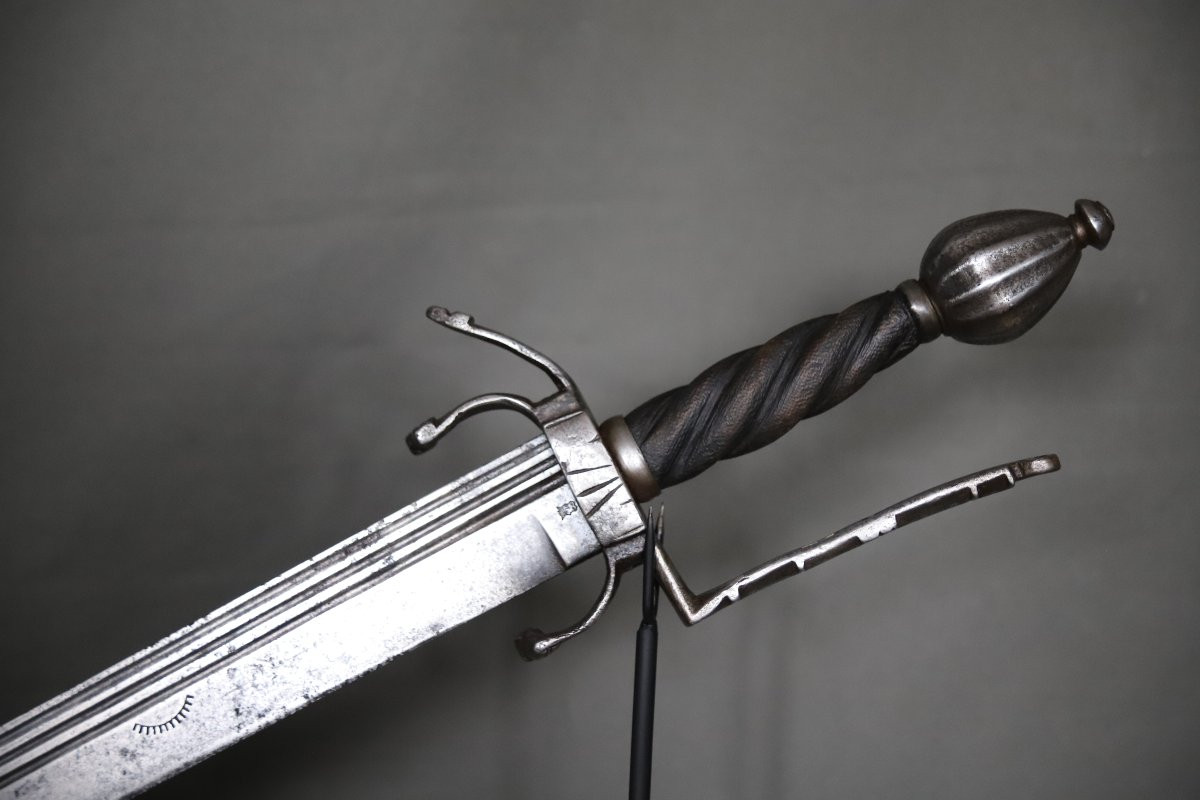
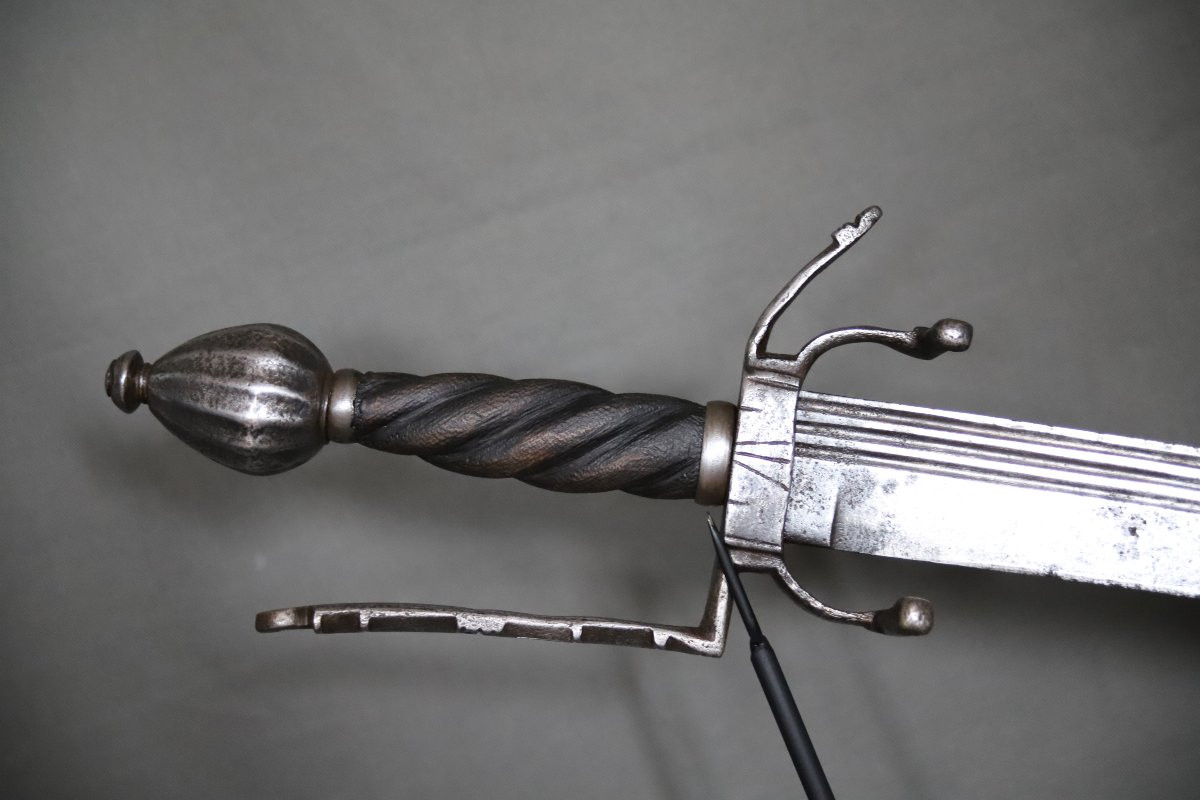
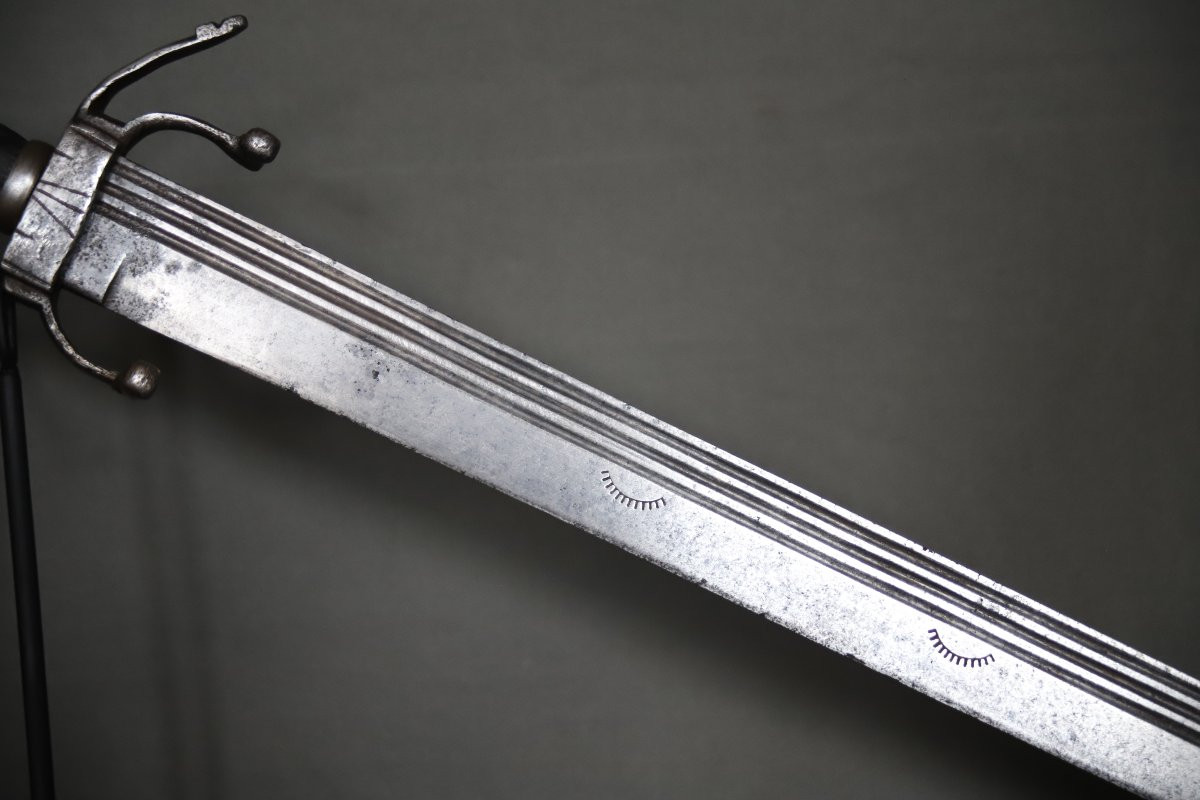
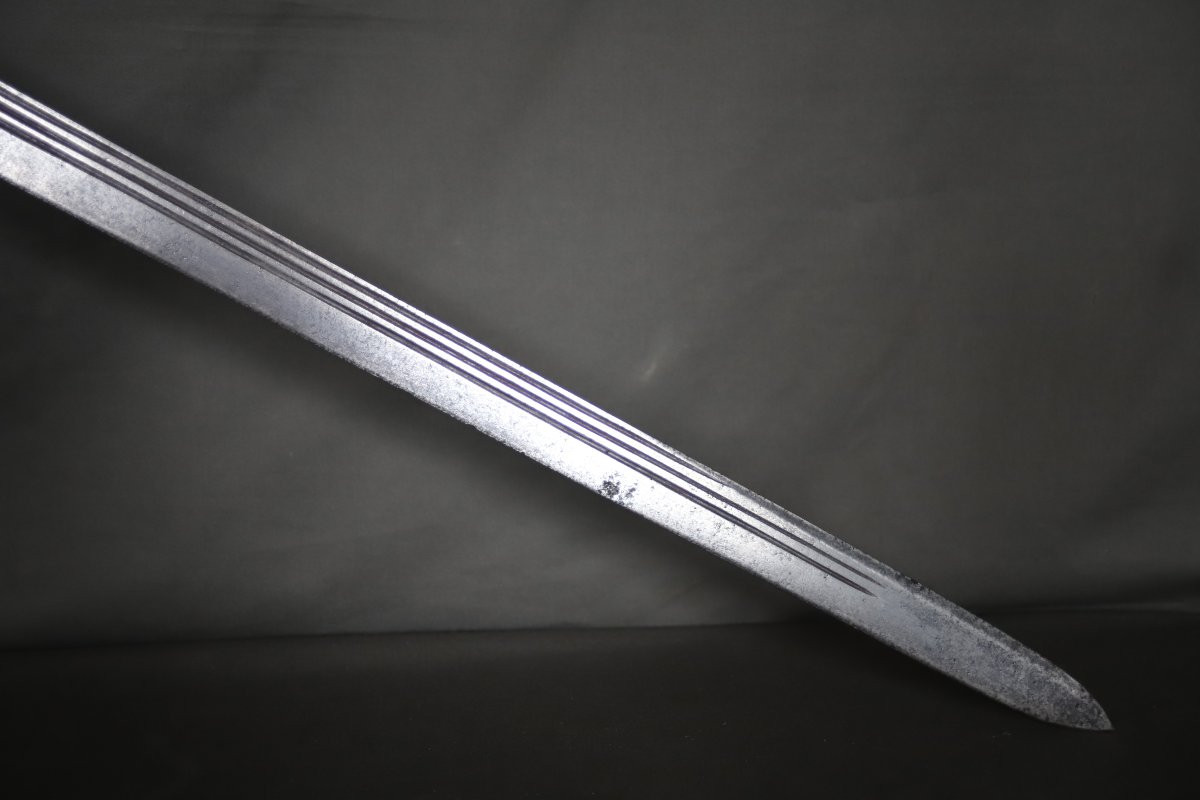
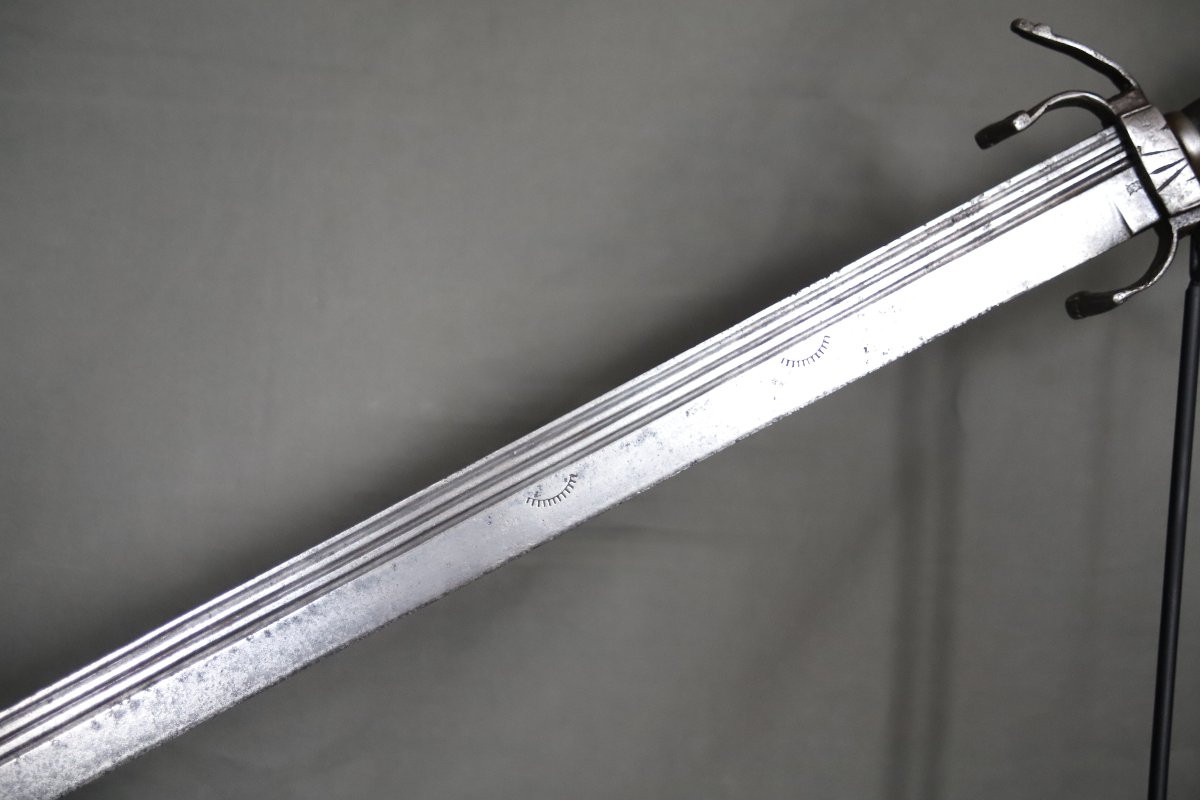
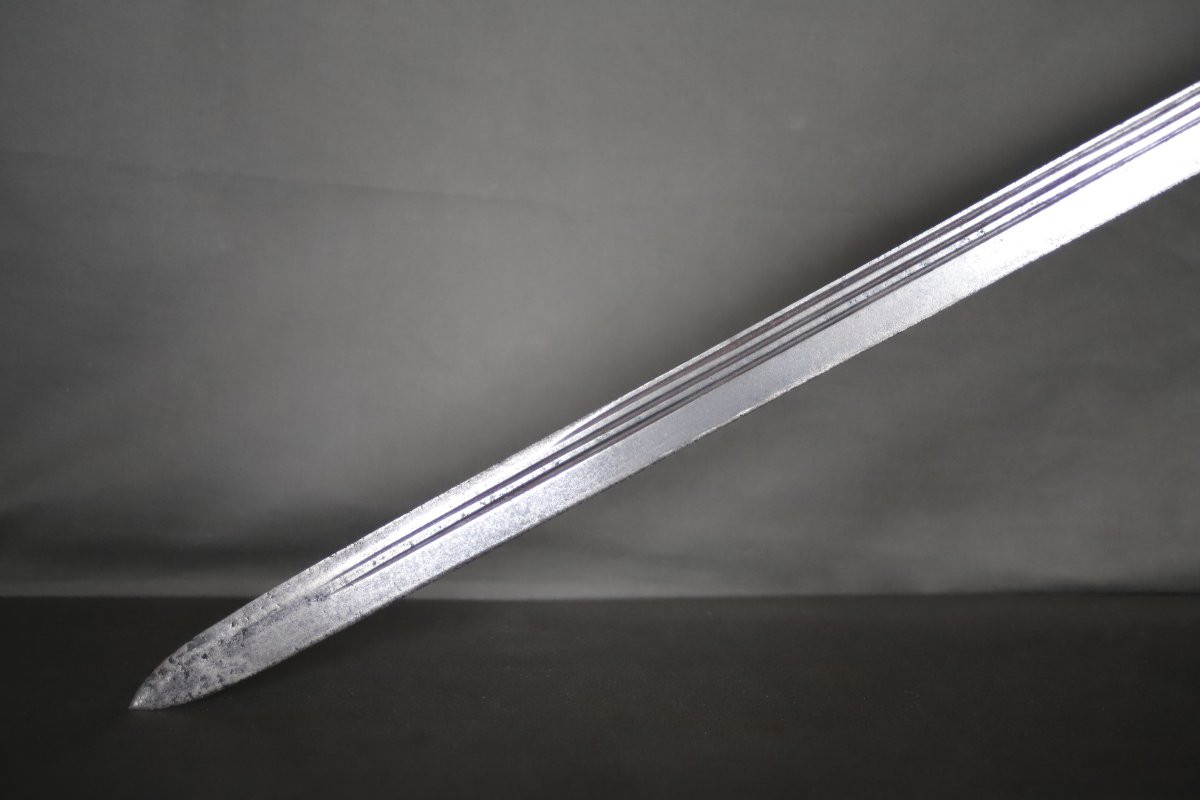
Single-edged straight blade, flat dot and three deep gutters.
Famous serrated semicircle markings (also known as eyelashes in English) on both sides.
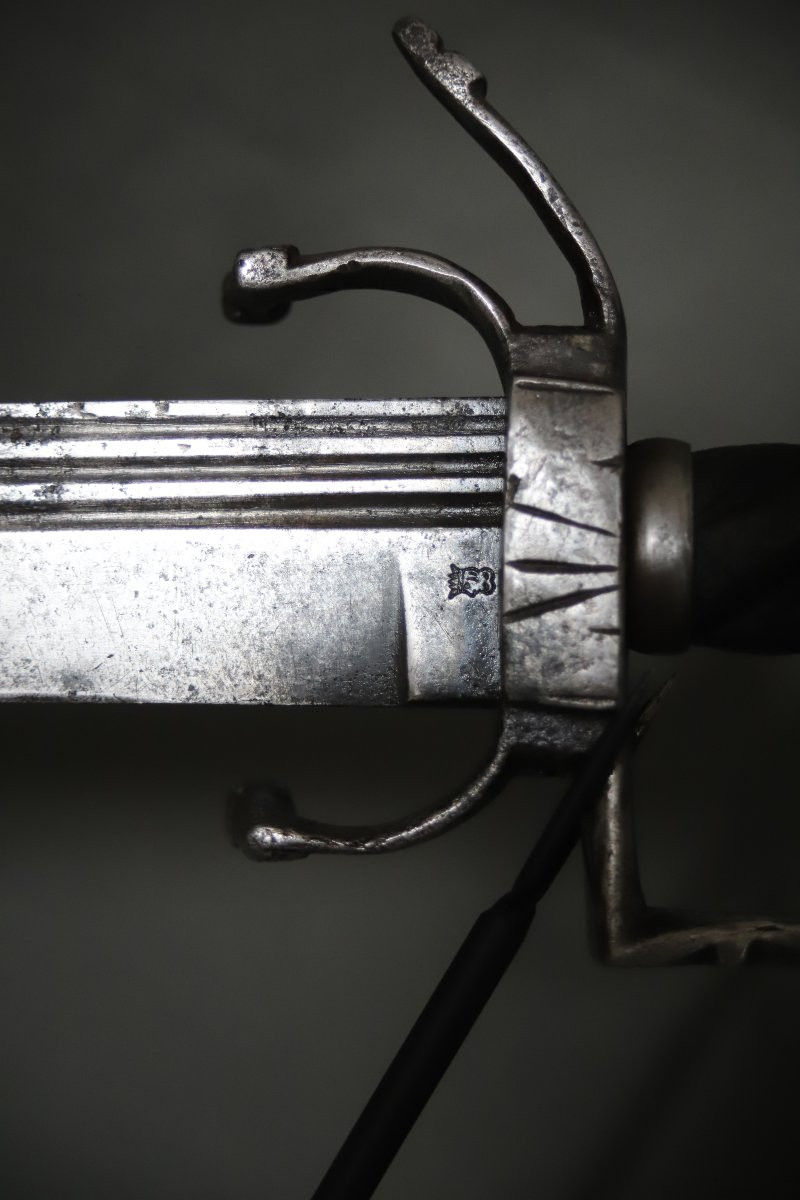
On one side, a crowned head, the hallmark of the famous of the famous Solingen "WUNDES" family of forgers, active in the late late 16th and early 17th centuries.
In the book armes blanches, symbolisme, inscriptions, marquements,fourbisseurs, manufactures by Jean Lhoste and Jean-Jacques Buigne, thiscrowned head hallmark is attributed to Johanes Wundes or Thies Wundes, active in Sonlingen between 1560-1620 (cf. p. 202-203).
Two swords in London's Wallace Collection also bear a similar mark on their blades.mark on their blades. Cf Wallace collections catalogsEuropean arms and armour,reference A508 and A725.
Respectively attributed and dated as follows:
Wundes, Germany, Solingen, 1635-45
J. Wundes, Solingen 1550-1620
Blade dated late 16th or early 17th century.
Blade type that was heavily imported to the Maghreb during the 16thand 17th centuries, as they are frequently found mounted on nimcha swordsnimcha or takouba swords of this period.
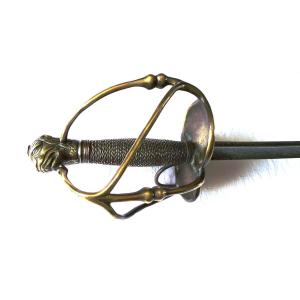
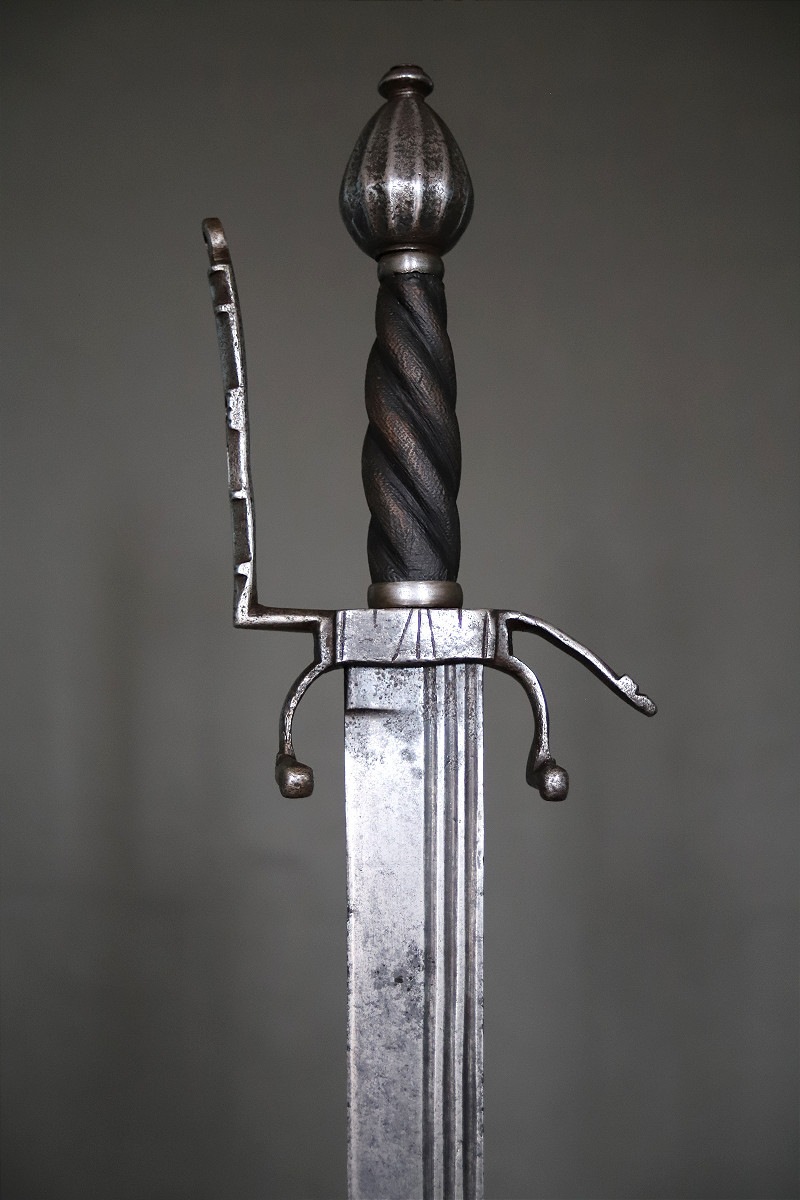
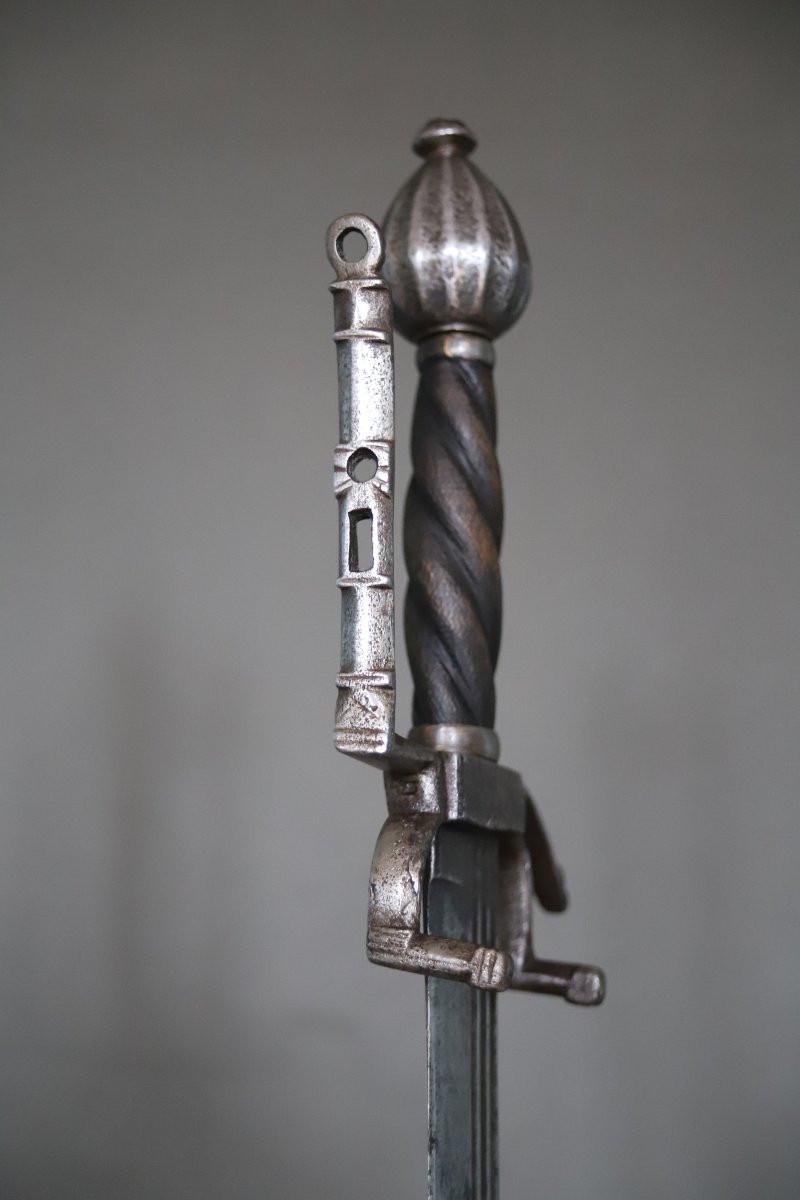
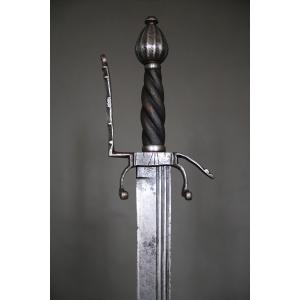
Piton guard of the nimcha type (itself inspired by Spanishguards of the 15th century (Cf catalog of Charles Buttin's collection ofof Charles Buttin). Beautifullyforged and openwork. The guard itself dates from the same period as the blade.blade.
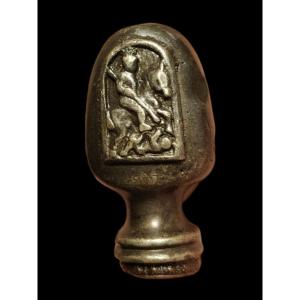
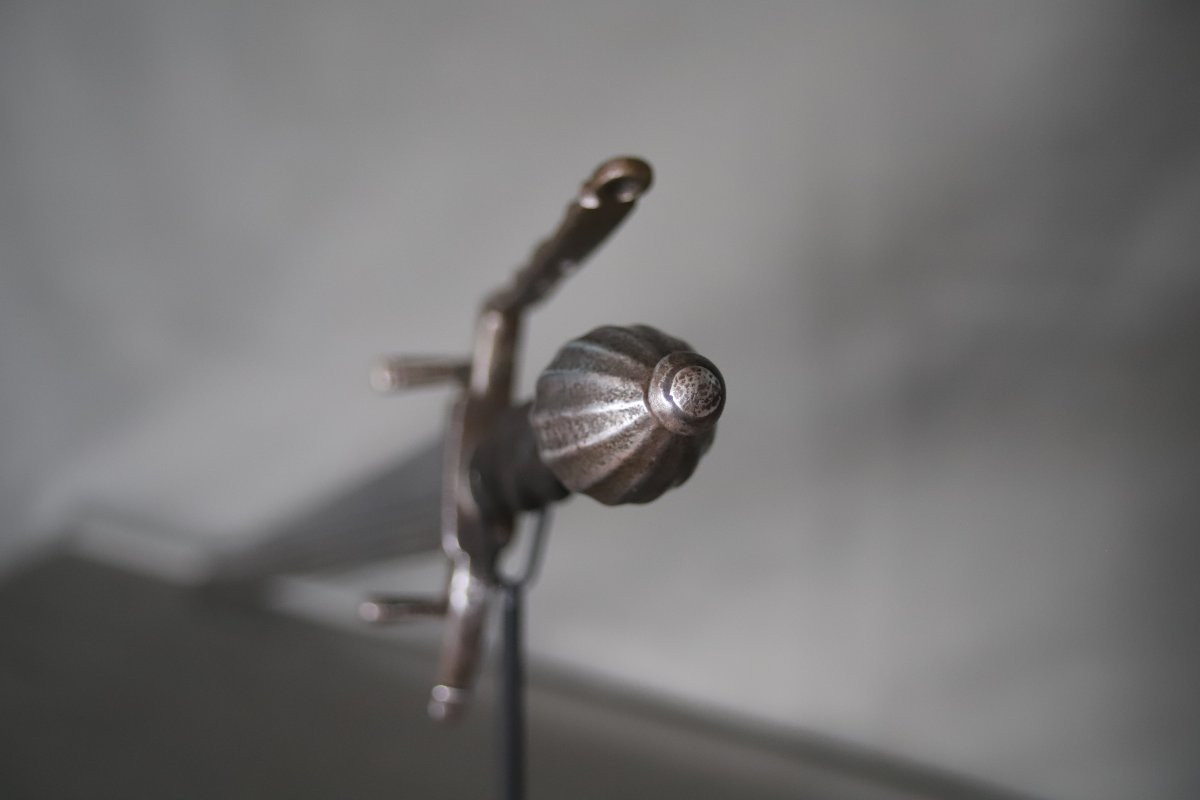
Strong pear-shaped pommel with several sides, typical of rapiers from the late 16th/early 17th century.
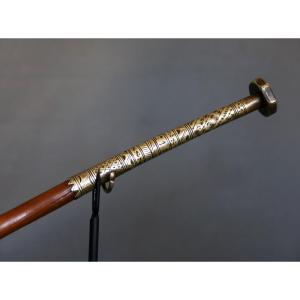
Twisted wooden fusee with two steel ferrules at the ends. Thefuse was formerly covered with a watermark that left its imprintimpressions in the wood. The fuse seems more recent than the other elements.elements. Probably a Viollet-le-Duc restoration.
This rather singular sword is difficult to place precisely in time and space.
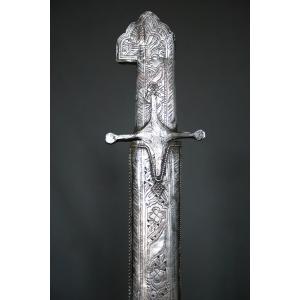
The homogeneity of the saber and the concordance in dating of the blade,hilt and pommel suggest that the whole was originally assembled(as for the fuse, it is likely to be a restoration from the19th century restoration). We may then be dealing with a Moroccan sabersaber (or at least of the Maghreb nimcha type) from the 17th century in the style of the European rapiers of the period; or perhaps a European saber influencedinfluenced by Maghreb nimchas of the time.
(For an example of sabers drawing their influences from both sides of theMediterranean, cf. Saber inventory number Y0O41 SKD museum Dresden:
https://skd-online-collection.skd.museum/Details/Index/289063
Once this has been said, it is nevertheless not to be ruled out that this saber is a composite 19th century saber with elements from the late 16th early 17th century elements.
Beautiful condition
Length 105,5cm
Blade length 89,5cm
Blade width at ricasso 37mm
Weight 1050gr
Period: 17th century
Style: Renaissance, Louis 13th
Condition: Good condition
Reference (ID): 1755366
Availability: In stock