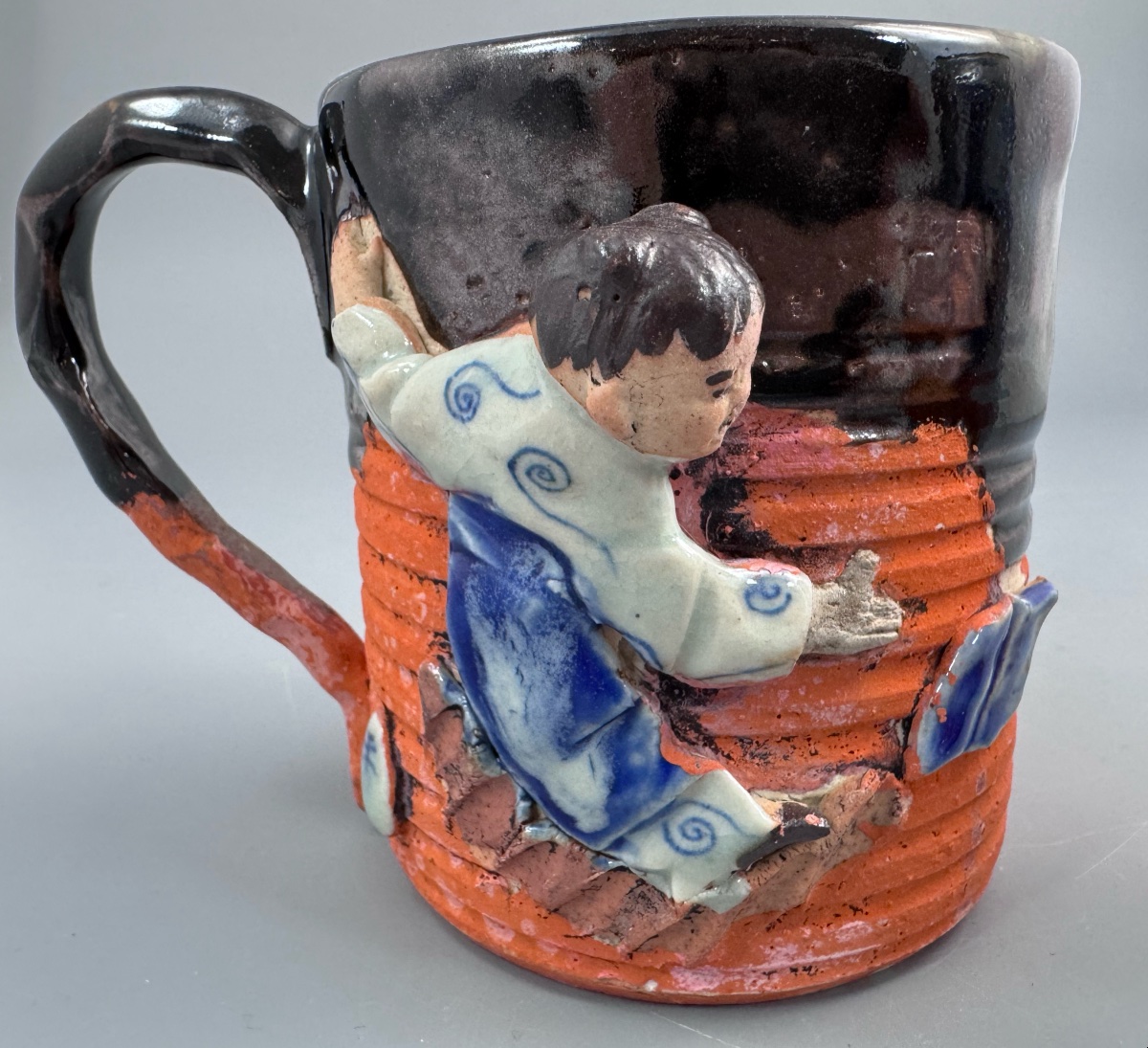


Japanese Sumida Gawa Mug With Applied Karako Figure, Signed Kōko — Meiji / Early Taishō Period
A hand-thrown Sumida ware (隅田焼 / Sumida-gawa) mug, Japan, late Meiji to early Taishō period, c. 1900–1920, signed Kōko and attributed to the potter Ishiguro Kōko (石黒光湖).
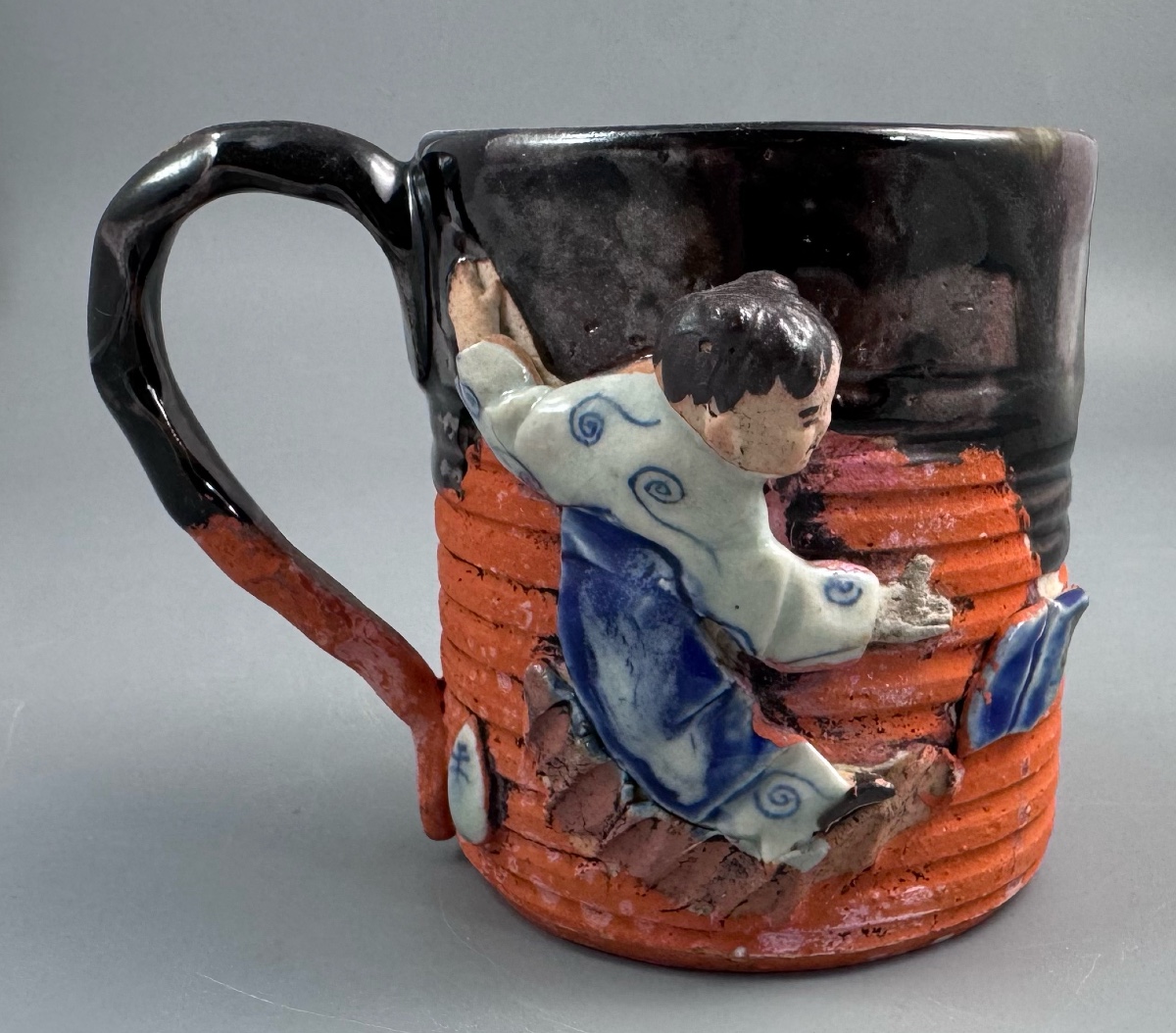
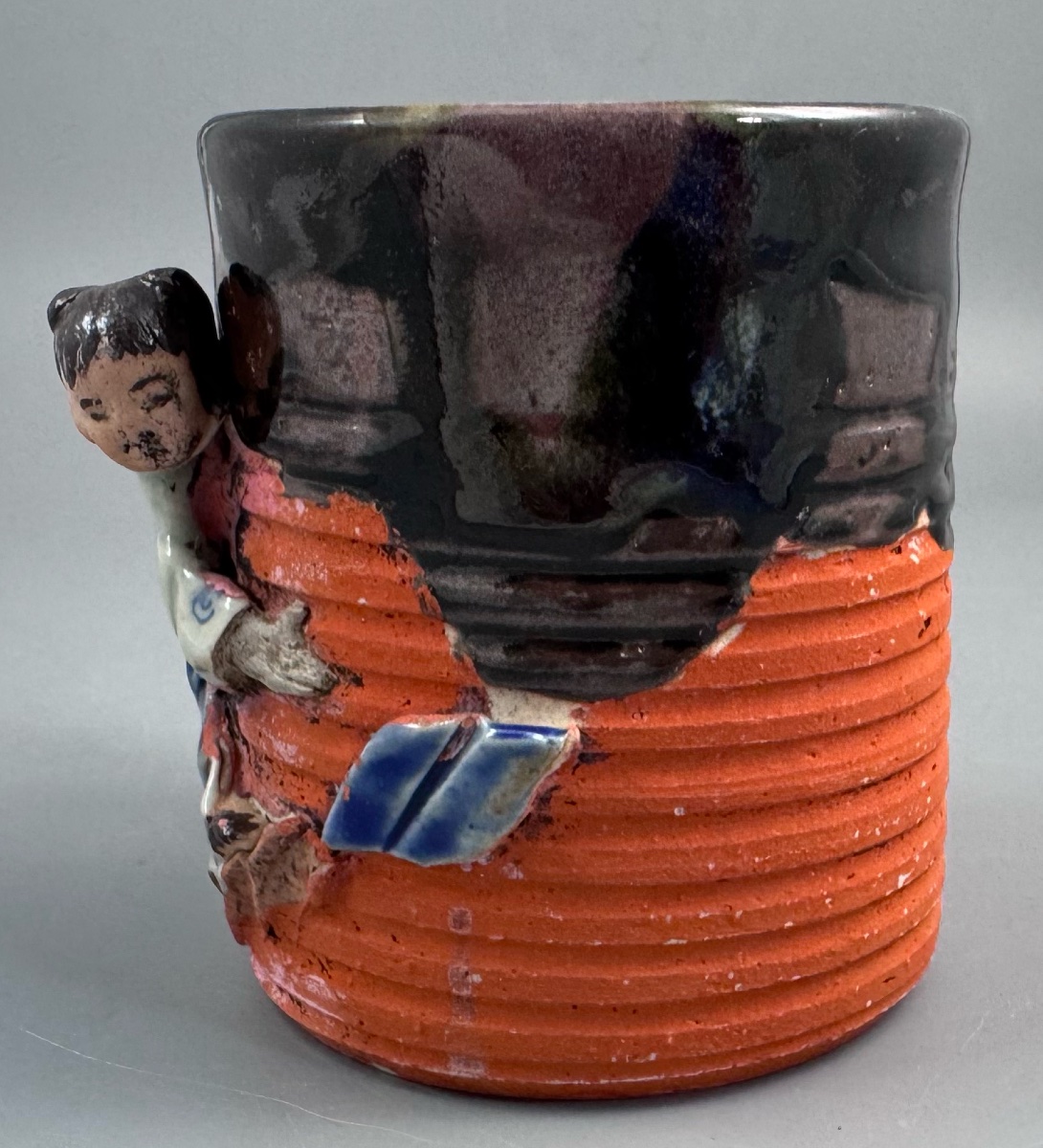
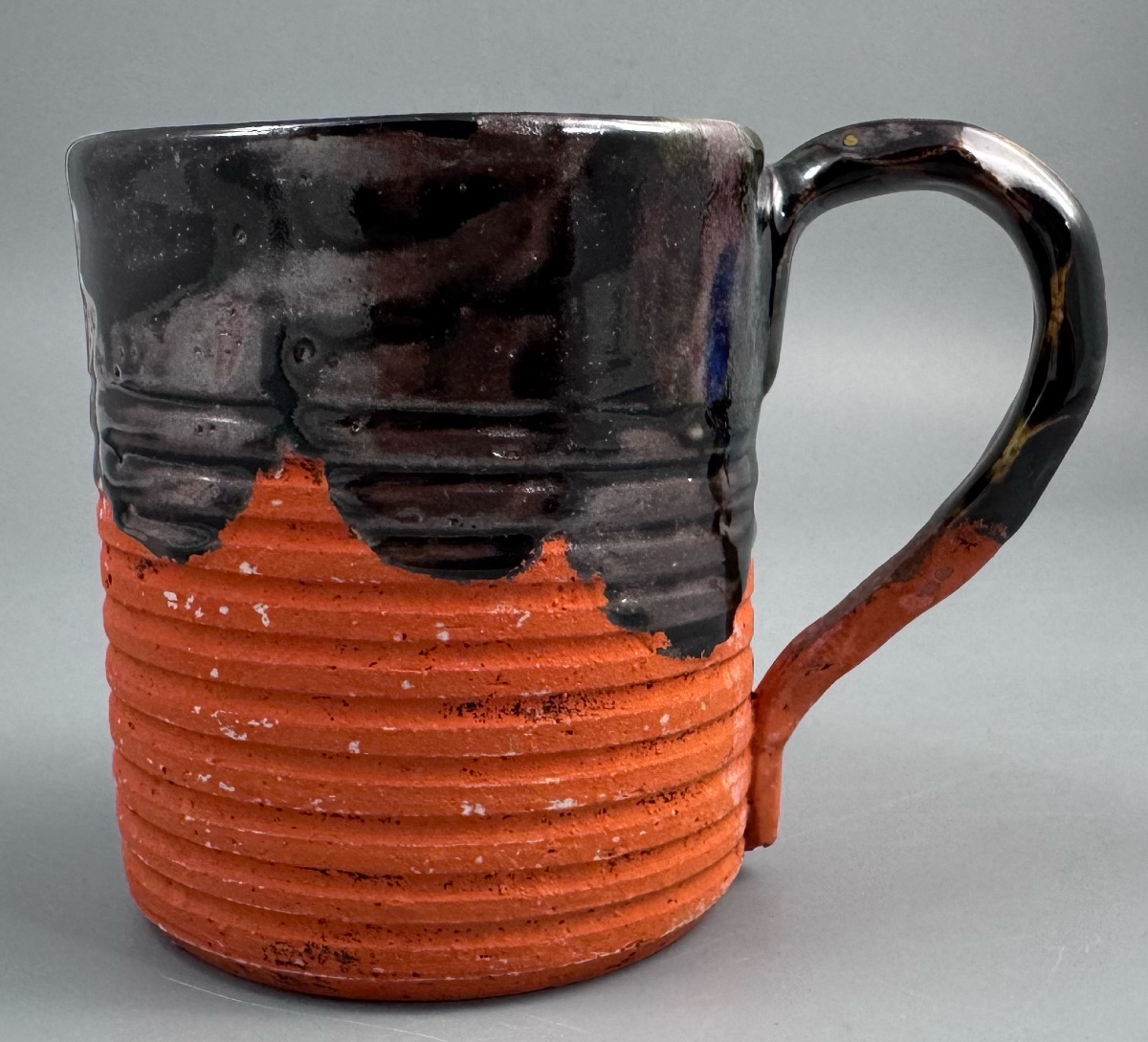
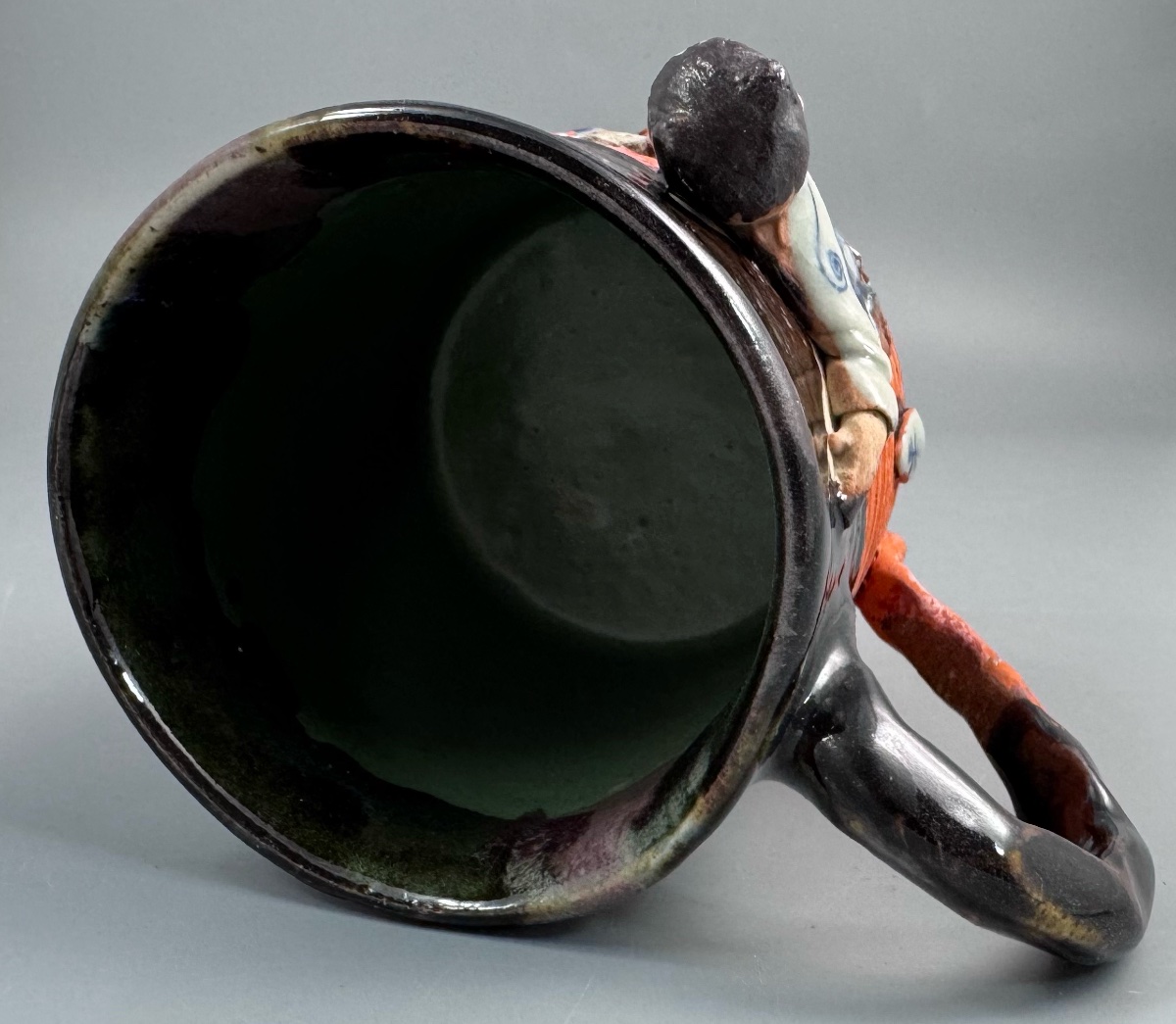
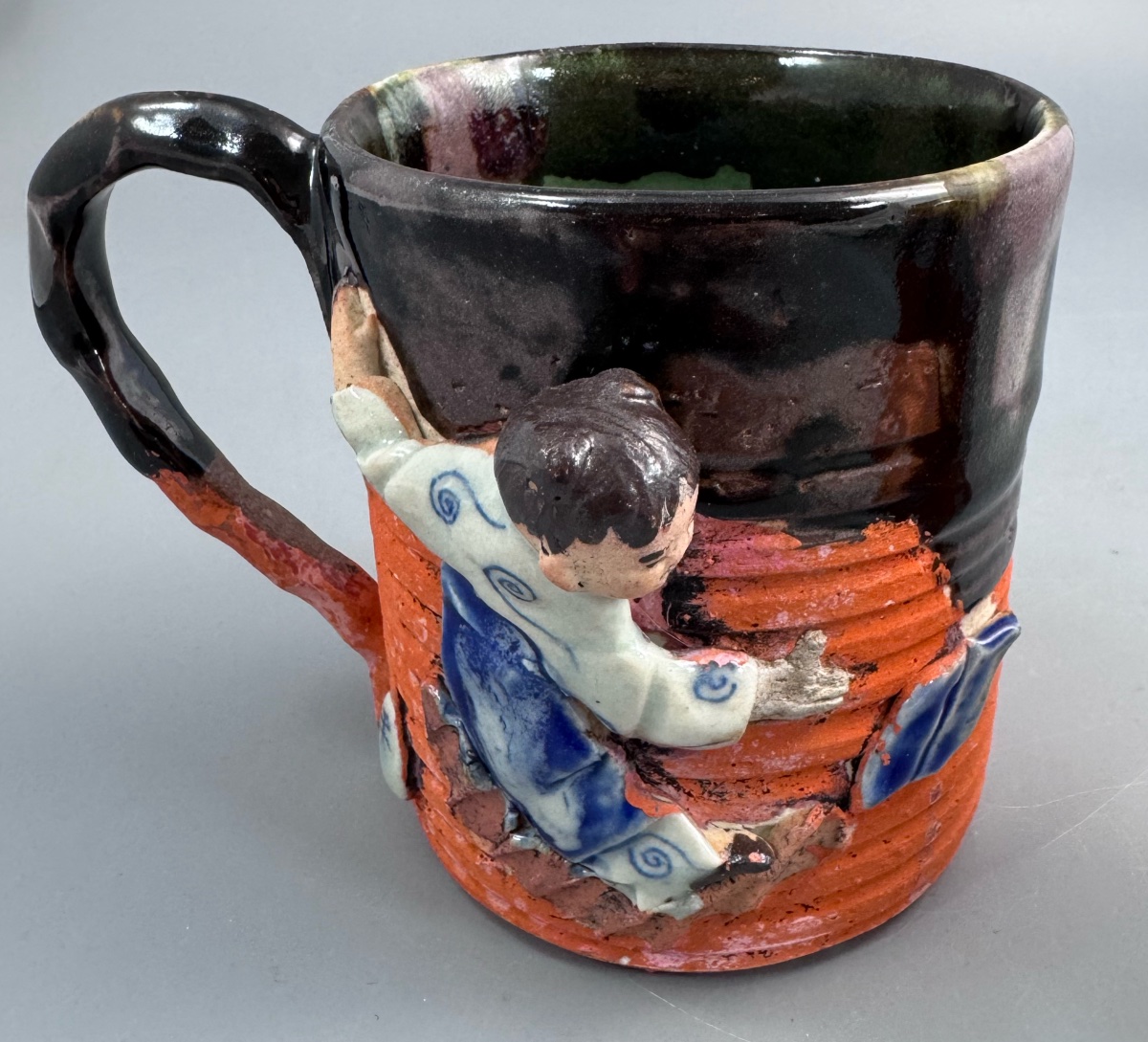
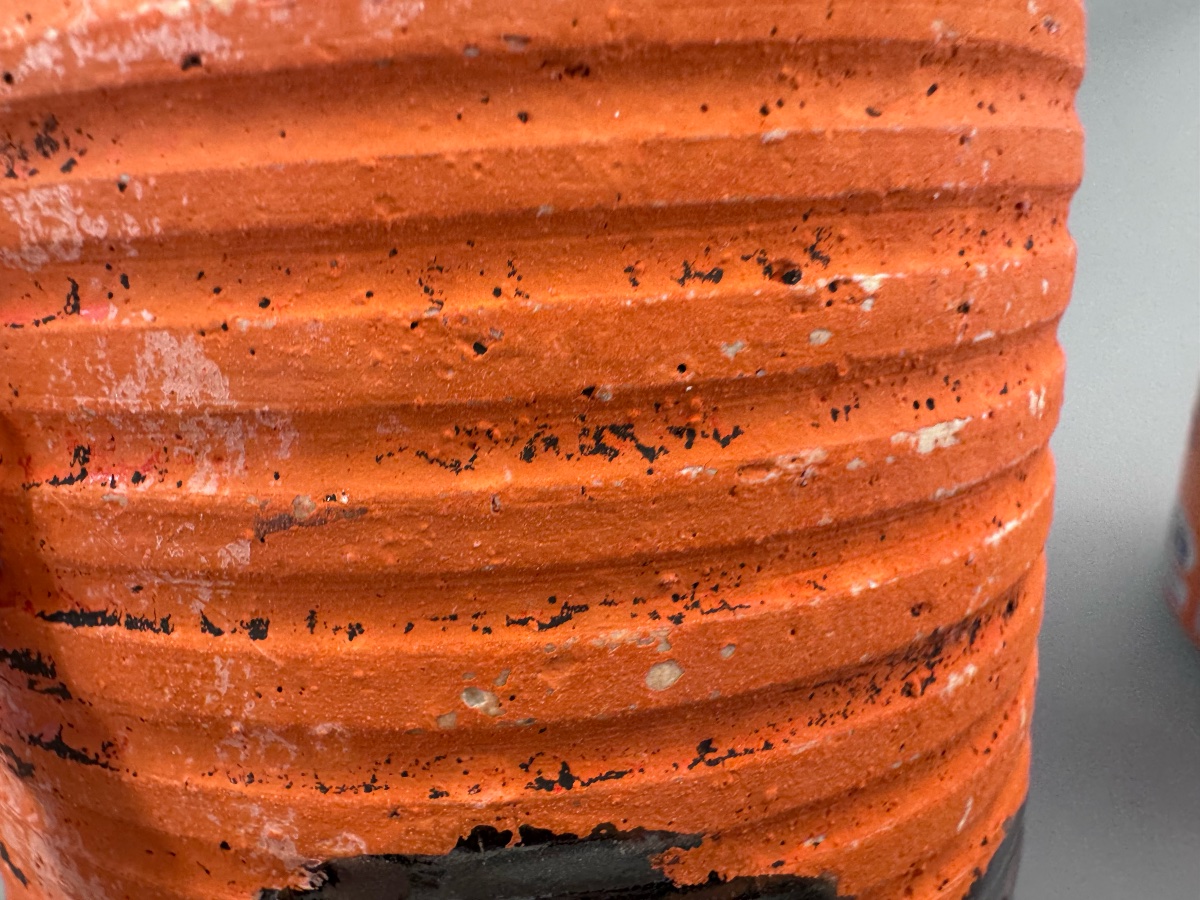
Materials: iron-rich red earthenware body, finished with the characteristic Sumida "flashed" orange-red slip over a heavily ribbed, wheel-thrown surface. The upper third and interior are covered in a lustrous aubergine-black treacle glaze that pools and drips irregularly over the orange body — a flambé effect typical of the workshop. The applied decoration is separately modeled and glazed in porcelaneous white and cobalt underglaze blue, attached to the body before the final firing.
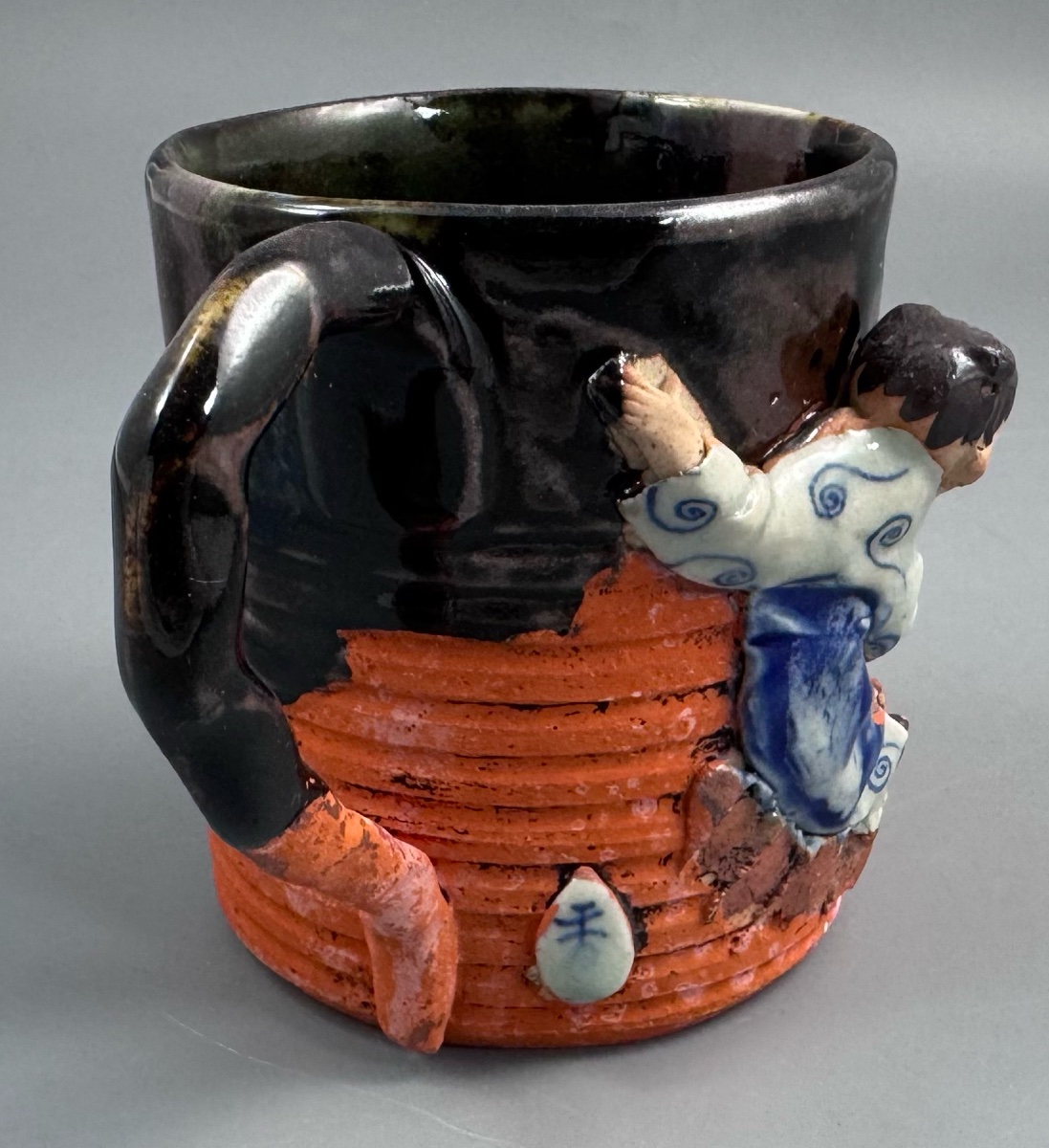
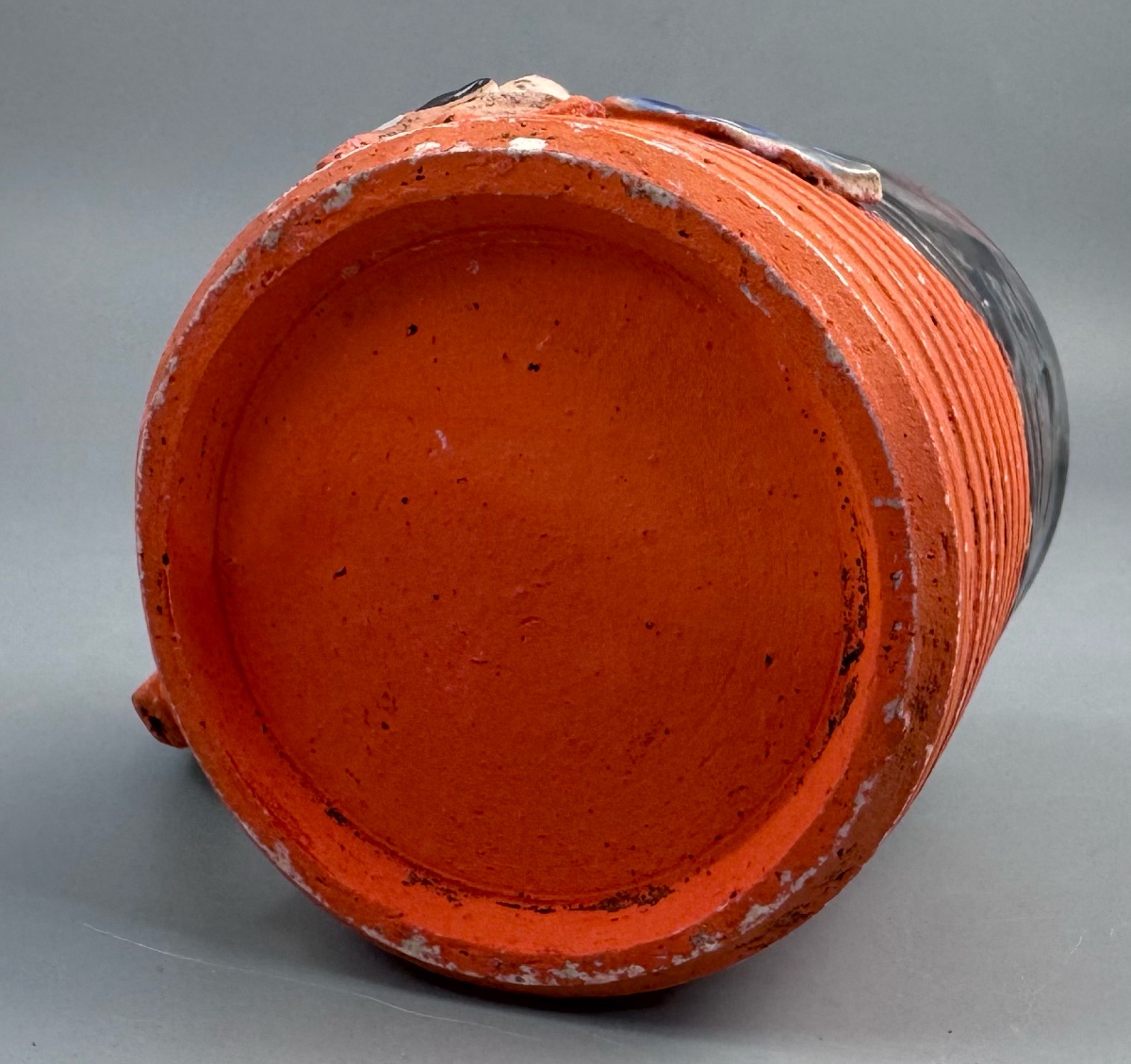
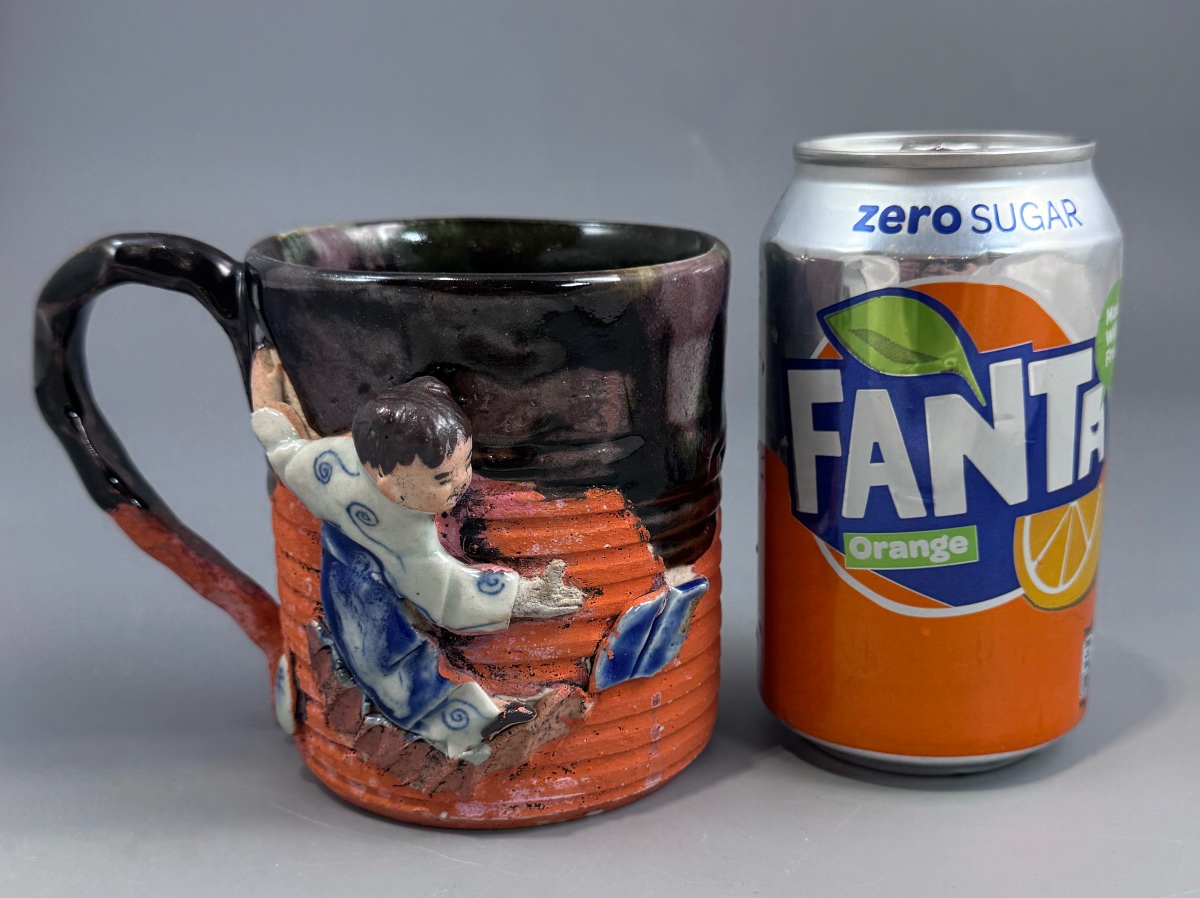
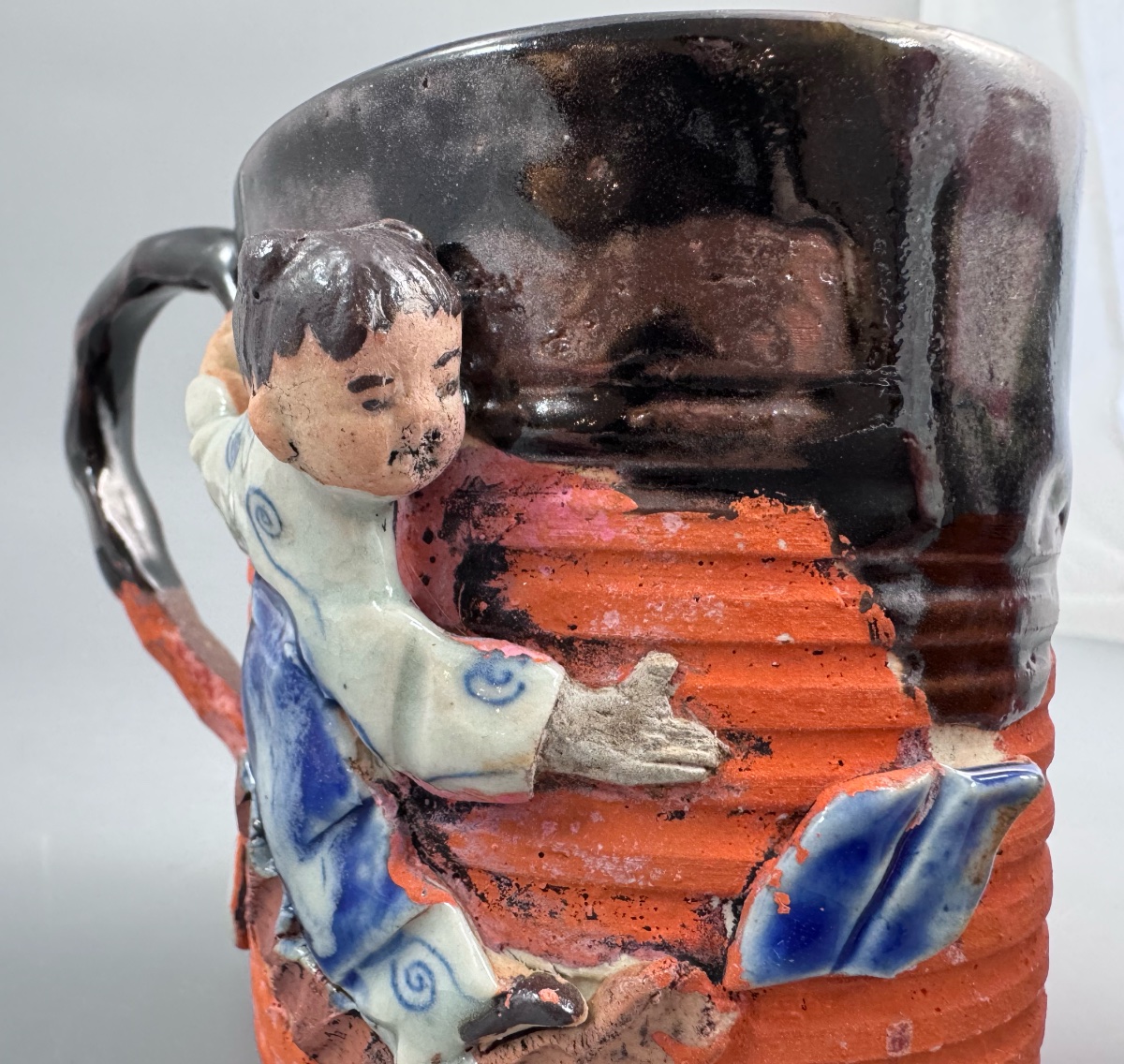
Design: a karako (Chinese-style boy) in a swirling-patterned robe climbs the exterior of the mug, one hand reaching toward the rim, the other (partially lost) grasping the lip. The three-dimensional figure wraps around the front of the vessel, with fragments of his trailing robe continuing around the side. The pulled handle runs from rim to base in glazed black flowing into the unglazed red body. Underside fully unglazed, revealing the grogged terracotta clay.
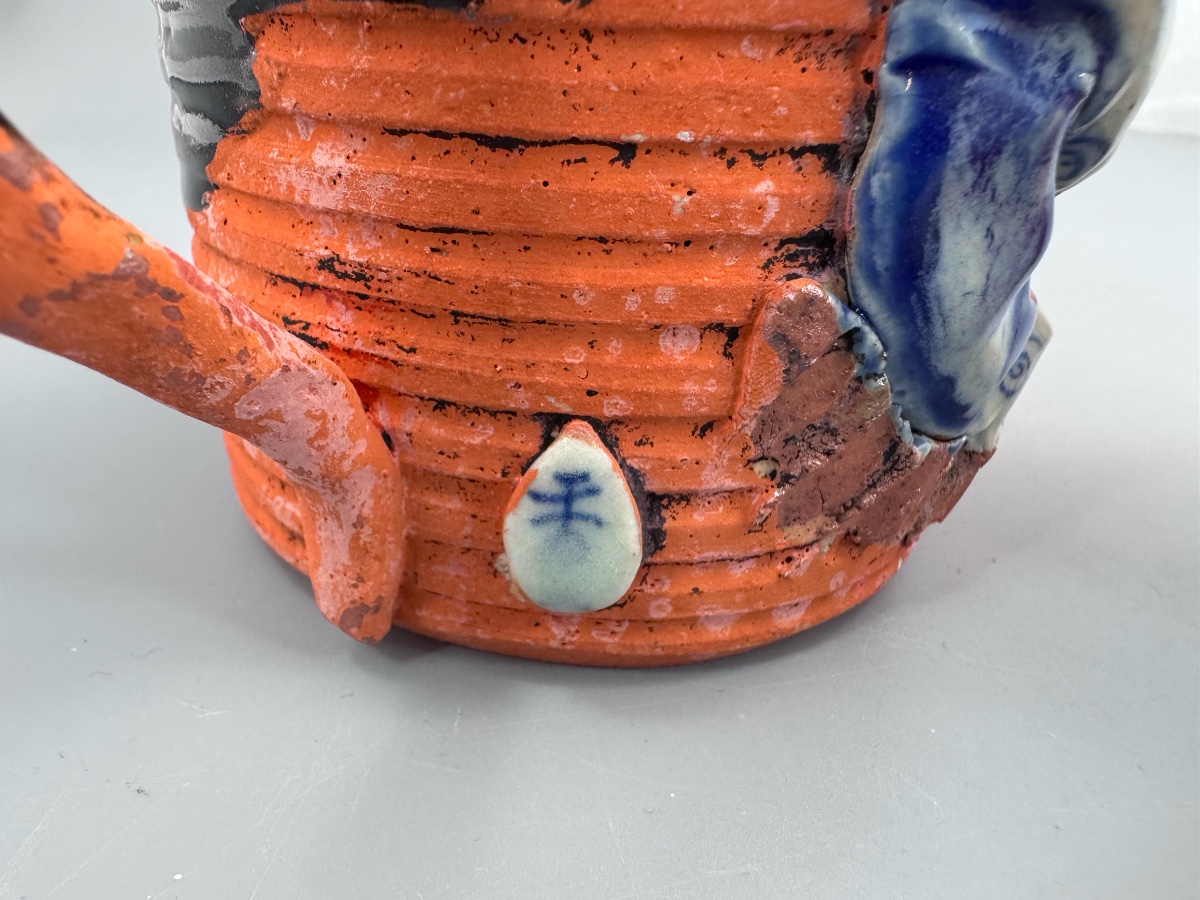
Hallmark: applied porcelain teardrop cartouche at the lower body, painted in underglaze cobalt blue with the signature Kōko (光湖), consistent with marks associated with Ishiguro Kōko.
Dimensions: H 10 cm, D 8.5 cm. Weight 349 g.
Condition: honest age-related wear consistent with period use. Small loss to the figure's right hand; minor glaze nibbles and surface abrasion to the ribbed body; light wear to the glazed handle. No restorations. No cracks. Holds liquid.
Period: 20th century
Style: Asian art
Condition: Excellent condition
Material: Earthenware
Diameter: 8.5
Height: 10
Reference (ID): 1745616
Availability: In stock