


Small Two-handled Pedestal Bowl, Circa 1900-1906 - Ferdinand Levillain (1837-1905)
Artist: Ferdinand Levillain (1837–1905)
Ferdinand Levillain (1837-1905)
Small pedestal bowl with two handles, circa 1900-1906
Gilt bronze, fonte F. Barbedienne
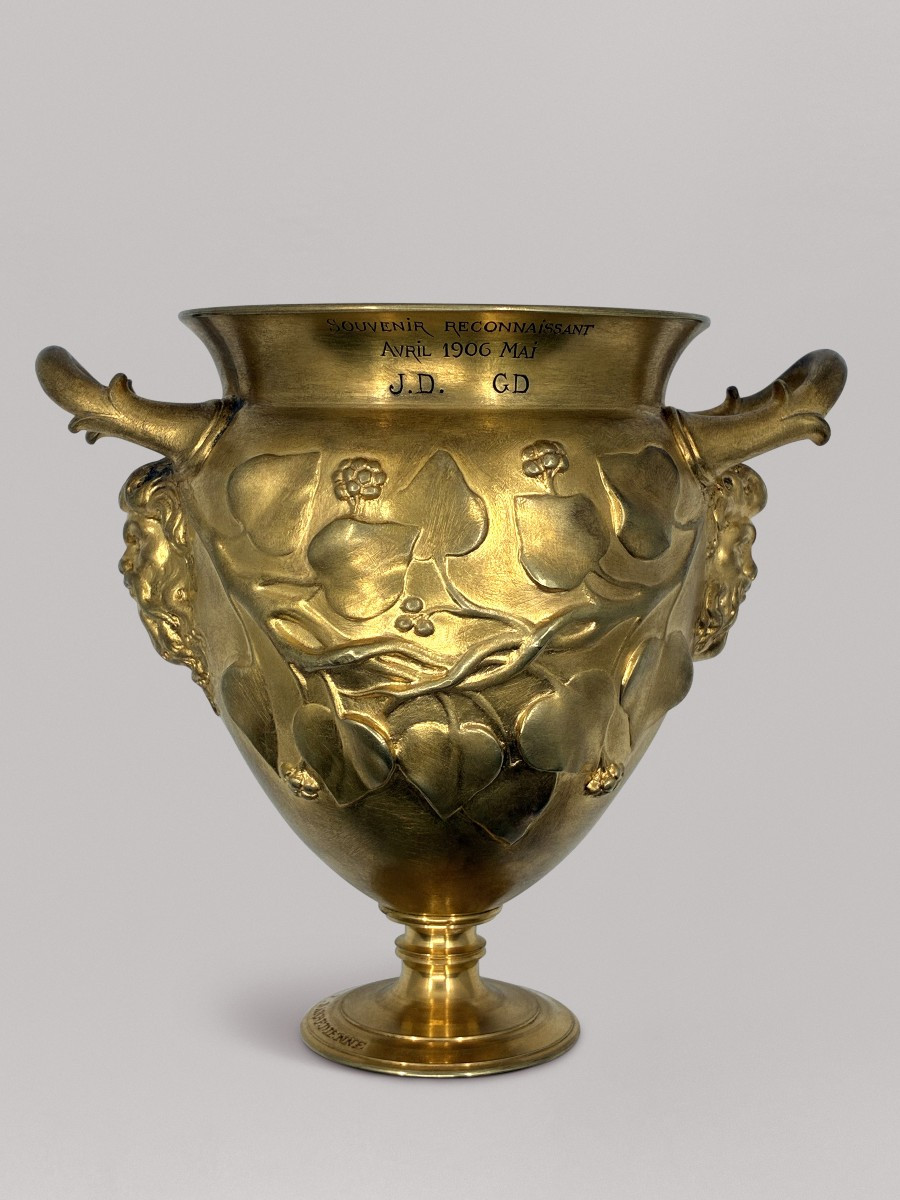
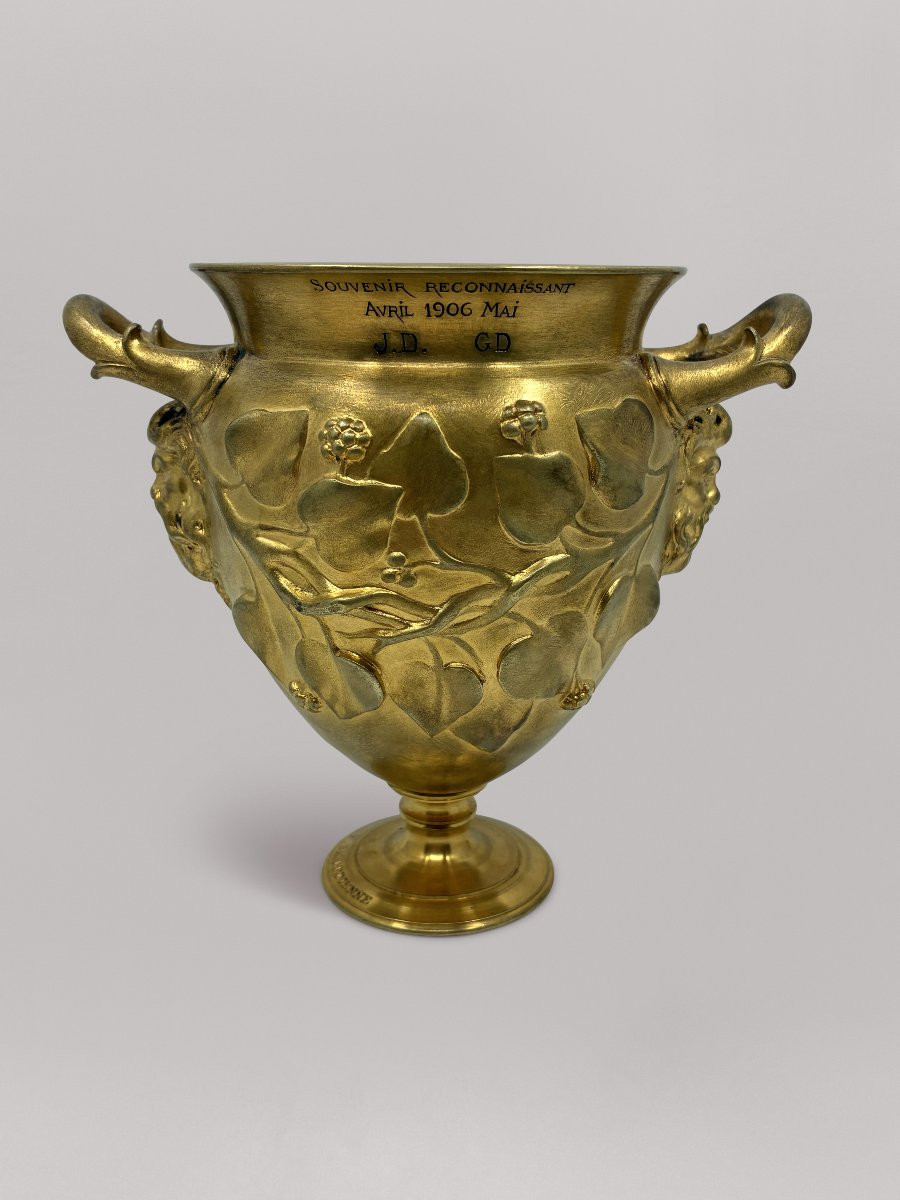
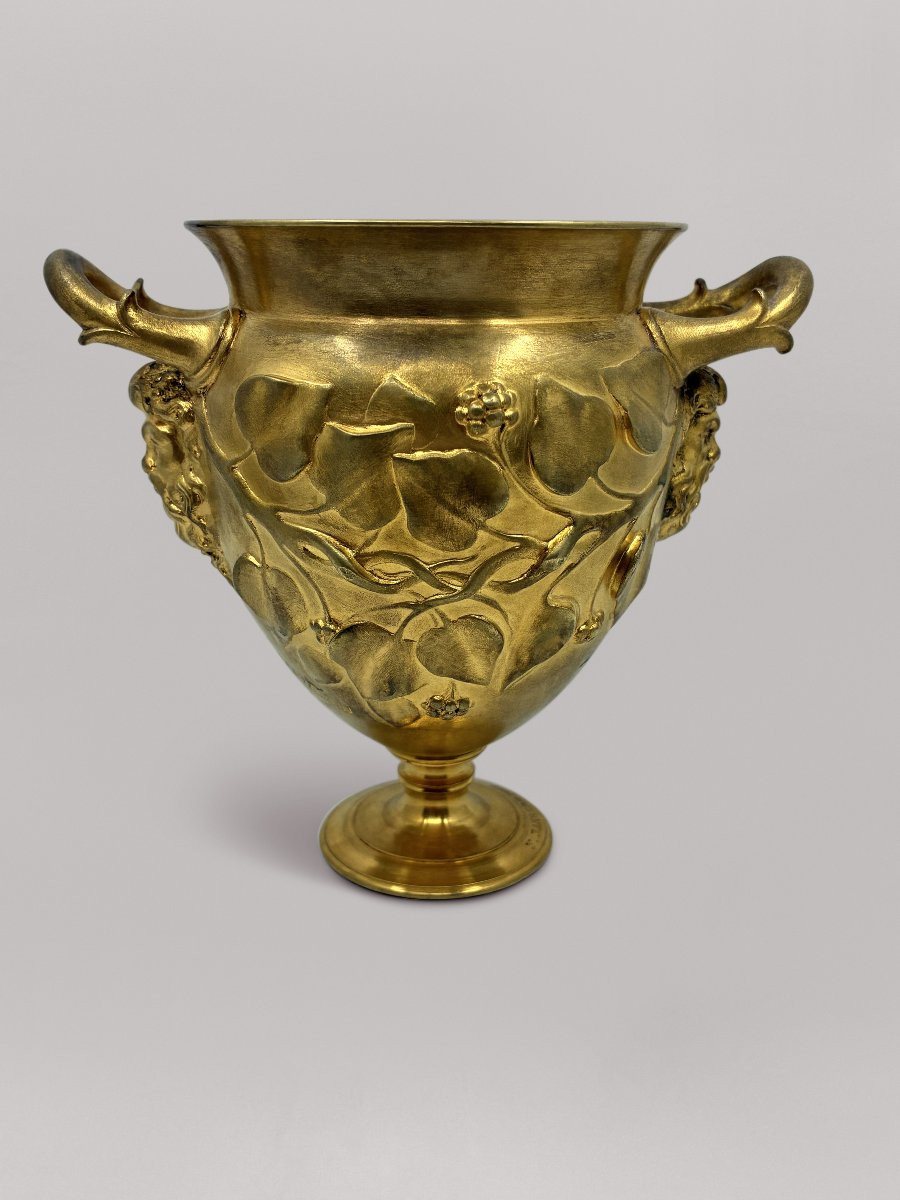
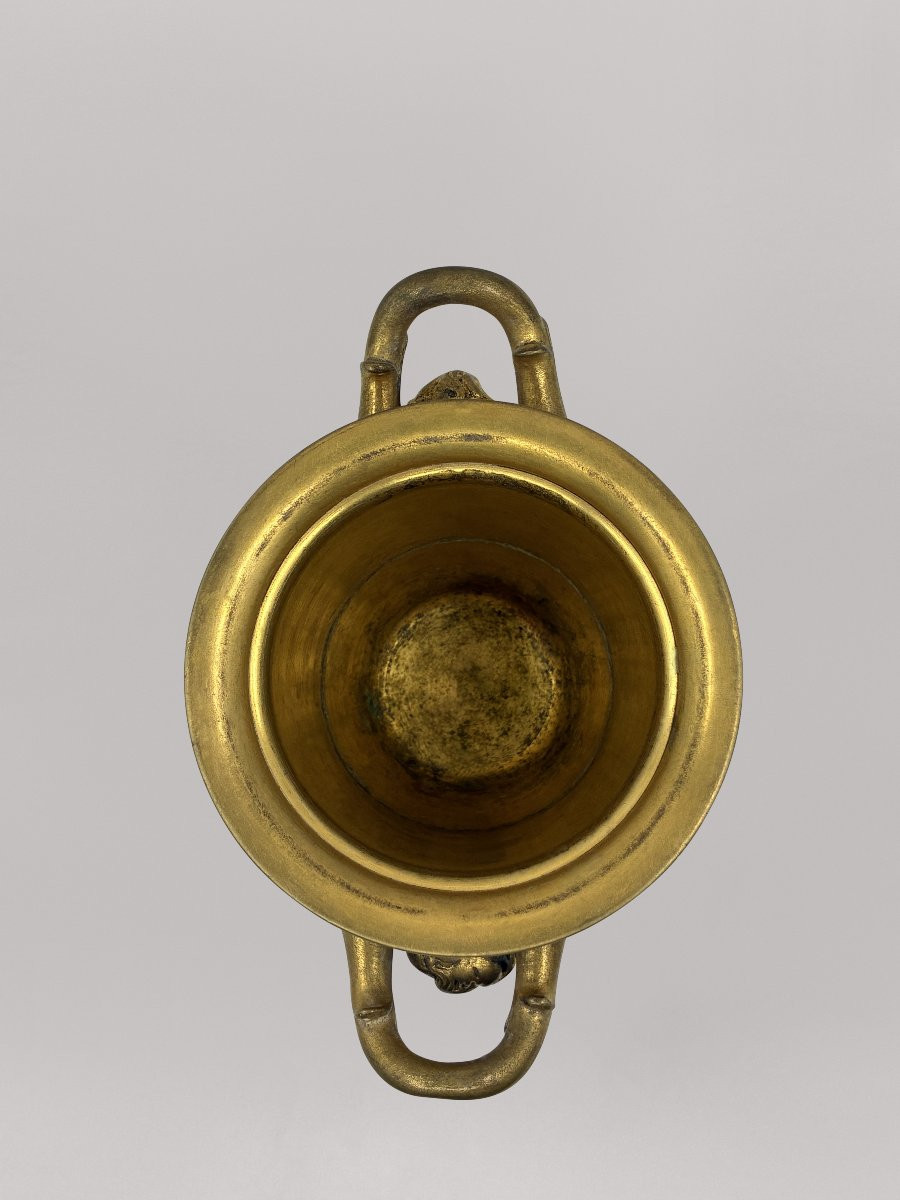
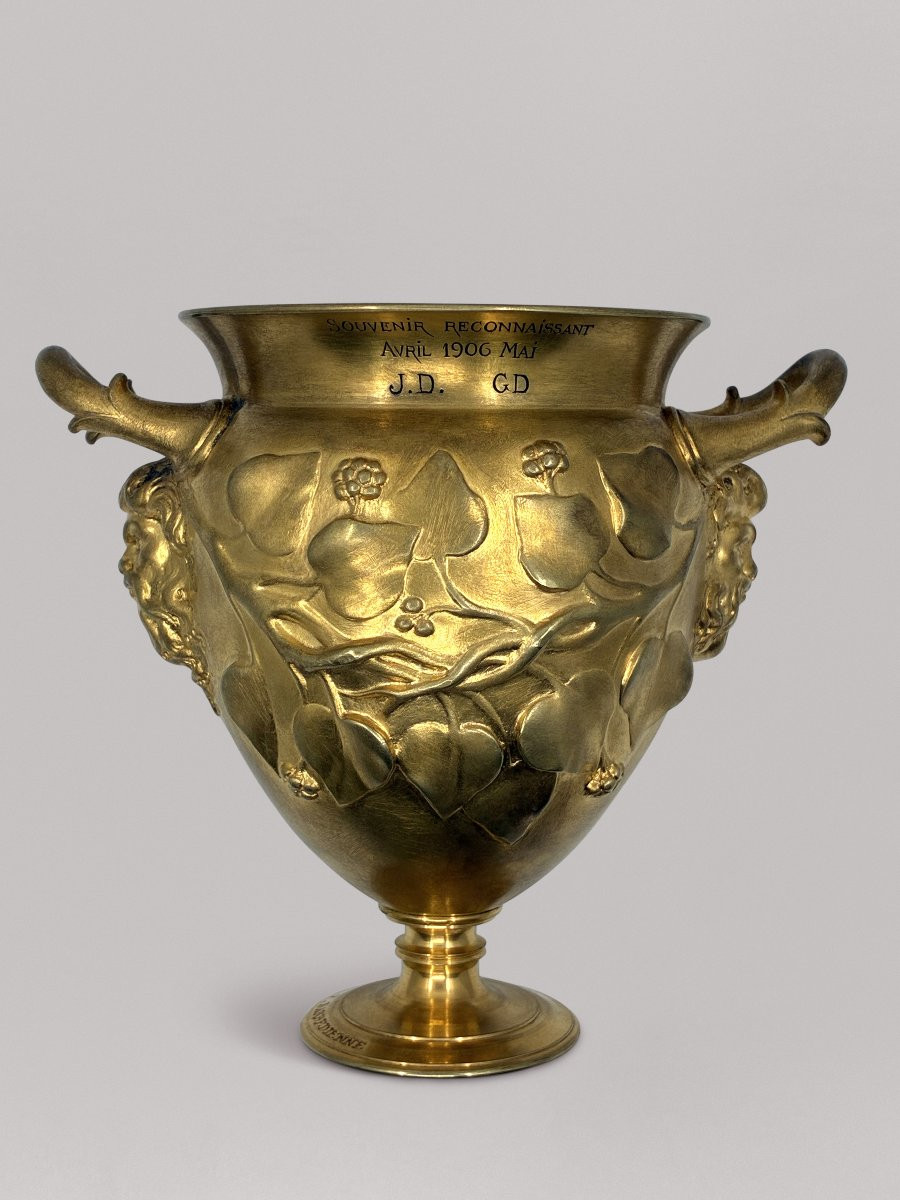
Small pedestal bowl in gilt bronze, with two lateral handles, whose body is entirely decorated in relief. This combines masks of Bacchus with a network of grapevines, stylized and continuous over the entire surface. The decoration, integrated into the shape, bears the signature of Ferdinand Levillain.
Below the collar is an engraved inscription:
"Souvenir reconnaissant / avril 1906 mai / J.D - G.D", probably indicating a commemorative or present function.
The cast was made by the Maison F. Barbedienne, a Parisian workshop renowned for the quality of its bronze castings at the turn of the 19th and 20th centuries.
The general shape of the bowl, with two opposing handles and a flared bowl on a pedestal, is based on a model from the ancient repertoire, close to the Roman scyphus. Objects with a similar morphology were unearthed in the villa of Boscoreale, near Pompeii, during the 1895 excavations, including silver pieces with embossed plant decoration. The motif of ivy and vines, frequently associated with the cult of Bacchus, is a recurrent element in ancient ornamentation, reinterpreted here in a late 19th-century decorative vocabulary.
Small pedestal bowl with two handles, circa 1900-1906
Gilt bronze, fonte F. Barbedienne
Small pedestal bowl in gilt bronze, with two lateral handles, whose body is entirely decorated in relief. This combines masks of Bacchus with a network of grapevines, stylized and continuous over the entire surface. The decoration, integrated into the shape, bears the signature of Ferdinand Levillain.
Below the collar is an engraved inscription:
"Souvenir reconnaissant / avril 1906 mai / J.D - G.D", probably indicating a commemorative or present function.
The cast was made by the Maison F. Barbedienne, a Parisian workshop renowned for the quality of its bronze castings at the turn of the 19th and 20th centuries.
The general shape of the bowl, with two opposing handles and a flared bowl on a pedestal, is based on a model from the ancient repertoire, close to the Roman scyphus. Objects with a similar morphology were unearthed in the villa of Boscoreale, near Pompeii, during the 1895 excavations, including silver pieces with embossed plant decoration. The motif of ivy and vines, frequently associated with the cult of Bacchus, is a recurrent element in ancient ornamentation, reinterpreted here in a late 19th-century decorative vocabulary.
750 €
Period: 19th century
Style: Rome and Antic Greece
Condition: Good condition
Material: Bronze
Width: 14cm
Height: 13cm
Reference (ID): 1741453
Availability: In stock
Print