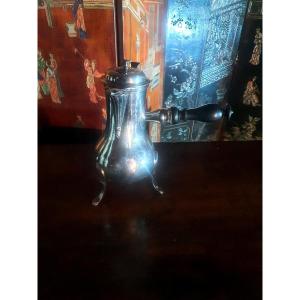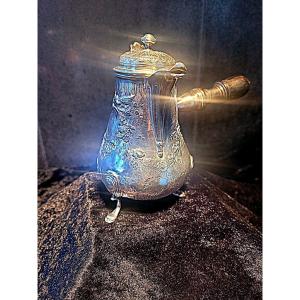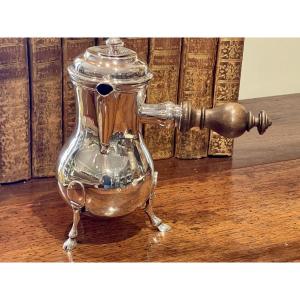
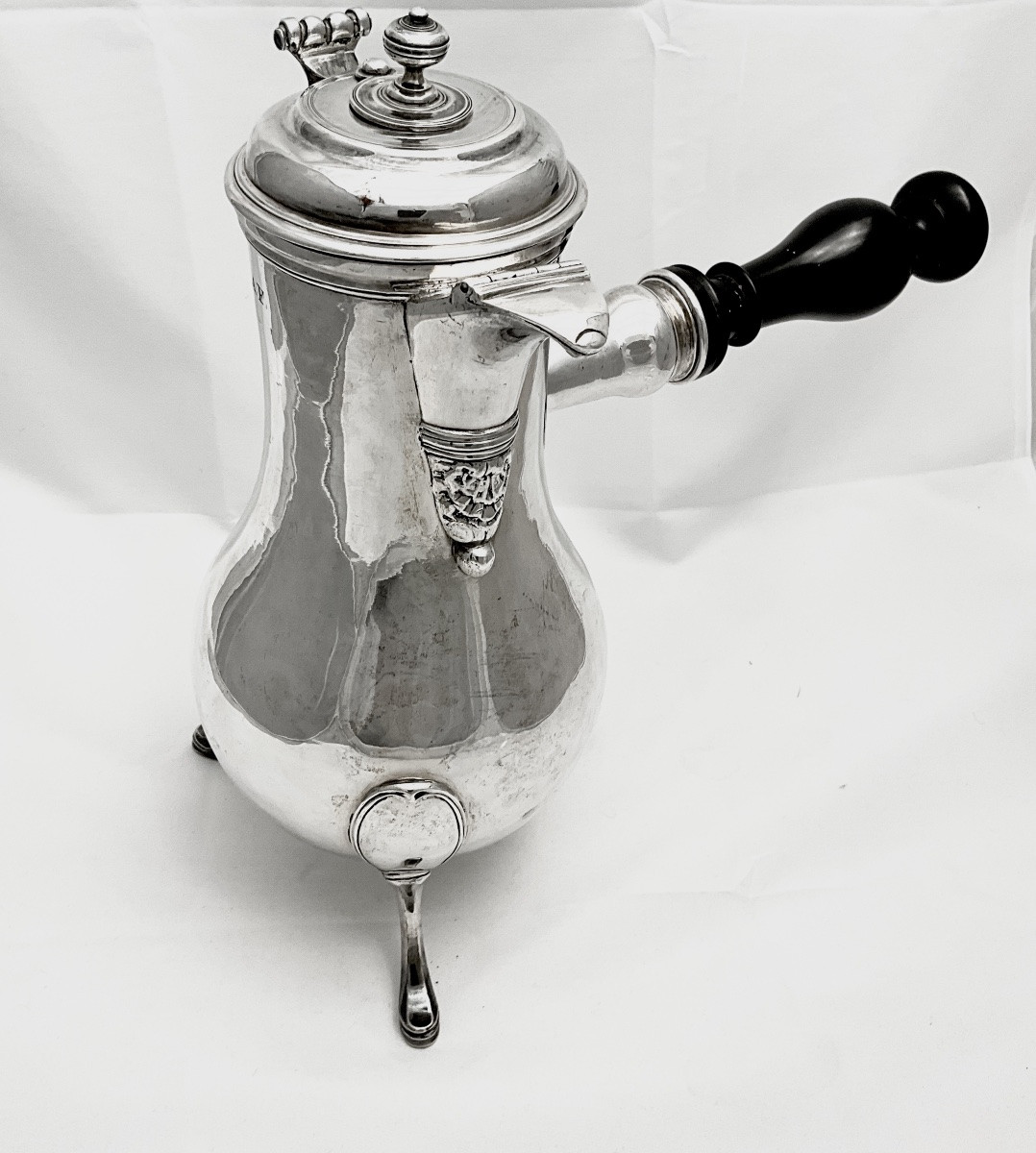


Amiens 1755 , Chocolate Pot, Sterling Silver , Jean Guidé (1717-1780), Tripod Coffee Pot
Artist: Jean Guidée Actif à Roye Et Puis Amiens àpd 1744
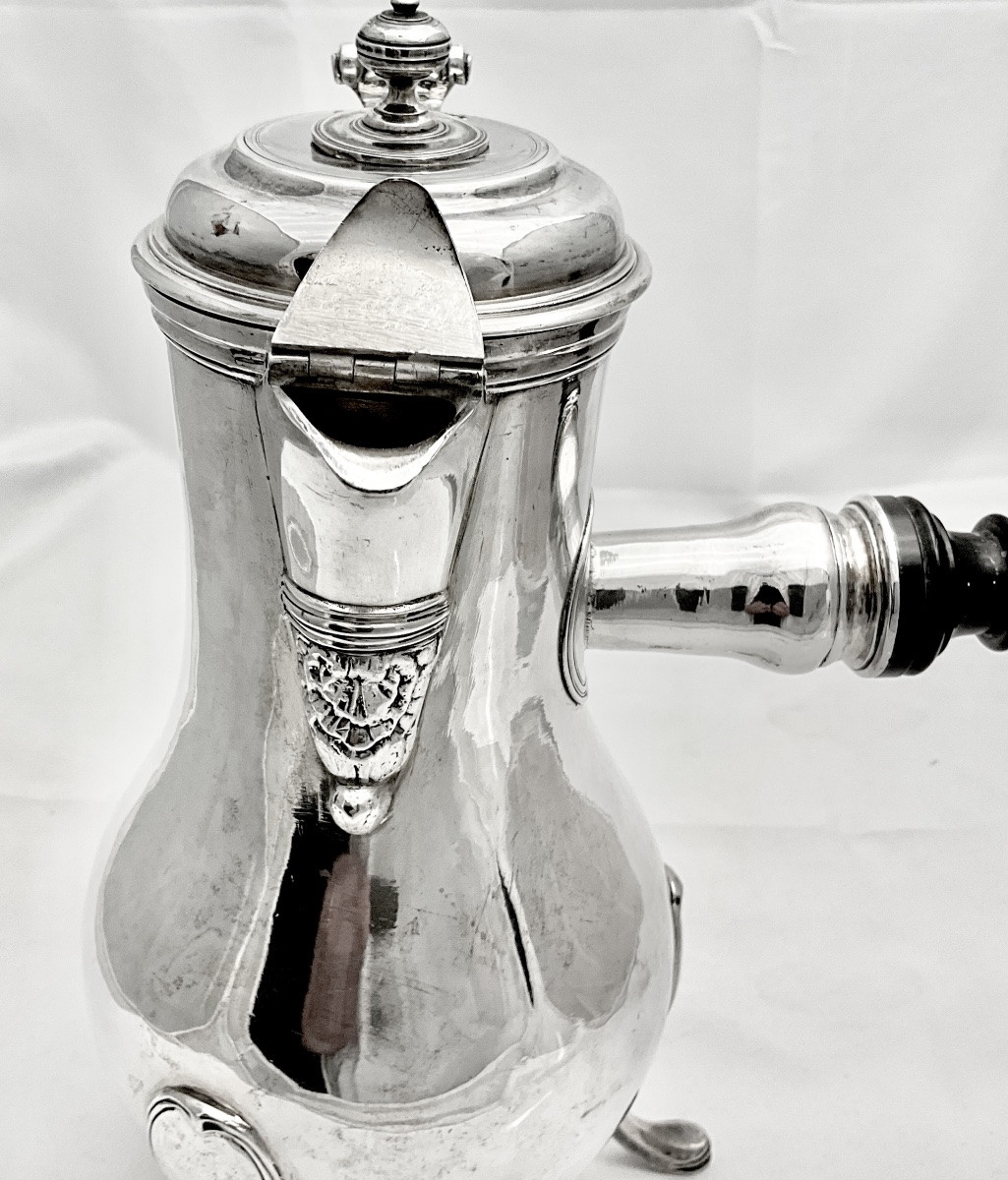
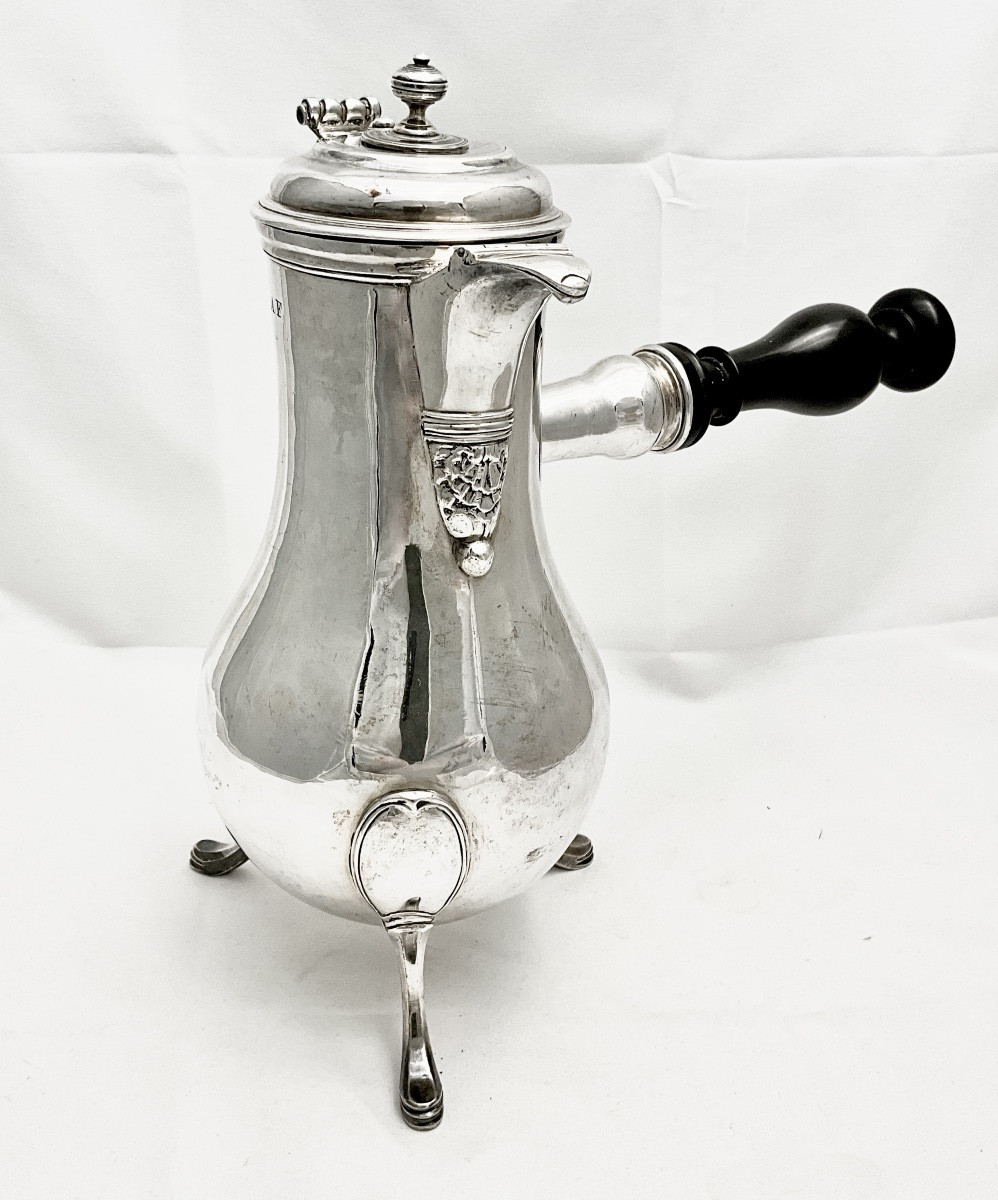
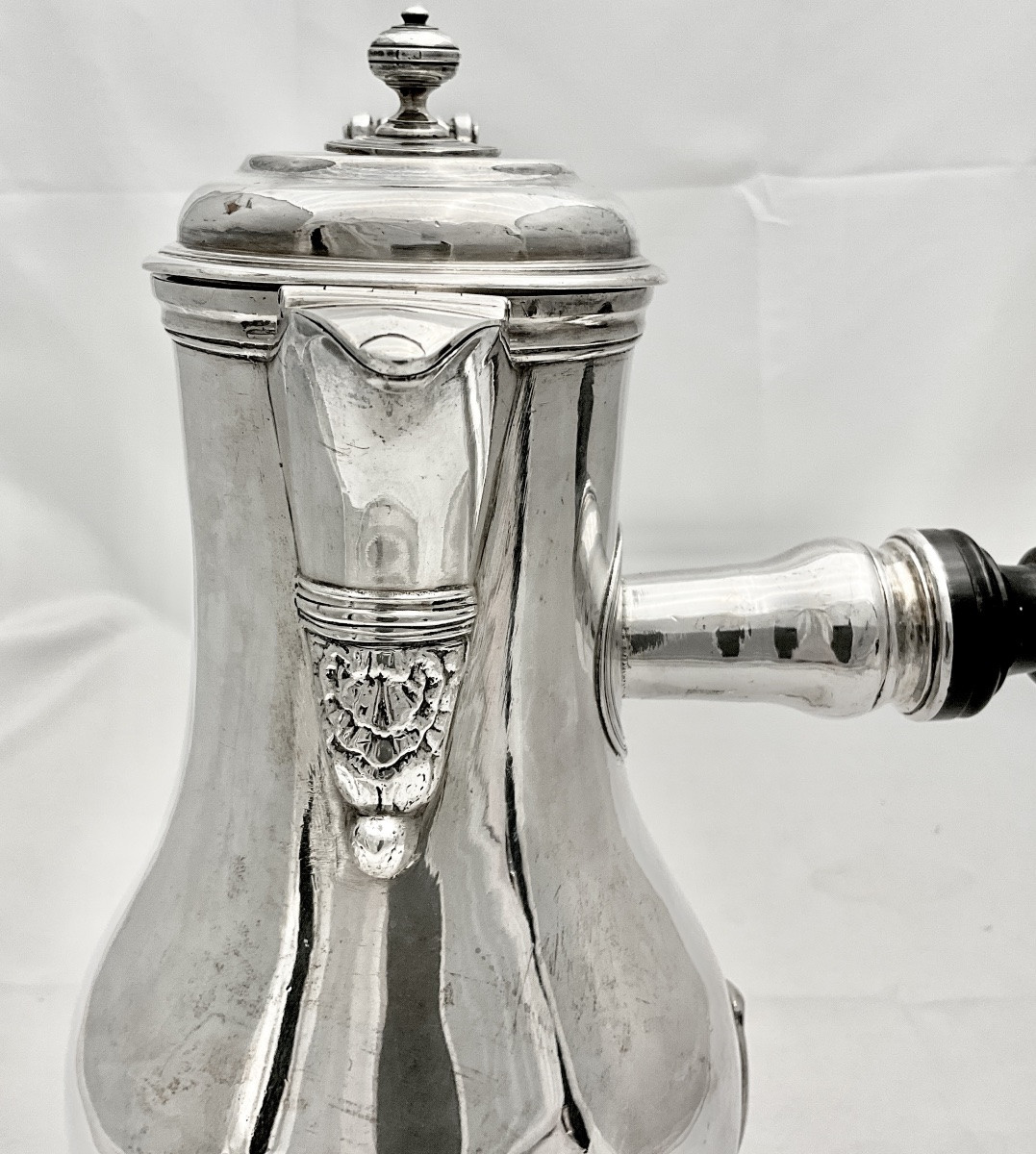
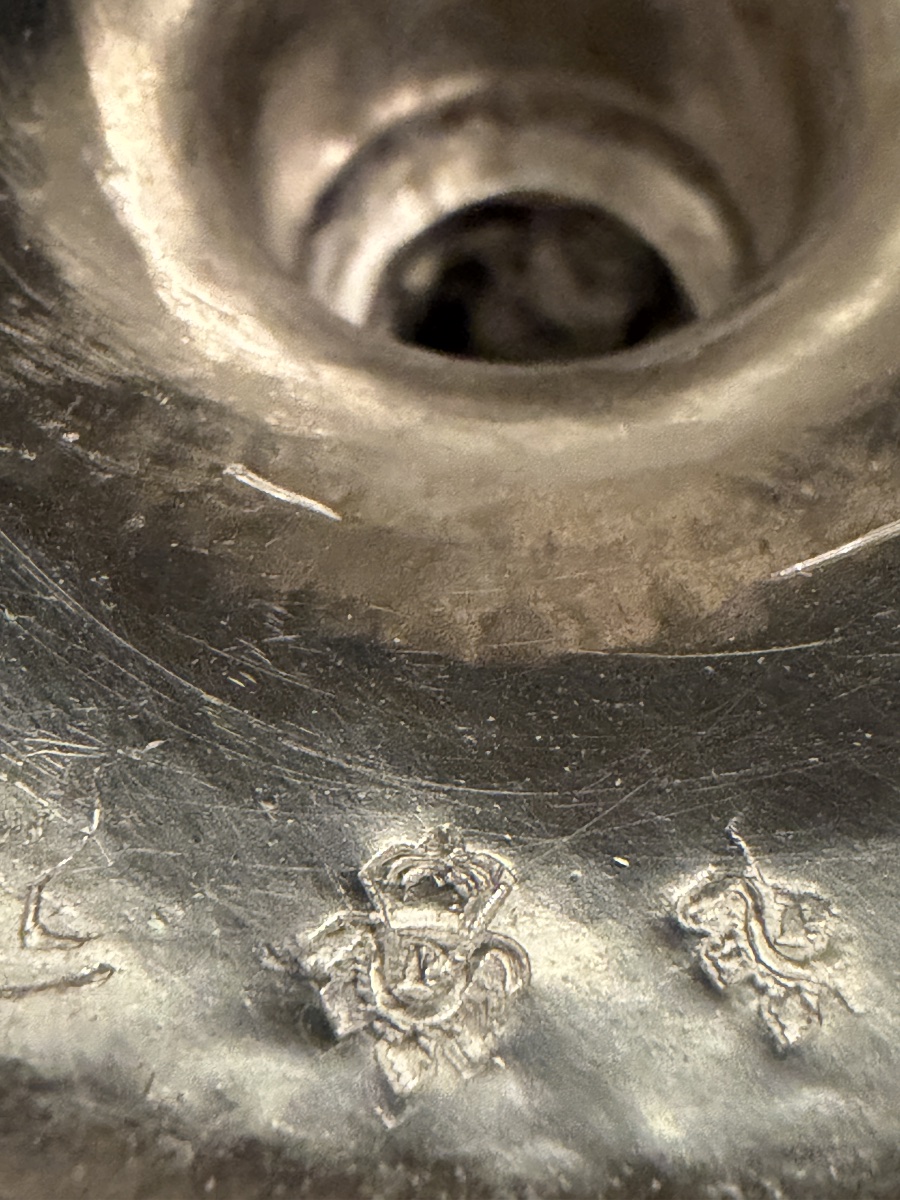
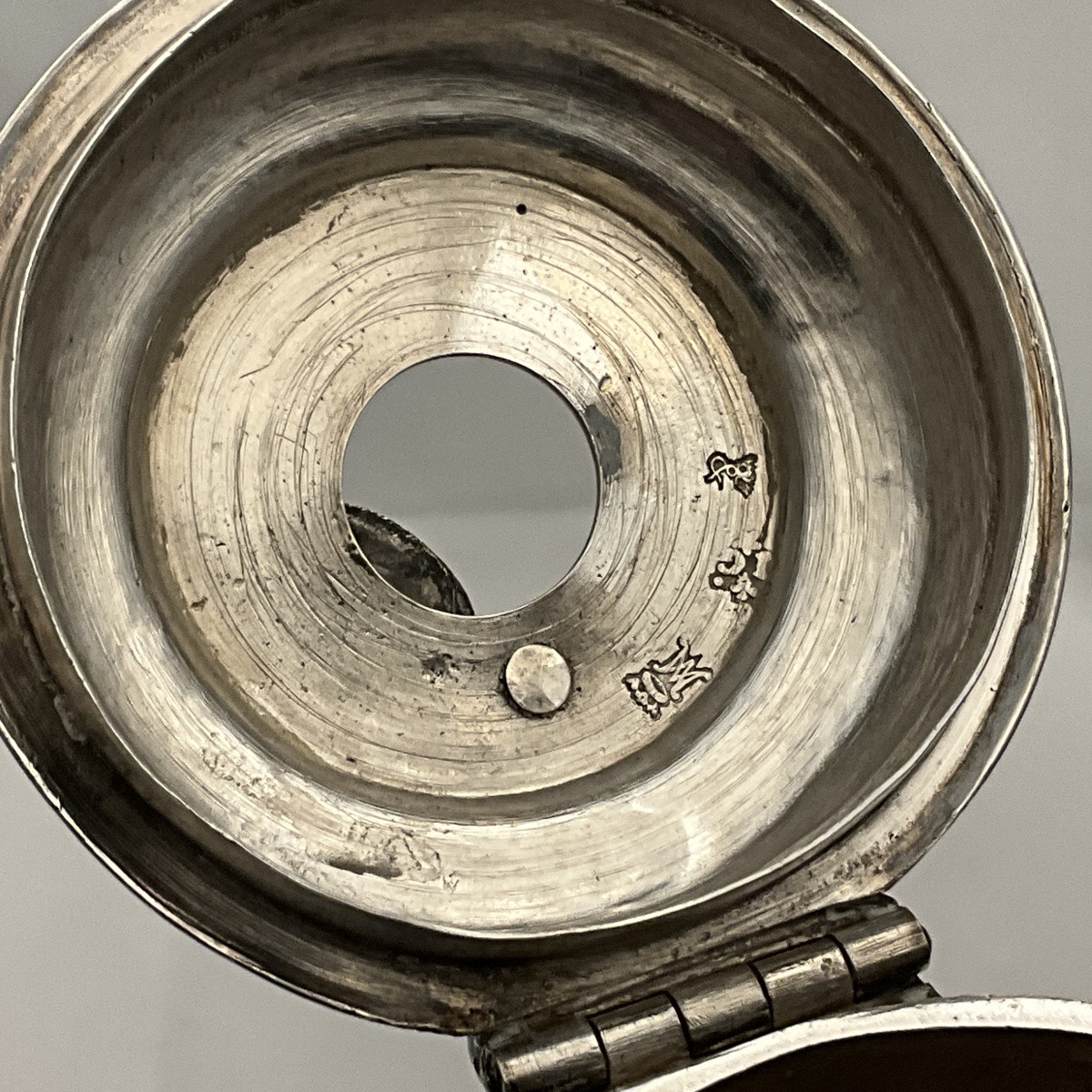
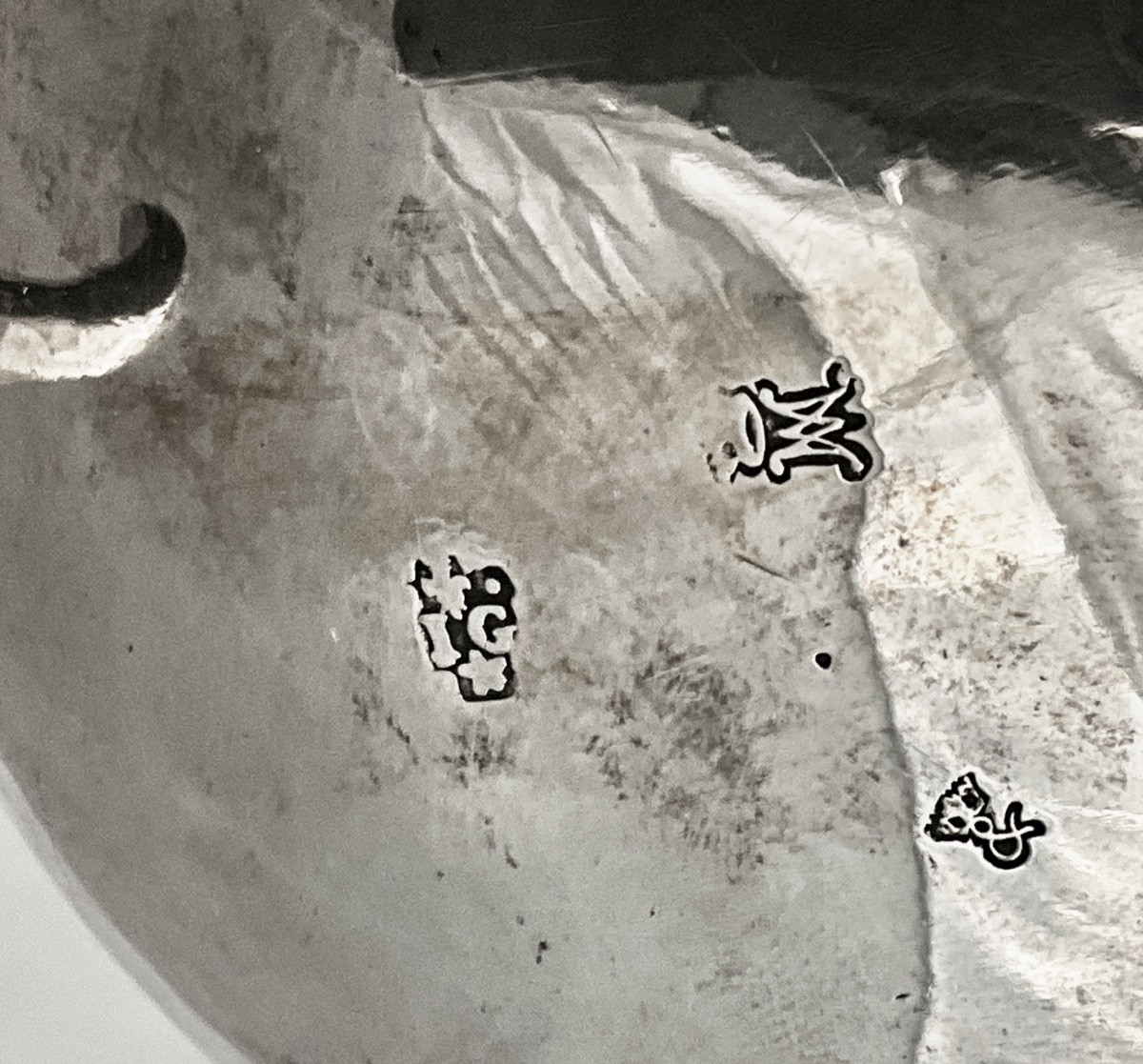
Delightful and rare solid silver chocolatière with Amiens town hallmarks for the period 1754-1756.
It also bears the master goldsmith hallmark of Jean Guidée.
A native of Compiègne , he completed his apprenticeship there and followed his master Pierre Camus to Crépy-en-Valois.
After his admission to the mastery in 1744, he was authorized by the Noyon community to settle in Roye. He remained there until 1751. In the same year, he was accepted by the Amiens community. There, he married Marie-Hélène Doderel, daughter of goldsmith Étienne III Doderel. His mother-in-law, a goldsmith's widow, gave him her late husband's workshop and store.
He practiced goldsmithing until his death in 1780, and his widow continued his workshop until 1788. He was the eldest of a whole dynasty of goldsmiths of the same name, who continued his art until the mid-nineteenth century.
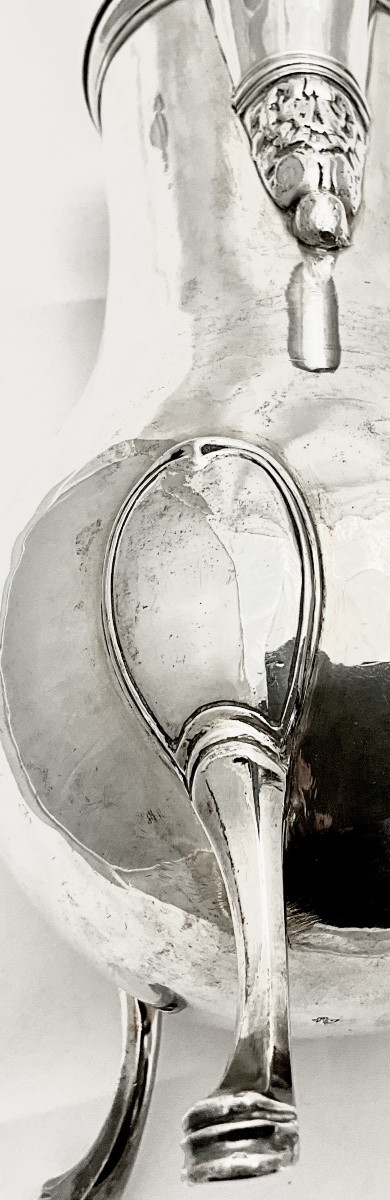
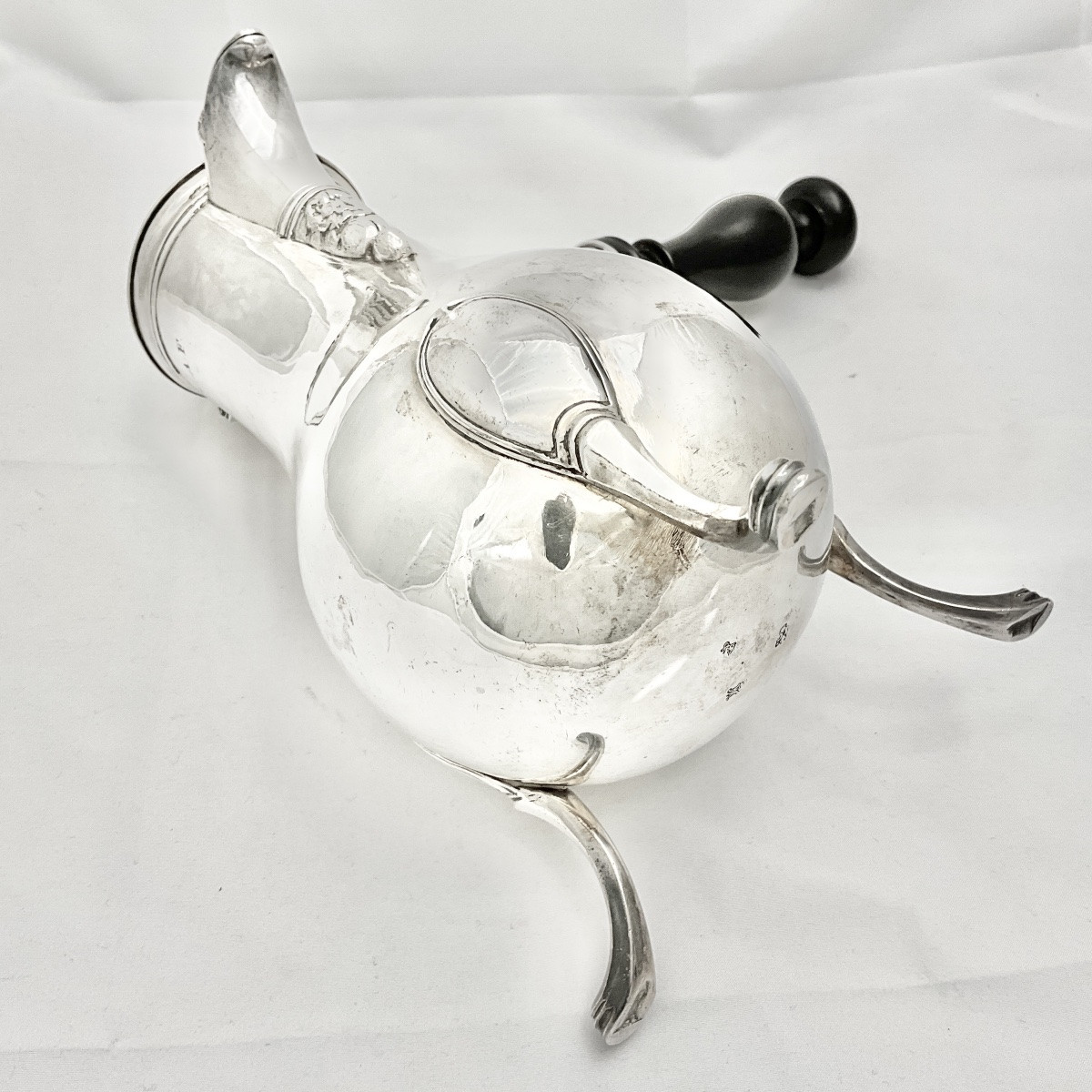
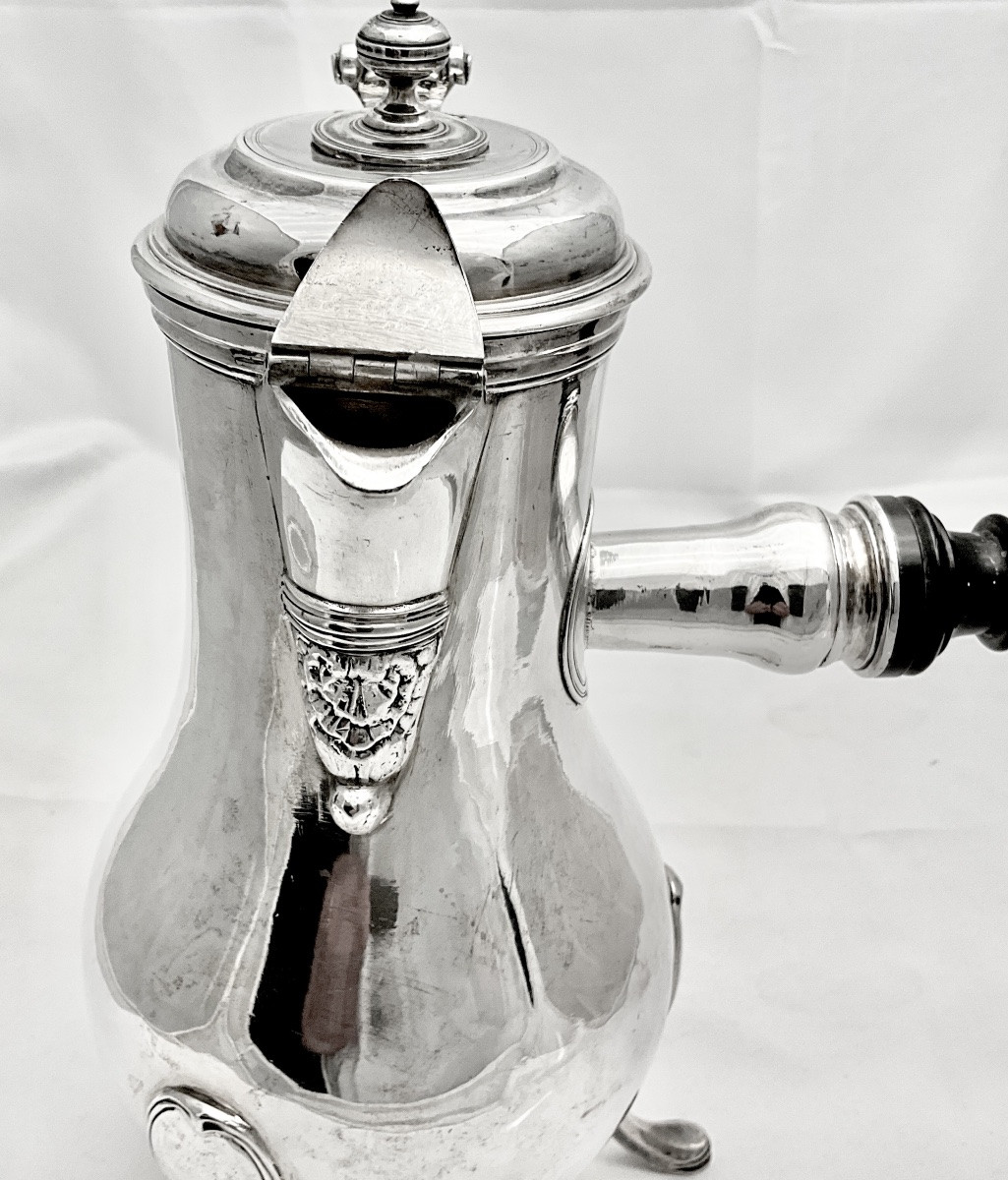
The chocolatiere is quite large and sturdy, and rather heavy for its size.
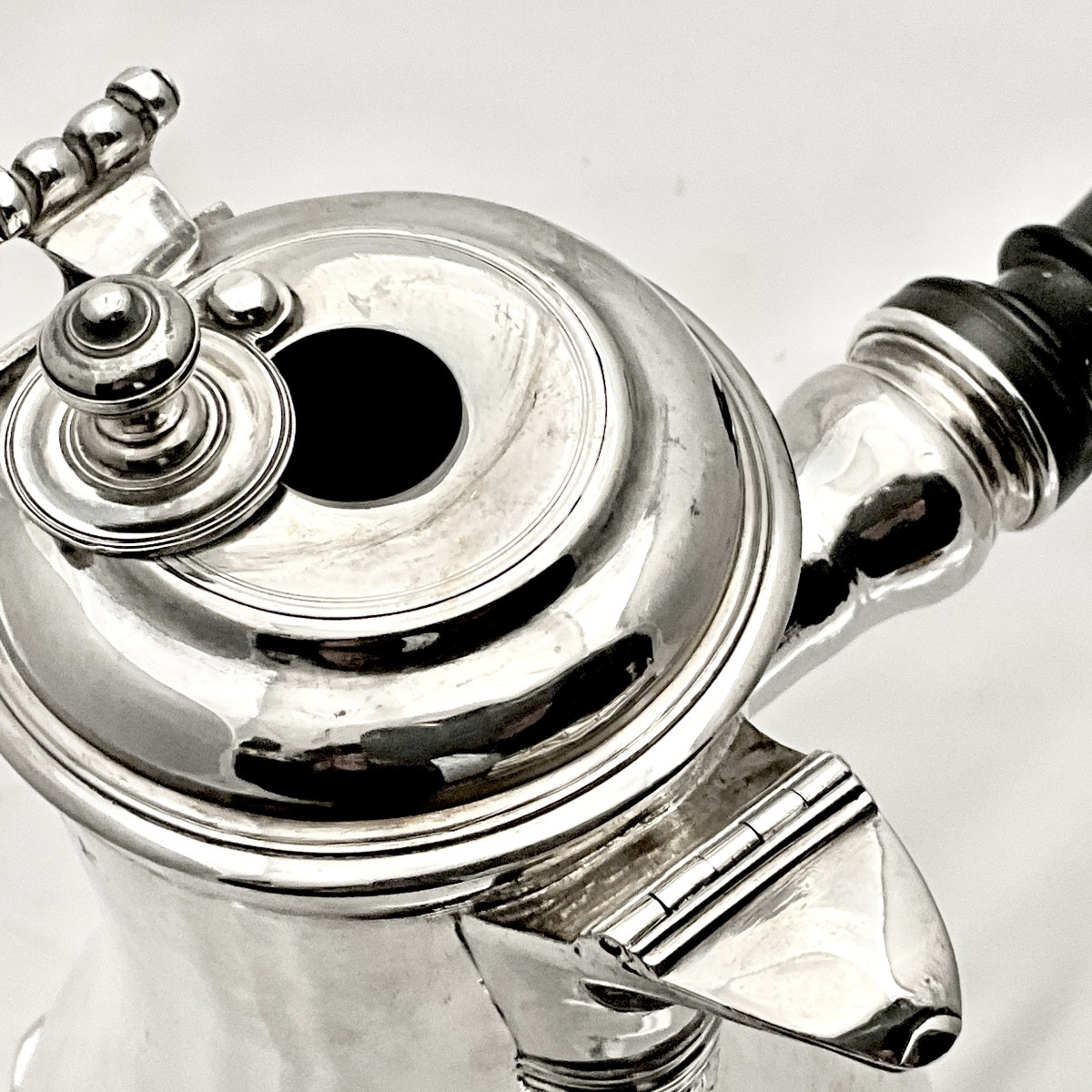
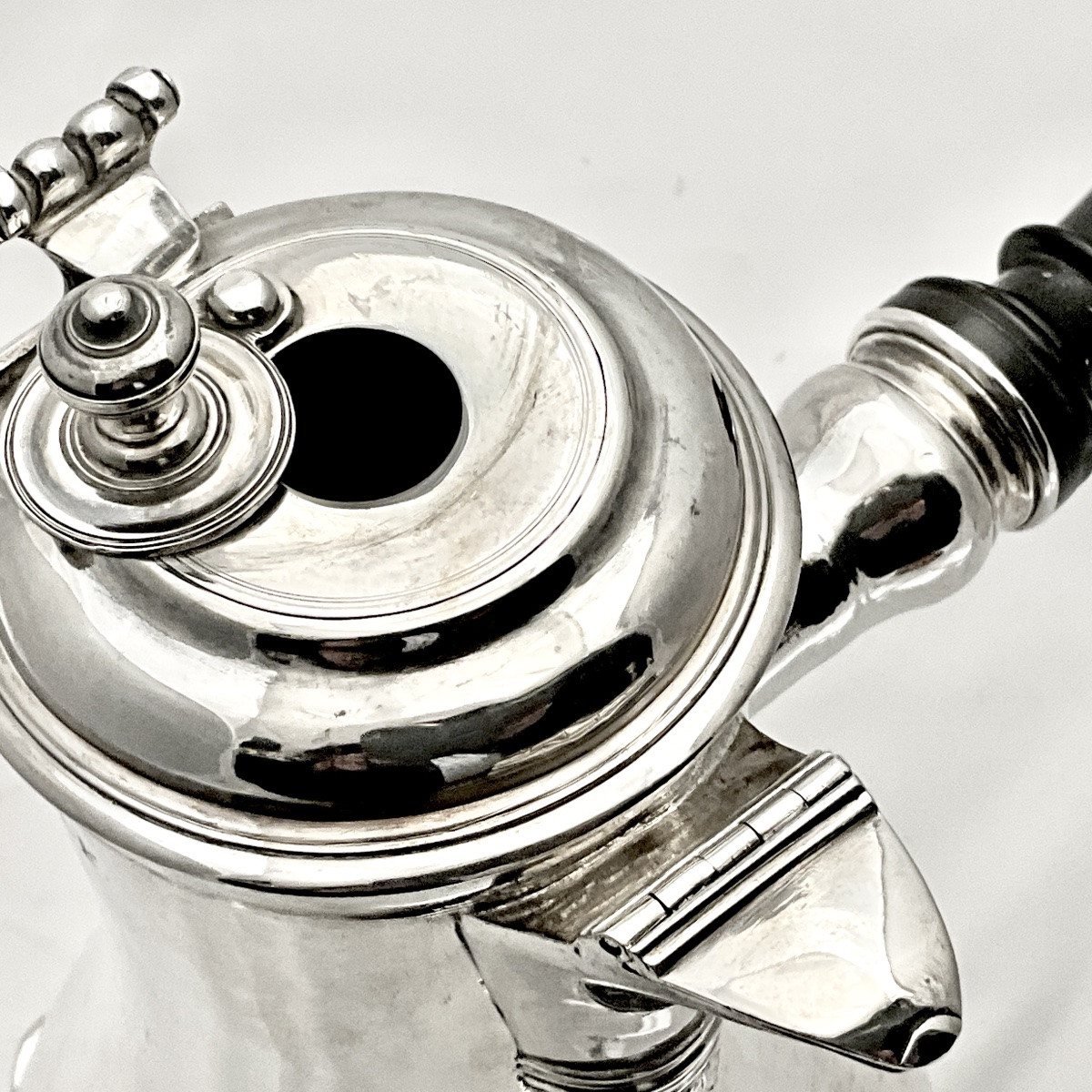
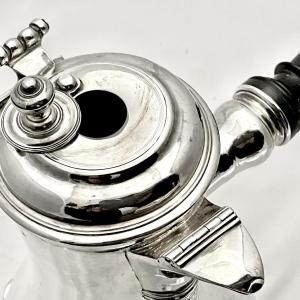
As was often the case in the eighteenth century, the lid's fretel can be turned to leave an opening for the insertion of a frother. The frother is a wooden utensil that can be rolled between the palms of the hands to homogenize the drink until it foams, and to mix the grated chocolate with the liquid. The chocolate whisk was already used by the Aztecs in the form of a twig or reel.
It also bears the master goldsmith hallmark of Jean Guidée.
A native of Compiègne , he completed his apprenticeship there and followed his master Pierre Camus to Crépy-en-Valois.
After his admission to the mastery in 1744, he was authorized by the Noyon community to settle in Roye. He remained there until 1751. In the same year, he was accepted by the Amiens community. There, he married Marie-Hélène Doderel, daughter of goldsmith Étienne III Doderel. His mother-in-law, a goldsmith's widow, gave him her late husband's workshop and store.
He practiced goldsmithing until his death in 1780, and his widow continued his workshop until 1788. He was the eldest of a whole dynasty of goldsmiths of the same name, who continued his art until the mid-nineteenth century.
The chocolatiere is quite large and sturdy, and rather heavy for its size.
As was often the case in the eighteenth century, the lid's fretel can be turned to leave an opening for the insertion of a frother. The frother is a wooden utensil that can be rolled between the palms of the hands to homogenize the drink until it foams, and to mix the grated chocolate with the liquid. The chocolate whisk was already used by the Aztecs in the form of a twig or reel.
2 450 €
Period: 18th century
Style: Louis 15th - Transition
Condition: Perfect condition
Material: Sterling silver
Width: 27 cm
Height: 27 cm
Reference (ID): 1738386
Availability: In stock
Print