THIS OBJECT WAS SOLD
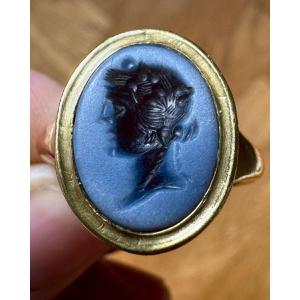
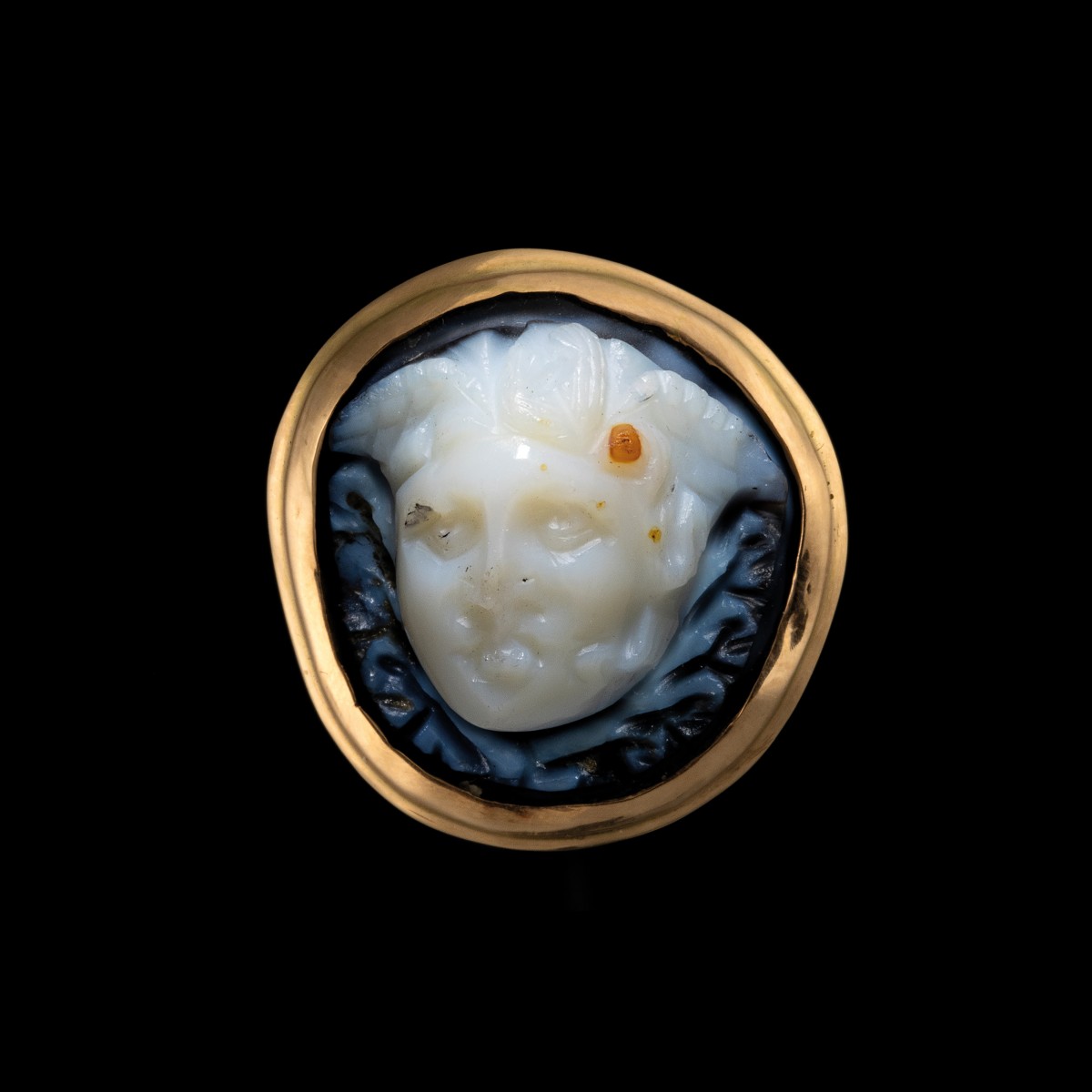
A Gold Ring Set With A Roman Onyx Cameo. Head Of Gorgoneion.
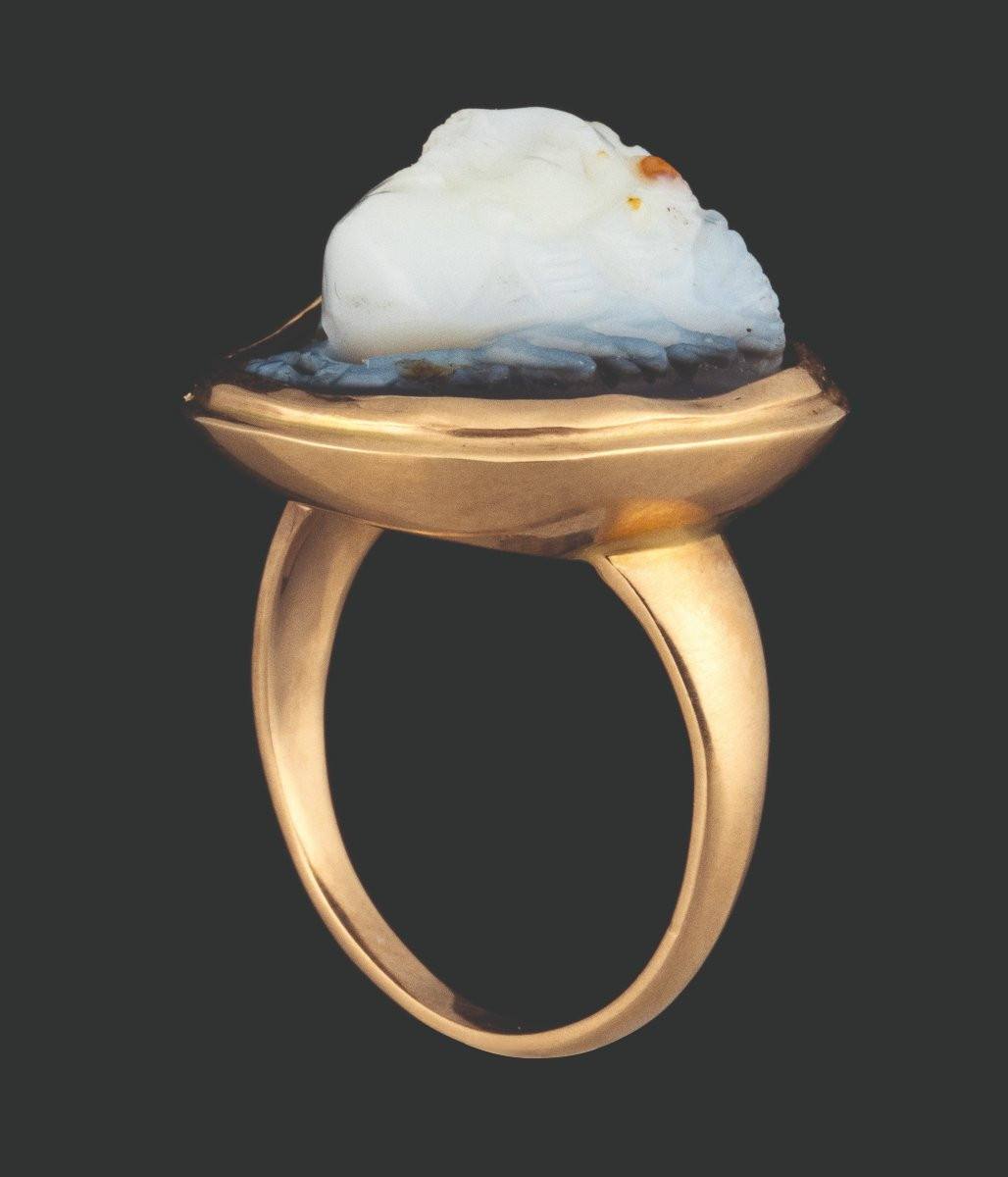
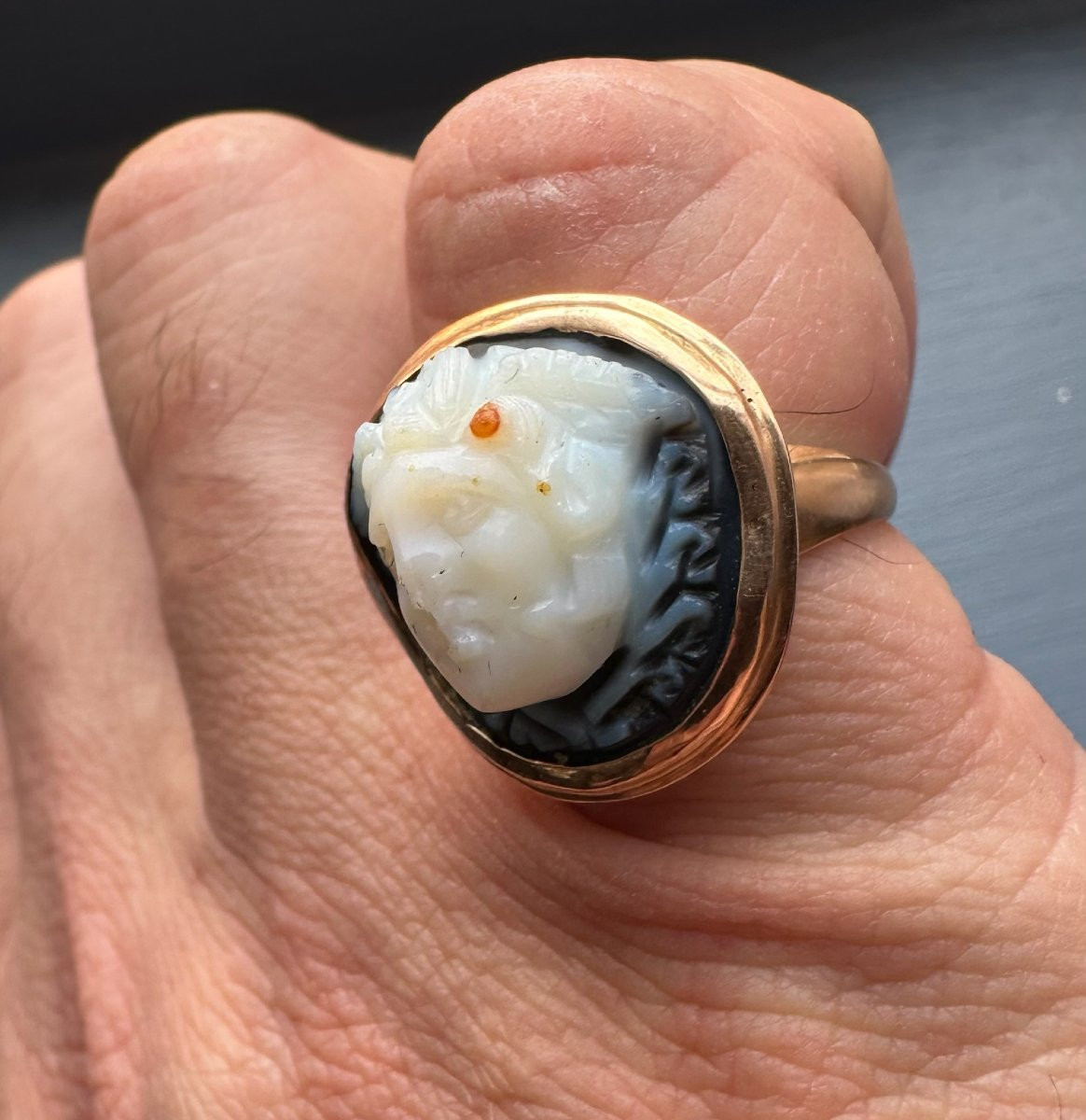


Ring size EU 53 / US 6¼
Weight 7.69 g
Cameo : 15 × 18 mm
Roman art, 3rd century A.D.
Mounting : later
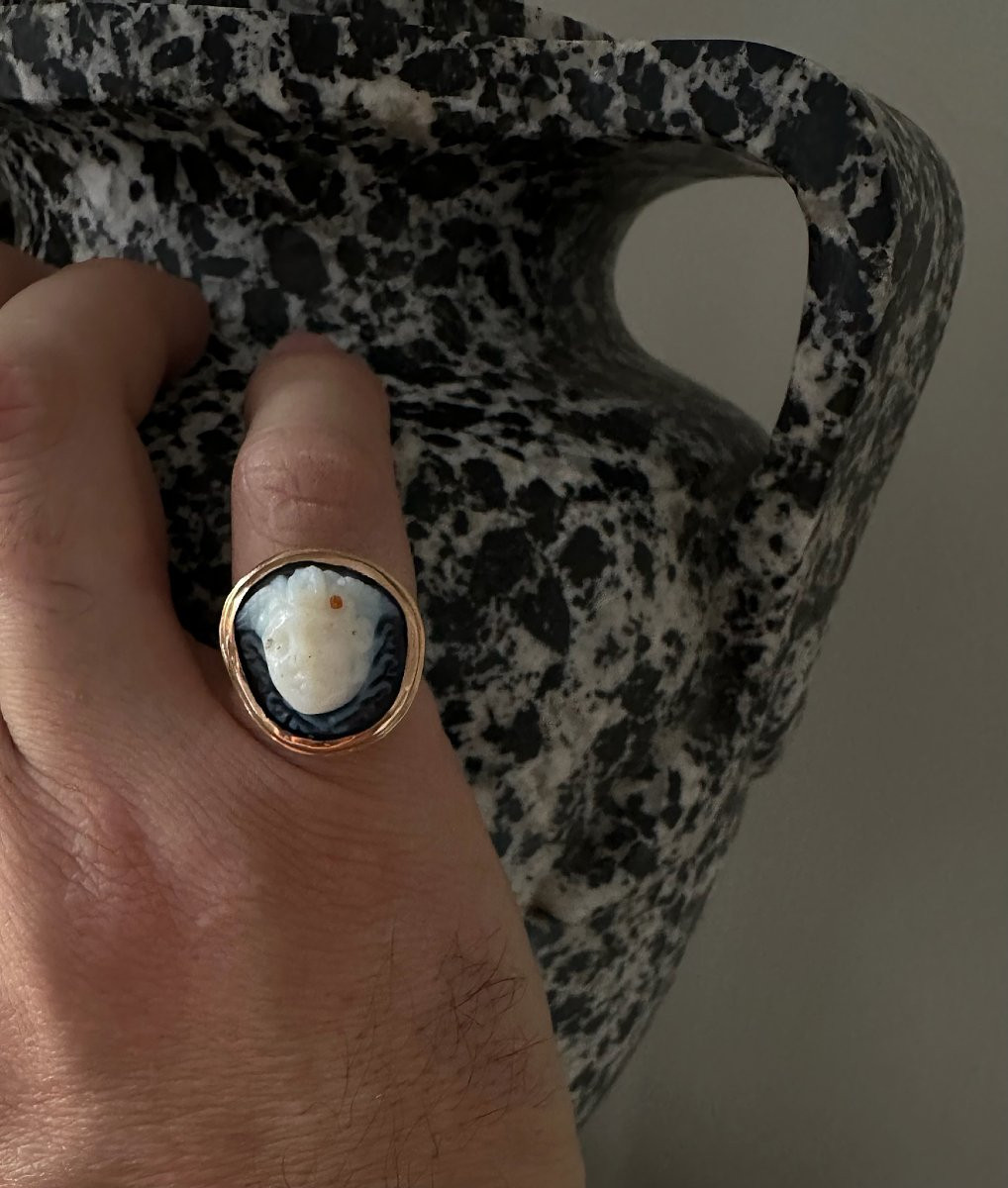
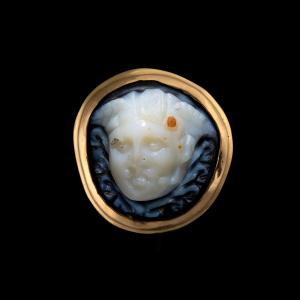
A gold ring set with a Roman cameo carved from onyx, depicting a Gorgoneion — the frontal head of the Gorgon Medusa. The face is rendered in slight three-quarter view, carved in high relief in the white upper layer of the stone, set against the deep blue-black ground of the onyx. The serpentine hair is suggested by undulating ridges encircling the head. A small amber-toned inclusion punctuates the brow, a natural particularity of the stone. The carving displays the confident modelling characteristic of Roman glyptic art of the Imperial period.
The cameo is Roman, dateable to the 3rd century AD on stylistic grounds, and is mounted in a later gold ring. The Gorgon head — apotropaic emblem par excellence in antiquity — was a favoured subject in Roman gem-carving, worn as personal protection. The three-quarter presentation of the face, departing from the canonical frontal Gorgoneion, reflects the naturalistic tendencies of later Imperial glyptic.
Weight 7.69 g
Cameo : 15 × 18 mm
Roman art, 3rd century A.D.
Mounting : later
A gold ring set with a Roman cameo carved from onyx, depicting a Gorgoneion — the frontal head of the Gorgon Medusa. The face is rendered in slight three-quarter view, carved in high relief in the white upper layer of the stone, set against the deep blue-black ground of the onyx. The serpentine hair is suggested by undulating ridges encircling the head. A small amber-toned inclusion punctuates the brow, a natural particularity of the stone. The carving displays the confident modelling characteristic of Roman glyptic art of the Imperial period.
The cameo is Roman, dateable to the 3rd century AD on stylistic grounds, and is mounted in a later gold ring. The Gorgon head — apotropaic emblem par excellence in antiquity — was a favoured subject in Roman gem-carving, worn as personal protection. The three-quarter presentation of the face, departing from the canonical frontal Gorgoneion, reflects the naturalistic tendencies of later Imperial glyptic.
Explore similar pieces and discover your ideal find:
rings