THIS OBJECT WAS SOLD
Still Life With A Bouquet Of Flowers In An Earthenware Vase. Signed Jules Ragot (1835-1912).
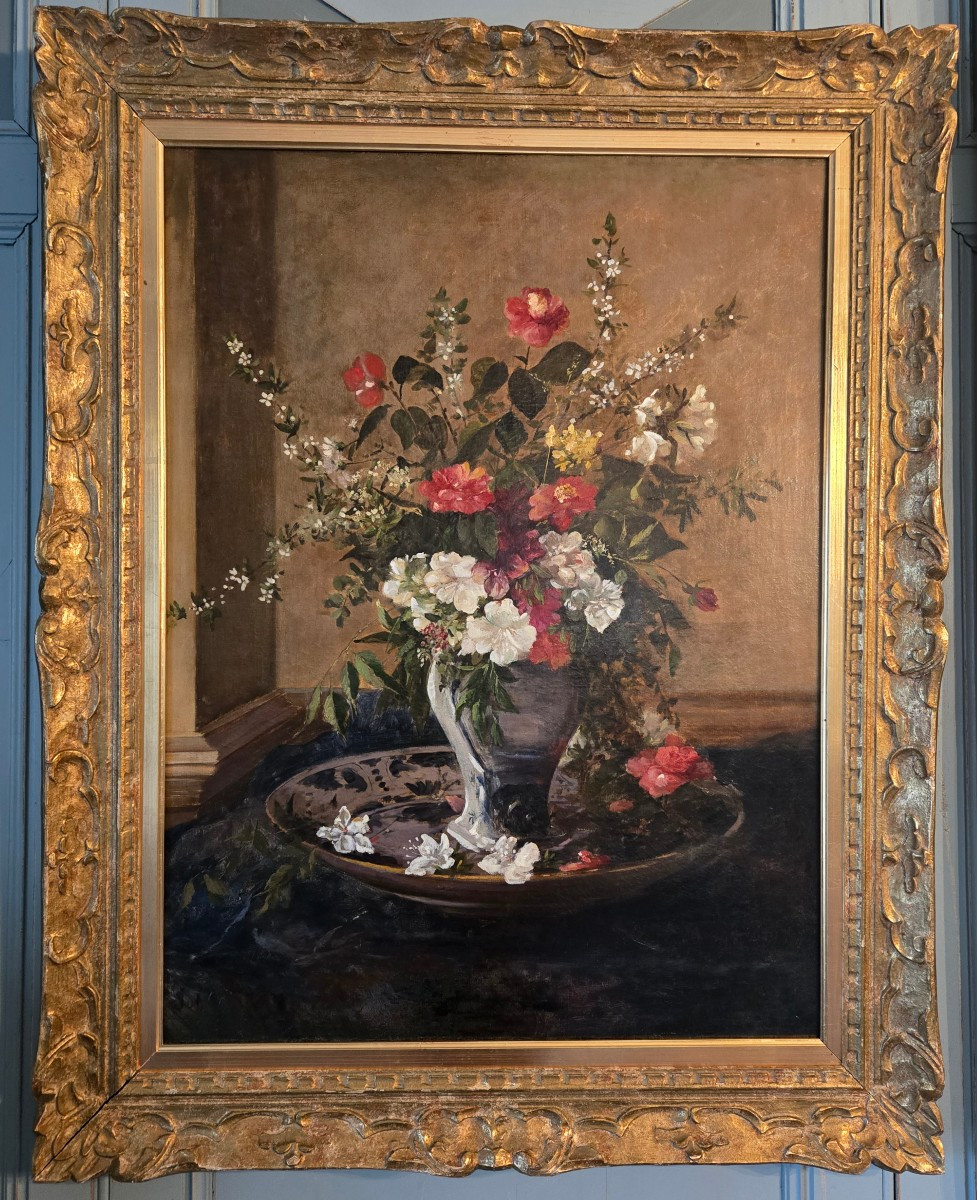
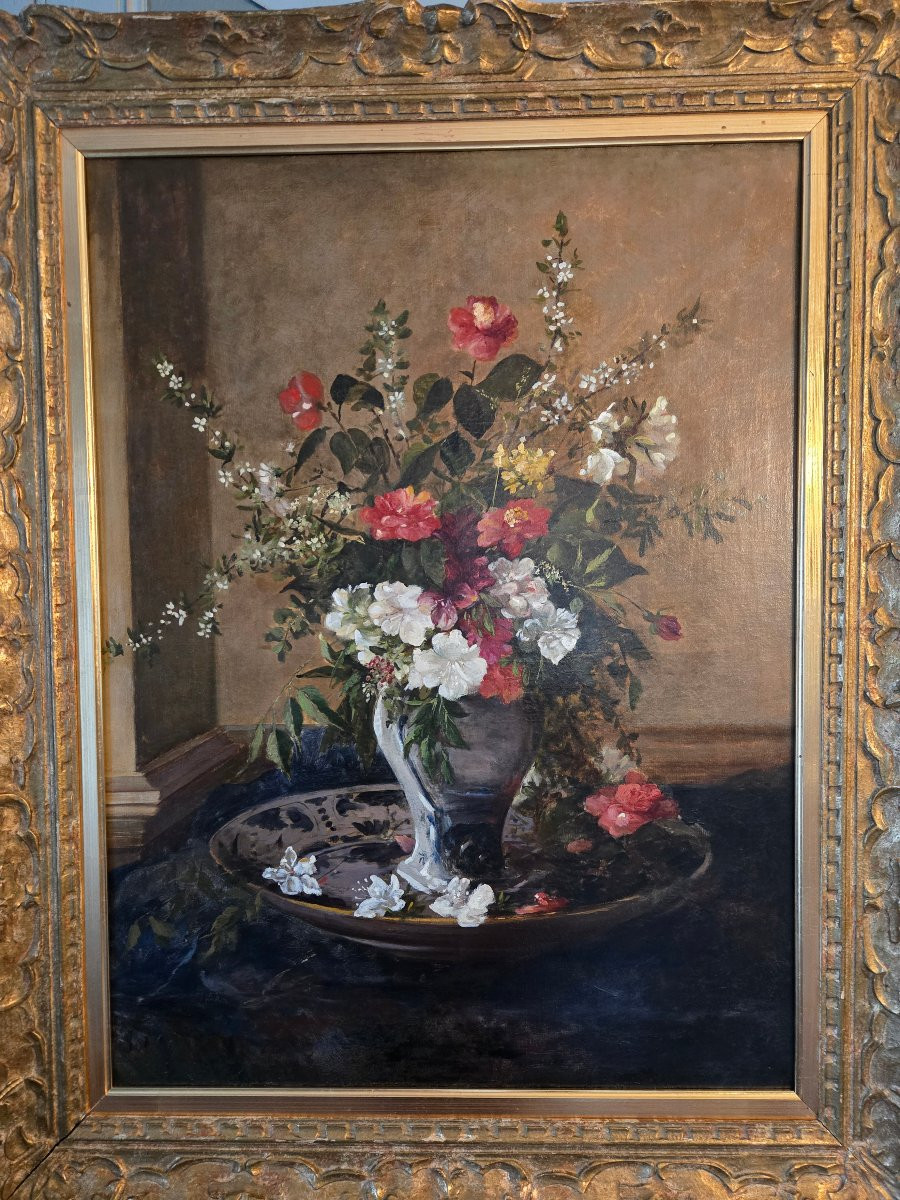
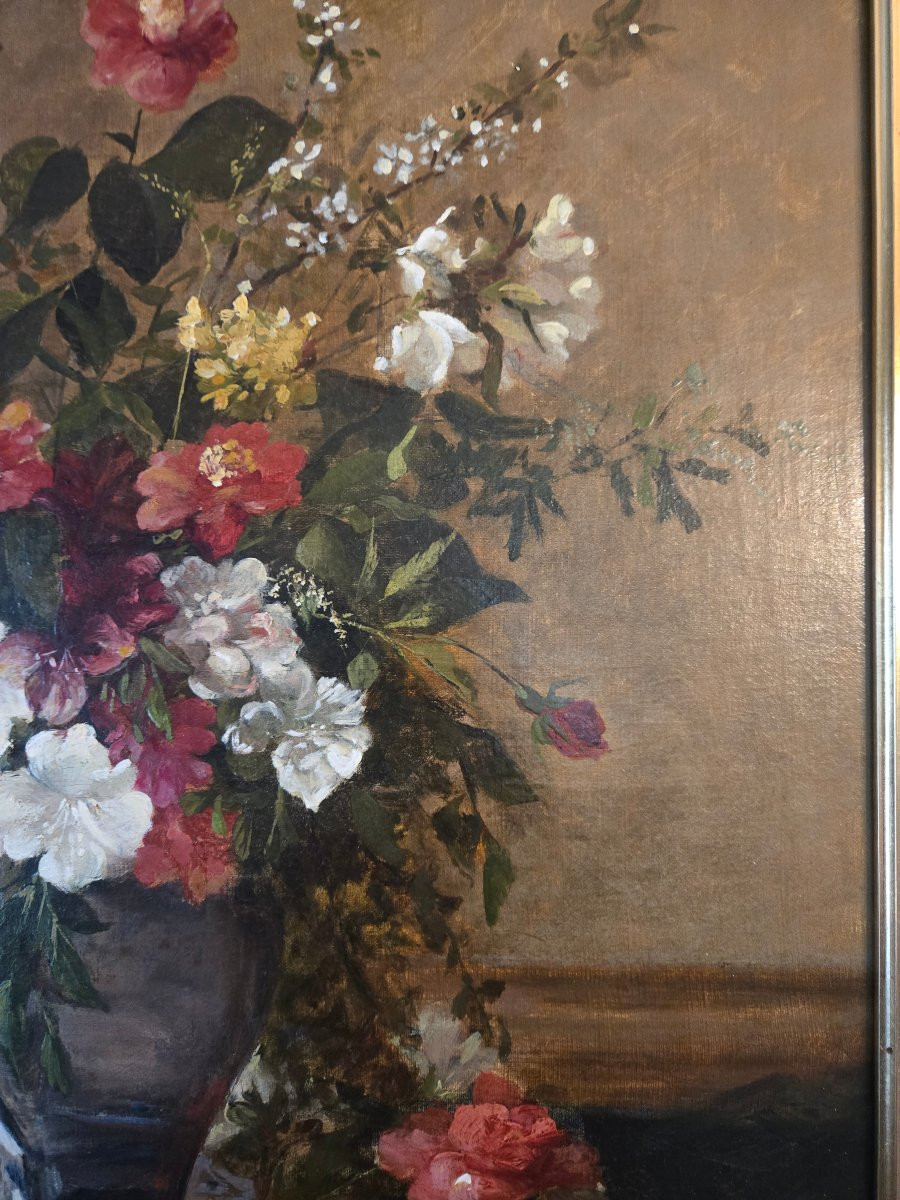
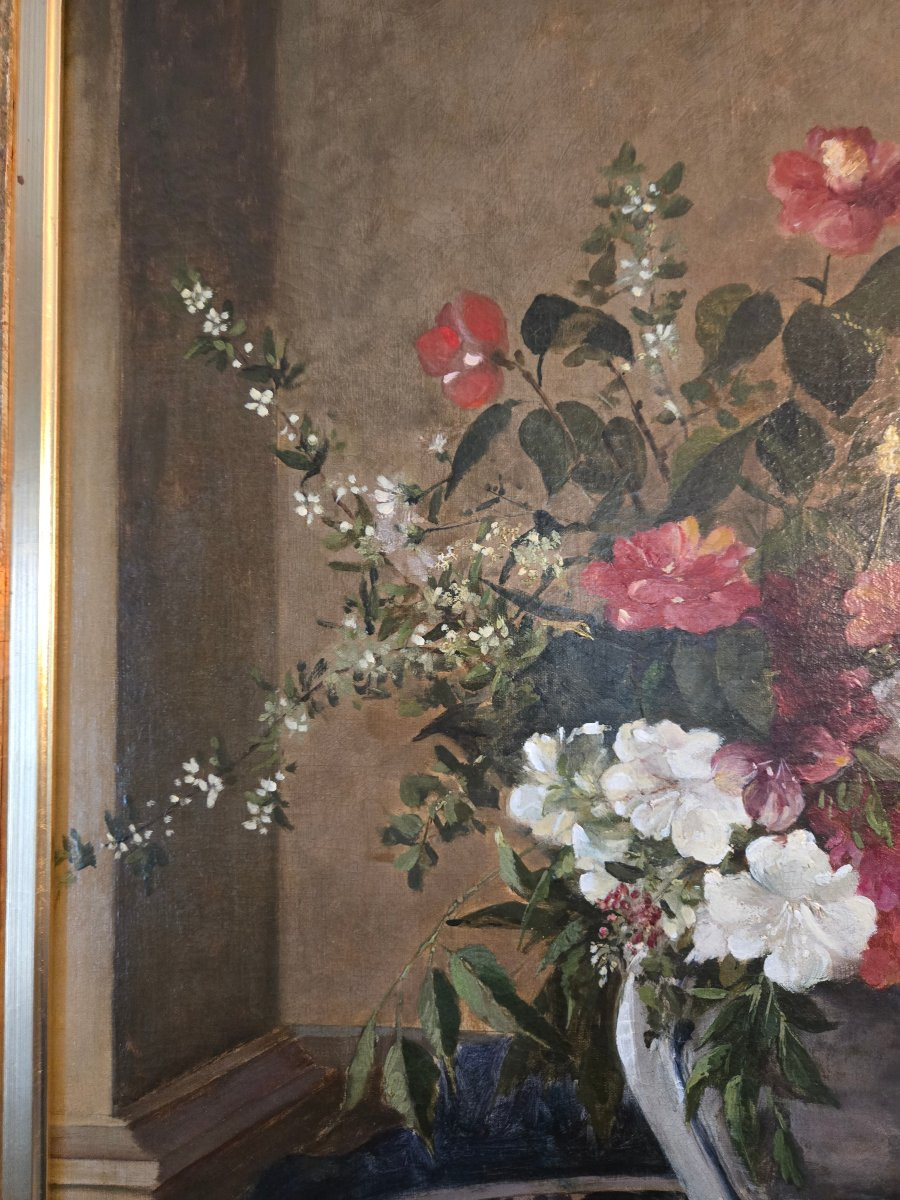



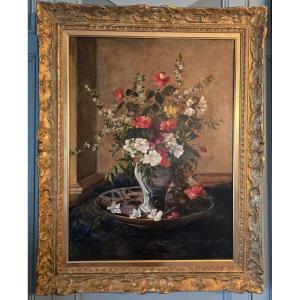


This elegant still life is part of a rich pictorial tradition, blending ancient heritage and 19th-century sensibility, where the study of the living is combined with genuine decorative research.
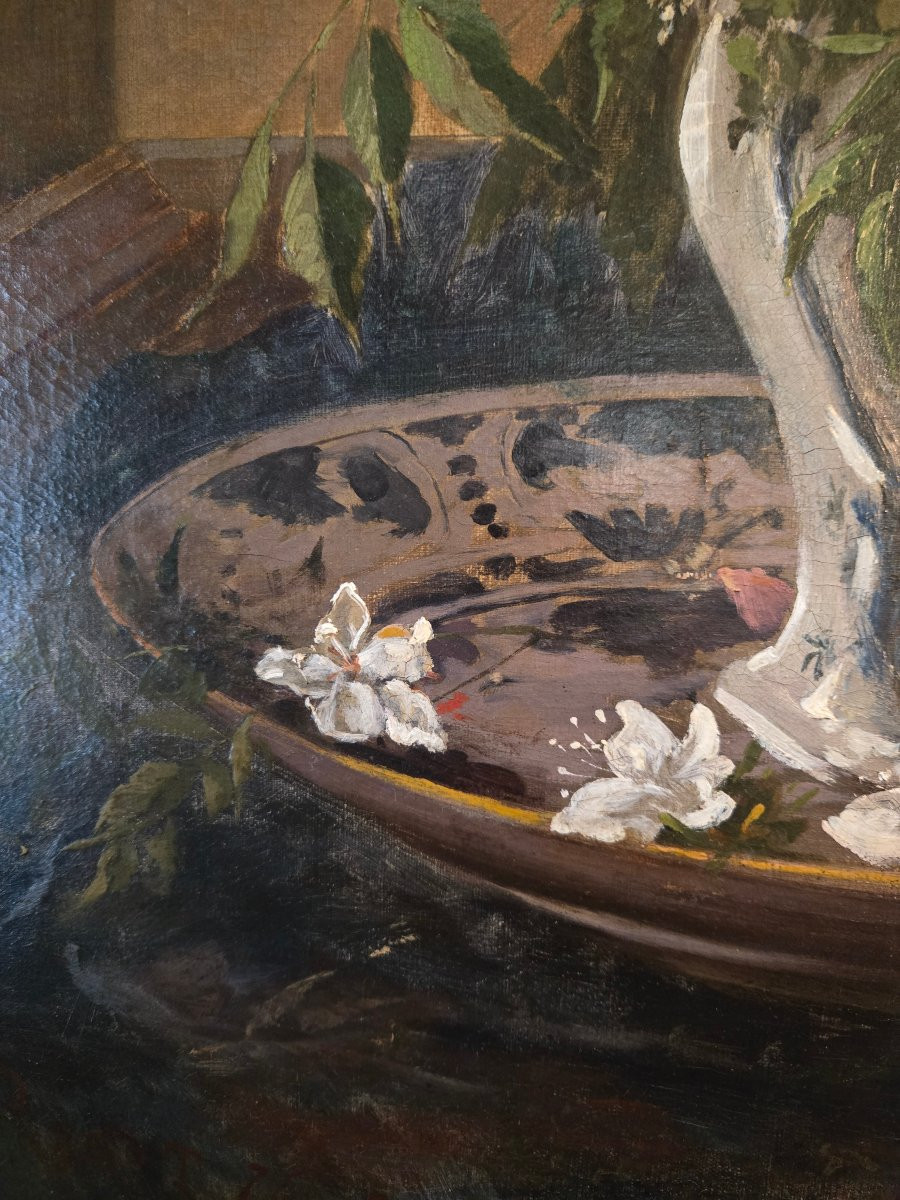
At the center of the composition, an earthenware vase with white and blue decoration, set on a large matching dish, immediately catches the eye. In tone and spirit, this set evokes Delft earthenware, highly appreciated in the 19th century for its link with the great Dutch tradition of the 17th century.
This reference is not insignificant: it places the work in an artistic filiation where still life becomes both homage and reinterpretation.
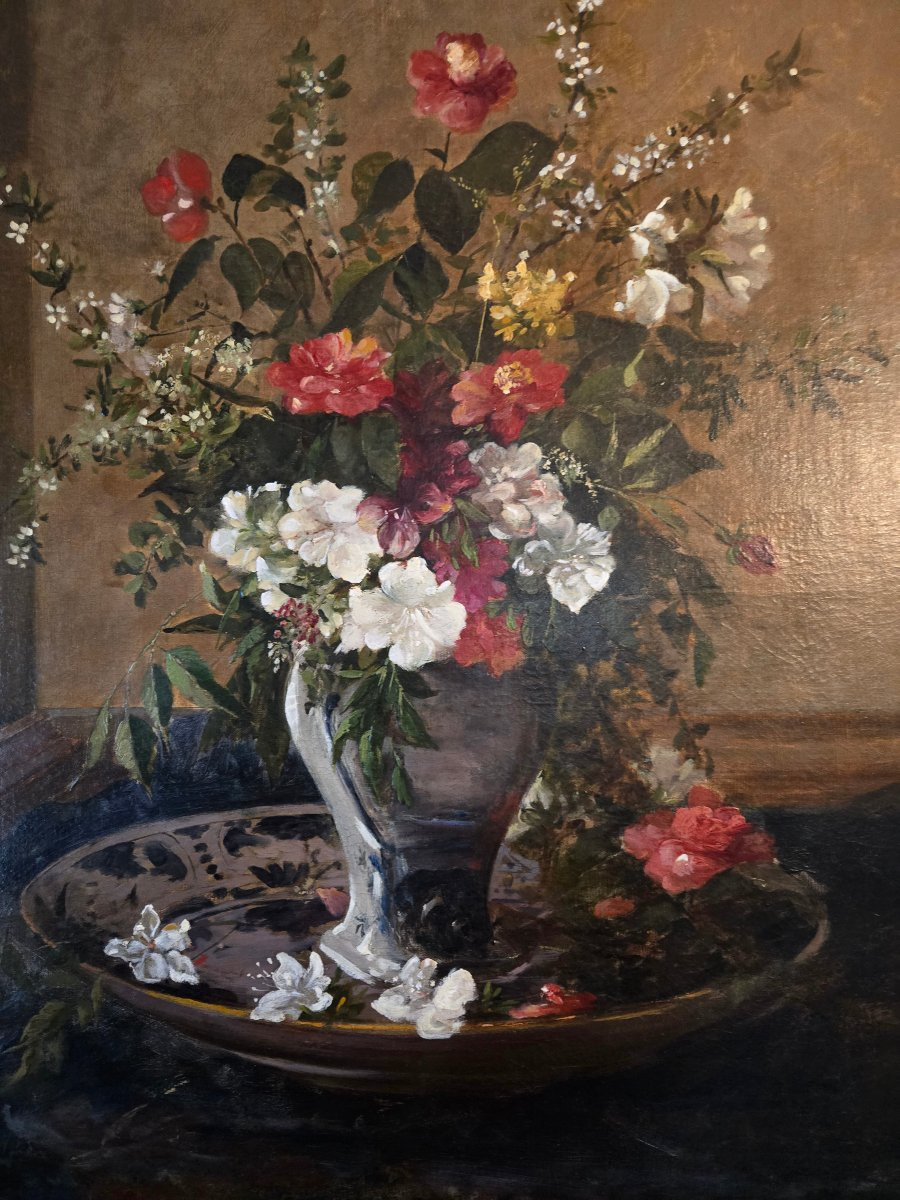
The bouquet, ample and skilfully orchestrated, displays a rich floral variety. Large roses in shades of red and pink, white flowers with delicately shaped petals reminiscent of peonies or wild roses, and slender flowering branches lighten the composition. A few touches of yellow provide a luminous contrast, while the softly treated foliage creates a subtle interplay of depth and transparency.
The delicately fallen flowers in the foreground, some already slightly wilted, are reminiscent of the 17th-century Dutch still-life tradition, where they discreetly symbolize the passage of time and the fragility of living things. During this period, painters developed the theme of floral vanitas, recalling the ephemeral, fragile beauty and transitory nature of all things. Here, Jules Ragot offers a softer, almost poetic reading, in which this symbolism is hinted at without ever imposing itself.
The composition is based on a subtle balance between freedom and rigor. In the background, a wall corner marked by a picture rail introduces an architectural structure, providing a spatial anchor and a certain classical discipline. This construction contrasts with the organic vitality of the bouquet, creating a harmonious dialogue between order and spontaneity.
In the very treatment of the painting, a certain freedom in the branches and spaces is apparent. With discreet touches, it evokes the Japanese sensibility in vogue at the end of the 19th century: certain stems soar with lightness, voids breathe, and the composition gains in elegance and modernity.
The brushstroke is supple and nuanced, alternating precision in the rendering of flowers with more subdued passages in the backgrounds. The soft, enveloping light highlights the materials - the satin sheen of the earthenware, the velvety texture of the petals, the depth of the shadows - giving the whole an intimate, refined atmosphere.
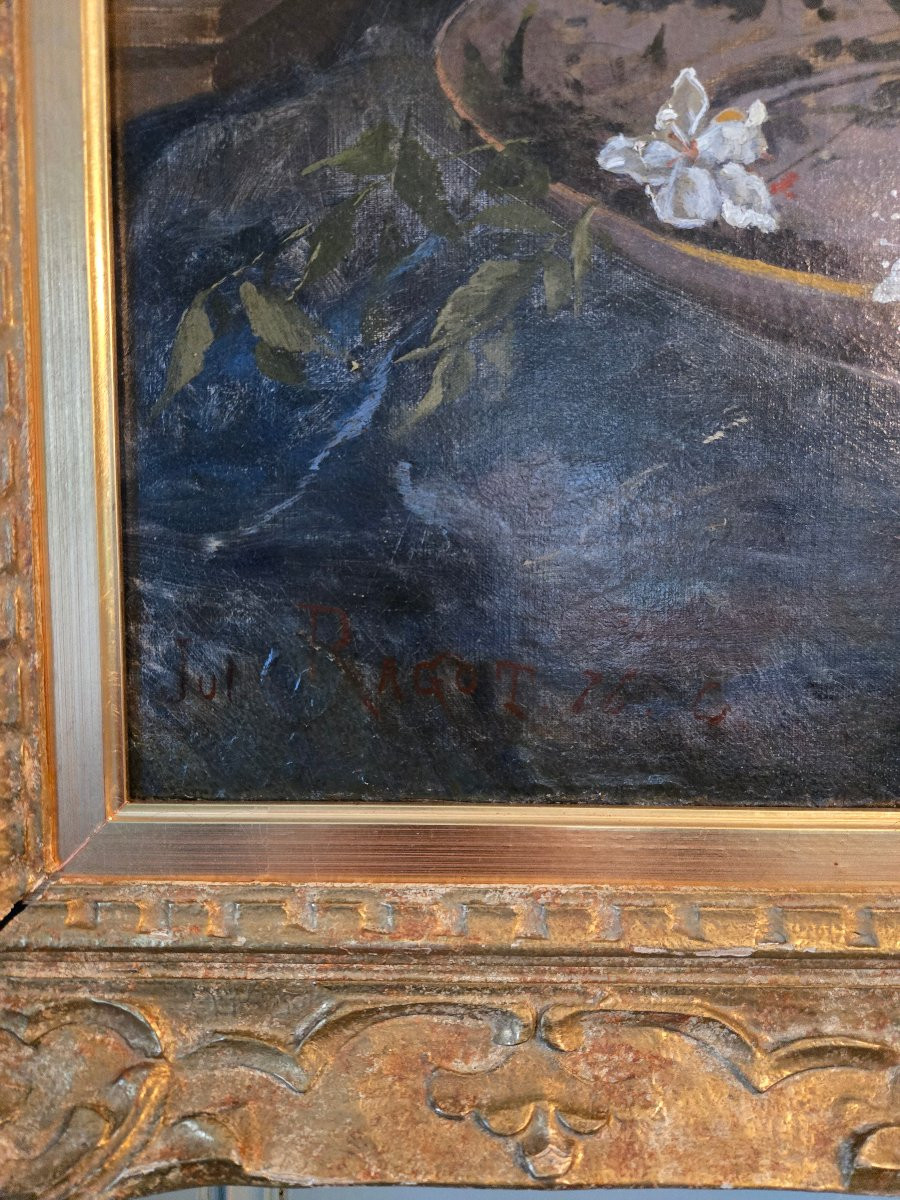
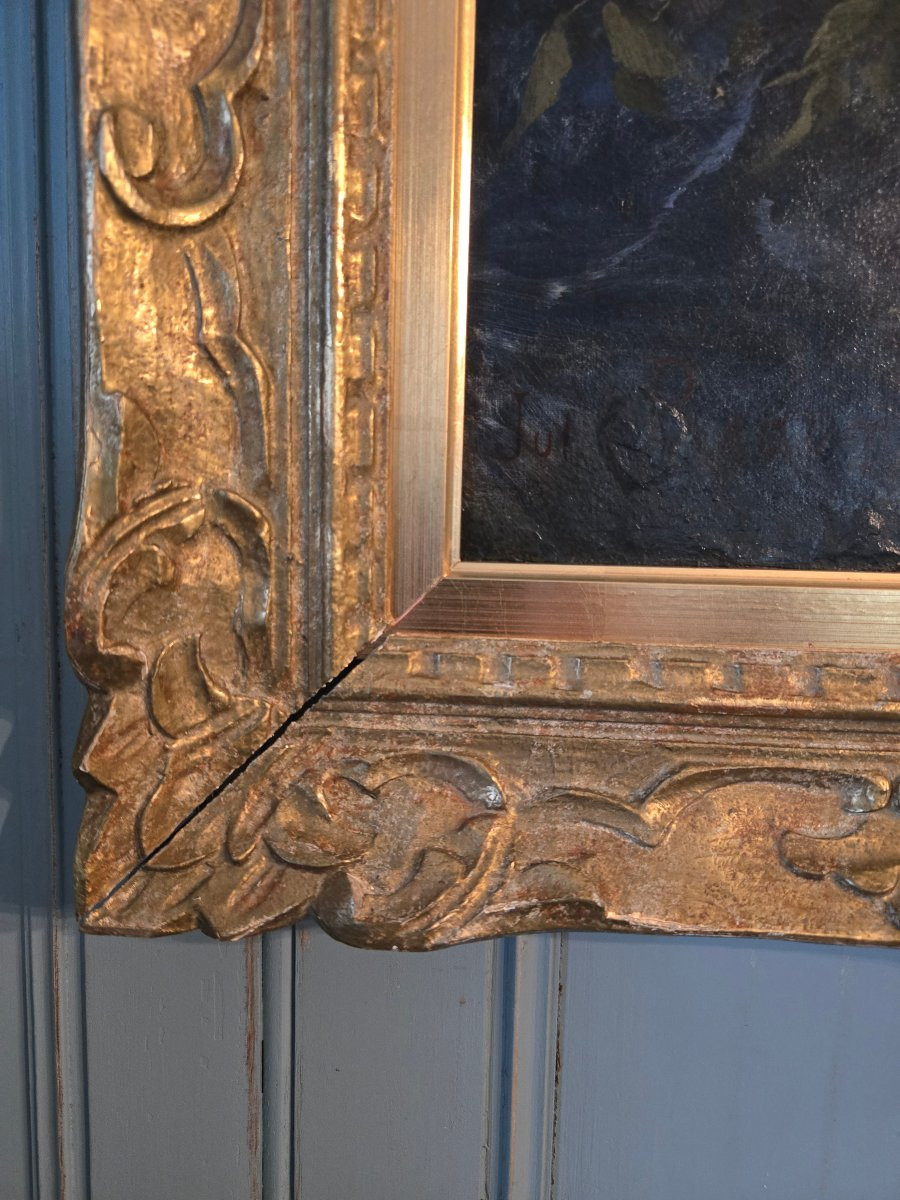
Signed lower left. Jules Ragot (1835-1912) A French painter trained by Jean Murat and François-Édouard Picot, Jules Ragot followed the academic tradition of the 19th century. From 1867 onwards, he exhibited regularly at the Paris Salon, showing still lifes, portraits and genre scenes. His painting is characterized by a great sensitivity in the rendering of materials and a particular attention to floral compositions. He settled in Belgium, where he enjoyed considerable success: his works were acquired by King Leopold II, and he taught painting to Queen Marie-Henriette, testifying to the recognition he enjoyed during his lifetime.
Condition: Original canvas and stretcher. Recently professionally restored: old small perforation repaired, varnish cleaned and lightened.
These interventions have restored the composition's legibility and the freshness of its palette. Late 19th-century wood and gilded stucco frame, possibly original, with a beautiful patina in harmony with the work. Dimensions:
at sight: 80 x 59.5 cm
with frame: 100.5 x 79.5 cm
At the center of the composition, an earthenware vase with white and blue decoration, set on a large matching dish, immediately catches the eye. In tone and spirit, this set evokes Delft earthenware, highly appreciated in the 19th century for its link with the great Dutch tradition of the 17th century.
This reference is not insignificant: it places the work in an artistic filiation where still life becomes both homage and reinterpretation.
The bouquet, ample and skilfully orchestrated, displays a rich floral variety. Large roses in shades of red and pink, white flowers with delicately shaped petals reminiscent of peonies or wild roses, and slender flowering branches lighten the composition. A few touches of yellow provide a luminous contrast, while the softly treated foliage creates a subtle interplay of depth and transparency.
The delicately fallen flowers in the foreground, some already slightly wilted, are reminiscent of the 17th-century Dutch still-life tradition, where they discreetly symbolize the passage of time and the fragility of living things. During this period, painters developed the theme of floral vanitas, recalling the ephemeral, fragile beauty and transitory nature of all things. Here, Jules Ragot offers a softer, almost poetic reading, in which this symbolism is hinted at without ever imposing itself.
The composition is based on a subtle balance between freedom and rigor. In the background, a wall corner marked by a picture rail introduces an architectural structure, providing a spatial anchor and a certain classical discipline. This construction contrasts with the organic vitality of the bouquet, creating a harmonious dialogue between order and spontaneity.
In the very treatment of the painting, a certain freedom in the branches and spaces is apparent. With discreet touches, it evokes the Japanese sensibility in vogue at the end of the 19th century: certain stems soar with lightness, voids breathe, and the composition gains in elegance and modernity.
The brushstroke is supple and nuanced, alternating precision in the rendering of flowers with more subdued passages in the backgrounds. The soft, enveloping light highlights the materials - the satin sheen of the earthenware, the velvety texture of the petals, the depth of the shadows - giving the whole an intimate, refined atmosphere.
Signed lower left. Jules Ragot (1835-1912) A French painter trained by Jean Murat and François-Édouard Picot, Jules Ragot followed the academic tradition of the 19th century. From 1867 onwards, he exhibited regularly at the Paris Salon, showing still lifes, portraits and genre scenes. His painting is characterized by a great sensitivity in the rendering of materials and a particular attention to floral compositions. He settled in Belgium, where he enjoyed considerable success: his works were acquired by King Leopold II, and he taught painting to Queen Marie-Henriette, testifying to the recognition he enjoyed during his lifetime.
Condition: Original canvas and stretcher. Recently professionally restored: old small perforation repaired, varnish cleaned and lightened.
These interventions have restored the composition's legibility and the freshness of its palette. Late 19th-century wood and gilded stucco frame, possibly original, with a beautiful patina in harmony with the work. Dimensions:
at sight: 80 x 59.5 cm
with frame: 100.5 x 79.5 cm
Explore similar pieces and discover your ideal find:
Still Life Paintings