

16th Century German War Hammer
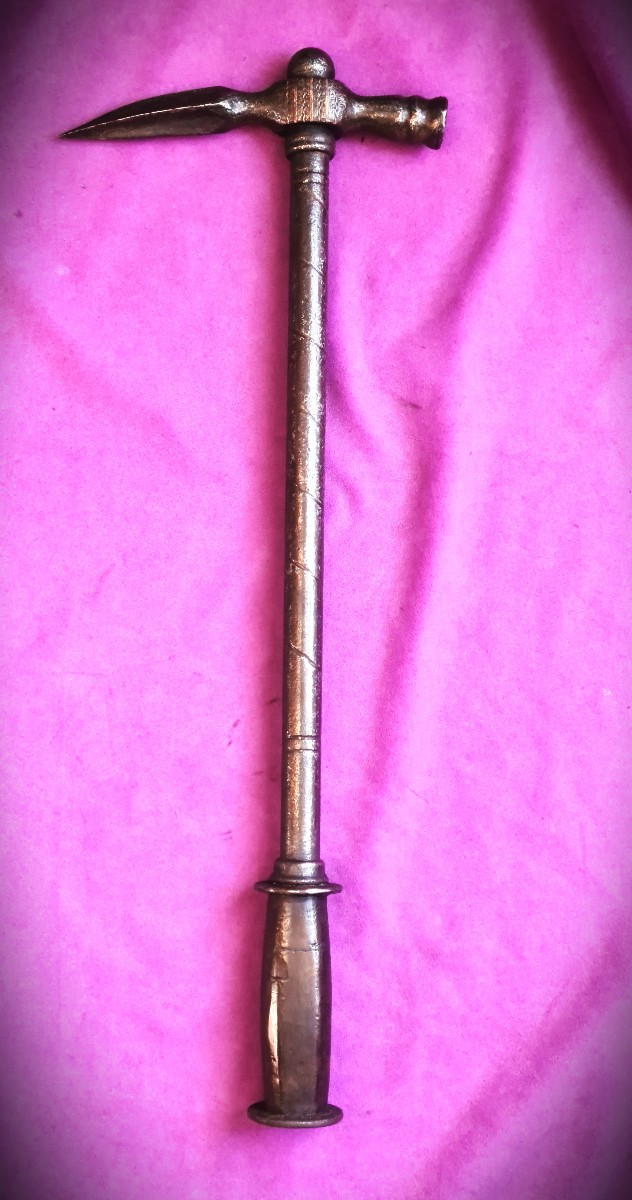
War hammers are rare on the market, and their price is always relatively high. This one is Germanic and can be dated fromthe 16th century. These weapons, often unknown to the general public, were widely used in combat in the Poland-Hungary region, and also in the rest of the Germanic sphere of influence. In a melee between two cavalry units, they proved much more practical than swords, allowing for a very quick follow-up attack if the enemy had been missed with an initial move.
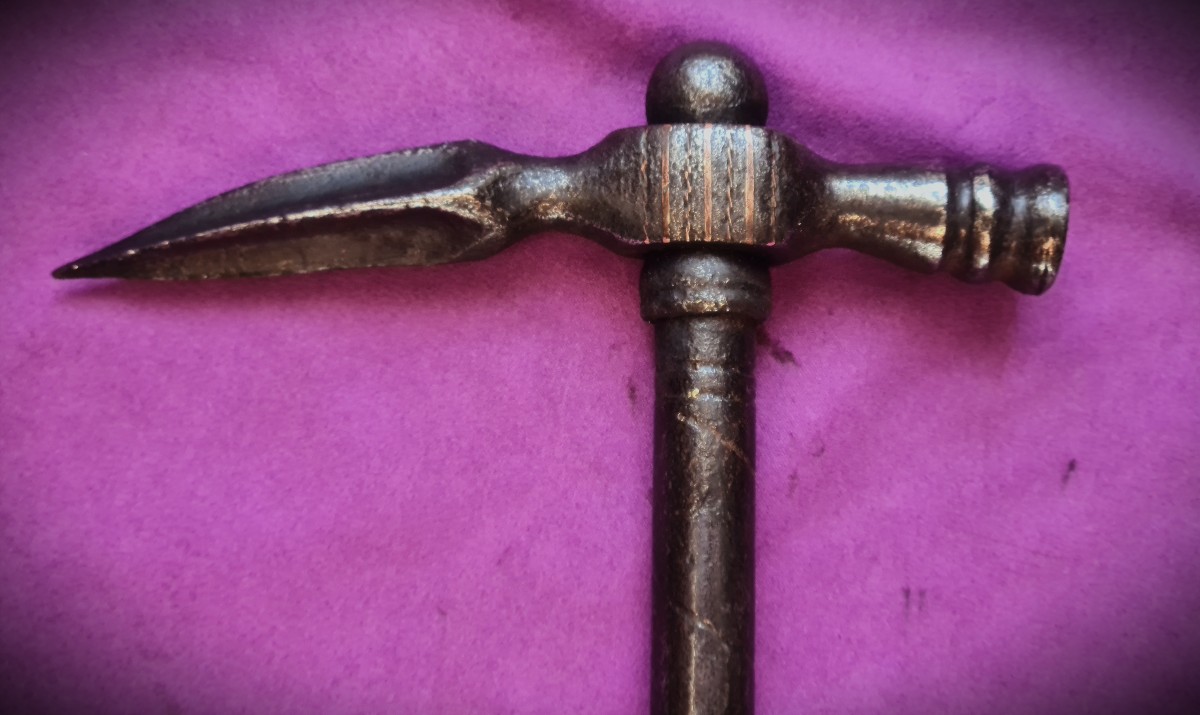
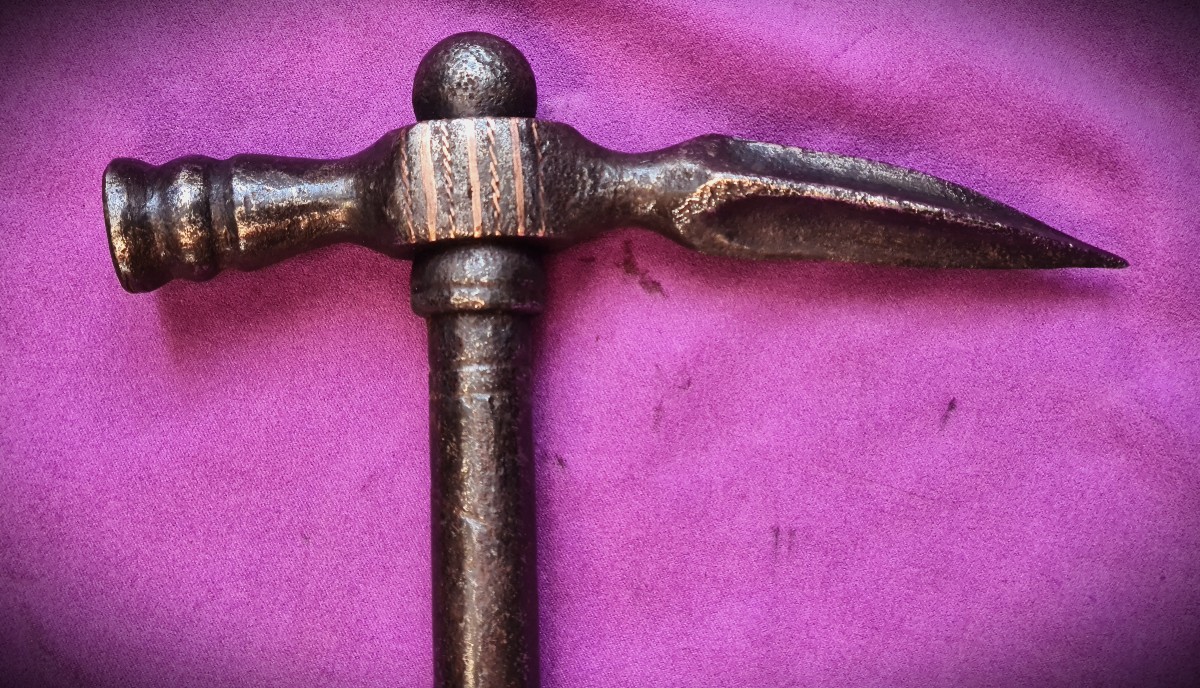
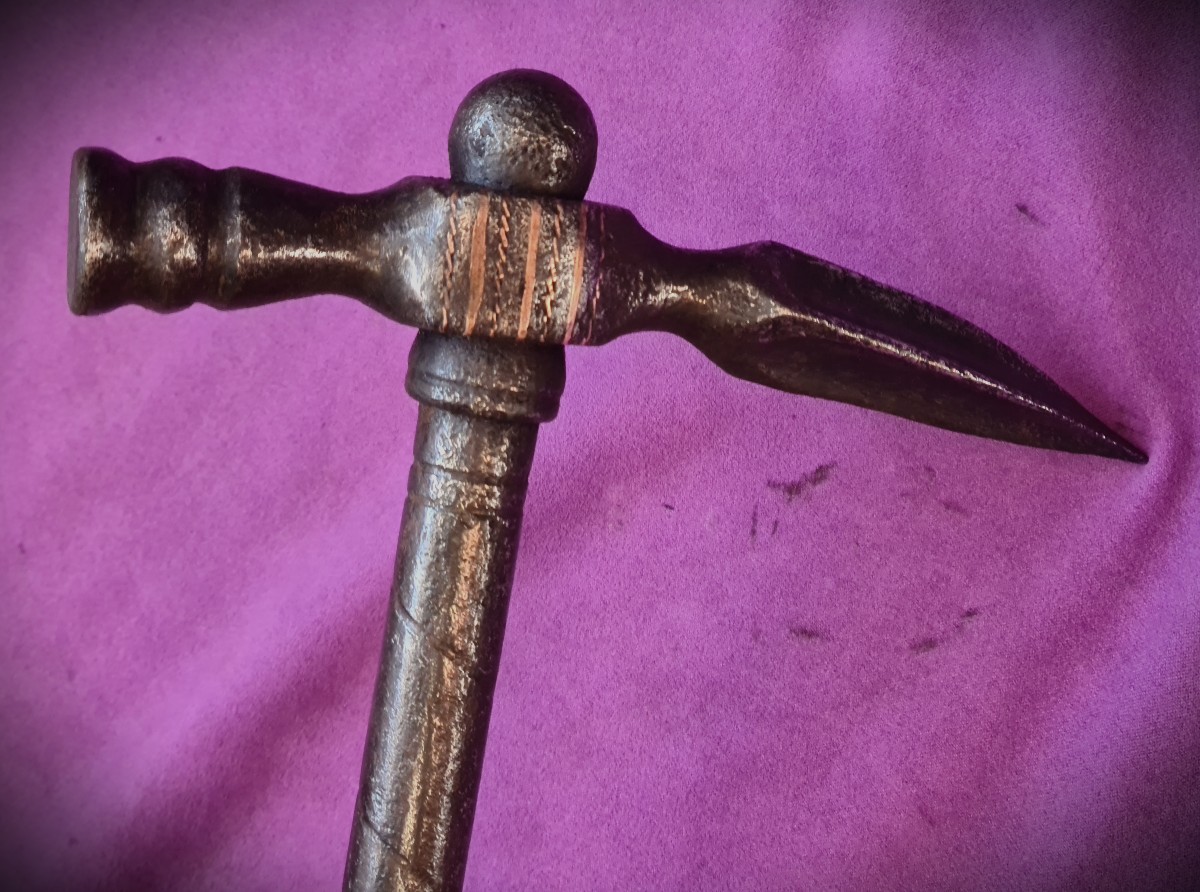
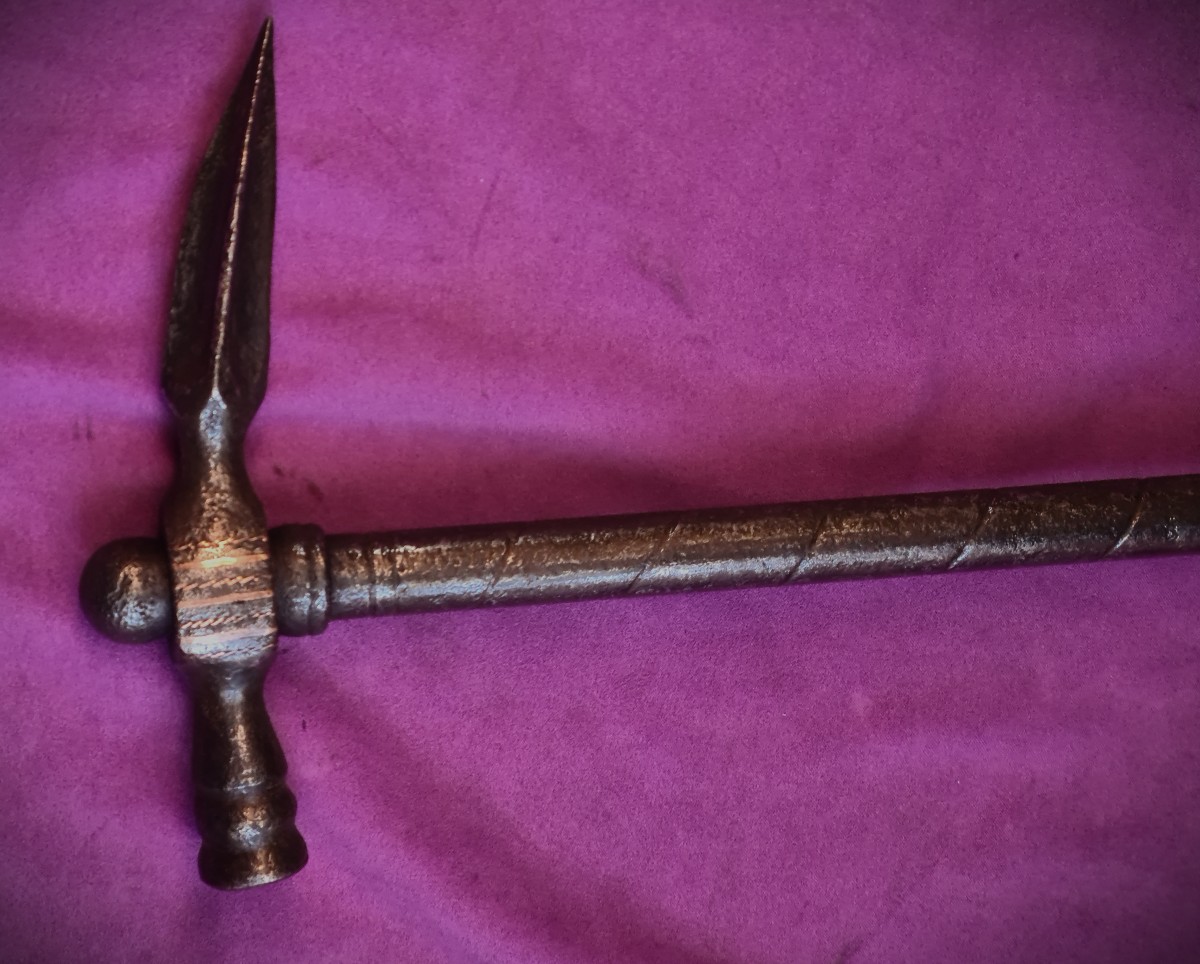
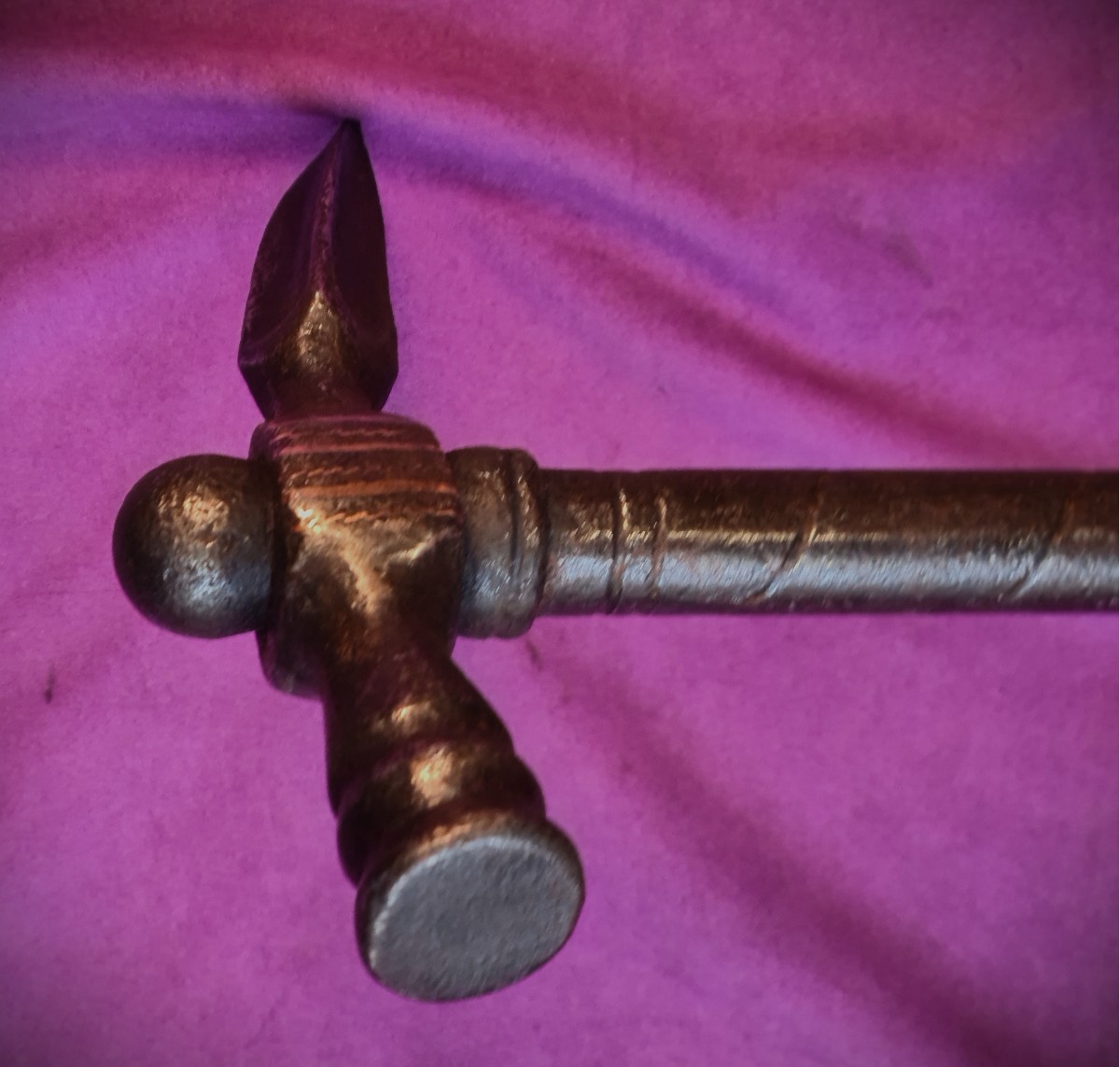
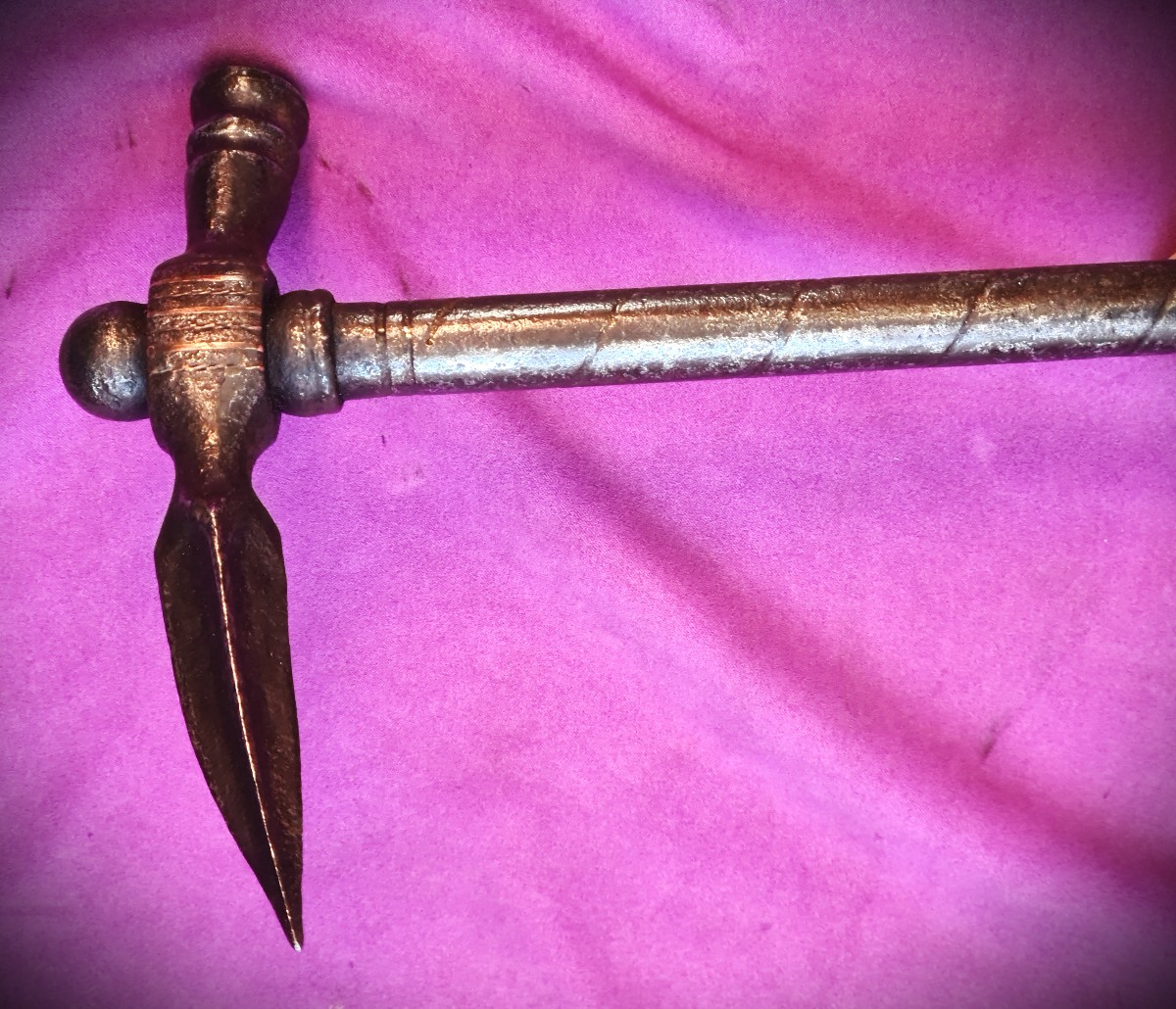
The hammer head has, on one side, an inverted cone with a flat head, which is the hammer itself, very effective on the rounds parts of armor, and on the other, the strong point, with four prominent edges and four hollow sides, known as a "crow's beak," which could be used to slide into the joints of the armor. The central part of the hammer head is decorated with copper inlays, alternating smooth and twisted bands. The head is surmounted by a large spherical knob. Head width = 19.7 cm
Hammer stock: After a baluster shape just below the head, it becomes cylindrical, decorated with twists. A very small fragment of brass indicates that originally, filigree must have decorated the inside of these twists.
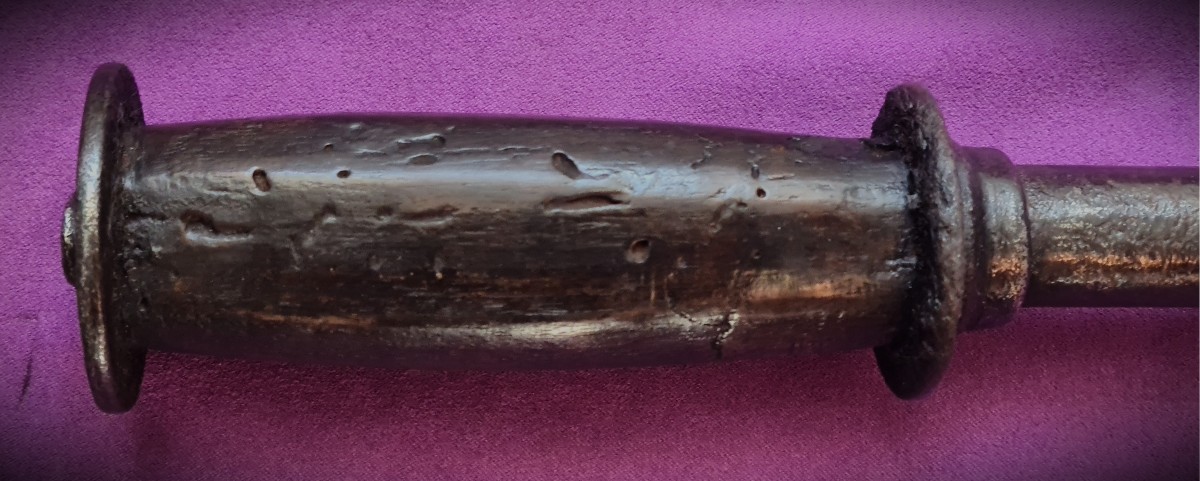
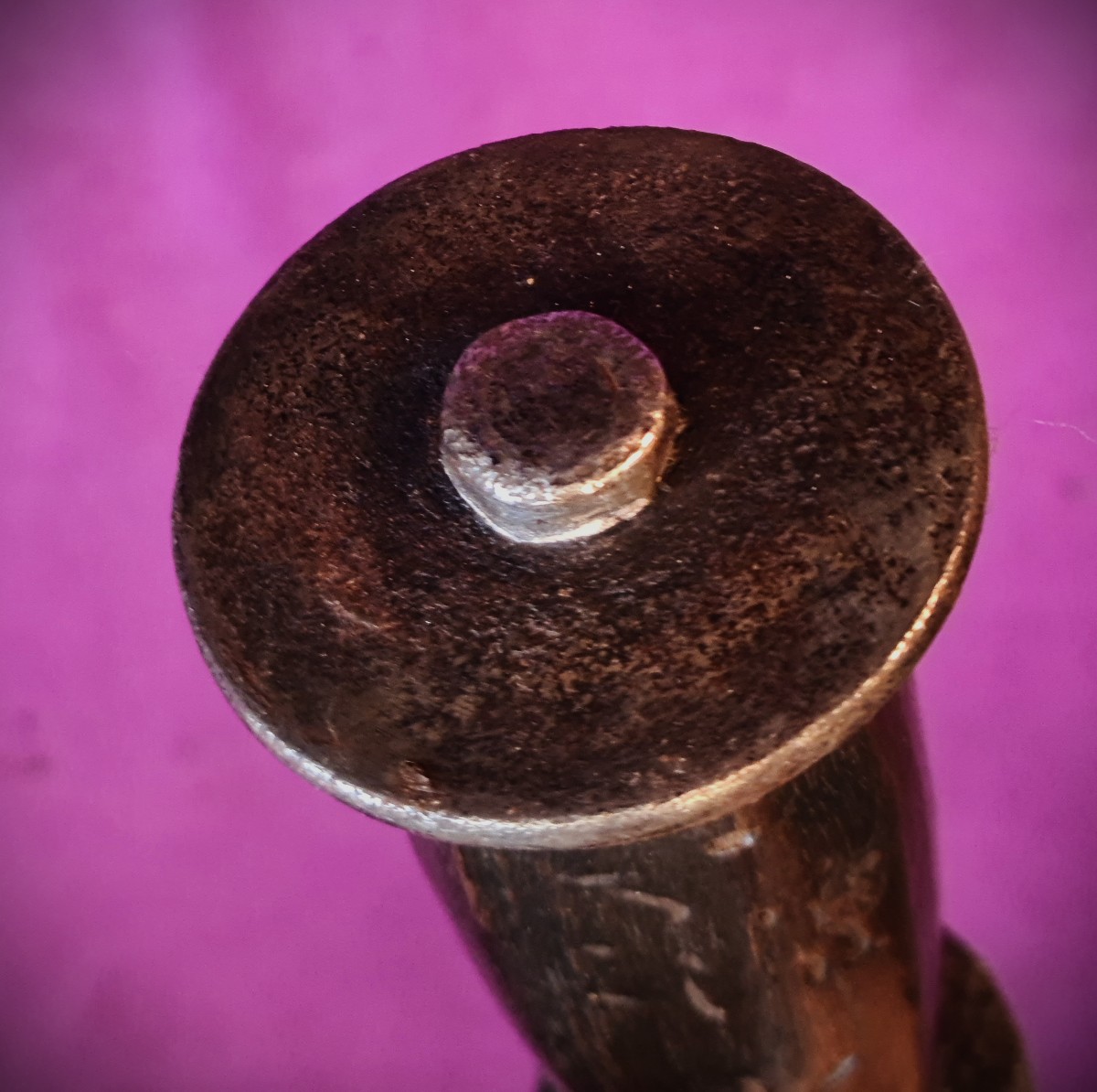
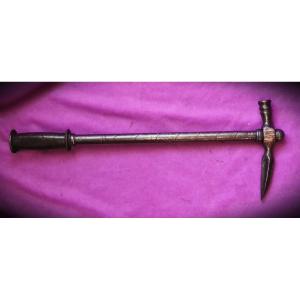
Grip : It is in the shape of an octagonal spool made of natural wood. A circular iron guard protects the hand. The grip terminates at the opposite end with another iron wheel surmounted by a small rivet.
This beautiful historical object evokes the cavalry assaults of the 16th century, when two groups of horsemen clashed and, in the general disarray, swords were difficult to wield.
Shipping costs: France = €30, Western Europe = €40,
Ref C-1566
The hammer head has, on one side, an inverted cone with a flat head, which is the hammer itself, very effective on the rounds parts of armor, and on the other, the strong point, with four prominent edges and four hollow sides, known as a "crow's beak," which could be used to slide into the joints of the armor. The central part of the hammer head is decorated with copper inlays, alternating smooth and twisted bands. The head is surmounted by a large spherical knob. Head width = 19.7 cm
Hammer stock: After a baluster shape just below the head, it becomes cylindrical, decorated with twists. A very small fragment of brass indicates that originally, filigree must have decorated the inside of these twists.
Grip : It is in the shape of an octagonal spool made of natural wood. A circular iron guard protects the hand. The grip terminates at the opposite end with another iron wheel surmounted by a small rivet.
This beautiful historical object evokes the cavalry assaults of the 16th century, when two groups of horsemen clashed and, in the general disarray, swords were difficult to wield.
Shipping costs: France = €30, Western Europe = €40,
Ref C-1566
1 750 €
Period: 16th century
Style: Renaissance, Louis 13th
Condition: Good condition
Material: Other
Length: 55 cm
Width: 19.7 cm
Reference (ID): 1732719
Availability: In stock
Print