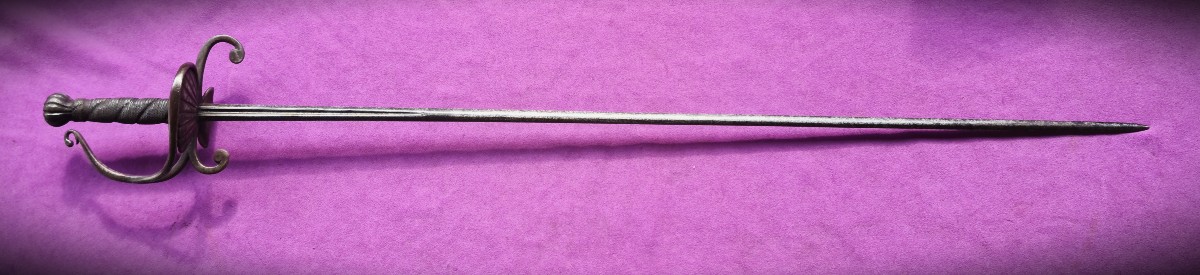
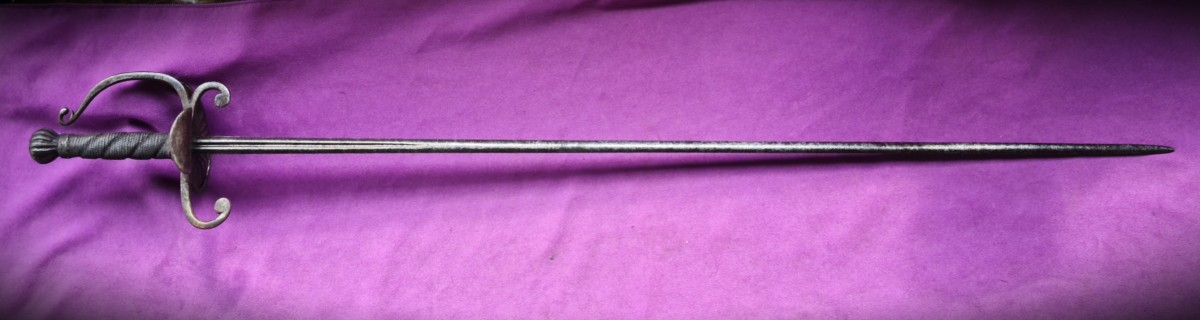
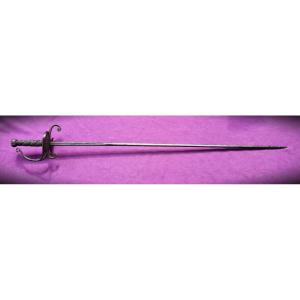


"Germanic Rapier, 17th Century, Atypical Mount"
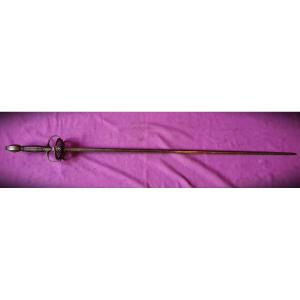
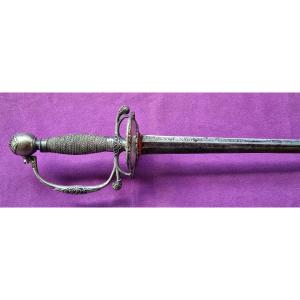
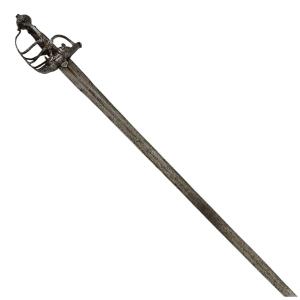
This rapier is from Germanic origin. The hilt is very unusual, dating from the 17th century, with the reuse of an older rapier blade, probably from the late 16th century. Due to its dimensions, it is clearly either a domestic rapier or one intended for discreet wear under formal dress. The narrow, robust blade is designed for thrusting attacks, and its compact size likely allowed for very rapid handling.
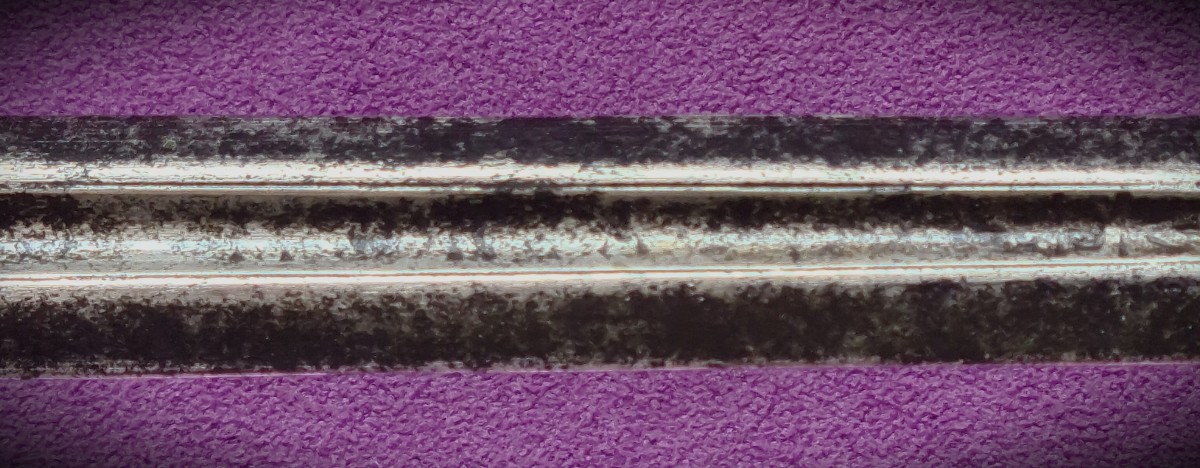
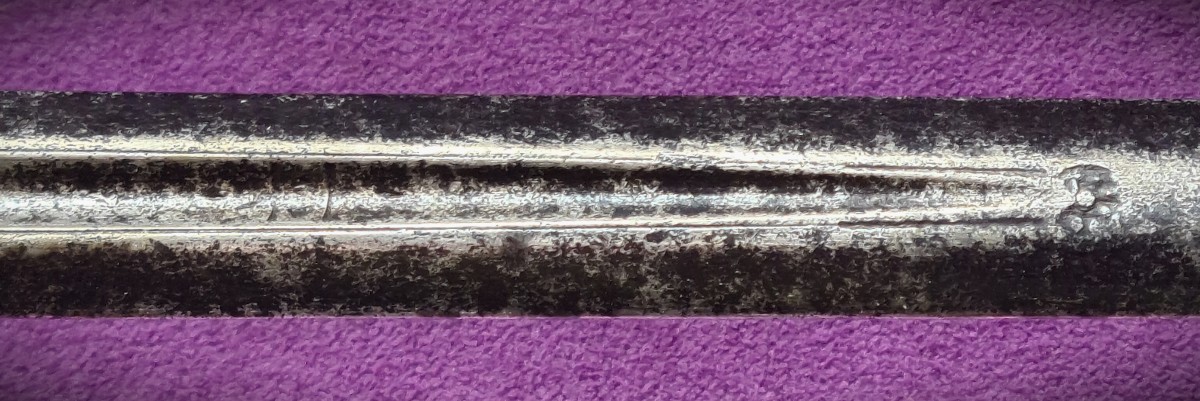
BLADE : It is hexagonal in cross-section from the outset. It is probable that the original ricasso was incorporated inside the hilt during reassembly. A thin central fuller in the first third of each face bears inscriptions, partially erased by time. I seem to decipher the end of …NIS and an A, which could therefore correspond to "Iohannis," but I offer this interpretation without any guarantee.
The central fuller ends with a small chased floral decoration.
Blade length = 81.8 cm, width at the ricasso = 1.6 cm, thickness at the ricasso = 7.6 mm. Balance point 8 cm from the guard.
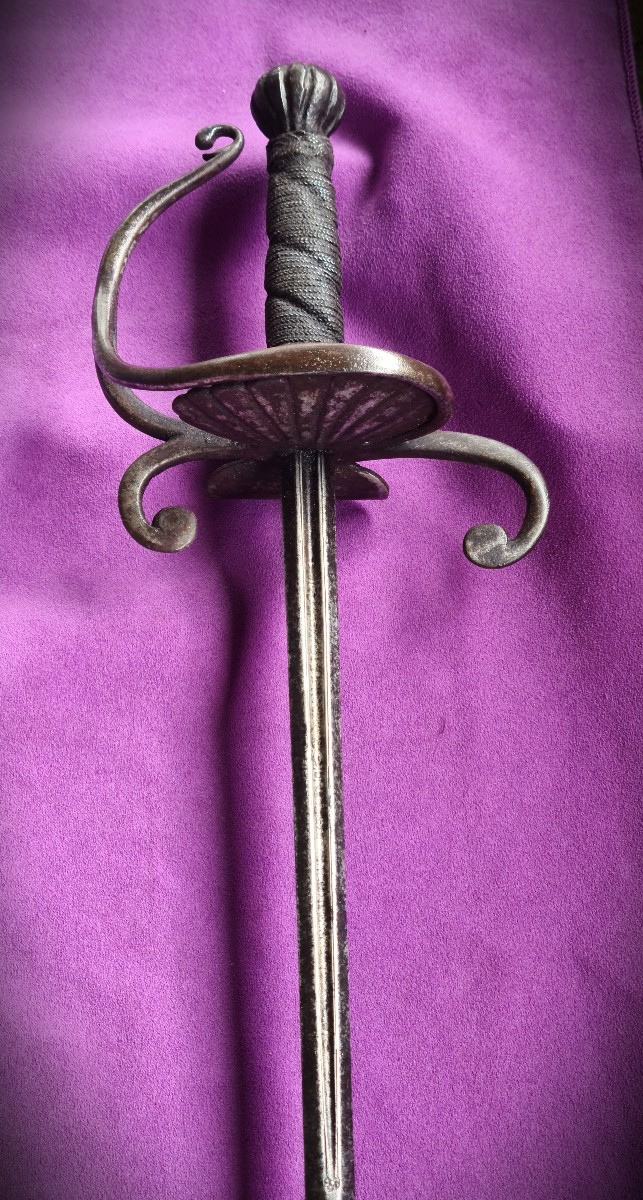
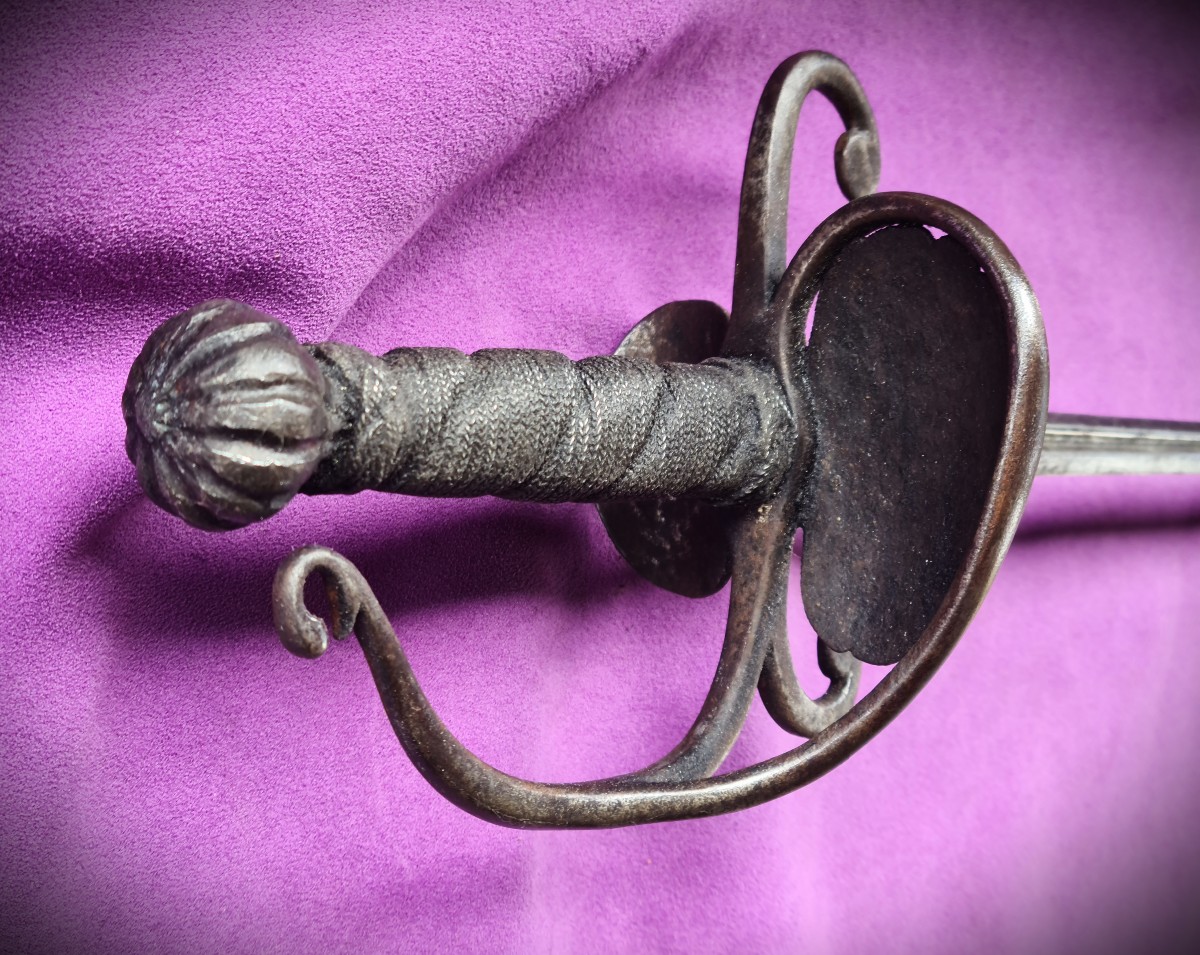
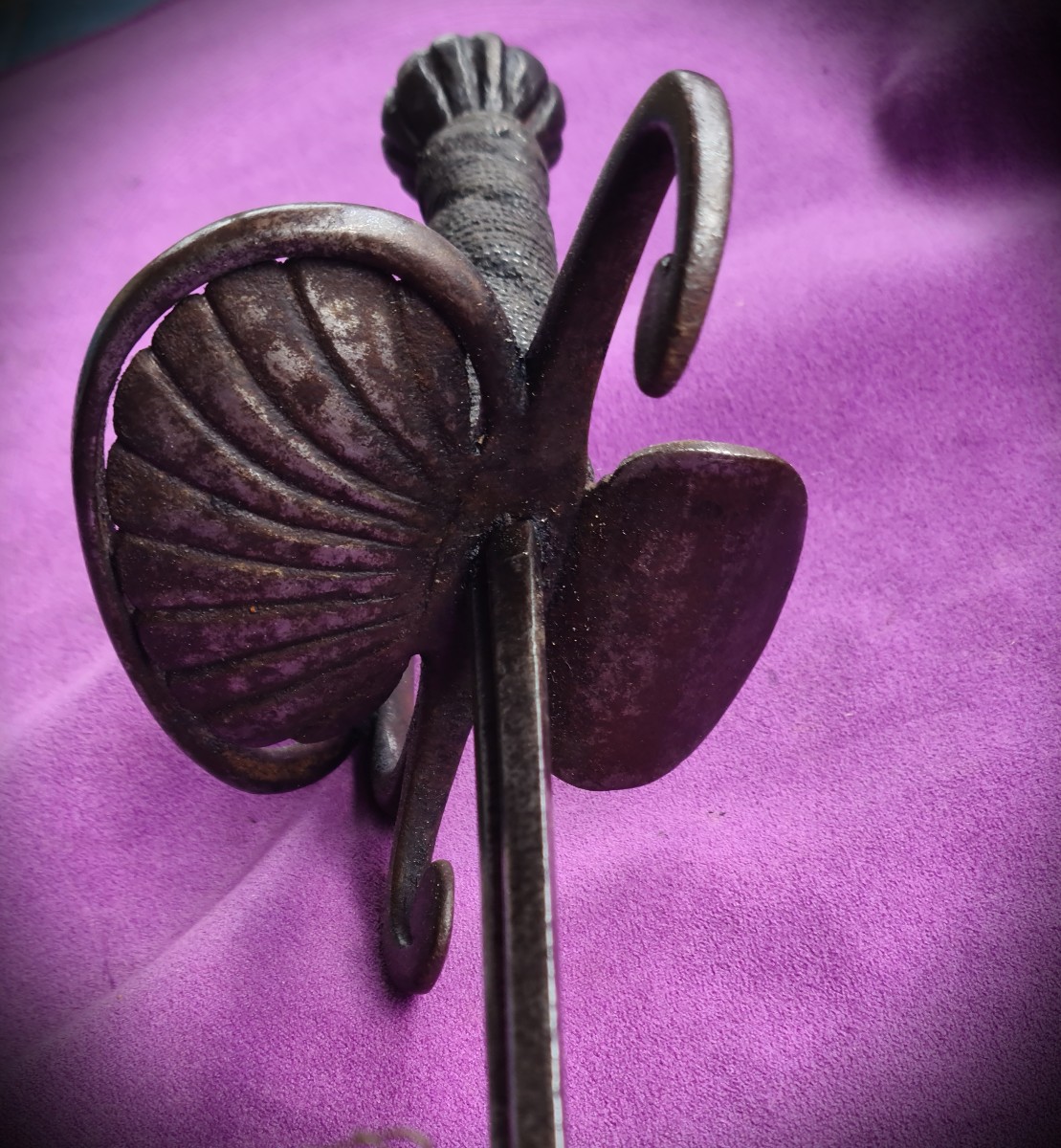
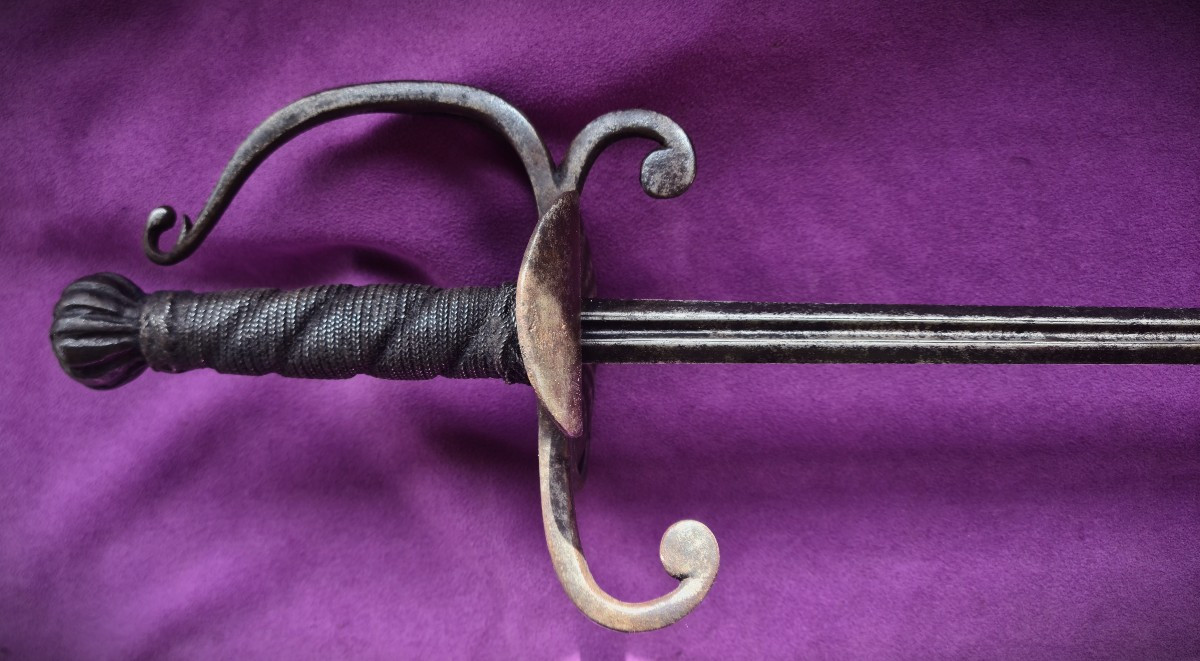
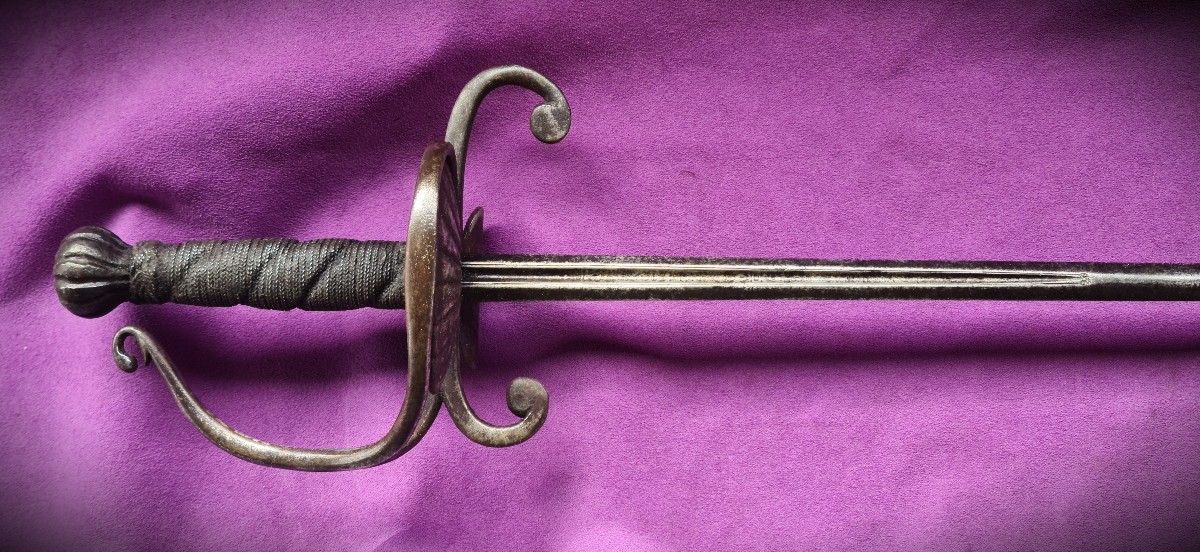
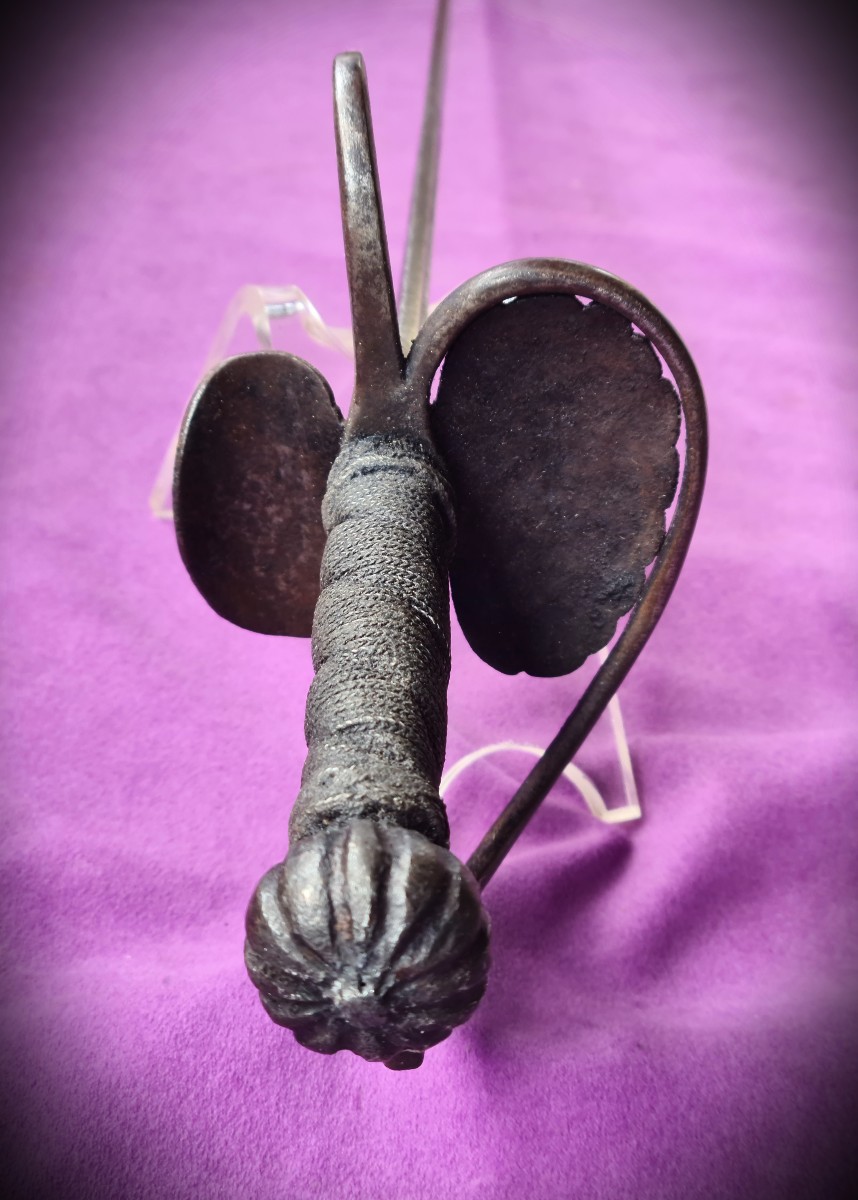
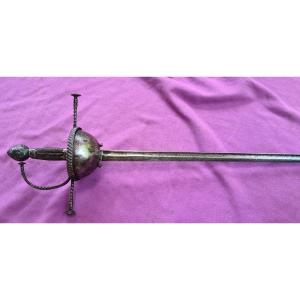
GUARD : This is a so-called "shell" guard with two guard plates.
The outer guard plate features a scallop shell motif; it is not applied separately as on Walloon swords, but is carved from a single block of metal along with the rest of the guard.
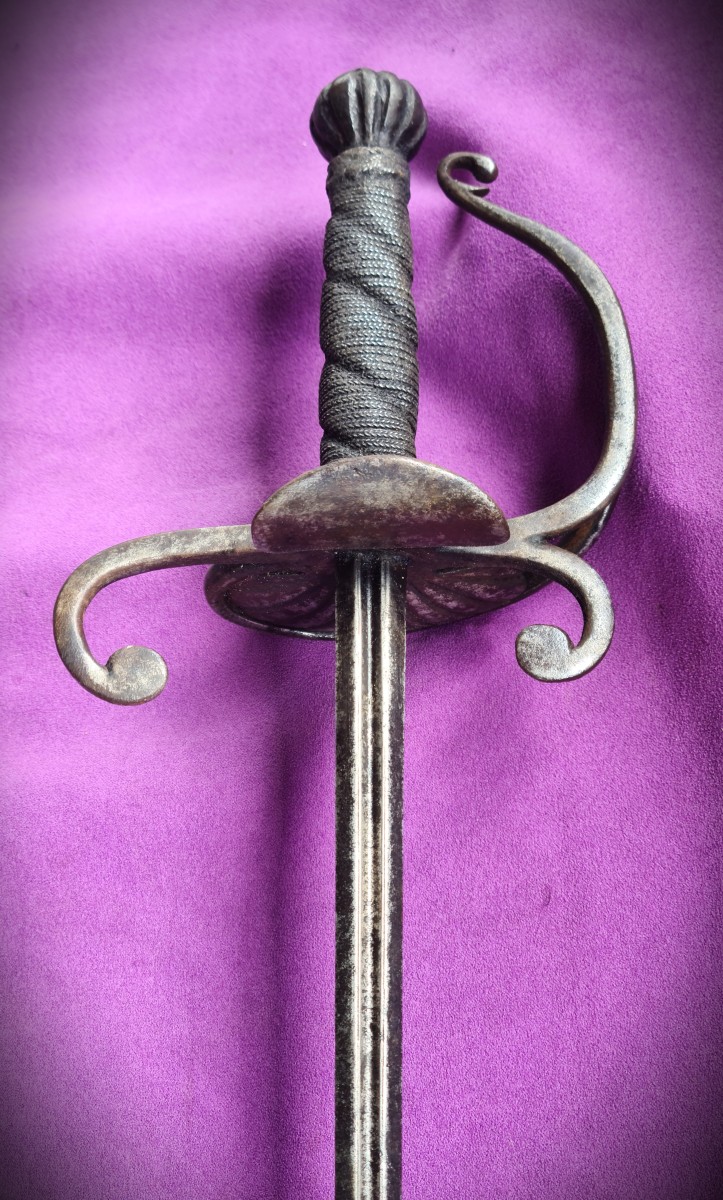
The inner shell is smooth and concave to provide good thumb support.
Thecross guard has two quillons that curve towards the blade, curiously asymmetrical.
The outer arc transforms into a secondary branch that joins the knucklre bow. This knuckle bow ends forming a hook near the pommel without being attached to it.
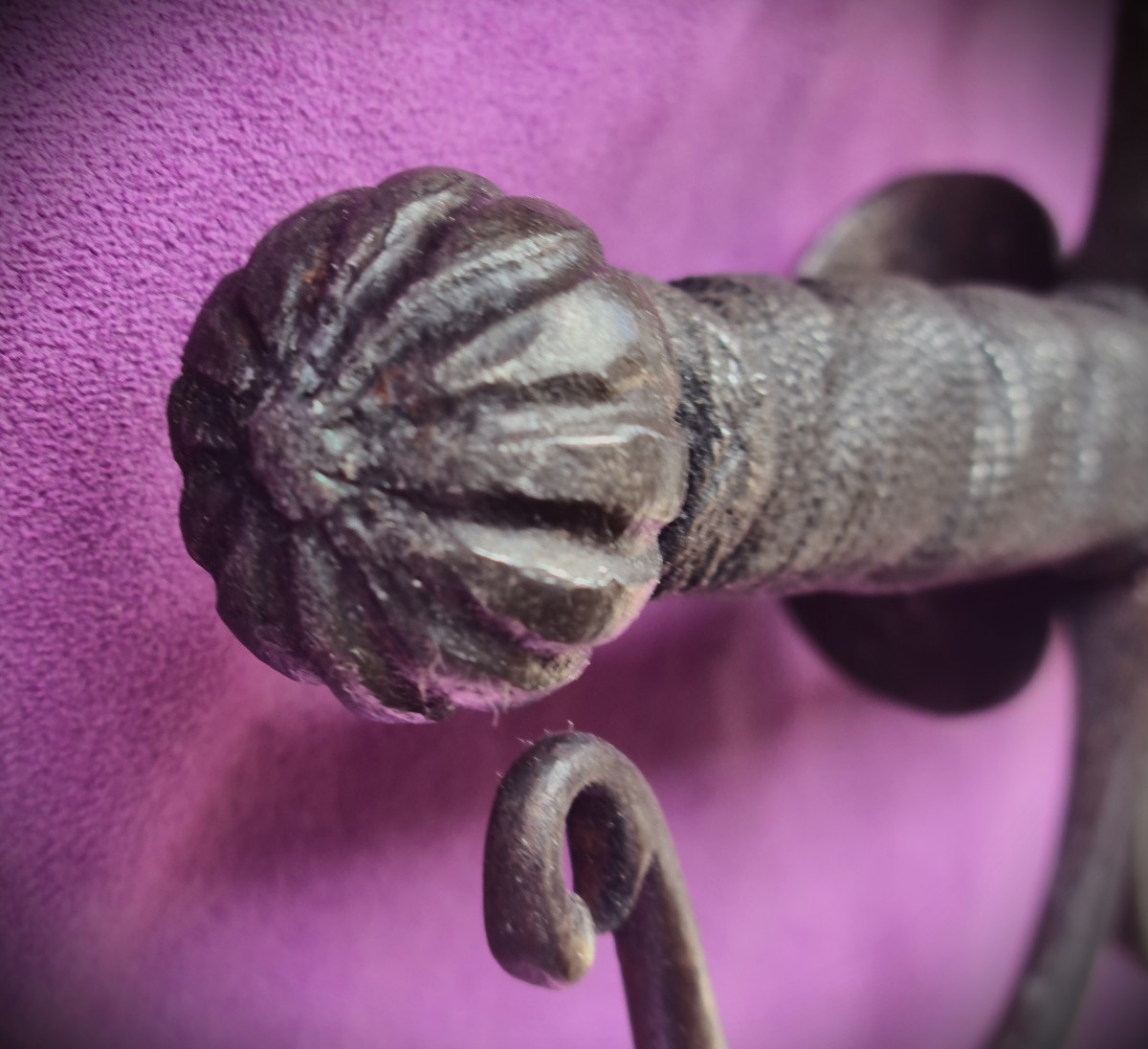
POMMEL: It is bulbous and features a decoration that matches the scallop shell motif on the guard. The blade's tang is riveted directly to this pommel.
GRIP l: it is twisted and covered with a double iron wire wrap arranged in a chevron pattern and highlighted with a smooth wire wrap. The braided crown ferrules, known as "Turk's heads," are present and in good condition.
This rapier is a rather unusual weapon. It will easily find its place in a collection of 17th-century edged weapons.
Reference G12-34.
Shipping costs: France €30, Europe €40










 Le Magazine de PROANTIC
 TRÉSORS Magazine
 Rivista Artiquariato