

Elephant Goad Known As "ankush"
The elephant Goad, known as "Ankush" (Ankus, Angkus), is mentioned in the West primarily as an instrument for controlling elephants, but its use as a weapon is much less well-known, even though it is clearly documented as such in ancient Indian treatises.
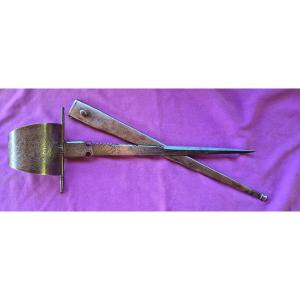
These goads were in fact used in combat somewhat like a kind of left-handed dagger. The aim was to deflect, or even "capture" and hold, the blade of an opponent's long weapon using the hook, or to block it between the point and the base of the hook during a rapid block on.
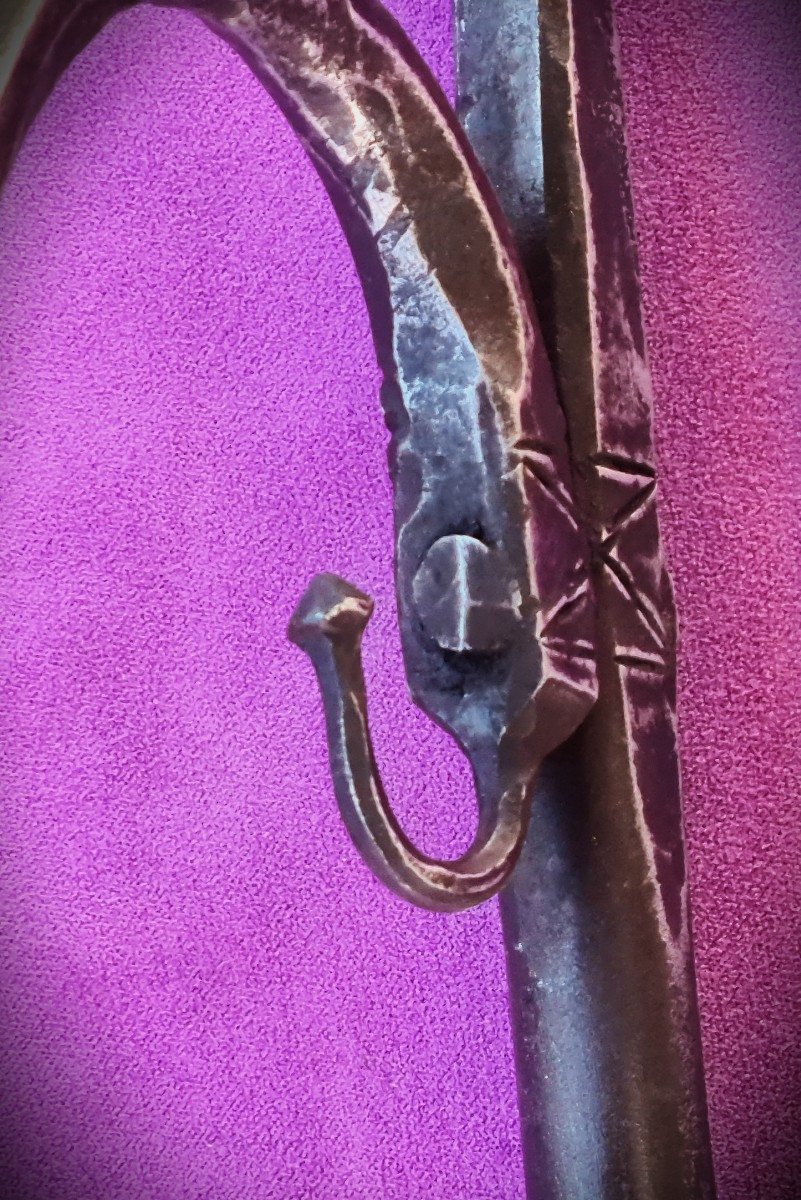
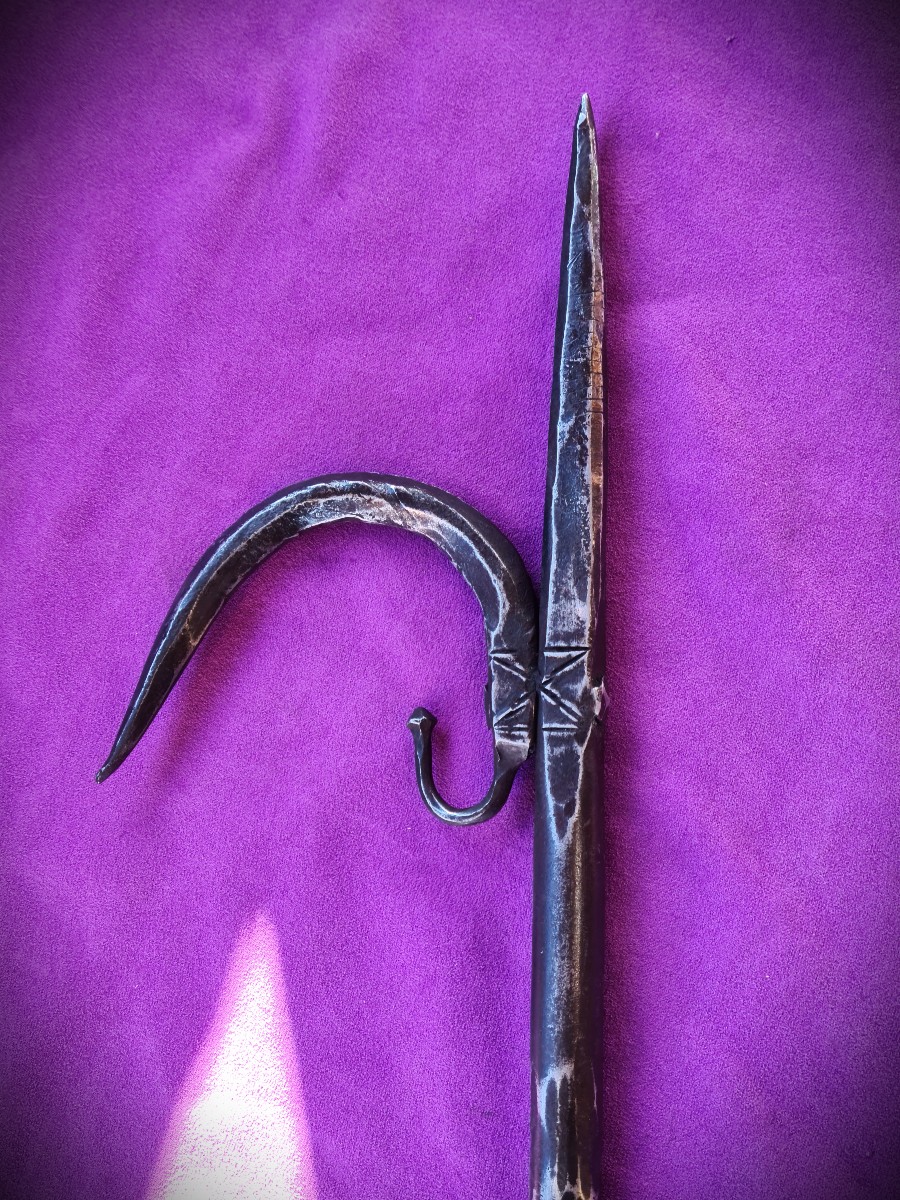
These combat goads are recognizable by three essential characteristics: they are made of steel or iron, they are quite large (over 45 cm), and most importantly, the large hook is complemented at its base by a small, inverted hook, open rather than folded towards the handle, which allows the opponent's blade to be blocked so that it does not slip down the handle
. In fact, once again we have here a weapon that has the appearance of a tool, much like the "rope-passer" knives of Genoese sailors, the Lyonnais goyardes, or the Italian artillery stilettos.
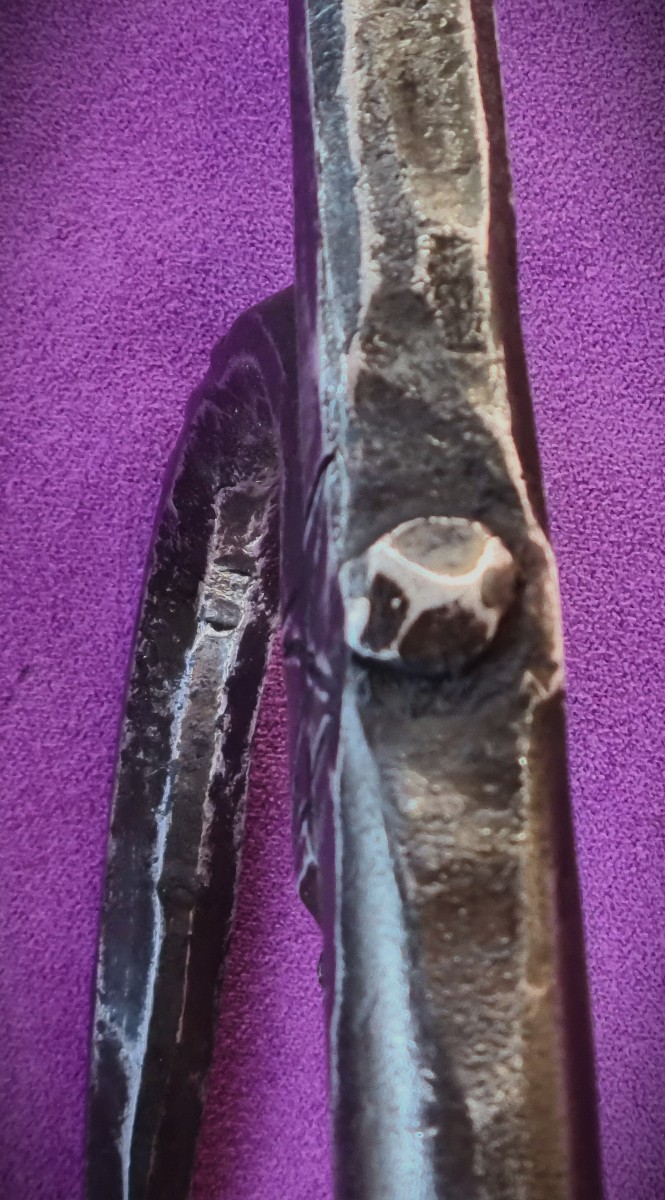
The weapon is forged from two pieces of steel, held together by a rivet. The main part consists of the handle, which ends on one side with a 13 cm long quadrangular point, and on the other with a small cone. The large hook itself is riveted to the base of the point. At its base, it extends into a small hook that curves upwards towards the point, serving to prevent the hooked blade from slipping towards the hand.
The entire object shows traces of forging; it is simple but effective in its construction.
Since the use of Ankush as weapons is rarely mentioned in Europe, I thought it would be interesting to discuss it.
Shipping to France and Europe: €20.
Ref 4Y-2634
These goads were in fact used in combat somewhat like a kind of left-handed dagger. The aim was to deflect, or even "capture" and hold, the blade of an opponent's long weapon using the hook, or to block it between the point and the base of the hook during a rapid block on.
These combat goads are recognizable by three essential characteristics: they are made of steel or iron, they are quite large (over 45 cm), and most importantly, the large hook is complemented at its base by a small, inverted hook, open rather than folded towards the handle, which allows the opponent's blade to be blocked so that it does not slip down the handle
. In fact, once again we have here a weapon that has the appearance of a tool, much like the "rope-passer" knives of Genoese sailors, the Lyonnais goyardes, or the Italian artillery stilettos.
The weapon is forged from two pieces of steel, held together by a rivet. The main part consists of the handle, which ends on one side with a 13 cm long quadrangular point, and on the other with a small cone. The large hook itself is riveted to the base of the point. At its base, it extends into a small hook that curves upwards towards the point, serving to prevent the hooked blade from slipping towards the hand.
The entire object shows traces of forging; it is simple but effective in its construction.
Since the use of Ankush as weapons is rarely mentioned in Europe, I thought it would be interesting to discuss it.
Shipping to France and Europe: €20.
Ref 4Y-2634
170 €
Period: 18th century
Style: Orientalism
Condition: Good condition
Material: Other
Length: 49.8 cm
Width: 11.5 cm
Reference (ID): 1721936
Availability: In stock
Print