THIS OBJECT WAS SOLD
Terracotta Group Representing Pan And Two Young Shayri, After Clodion (1870-1890)
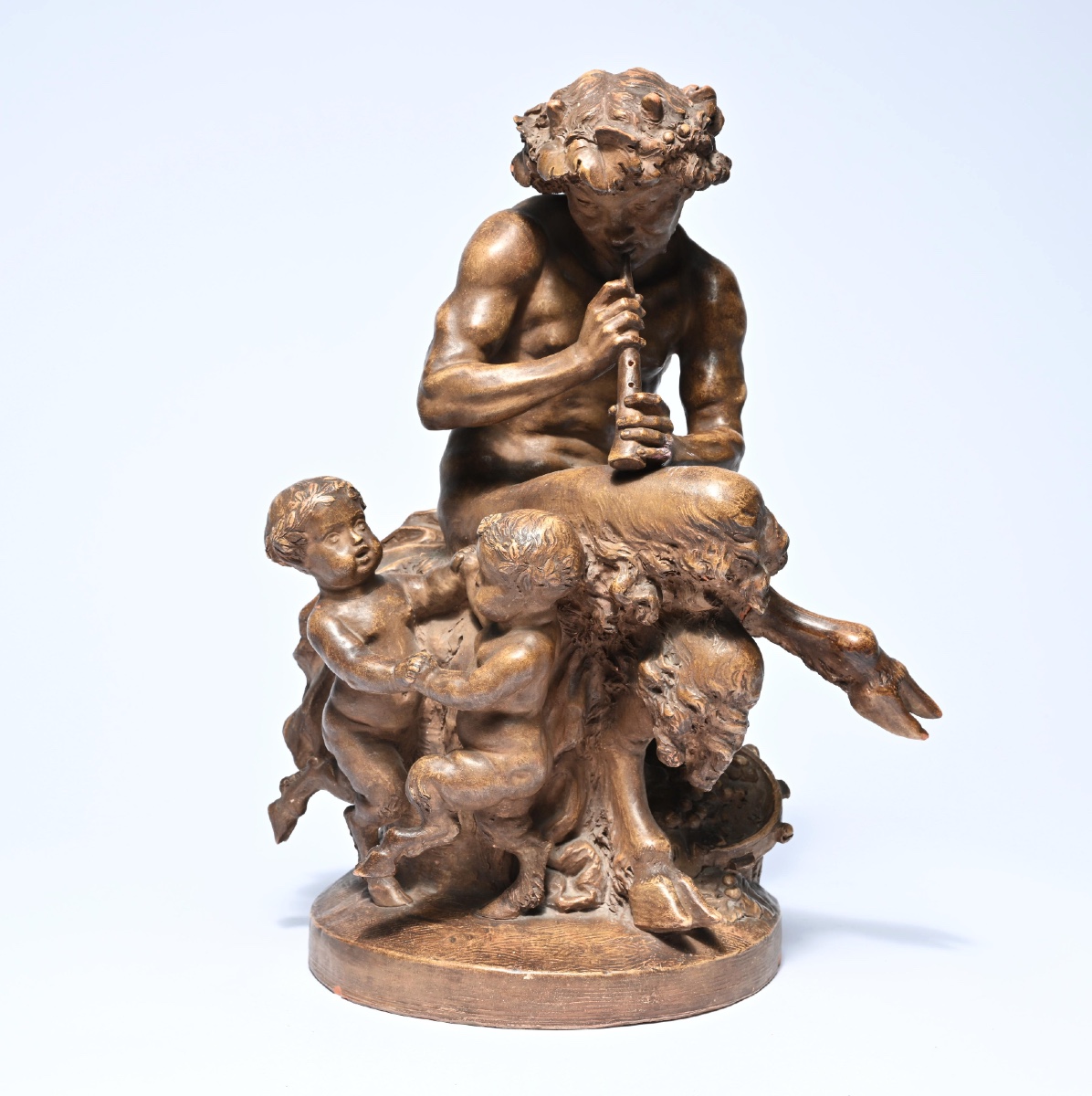
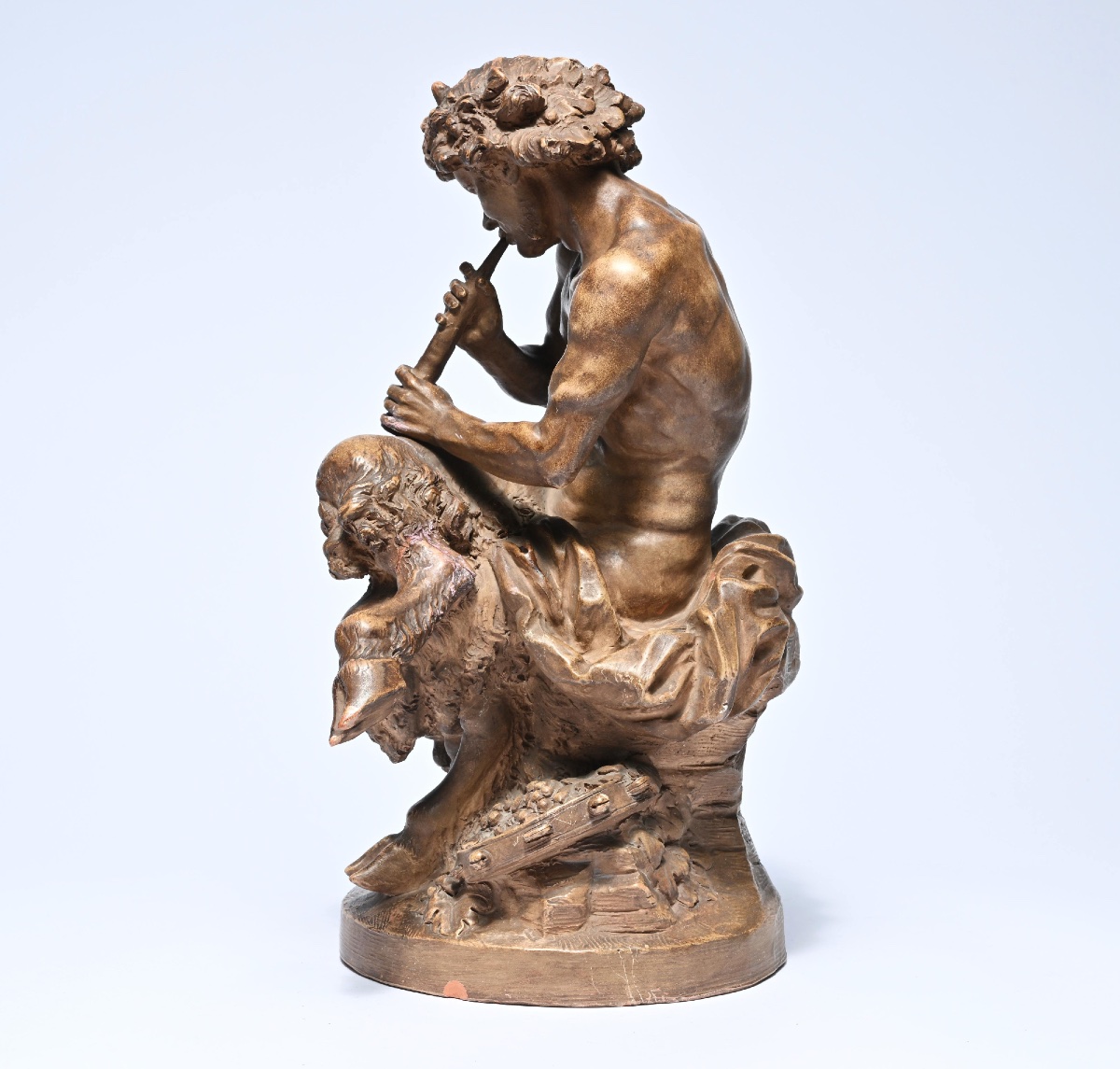
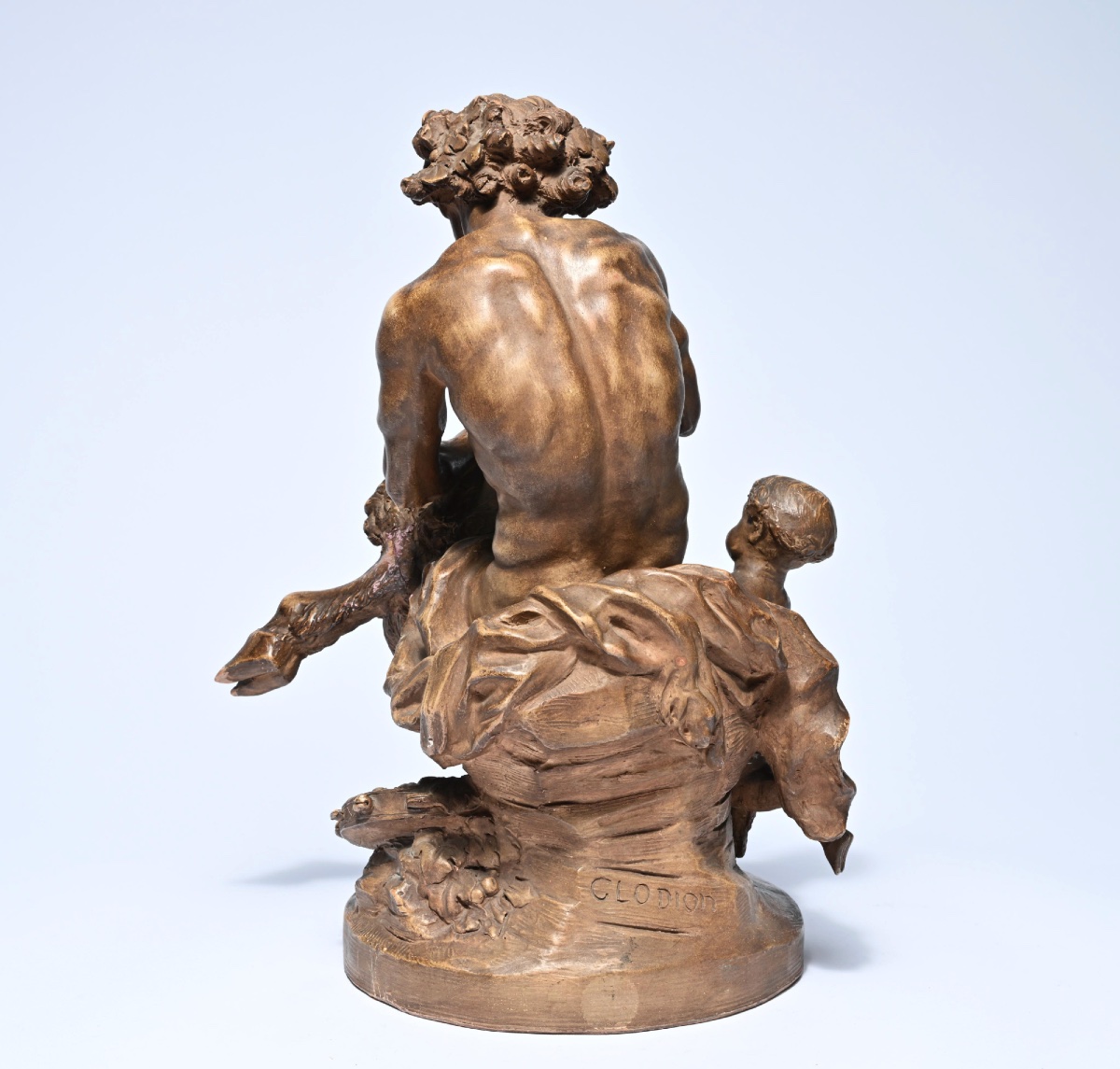
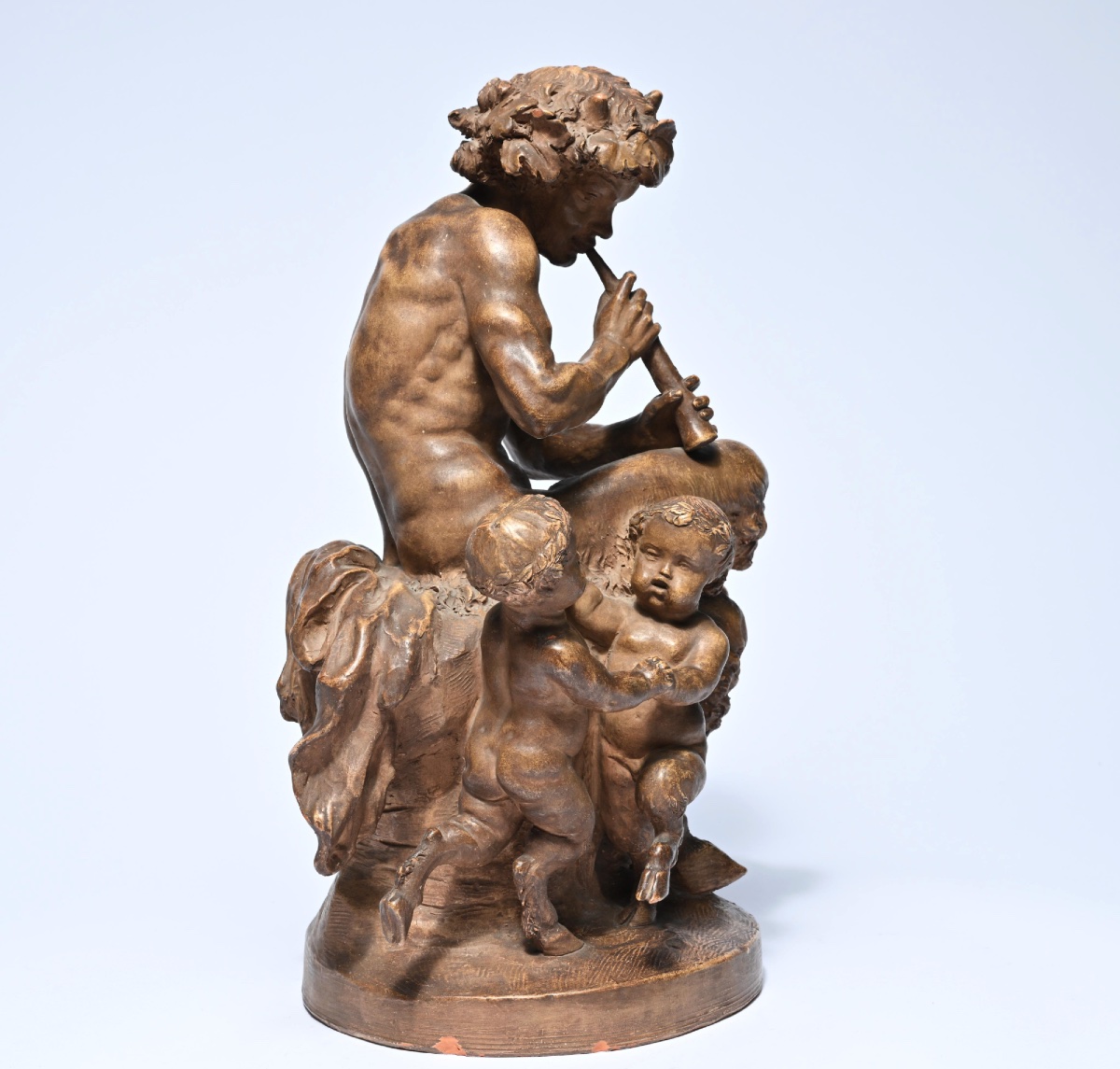
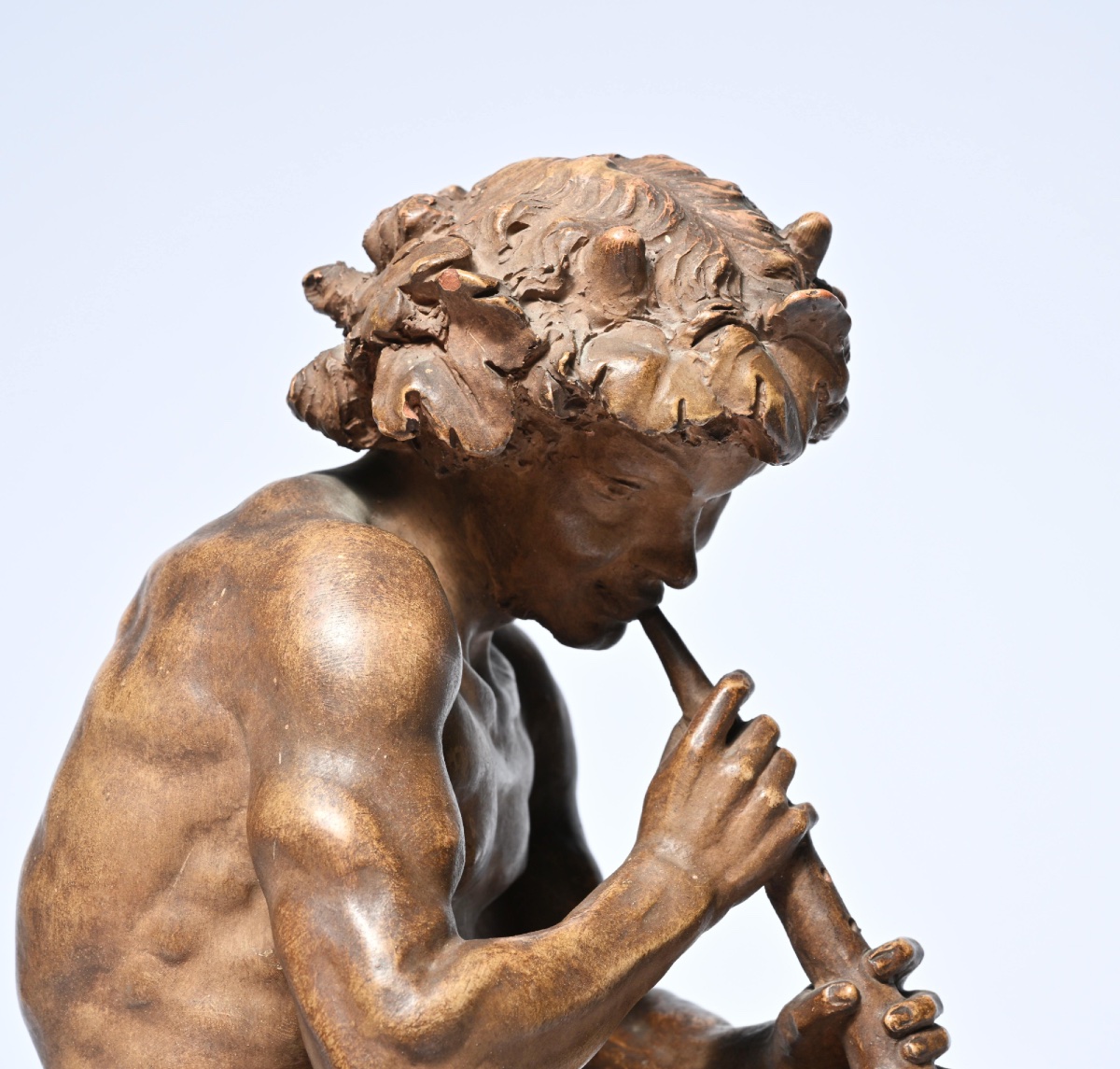
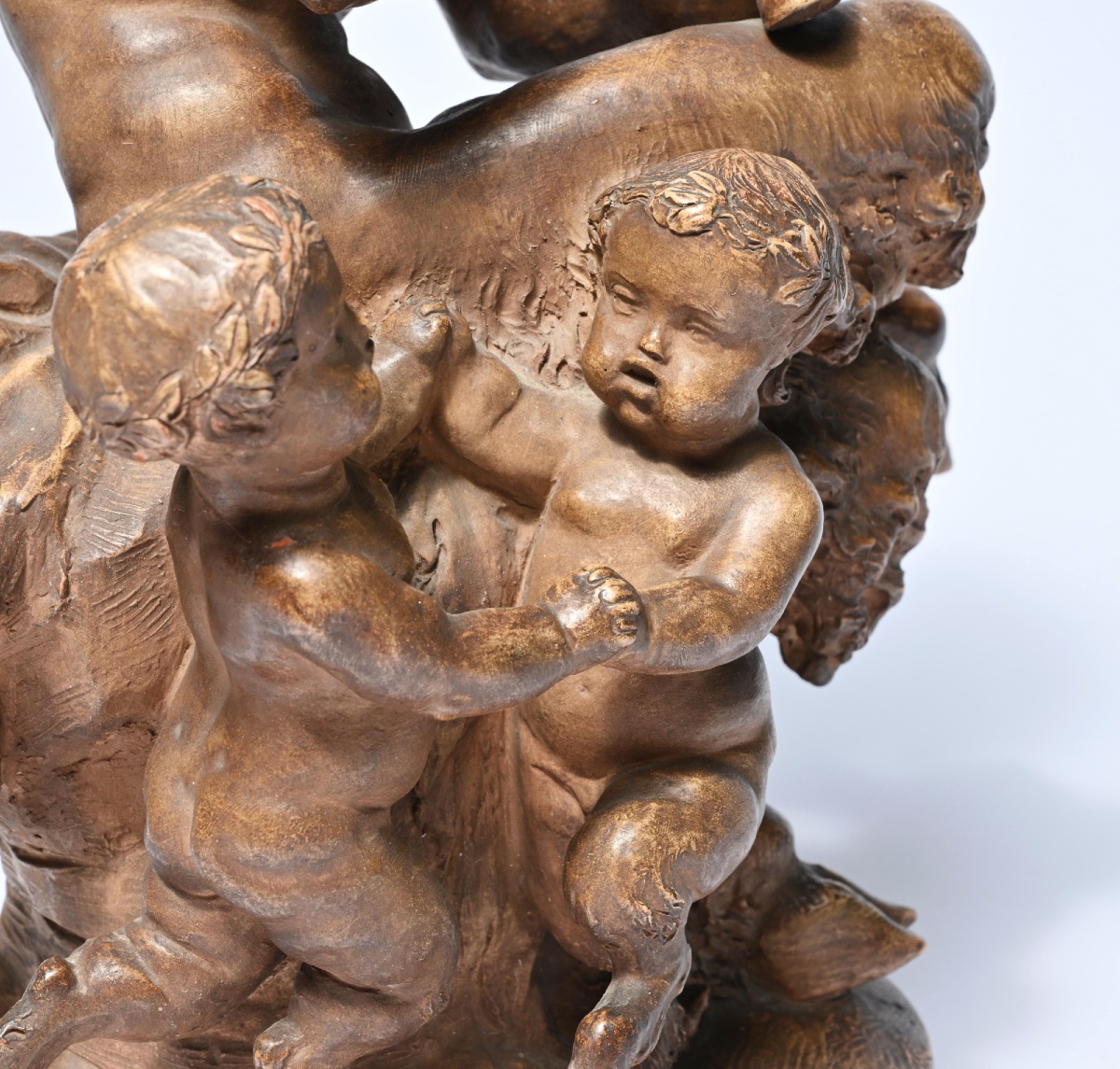
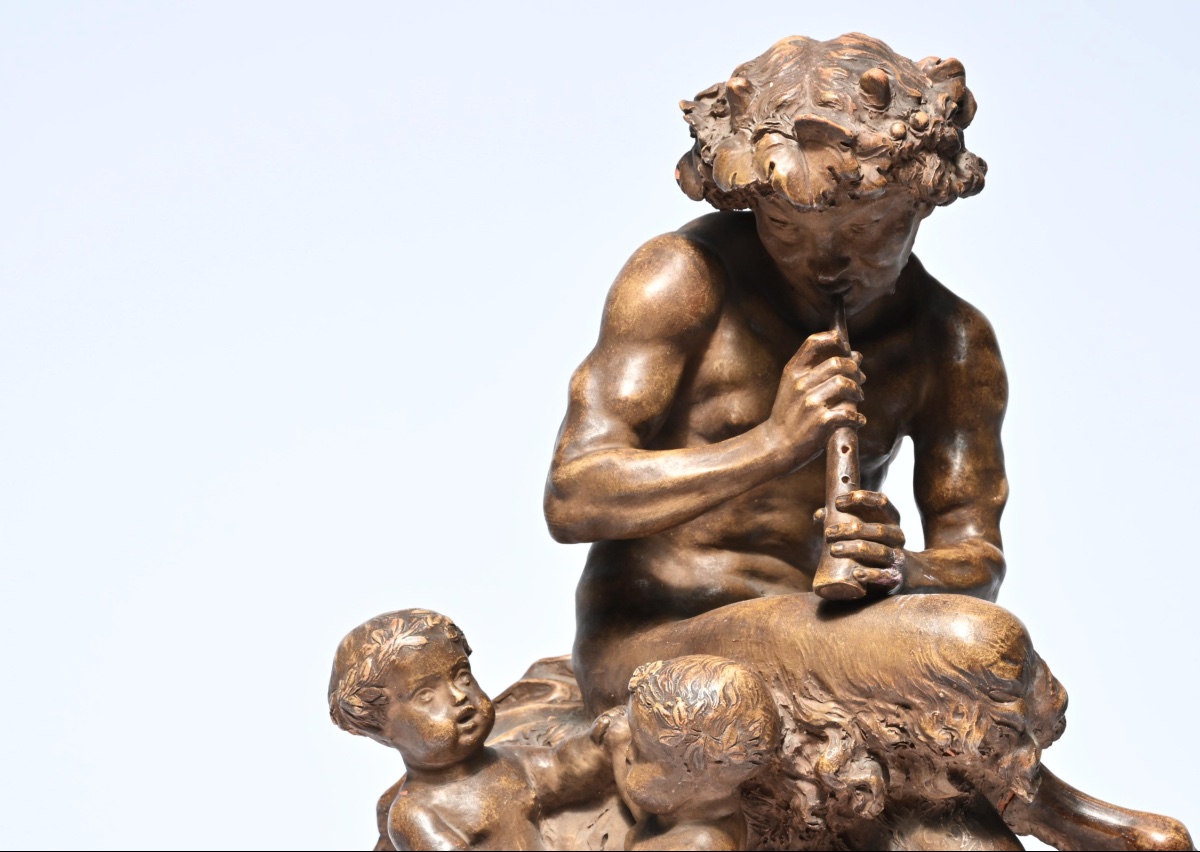


This patinated terracotta sculpture is an excellent example of the intimate and vibrant style that made Claude Michel (1738-1814), better known as Clodion, one of the most sought-after sculptors of the 18th century. The work depicts the Greek god Pan, seated on a wooded rock, engrossed in playing his flute. He is flanked by two playful young satyrs, whose dynamic poses contrast charmingly with the serene concentration of the central figure.
Clodion excelled in working with terracotta, a material that allowed him to render details with great speed and virtuosity. In this composition, this mastery is evident in the refined modeling of the anatomy, the texture of the goatskin, and the expressive features of the figures. The theme is deeply rooted in the Rococo tradition, which favored lighthearted mythological scenes, full of joie de vivre and natural grace. These bacchanalian groups were highly prized as decorative objects by the Parisian aristocracy in the late 18th century, but their popularity persisted well into the 19th century, as evidenced by the numerous high-quality versions produced from the original models in subsequent periods. This phenomenon is known as "Clodion Mania."
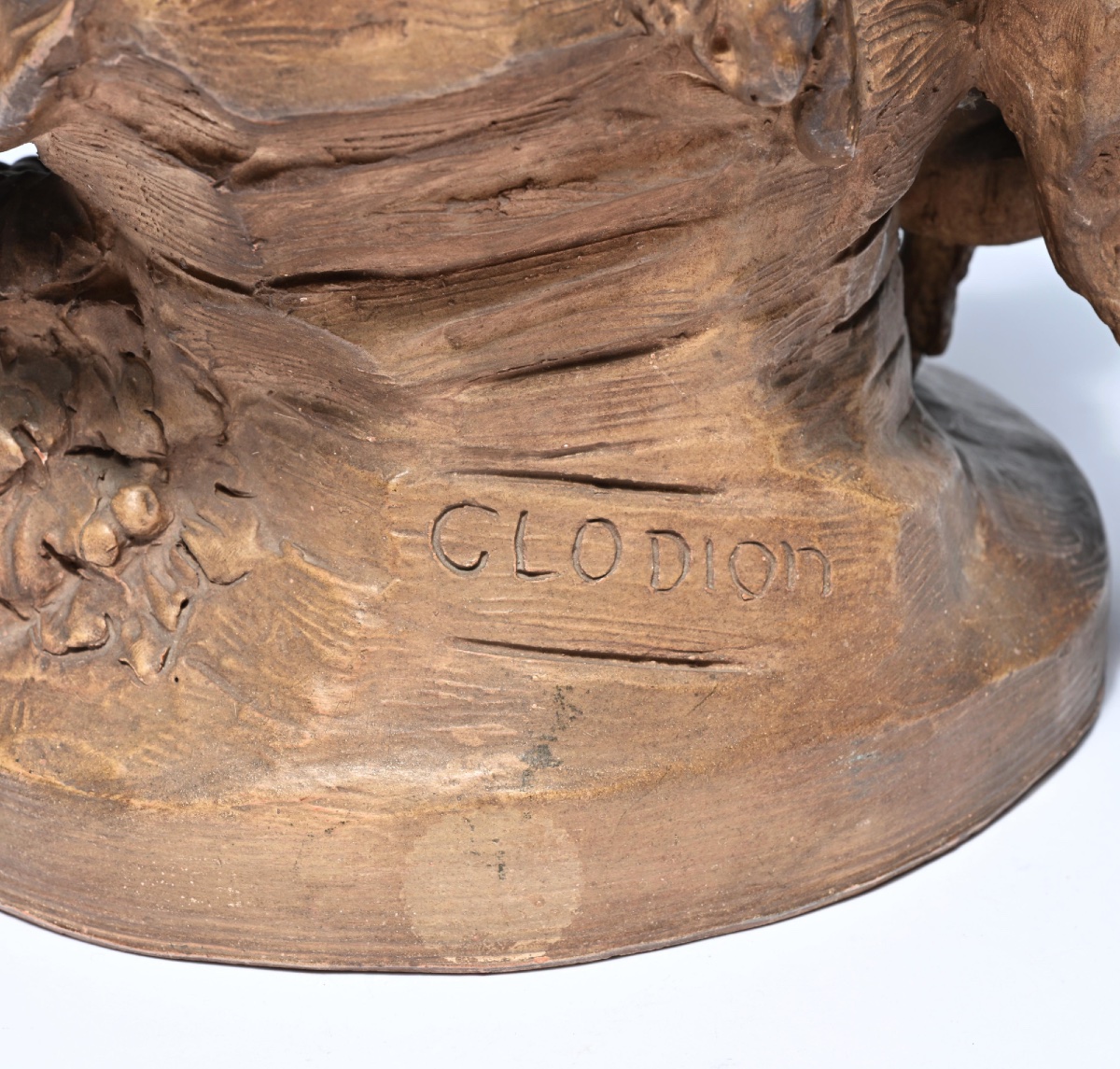
The rising bourgeoisie harbored a nostalgia for the elegance of 18th-century France, resulting in enormous demand for reproductions of its most iconic creations. This sculptural group dates from the second half of the 19th century and is distinguished from later 20th-century copies by the high technical precision of its finish and the application of refined patinas. The name Clodion has been engraved into the base, not as a counterfeit, but as a mark of quality identifying the specific model.
Clodion excelled in working with terracotta, a material that allowed him to render details with great speed and virtuosity. In this composition, this mastery is evident in the refined modeling of the anatomy, the texture of the goatskin, and the expressive features of the figures. The theme is deeply rooted in the Rococo tradition, which favored lighthearted mythological scenes, full of joie de vivre and natural grace. These bacchanalian groups were highly prized as decorative objects by the Parisian aristocracy in the late 18th century, but their popularity persisted well into the 19th century, as evidenced by the numerous high-quality versions produced from the original models in subsequent periods. This phenomenon is known as "Clodion Mania."
The rising bourgeoisie harbored a nostalgia for the elegance of 18th-century France, resulting in enormous demand for reproductions of its most iconic creations. This sculptural group dates from the second half of the 19th century and is distinguished from later 20th-century copies by the high technical precision of its finish and the application of refined patinas. The name Clodion has been engraved into the base, not as a counterfeit, but as a mark of quality identifying the specific model.
Explore similar pieces and discover your ideal find:
Terracotta Sculptures