THIS OBJECT WAS SOLD
Large Earthenware Potpourri Vase, Desvres, France (1890-1900)
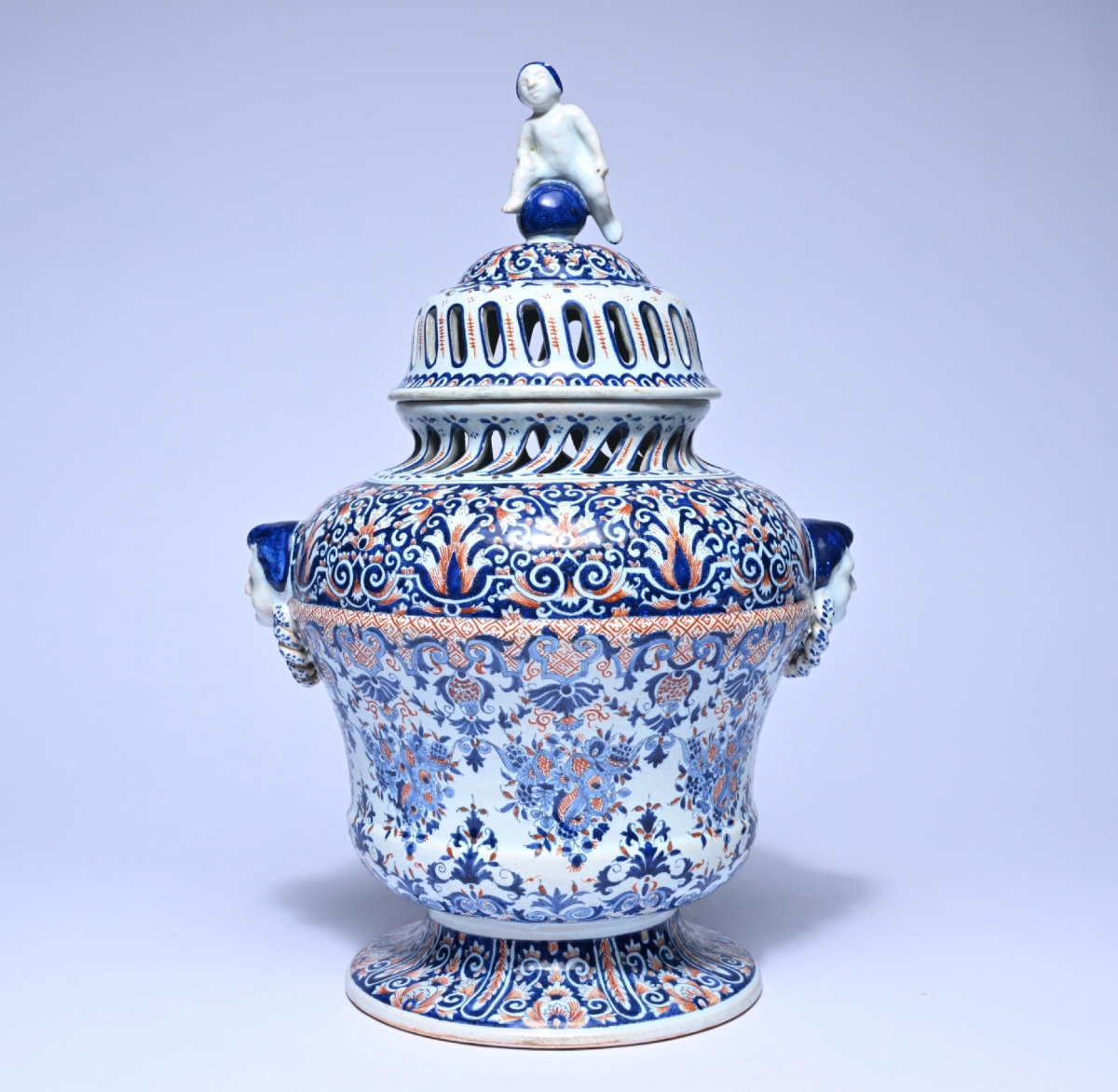
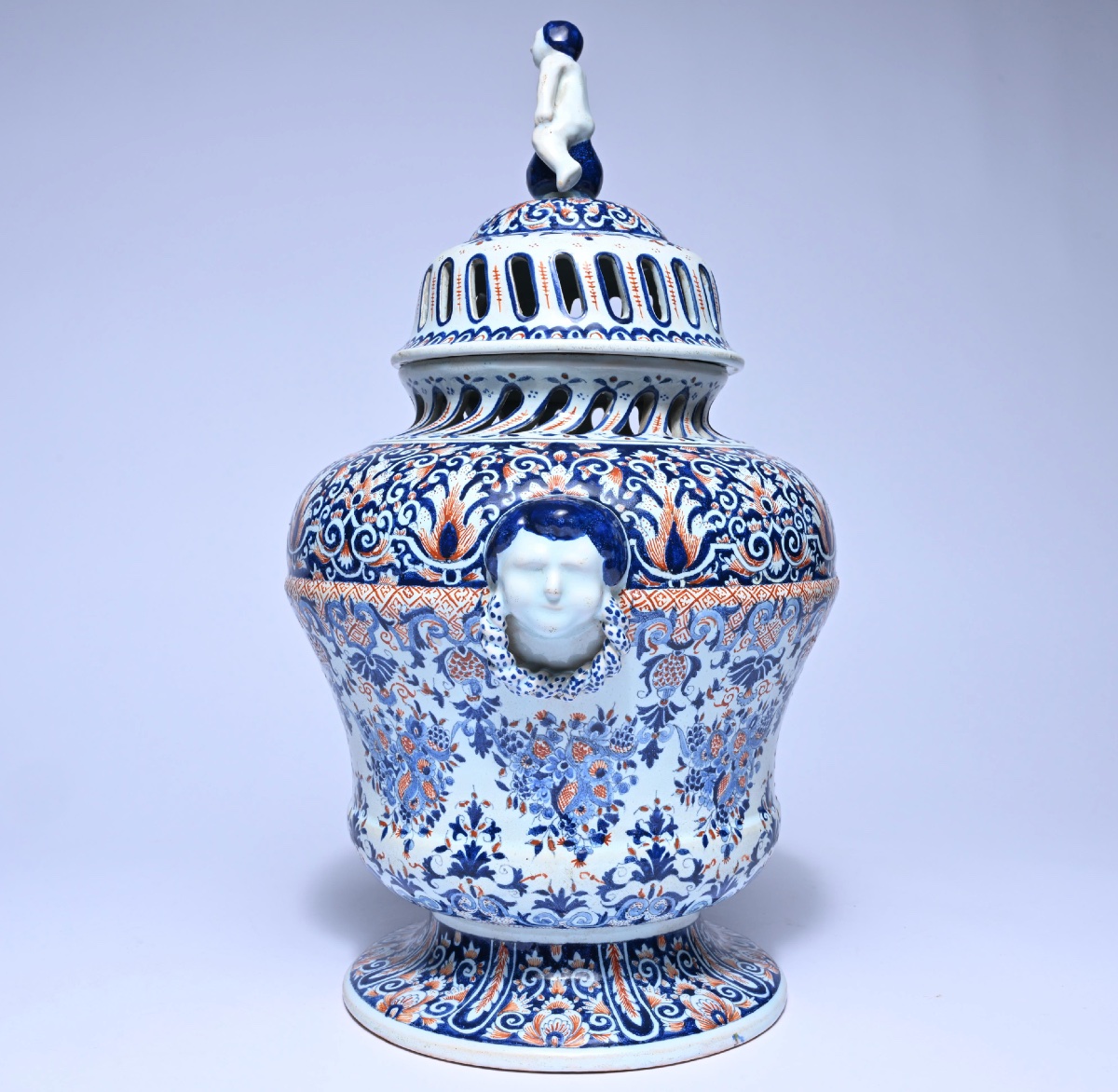
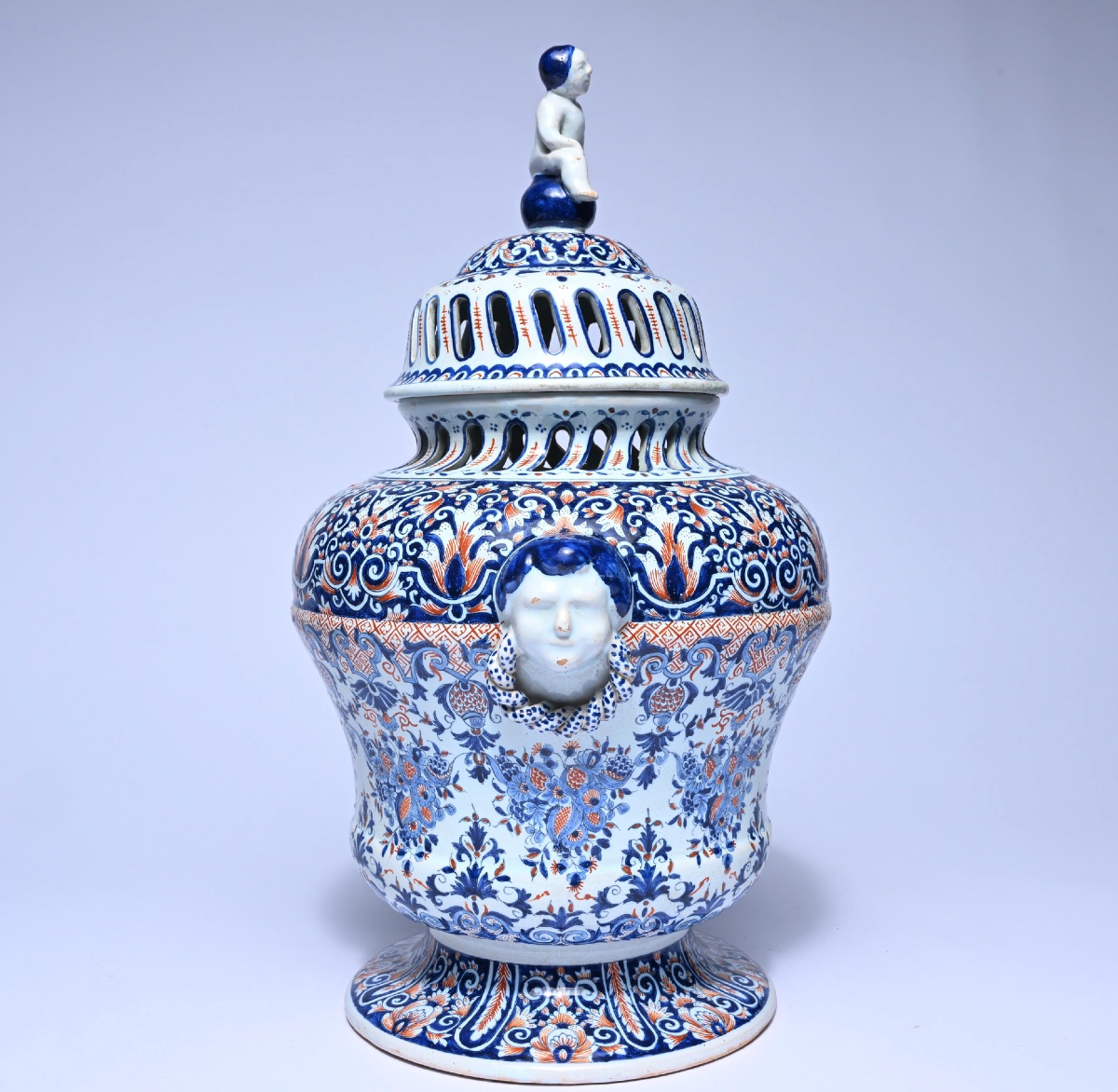
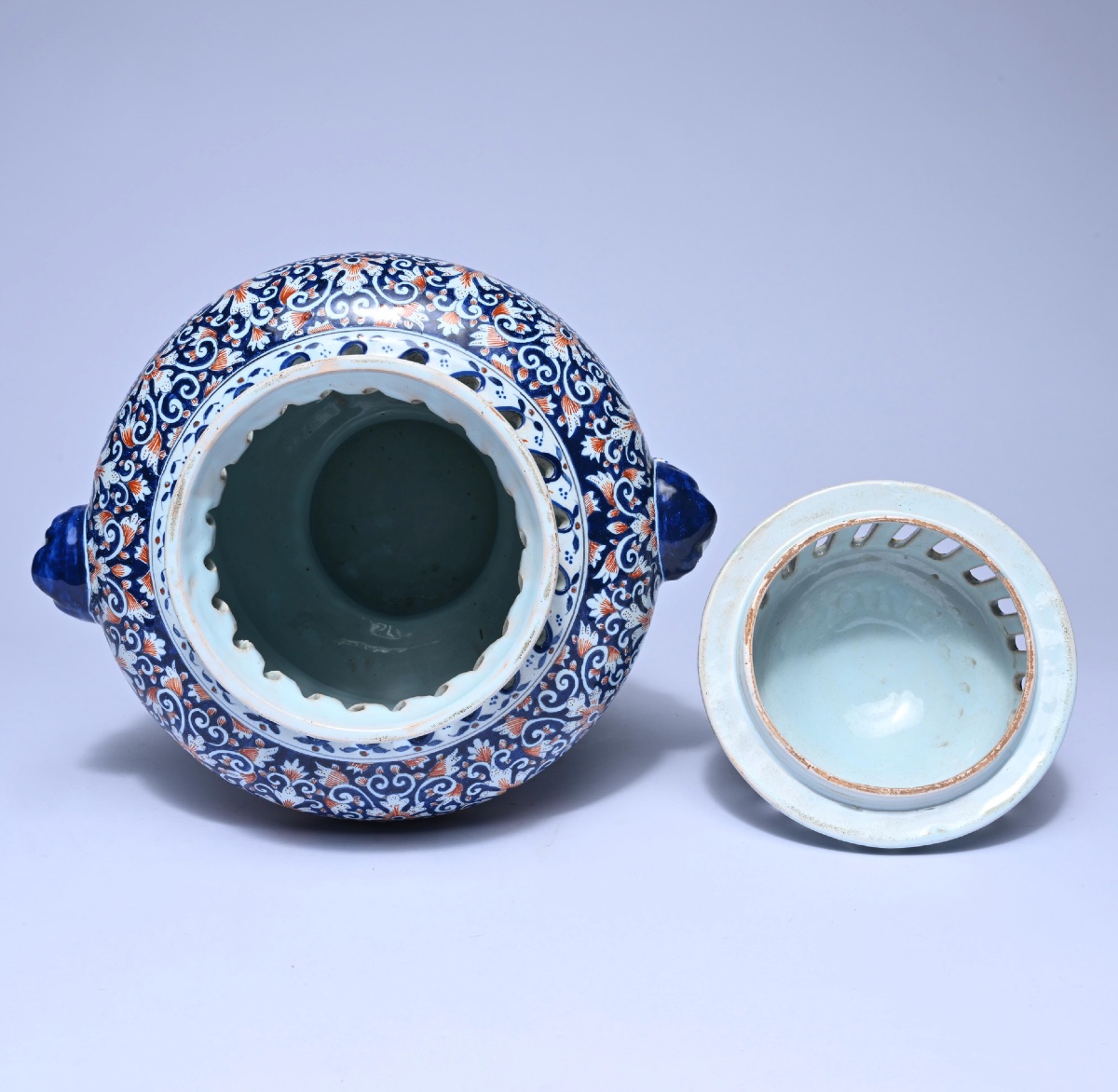
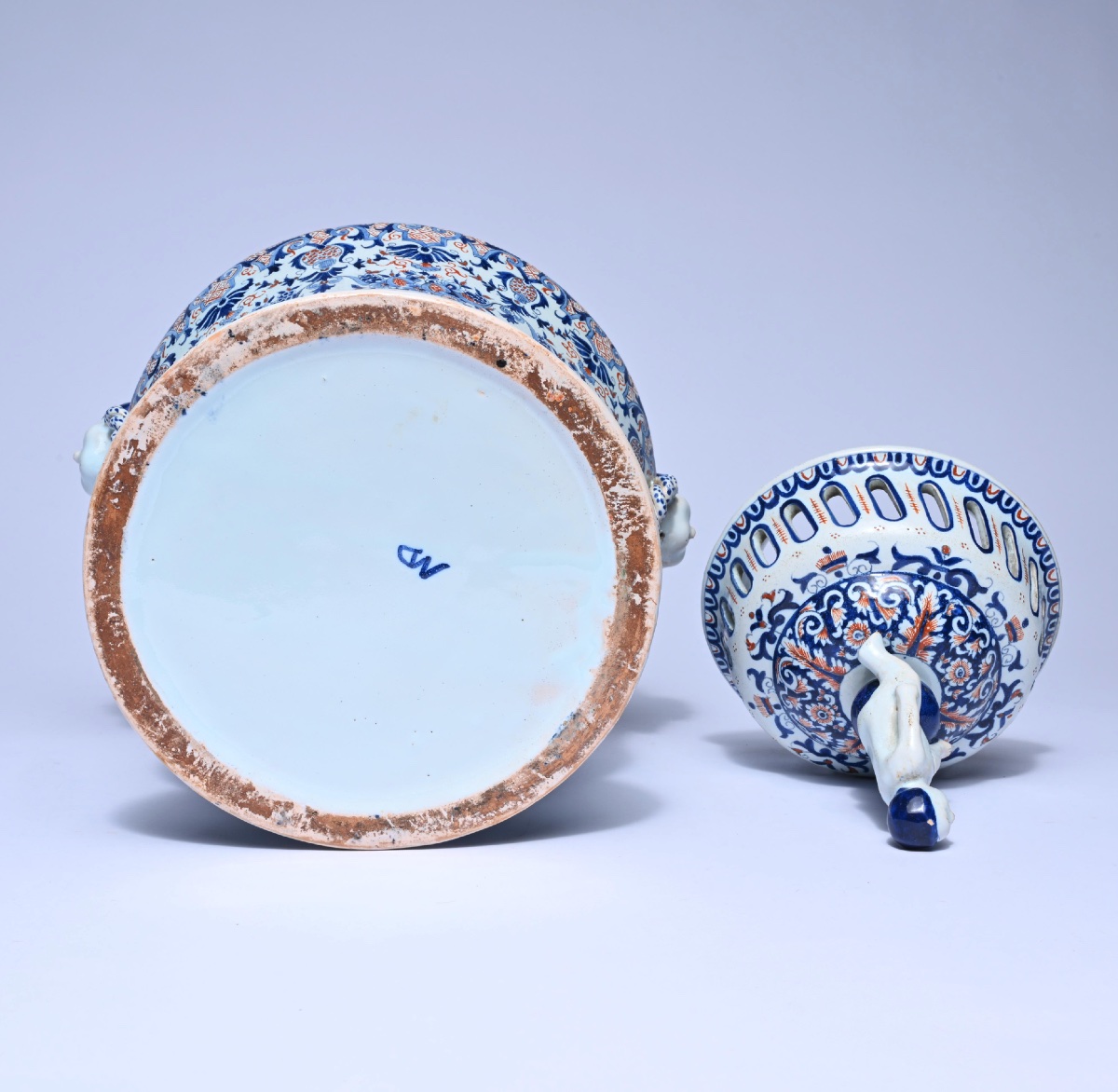
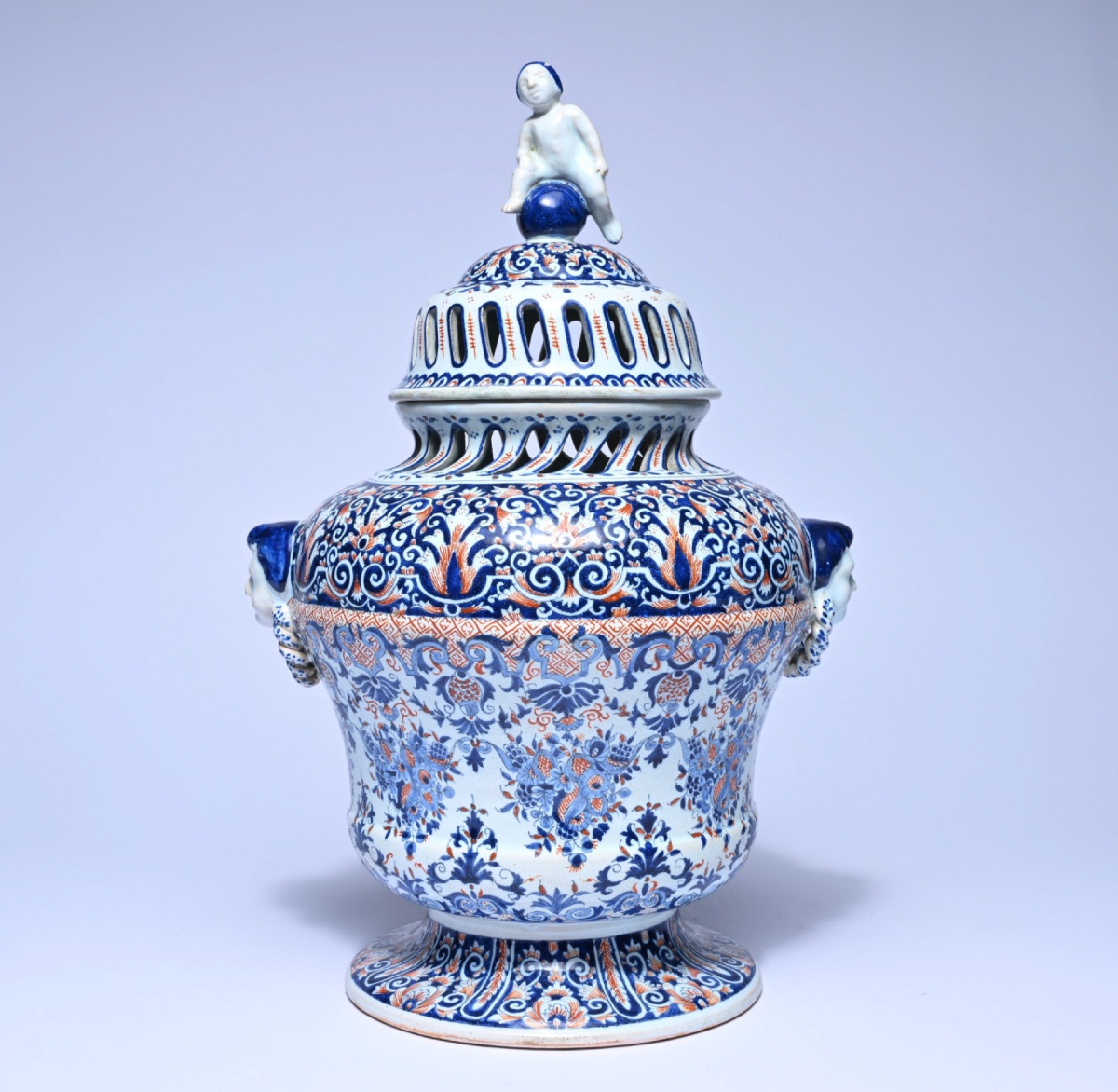
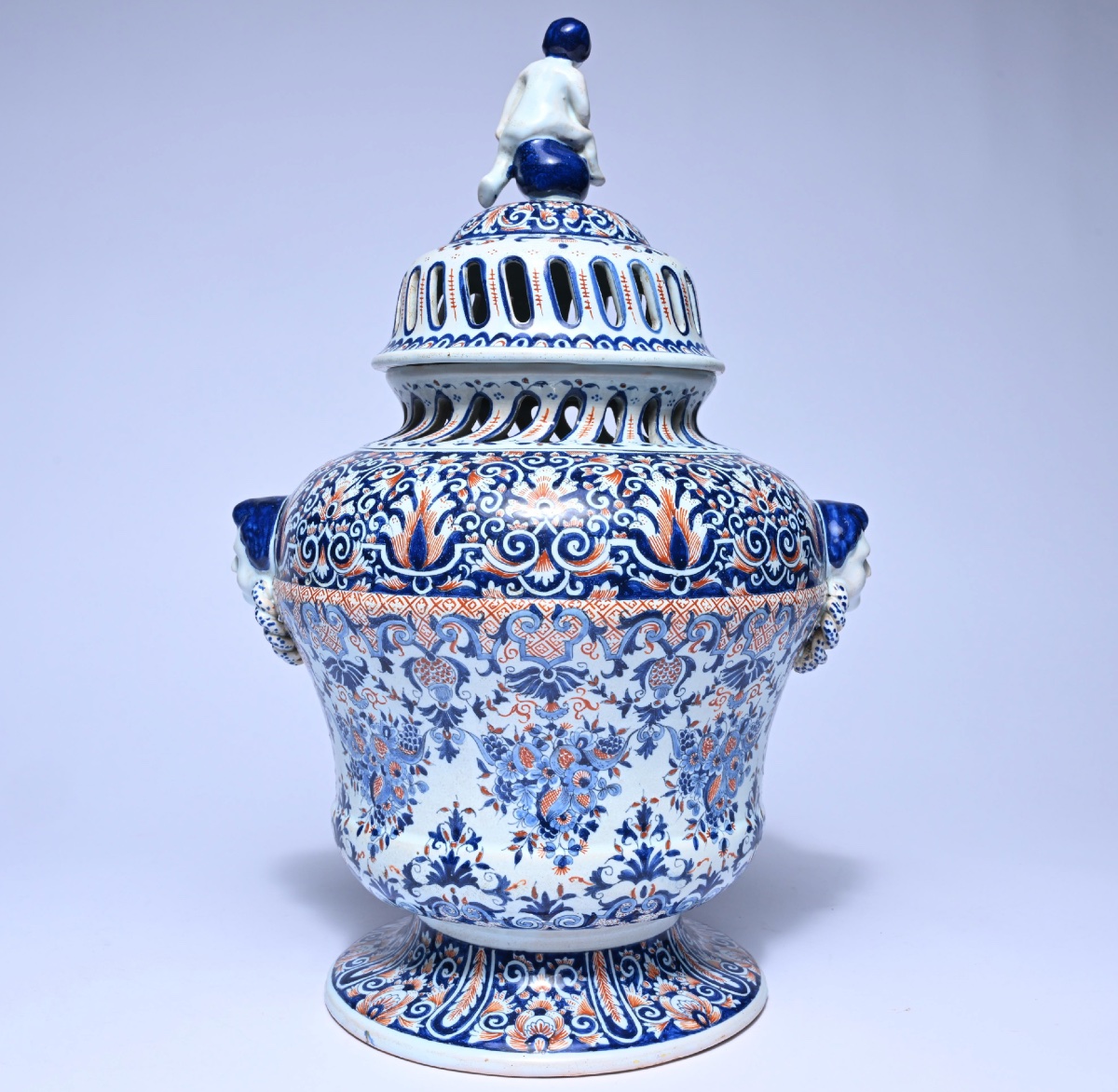
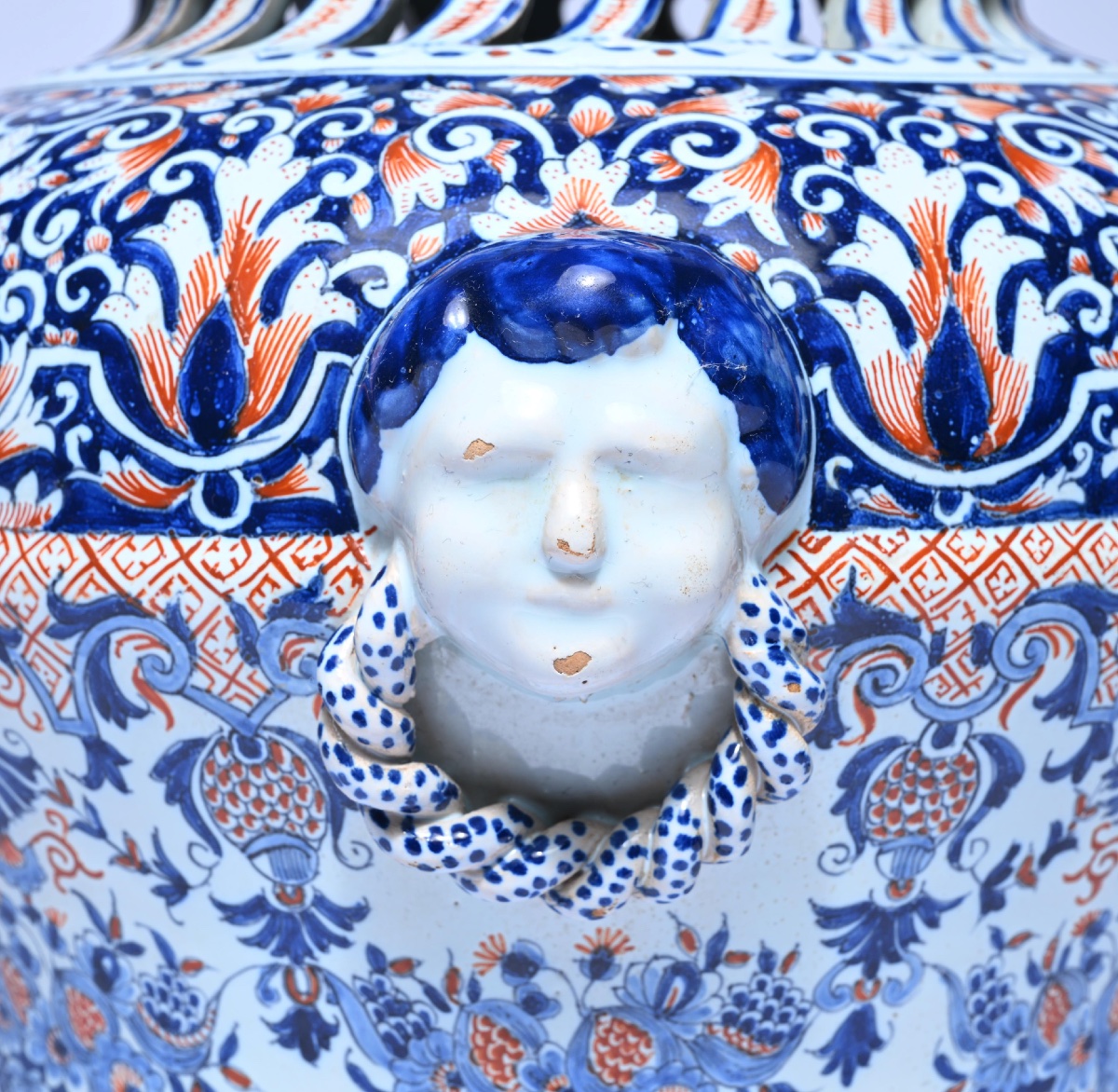
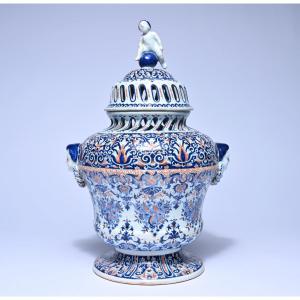


This imposing lidded vase, made of painted polychrome earthenware, is an excellent example of the 19th-century revival of classic Rouen faience. Designed as a baluster vase, it rests on a raised base (pedestal), whose rich decoration immediately draws the eye.
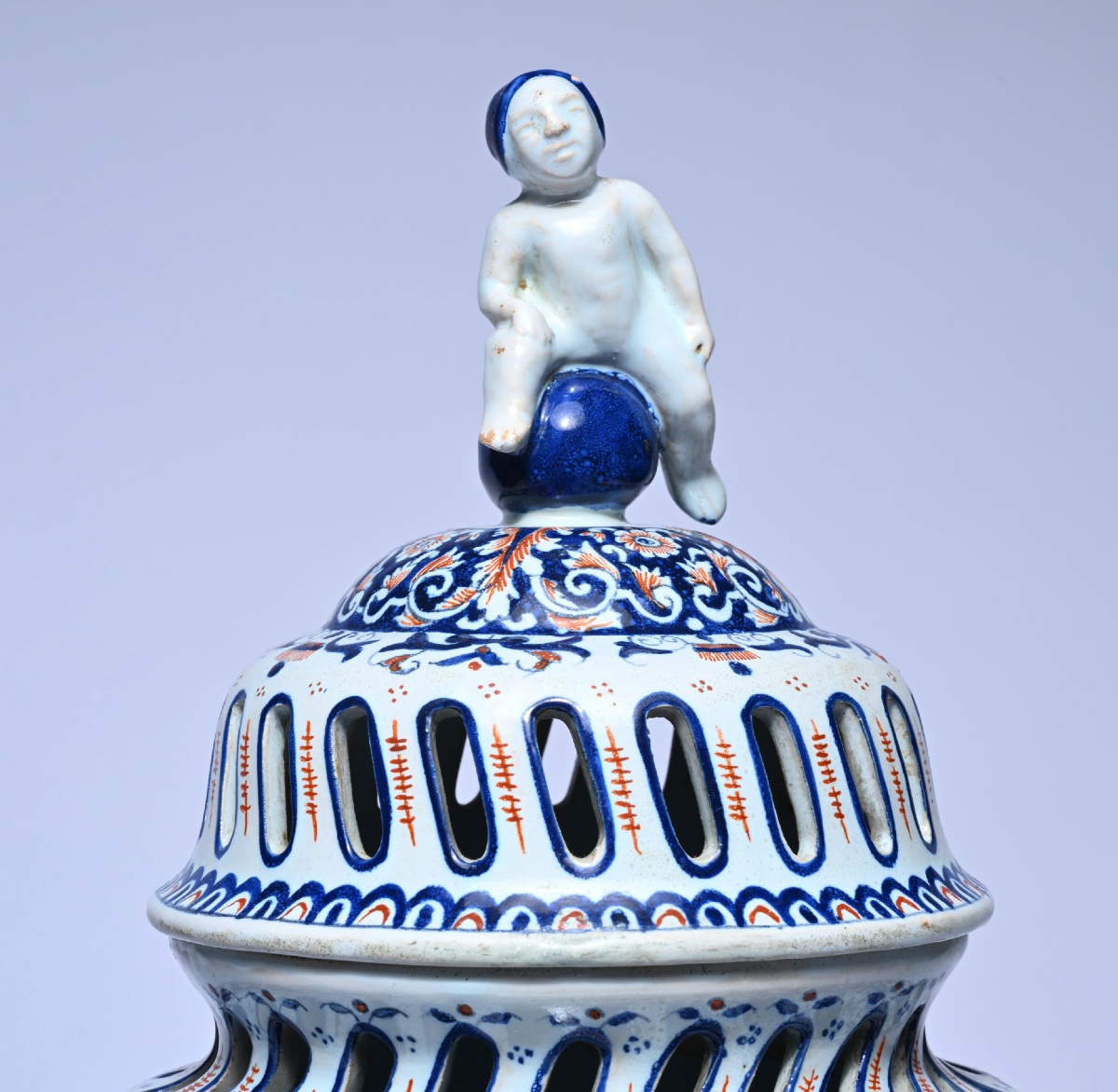
The vase is crafted in the characteristic radiant or scalloped style, recognizable by its fine geometric interlacing and symmetrical floral motifs in the classic combination of deep blue and iron red on a white ground. The shoulder of the vase is adorned with two mascarons in the form of children's faces, which also serve as handles. The unique feature of this piece lies in its function as a potpourri vase. Both the neck and the lid are decorated with refined openwork, allowing the fragrance of dried flowers and herbs to subtly diffuse throughout the room. The lid is surmounted by a beautifully sculpted putto resting on a blue ball, a common decorative element in the Dutch ceramic tradition.
This baluster vase is entirely based on a model made by De Delftse Pauw, a renowned 17th-century potter. Although the decoration strictly adheres to the 18th-century Rouen style, the design is a direct homage to the models of the Delftware workshops. This blending of styles was a specialty of the Desvres workshops, who thus united the two most prestigious European traditions of earthenware in a single monumental object.
The vase is crafted in the characteristic radiant or scalloped style, recognizable by its fine geometric interlacing and symmetrical floral motifs in the classic combination of deep blue and iron red on a white ground. The shoulder of the vase is adorned with two mascarons in the form of children's faces, which also serve as handles. The unique feature of this piece lies in its function as a potpourri vase. Both the neck and the lid are decorated with refined openwork, allowing the fragrance of dried flowers and herbs to subtly diffuse throughout the room. The lid is surmounted by a beautifully sculpted putto resting on a blue ball, a common decorative element in the Dutch ceramic tradition.
This baluster vase is entirely based on a model made by De Delftse Pauw, a renowned 17th-century potter. Although the decoration strictly adheres to the 18th-century Rouen style, the design is a direct homage to the models of the Delftware workshops. This blending of styles was a specialty of the Desvres workshops, who thus united the two most prestigious European traditions of earthenware in a single monumental object.
Explore similar pieces and discover your ideal find:
Faience Vases and Decorative Objects