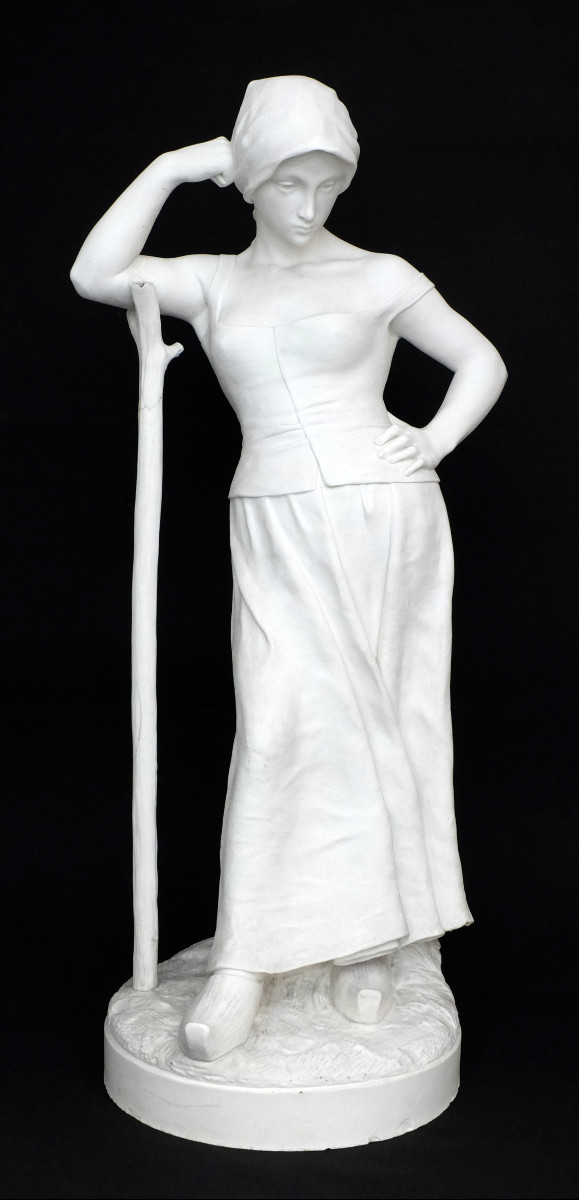
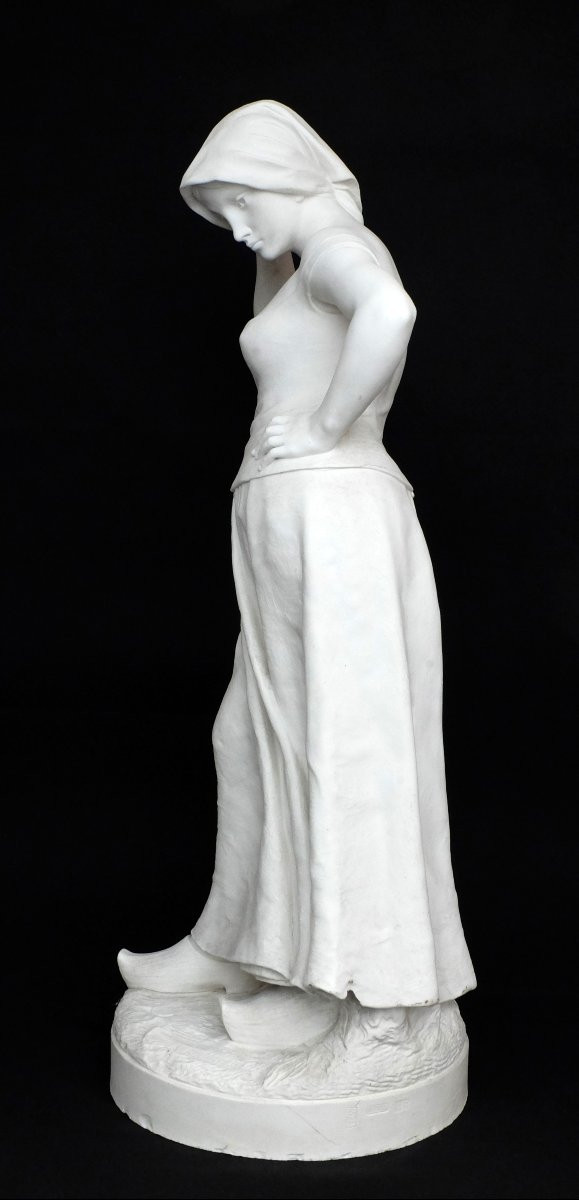
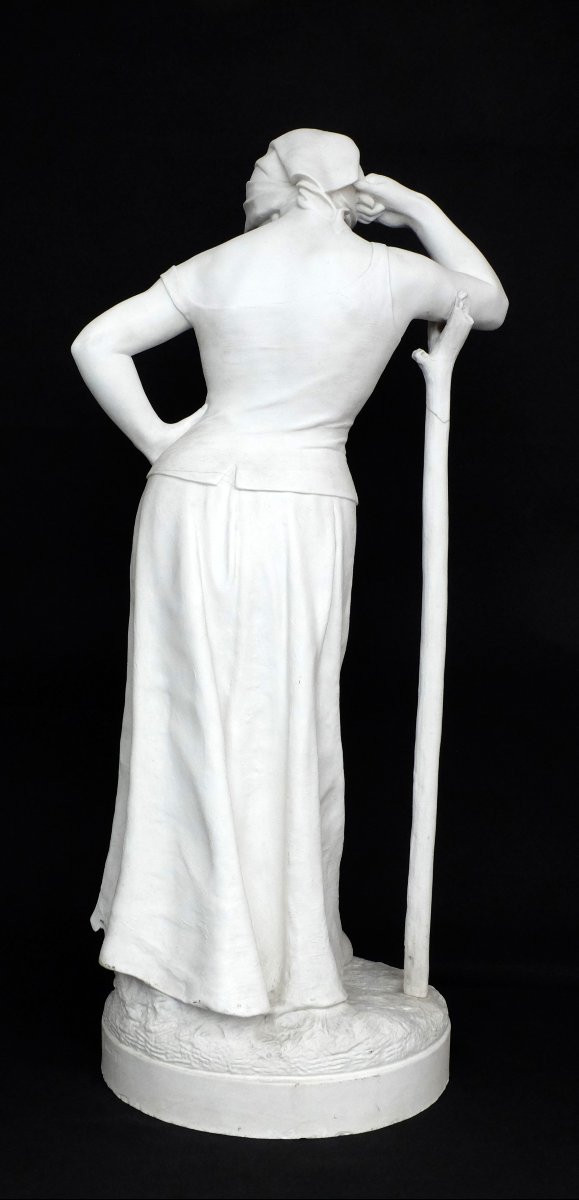
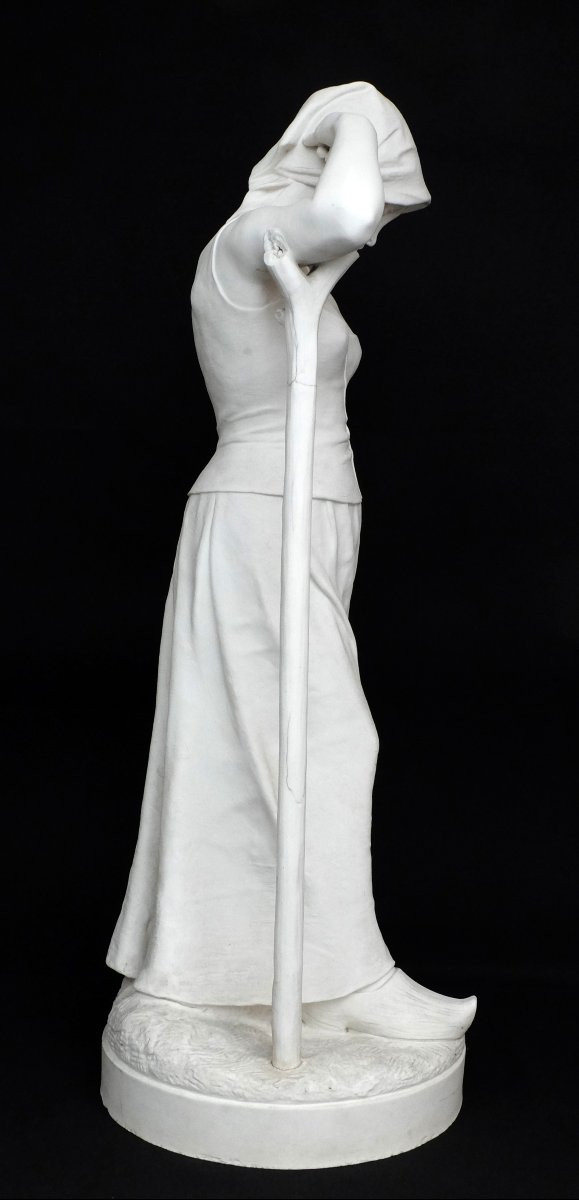


Manufacture De Sèvres, After Alfred Boucher, La Faneuse (the Haymaker), Biscuit, 65 Cm, 1913
Alfred BOUCHER (1850-1934) - La Faneuse "THE HAYMAKER" - Sèvres Biscuit Porcelain - 1913
Rare hard-paste biscuit porcelain from the Manufacture nationale de Sèvres depicting a young peasant woman leaning on the handle of her pitchfork after haymaking work.
Model created after the famous sculpture by Alfred Boucher (1850-1934), mentor of Camille Claudel, presented at the Salon des Artistes Français in 1897. The original marble is kept at the Petit Palais in Paris. Bronze and marble versions are exhibited at the Musée Camille Claudel in Nogent-sur-Seine.
Between 1900 and 1928, only 105 specimens were produced in two sizes (37 in first size, 67 in second size). The year 1913 was one of the most productive with 10 specimens made. Production was permanently discontinued in 1942 during the reorganization of the Manufacture, with destruction of the molds.
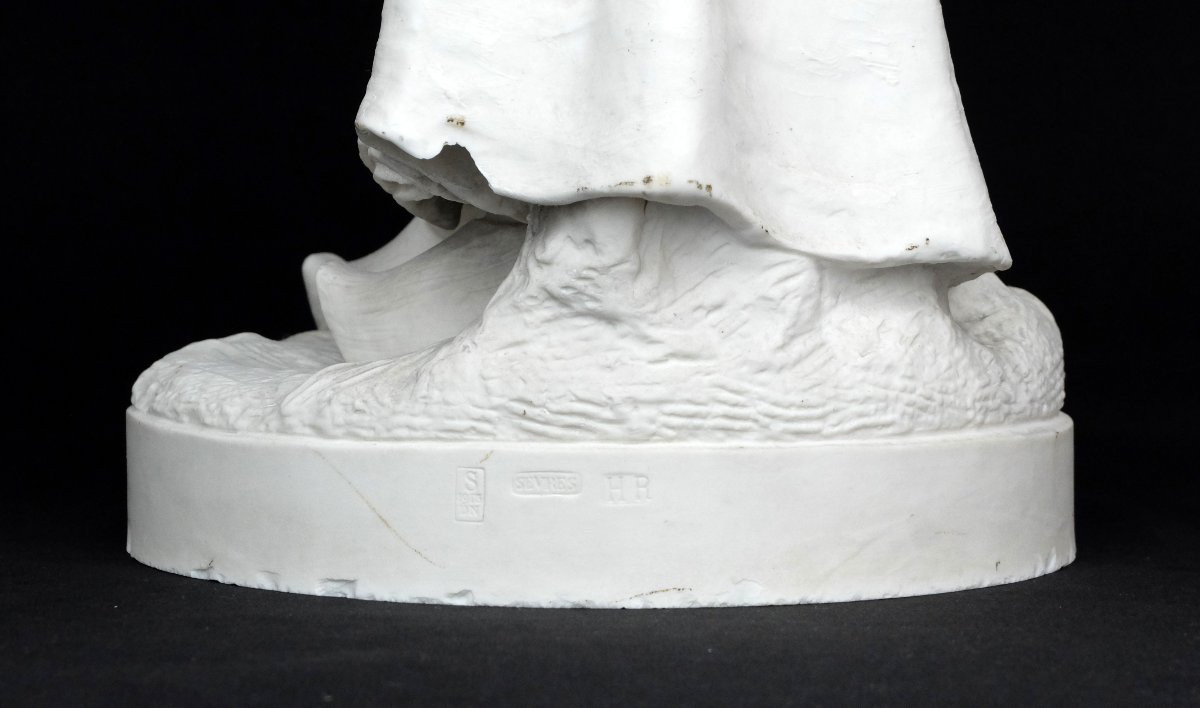
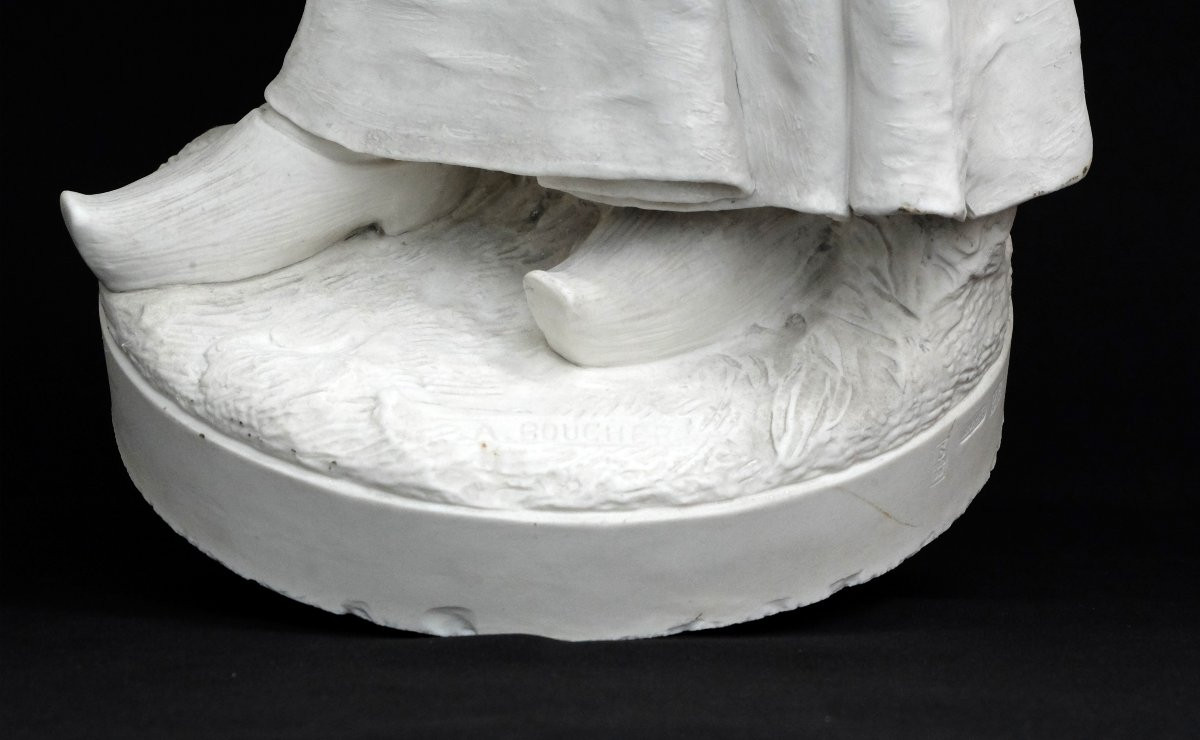
MARKS AND SIGNATURES:
- Signature "A. BOUCHER" incised on top of the base
- Cartouche "SEVRES" incised
- Cartouche "S 1913 DN" incised (precise dating)
- Initials "HR" incised (assembler/repairer craftsman)
- DN = Pâte Dure Nouvelle (new hard paste developed at Sèvres in late 19th century)
Height: 65 cm with base (second size)
A few surface hairlines characteristic of antique biscuit, particularly on the handle. The two upper prongs of the pitchfork are missing. Minor chips at the base of the plinth.
The pitchfork handle is miraculously present so that the composition and readability of the work remain perfectly preserved. All marks are clear and legible.
Complete documentation provided by the Archives Service of the Manufacture de Sèvres: original contract, production records, chronological table 1900-1928, termination letters 1942.
An official 2018 report from the Cité de la céramique de Sèvres expressly mentions the discovery of a first size specimen of "La Faneuse" after Alfred Boucher (inv. 10 17324) during a collection inventory, thus highlighting the recognized heritage importance that the institution confers upon it.
Rare hard-paste biscuit porcelain from the Manufacture nationale de Sèvres depicting a young peasant woman leaning on the handle of her pitchfork after haymaking work.
Model created after the famous sculpture by Alfred Boucher (1850-1934), mentor of Camille Claudel, presented at the Salon des Artistes Français in 1897. The original marble is kept at the Petit Palais in Paris. Bronze and marble versions are exhibited at the Musée Camille Claudel in Nogent-sur-Seine.
Between 1900 and 1928, only 105 specimens were produced in two sizes (37 in first size, 67 in second size). The year 1913 was one of the most productive with 10 specimens made. Production was permanently discontinued in 1942 during the reorganization of the Manufacture, with destruction of the molds.
MARKS AND SIGNATURES:
- Signature "A. BOUCHER" incised on top of the base
- Cartouche "SEVRES" incised
- Cartouche "S 1913 DN" incised (precise dating)
- Initials "HR" incised (assembler/repairer craftsman)
- DN = Pâte Dure Nouvelle (new hard paste developed at Sèvres in late 19th century)
Height: 65 cm with base (second size)
A few surface hairlines characteristic of antique biscuit, particularly on the handle. The two upper prongs of the pitchfork are missing. Minor chips at the base of the plinth.
The pitchfork handle is miraculously present so that the composition and readability of the work remain perfectly preserved. All marks are clear and legible.
Complete documentation provided by the Archives Service of the Manufacture de Sèvres: original contract, production records, chronological table 1900-1928, termination letters 1942.
An official 2018 report from the Cité de la céramique de Sèvres expressly mentions the discovery of a first size specimen of "La Faneuse" after Alfred Boucher (inv. 10 17324) during a collection inventory, thus highlighting the recognized heritage importance that the institution confers upon it.
2 800 €
Period: 20th century
Style: Art Nouveau
Condition: Some scratches and chips
Material: Porcelain
Height: 65 cm
Reference (ID): 1708562
Availability: In stock
Print