THIS OBJECT WAS SOLD
Maedate In Stamped, Engraved And Gilded Copper Depicting A Scallop Shell - Edo Period.
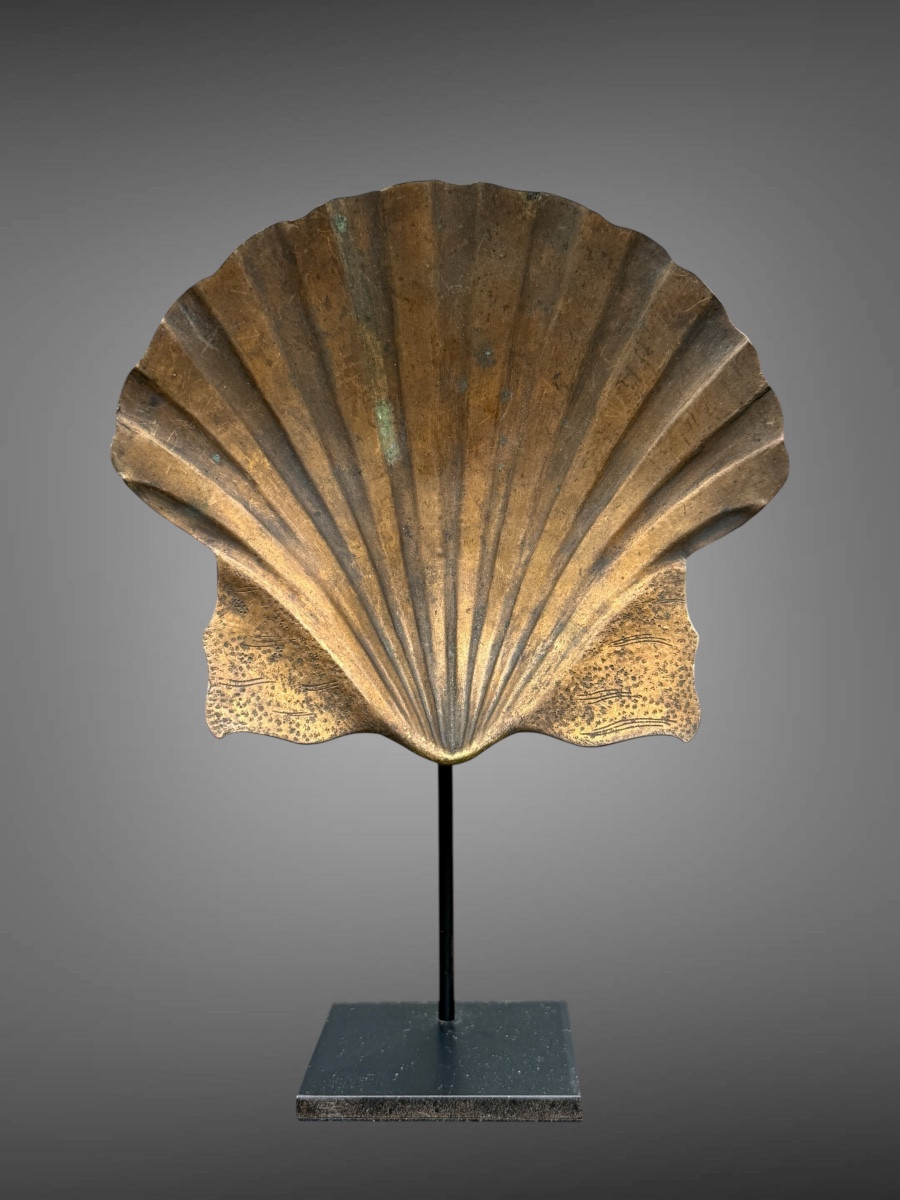
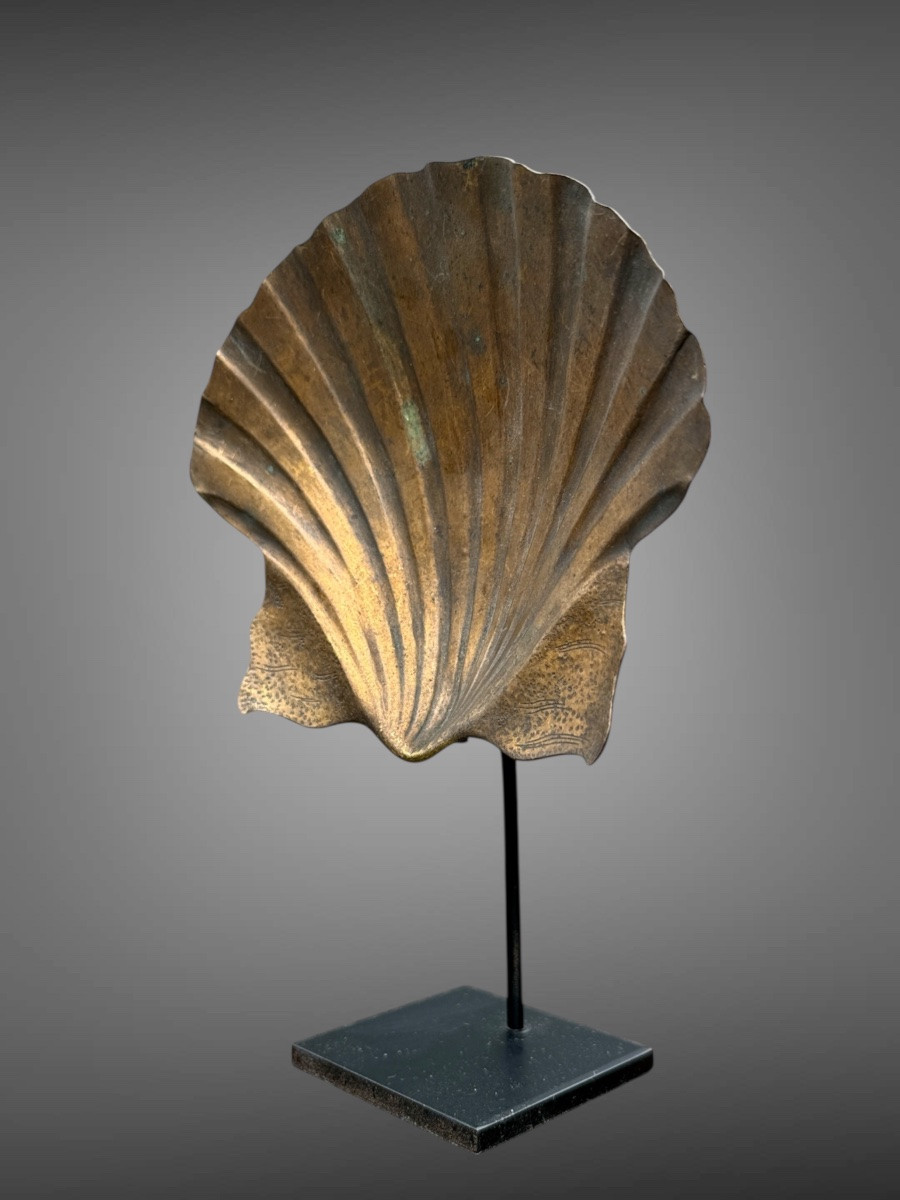
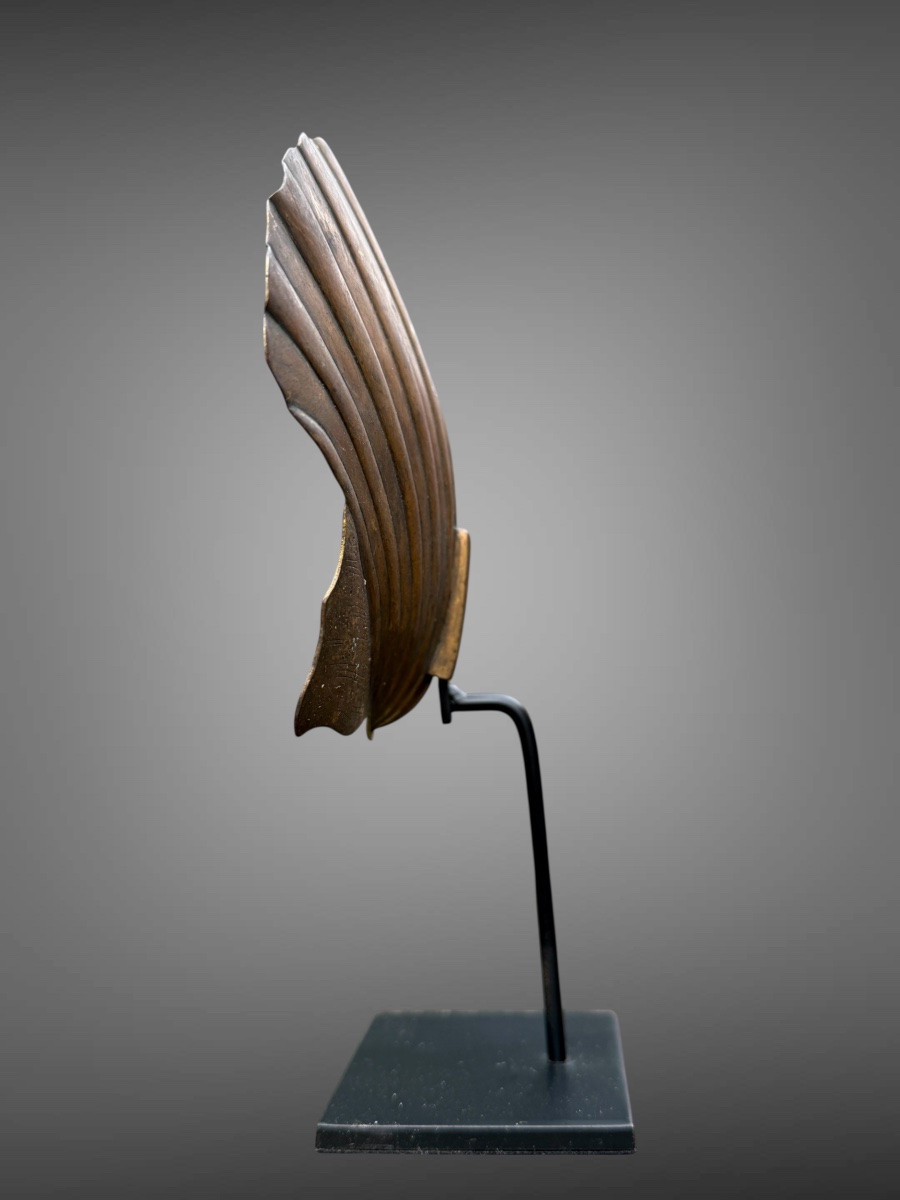
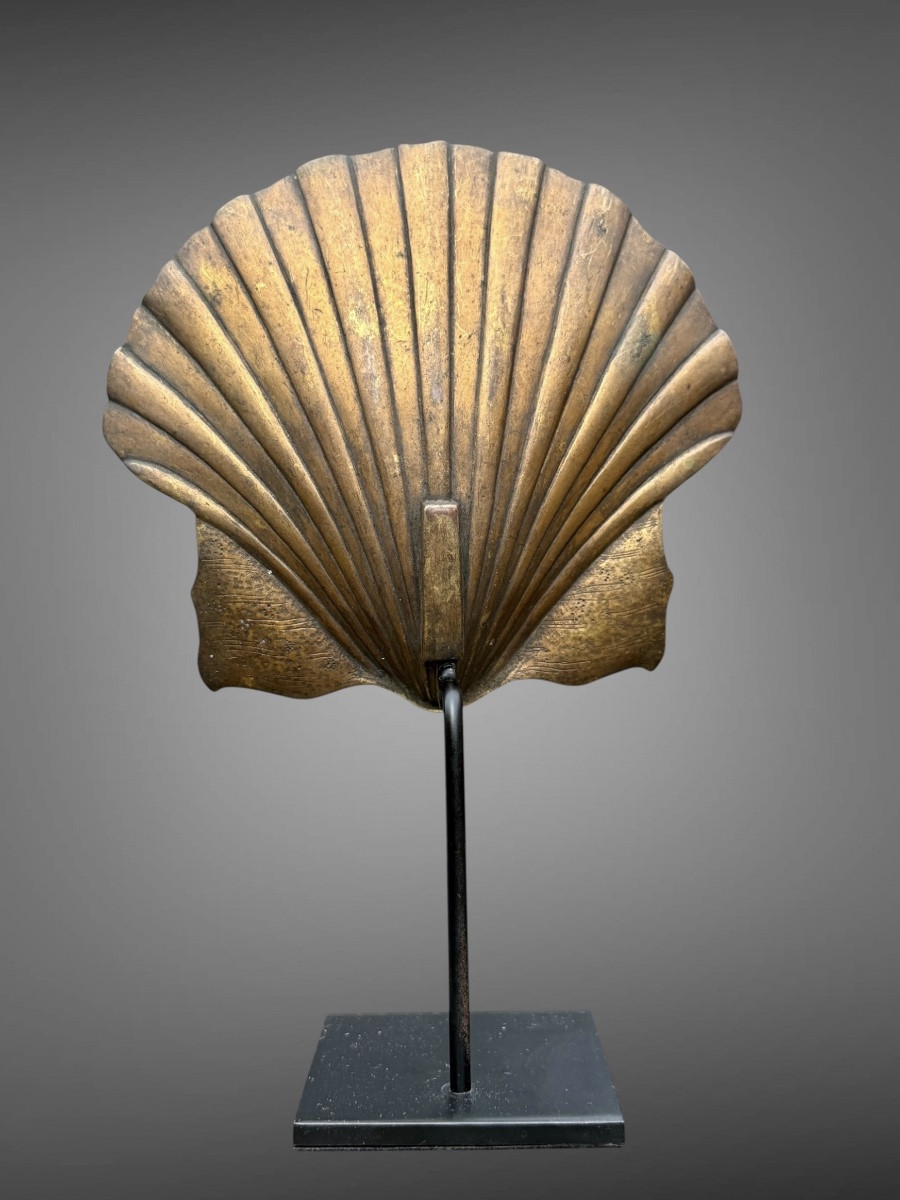
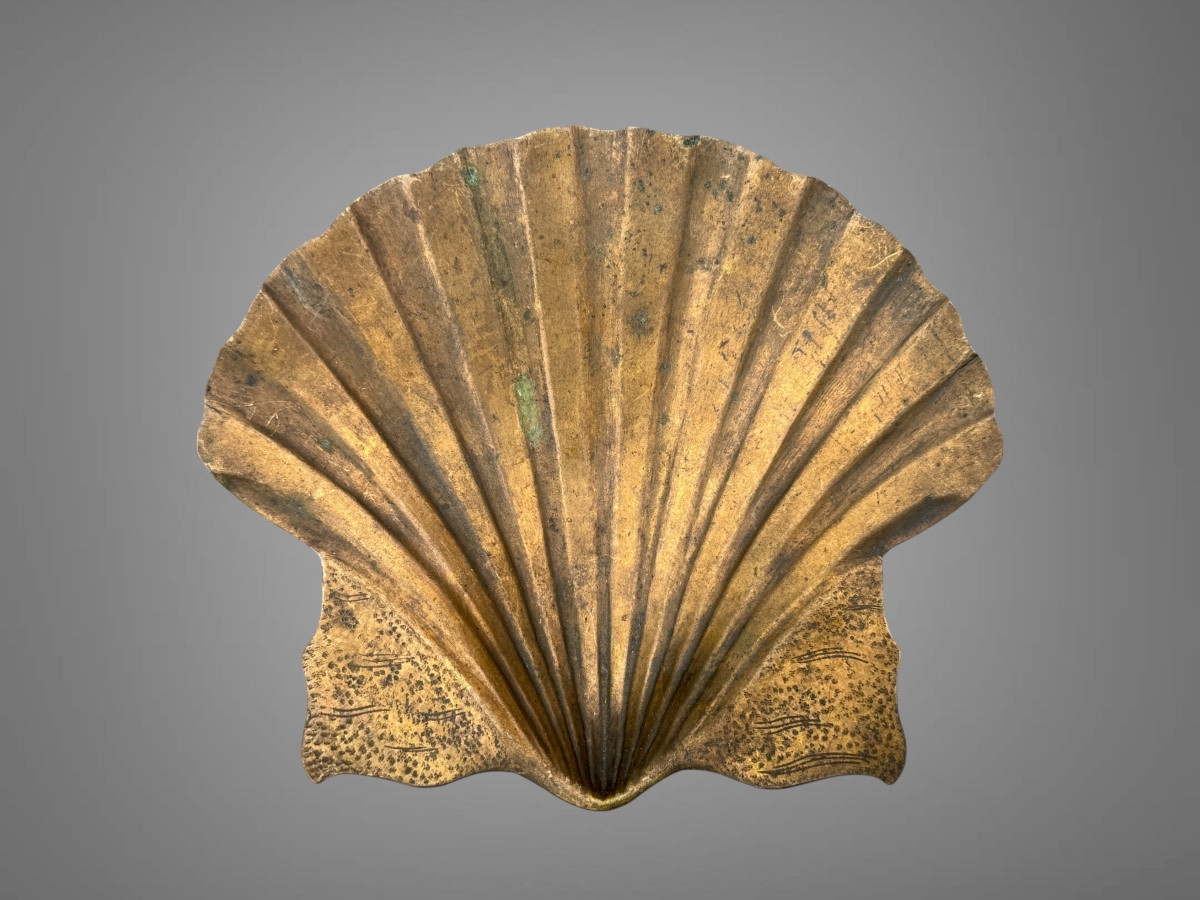


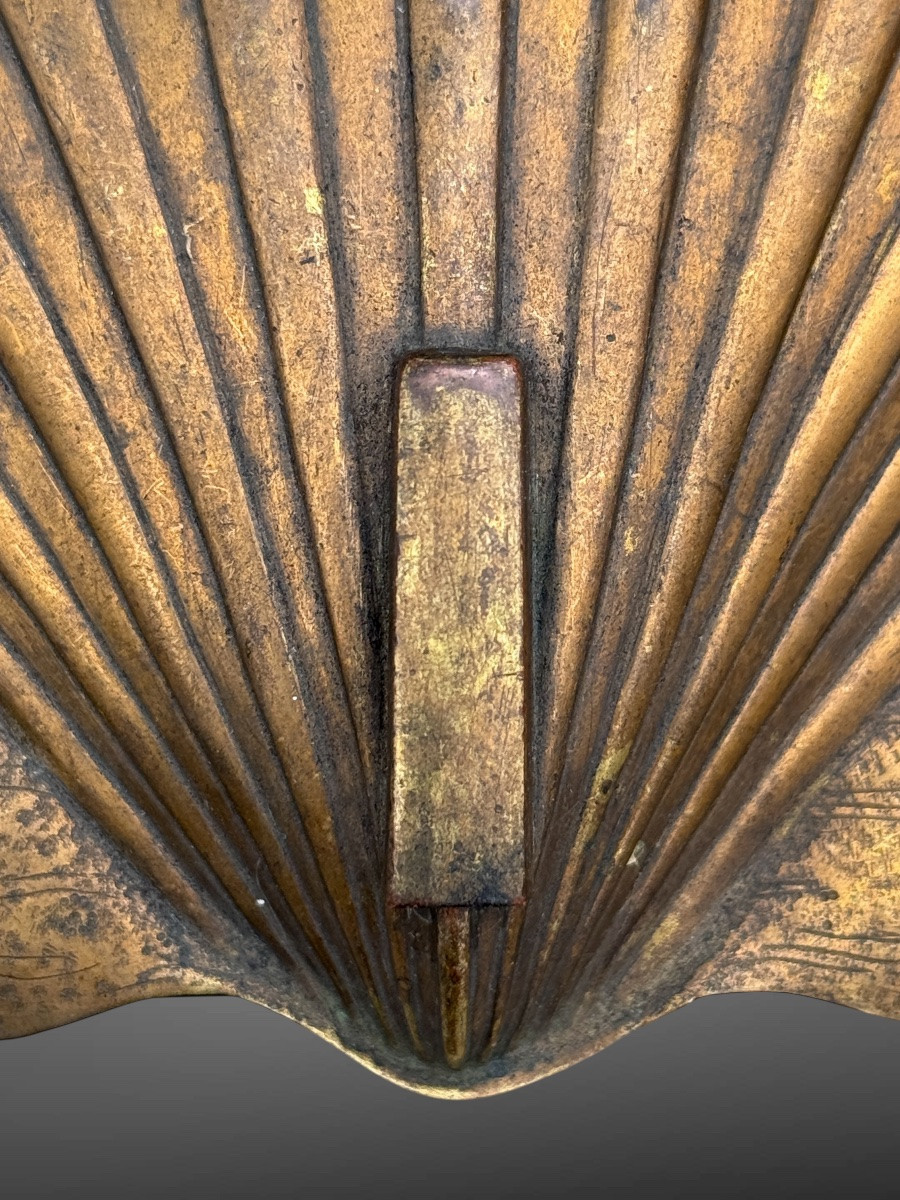
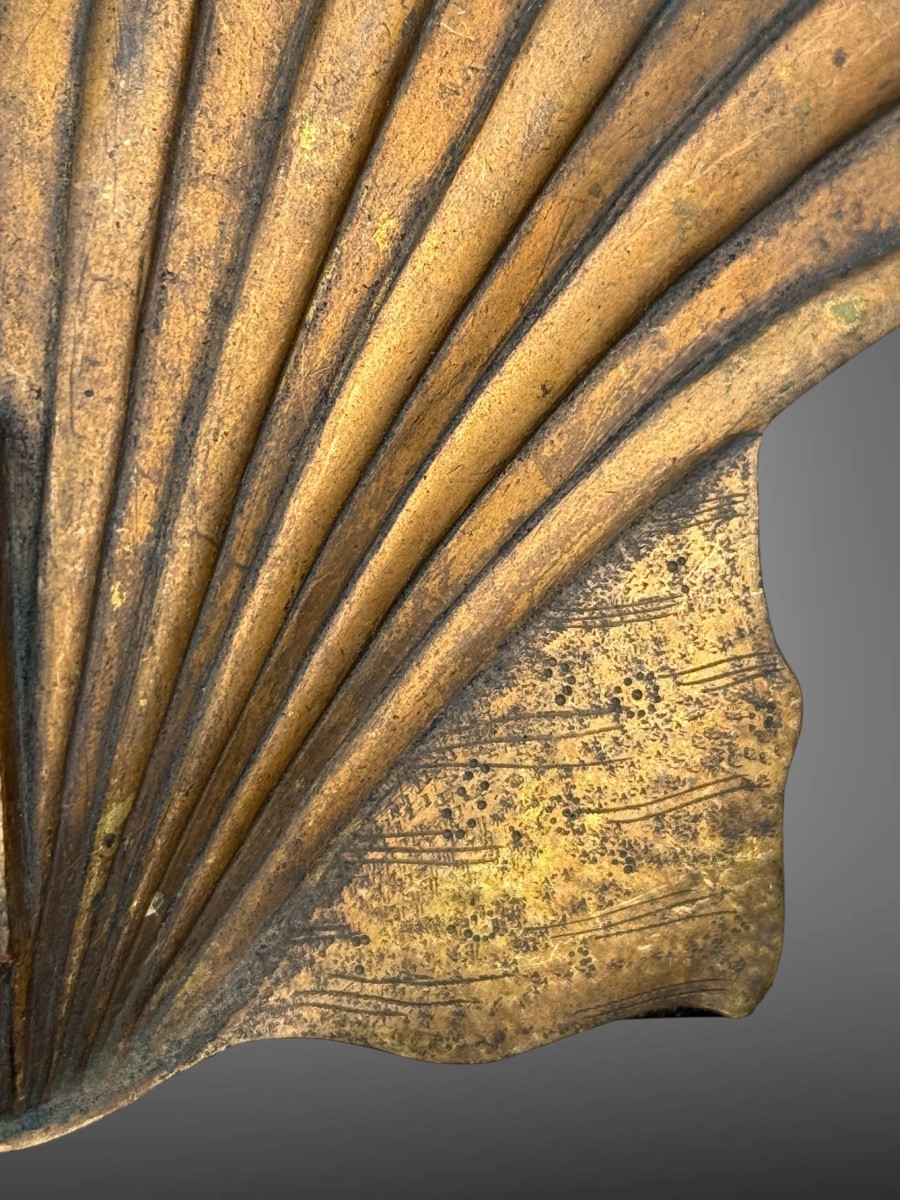
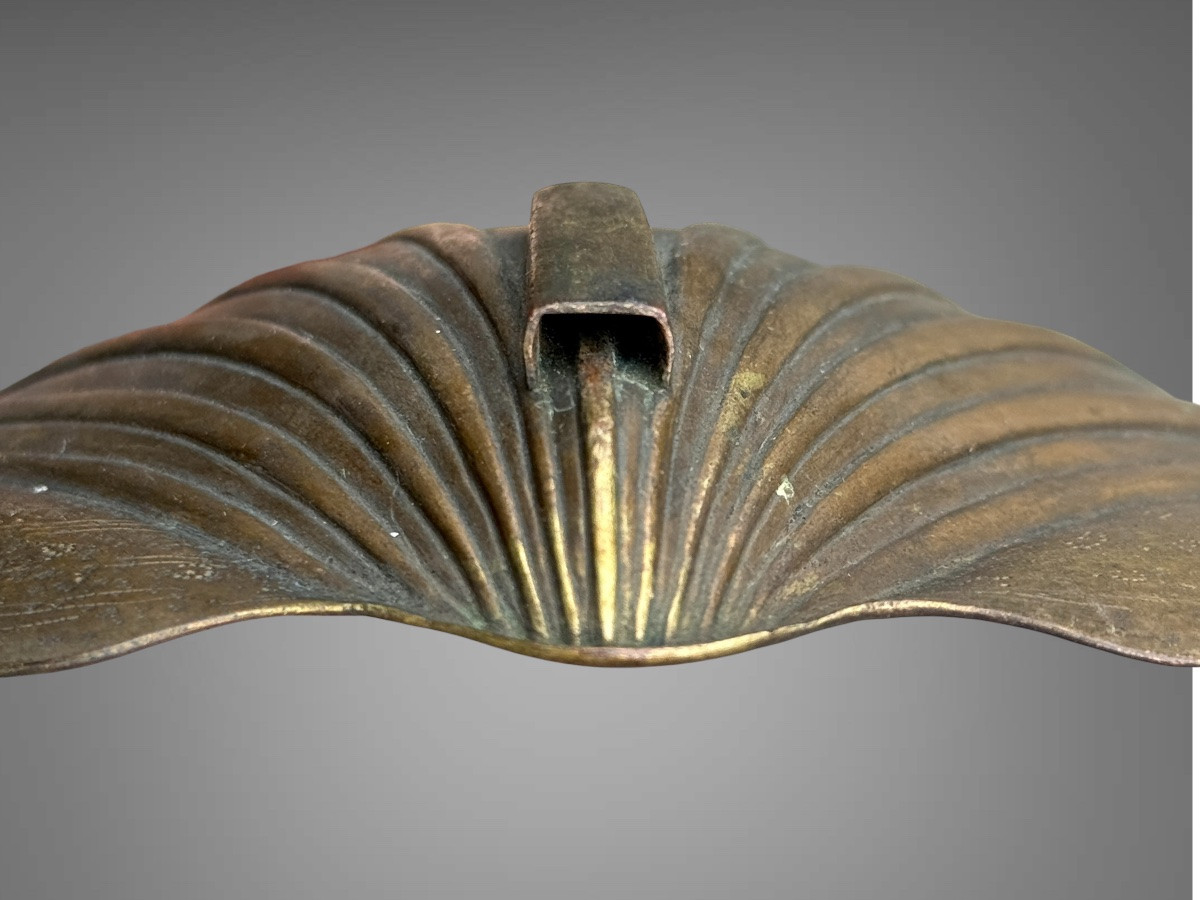
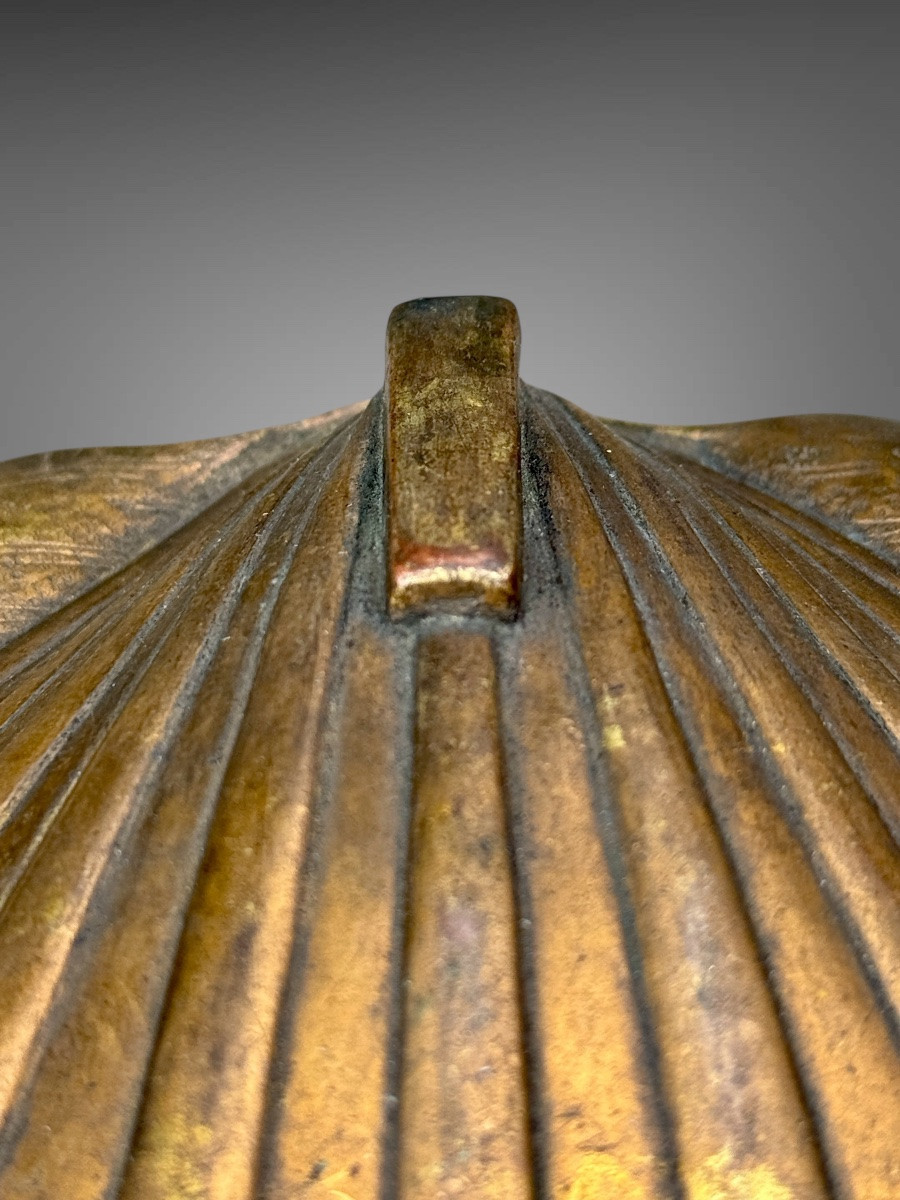
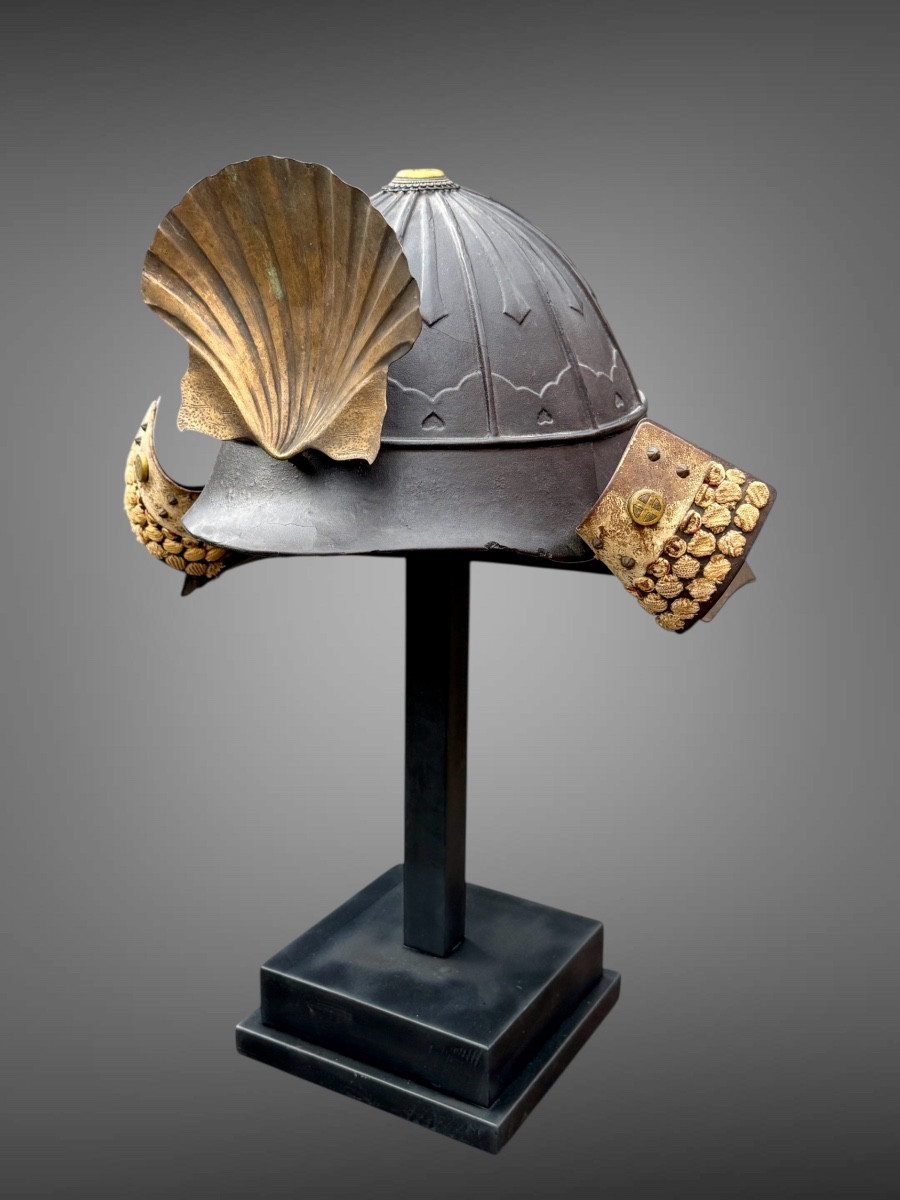
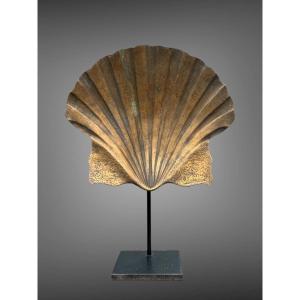


JAPAN - Edo Period (1603-1868). Stamped, engraved, and gilded copper maedate depicting a scallop shell. Minor wear to the gilding. Dimensions: 12 x 14 x 2 cm. Sold with its base. Dimensions with base: 20 x 14 x 6.3 cm. Notes: In Japan, the scallop has always been a very popular delicacy. Its name, "hotate," means "the sail that is hoisted." It is particularly fished in the Hokkaido and Tohoku regions. Among the samurai, the scallop, and more broadly the shell (kai), or seashells, can evoke the notions of protection and transition. Its form, which both shelters and reveals, symbolizes the armor of the soul: closing to resist, opening to act with justice. Associated with travel and the sea, it evokes the impermanence of the world and the need to move forward without attachment. For the warrior, the shell thus becomes the image of a calm inner strength, born from the balance between withdrawal and engagement. Two kawari kabuto from the Barbier-Muller collection can be cited where the helmets themselves take the form of seashells. See Warrior's Armor, Samurai Armor from the Ann and Gabriel Barbier-Muller collection, pp. 162 and 192.
Explore similar pieces and discover your ideal find:
Uniforms, Armors