THIS OBJECT WAS SOLD
Samurai With Banner, Kojima, Kakemono, Japan, 19th Century.


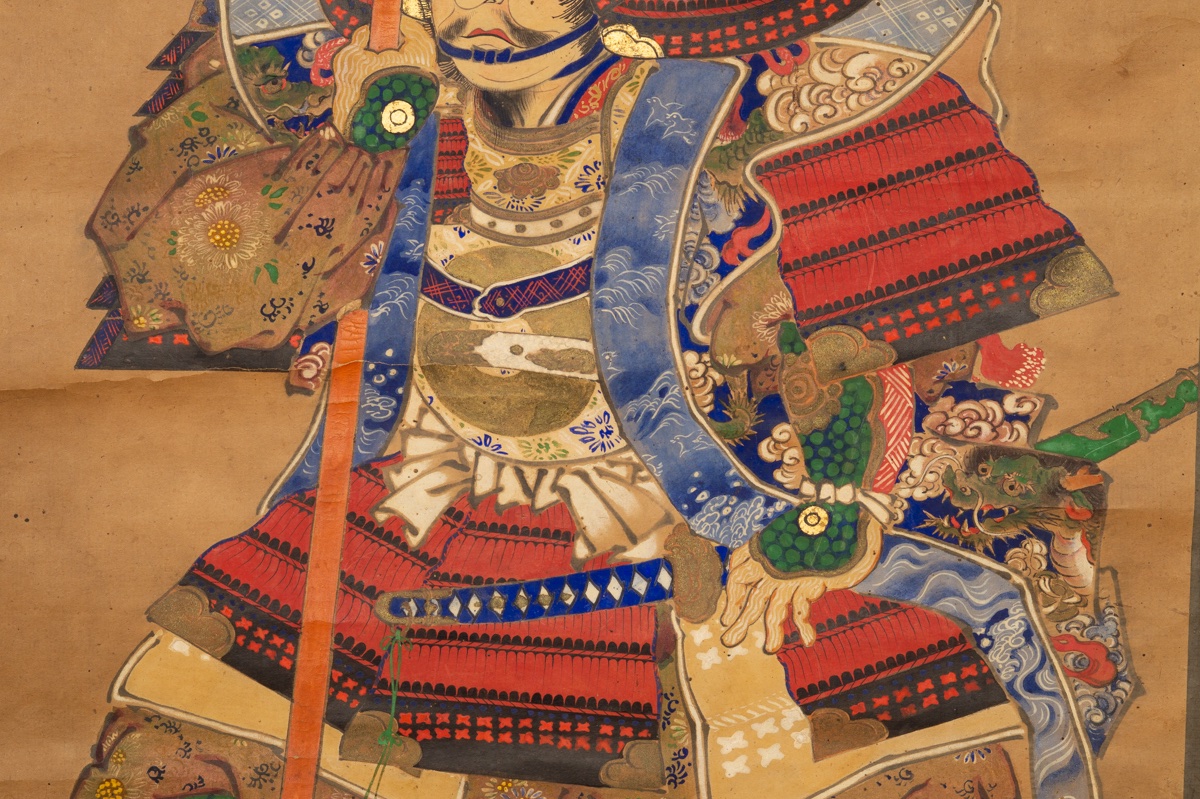
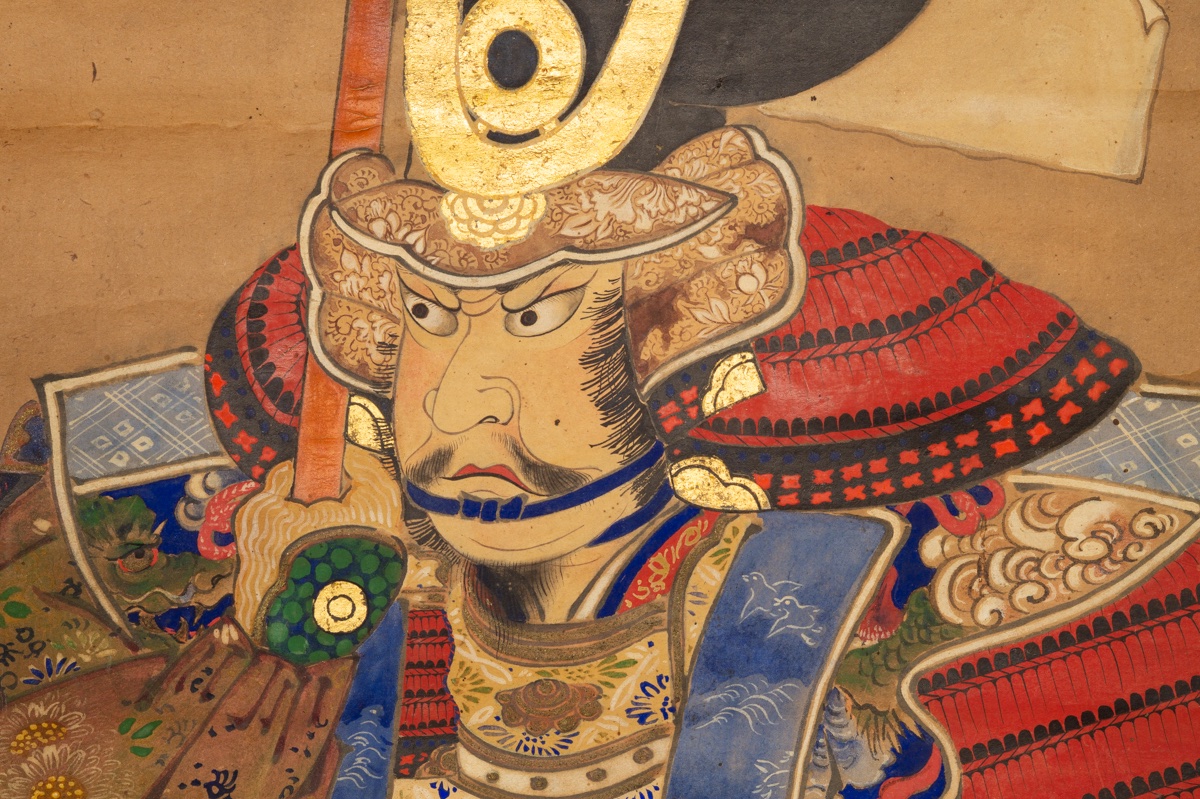


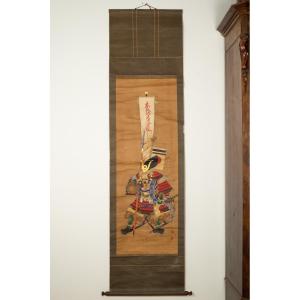


A hand-painted scroll depicting a samurai holding a banner. This meticulously detailed depiction is painted in the musha-e style, a style of warrior paintings particularly popular in Japan during the Edo period. The painting represents the renowned Lord Katō Kiyomasa, who lived in the late 16th and early 17th centuries. The samurai is shown in full armor, with a katana at his belt, holding a banner inscribed with the phrase 南無妙法蓮華経 - Namu Myōhō Renge Kyō. This translates to "To devote oneself to the Lotus Sutra of the Mystical Law." This is the central mantra of Nichiren Buddhism, one of the most influential Buddhist schools in Japan since the Middle Ages. This type of scroll was displayed in Japanese homes once a year, during Tango no Sekku (Boys' Festival), to bestow upon sons the strength and determination that characterized the legendary Kiyomasa.
Ink and color on paper.
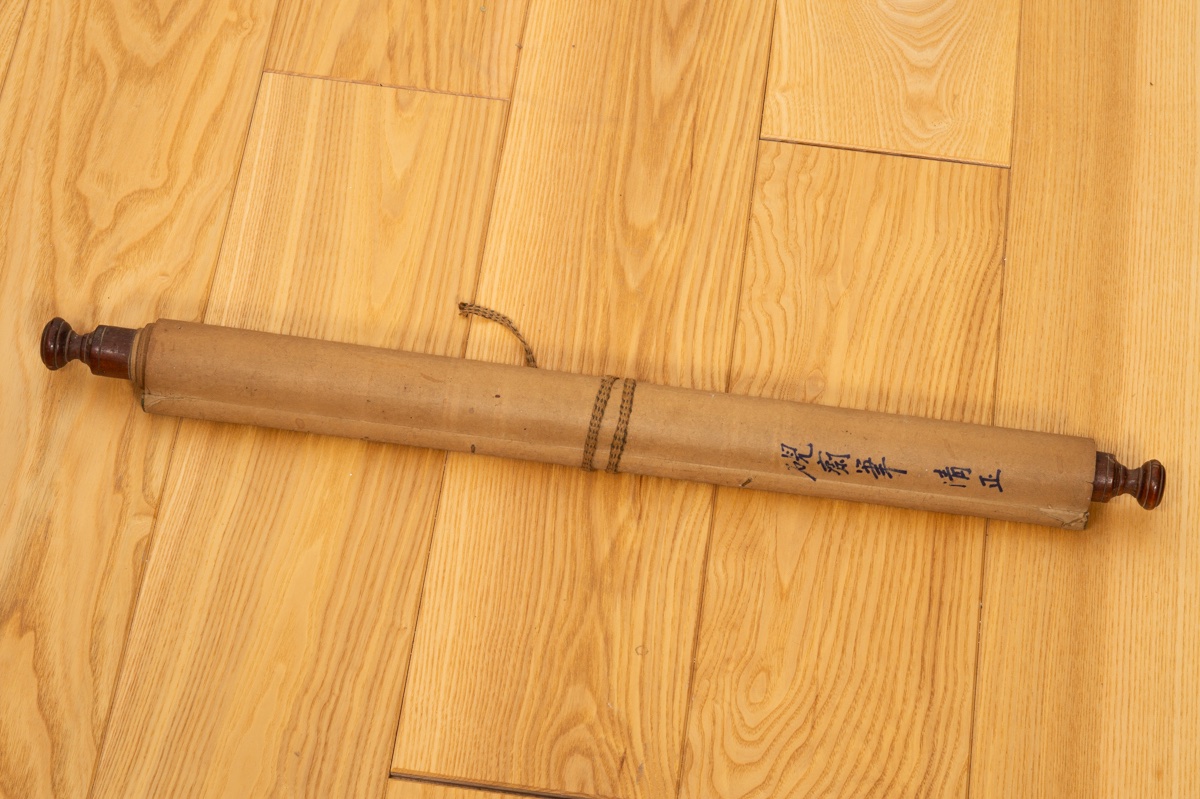
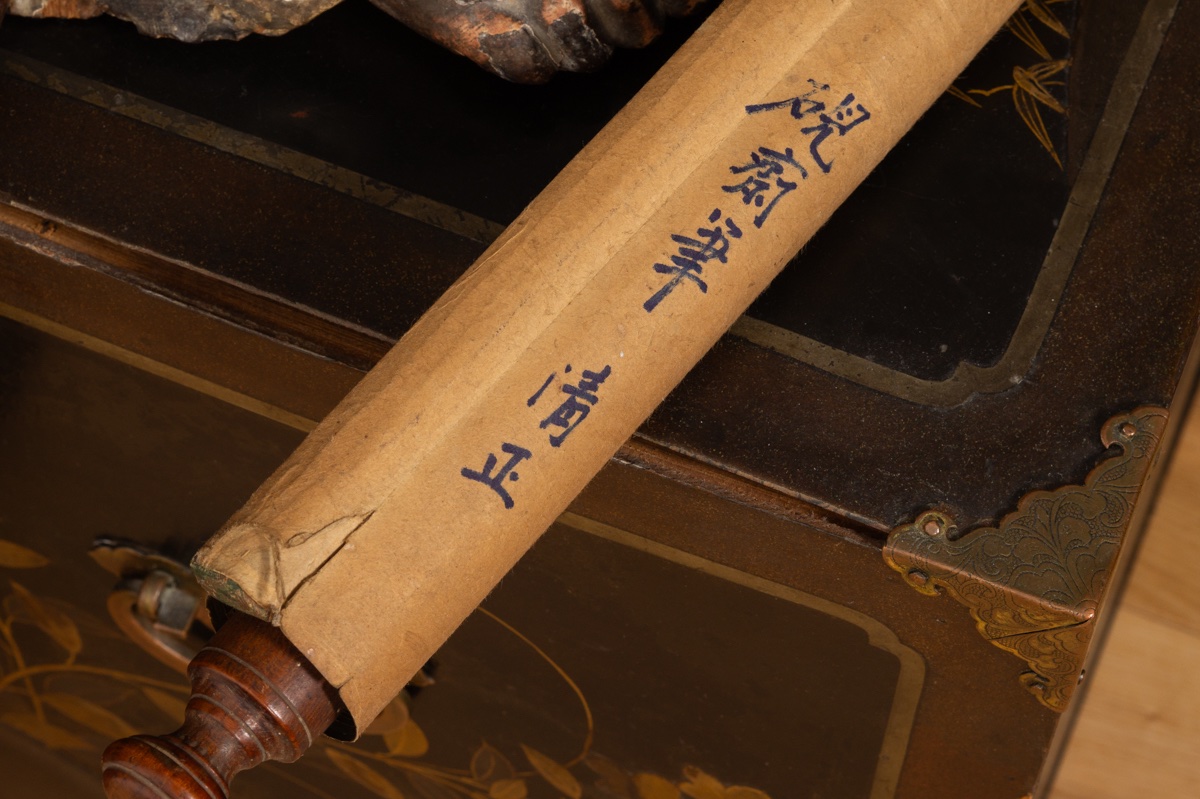
Kojima, Japan, Edo period, 19th century. The rolled scroll bears the handwritten inscription: 児島筆清正 (Kojima hitsu – Kiyomasa). This means: "Kojima's Brush – Kiyomasa." Relatively good condition, with visible creases and soiling. Dimensions: 186 x 48.5 cm. Image: 114.5 x 39.5 cm. Width including handles: 58 cm.
Kakemono (Japanese: 掛け物 kake-mono - "hanging object"; also: 掛軸 kakejiku - "hanging scroll") - a Japanese painting on paper or silk, usually glued to a silk backing, intended to be hung on the wall. The top and bottom edges of the kakemono are attached to wooden bars to facilitate rolling, with the bottom bar (Japanese: ikugi 軸木) also equipped with projecting handles (Japanese: jiku). Kakemono scrolls first appeared in Japan during the Nara period (710-794). In traditional Japanese homes, they are hung in a niche called a tokonoma.
Free shipping within the European Union! I send packages via insured courier (DPD or DHL). All items are very carefully packaged. Payment by international bank transfer. I will provide a certificate of authenticity upon request.
Ink and color on paper.
Kojima, Japan, Edo period, 19th century. The rolled scroll bears the handwritten inscription: 児島筆清正 (Kojima hitsu – Kiyomasa). This means: "Kojima's Brush – Kiyomasa." Relatively good condition, with visible creases and soiling. Dimensions: 186 x 48.5 cm. Image: 114.5 x 39.5 cm. Width including handles: 58 cm.
Kakemono (Japanese: 掛け物 kake-mono - "hanging object"; also: 掛軸 kakejiku - "hanging scroll") - a Japanese painting on paper or silk, usually glued to a silk backing, intended to be hung on the wall. The top and bottom edges of the kakemono are attached to wooden bars to facilitate rolling, with the bottom bar (Japanese: ikugi 軸木) also equipped with projecting handles (Japanese: jiku). Kakemono scrolls first appeared in Japan during the Nara period (710-794). In traditional Japanese homes, they are hung in a niche called a tokonoma.
Free shipping within the European Union! I send packages via insured courier (DPD or DHL). All items are very carefully packaged. Payment by international bank transfer. I will provide a certificate of authenticity upon request.
Explore similar pieces and discover your ideal find:
drawings