THIS OBJECT WAS SOLD
Falcon Looking At Its Reflection, Ryūzan, Kakemono, Sumi-e, Japan, Meiji Era, 1896.
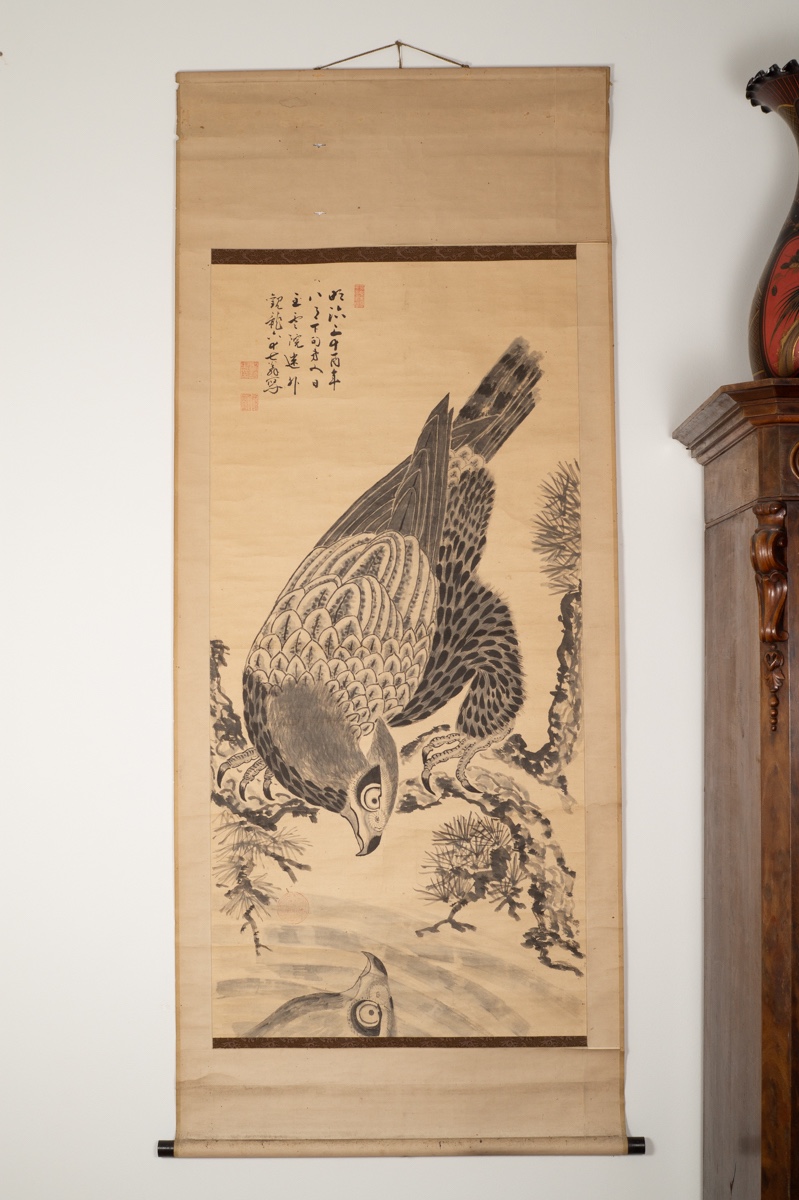
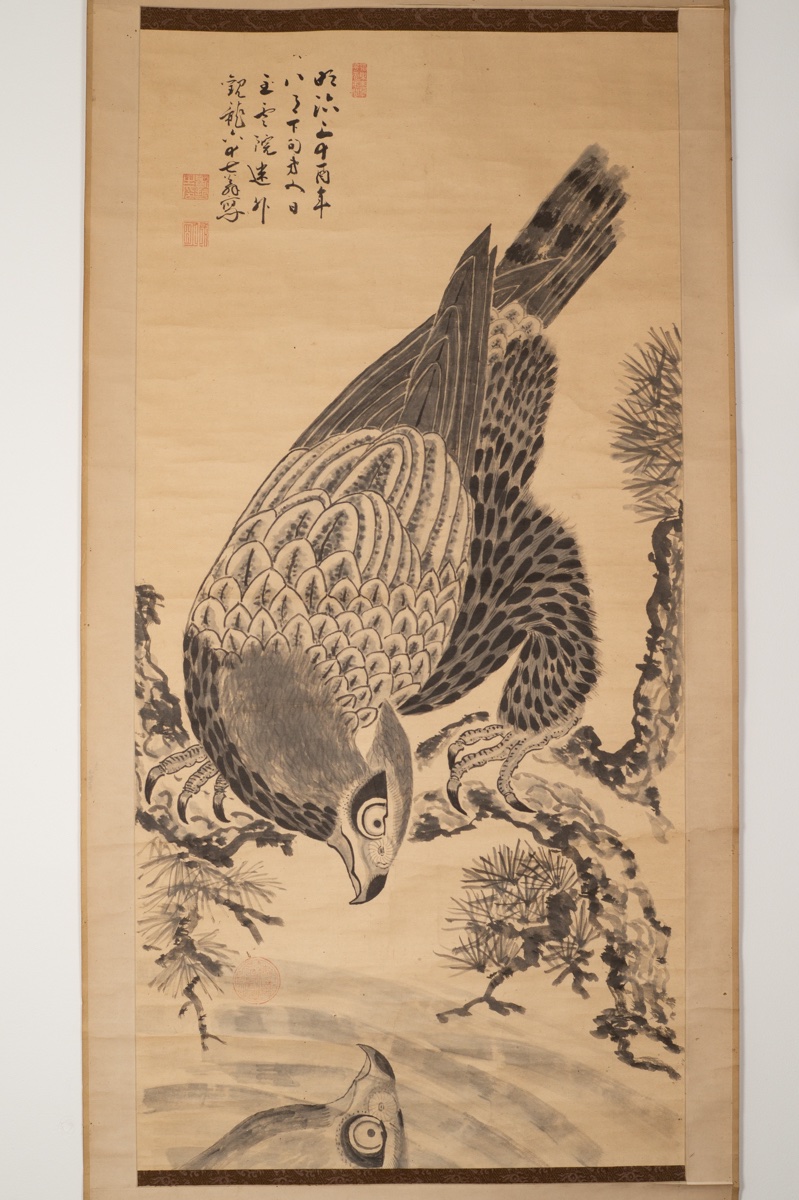
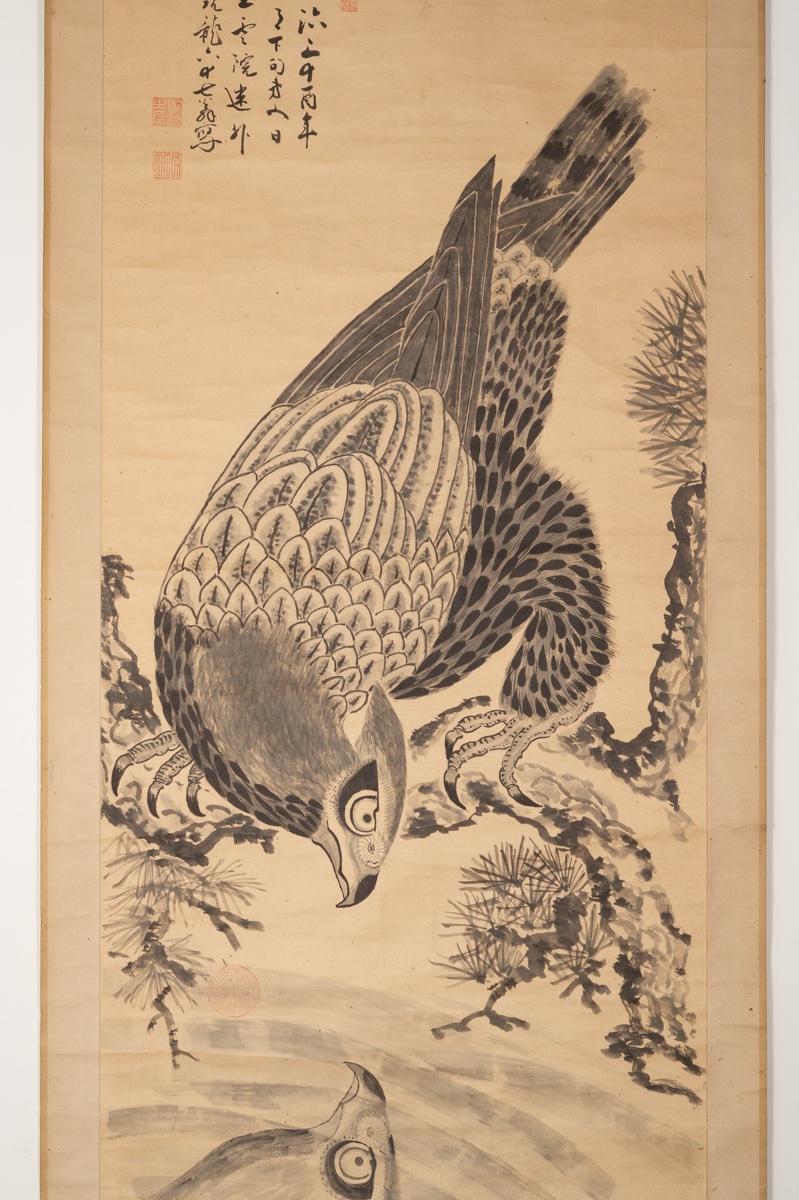
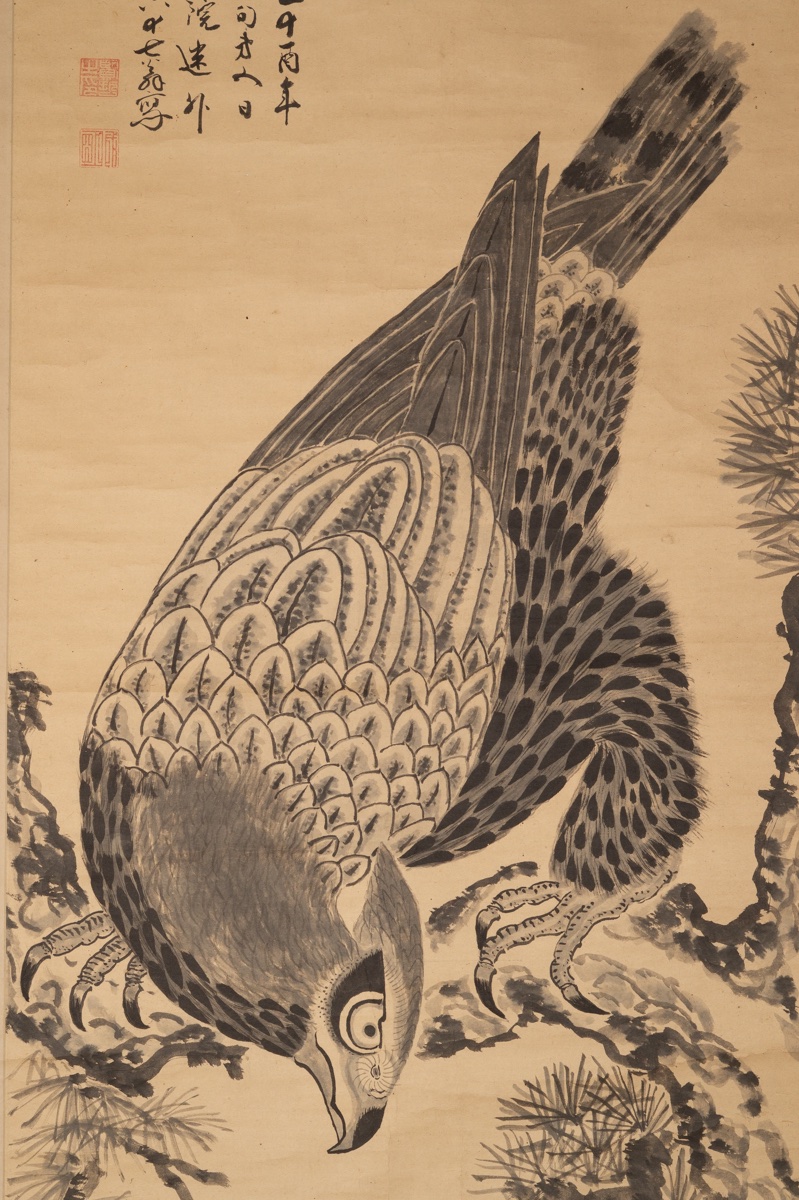

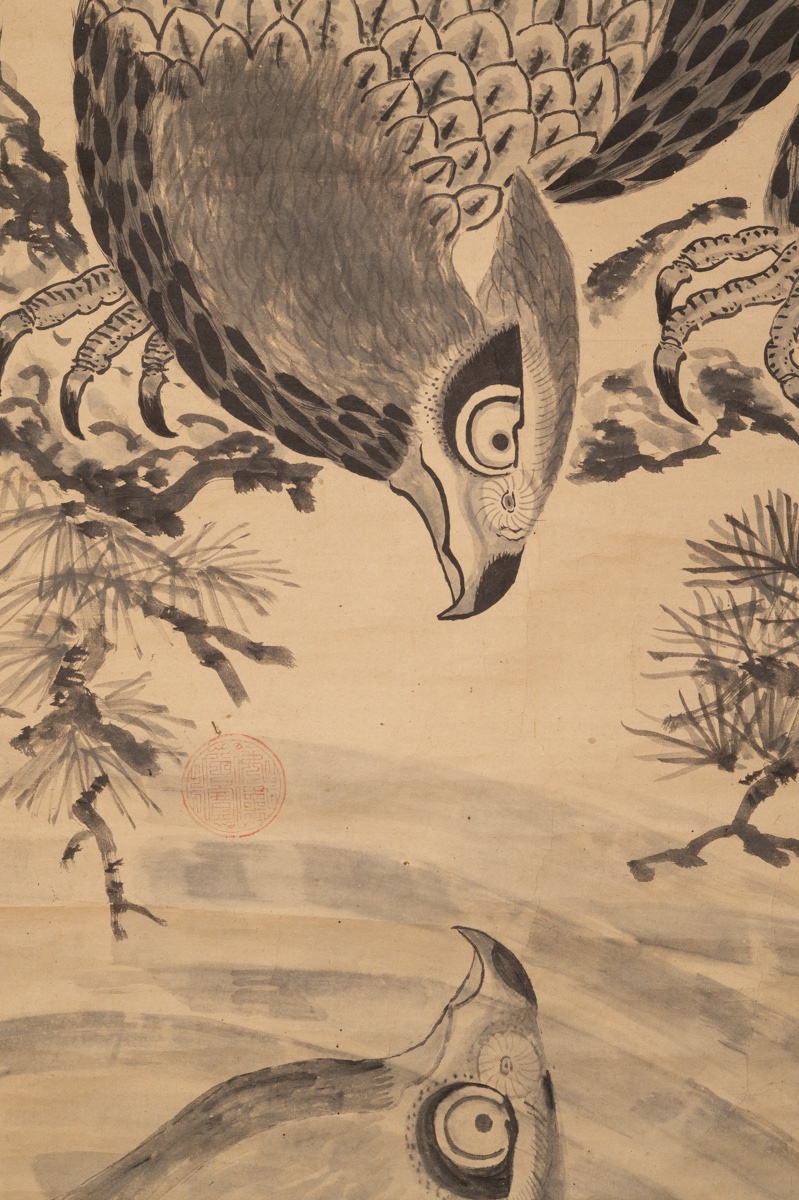
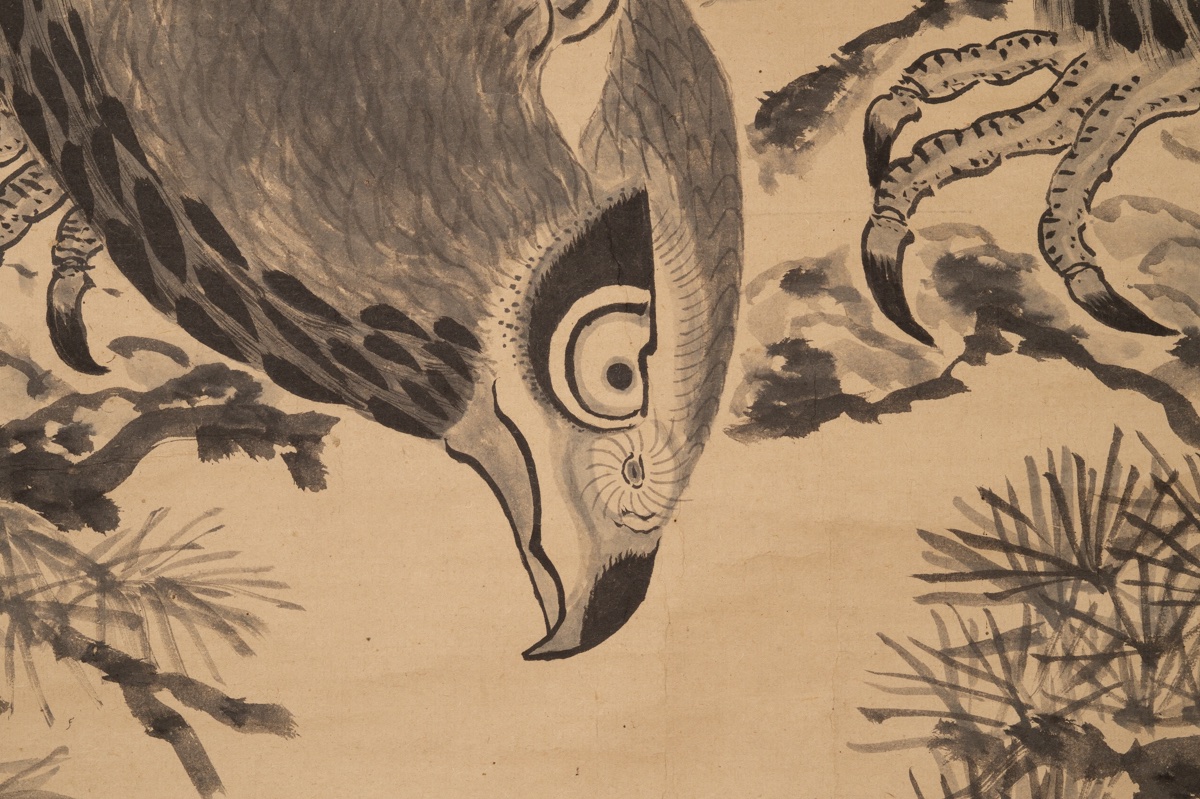
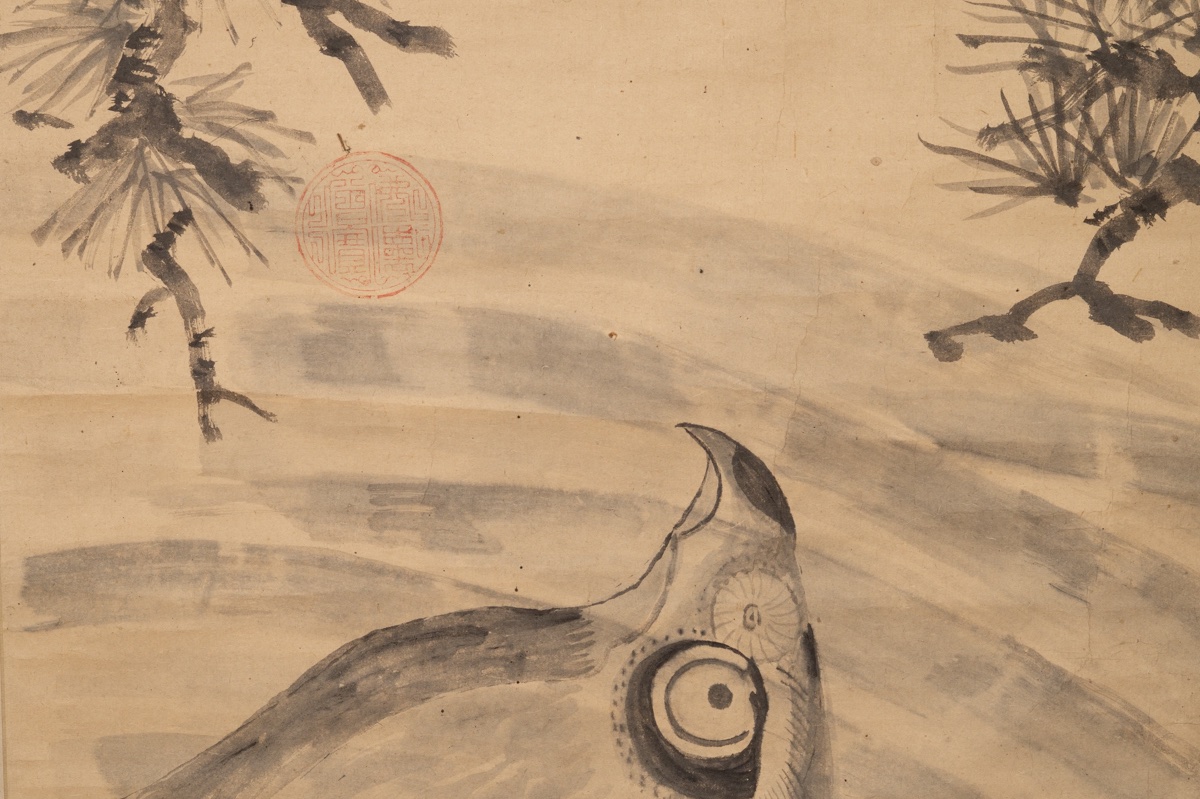
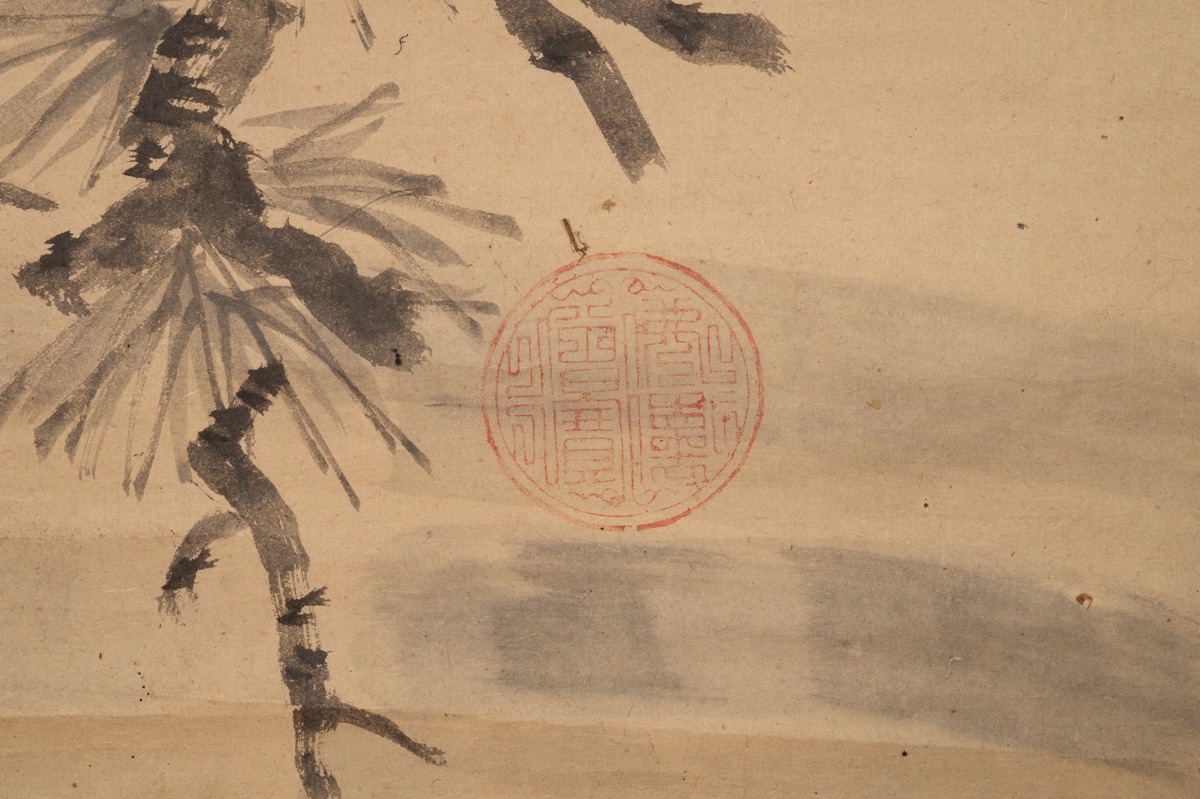

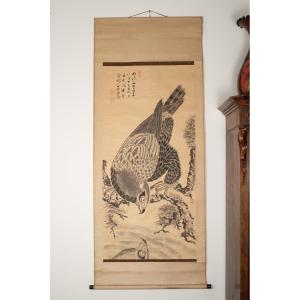


A hand-painted scroll in the sumi-e technique depicting a falcon perched on a pine branch, gazing at its reflection in the water. The Japanese artist has portrayed the bird of prey in all its splendor, meticulously rendering the details of its plumage. An elaborate inscription and several red seals are located in the upper left corner. In Asian art, particularly in China and Japan, the symbolism of the falcon is rich and primarily associated with power, precision, the ability to make swift decisions, as well as freedom and a broad perspective.
Dimensions: 175 x 76 cm. Image: 131 x 63 cm. Width with handles: 81 cm.
Ink on paper.
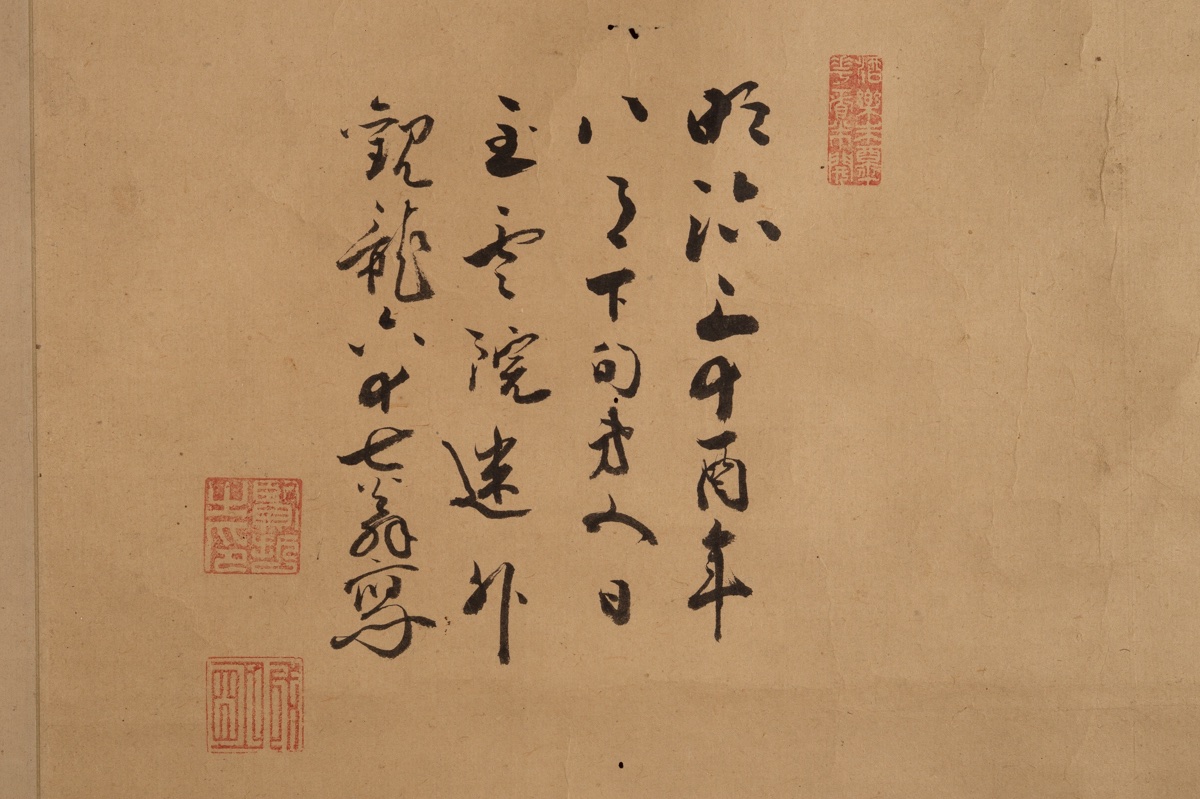
Japan, Meiji era, 1896, signed: Ryūzan (龍山), most likely Taki Ryūzan (滝龍山). Translation of the inscription: Date: 明治二十九年丙申 (Meiji nijūkyū-nen, hinoesaru) - means 1896 (29th year of the Meiji era, year of the Fire Monkey in the Chinese calendar). Month: Late August (Hachigatsu gejun). Author: Ryūzan Rōō sha (Ryūzan Rōō sha), meaning "Painted by the old man Ryūzan" (or the venerable master named Ryūzan).
The painting is in good condition, with some minor damage and soiling.
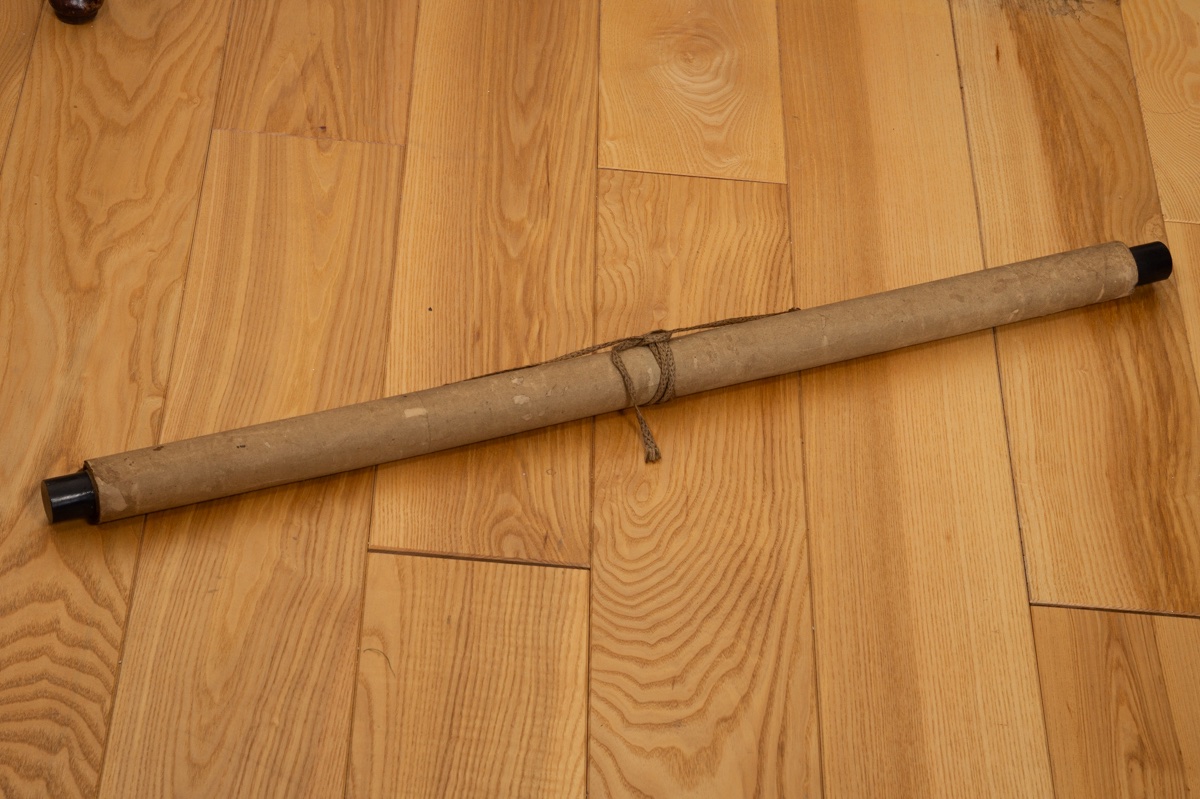
Kakemono (Japanese: kake-mono, "hanging object"; also: kakejiku, "hanging scroll") - a Japanese painting on paper or silk, usually glued to a silk backing, intended to be hung on the wall. The top and bottom edges of the kakemono are attached to wooden bars to facilitate rolling, with the bottom bar (Japanese: ikugi) also equipped with projecting handles (Japanese: jiku). Kakemono scrolls first appeared in Japan during the Nara period (710-794). In traditional Japanese homes, they are hung in a niche called a tokonoma.
Free shipping within the European Union! I send packages via insured courier (DPD or DHL). All items are packaged very carefully. Payment by international bank transfer. I will provide a certificate of authenticity upon request.
Dimensions: 175 x 76 cm. Image: 131 x 63 cm. Width with handles: 81 cm.
Ink on paper.
Japan, Meiji era, 1896, signed: Ryūzan (龍山), most likely Taki Ryūzan (滝龍山). Translation of the inscription: Date: 明治二十九年丙申 (Meiji nijūkyū-nen, hinoesaru) - means 1896 (29th year of the Meiji era, year of the Fire Monkey in the Chinese calendar). Month: Late August (Hachigatsu gejun). Author: Ryūzan Rōō sha (Ryūzan Rōō sha), meaning "Painted by the old man Ryūzan" (or the venerable master named Ryūzan).
The painting is in good condition, with some minor damage and soiling.
Kakemono (Japanese: kake-mono, "hanging object"; also: kakejiku, "hanging scroll") - a Japanese painting on paper or silk, usually glued to a silk backing, intended to be hung on the wall. The top and bottom edges of the kakemono are attached to wooden bars to facilitate rolling, with the bottom bar (Japanese: ikugi) also equipped with projecting handles (Japanese: jiku). Kakemono scrolls first appeared in Japan during the Nara period (710-794). In traditional Japanese homes, they are hung in a niche called a tokonoma.
Free shipping within the European Union! I send packages via insured courier (DPD or DHL). All items are packaged very carefully. Payment by international bank transfer. I will provide a certificate of authenticity upon request.
Explore similar pieces and discover your ideal find:
drawings