


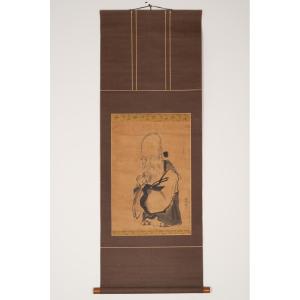


Jurōjin, Kanō Tan'yū? Kakemono, Sumi-e, Japan, Edo Period, 17th-18th Century.
Artist: Kanō Tan’yū?
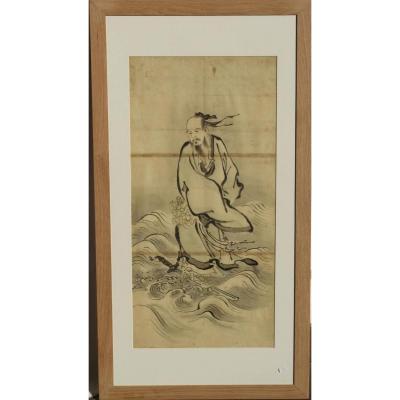
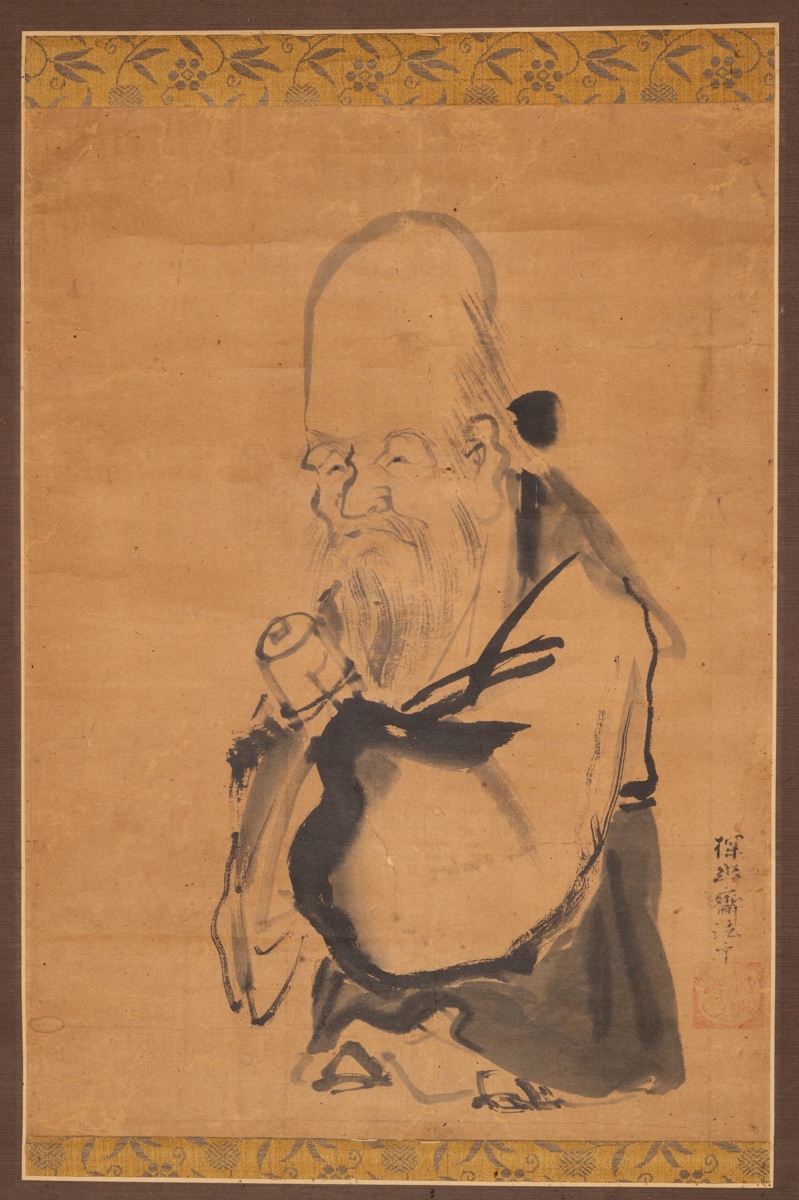
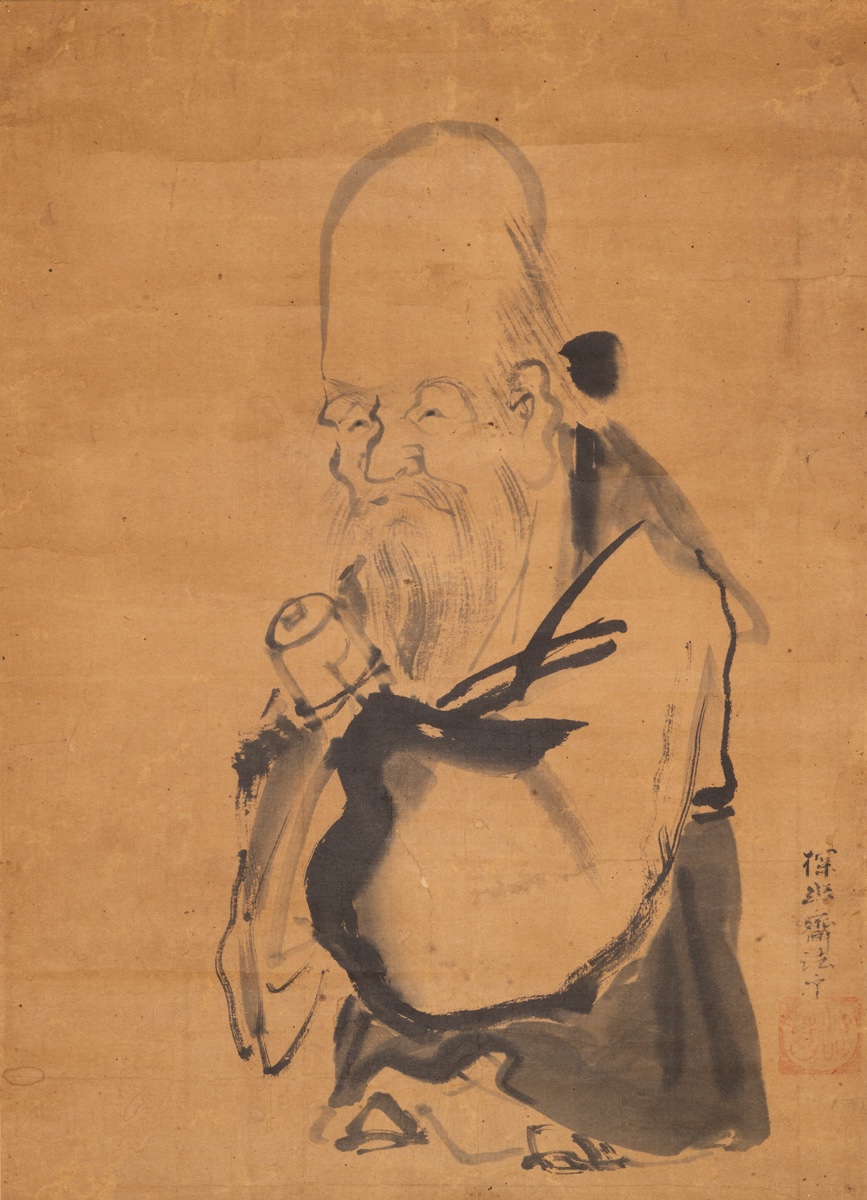
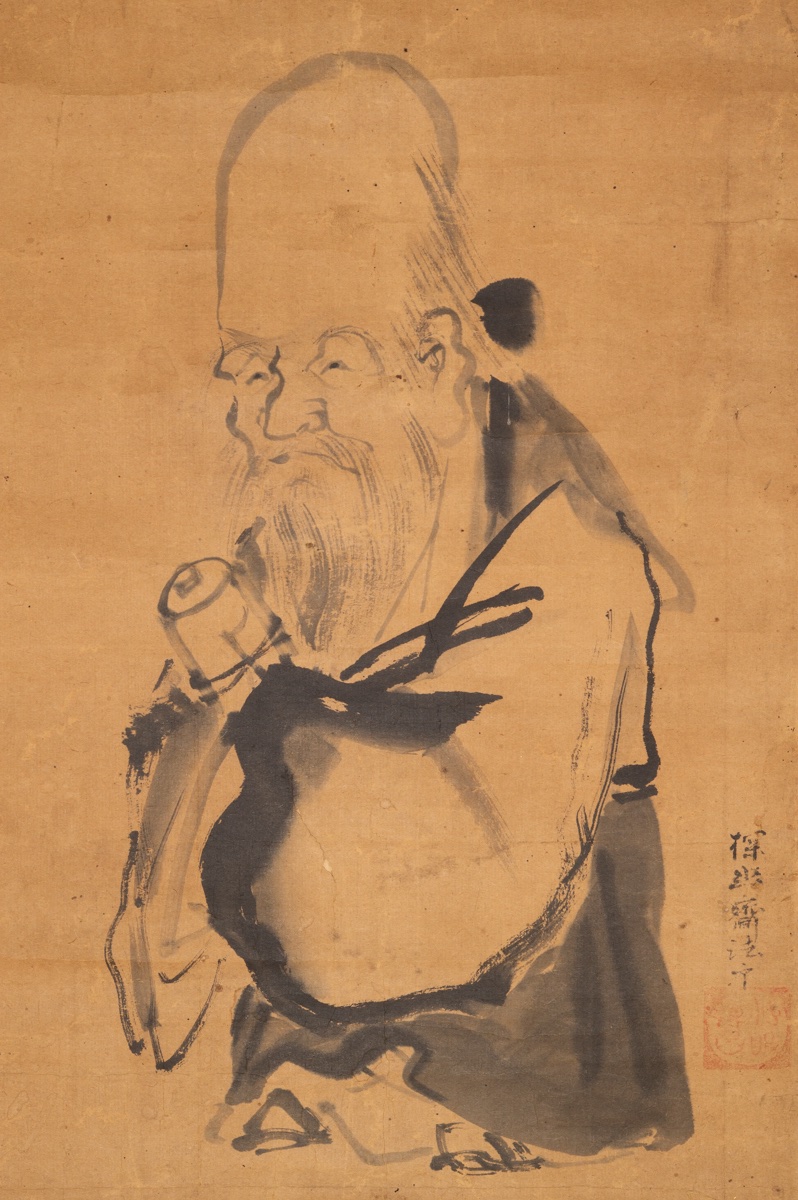
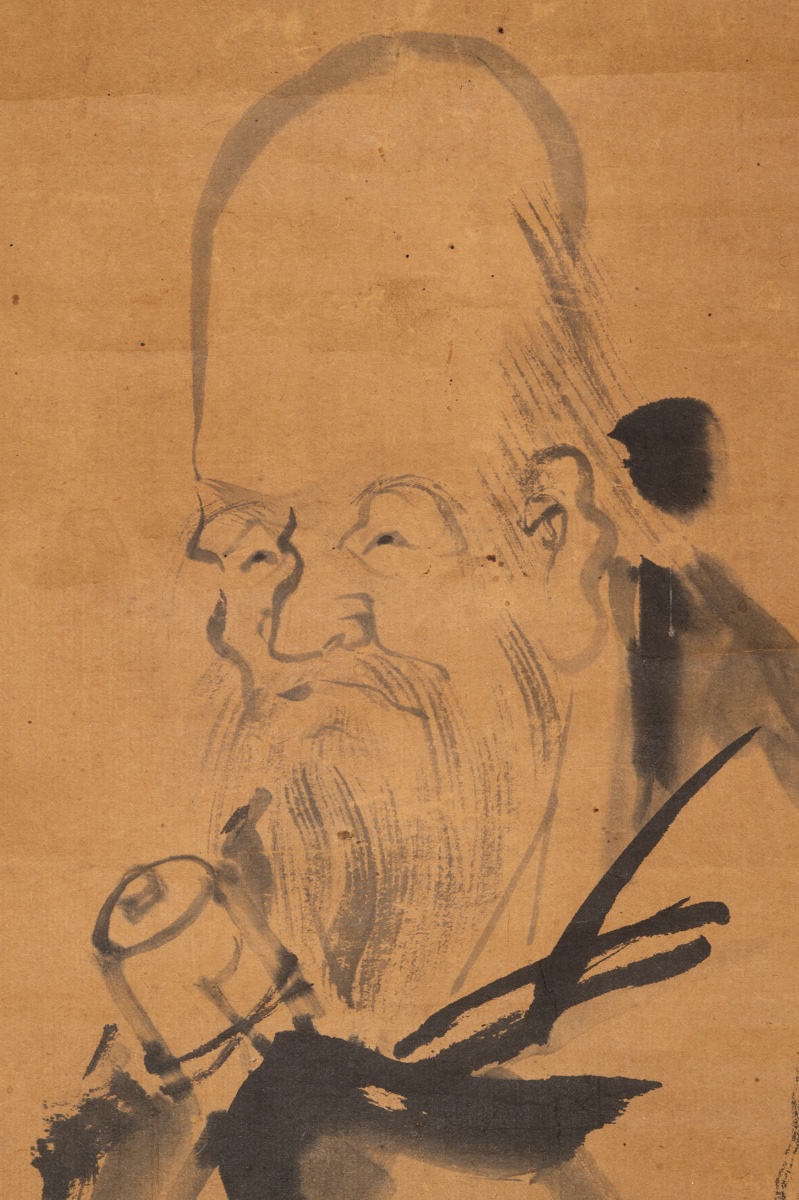
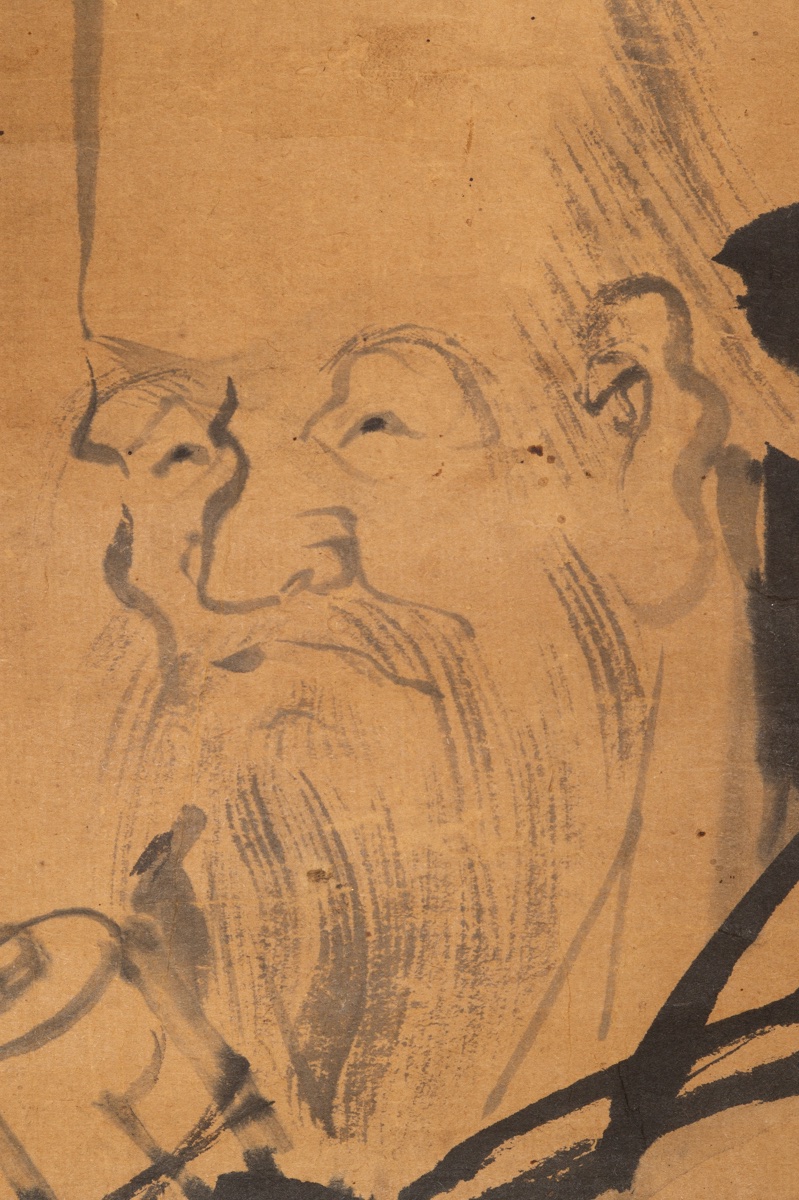
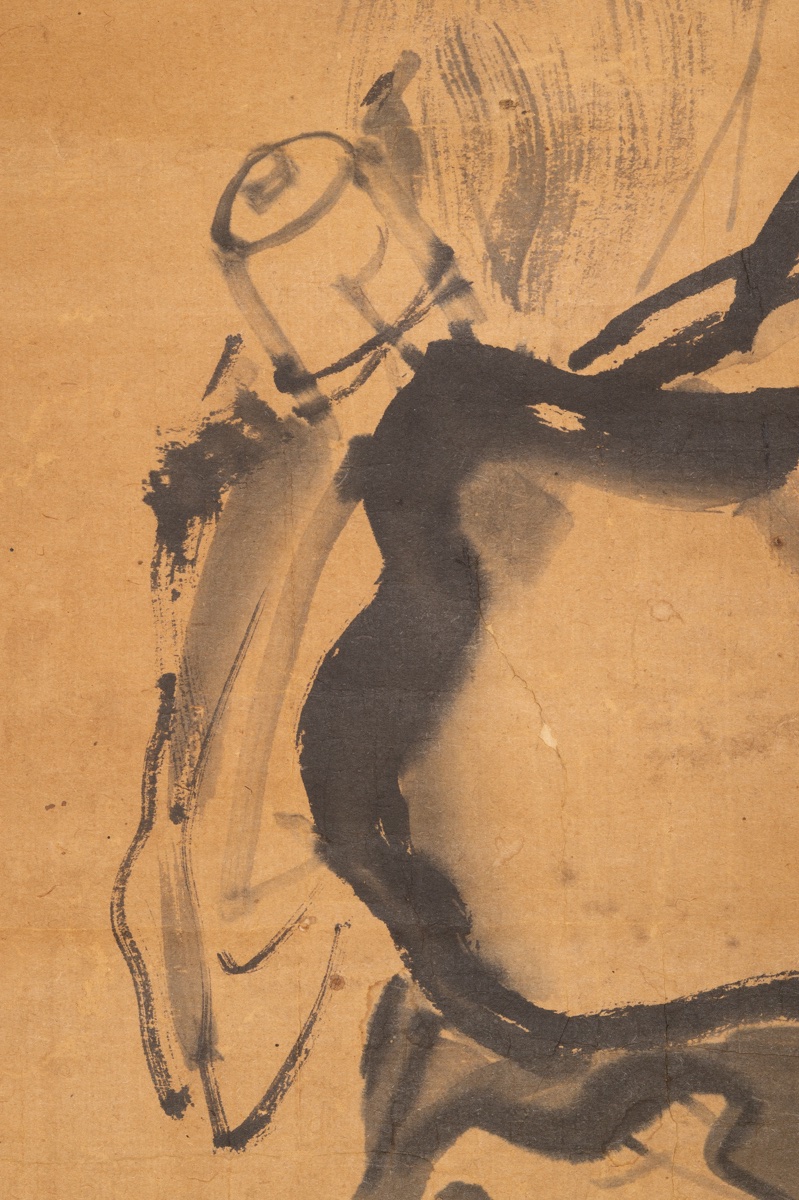
Scroll with a hand-painted ink on paper. Depicting Jurōjin, one of the Seven Lucky Gods (Shichifukujin), a deity of longevity and wisdom. The painting shows an old man with a characteristically elongated skull, an attribute of wisdom. He likely holds a scroll, and his clothing is painted with broad, expressive brushstrokes in the ink style (suiboku-ga). This style is reminiscent of Zen tradition, where the dynamism and spiritual message of the work are more important than the details.
Ink on paper.
Sumi-e, Japan, 17th-18th century. Kanō Tan'yū (1602-1674) or his school.
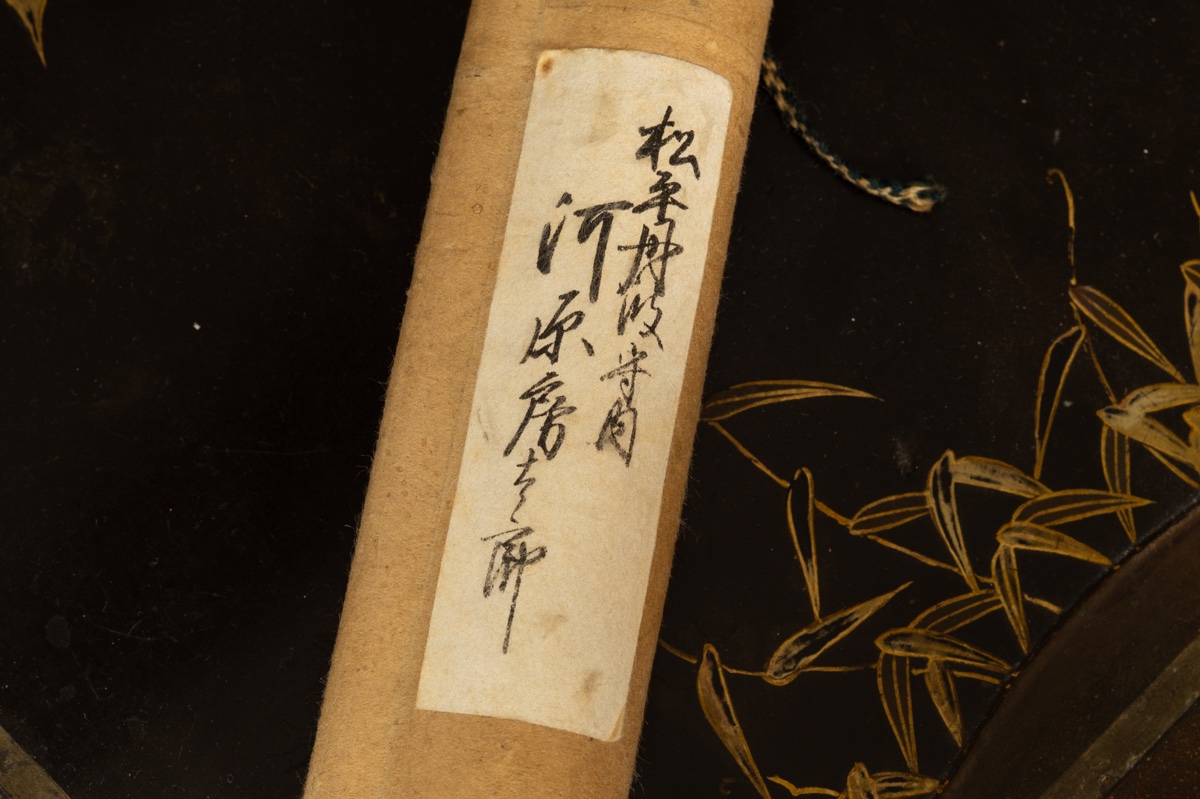
Signature: 探幽齋法印 (Tan'yūsai Hōin). This is a signature indicating Kanō Tan'yū (1602-1674), one of the most celebrated Japanese painters of the Edo period and founder of the Kajibashi branch of the Kanō school. The title "Hōin" (Seal of the Law) was the highest rank bestowed upon artists by the shogunate. The inscription on the rolled scroll label reads: 探幽 (Tan'yū) – Confirmation of the artist's name, 寿老 (Jurō) – Abbreviation of Jurōjin, which confirms the identity of the figure depicted in the painting.
Dimensions: 103 x 37.5 cm. Image: 40 x 29 cm. Total width: 42.5 cm.
Relatively good condition, with visible discoloration and paper crease.
Kanō Tan'yū (1602–1674) was the grandson of the legendary Kanō Eitoku. From childhood, he was considered a child prodigy, and at the young age of 15, he became the official painter (goyō eshi) of the Tokugawa shogunate. His main achievement was adapting the Kanō school style to the new era of peace under the shoguns. He moved away from his grandfather's aggressive and monumental style in favor of more subtle, transparent, and "breathing" compositions (with white patches or empty spaces).
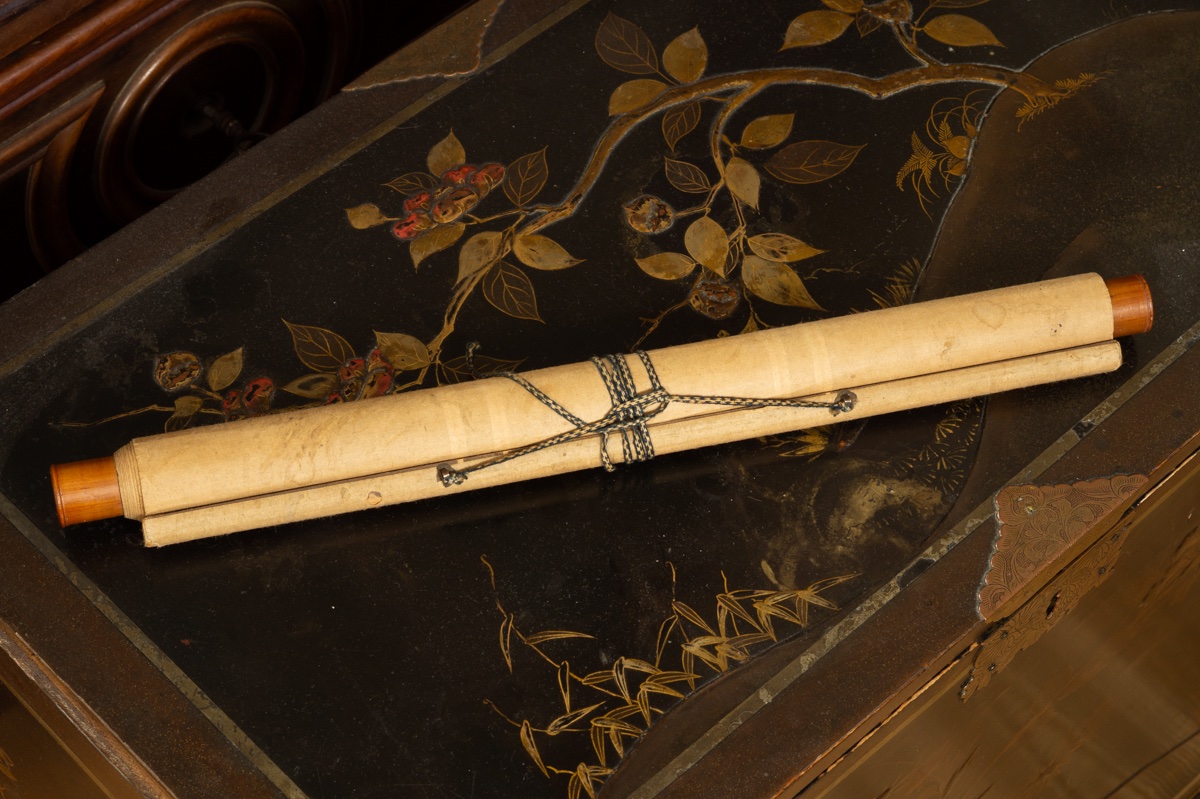
Kakemono (Japanese: 掛け物 kake-mono – "hanging object"; also: 掛軸 kakejiku – "hanging scroll") – a Japanese painting on paper or silk, usually glued to a silk backing, intended to be hung on the wall. The top and bottom edges of the kakemono are attached to wooden bars that facilitate rolling, with the bottom bar (Japanese: ikugi 軸木) also equipped with projecting handles (Japanese: jiku). Kakemono scrolls first appeared in Japan during the Nara period (710-794). In traditional Japanese homes, they are hung in a niche called a tokonoma.
Examples of works by Kanō Tan'yū:
https://www.christies.com/en/lot/lot-5416327
https://www.christies.com/en/lot/lot-5538567
https://www.metmuseum.org/art/collection/search/49098
Free shipping within the European Union! I send packages via insured courier (DPD or DHL). All items are very carefully packaged. Payment by international bank transfer. I will provide a certificate of authenticity upon request.
Ink on paper.
Sumi-e, Japan, 17th-18th century. Kanō Tan'yū (1602-1674) or his school.
Signature: 探幽齋法印 (Tan'yūsai Hōin). This is a signature indicating Kanō Tan'yū (1602-1674), one of the most celebrated Japanese painters of the Edo period and founder of the Kajibashi branch of the Kanō school. The title "Hōin" (Seal of the Law) was the highest rank bestowed upon artists by the shogunate. The inscription on the rolled scroll label reads: 探幽 (Tan'yū) – Confirmation of the artist's name, 寿老 (Jurō) – Abbreviation of Jurōjin, which confirms the identity of the figure depicted in the painting.
Dimensions: 103 x 37.5 cm. Image: 40 x 29 cm. Total width: 42.5 cm.
Relatively good condition, with visible discoloration and paper crease.
Kanō Tan'yū (1602–1674) was the grandson of the legendary Kanō Eitoku. From childhood, he was considered a child prodigy, and at the young age of 15, he became the official painter (goyō eshi) of the Tokugawa shogunate. His main achievement was adapting the Kanō school style to the new era of peace under the shoguns. He moved away from his grandfather's aggressive and monumental style in favor of more subtle, transparent, and "breathing" compositions (with white patches or empty spaces).
Kakemono (Japanese: 掛け物 kake-mono – "hanging object"; also: 掛軸 kakejiku – "hanging scroll") – a Japanese painting on paper or silk, usually glued to a silk backing, intended to be hung on the wall. The top and bottom edges of the kakemono are attached to wooden bars that facilitate rolling, with the bottom bar (Japanese: ikugi 軸木) also equipped with projecting handles (Japanese: jiku). Kakemono scrolls first appeared in Japan during the Nara period (710-794). In traditional Japanese homes, they are hung in a niche called a tokonoma.
Examples of works by Kanō Tan'yū:
https://www.christies.com/en/lot/lot-5416327
https://www.christies.com/en/lot/lot-5538567
https://www.metmuseum.org/art/collection/search/49098
Free shipping within the European Union! I send packages via insured courier (DPD or DHL). All items are very carefully packaged. Payment by international bank transfer. I will provide a certificate of authenticity upon request.
850 €
Period: 17th century
Style: Asian art
Condition: Good condition
Material: Paper
Length: 103
Width: 37,5
Reference (ID): 1718794
Availability: In stock
Print