THIS OBJECT WAS SOLD
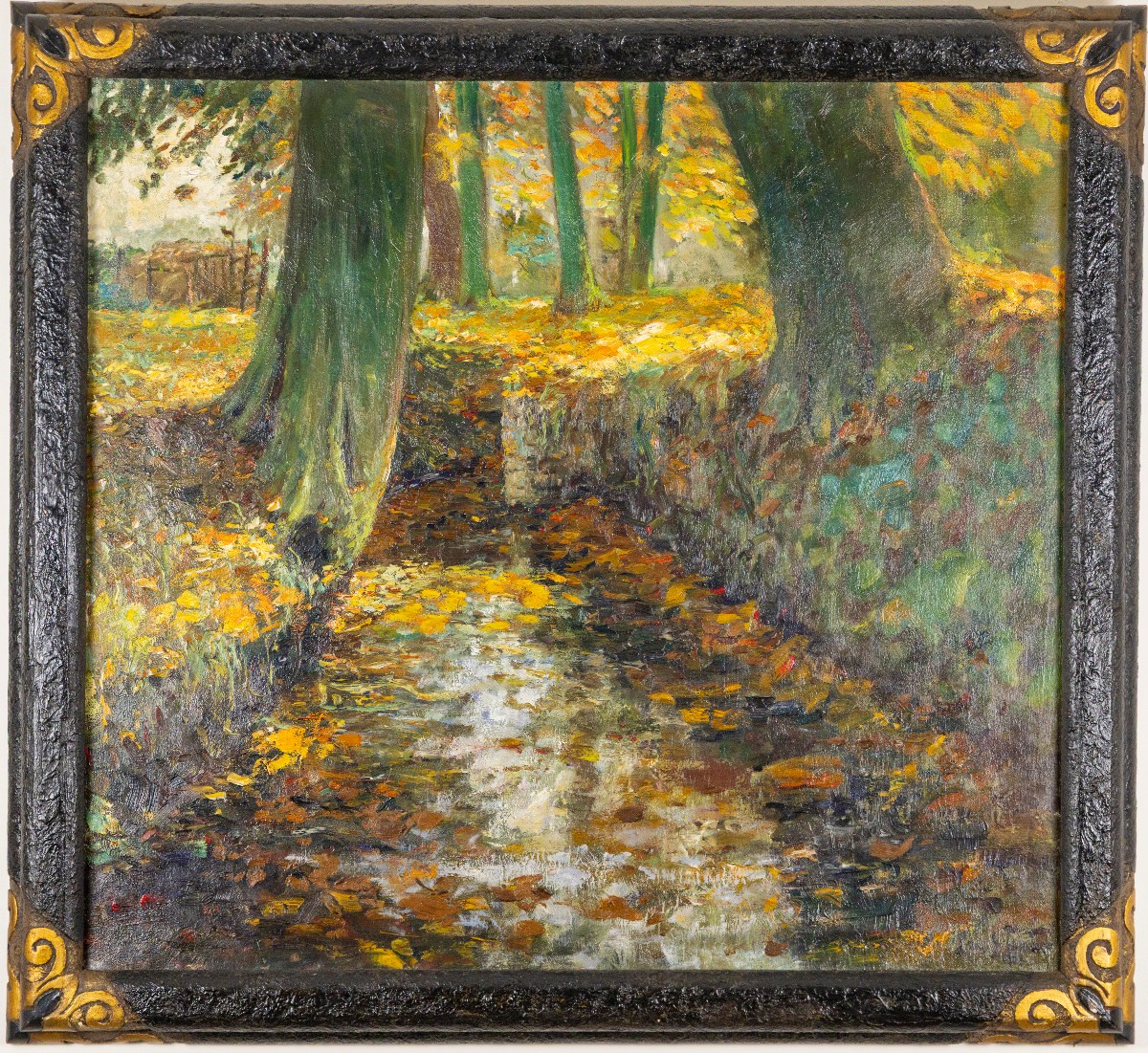
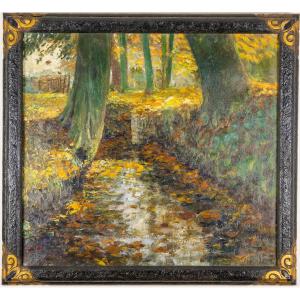
Cambier Louis-gustave (1874 - 1949) Oil On Canvas "the Sonian Forest". Signed Lower Right
Louis-Gustave Cambier was a Belgian painter and sculptor active primarily in the first half of the 20th century, associated with the Post-Impressionist and Symbolist movements.
Louis-Gustave Cambier was born in Schaerbeek in 1874 and died in Ixelles in 1949. He trained in Brussels and became part of the Belgian artistic scene of the late 19th century, marked by late Impressionism and Symbolist explorations. Cambier painted portraits, landscapes, still lifes, and genre scenes, but was also a sculptor, draftsman, and engraver.
His pictorial work demonstrates a synthesis between the Impressionist legacy (the handling of light and atmosphere) and a more structured stylization of forms, sometimes bordering on a restrained Symbolism. The landscapes and rural scenes of the late 19th century demonstrate an interest in luminous and structured nature, rendered with a firm yet sensitive touch.
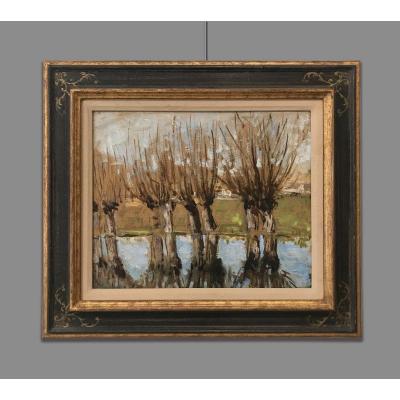
Our work depicts a woodland scene crossed by a stream, but this familiar theme is captured through a highly original low-angle perspective. The brushwork is dense, both dark and shimmering. The splendid black and gold decorated frame enhances this beautiful work.This is probably a view of the Soignes Forest.
Works by Cambier are held in Belgian institutions, notably the Royal Museums of Fine Arts of Belgium. A monographic study entitled "Louis-Gustave Cambier, Impressionist Adventurer" provides further insight into his life, style, and role in Belgian painting of his time.
Louis-Gustave Cambier was born in Schaerbeek in 1874 and died in Ixelles in 1949. He trained in Brussels and became part of the Belgian artistic scene of the late 19th century, marked by late Impressionism and Symbolist explorations. Cambier painted portraits, landscapes, still lifes, and genre scenes, but was also a sculptor, draftsman, and engraver.
His pictorial work demonstrates a synthesis between the Impressionist legacy (the handling of light and atmosphere) and a more structured stylization of forms, sometimes bordering on a restrained Symbolism. The landscapes and rural scenes of the late 19th century demonstrate an interest in luminous and structured nature, rendered with a firm yet sensitive touch.
Our work depicts a woodland scene crossed by a stream, but this familiar theme is captured through a highly original low-angle perspective. The brushwork is dense, both dark and shimmering. The splendid black and gold decorated frame enhances this beautiful work.This is probably a view of the Soignes Forest.
Works by Cambier are held in Belgian institutions, notably the Royal Museums of Fine Arts of Belgium. A monographic study entitled "Louis-Gustave Cambier, Impressionist Adventurer" provides further insight into his life, style, and role in Belgian painting of his time.
Explore similar pieces and discover your ideal find:
Landscapes