




Bronze Centerpiece "en Agrois Bios" Signed "robert F." 19th Century
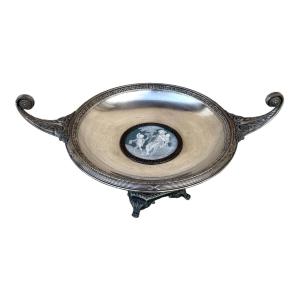
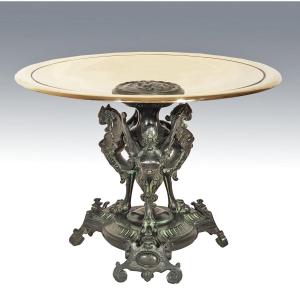
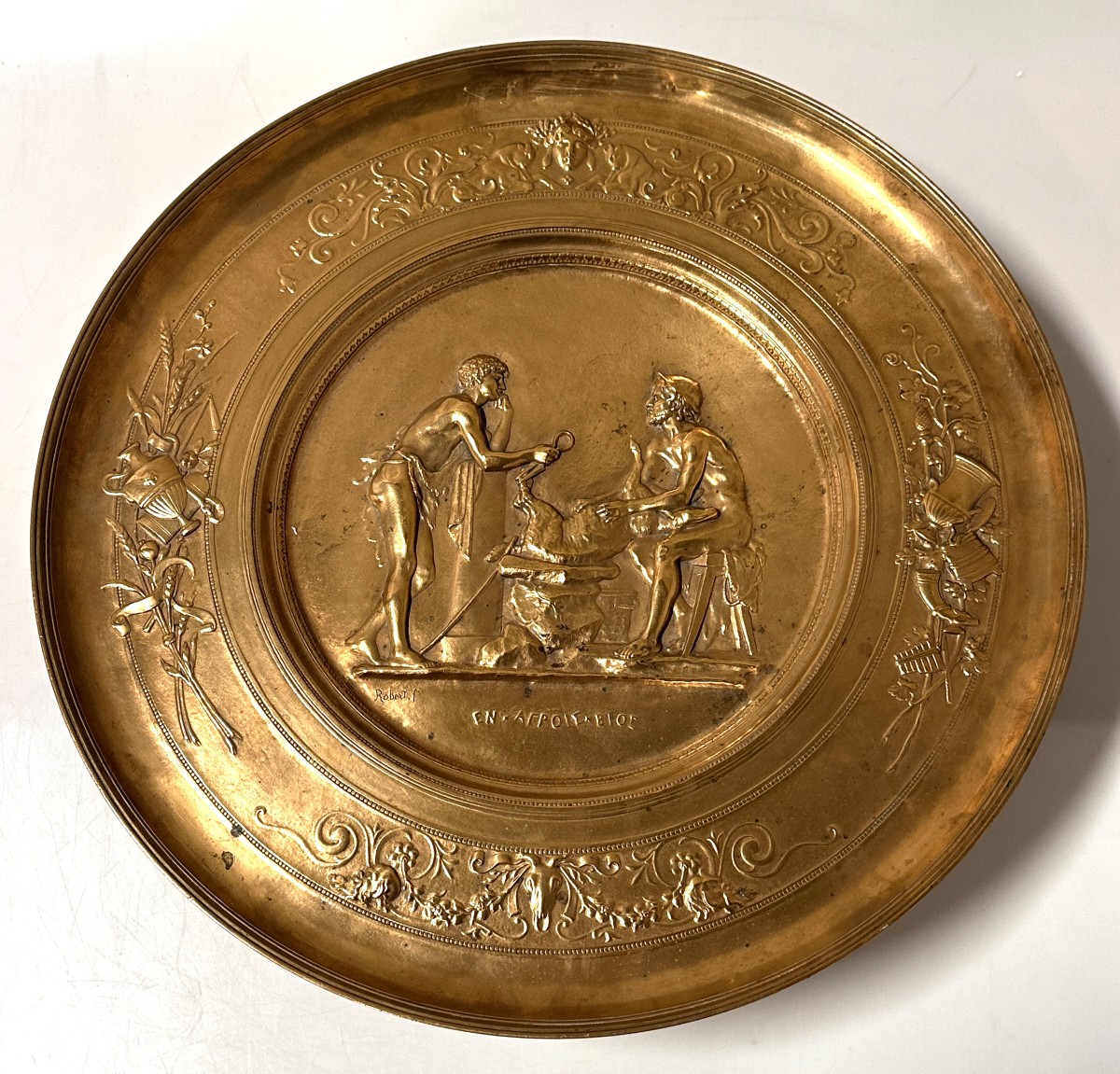
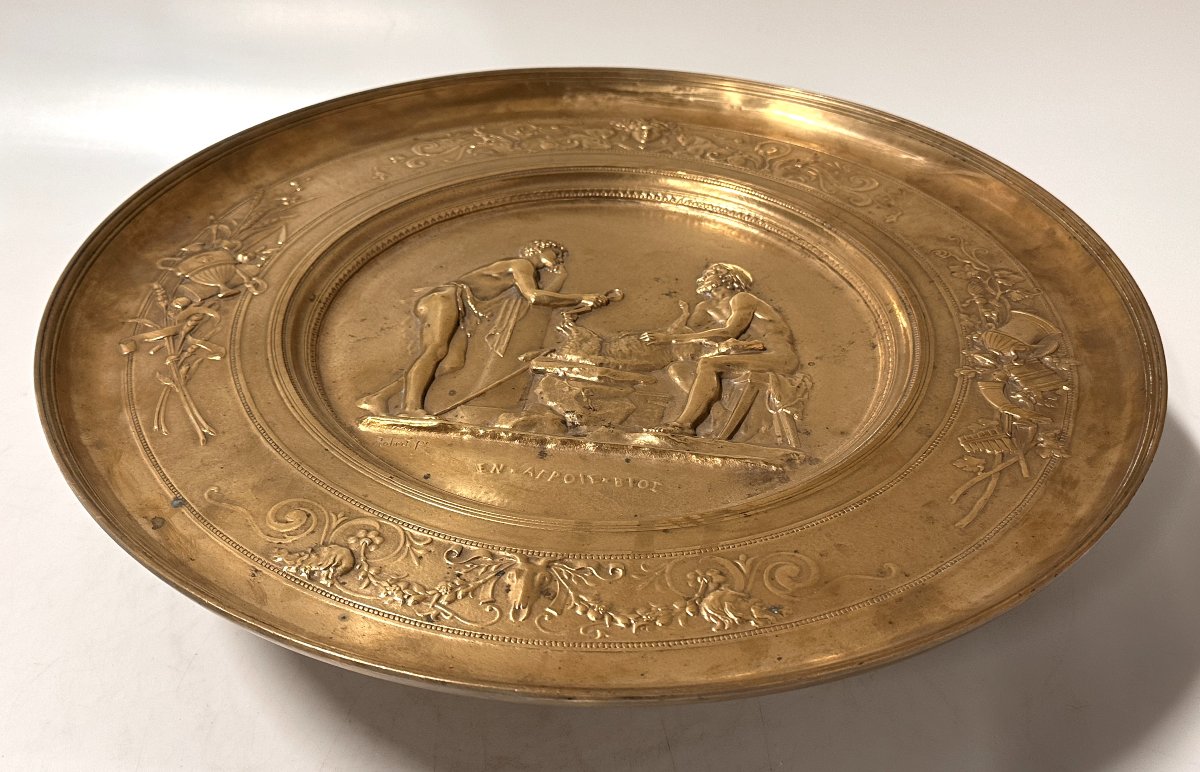
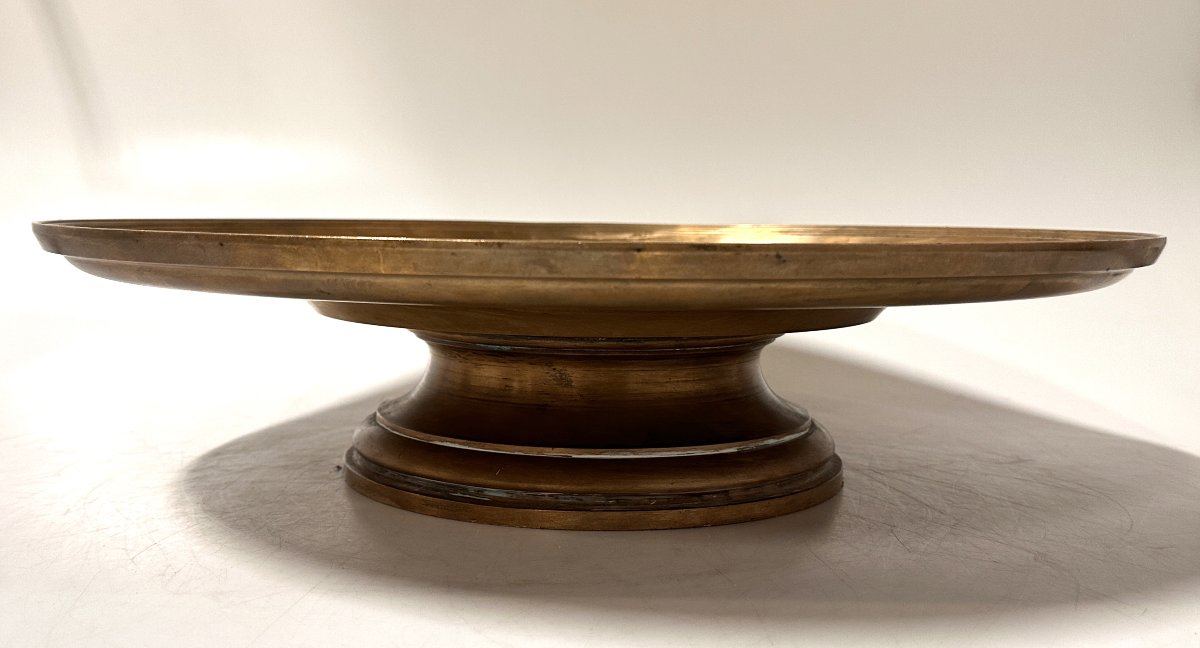
A large bronze centrepiece (tazza), conceived in the Neo-Greek / Neoclassical idiom and most plausibly produced in France during the 19th century (Napoleon III / second half of the century). Its wide dish on a stepped, moulded foot and its “antique” ornamental language correspond to a well-documented decorative-arts output inspired by Greco-Roman models.
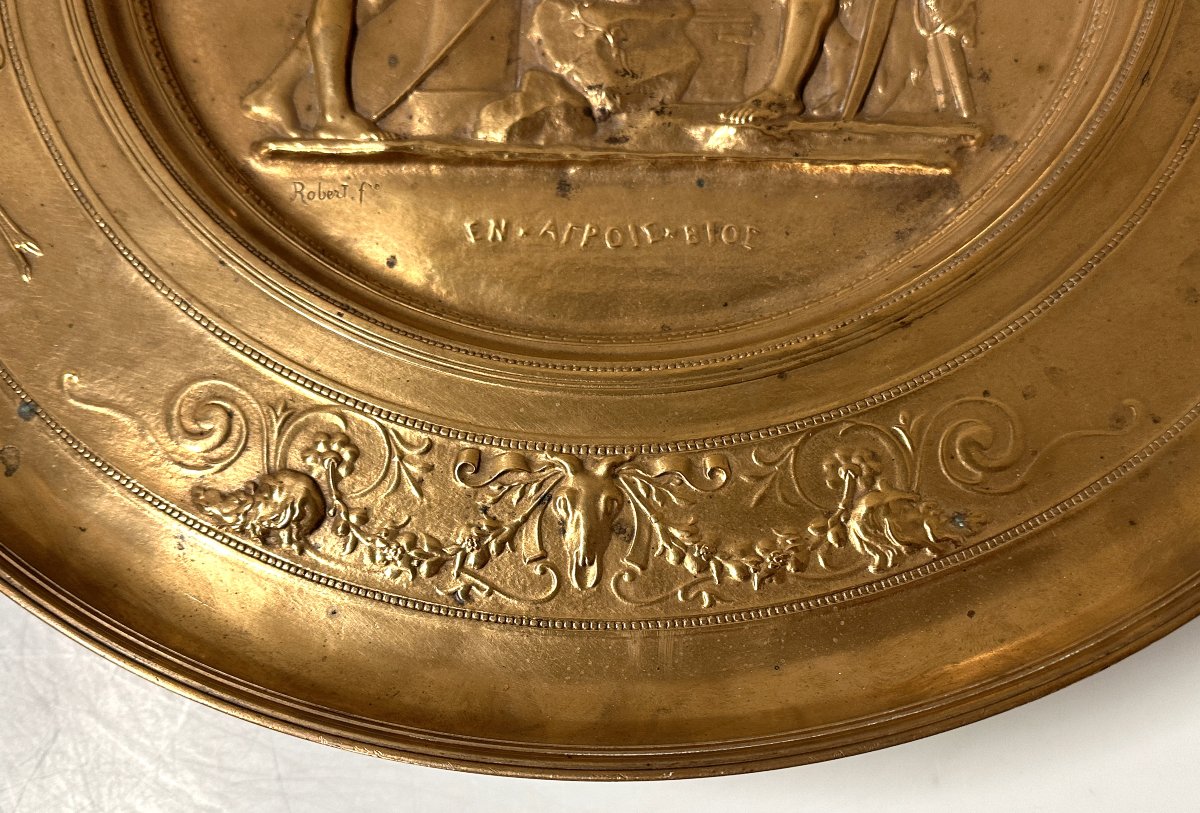
Material and workmanshipCopper alloy (bronze) with a gilt-toned patina. The decoration combines relief modelling with chased finishing, visible in the treatment of anatomy, hair, drapery and small implements. The construction follows the classic tazza format: broad rim, concentric step mouldings, and a turned pedestal foot. The underside shows natural oxidation consistent with age.
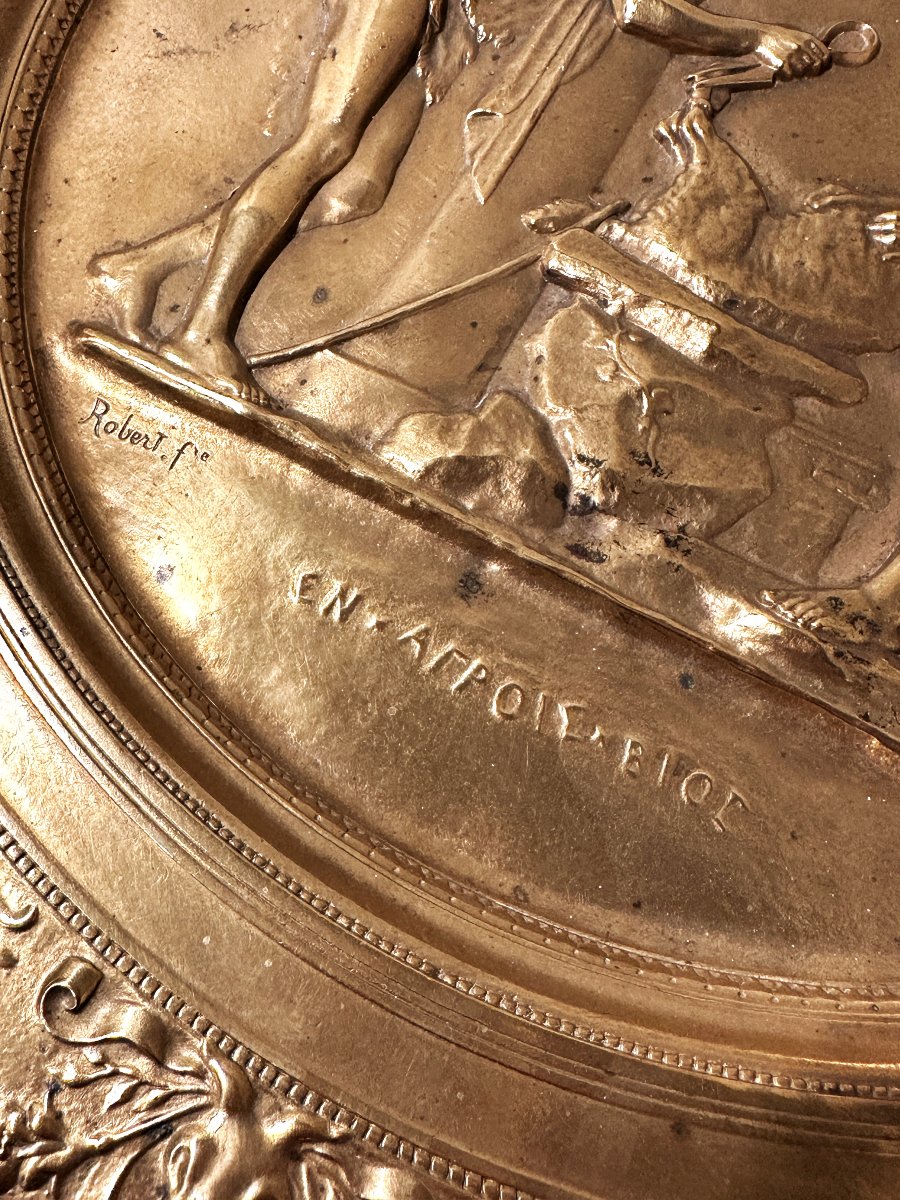
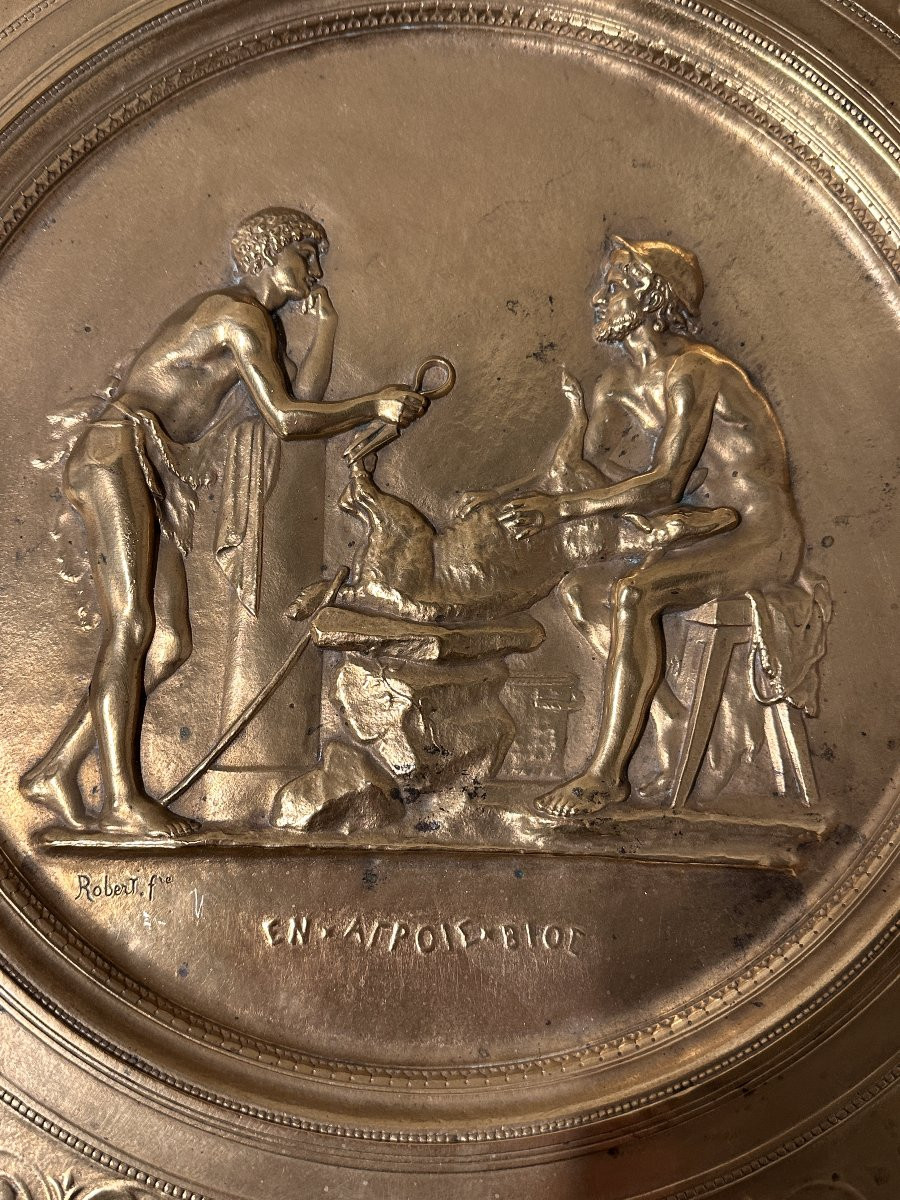
Central scene and inscriptionThe central bas-relief presents an “antique” pastoral episode: a standing, partly draped youth addresses a seated male figure, with an animal arranged on a rustic support between them, suggesting a bucolic exchange or offering. The work is signed “Robert f.” (fecit) and bears a Greek title « ΕΝ ΑΓΡΟΙΣ ΒΙΟΣ », transliterated EN AGROIS BIOS, generally understood as “Life in the countryside / Rural life.”
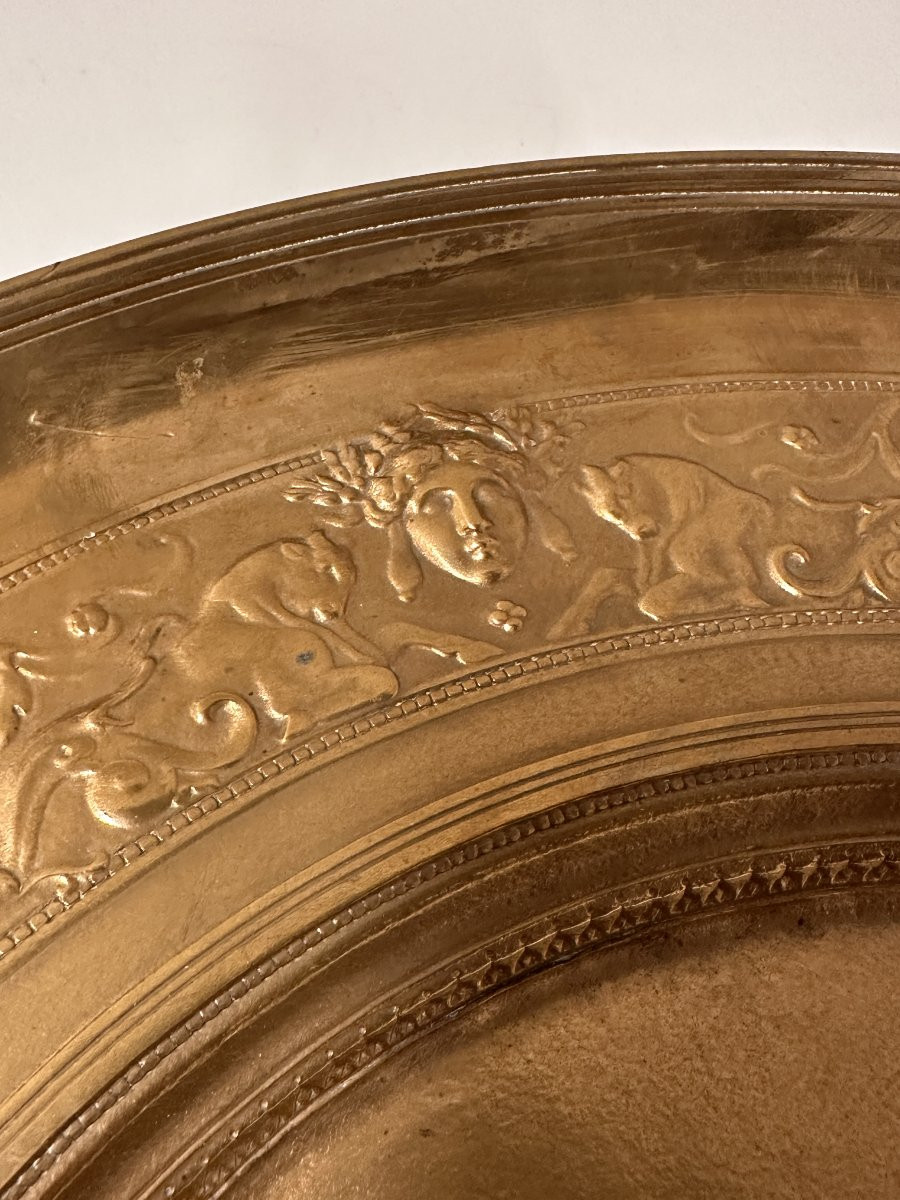
Border ornamentThe rim is enriched with a Neo-Greek decorative programme: scrolling foliage, ribbonwork, beaded borders and trophy motifs (vessels/urns with vegetal attributes), centred by a high-relief mask-like head crowned with leaves. The alternation of plain reserves and chased passages enhances the readability of the central medallion.
Dimensions:
Height - 12.5 cm
Diameter - 51 cm
Period: 19th century
Style: Rome and Antic Greece
Condition: Excellent condition
Material: Bronze
Diameter: 51 cm
Height: 12.5
Reference (ID): 1671854
Availability: In stock