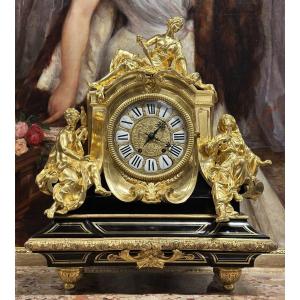


Important Louis XIV Style "parques Clock" After André-charles Boulle
Provenance
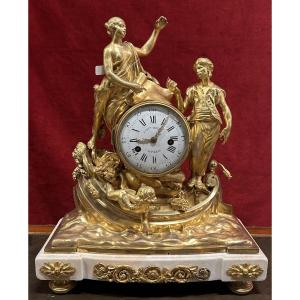
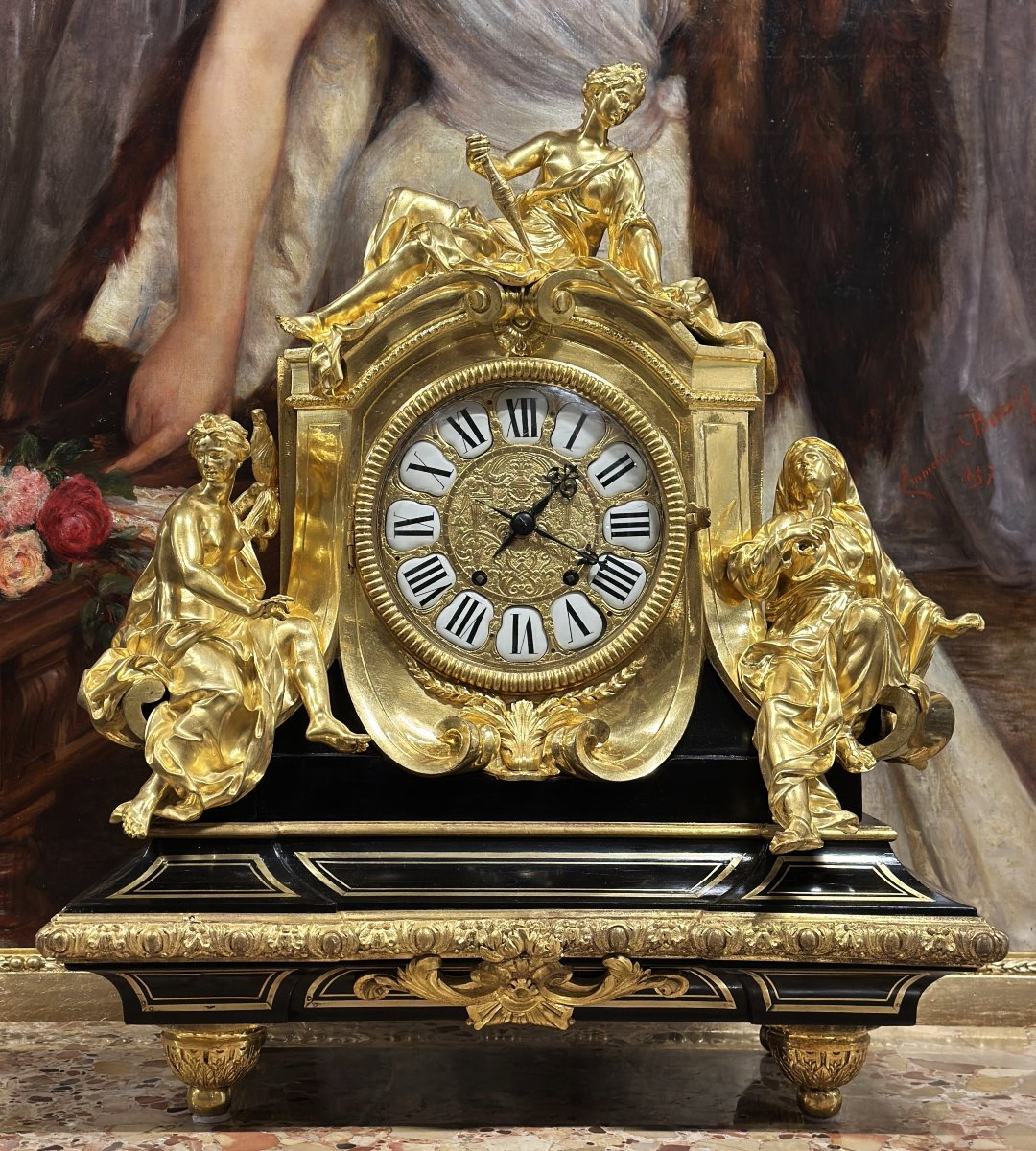
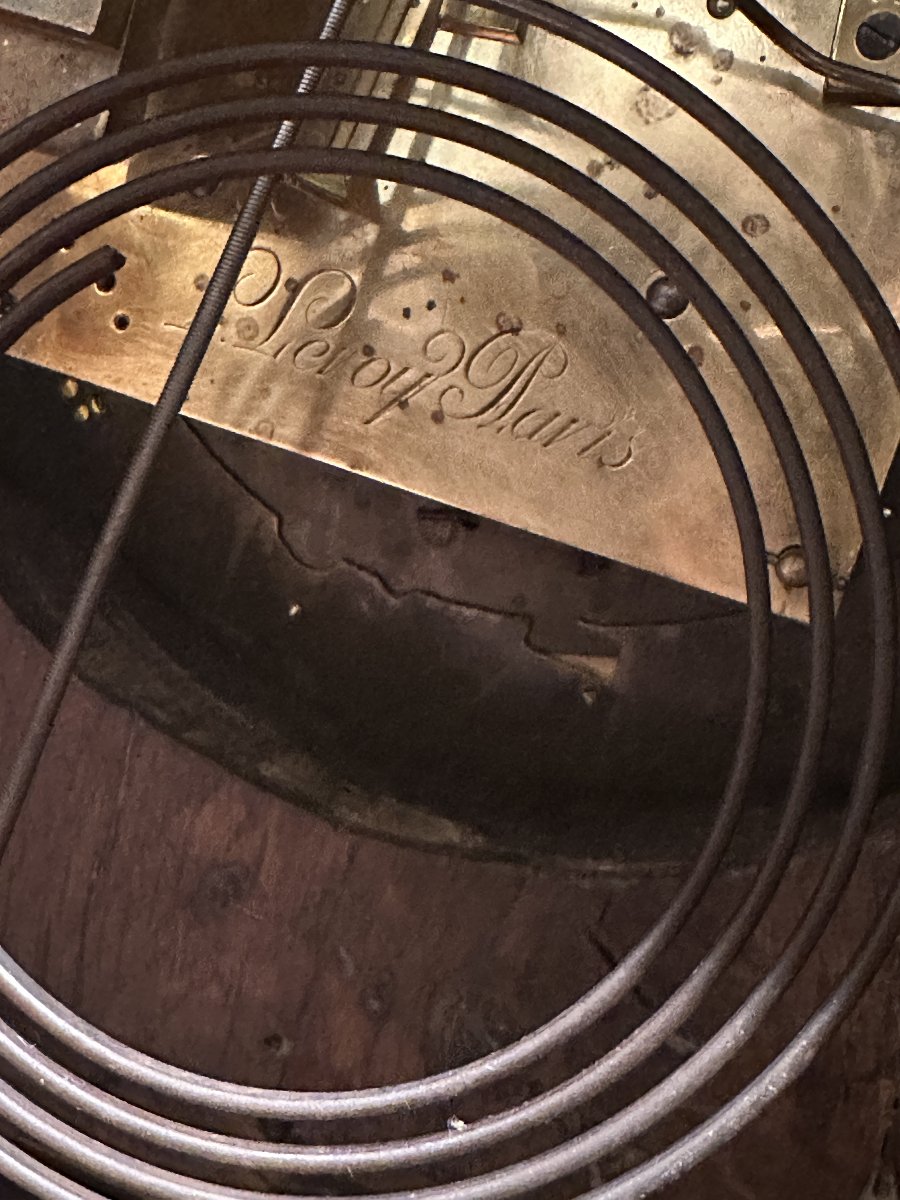
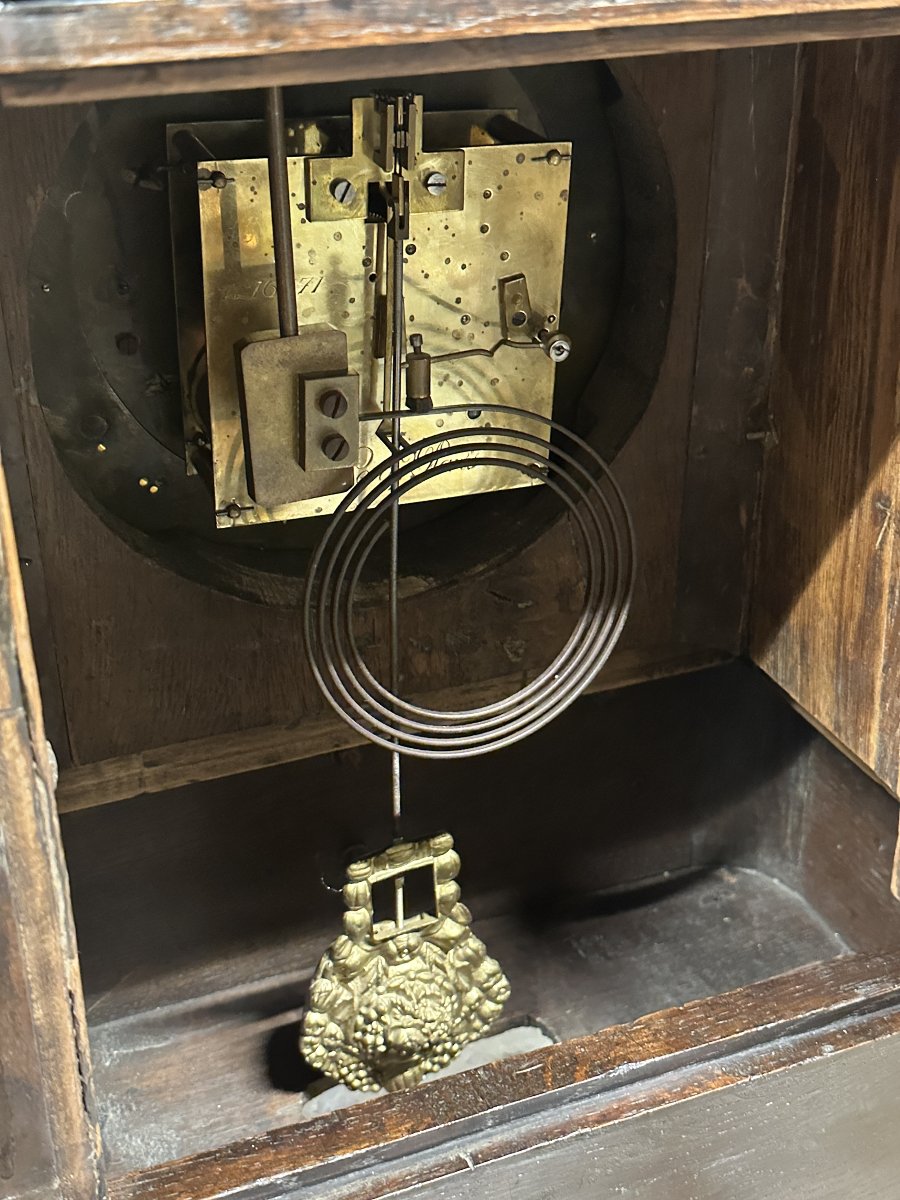
Important Louis XIV style mantel clock, made in the 19th century after the celebrated model known as “aux Parques de M. Coustou”, associated with André-Charles Boulle and the sculptural models of Nicolas Coustou. The original Louis XIV example, circa 1700, attributed to Boulle, belongs to a limited corpus of mythological clocks and is considered among the most ambitious compositions in French decorative horology of the Grand Siècle. A Louis XIV period example, formerly with Galerie Kugel, Paris, was included in Christie’s Paris sale Hubert de Givenchy – Collectionneur: Chefs-d’œuvre / Masterpieces, lot 24, where it sold for €277,200, against an estimate of €120,000–180,000. A comparable 19th-century model was also offered by Sotheby’s in 2025 and, according to the information provided, sold for €35,000. These references place the present clock within the tradition of a historically important and highly recognisable model. The movement of this example is signed L. Leroy Paris and numbered 16771 on the back plate.
Description
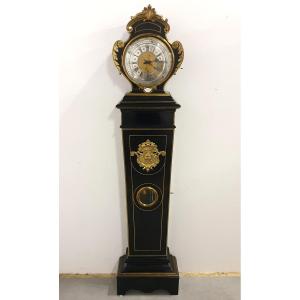
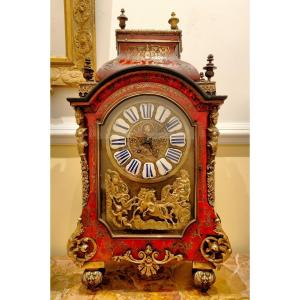
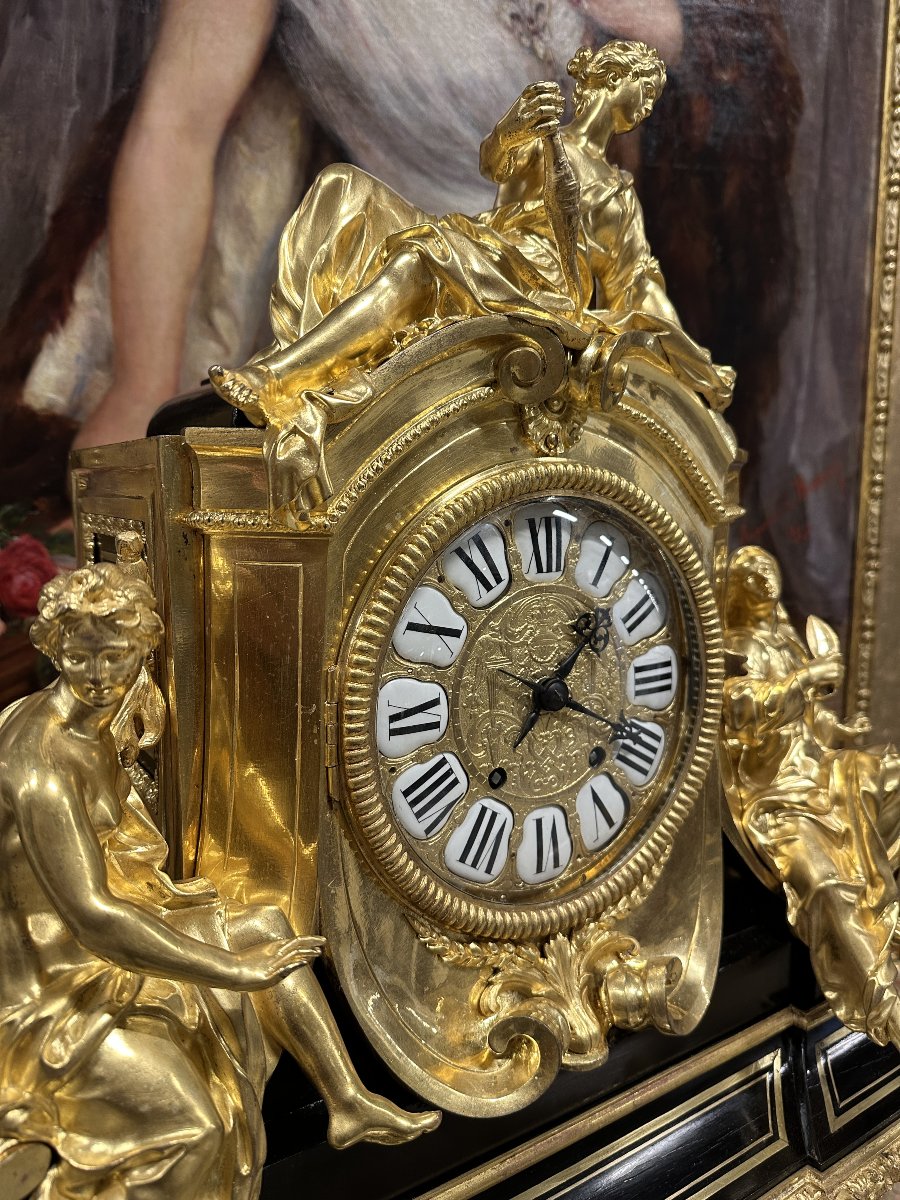
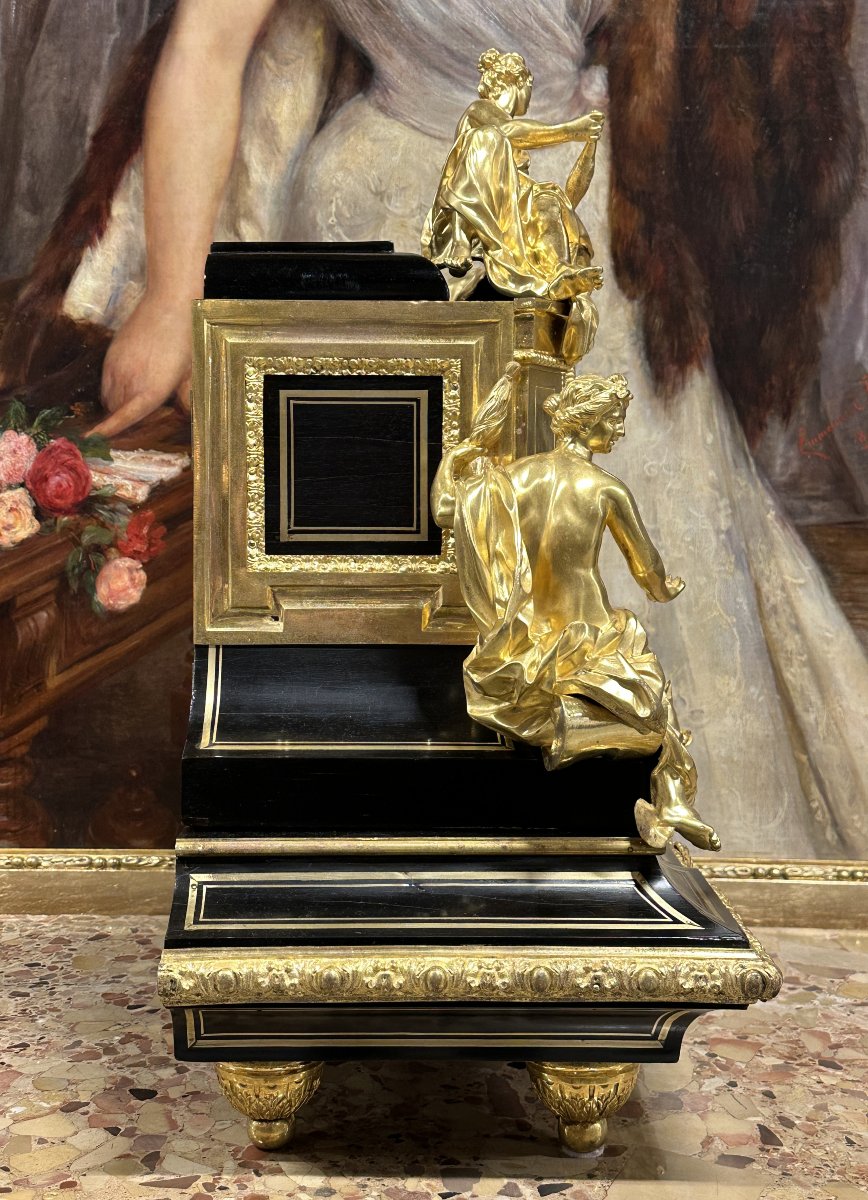
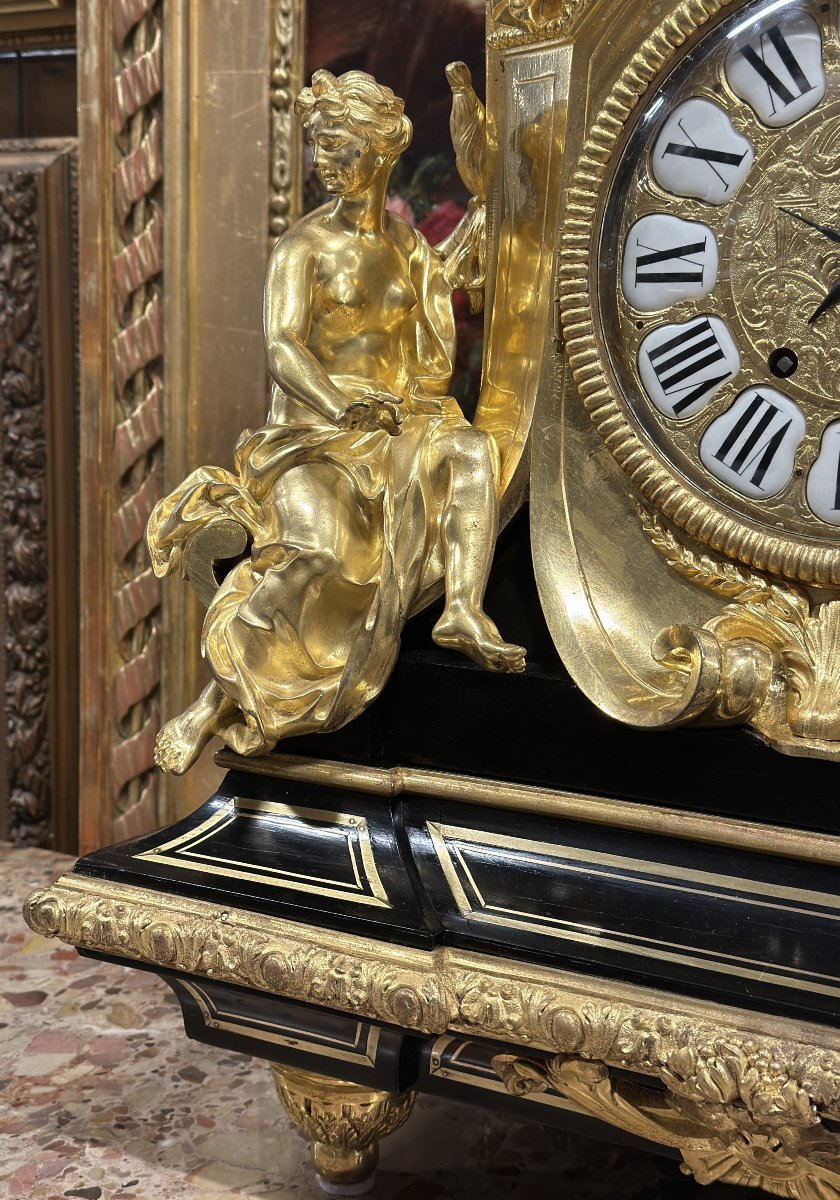
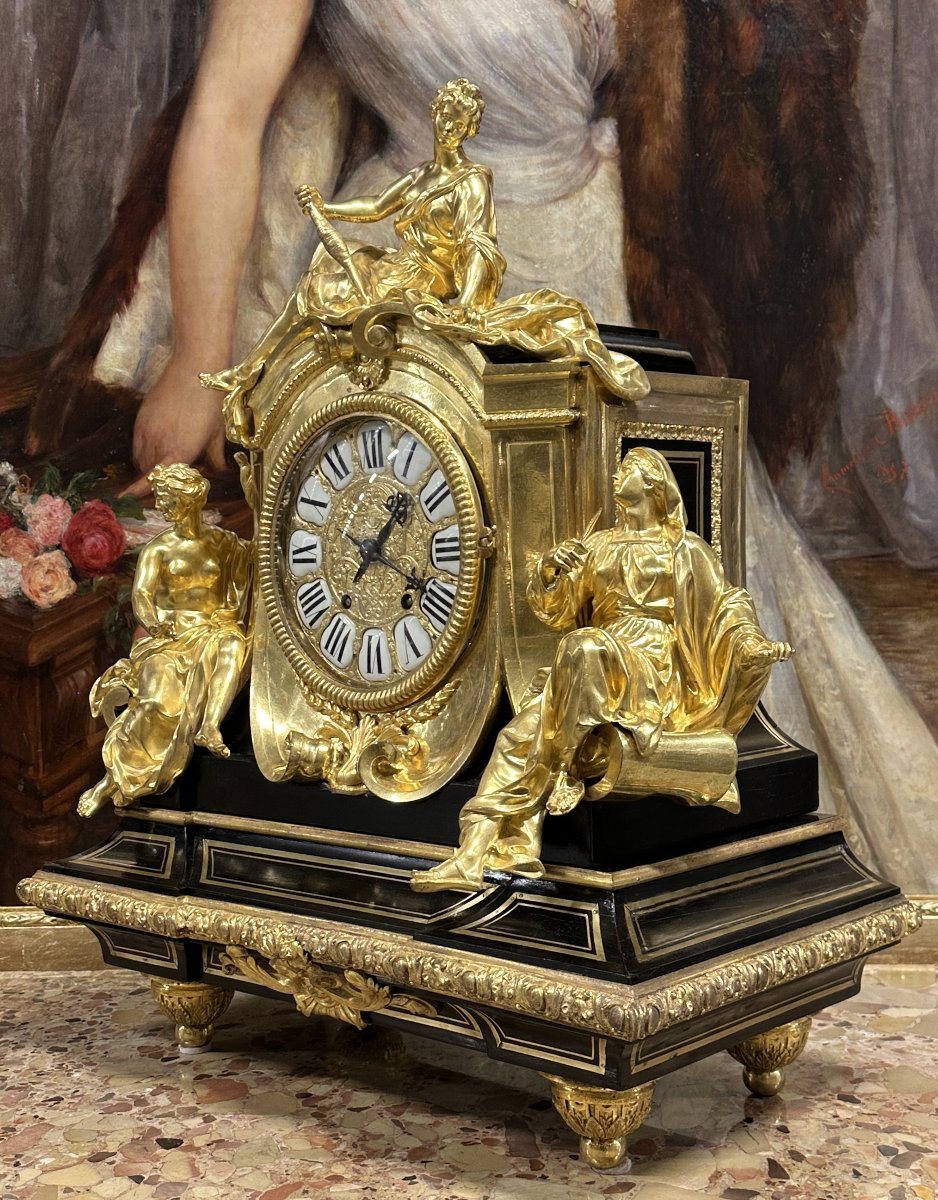
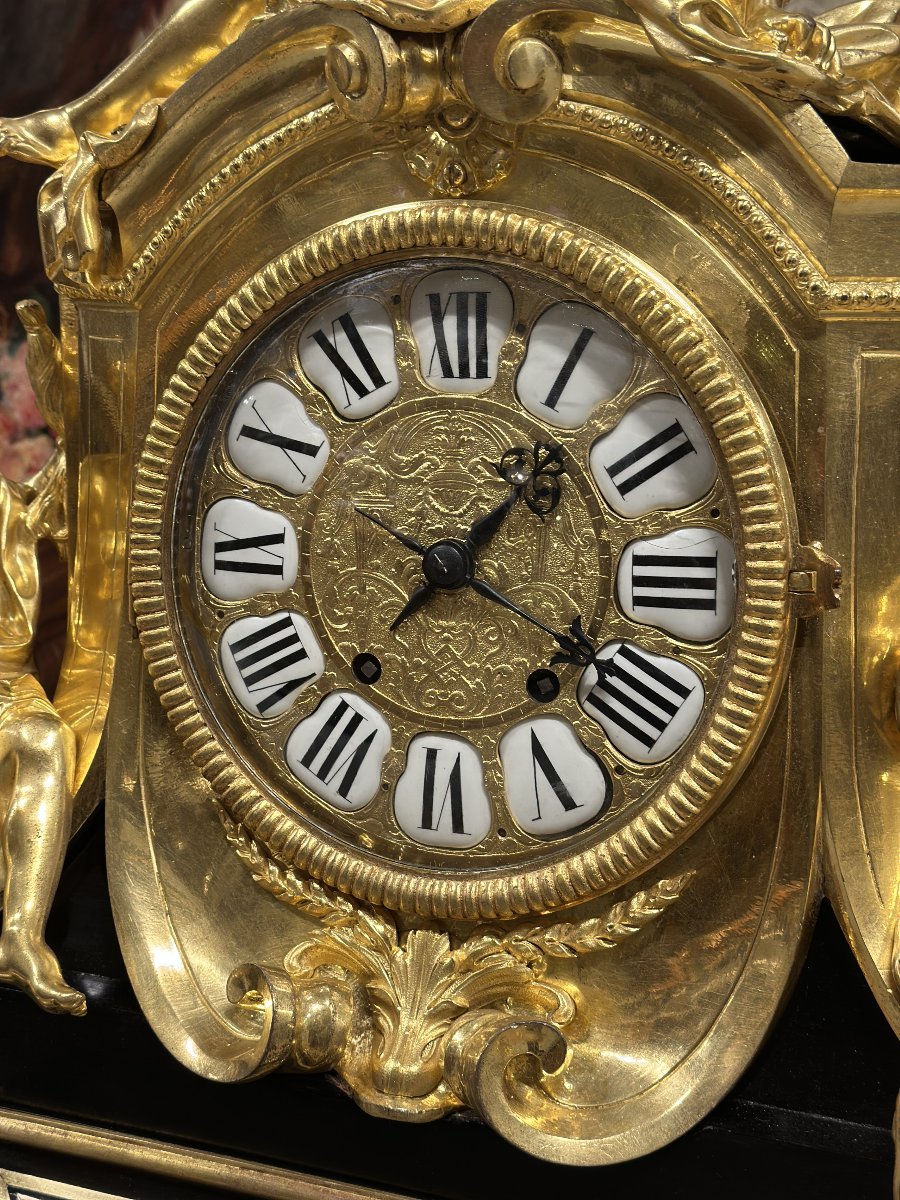
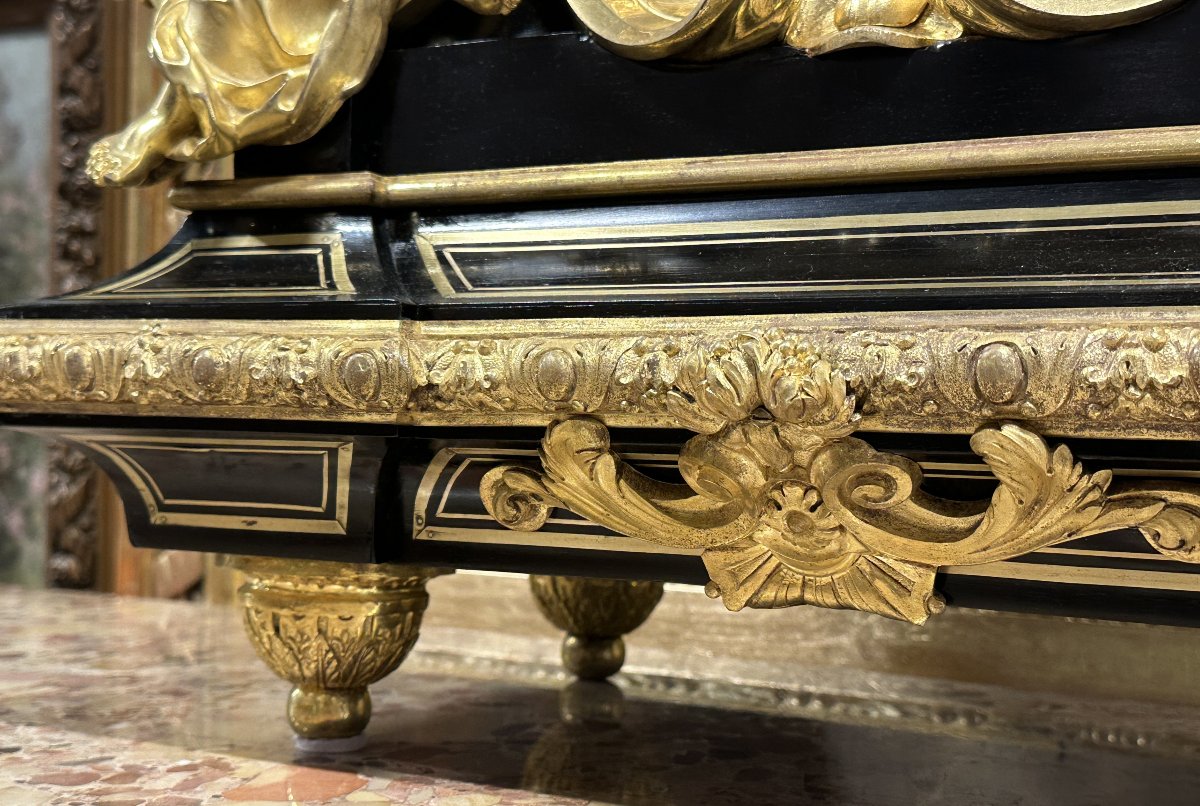
The clock is conceived as a substantial architectural and sculptural object. The case, in ebonised wood or ebony, rests on a broad stepped base decorated with fine light-coloured stringing, framed panels and a richly chased gilt-bronze frieze with scrolls, foliage, floral motifs and acanthus ornament. The façade is centred by a large circular dial framed by a gadrooned and beaded gilt-bronze surround. The hours are indicated in black Roman numerals on white cartouches, arranged around a finely engraved gilt centre with ornamental decoration.
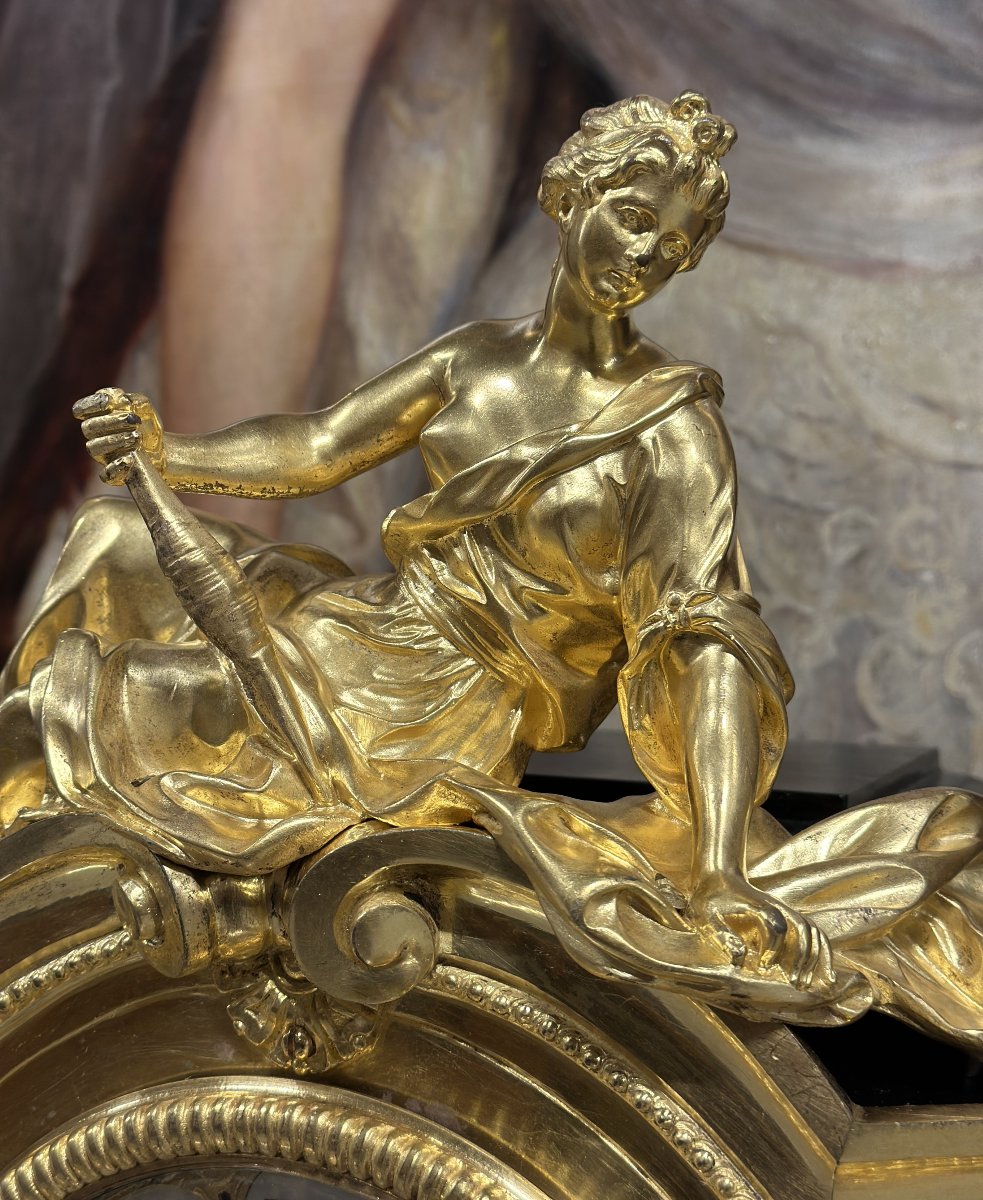
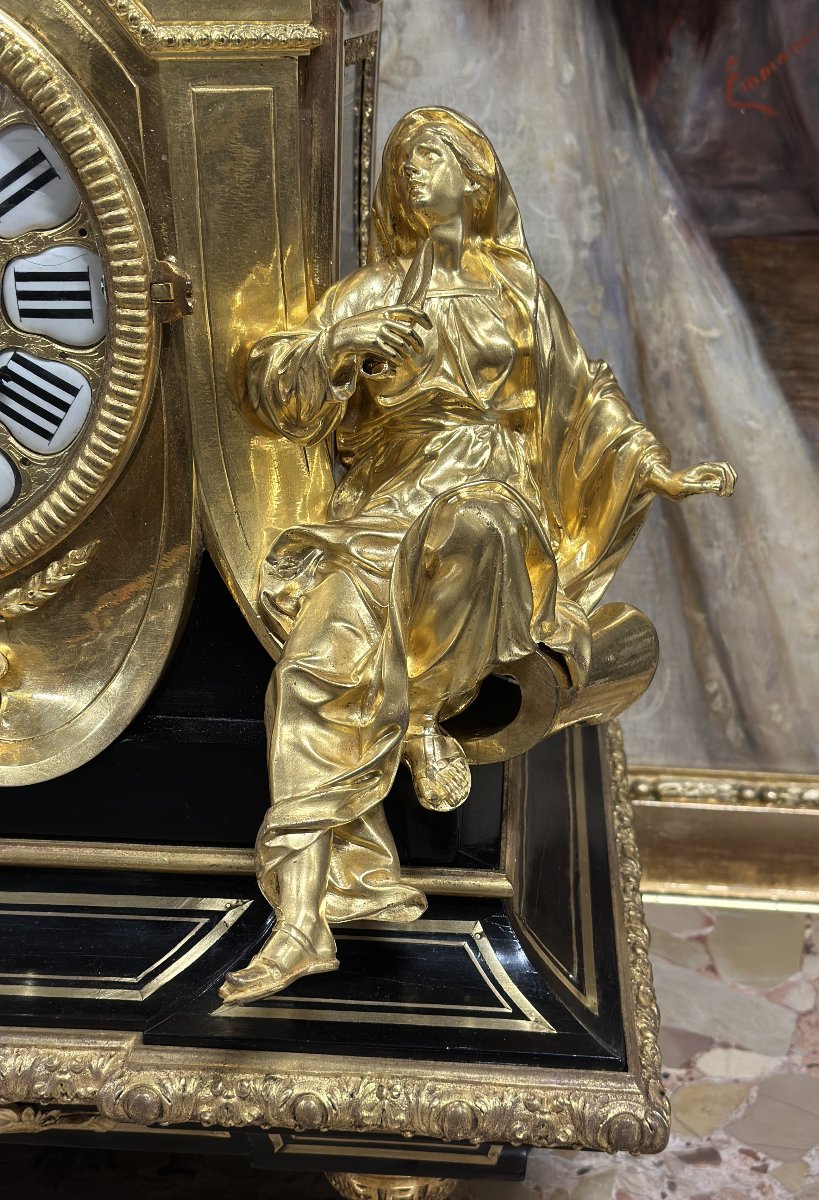
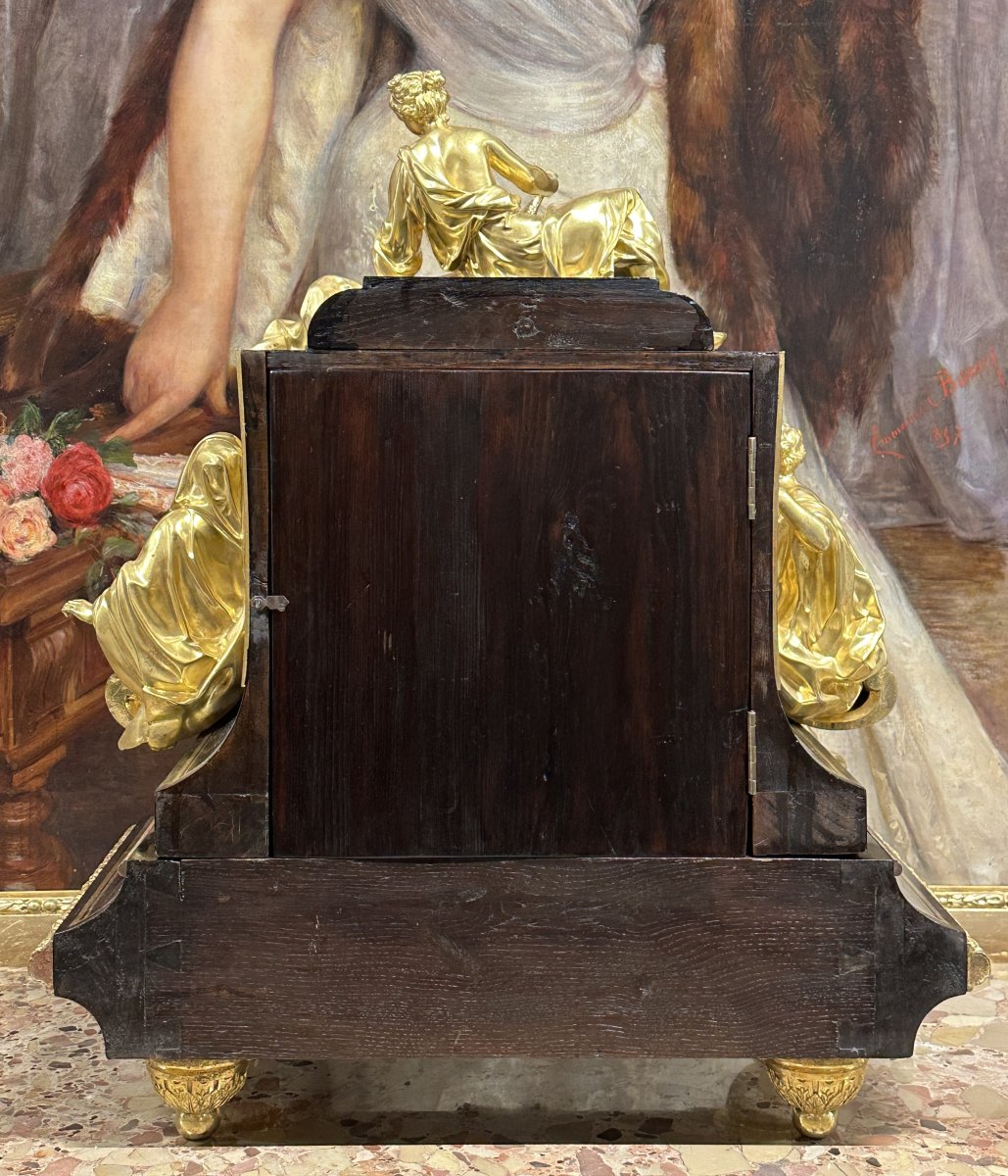
The iconographic programme is devoted to the Three Fates, the ancient goddesses of destiny. To the left, Clotho holds the spindle and unwinds the thread of life. At the top, Lachesis crowns the composition and measures the thread. To the right, Atropos, shown veiled, holds the scissors and prepares to cut it. This subject is particularly appropriate for a clock, as it directly connects the measurement of time with the duration of human life. The gilt-bronze figures are fully modelled in the round and display fine quality casting, carefully worked drapery, expressive attitudes and rich chasing.
Technique and materials
Case in ebonised wood or ebony, with decorative stringing, moulded panels and substantial chased and gilt-bronze mounts. Allegorical figures in gilt bronze, white cartouche dial, black Roman numerals, blackened metal hands and engraved gilt centre. Mechanical pendulum movement, visible from the back, signed L. Leroy Paris and numbered 16771.
Dating
19th century, in the French historicist taste, after a Louis XIV model circa 1700 attributed to André-Charles Boulle. The architectural structure, the contrast between the black case and gilt bronze, the richness of the casting and the mythological subject connected with time are consistent with important 19th-century French productions inspired by royal and aristocratic models from the reign of Louis XIV.
Condition
Good overall condition, with normal age-related wear, small marks, local oxidation and visible wear to the gilding, black surfaces and some areas of the dial. The case retains strong decorative presence and the gilt bronzes show fine quality chasing. The movement is present, signed and numbered. Its working condition should be confirmed by the buyer or checked by a specialist clockmaker.
Function and display
Due to its subject, imposing scale and rich decorative quality, this clock is suitable as a central piece for a mantel, console, collector’s cabinet or classical interior. It would be particularly appropriate in a Louis XIV, Napoleon III or Grand Goût français setting, alongside Boulle furniture, gilt bronzes, marble and period woodwork.
Dimensions
height – 66 cm
width – 57 cm
depth – 33 cm
Period: 19th century
Style: Louis 14th, Regency
Condition: Excellent condition
Material: Bronze
Width: 57 cm
Height: 66 cm
Depth: 33 cm
Reference (ID): 1775477
Availability: In stock