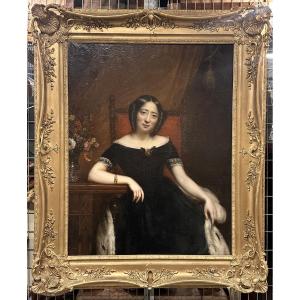


Large Portrait Of A Woman, Signed J. Braudin, Dated 1843, Oil On Canvas
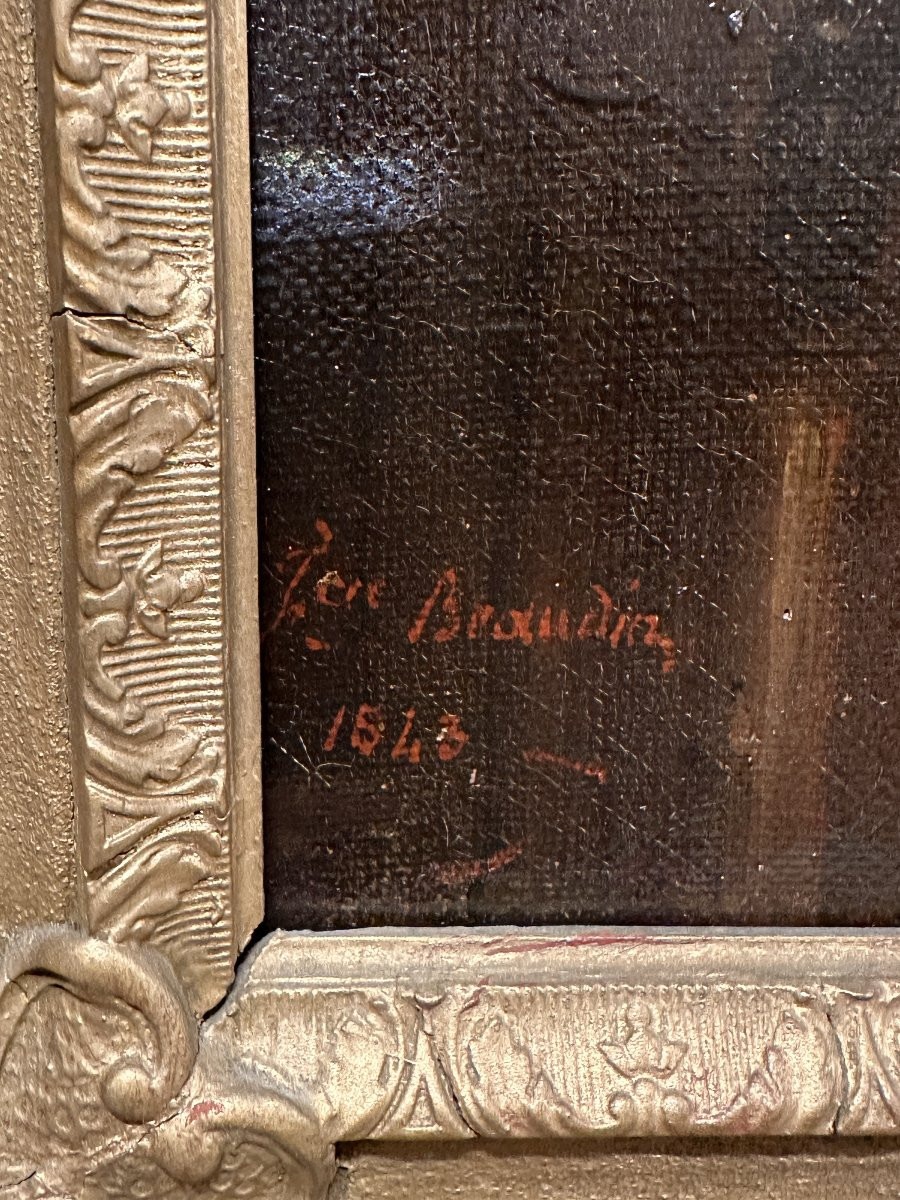
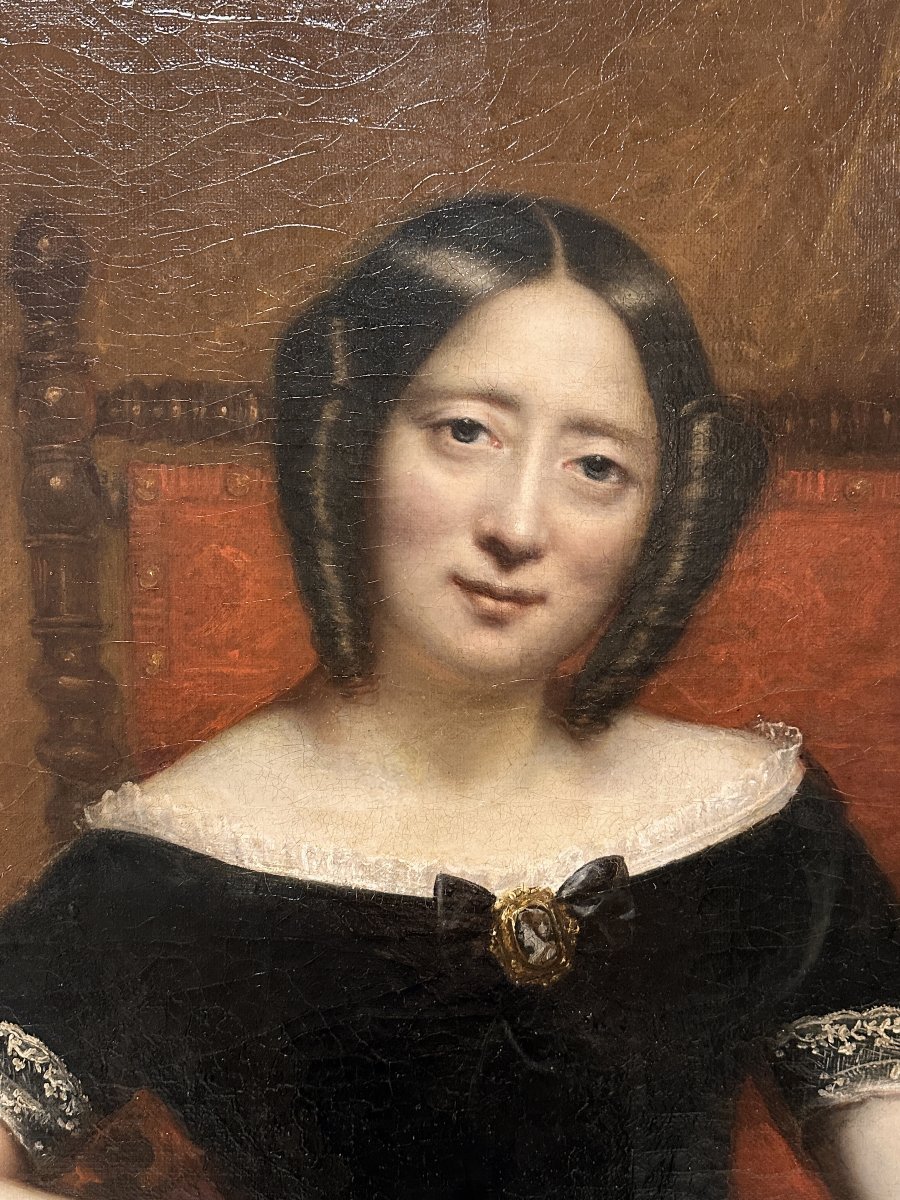
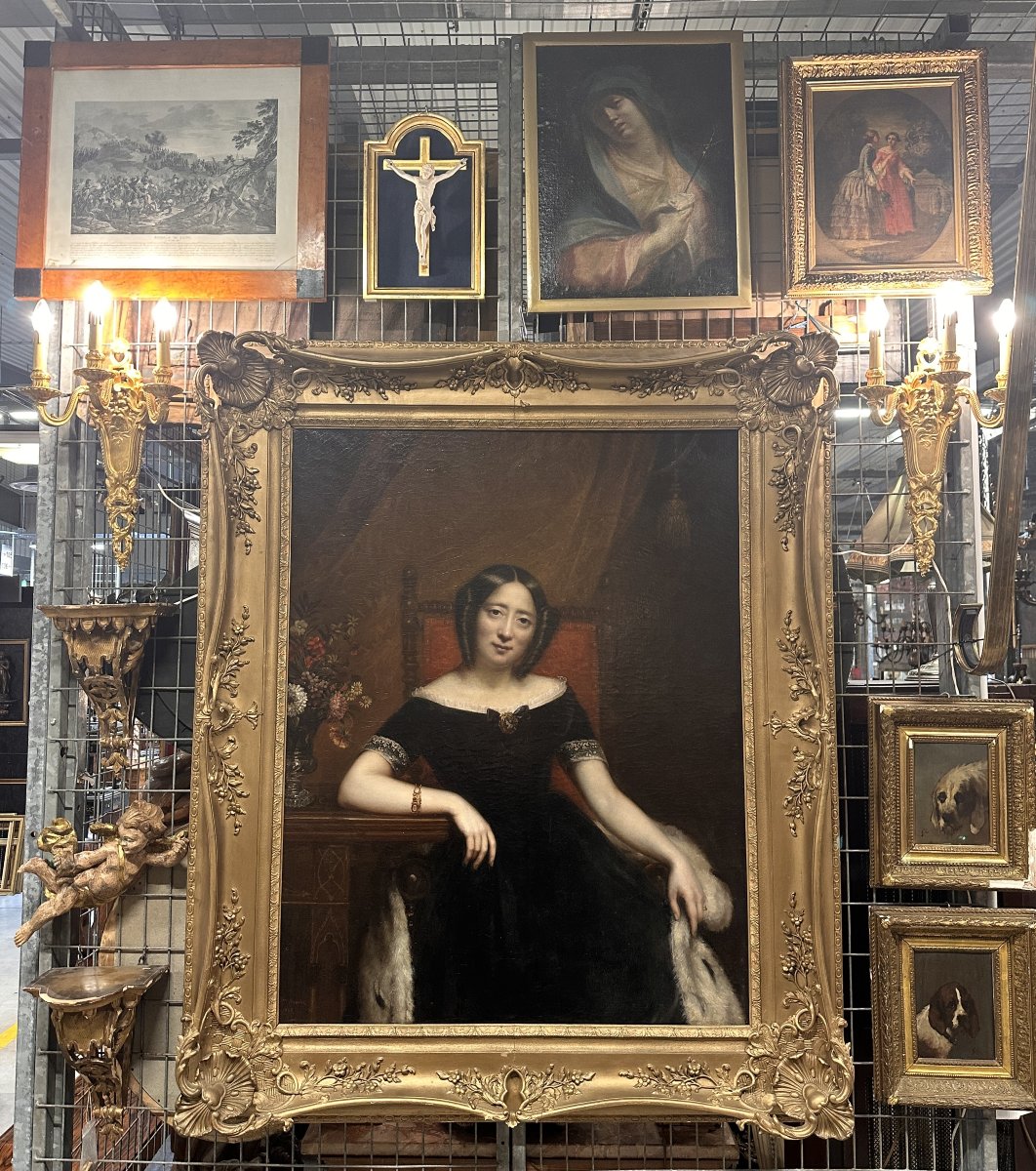
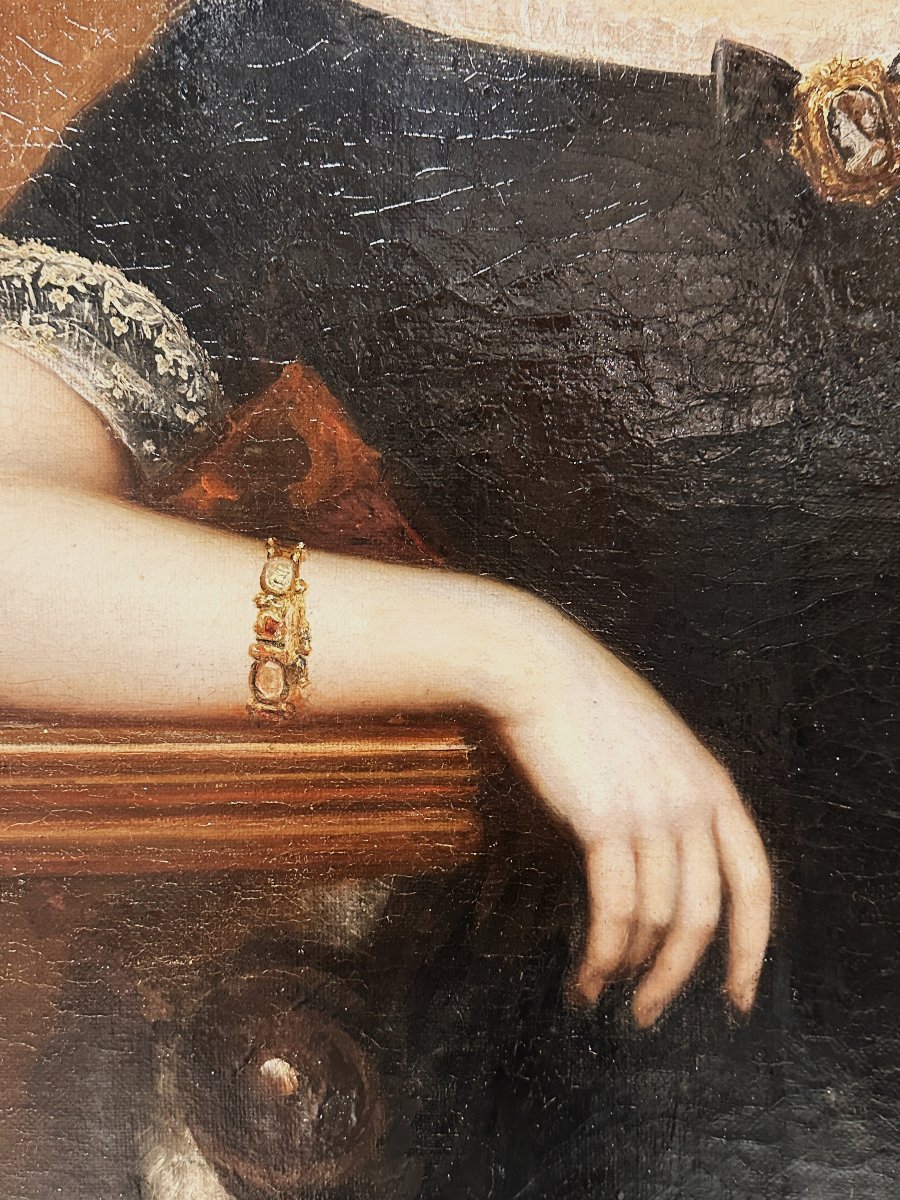
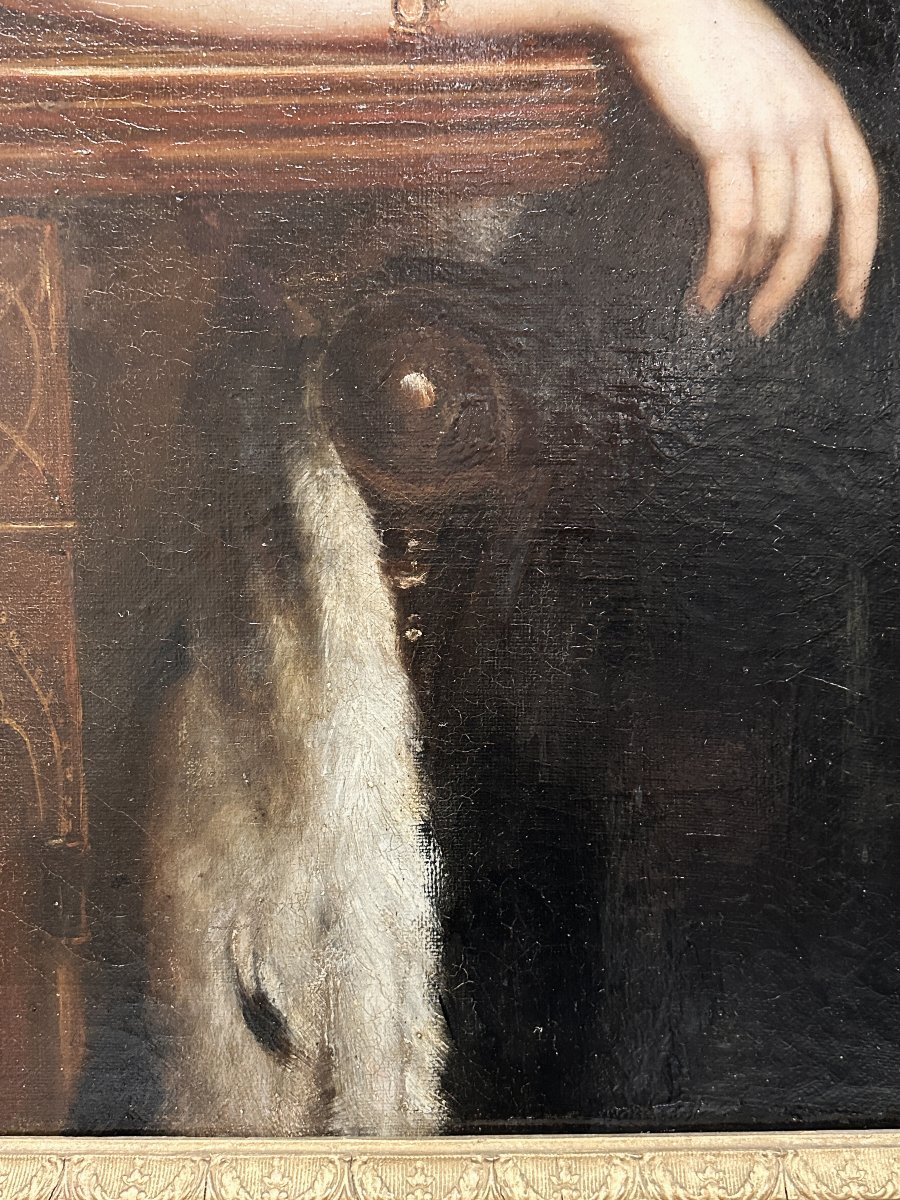
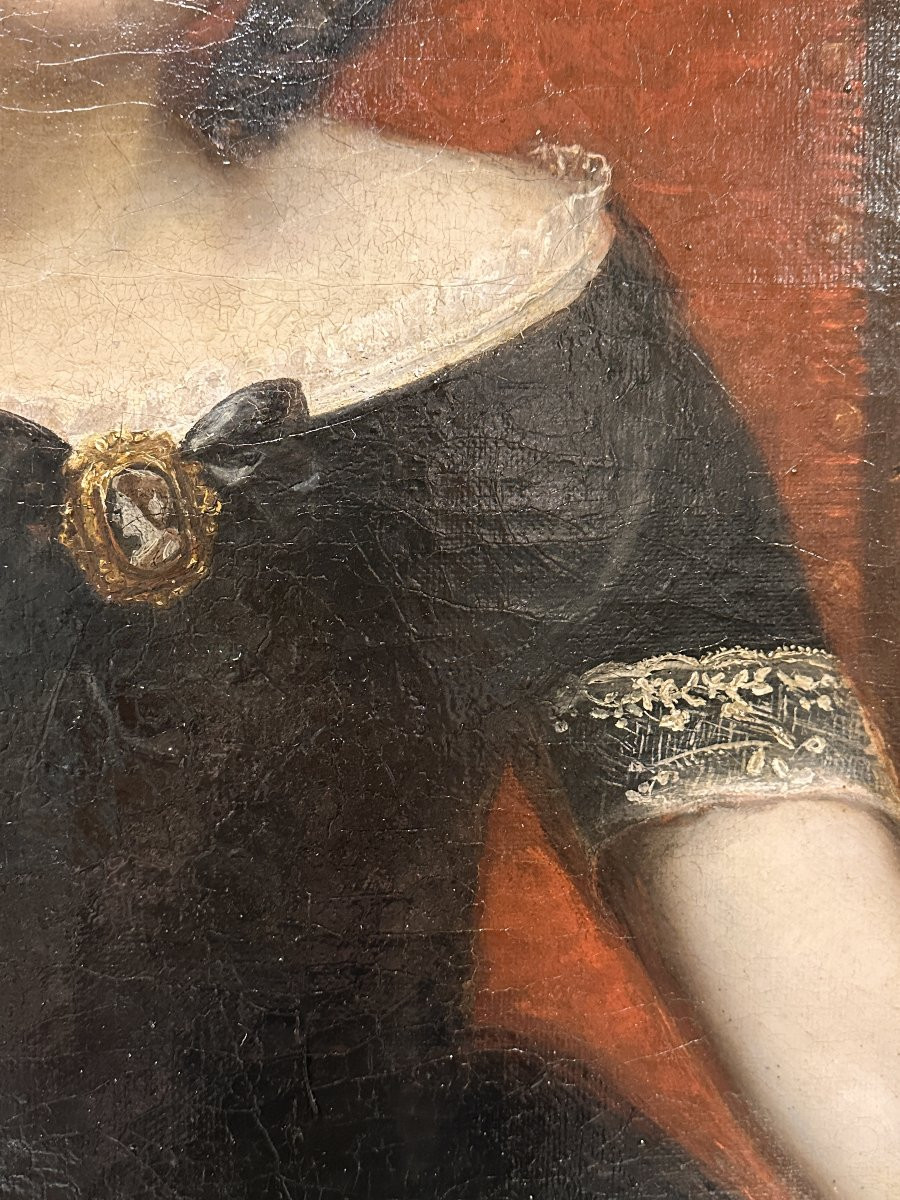
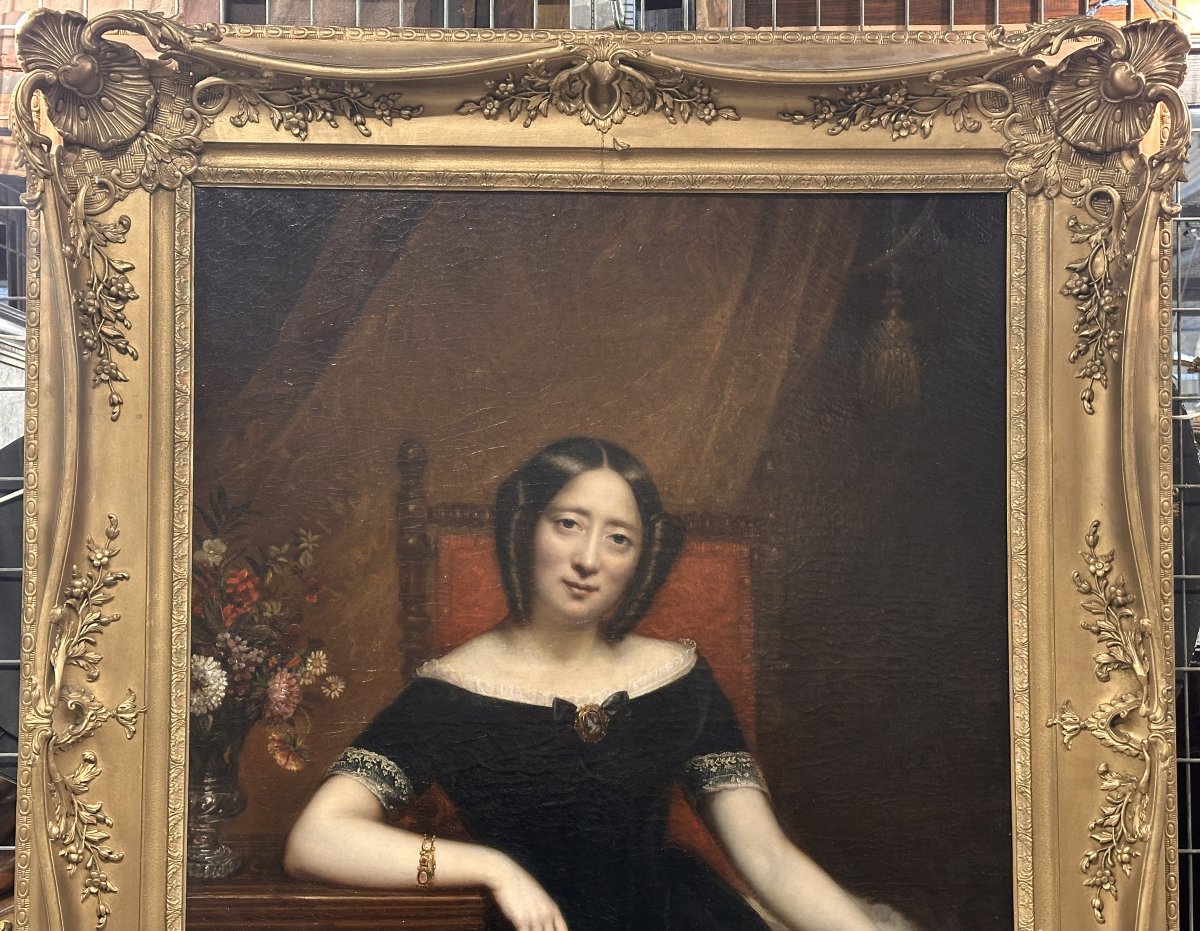
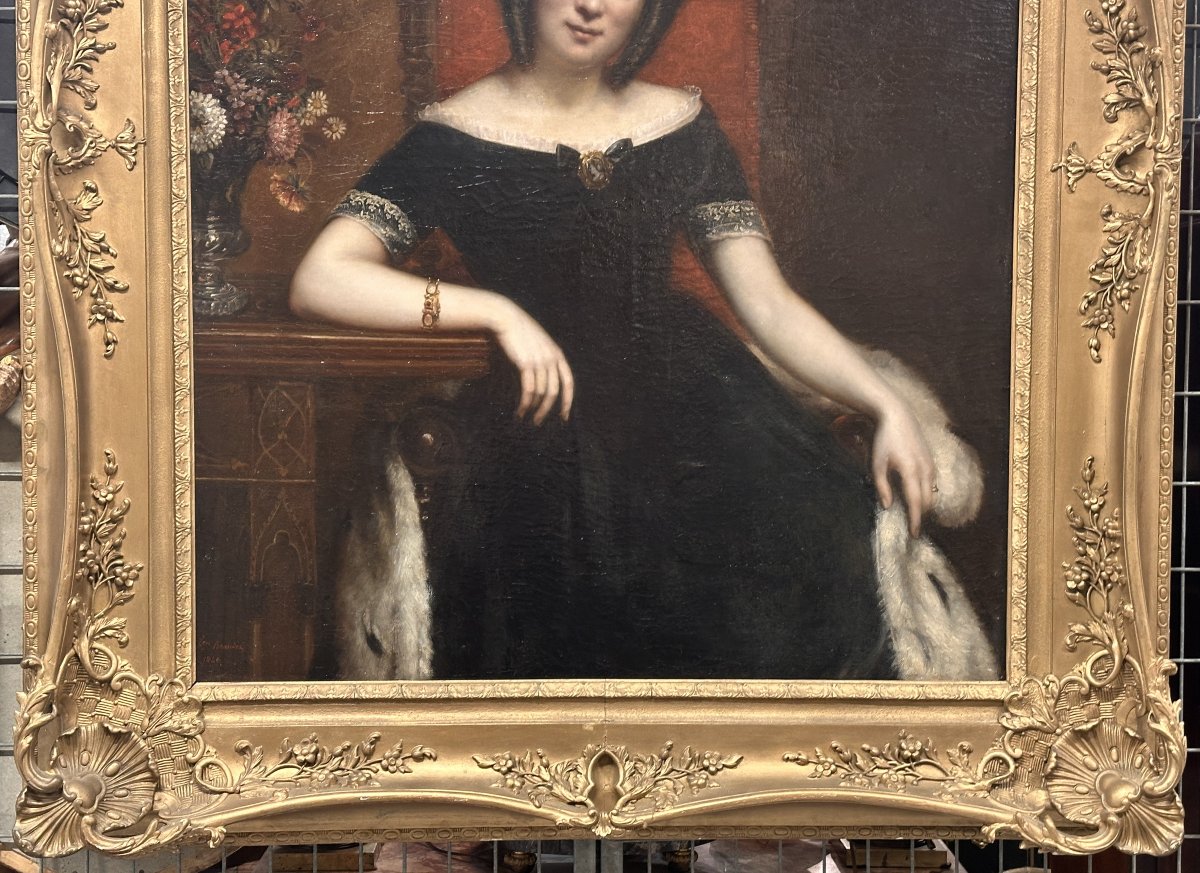
A large-scale female portrait from the first half of the nineteenth century, signed J. Braudin at lower left and dated 1843. The sitter is shown seated in an interior, dressed in a black gown with a wide lace-trimmed neckline, adorned with a bracelet and cameo brooch, and holding a pale fur. The painting belongs convincingly to the tradition of the formal yet intimate bourgeois portrait developed during the Louis-Philippe period, balancing social distinction with a residual aristocratic tone. Comparable examples currently presented on Proantic confirm how frequently mid-nineteenth-century female portraits adopt this very formula: a seated figure, a refined domestic setting, oil on canvas, and a gilt nineteenth-century frame.
Attribution and datingThe visible lower-left inscription, read as J. Braudin, together with the date 1843, places the work firmly in the Louis-Philippe era. Beyond the signature itself, the stylistic evidence is fully coherent with that dating: the bandeaux hairstyle, the elegant restraint of the black dress, and the interior staging with drapery, upholstered chair and floral arrangement all correspond to French portrait conventions of the years circa 1835–1845. Comparisons with several Louis-Philippe female portraits listed on Proantic support the same chronological and stylistic placement.
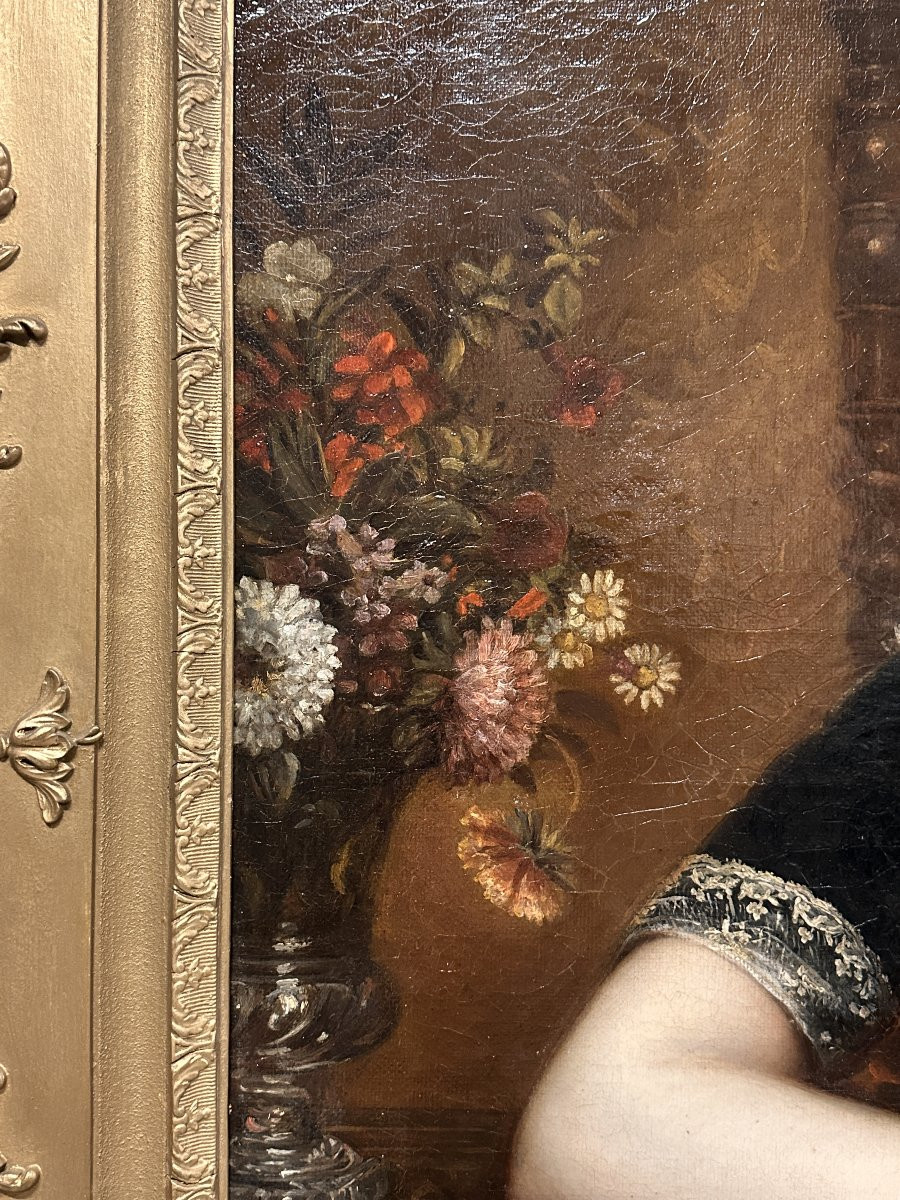
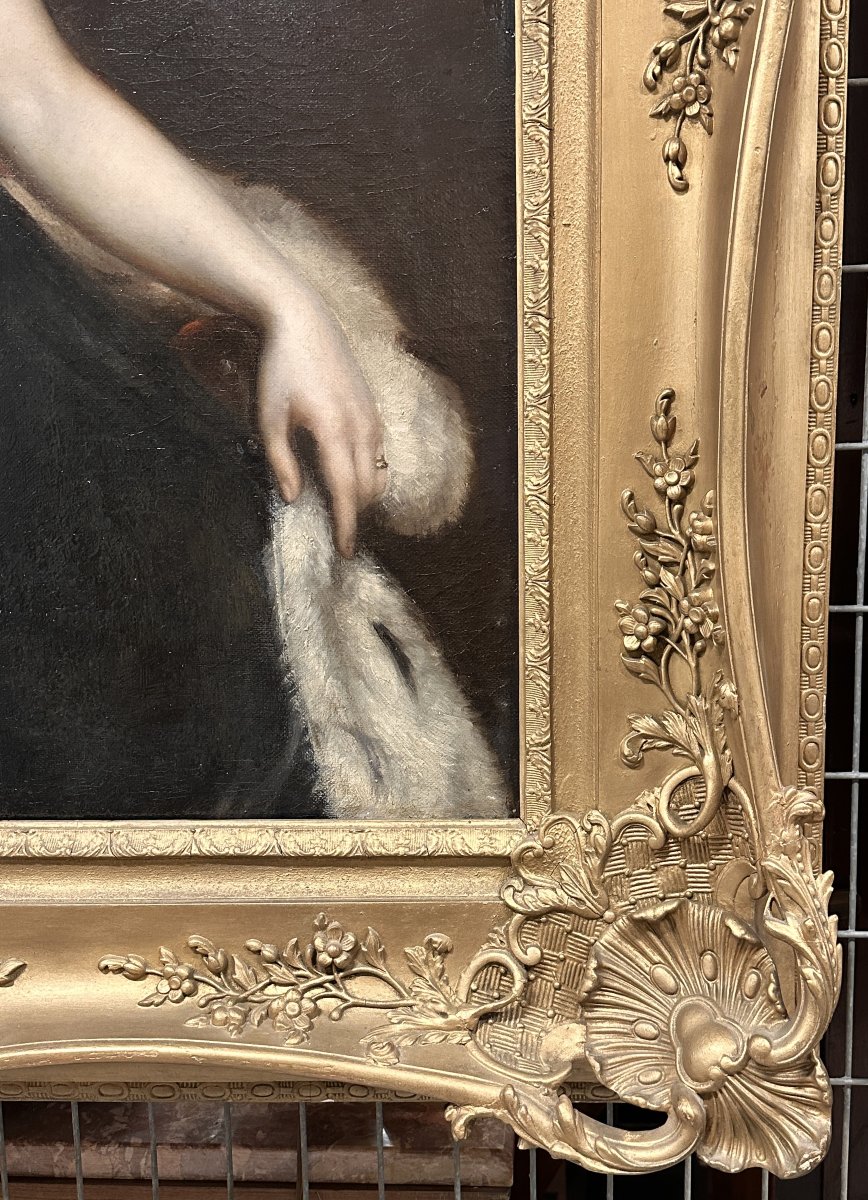
Composition and sitterThe composition is particularly successful in the way it combines psychological presence with decorative balance. One arm rests on the table, while the other falls naturally over the light fur, and a vase of flowers animates the left side of the composition. These accessories – table, chair, bouquet and drapery – are not incidental; they belong to the visual language of commissioned portraiture, designed to convey status, refinement and cultivated domestic taste. The sitter’s gentle, restrained smile and steady gaze lend the portrait a discreetly enigmatic quality, giving the picture both charm and quiet authority. Comparable Proantic portraits from the same period confirm that this type of interior portrait sits midway between social representation and private likeness.
Materials and techniqueThe work is painted in oil on canvas, in a soft and carefully blended manner. Flesh tones are delicately modelled, with smooth tonal transitions that give the face and hands an almost pastel-like tenderness. The draughtsmanship is worth noting: anatomical proportions are well maintained, the hands are convincingly structured, and the head remains stable and harmonious despite its slight inclination. The painter handles surface contrasts with skill, setting the satin black of the dress against the airy whiteness of the lace, the measured brilliance of the jewellery, the softness of the fur and the warm transparency of the brown background. This balance between descriptive precision and atmospheric softness places the work within the academic portrait tradition, yet with a gentler sensibility characteristic of certain French studios of the mid-nineteenth century. Proantic descriptions of comparable Louis-Philippe female portraits repeatedly stress the same elements: oil on canvas, careful execution and a strong decorative frame.
FrameThe painting is housed in an impressive period frame of wood and gilt stucco, richly articulated and highly decorative. Its openwork and scrolling ornament, with shell and foliate motifs, reflects the historicist ornamental taste that enhances the painting’s large format and formal presentation. Judging from the photographs, the frame is in very good overall visual condition and contributes significantly to the decorative impact of the work. On Proantic, comparable female portraits of the period are very often presented in gilt nineteenth-century frames, which are consistently treated as an essential part of their decorative identity.
ConditionFrom the photographs, the painting appears to be in very good overall condition. The pictorial surface remains coherent, the image is clearly legible, and the general presentation is highly satisfactory for a work of this size and date. The frame also appears to be in a strong decorative state, fully supporting the quality of display.
ConclusionThis is a large and finely presented French female portrait dated 1843, bringing together the qualities sought after in this category: an elegant sitter, a well-composed interior setting, careful execution, substantial dimensions and a richly decorative period frame. By its nature, it was very likely painted as a commissioned portrait, intended both to preserve the likeness of the sitter and to affirm her social standing.
Dimensions:
frame - 162 x 135 cm
canvas - 124 x 96 cm
Period: 19th century
Style: Louis Philippe, Charles 10th
Condition: Excellent condition
Material: Oil painting
Width: cadre - 135 cm / toile - 96 cm
Height: cadre - 162 cm / toile - 124 cm
Reference (ID): 1733651
Availability: In stock