







Hirado Porcelain Recumbent Horse, Mikawachi Kilns, Late Edo To Early Meiji (c. 1850–1880)
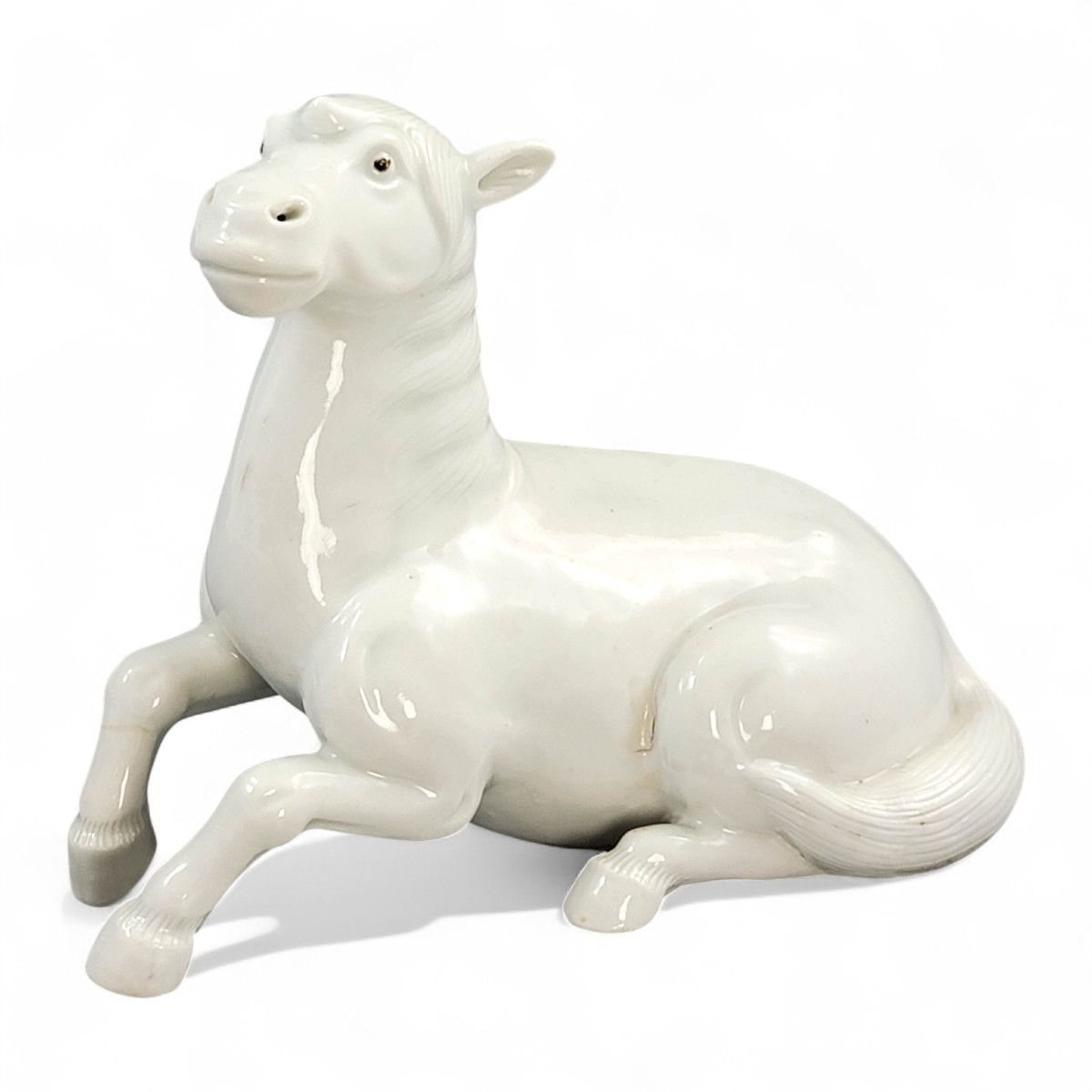
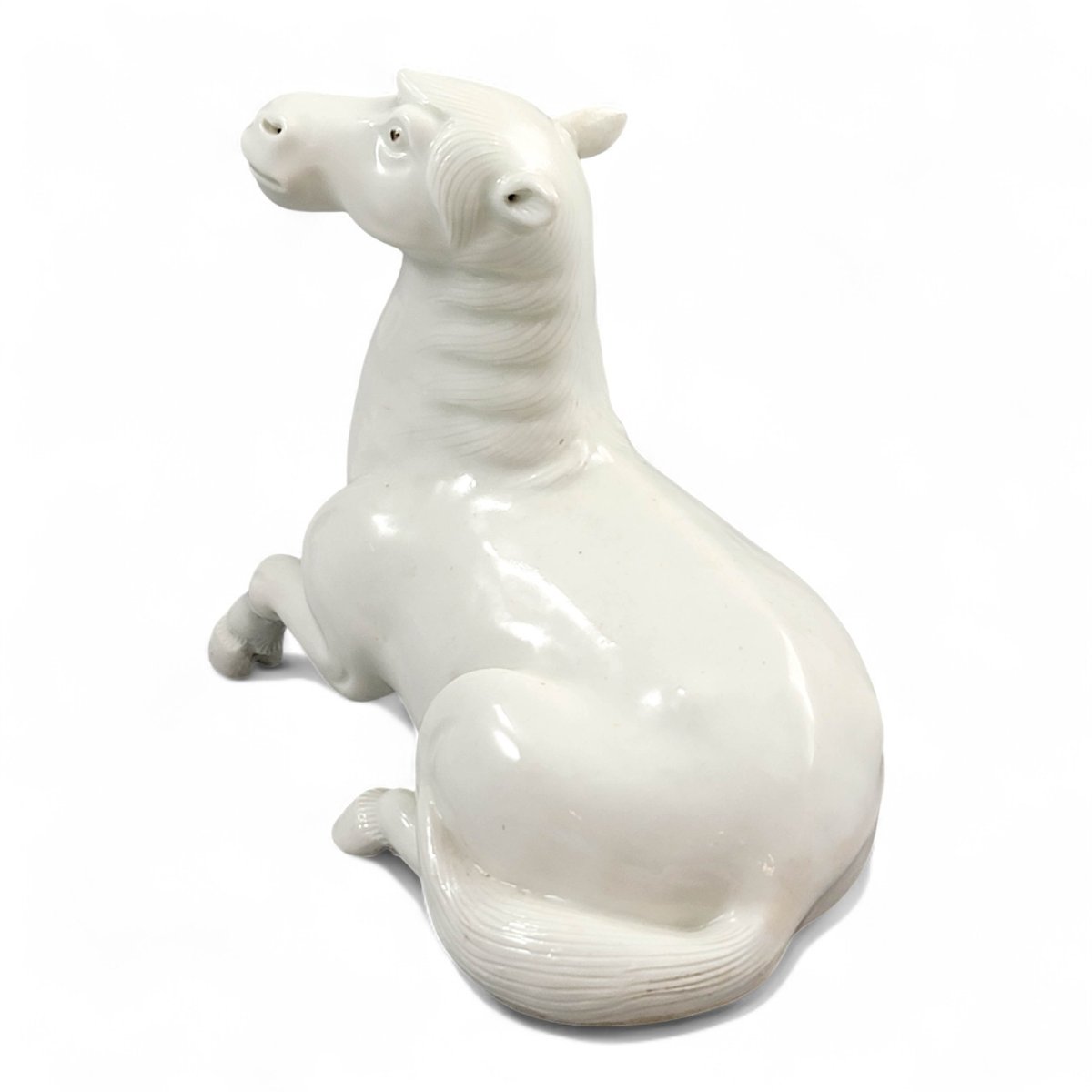
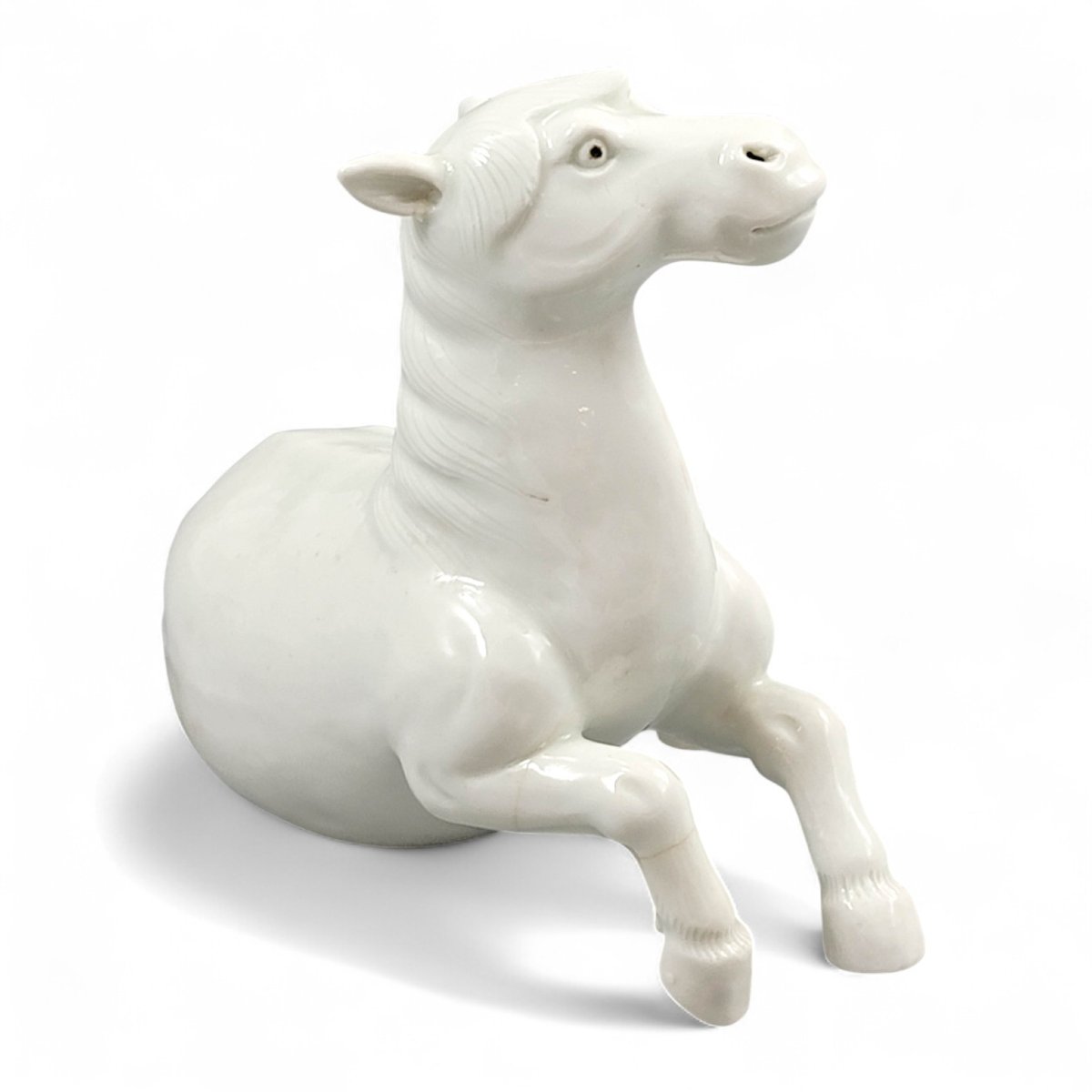
A refined Hirado porcelain figure of a recumbent horse produced at the Mikawachi kilns of the Hirado domain, Hizen Province, during the late Edo to early Meiji period, c. 1850–1880. The horse is modelled lying with the head gently raised, its expression composed and alert. The body is hollow-cast in fine, dense white porcelain made from Amakusa kaolin, prized for its purity and cool, luminous tone. A thin bluish-white translucent glaze covers the surface evenly, settling lightly in the recesses and enhancing the sculptural definition of the form.
Incised lines articulate the mane and tail, while subtle modelling conveys the soft swell of muscle at the neck and haunches. The eyes and nostrils are touched with a delicate iron-brown pigment beneath the glaze, a characteristic feature of Hirado animal figures. The underside is left unglazed, showing the smooth ivory biscuit and faint kiln marks typical of Mikawachi firing supports. The overall effect is one of quiet refinement and controlled naturalism, reflecting the aesthetic cultivated under the patronage of the Matsura lords of Hirado.
Historical Background
The Hirado kilns rose to prominence in the eighteenth and nineteenth centuries for their porcelain of exceptional quality, including scholar’s objects, small figures, and diplomatic presentation wares. Their output is distinguished by purity of clay, disciplined modelling, and a restrained, luminous glaze palette.
The horse (uma) holds enduring significance in Japanese culture, associated with Shinto shrines as a divine messenger and with samurai values of loyalty and noble spirit. Porcelain horses of this type were appreciated both at court and among literati circles, and were later admired in Europe for their subtlety and sculptural clarity. Comparable examples are preserved in the Kyushu Ceramic Museum (Shibata Collection) and the Victoria and Albert Museum, London.
Measurements
Height: 13 cm / 5.12″
Width (nose to tail): 15.5 cm / 6.10″
Depth: 9 cm / 3.54″
Weight: 218 g
Condition
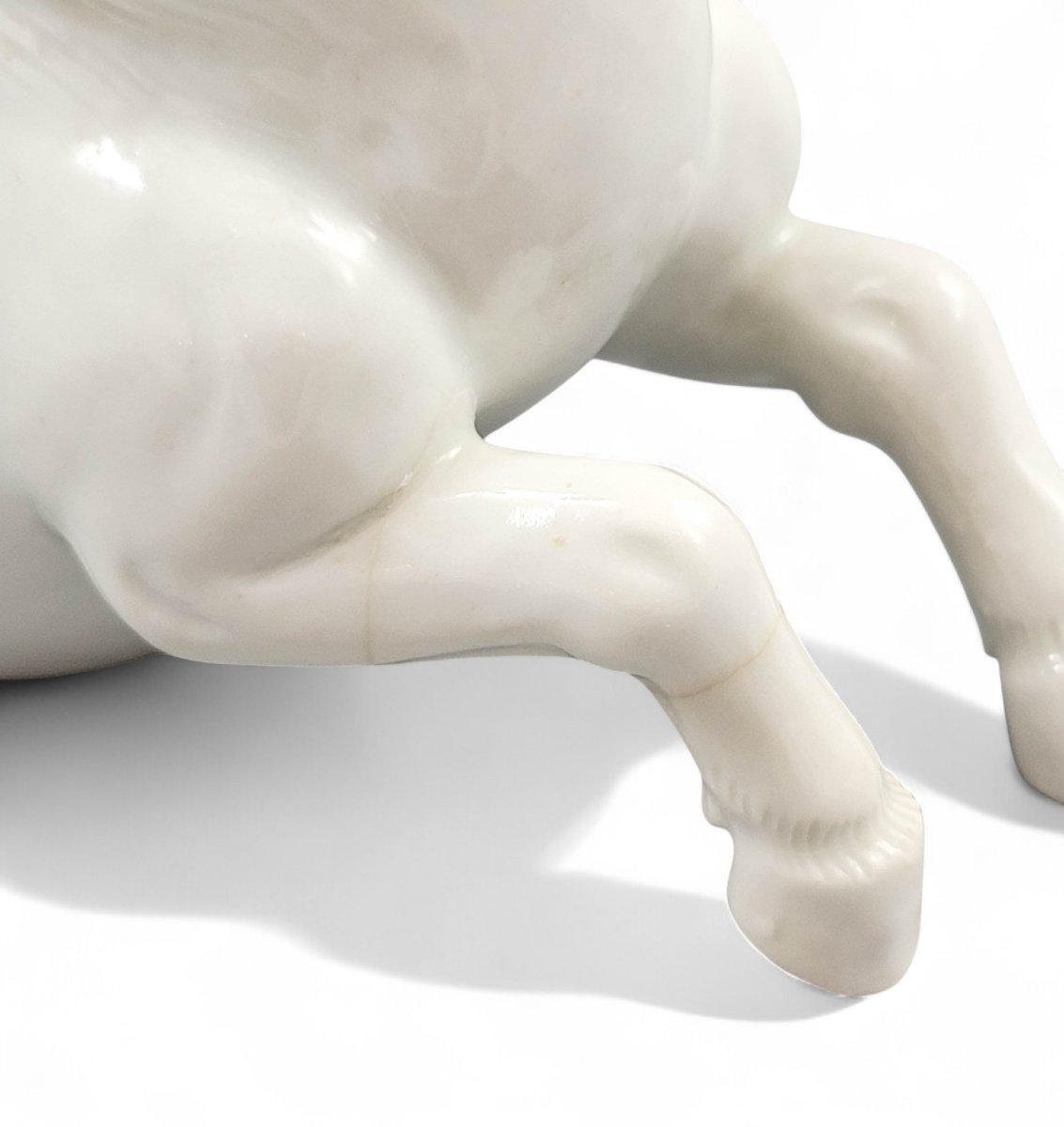
Very good antique condition. One professionally restored repair to the right foreleg, neatly executed and unobtrusive in normal display. A small, stable hairline is present at the junction of the right haunch and body, a typical stress line found in hollow Hirado sculptural porcelains; this is secure and does not affect structural integrity. No further cracks, chips, or losses. The glaze remains smooth and even, with finely preserved modelling detail throughout.
Shipping & Packaging
• Fully tracked and insured delivery
• Professional packing with secure protective materials
• Customs documentation supplied where necessary
Period: 19th century
Style: Asian art
Condition: Good condition
Material: Porcelain
Width: 15,5 cm
Height: 13 cm
Depth: 9 cm
Reference (ID): 1648623
Availability: In stock