



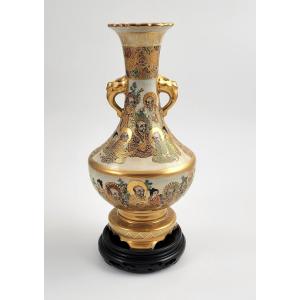


Satsuma Porcelain Vase, Elephant Handles, Shimazu Emblem, Japan, Circa 1890
Artist: Satsuma
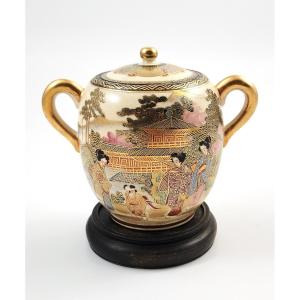
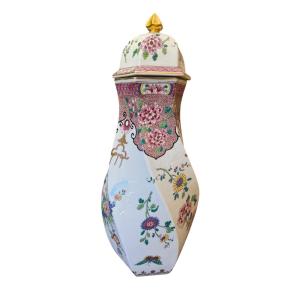
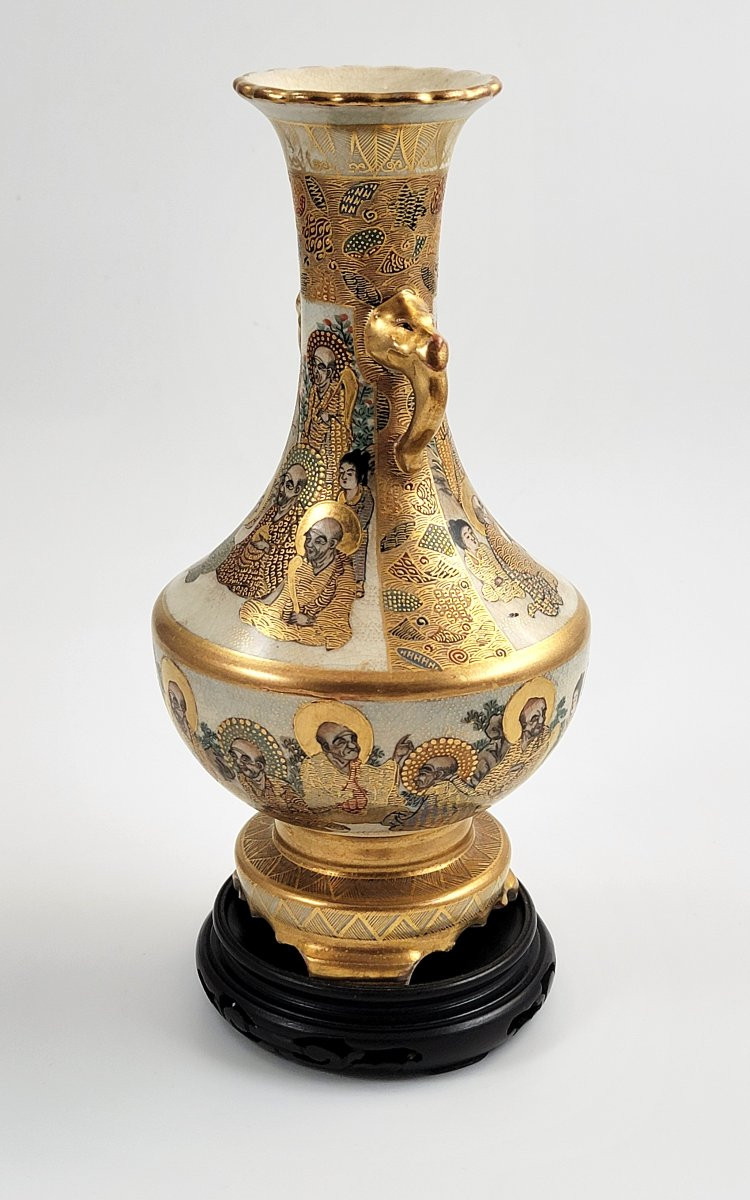
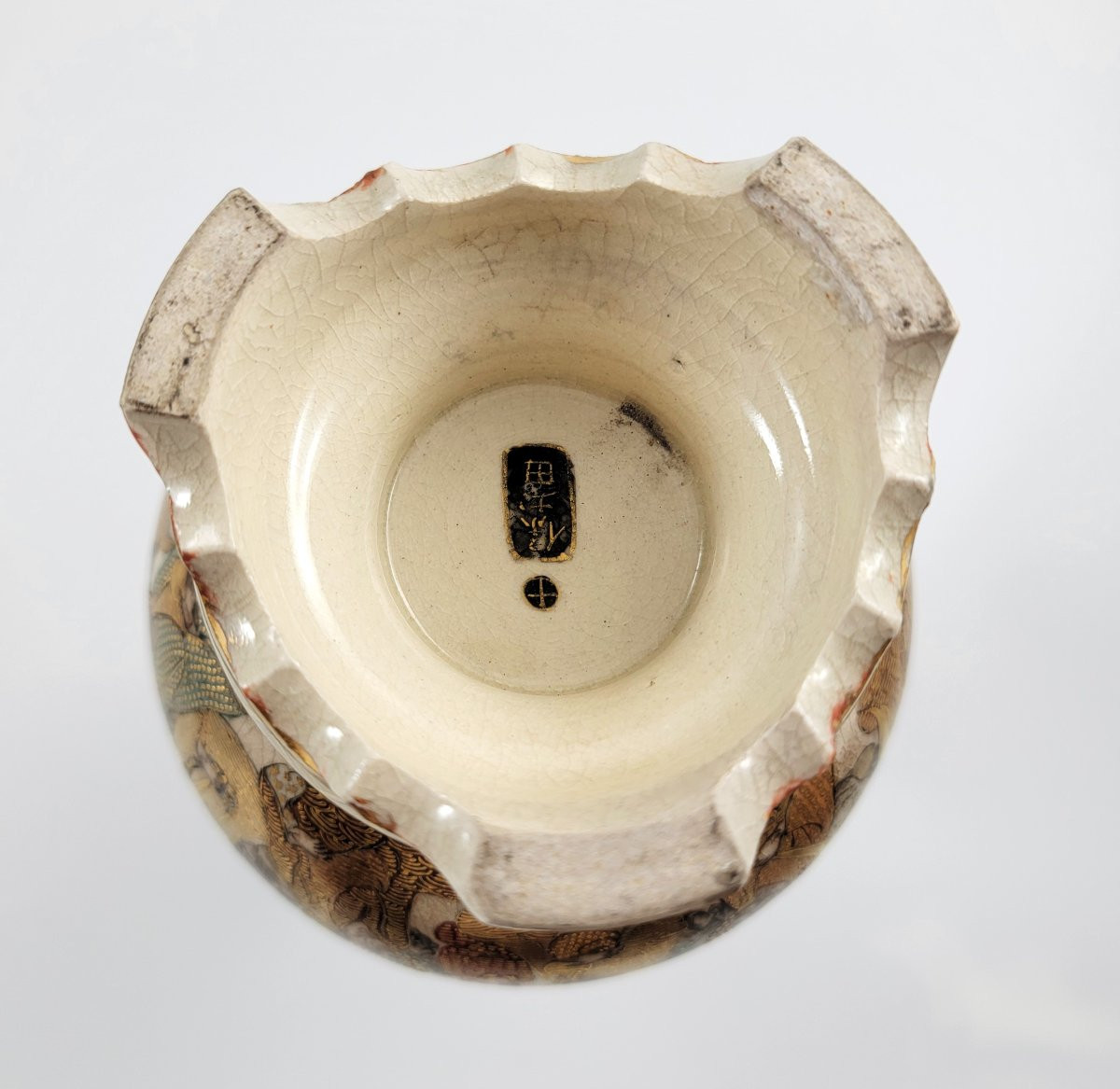
A Satsuma porcelain vase, Meiji period, circa 1890, of classical baluster form with a broad shoulder, a narrow neck, and a flared, scalloped upper rim. The vase rests on its original carved wooden base, included in the sale. The surface is decorated with polychrome enamels and raised gold highlights, depicting arhats (enlightened Buddhist disciples), each with a halo, expressive gestures, and finely detailed clothing. The vase is framed with stylized textile motifs and gold borders. A notable feature is the two elephant-head handles, carefully modeled with curved trunks, eyes, and ears, then enhanced with gilt. In Buddhist iconography, the white elephant symbolizes wisdom, spiritual strength, and royal virtue. The base bears a black and gold calligraphic mark reading 薩摩製 ("Satsuma-sei" – "Made in Satsuma"), as well as the Shimazu clan crest—a cross within a circle—confirming production in the great kilns of Kagoshima in the late 19th century. In addition to the rare elephant-head handles, this vase is distinguished by a complete frieze of hand-painted arhats, a refined two-register composition, remarkable quality of the glazes and gilding, and the preservation of its original carved wooden base. The legible cartouche accompanied by the Shimazu clan crest confirms its origin in a major Satsuma kiln circa 1890. Condition: Excellent condition. Very slight wear to the gilding on the handles. No chips, cracks, or restorations. Original base included.Dimensions: Height: 24 cm, Diameter 12 cm, Weight 664 gProvenance: European private collection.Please examine the attached photographs carefully, as they are an integral part of this description. If you have any questions, we will be happy to answer them. The item will be shipped with full tracking and insurance.
1 200 €
Period: 19th century
Style: Asian art
Condition: Perfect condition
Material: Porcelain
Reference (ID): 1571455
Availability: In stock
Print