
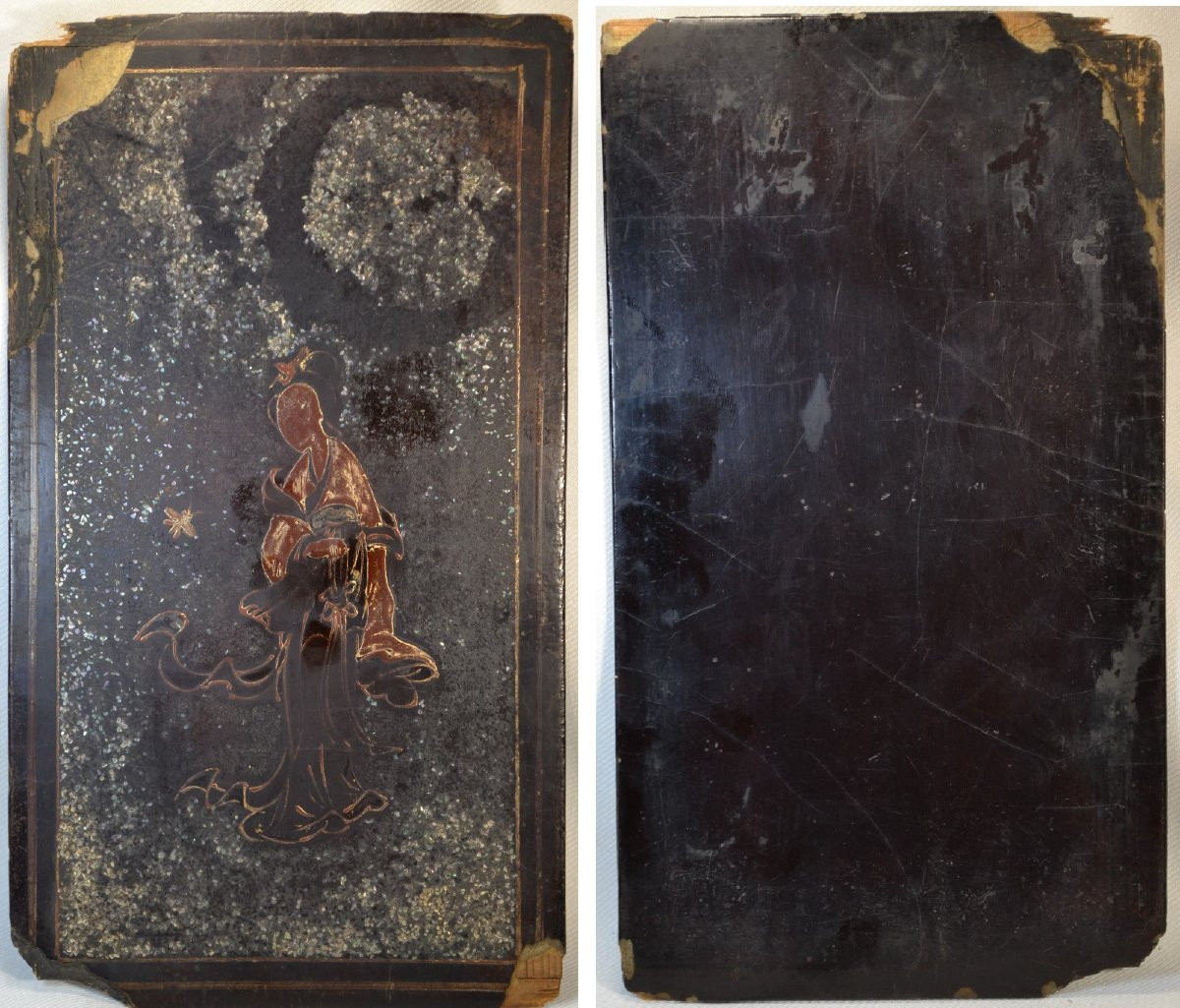
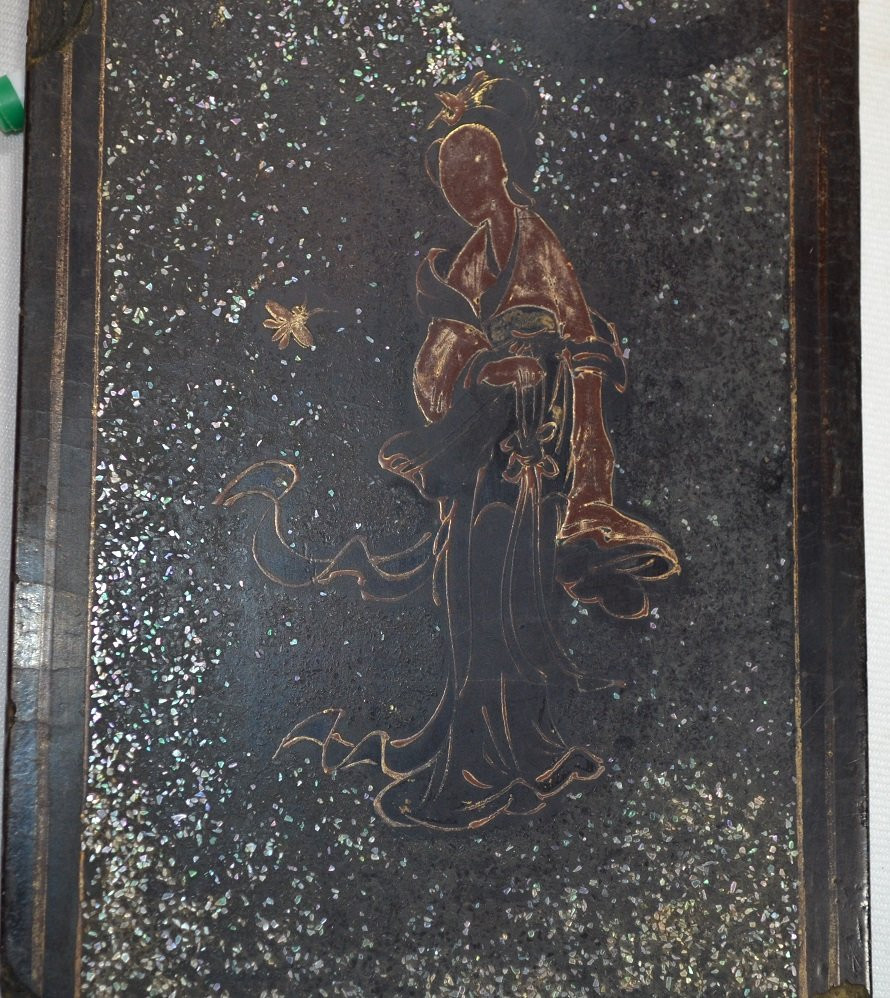
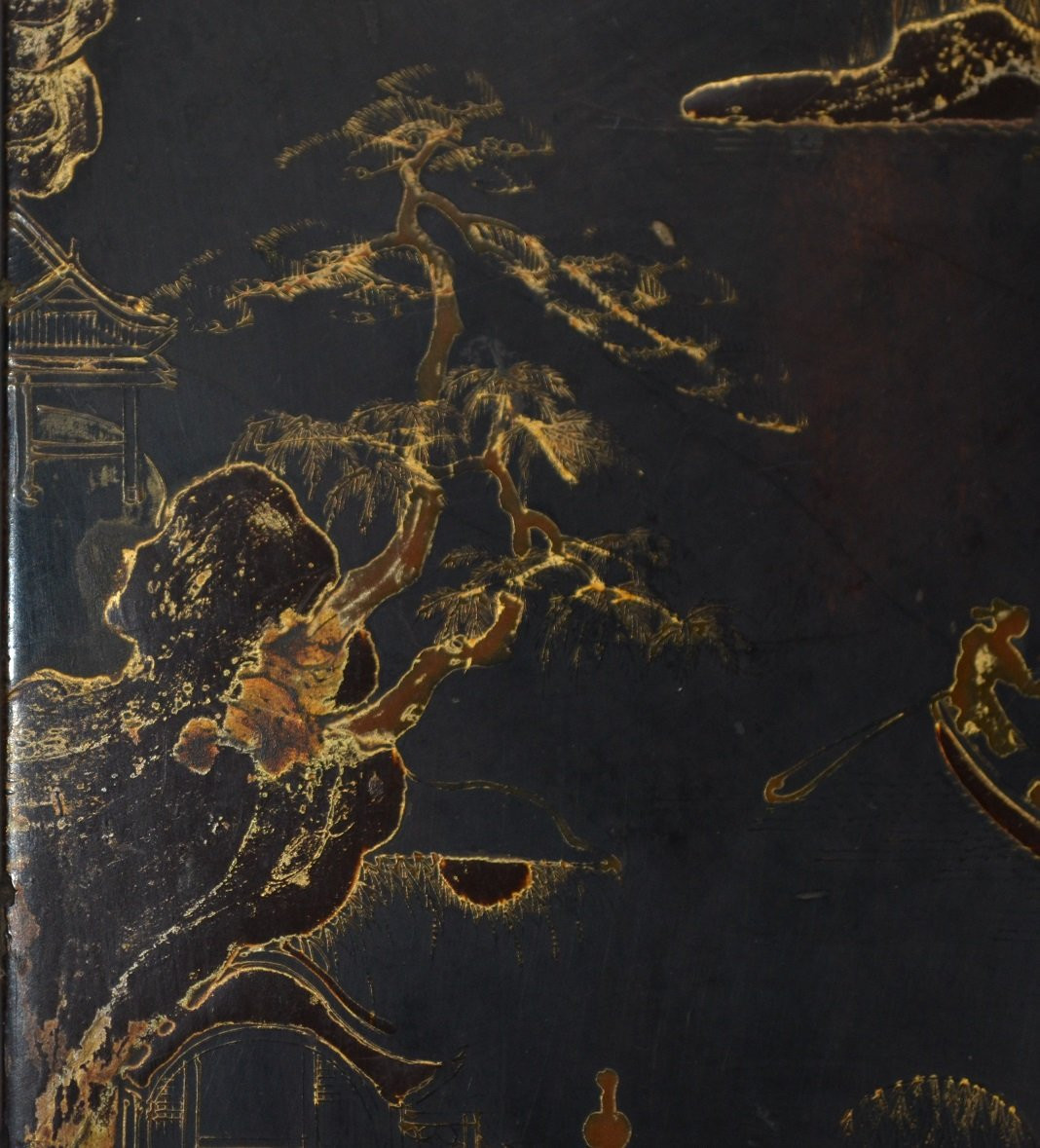


Two Chinese Lacquer Panels. 17th Century. Kangxi Period.
Artist: Chang'e
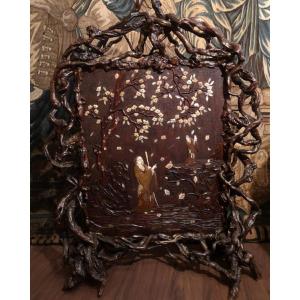
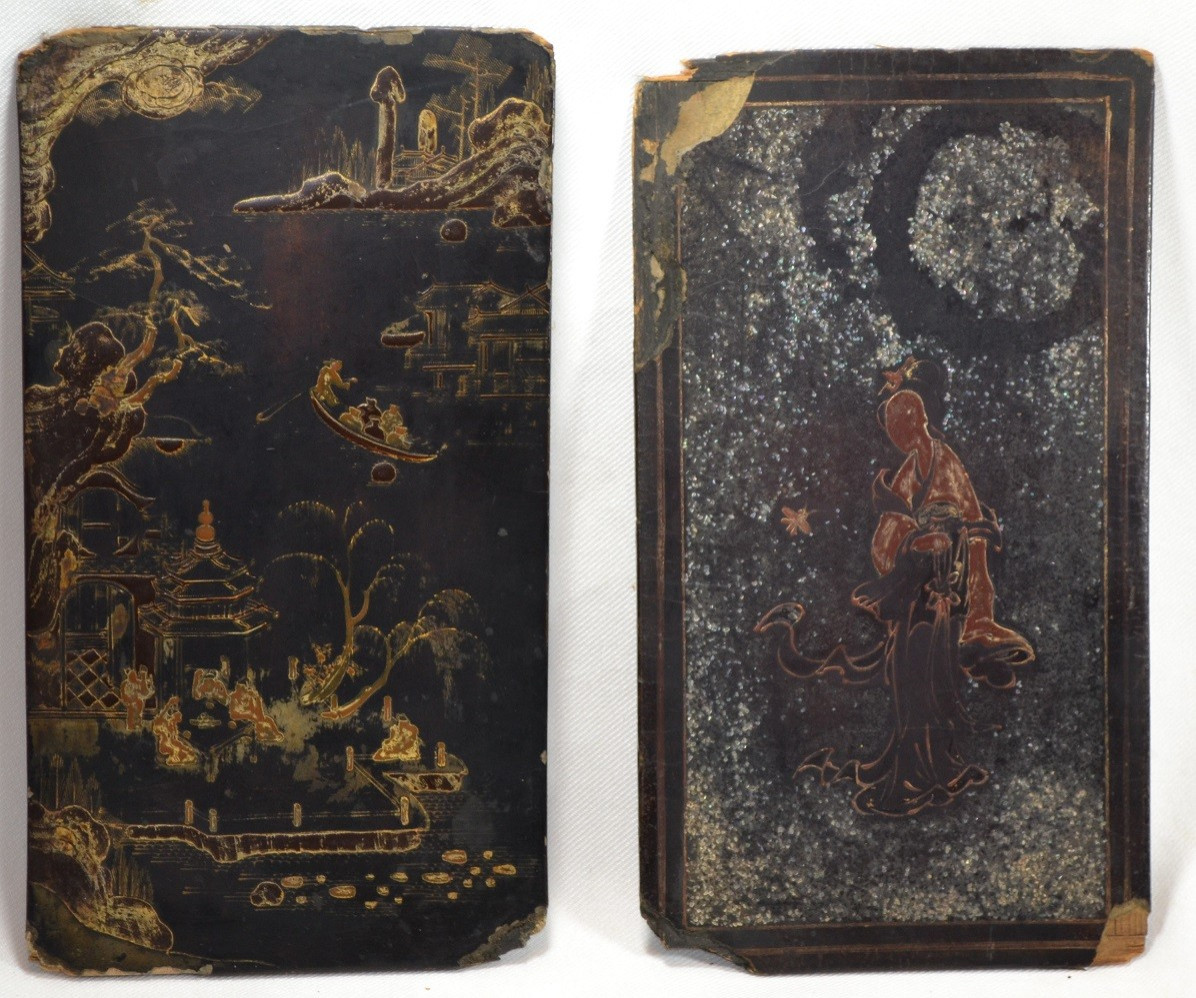
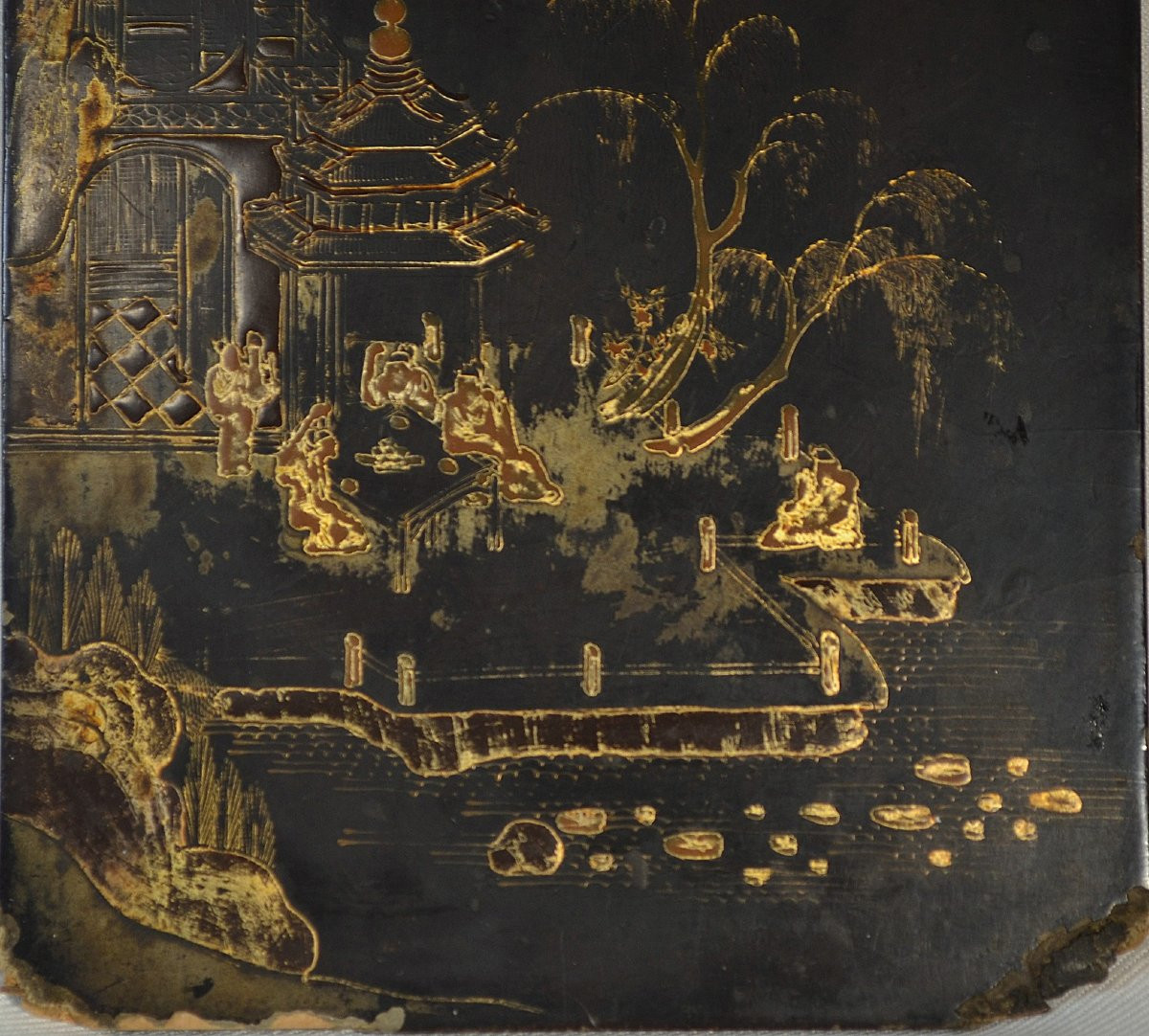
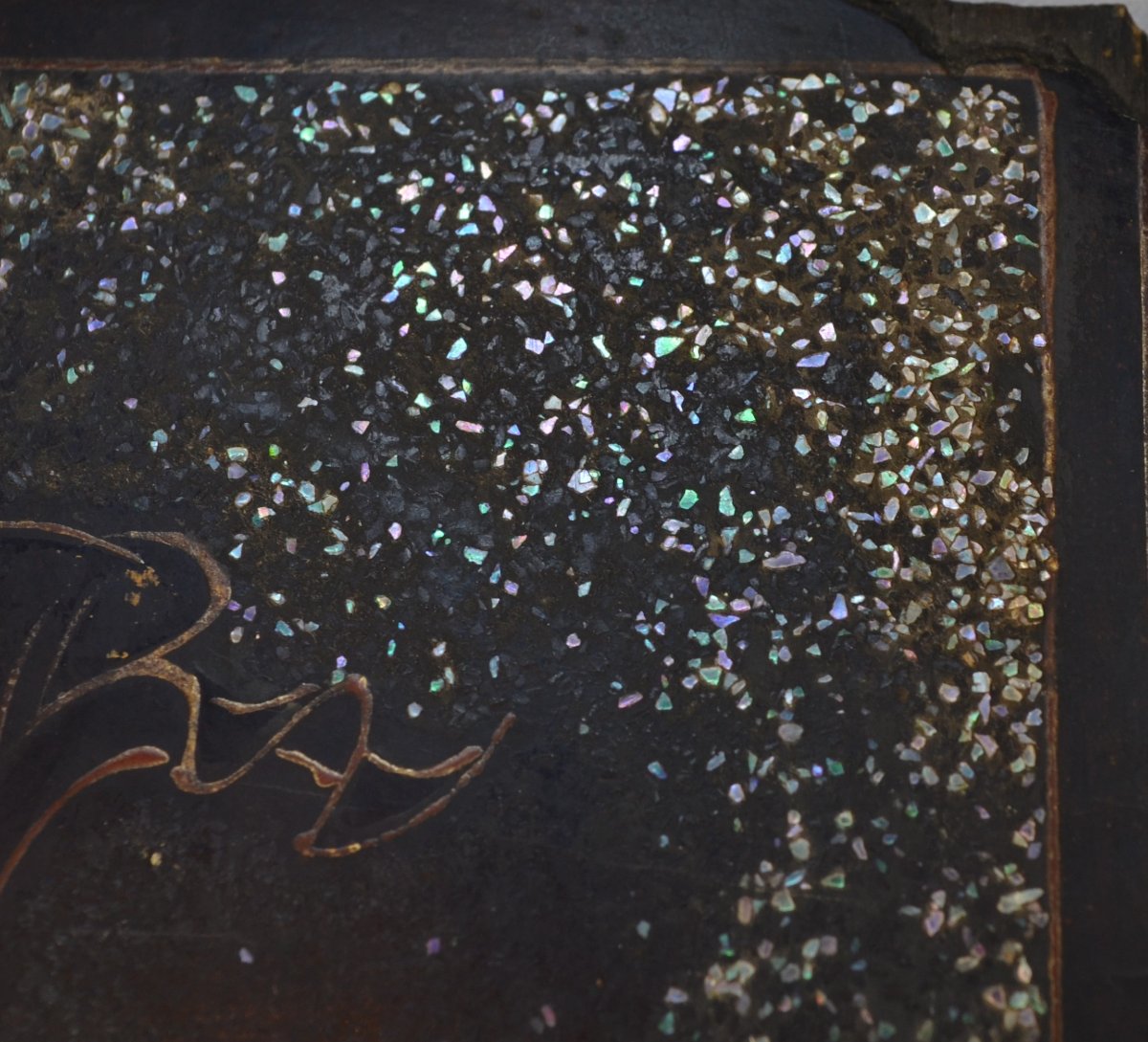
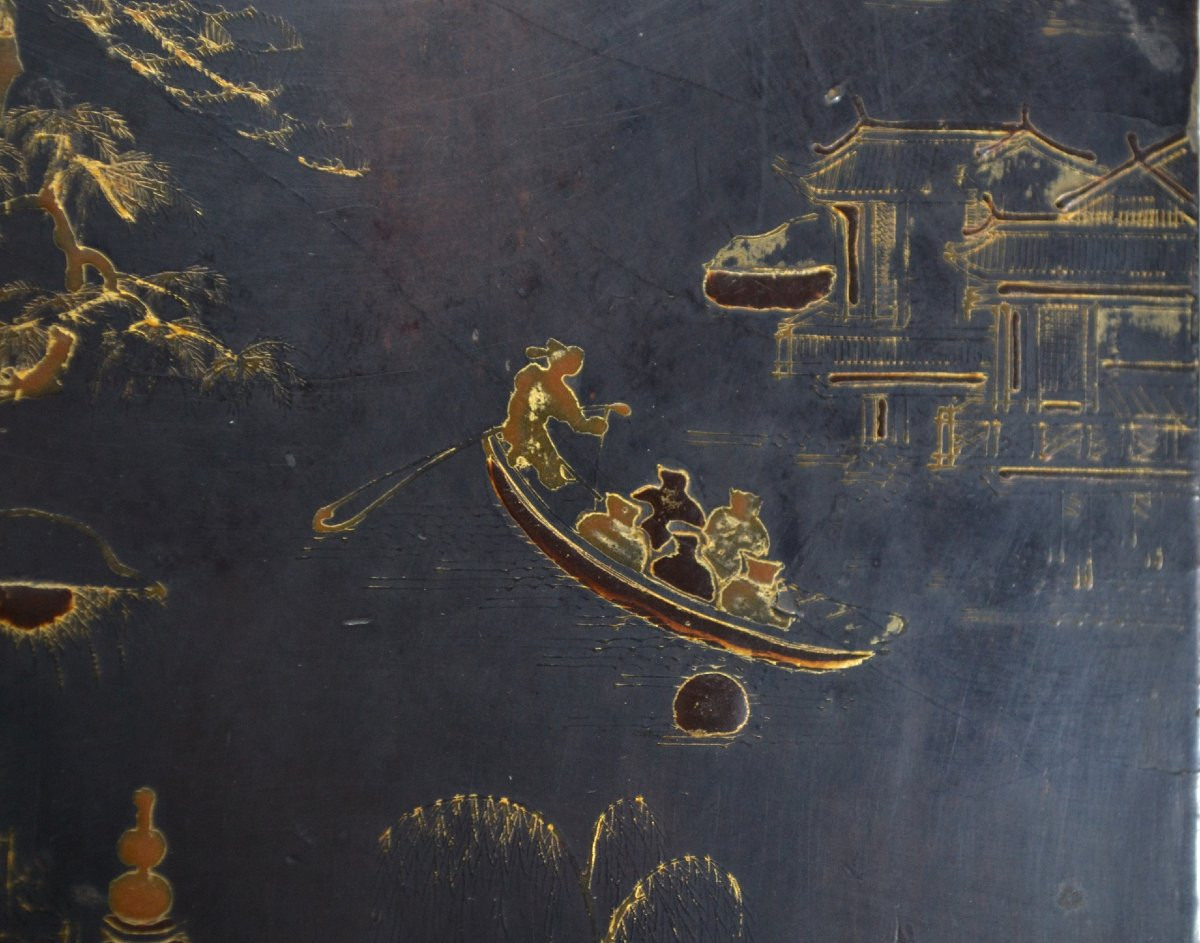
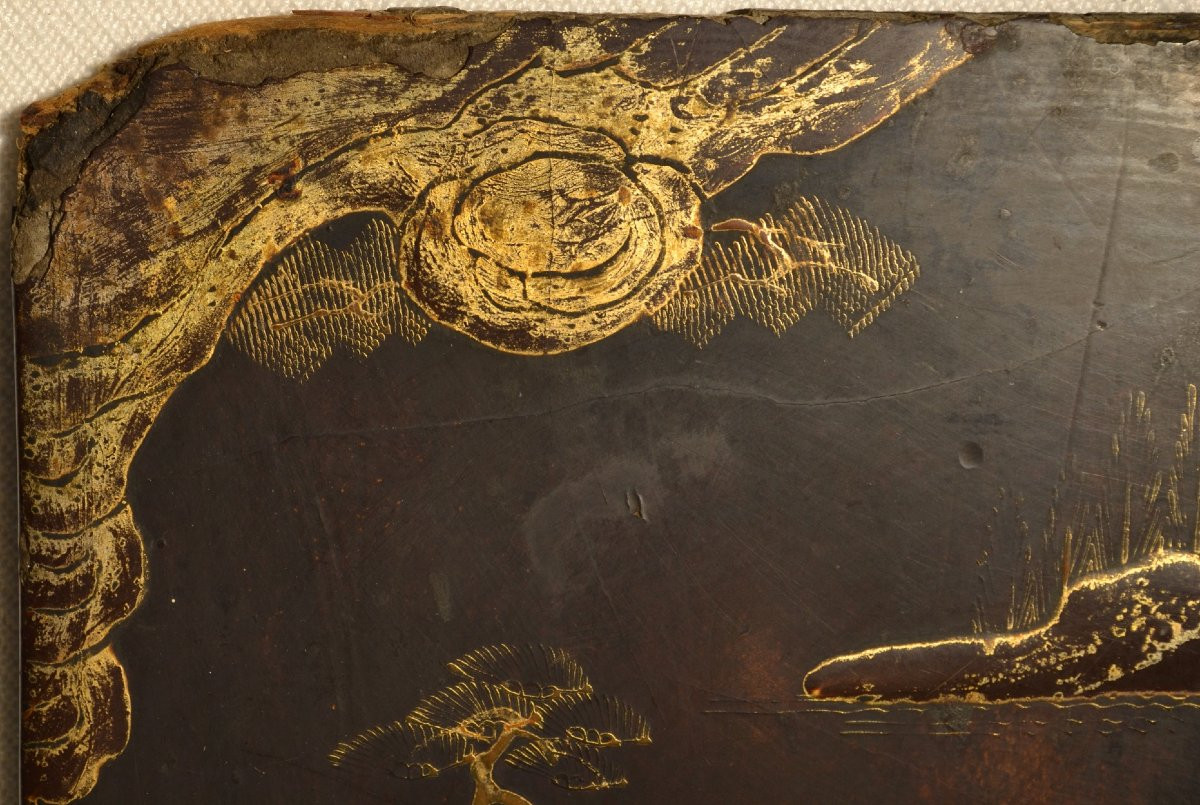
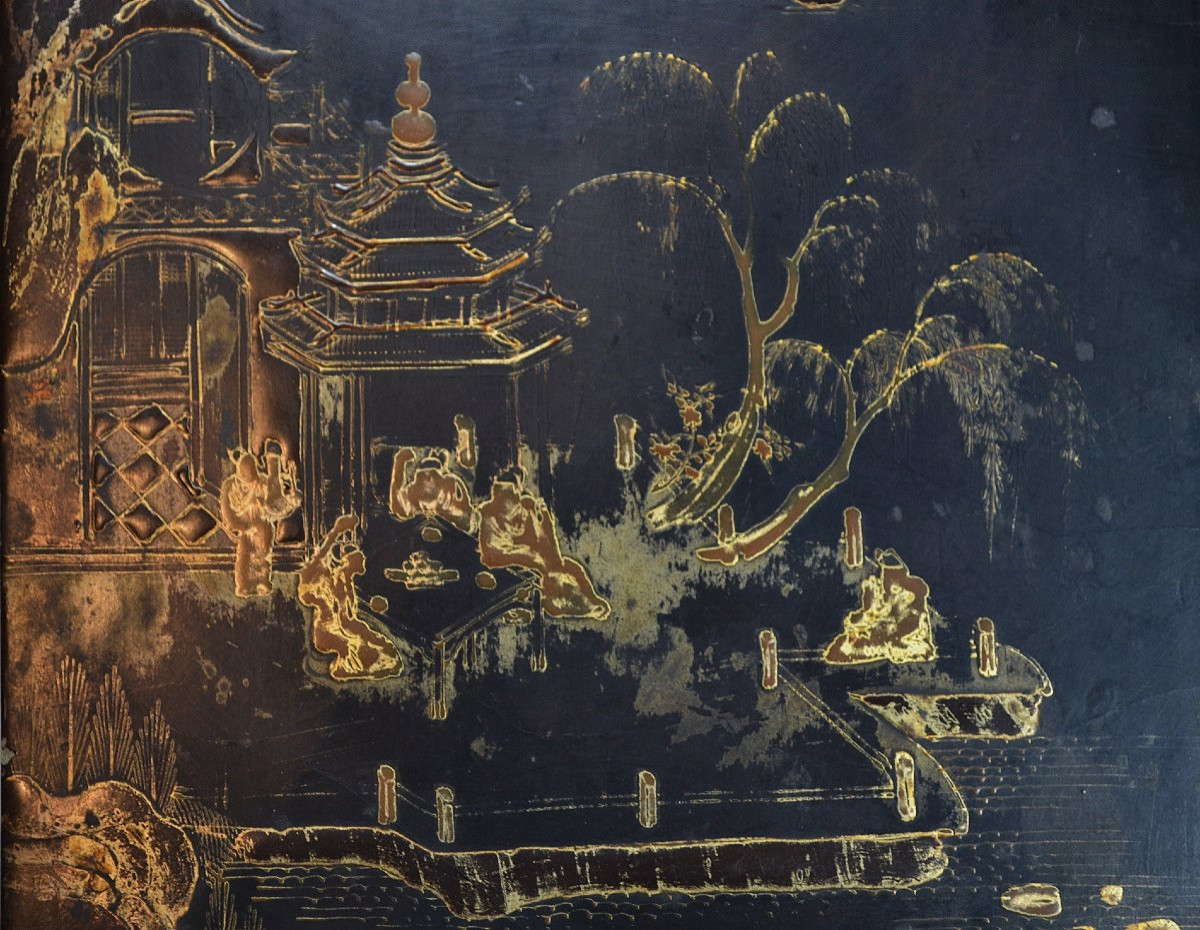
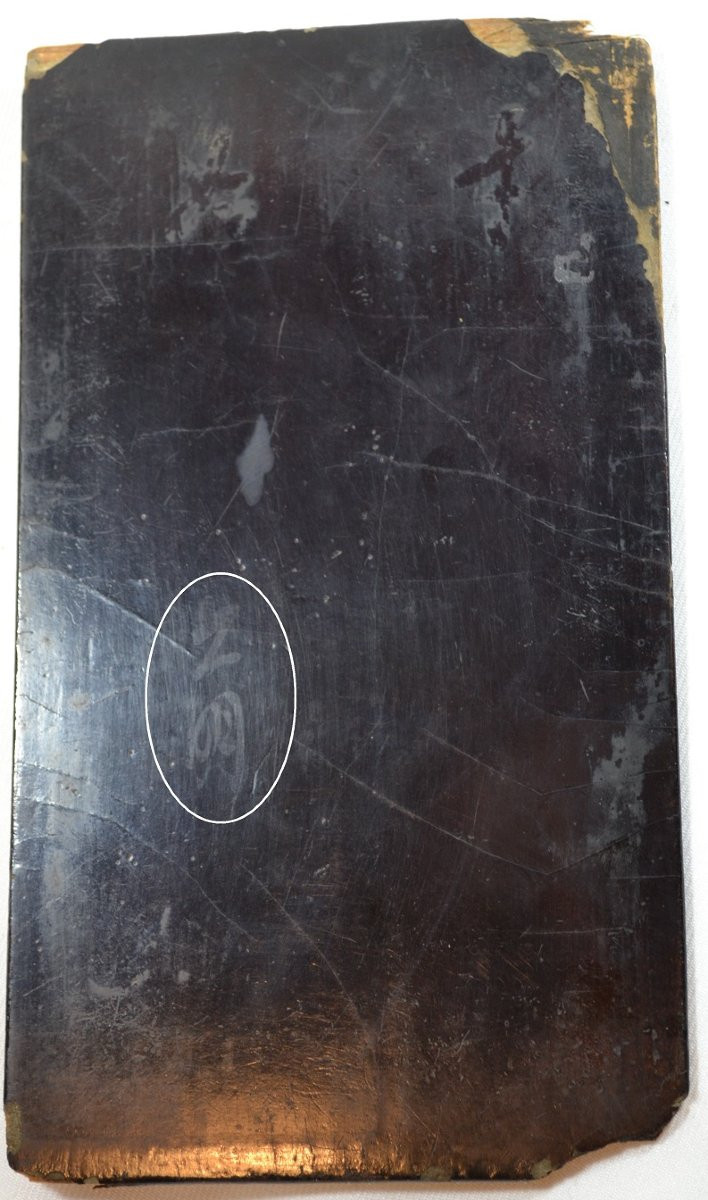
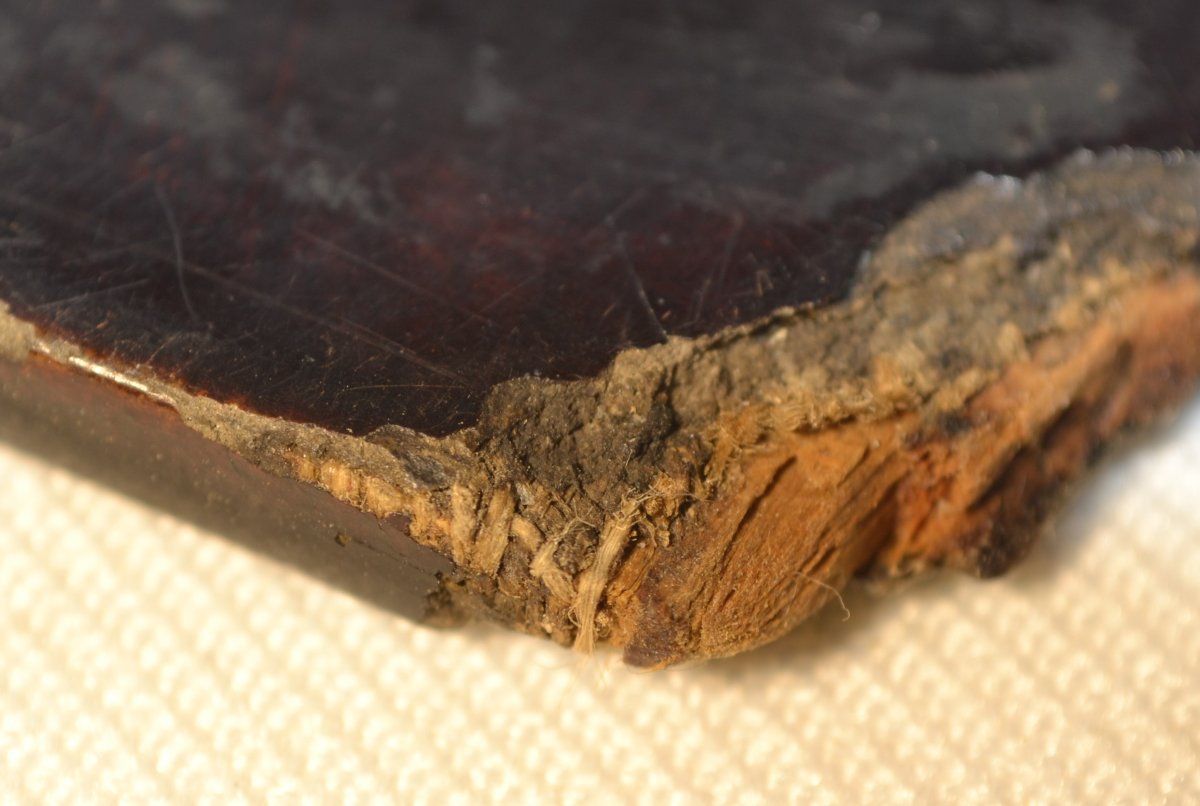
The two panels are in black lacquer, the first is decorated with gold powder with scholars gathered in a pavilion, in the middle of a lake landscape, on the reverse are written Chinese characters probably describing the scene and indicating who the artist was. The drawings are meticulously executed, some details are drawn with an exceptionally fine brush. The decoration of the second panel, also powdered with gold, but much simpler, is however very interesting because it represents the celestial divinity Chang-é, goddess of the moon, as indicated by the phoenix (Fenghuang) in her hair, the ribboned bottle held in her hand and above her, the moon suggested by the disc of mother-of-pearl sequins and her halo. The elegance of the Goddess, the movement of her dress, announces an excellent painter. On the back, one can discern, almost completely erased, Chinese characters, probably the name of the Goddess and/or that of the artist. A piece of broken lacquer lets us see on the first panel the reinforcing fabric, present only on very old lacquers, before the 18th century. We think that these panels, although they are different, are from the same period, that is to say from the end of the 17th century during the reign of Kangxi, but it is possible that they are earlier.Their lightness, their small dimensions and their abnormally pronounced wear suggest that they are objects that were very handled, like playing or divinatory cards. This would make them particularly rare and interesting objects. Same dimensions. 234x129mm and 231x129.
600 €
Period: 17th century
Style: Asian art
Condition: En l'etat
Material: Lacquer
Length: 234mm
Width: 129mm
Reference (ID): 1634580
Availability: In stock
Print