THIS OBJECT WAS SOLD
Silver-plated Duck Press Or Lobster Press, Wiskemann, Brussels, Circa 1890-1920


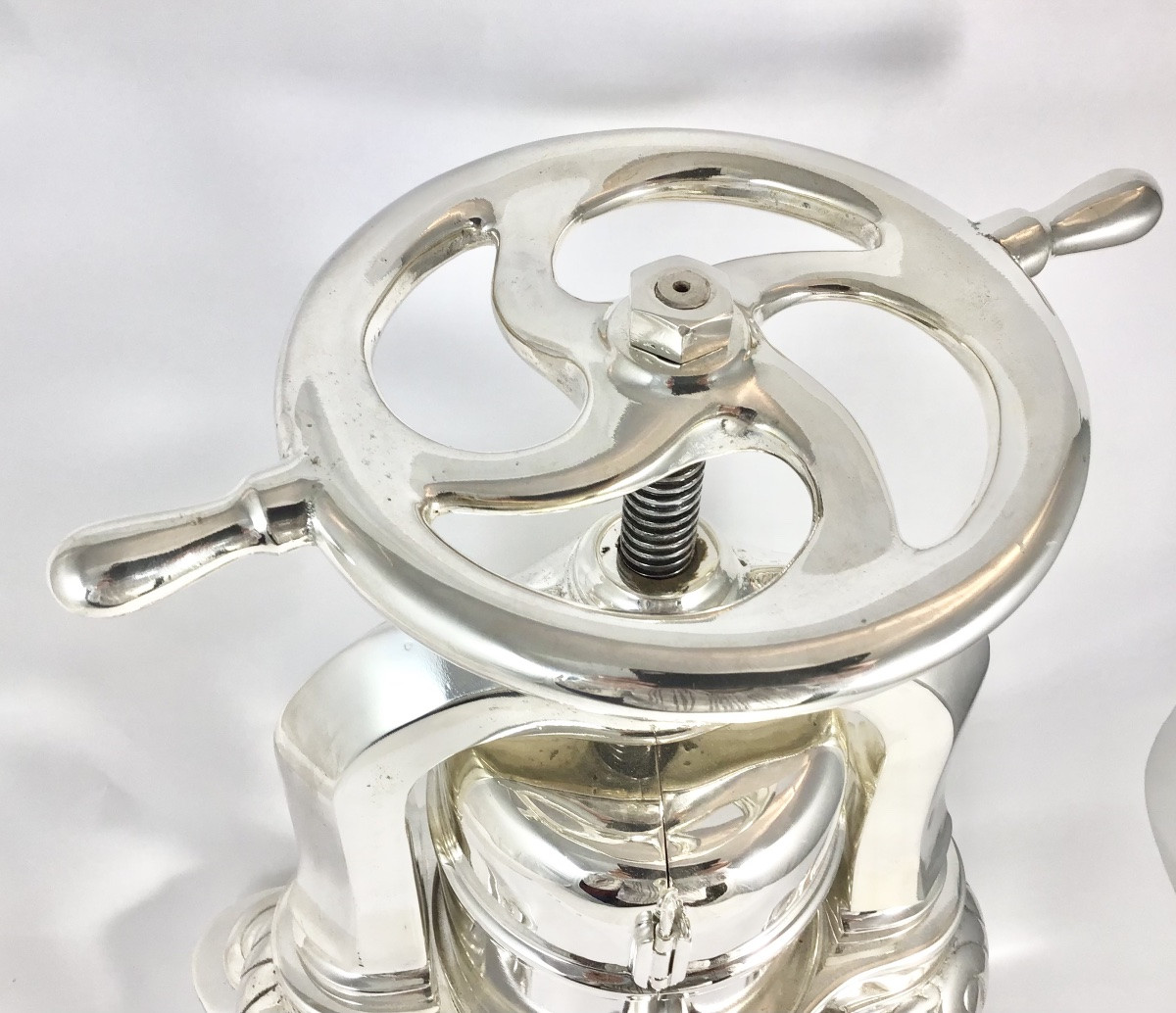

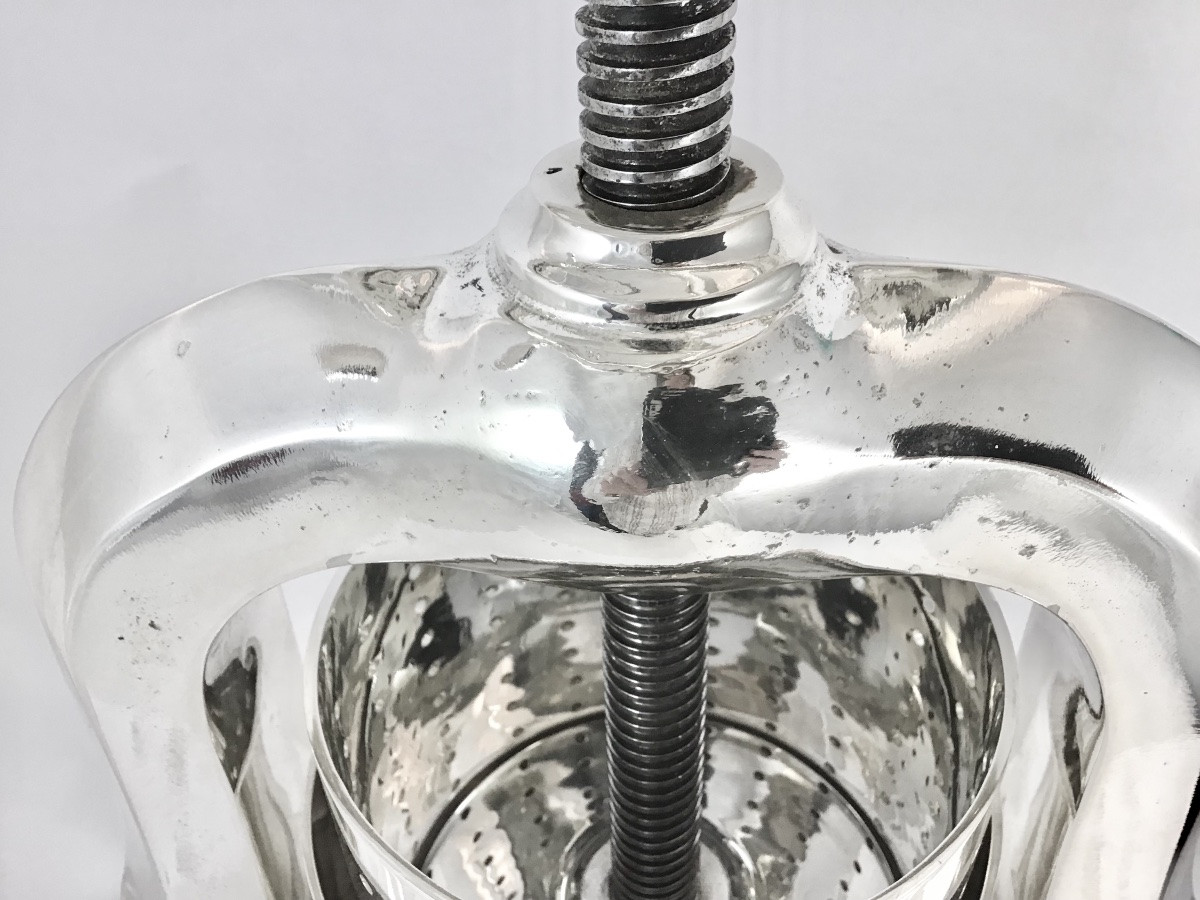


Extremely rare silver-plated duck or lobster press, made by the famous Brussels house Wiskemann around 1900. A key piece in restaurants and brasseries of the Belle Époque, this press was used to prepare the famous recipe for duck à la Denise or duck Duclair. A culinary specialty of Rouen, its recipe is attributed to an innkeeper Duclair, called Père Denise. The dish is composed of various parts of a duck, served with a sauce made from its blood and bone marrow, extracted using a press, called a "duck press". Canard au sang is sometimes considered "the height of elegance". This dish also became a specialty of the restaurant La Tour d'Argent, in Paris, where the recipe for "Caneton Tour d'Argent" was codified in the 19th century. A duck, preferably young and plump, is slaughtered in such a way as to preserve its blood (smothered). The duck is then partially grilled on a spit. Its liver is crushed and dried, then the legs and the breast are removed. What remains of the animal (including bones and skin) is placed in a special press (resembling a wine press): a juice of blood and carcass is thus obtained. The result of this extraction is then thickened and flavored to give a sauce. The crushed liver is added to this sauce made of chopped shallots reduced in a liter of Bordeaux with pepper and salt and to which butter is added. The breast is then cut and served with the sauce. The legs are grilled and can be the subject of the next dish. In the recipe for duck with blood, Tour d'Argent style, the sauce is prepared with 10 cl of Madeira and 5 cl of cognac. The press that we offer for sale has been completely restored and re-silvered according to the rules of the art. It is therefore perfectly usable.
Explore similar pieces and discover your ideal find:
Dinnerware