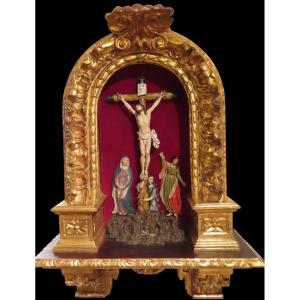


Calvary, Carved And Polychrome Wooden Sculpture, Guatemala, 18th Century
NICHE UNAVAILABLE
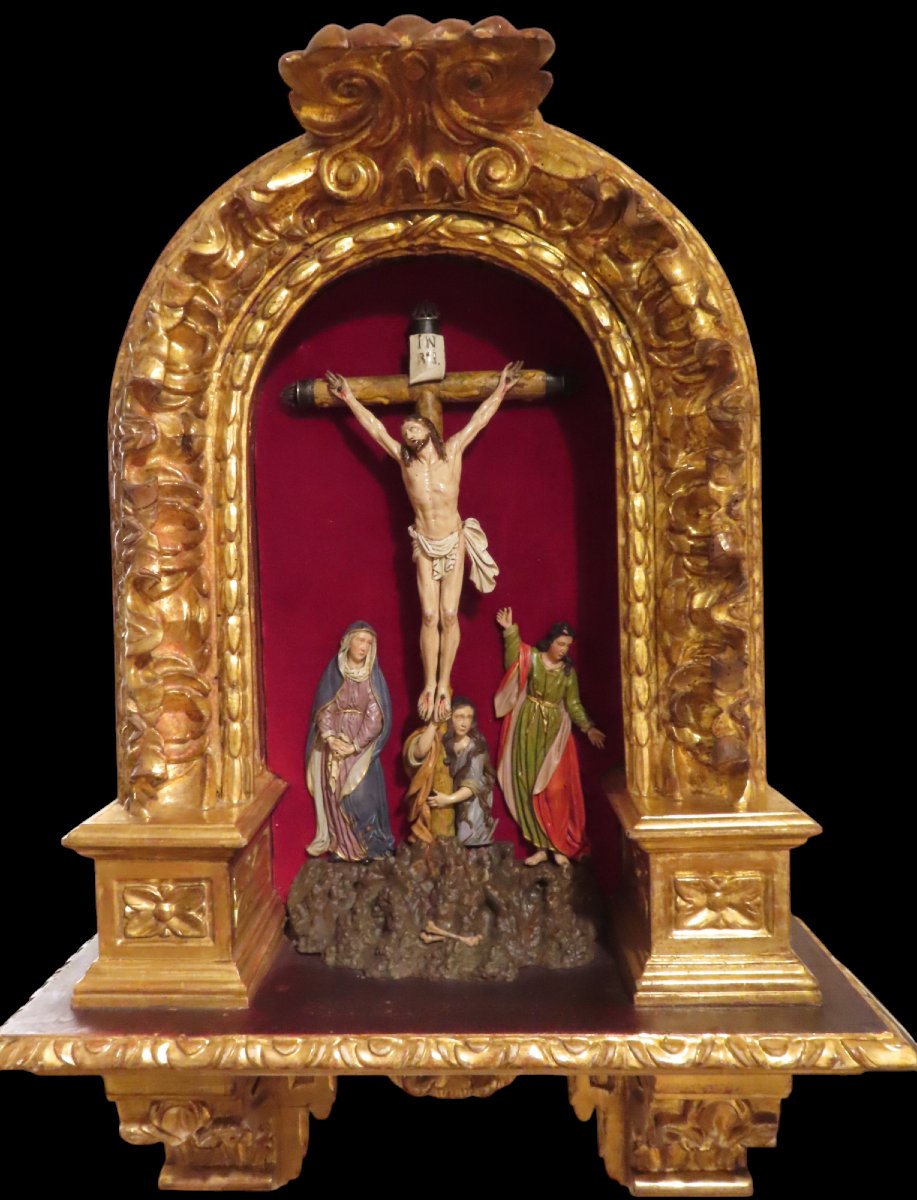
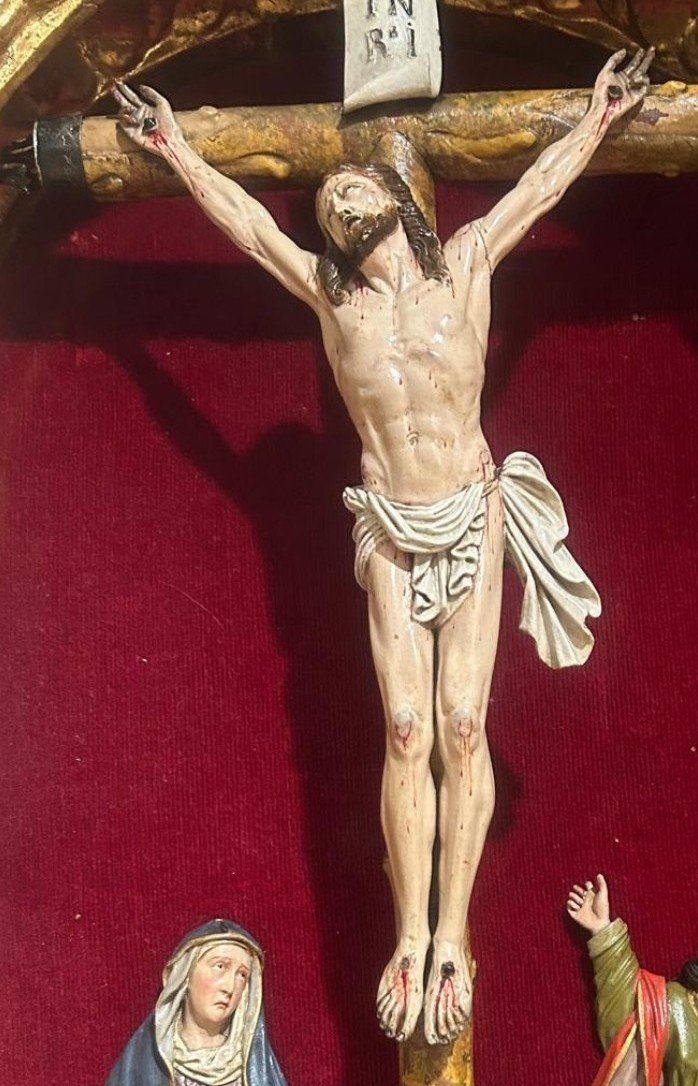
The depiction of the Crucifixion of Christ is notable for the elegance and beauty of its figures, as well as the delicacy with which the artist has rendered every detail. As is typical in most medieval *Calvaries* (Crucifixion scenes), the figure of the crucified Christ serves as the focal point, presiding over the scene; the vertical beam of the cross acts as the central axis of the composition. The Son of God is still alive; He is shown with His eyes open, wearing an expression of supplication directed toward the Father—an expression full of serenity. His body—clad only in a *perizonium*, or loincloth—appears languid, possessing a subtle curvature and rendered in a light, understated color palette. Firmly nailed to the wooden cross, Christ is depicted with His arms outstretched, His feet pinned together by two nails—a convention common in 17th-century Baroque painting.
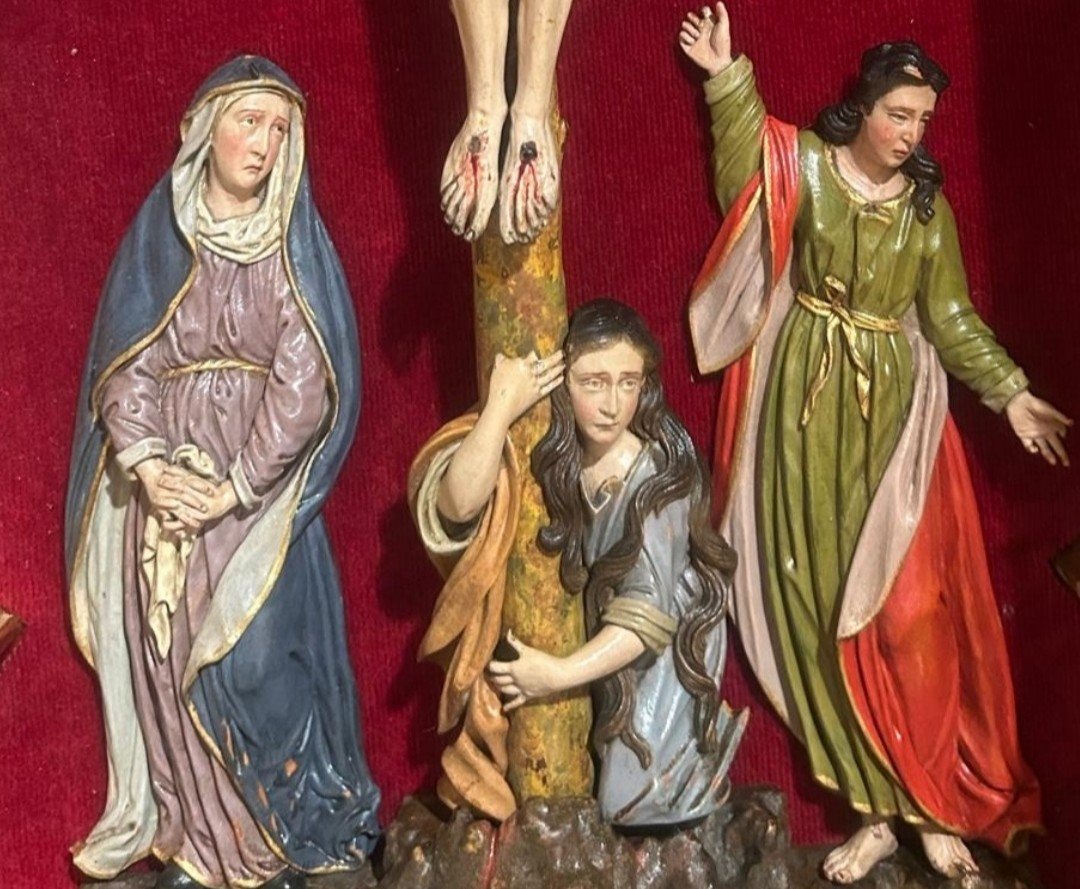
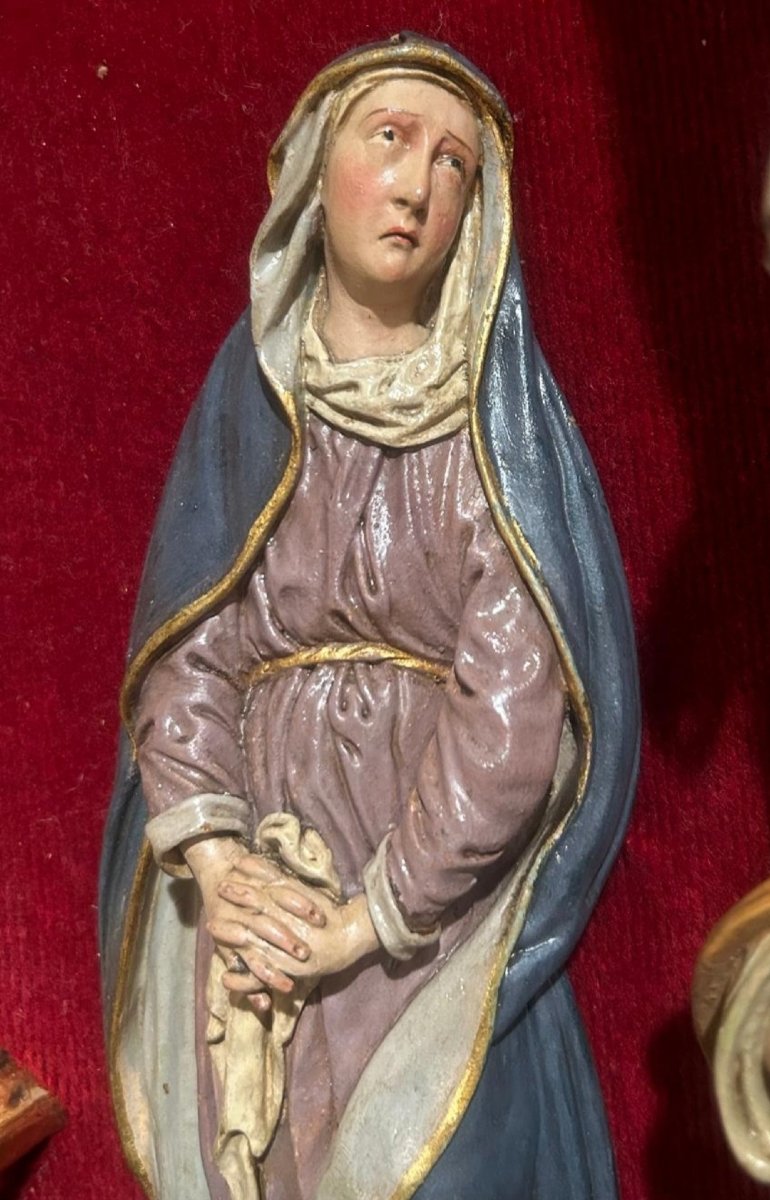
On either side of the cross—arranged in a balanced manner relative to the central axis of symmetry—are the key figures from the Gospel account, mourning and lamenting His death. To Christ’s right stands the Virgin Mary, dressed in a purple tunic and a sky-blue mantle with a golden border; she is overcome with grief, her fingers interlaced in prayer as she gazes toward her Son. Throughout the work, the garments of all the figures feature deep, abundant folds.
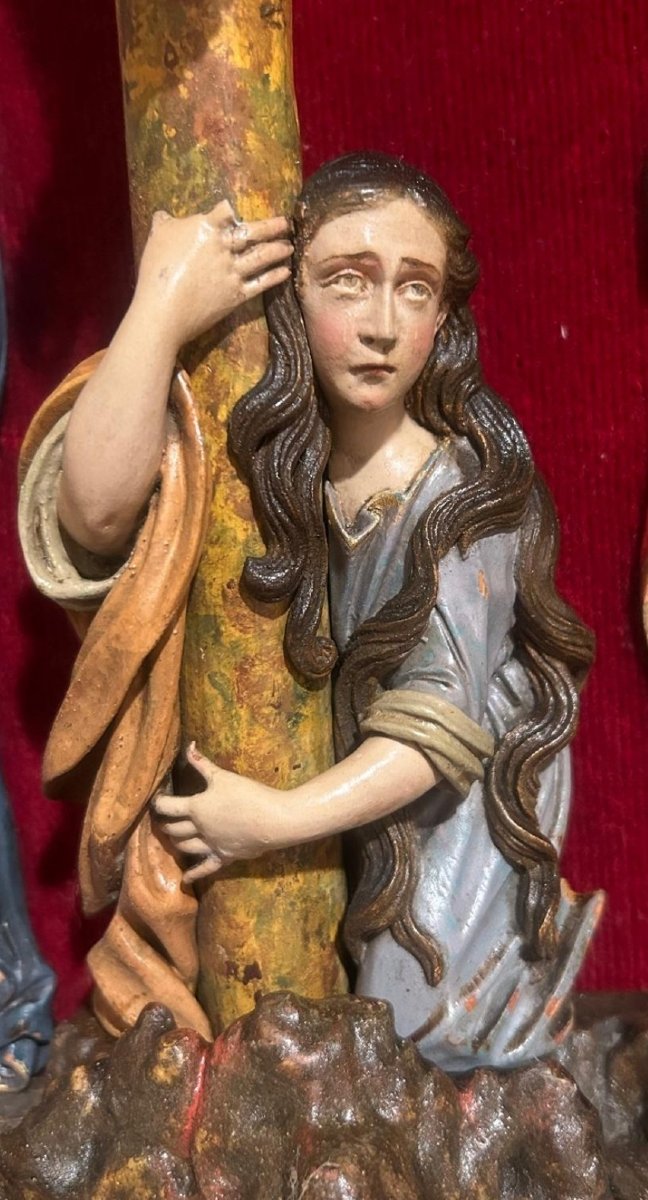
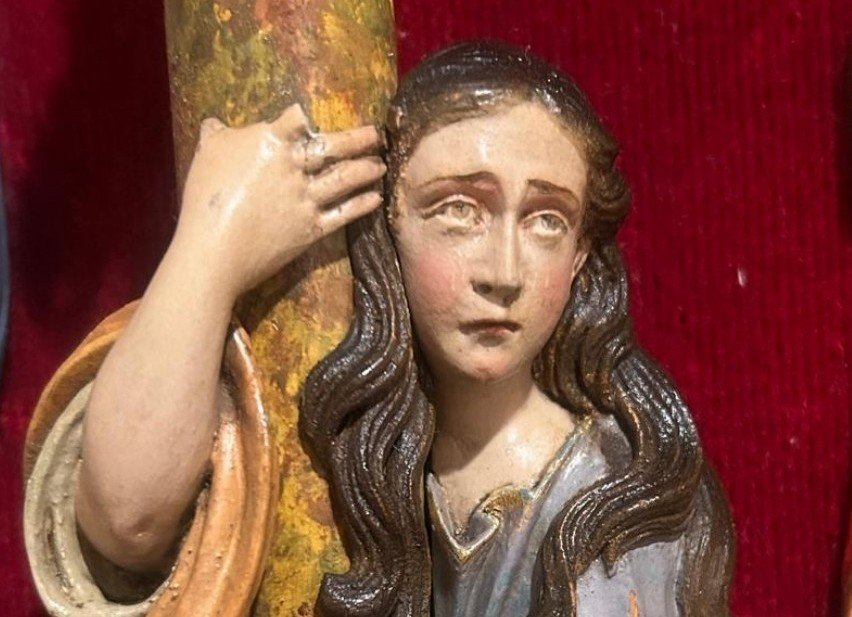
To the left is Saint John the Evangelist, the youngest of the apostles and the one closest to Jesus. As is customary, this disciple is portrayed beardless, with very youthful—almost adolescent—features. He raises his left hand toward the crucifix while inclining his right hand toward the ground, his face marked by an expression of profound sorrow. Between Mary and the disciple John, we find Mary Magdalene—the woman forgiven and redeemed by Jesus, who became one of his most faithful disciples, accompanying him all the way to Calvary. Mary Magdalene is depicted according to her most common iconography: bareheaded, with long, straight hair falling over her shoulders, and dressed in a grayish-toned gown with greenish trim at the cuffs. She is the only figure in the group who, as a gesture of grief, embraces the cross near the crucified feet.
This work exemplifies the visual and emotional qualities for which Guatemalan sculpture is renowned—namely, the refinement of its carving and the brilliant color of its polychromy. In all likelihood, this *Calvary* is the work of multiple artists, each an expert in a different aspect of its creation. One or more sculptors prepared the wood and carved the individual, unpainted figures, which were subsequently passed on to polychromers. The application of color was—in most cases—carried out by different specialists: those who focused on rendering human flesh (*encarnación*) and those dedicated to imitating textiles (*estofado*).
This Guatemalan *Calvary* would have served as the centerpiece for a domestic oratory belonging to a devout official or merchant living in the country. The material richness of the sculpture signaled prestige and social distinction; its display not only reflected the owner’s devotion but also a taste for acquiring pieces that were beyond the reach of the general public.
The *Calvary* shows some damage to Saint John’s right hand. It has undergone recent repainting and restoration.
2 500 €
Period: 18th century
Style: Other Style
Condition: Fully restored
Material: Painted wood
Width: 28
Height: 56
Reference (ID): 1856830
Availability: In stock
Print