Japan - Buddhist Triad Set - Lotus Sutra - Nichiren - Edo Period, 18th–19th Centuries.
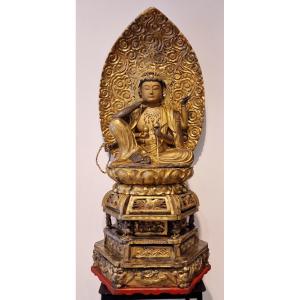
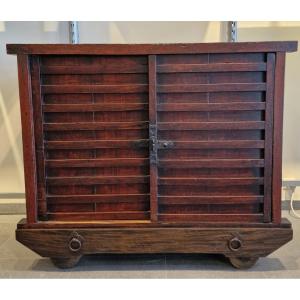
A Buddhist triad consisting of two deities seated in a meditative posture and a central stele housing a votive tablet. The structure rests on an imposing architectural base adorned with friezes of waves, floral scrolls (lotus), and geometric panels in a checkerboard and braided (kuzugata) style. The ensemble supports two figures of crowned bodhisattvas with serene faces, their hands joined in a gesture of prayer or veneration (gasshō), seated on lotus thrones with wide, open petals. Each figure is backed by a large, openwork, three-lobed mandorla (hōshu, or in the shape of stylized flames or leaves), richly carved with swirling motifs and volutes of celestial clouds.
The central stele is topped by a roof in the traditional Buddhist architectural style (to-yane), sheltering a vertical, black-lacquered plaque bearing the calligraphic inscription in Japanese characters: Namú Myōhō Renge Kyō (Title of the Lotus Sutra, Nichiren tradition). This sacred invocation of Nichiren Buddhism underscores the devotional and sectarian significance of the piece for a family altar (butsudan).
Origin:Japan.
Period:Edo period (18th–19th century).
Dimensions:Height: 50 cm; Length: 40 cm.
Condition:Natural wear on the gilding along the edges and reliefs, highlighting the object’s authenticity and age. A dark, warm patina of the wood is visible in places beneath the cracked gilding. Traces of old dust embedded in the deep carvings of the mandorlas, indicating careful preservation in a closed environment. No visible major restorations.
Provenance:Private collection in Brussels.
5 000 €
Period: 18th century
Style: Asian art
Condition: Excellent condition
Material: Gilted wood
Length: 40 cm
Height: 50 cm
Reference (ID): 1855564
Availability: In stock
Print