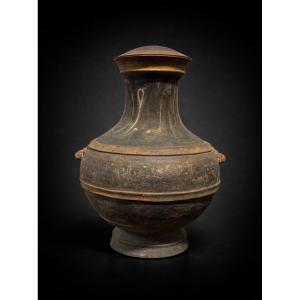





China - Terracotta Hu Vase With Rings - Han Dynasty - Tl
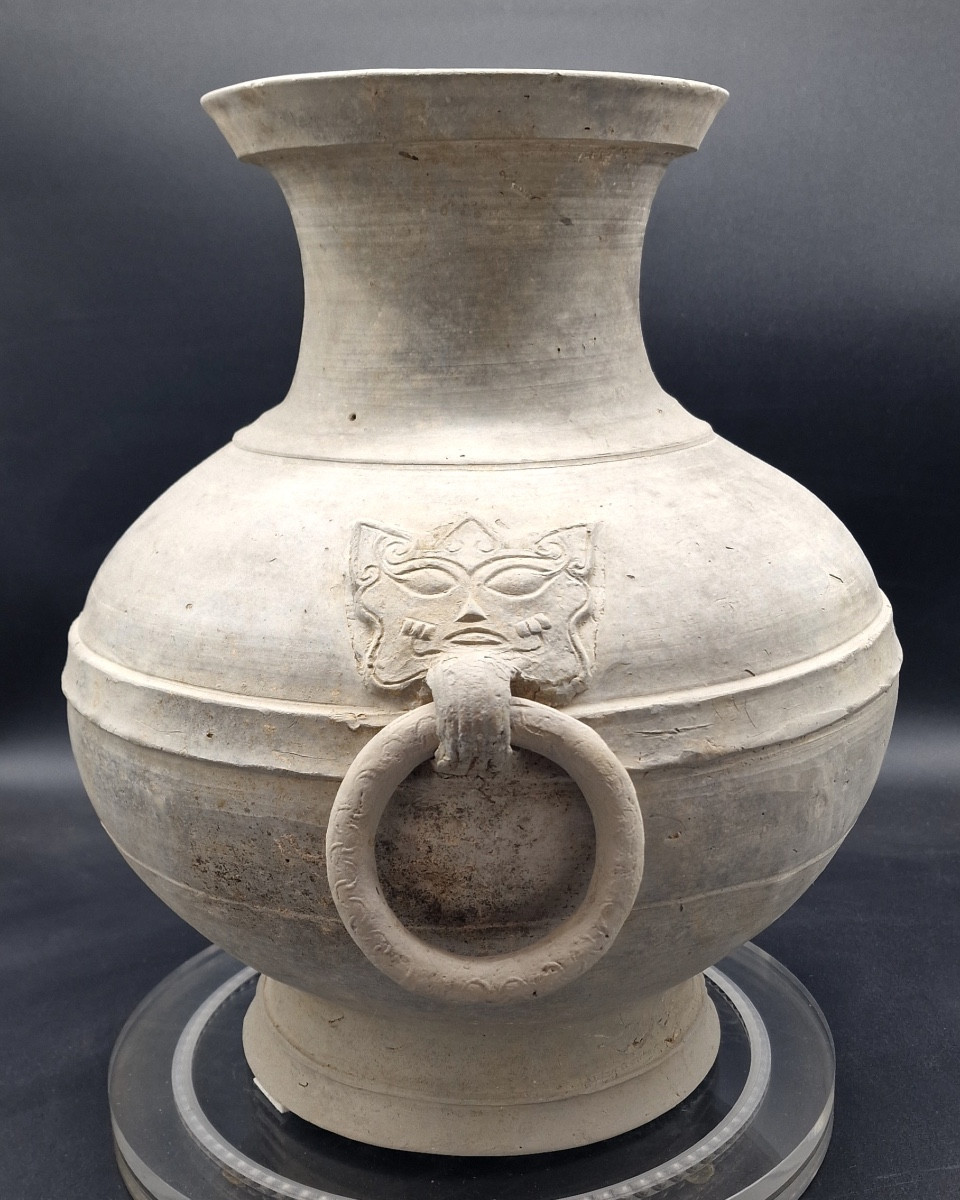
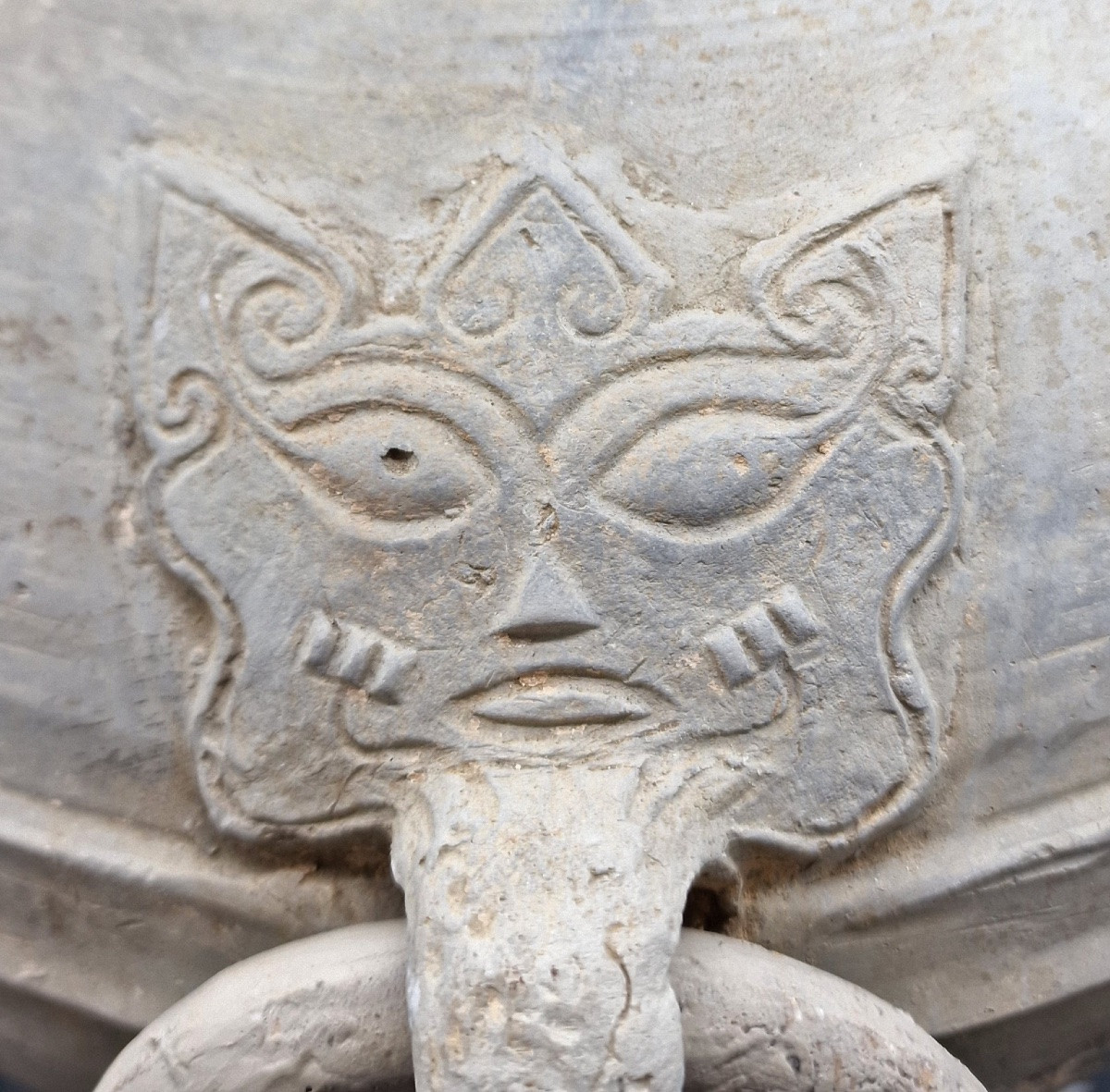
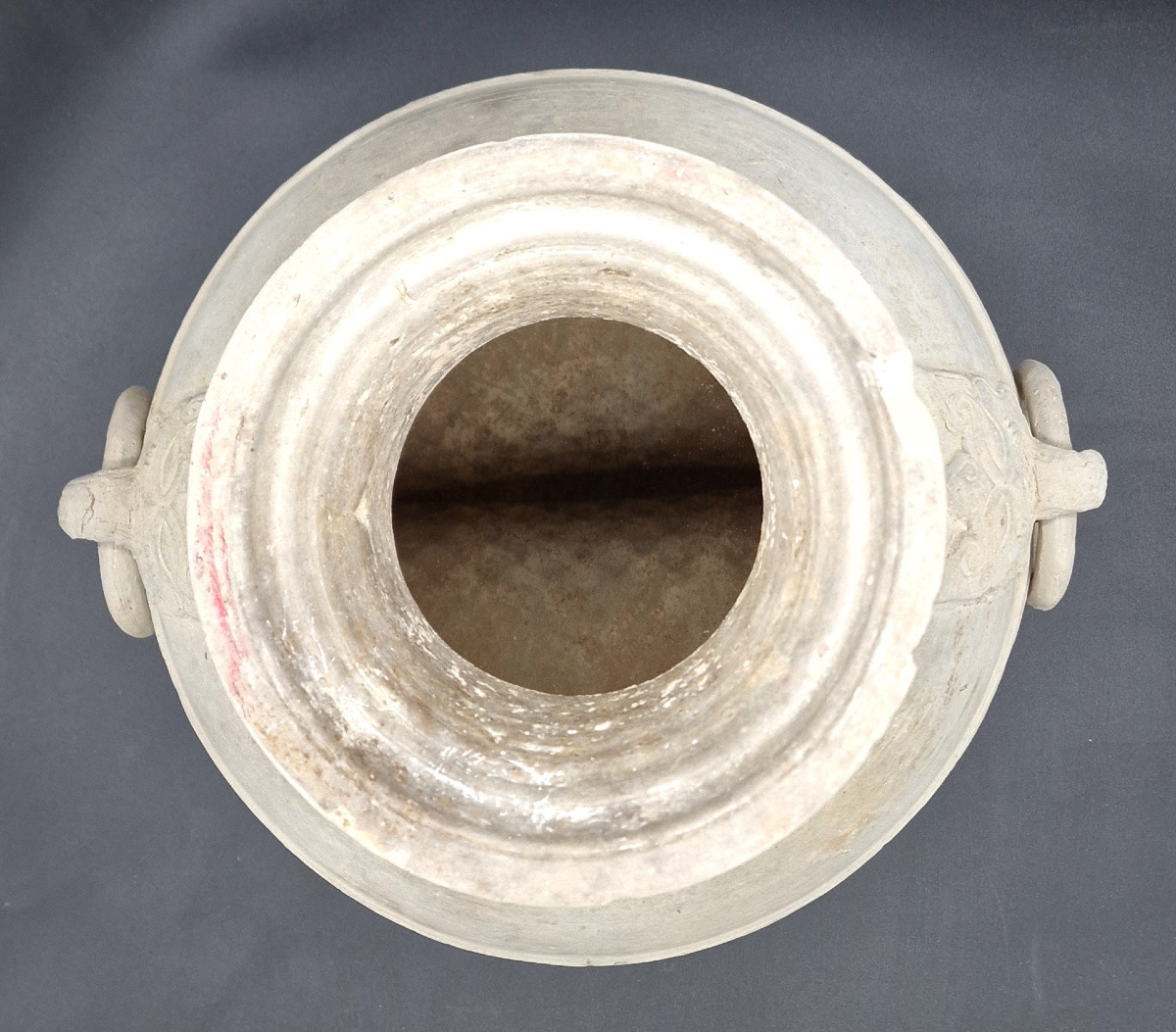
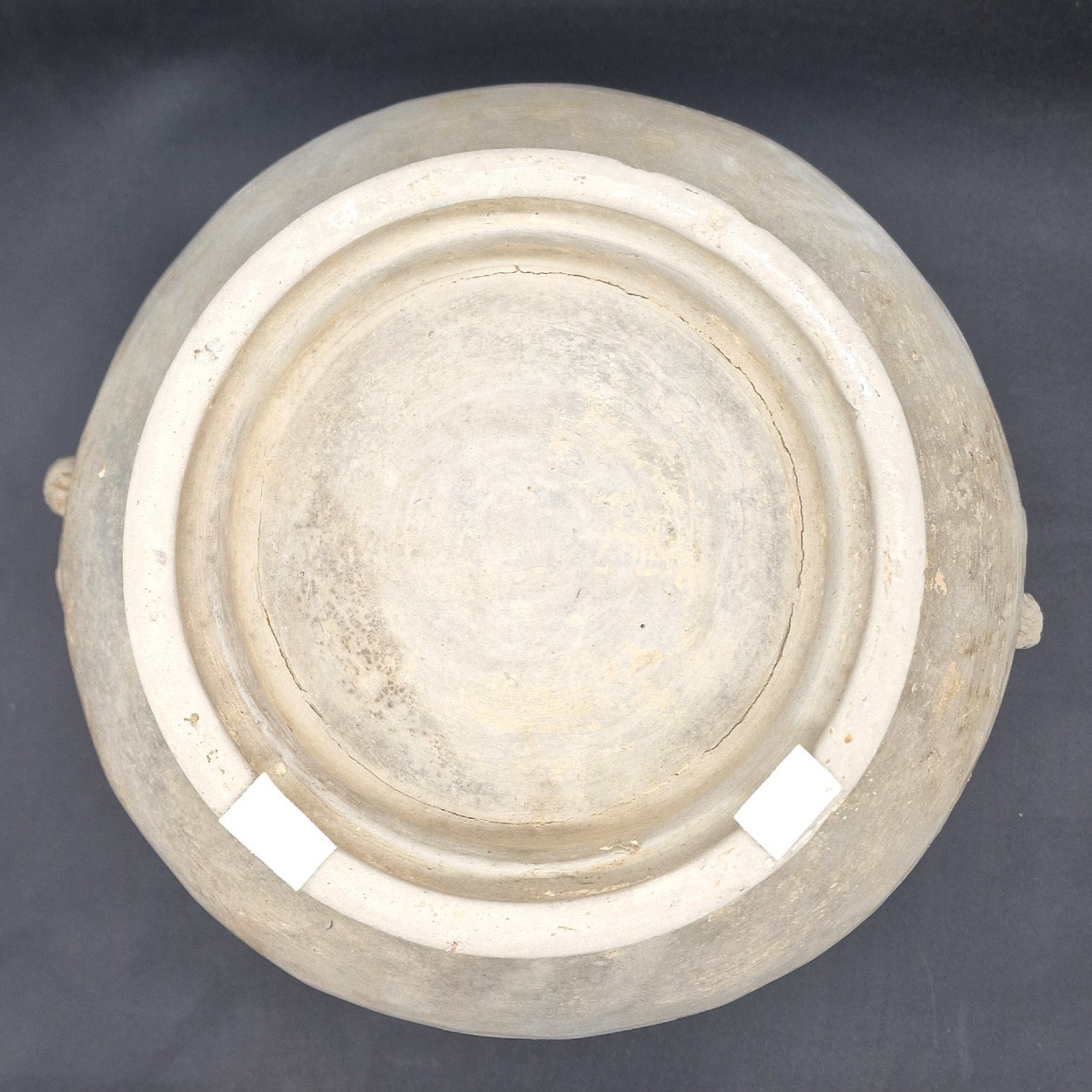
A typical Han period terracotta "Hu"-shaped vase features an elegant and functional shape. It is large in size, with a slender, flared silhouette. The surface of the vase is decorated with two taotie motifs, a Chinese mythological motif often representing a stylized face or a fantastical creature, a symbol of protection and power. The taotie motifs are symmetrical, with prominent eyes and mouths on which geometrically decorated rings are attached. The decorative rings reinforce the symbolic and aesthetic aspect of the object. The combination of these elements testifies to the craftsmanship and symbolic richness of funerary and domestic art during the Han Dynasty. The body is decorated with two parallel horizontal lines. The terracotta used was originally green in color, imitating bronze with a smooth texture. Remains of red color. A thermoluminescence test certifying the ancient dating accompanies the object. Origin: China. Period: Han Dynasty (206 BC - 220) - Thermoluminescence test. Dimensions: Height: 39 cm; Diameter: 31 cm; Width: 37 cm. Condition: Very good overall condition, except for small losses on the neck. Provenance: Former Belgian private collection. Han period terracotta vases are important objects, often linked to ritual, funerary or domestic practices. The presence of taotie motifs indicates an influence of Chinese mythological and symbolic art, often associated with protection against evil forces or the celebration of imperial power. These vases were sometimes placed in burial sites to accompany the deceased in the afterlife, or used during religious ceremonies. The terracotta manufacturing technique allowed for mass production, making these objects accessible to different social classes.
4 000 €
Period: Before 16th century
Style: Asian art
Condition: Excellent condition
Material: Terracotta
Width: 37 cm.
Diameter: 31 cm.
Height: 39 cm.
Reference (ID): 1549524
Availability: In stock
Print