


China - Lotus-decorated
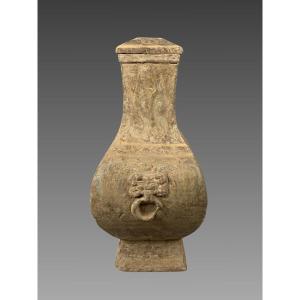
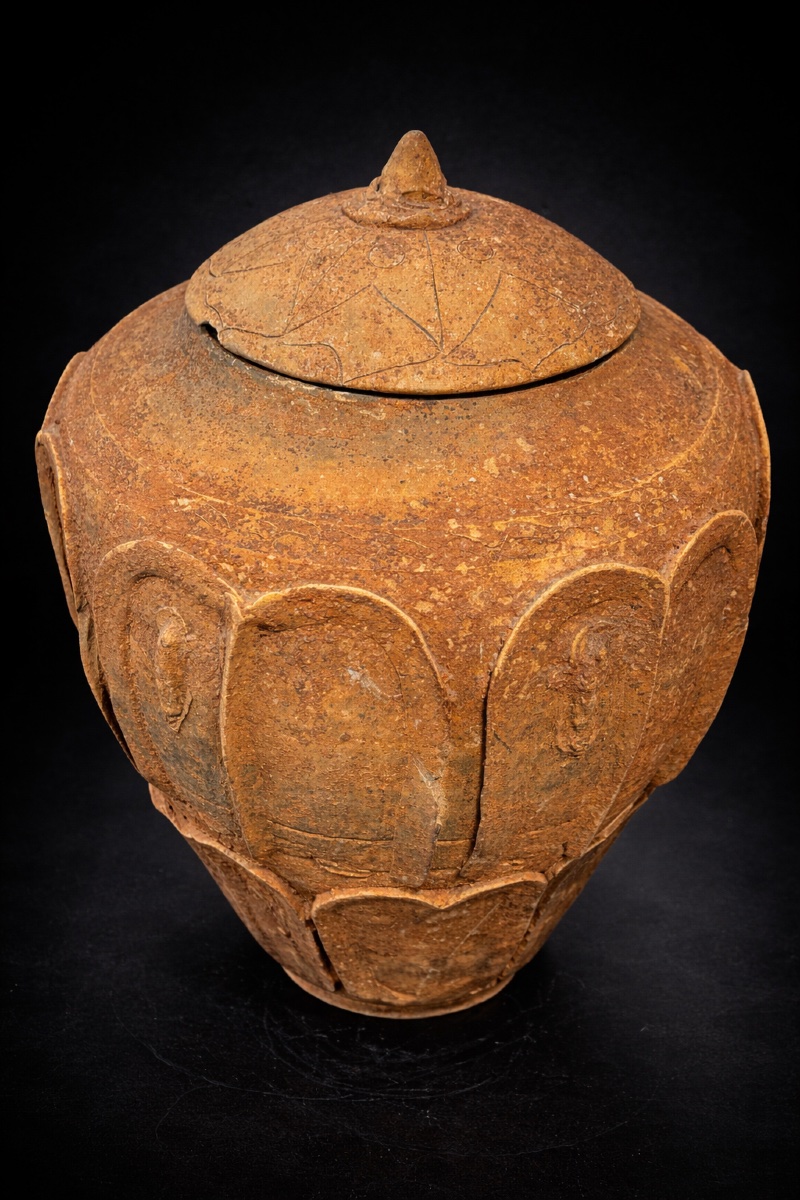
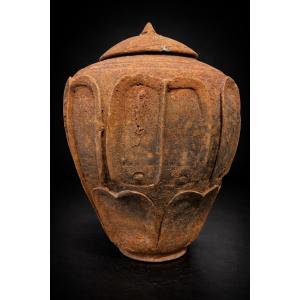
Remarkable "Hunping" funerary urn (or soul jar) for its applied lotus petal decoration and ferruginous patina. Six Dynasties period, probably Wei dynasty (386-589) Fashioned in terracotta with a rich, textured patina nearly sixteen centuries ago, this urn, called Hunping ("soul jar"), embodies one of the most spiritual periods in Chinese history. Under the Wei dynasty, funerary art underwent a fascinating transition: it was no longer simply a matter of housing the body, but of providing a receptacle for the spirit of the deceased. This piece is a miniature monument, designed to ensure the soul's peace in its celestial peregrinations. The decoration of this urn deploys Buddhist and Taoist symbolism of great graphic force:
Origin:China
Era:Wei Dynasty / Six Dynasties (386-589)
Dimensions:Height: 32 cm ; Diameter: 21 cm
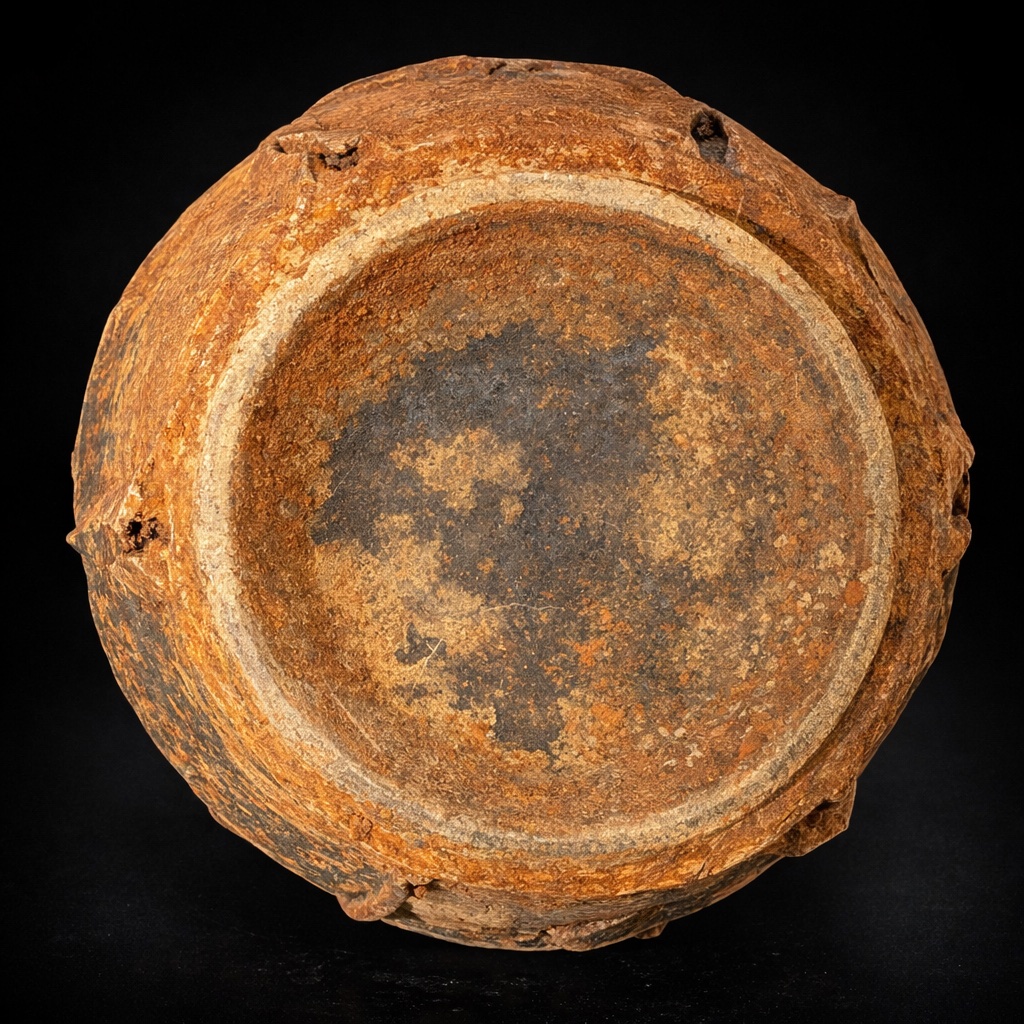
Conditions:Very fine condition for a piece of this period. Authentic excavation patina with ferruginous concretions. Natural surface wear, small chips to petal edges consistent with age. Original lid.
Provenance:Private Belgian collection.
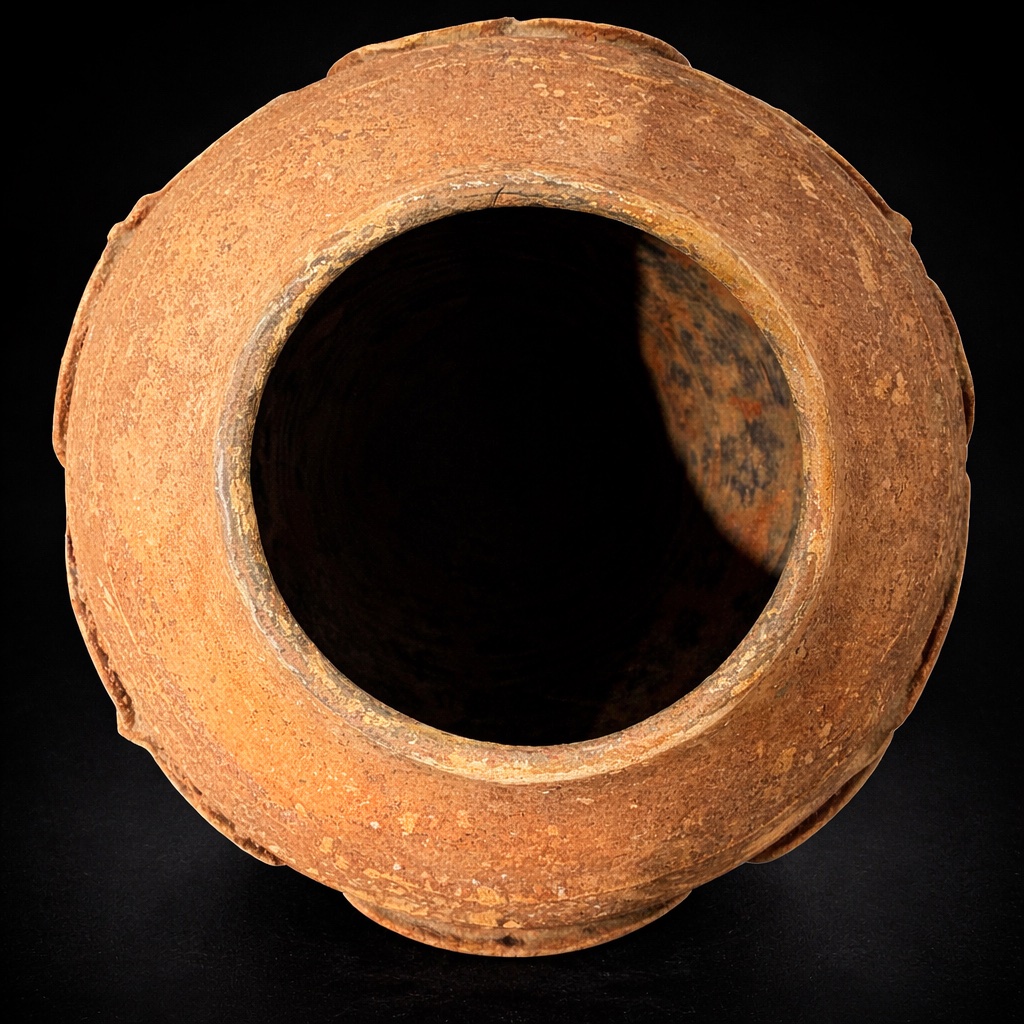
This piece is striking for its telluric presence. Its surface, covered in a natural oxidation of ochre and rust tones, seems to have fused with the earth that has protected it for centuries. Every crack in the clay and grain of sediment bears witness to a long archaeological slumber, offering an organic materiality that contrasts with the finesse of the lid's incisions.
Science at the Service of Art: What is a Thermoluminescence (TL) Test? In the world of high antiquity, the expert's eye is paramount, but science provides absolute certainty. For this Han dynasty funerary brick, the expertise was carried out by the QED laboratory.
The scientific principle:Thermoluminescence is a physical dating method that measures the energy stored in crystalline minerals (such as quartz or feldspar) contained in clay since its initial firing.
- The Blossoming Lotus: The body of the jar is adorned with large lotus petals applied in relief, arranged in superimposed registers. The lotus, emerging from the mud to bloom immaculately, symbolizes the purity of the soul and the promise of rebirth.
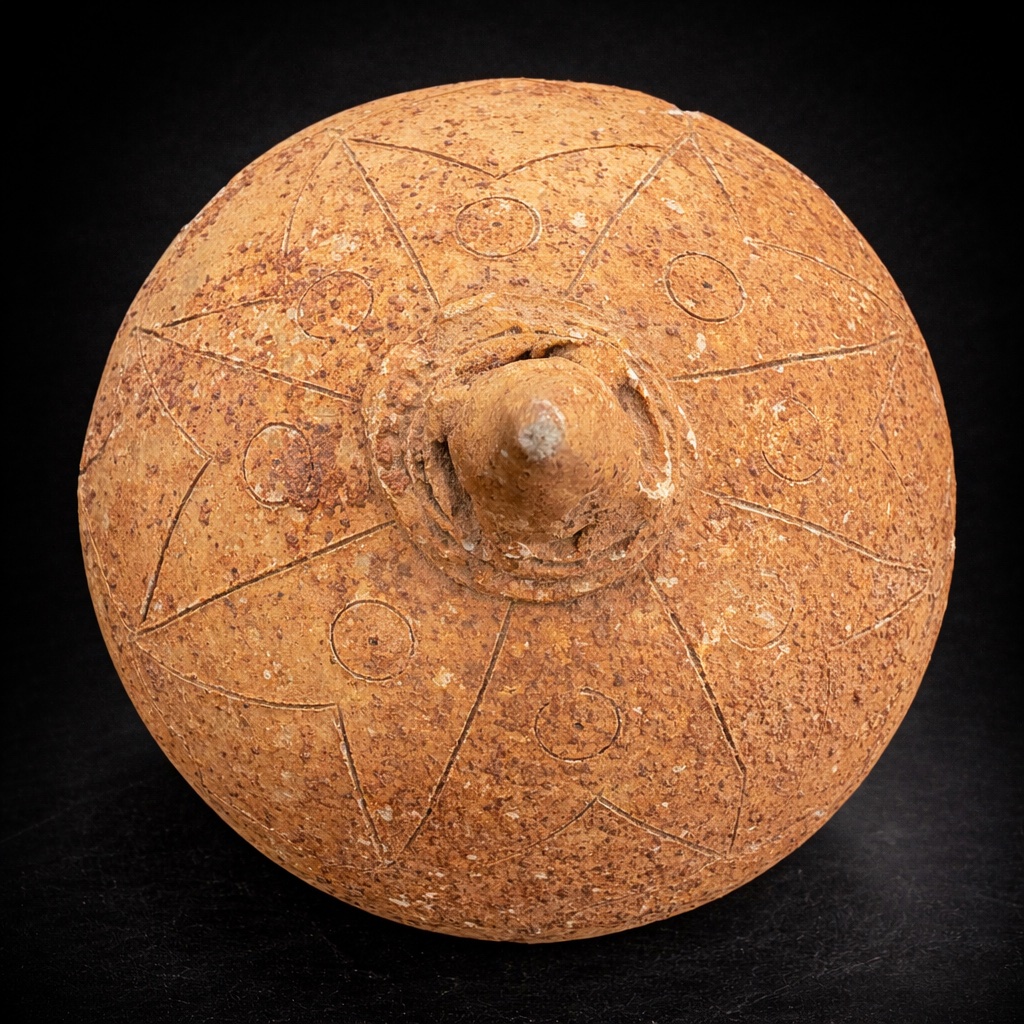
- The Spiked Lid: Topped with a bud-shaped terminal knob, the lid is engraved with incised stellar or floral motifs, evoking the vault of heaven or the paradise of the West.
- The Architecture of the Sacred: The silhouette flares out with hieratic elegance, the petals creating a vertical rhythm that guides the gaze skyward, a metaphor for spiritual ascent.
Origin:China
Era:Wei Dynasty / Six Dynasties (386-589)
Dimensions:Height: 32 cm ; Diameter: 21 cm
Conditions:Very fine condition for a piece of this period. Authentic excavation patina with ferruginous concretions. Natural surface wear, small chips to petal edges consistent with age. Original lid.
Provenance:Private Belgian collection.
This piece is striking for its telluric presence. Its surface, covered in a natural oxidation of ochre and rust tones, seems to have fused with the earth that has protected it for centuries. Every crack in the clay and grain of sediment bears witness to a long archaeological slumber, offering an organic materiality that contrasts with the finesse of the lid's incisions.
Science at the Service of Art: What is a Thermoluminescence (TL) Test? In the world of high antiquity, the expert's eye is paramount, but science provides absolute certainty. For this Han dynasty funerary brick, the expertise was carried out by the QED laboratory.
The scientific principle:Thermoluminescence is a physical dating method that measures the energy stored in crystalline minerals (such as quartz or feldspar) contained in clay since its initial firing.
- The geological clock: When the object was fired, the heat "reset" the clay's energy counter.
- The accumulation: Since that day, the object has absorbed a small amount of natural radioactivity from the soil.
- The revelation: In the laboratory, a micro-sample is heated to high temperature. The light then emitted (thermoluminescence) is proportional to the time elapsed since the last firing.
3 500 €
Period: Before 16th century
Style: Asian art
Condition: Excellent condition
Material: Terracotta
Diameter: 21 cm
Height: 32 cm
Reference (ID): 1742966
Availability: In stock
Print