

China - Pillar / Hollow Tomb Brick - Dignitary Decoration - Han Dynasty - Tl
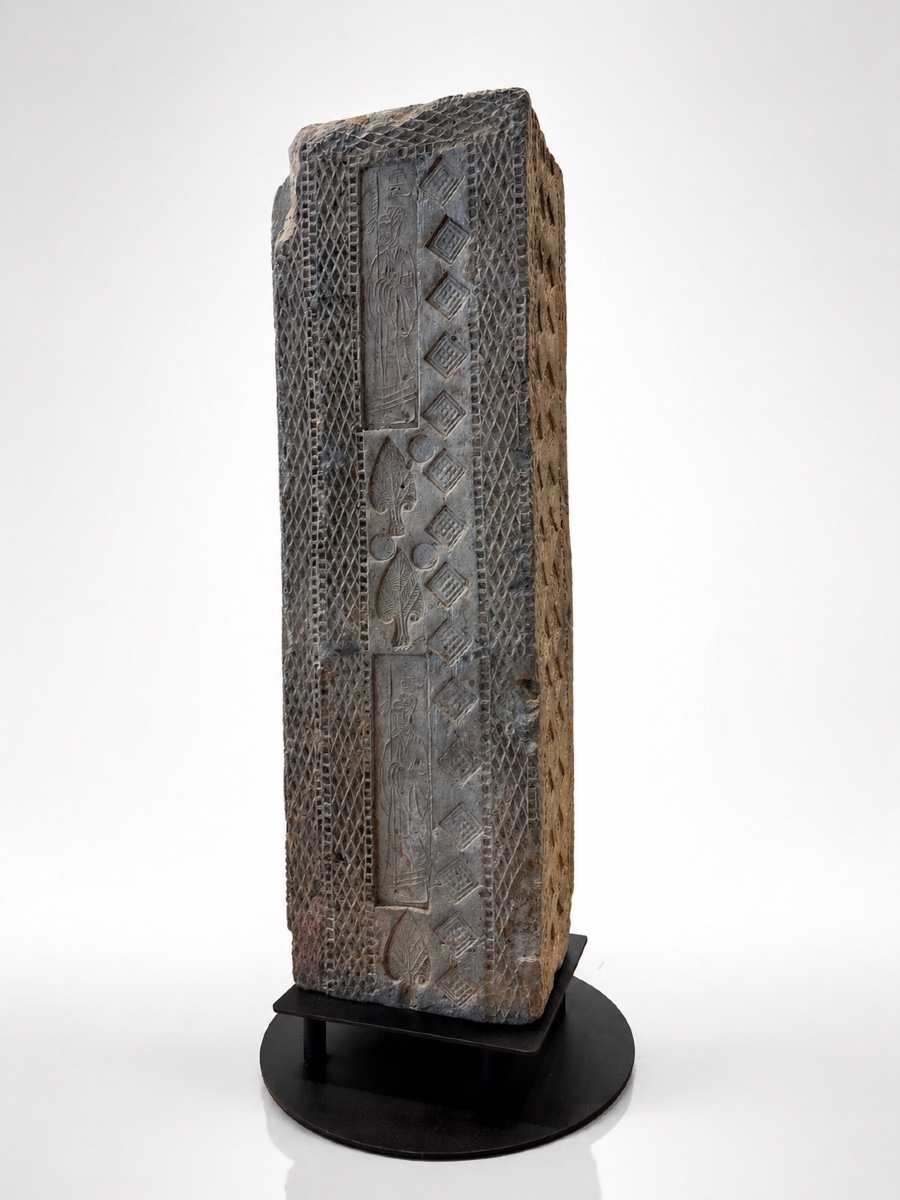
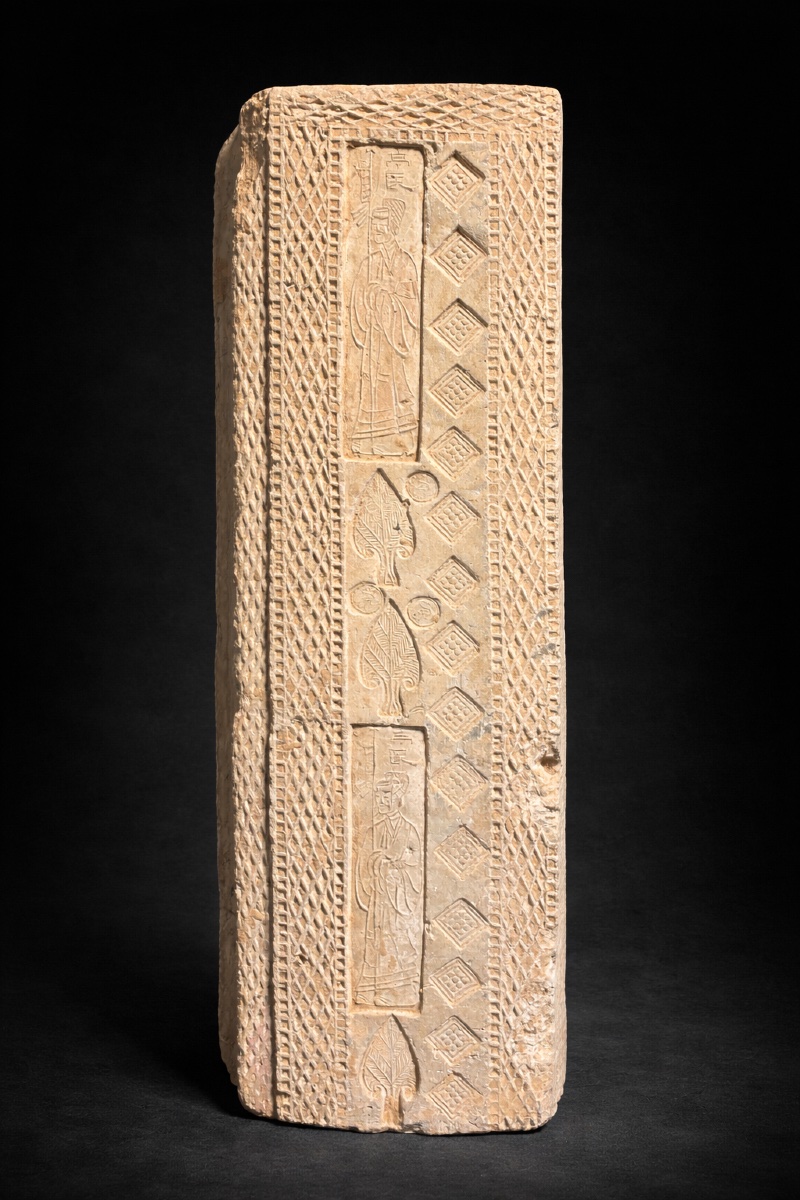
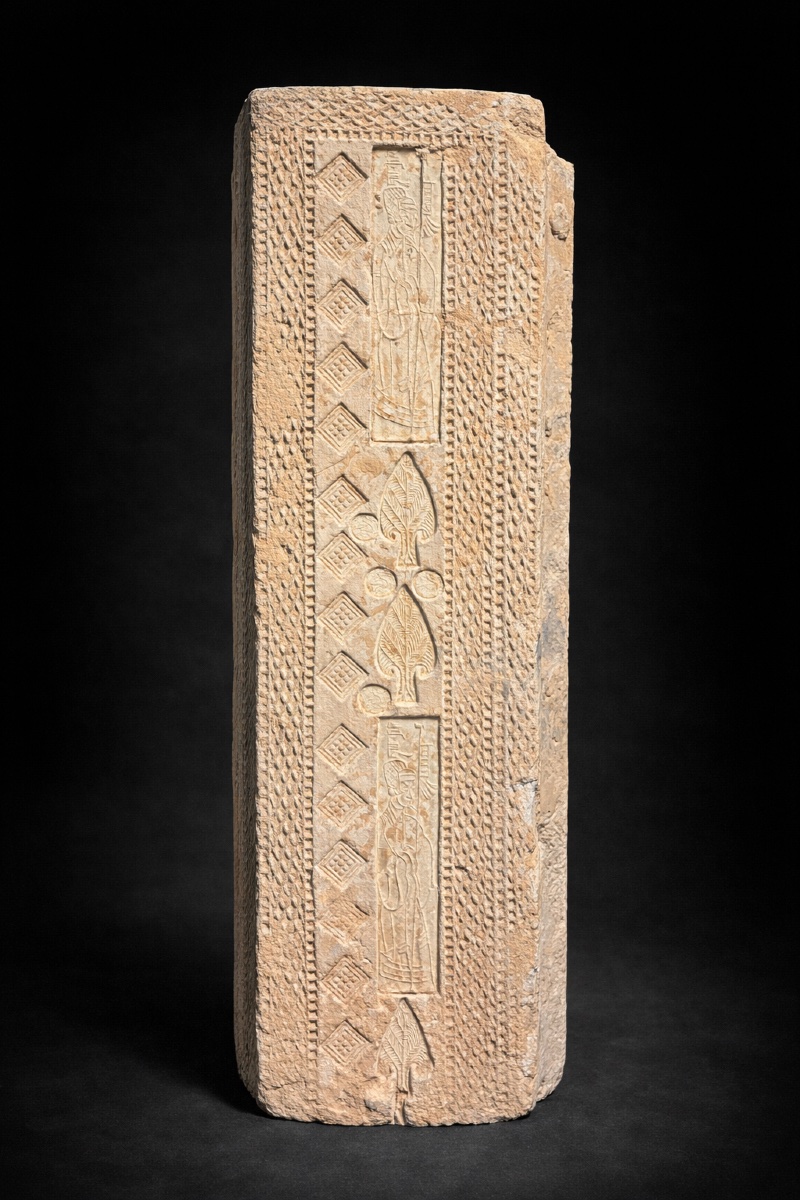
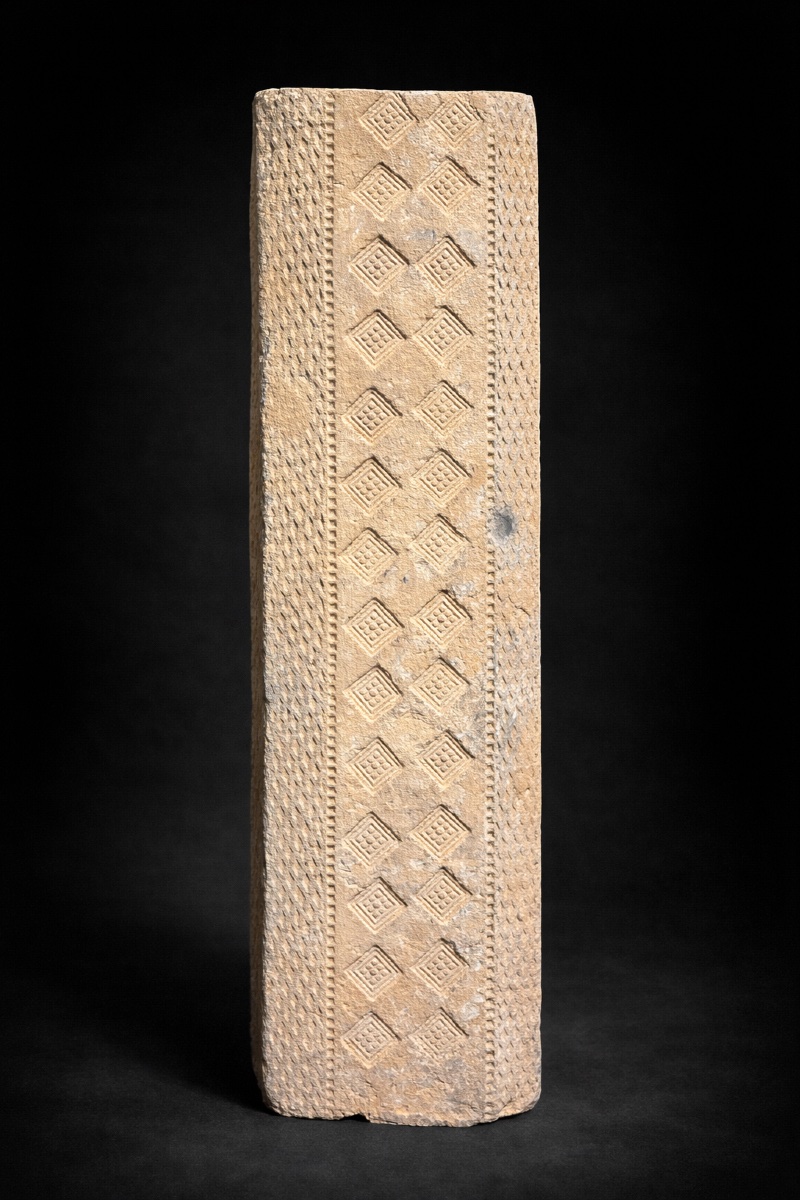
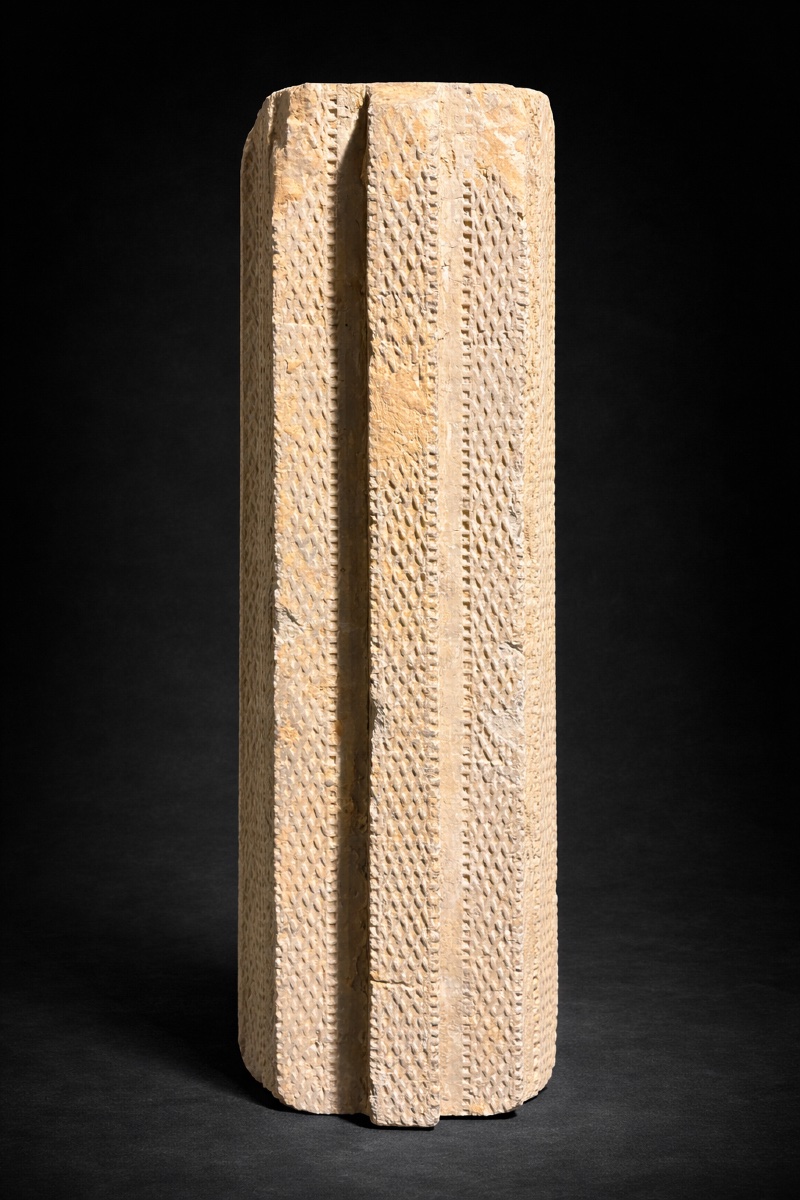
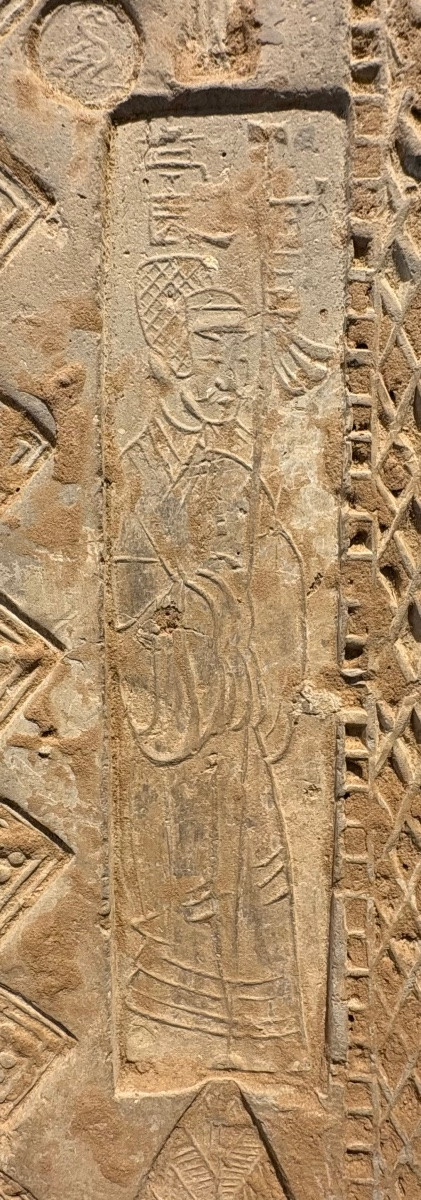
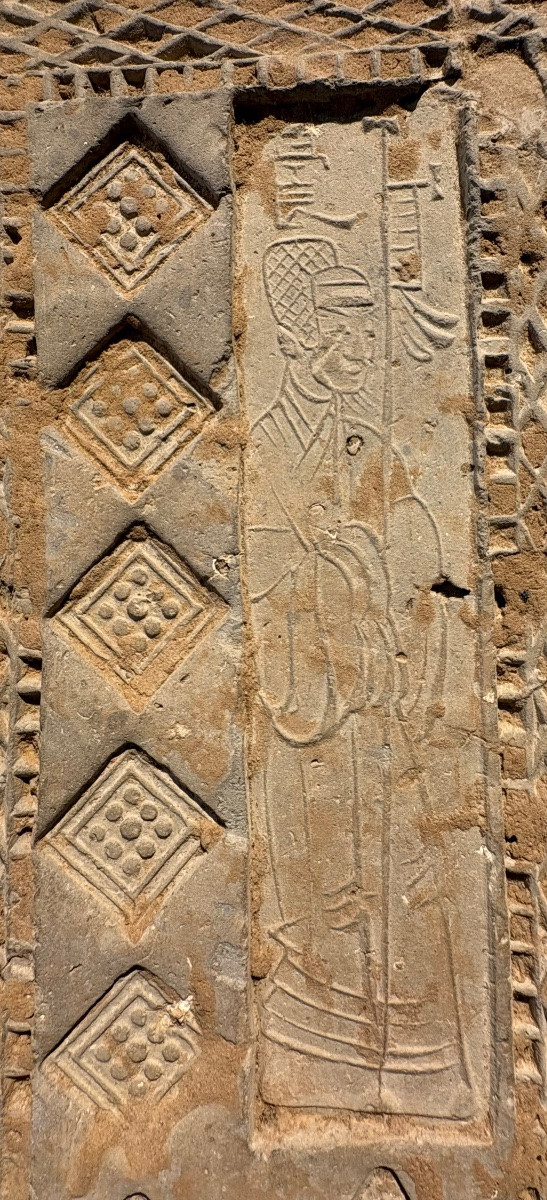
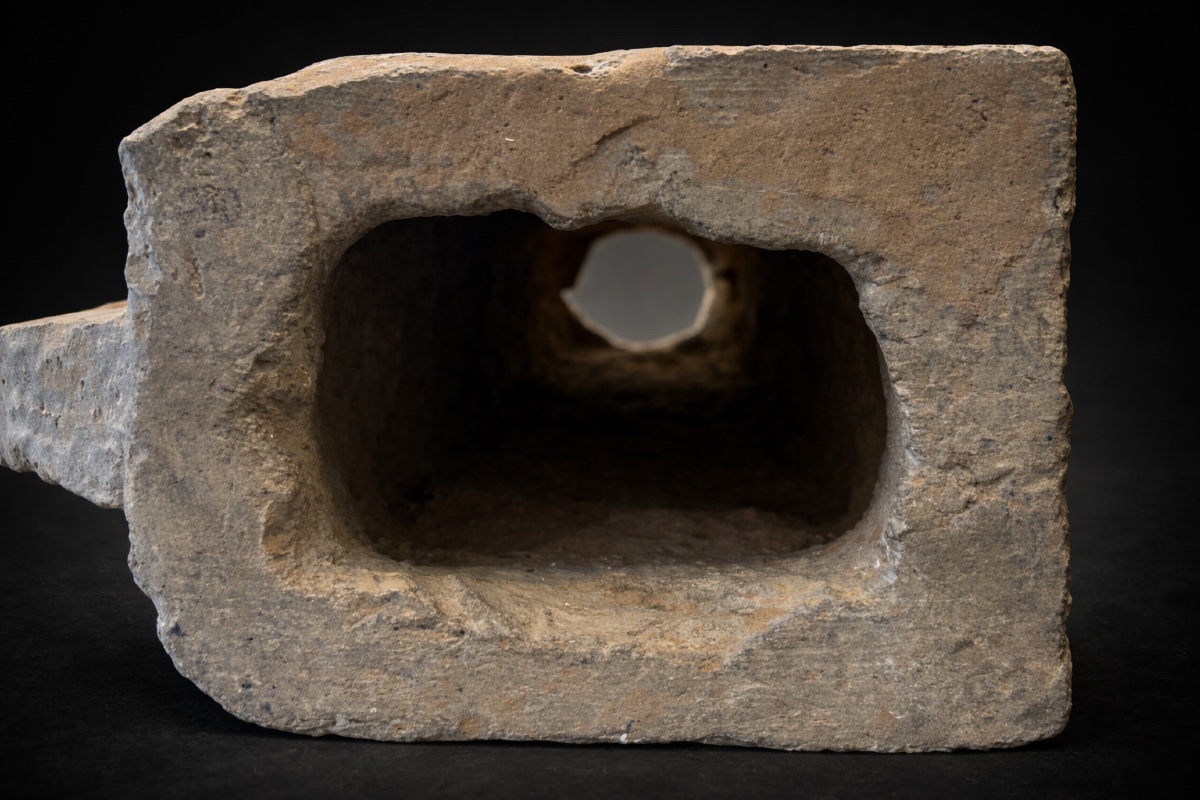
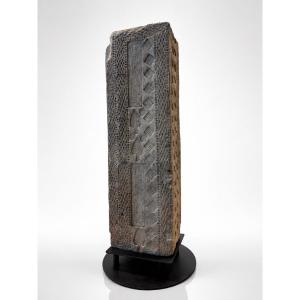
This is a hollow tomb brick, which served as a pillar, (called a kongxin zhuan) made of grey terracotta. These bricks were used to build the walls and pillars of the elite's underground burial chambers. The brick features richly embossed decoration on its visible faces, organized in vertical registers and geometric motifs:
Origin:China
Era:Han Dynasty (206 BC.C. - 220 AD)
Dimensions:Height: 66.5 cm; Length: 22.5 cm; Width: 15.5 cm.
Conditions:Very good condition. The brick has retained its original parallelepiped shape. This is a positive point, as these hollow pieces are often found fragmented or crushed by the weight of the earth over the centuries. Remains of earthy concretions and calcareous sediments can be seen in the hollows of the decoration. This is an excellent indicator of authenticity (from excavations), as these deposits form slowly on contact with the ground. There is natural erosion on the edges and corners, which is quite normal. The surface has a matt patina typical of grey terracotta (fired in reduction).
Provenance:Private Belgian collection. Under the Han dynasty, ancestor worship and belief in an afterlife were paramount. Tombs were considered eternal dwellings. These decorated bricks served not only as structural support, but also to recreate a familiar and protective environment for the soul of the deceased.
Science at the Service of Art: What is a Thermoluminescence (TL) Test? In the world of high antiquity, the expert eye is paramount, but science provides absolute certainty. For this Han dynasty funerary brick, the expertise was provided by the QED laboratory.
The scientific principle: Thermoluminescence is a physical dating method that measures the energy stored in crystalline minerals (such as quartz or feldspar) contained in clay since its initial firing.
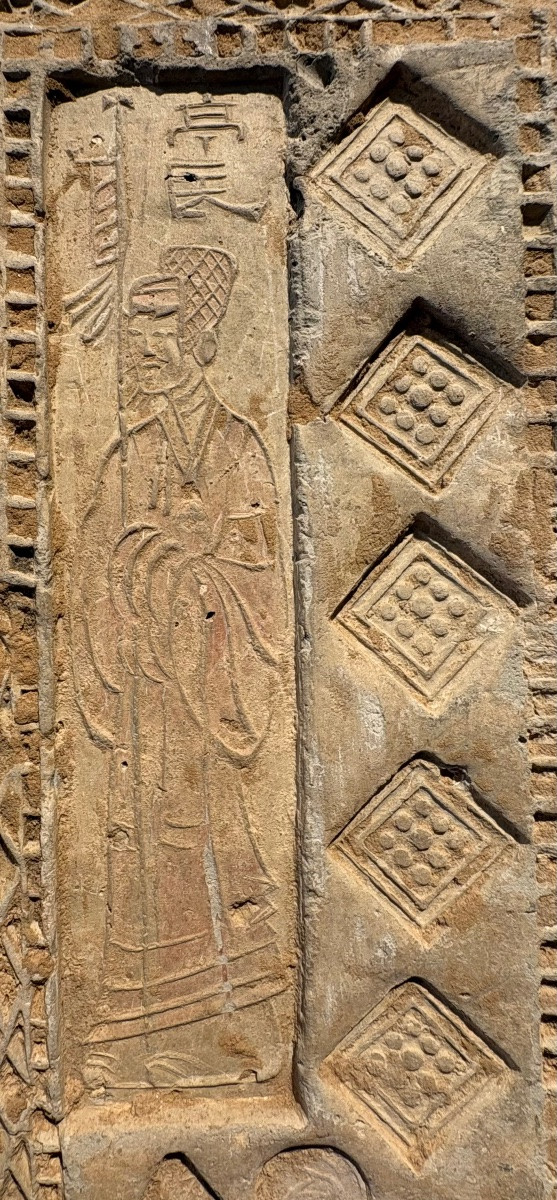
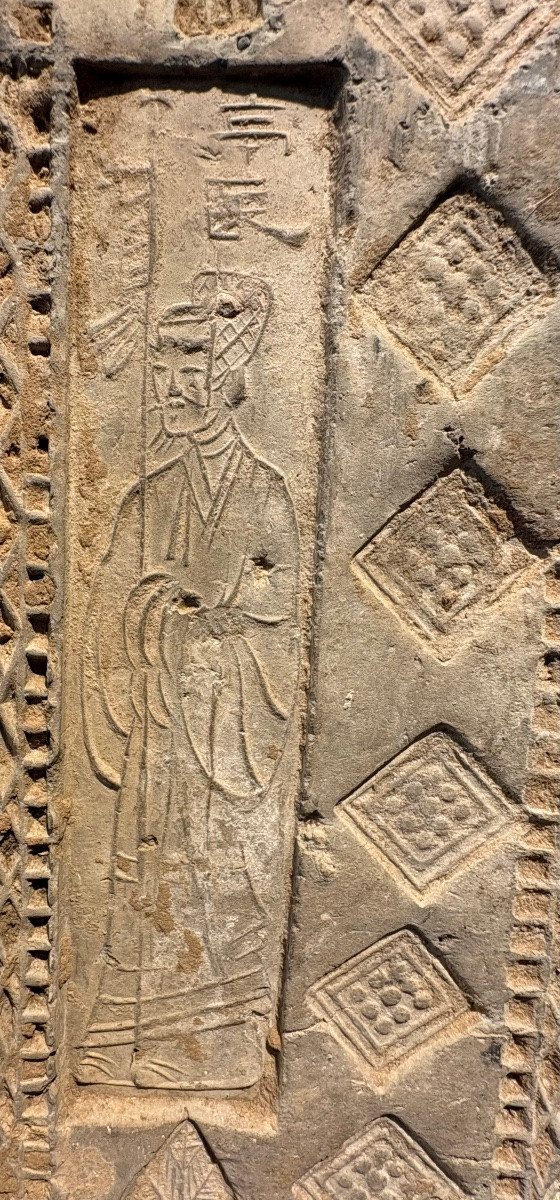
- The Figure (The Officer):There are two repetitions of a high-ranking figure (a scholar or official) standing in profile, dressed in traditional wide-sleeved robes and topped with a ceremonial cap. He is holding a long object, probably a spear or ceremonial standard (ji).
- Inscriptions:Above the figure are the Chinese characters"亭長"(Tíngzhǎng). Under the Han, the Tingzhang was a district or local police station chief. This inscription identifies either the status of the deceased, or the function of the figure depicted.
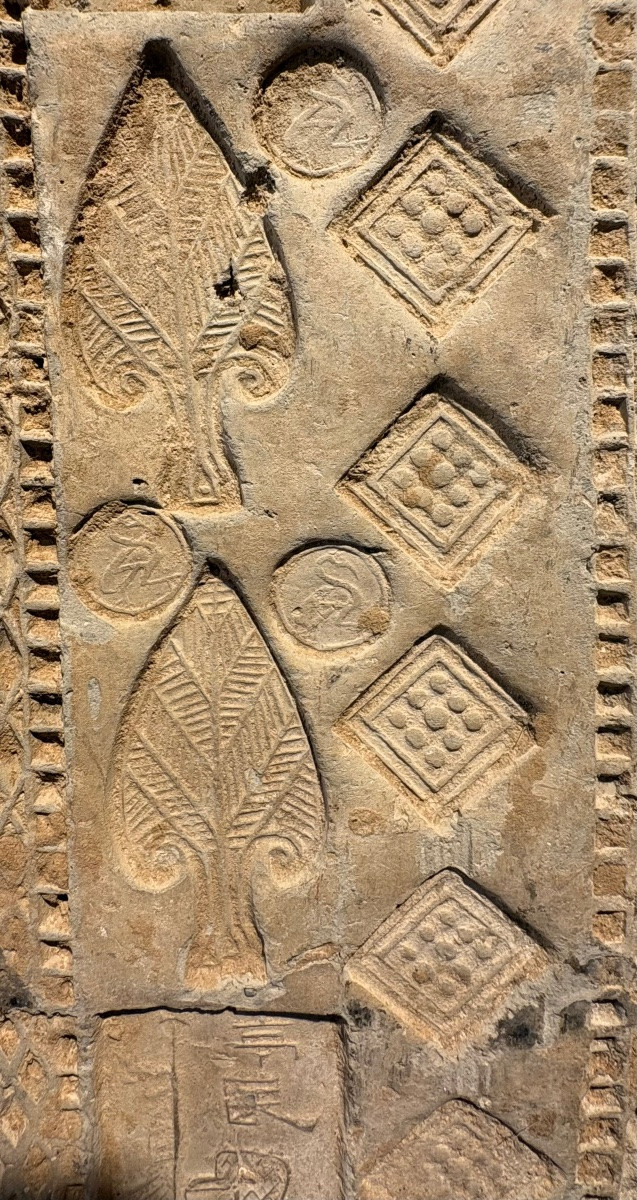
- Vegetal motifs:Palm leaf or heart motifs (often associated with the tree of life or fertility) are interspersed between the figures.
- Geometric motifs:
- An interlocking diamond border (lattice motif) frames the main scene.
- A band of beaded lozenges (containing small dots) runs down the composition.
- Small circular medallions containing cloud or spiral motifs (symbols of Qi or vital breath) are scattered across the surface.
Origin:China
Era:Han Dynasty (206 BC.C. - 220 AD)
Dimensions:Height: 66.5 cm; Length: 22.5 cm; Width: 15.5 cm.
Conditions:Very good condition. The brick has retained its original parallelepiped shape. This is a positive point, as these hollow pieces are often found fragmented or crushed by the weight of the earth over the centuries. Remains of earthy concretions and calcareous sediments can be seen in the hollows of the decoration. This is an excellent indicator of authenticity (from excavations), as these deposits form slowly on contact with the ground. There is natural erosion on the edges and corners, which is quite normal. The surface has a matt patina typical of grey terracotta (fired in reduction).
Provenance:Private Belgian collection. Under the Han dynasty, ancestor worship and belief in an afterlife were paramount. Tombs were considered eternal dwellings. These decorated bricks served not only as structural support, but also to recreate a familiar and protective environment for the soul of the deceased.
Science at the Service of Art: What is a Thermoluminescence (TL) Test? In the world of high antiquity, the expert eye is paramount, but science provides absolute certainty. For this Han dynasty funerary brick, the expertise was provided by the QED laboratory.
The scientific principle: Thermoluminescence is a physical dating method that measures the energy stored in crystalline minerals (such as quartz or feldspar) contained in clay since its initial firing.
- The geological clock: When the brick was fired 2,000 years ago, the heat "reset" the clay's energy counter.
- The accumulation: Since that day, the object has absorbed a small amount of natural radioactivity from the soil.
- The revelation: In the laboratory, a micro-sample is heated to high temperature. The light then emitted (thermoluminescence) is proportional to the time elapsed since the last firing.
6 000 €
Period: Before 16th century
Style: Asian art
Condition: Excellent condition
Material: Terracotta
Length: 22,5 cm
Width: 15,5 cm
Height: 66,5 cm
Reference (ID): 1742990
Availability: In stock
Print