THIS OBJECT WAS SOLD
Japan - Engraved Bone Inrō - Shunga Decoration - Meiji
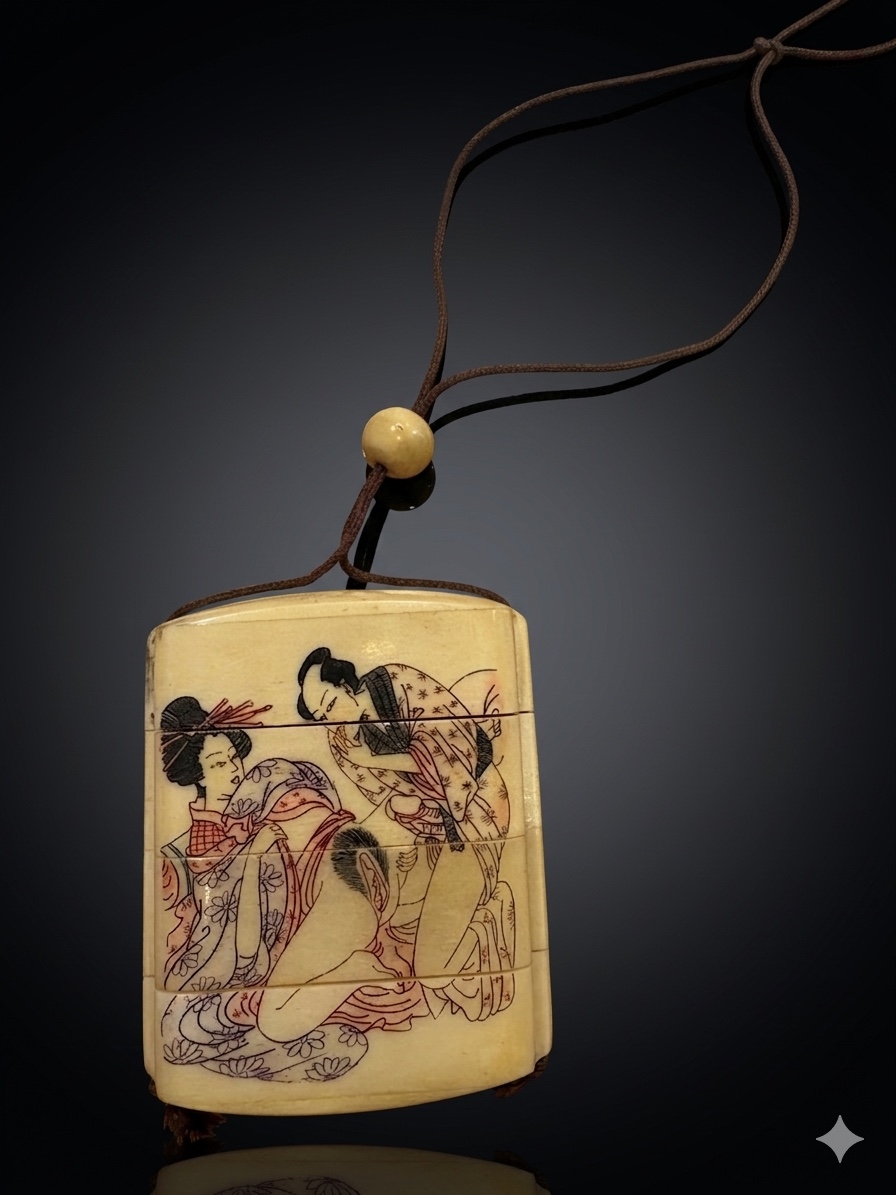
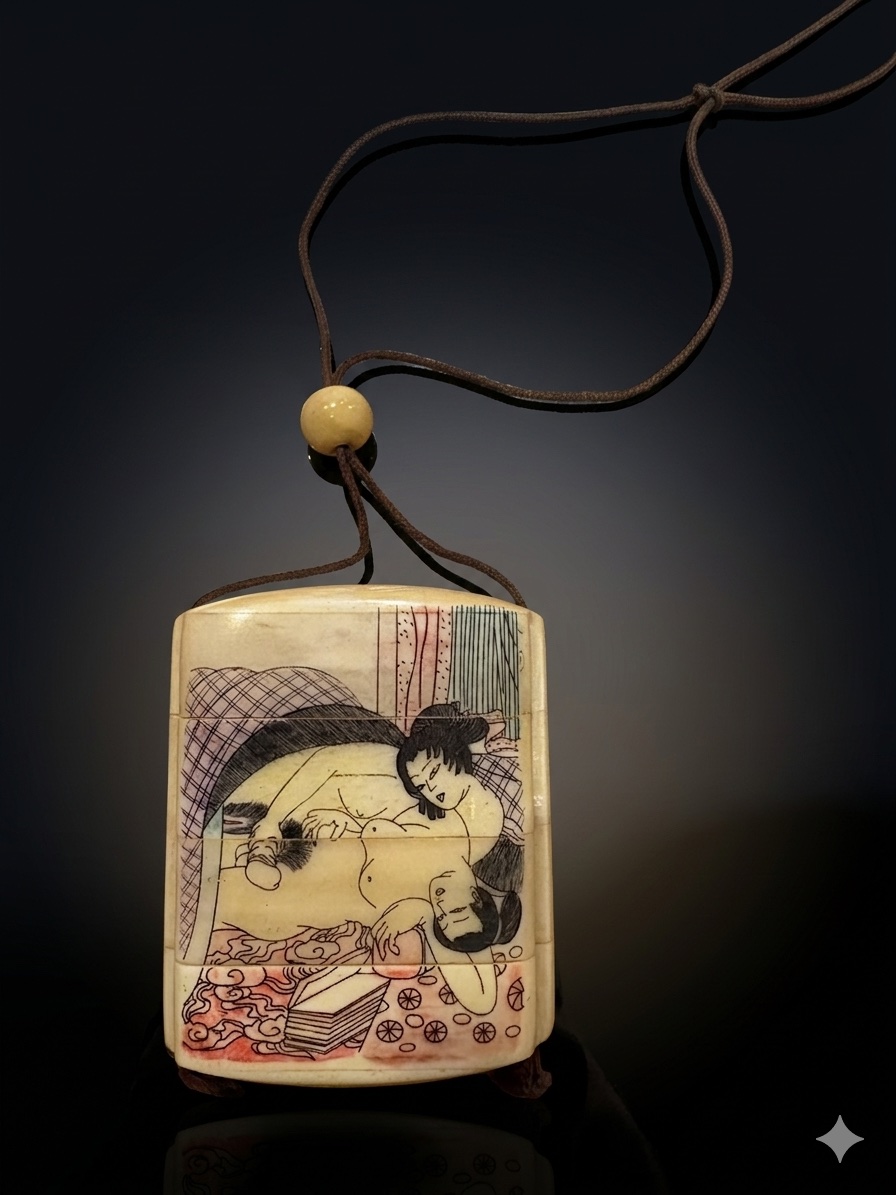
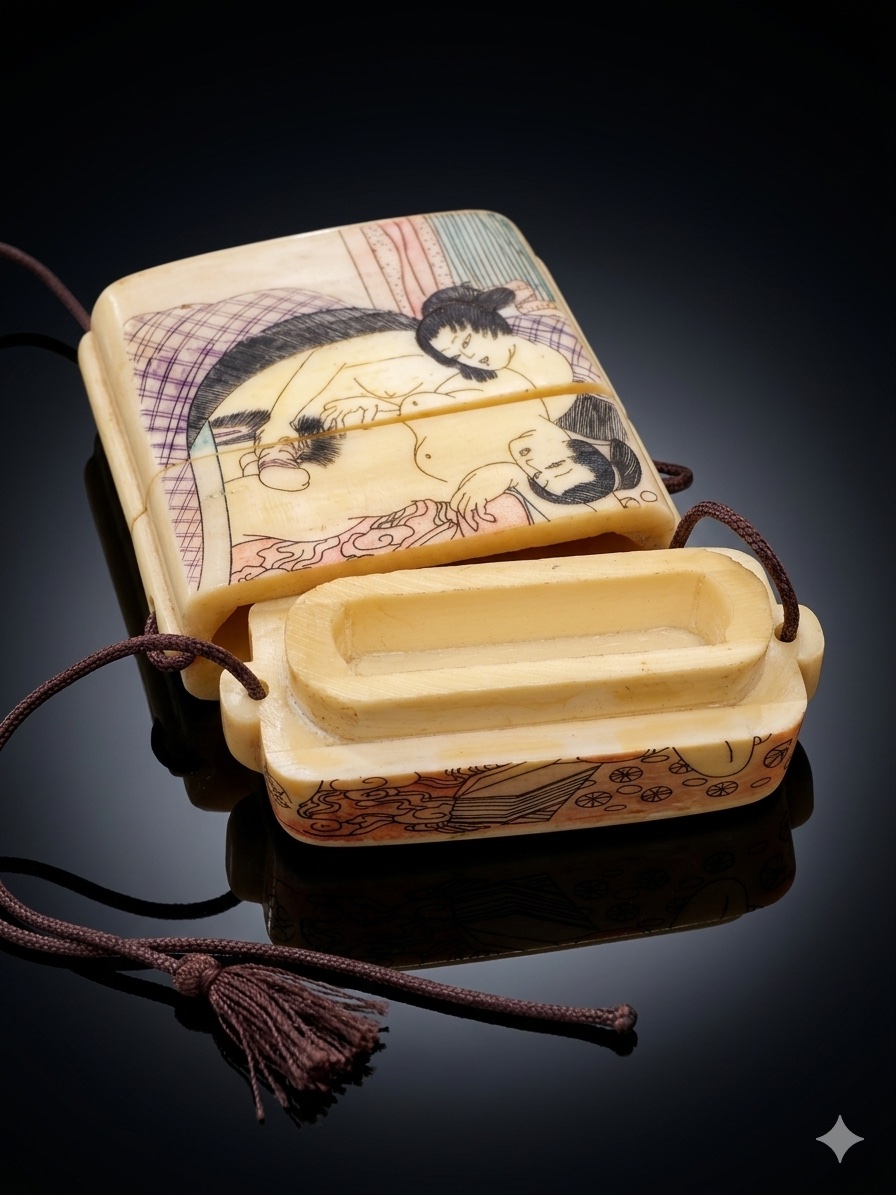
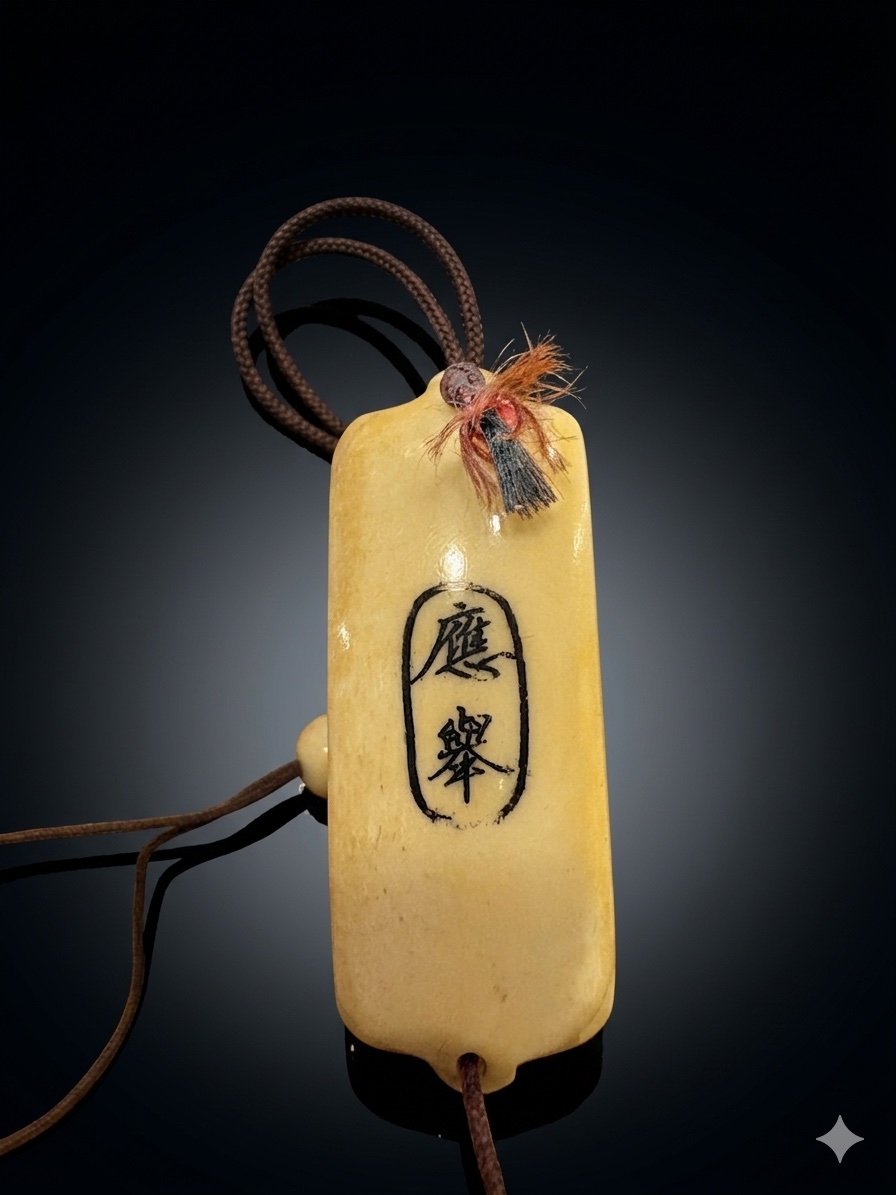
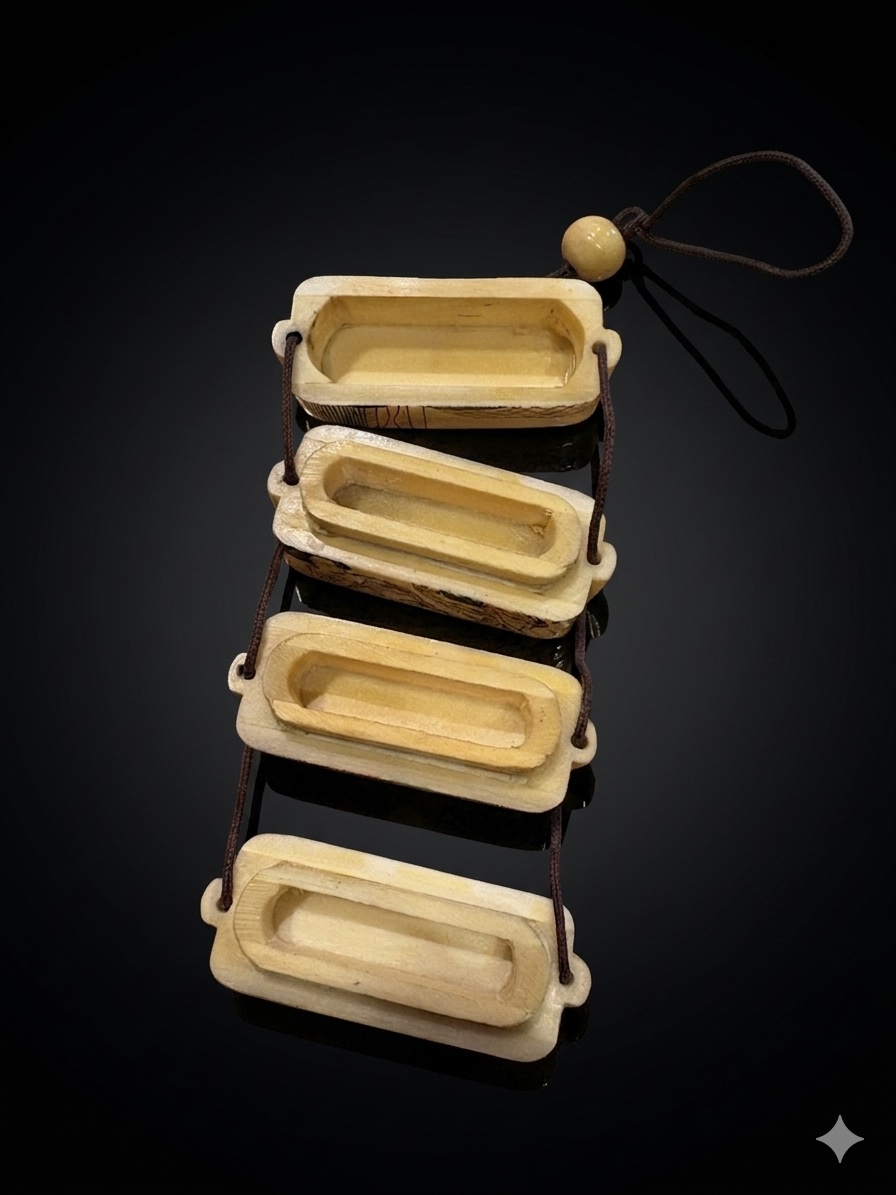
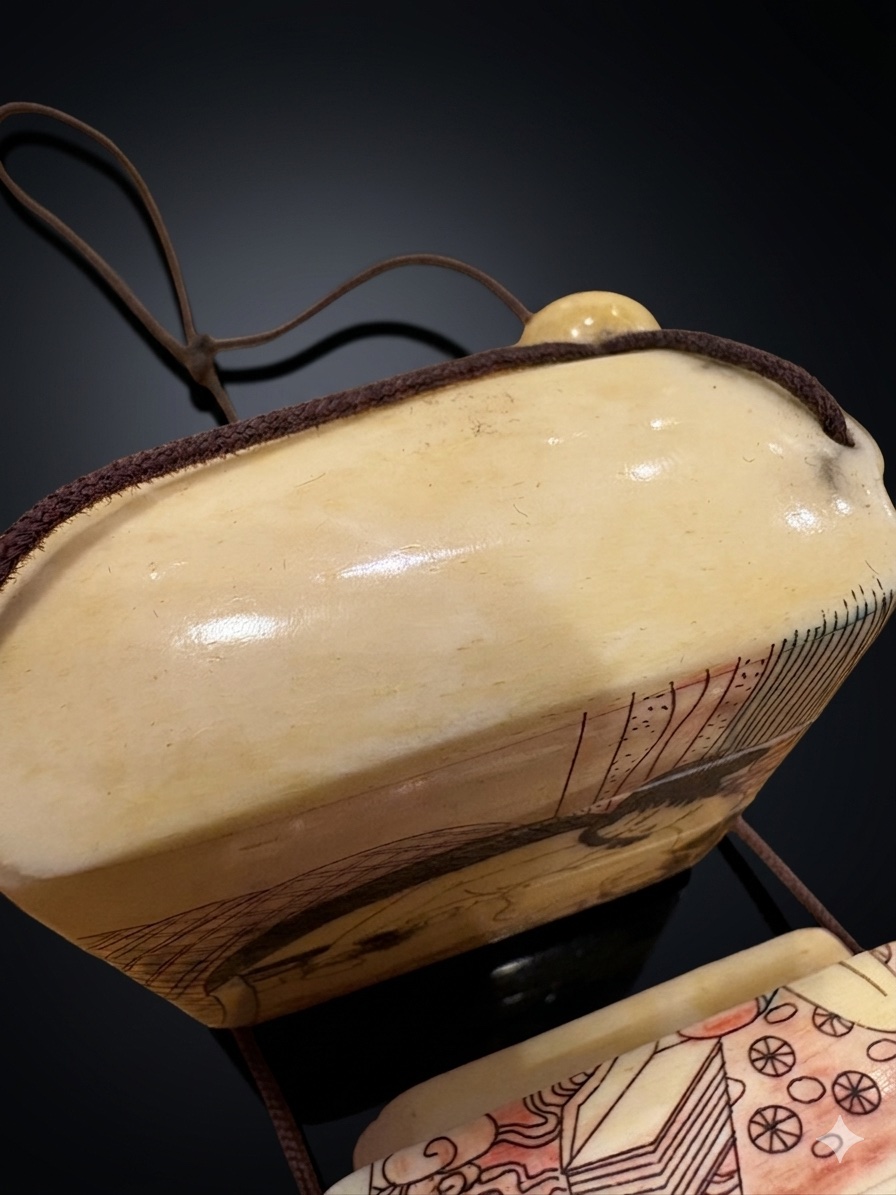


Japanese compartmented intrō, made of finely polished bone, featuring a beautiful ivory patina with slightly warm shades.
The object is decorated on both sides with erotic scenes (shunga), delicately engraved and enhanced with pigments, in the spirit of ukiyo-e prints. The base features a two-character signature in an oval seal. It reads Ōkyo, referring to Maruyama Ōkyo, one of the most influential painters of the 18th century. Although Ōkyo was a master of realism, his name was often affixed by late Meiji craftsmen to emphasize the artistic quality and prestige of the object. The compositions, with their supple, expressive strokes, feature couples in refined interiors, with particular attention paid to attitudes and textile motifs. This type of decoration, both intimate and subtle, is in the tradition of objects intended for a cultivated clientele of the late Edo and early Meiji periods. The inrō is composed of four nested compartments forming a portable set. It is preserved with its hanging cord and sliding bead (ojime). The hollowed interior is reminiscent of its original utilitarian function. Beautiful patina, with consistent light surface wear. The whole remains harmonious and well legible.
Shunga imagery, literally "images of spring". These erotic scenes were a common sub-genre of ukiyo-e art during the Edo and Meiji periods. Far from being simply scandalous objects, Shunga were often seen as celebrations of life, talismans against fire or humorous gifts for newlyweds. During the Meiji period, Japanese craftsmen produced elaborate sculptures in ivory or bone, often destined for the export market to the West, where collectors were fascinated by the exoticism and audacity of Nipponese eroticism.
The inrō is a small, traditional portable container designed to make up for the lack of pockets in the kimono. Originally suspended from the belt (obi), it was held in place by a cord, a sliding bead called an ojime, and a carved counterweight called a netsuke.
Origin:Japan.
Era:Meiji period (1868 - 1912) - Late 19th / Early 20th.
Dimensions:Height:8 cm; Length: 6.5 cm; Width: 2.5 cm.
Conditions:Very good condition, beautiful patina from use, with consistent light surface wear.
Provenance:Private Belgian collection.
The object is decorated on both sides with erotic scenes (shunga), delicately engraved and enhanced with pigments, in the spirit of ukiyo-e prints. The base features a two-character signature in an oval seal. It reads Ōkyo, referring to Maruyama Ōkyo, one of the most influential painters of the 18th century. Although Ōkyo was a master of realism, his name was often affixed by late Meiji craftsmen to emphasize the artistic quality and prestige of the object. The compositions, with their supple, expressive strokes, feature couples in refined interiors, with particular attention paid to attitudes and textile motifs. This type of decoration, both intimate and subtle, is in the tradition of objects intended for a cultivated clientele of the late Edo and early Meiji periods. The inrō is composed of four nested compartments forming a portable set. It is preserved with its hanging cord and sliding bead (ojime). The hollowed interior is reminiscent of its original utilitarian function. Beautiful patina, with consistent light surface wear. The whole remains harmonious and well legible.
Shunga imagery, literally "images of spring". These erotic scenes were a common sub-genre of ukiyo-e art during the Edo and Meiji periods. Far from being simply scandalous objects, Shunga were often seen as celebrations of life, talismans against fire or humorous gifts for newlyweds. During the Meiji period, Japanese craftsmen produced elaborate sculptures in ivory or bone, often destined for the export market to the West, where collectors were fascinated by the exoticism and audacity of Nipponese eroticism.
The inrō is a small, traditional portable container designed to make up for the lack of pockets in the kimono. Originally suspended from the belt (obi), it was held in place by a cord, a sliding bead called an ojime, and a carved counterweight called a netsuke.
Origin:Japan.
Era:Meiji period (1868 - 1912) - Late 19th / Early 20th.
Dimensions:Height:8 cm; Length: 6.5 cm; Width: 2.5 cm.
Conditions:Very good condition, beautiful patina from use, with consistent light surface wear.
Provenance:Private Belgian collection.
Explore similar pieces and discover your ideal find:
Carved Ivory & Bone