

Japanese - Kuruma Dansu - Yonezawa - Meiji
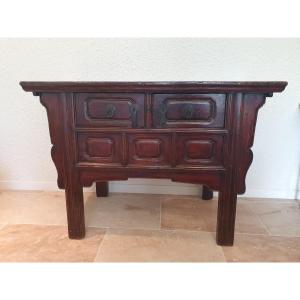
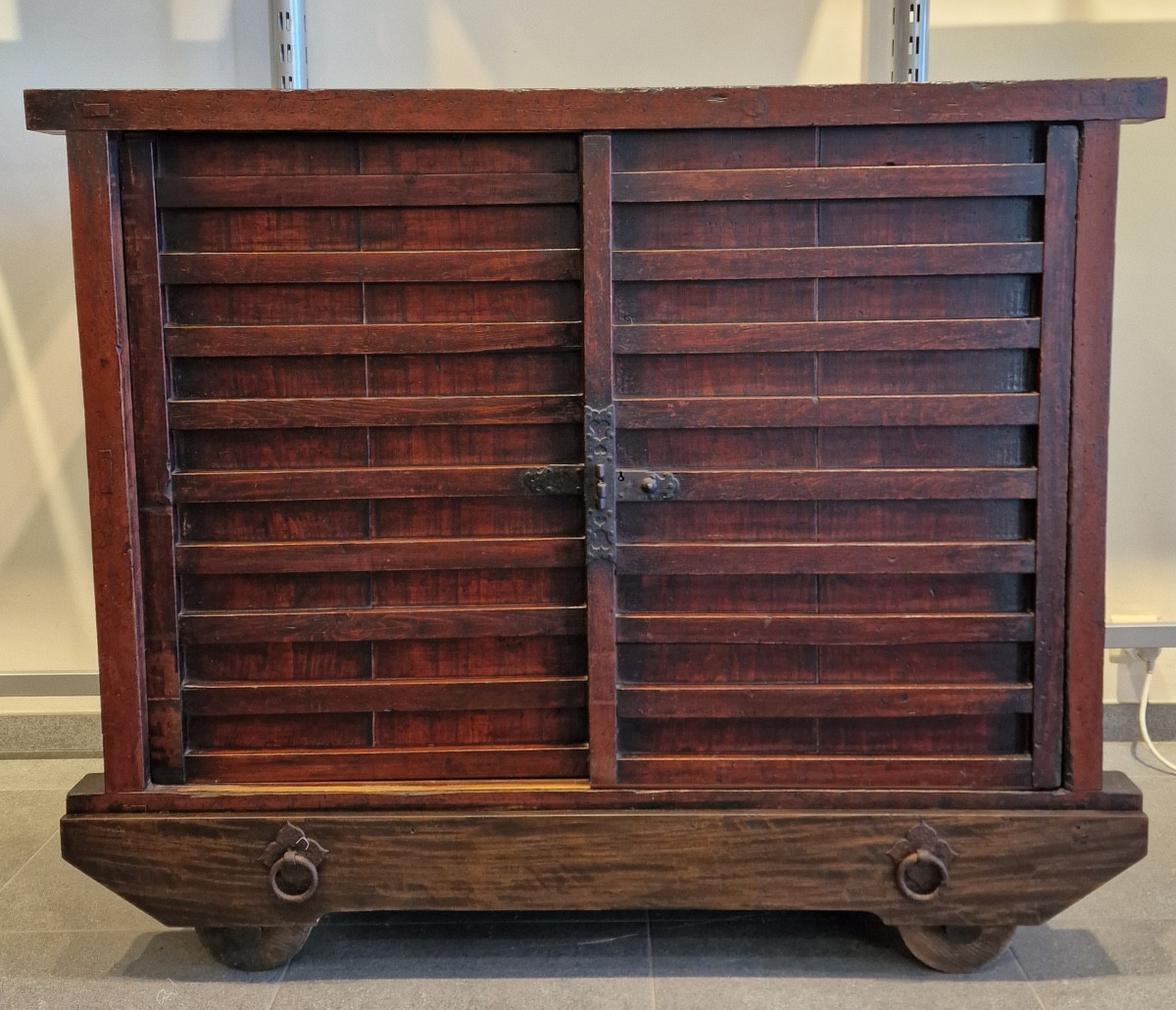
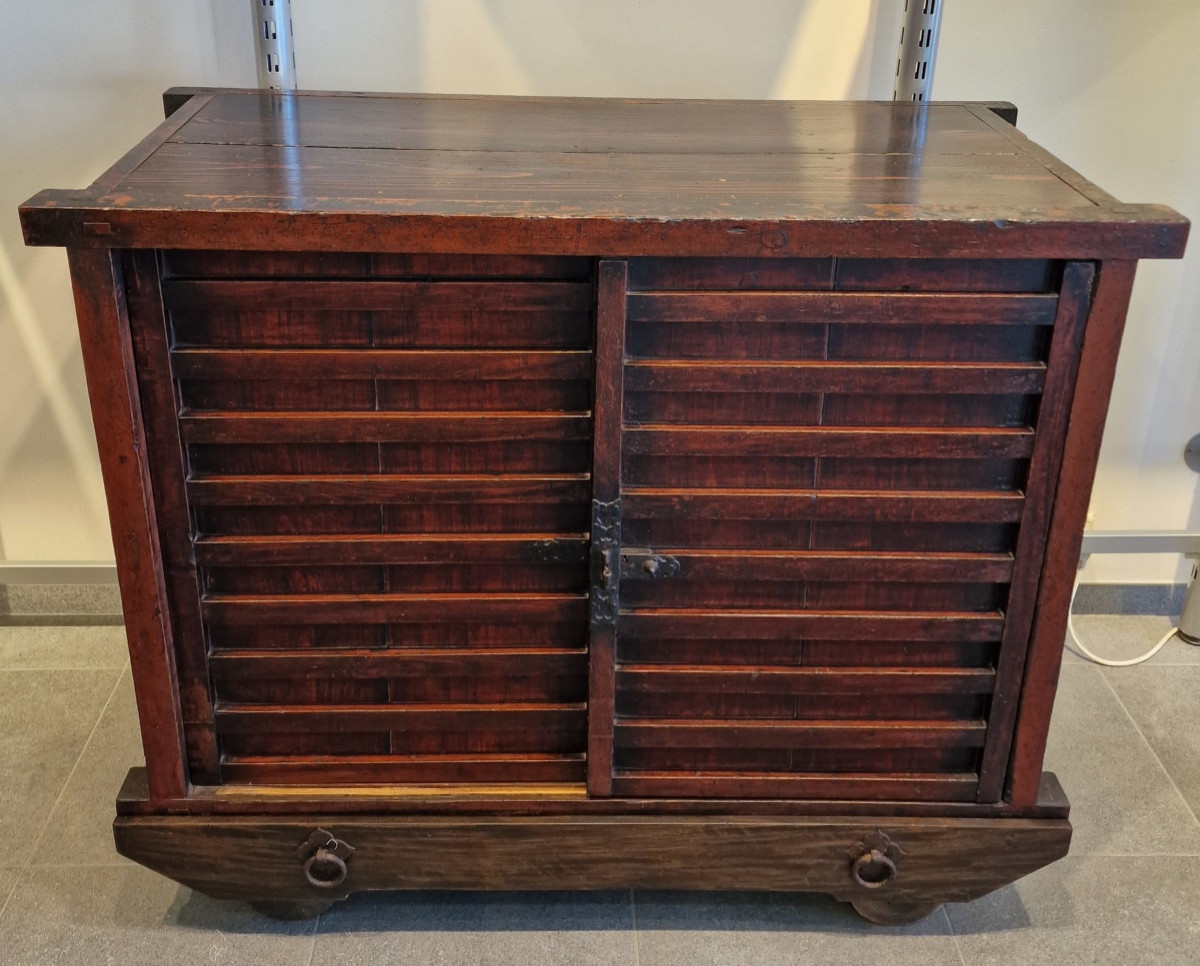
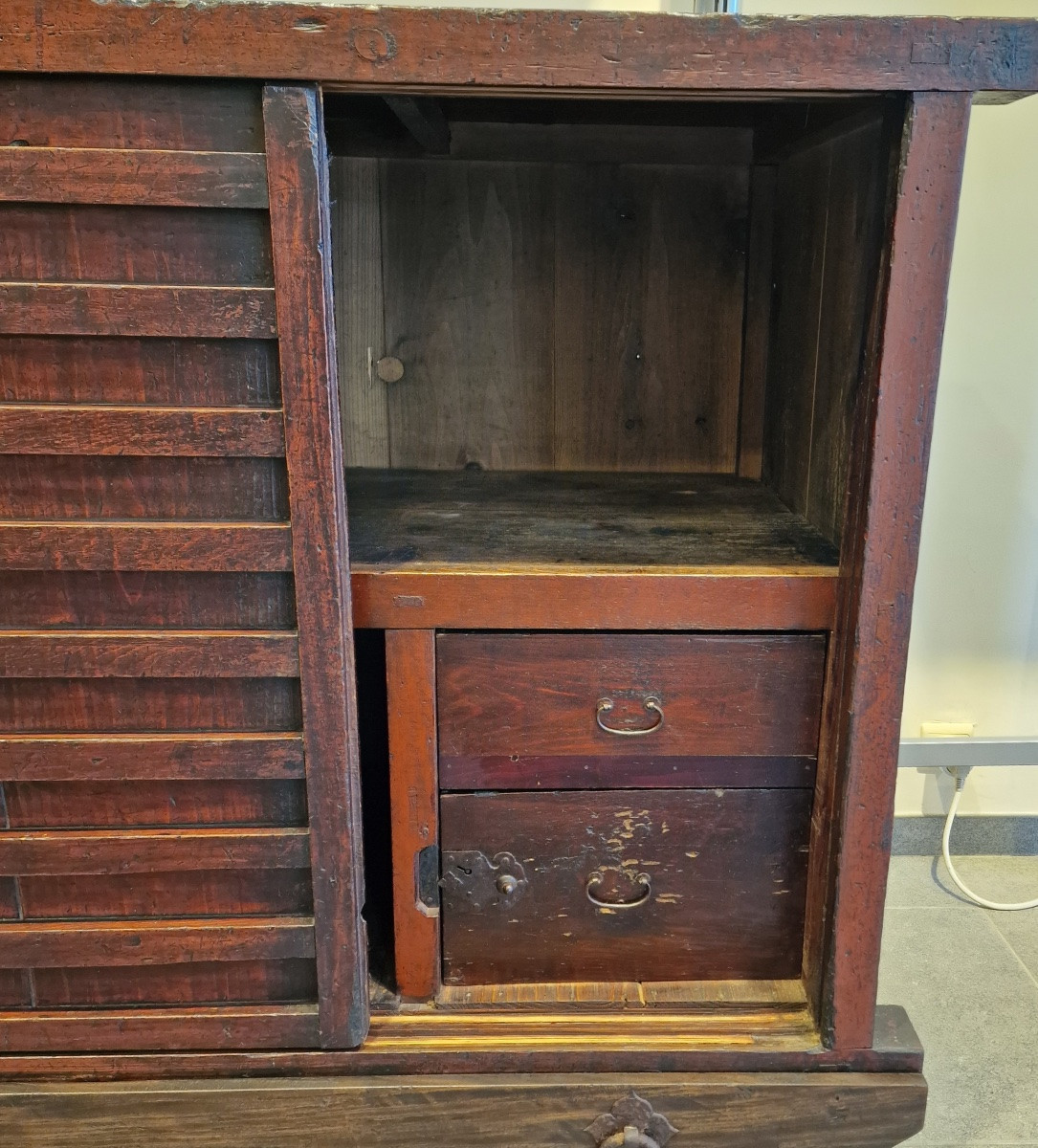
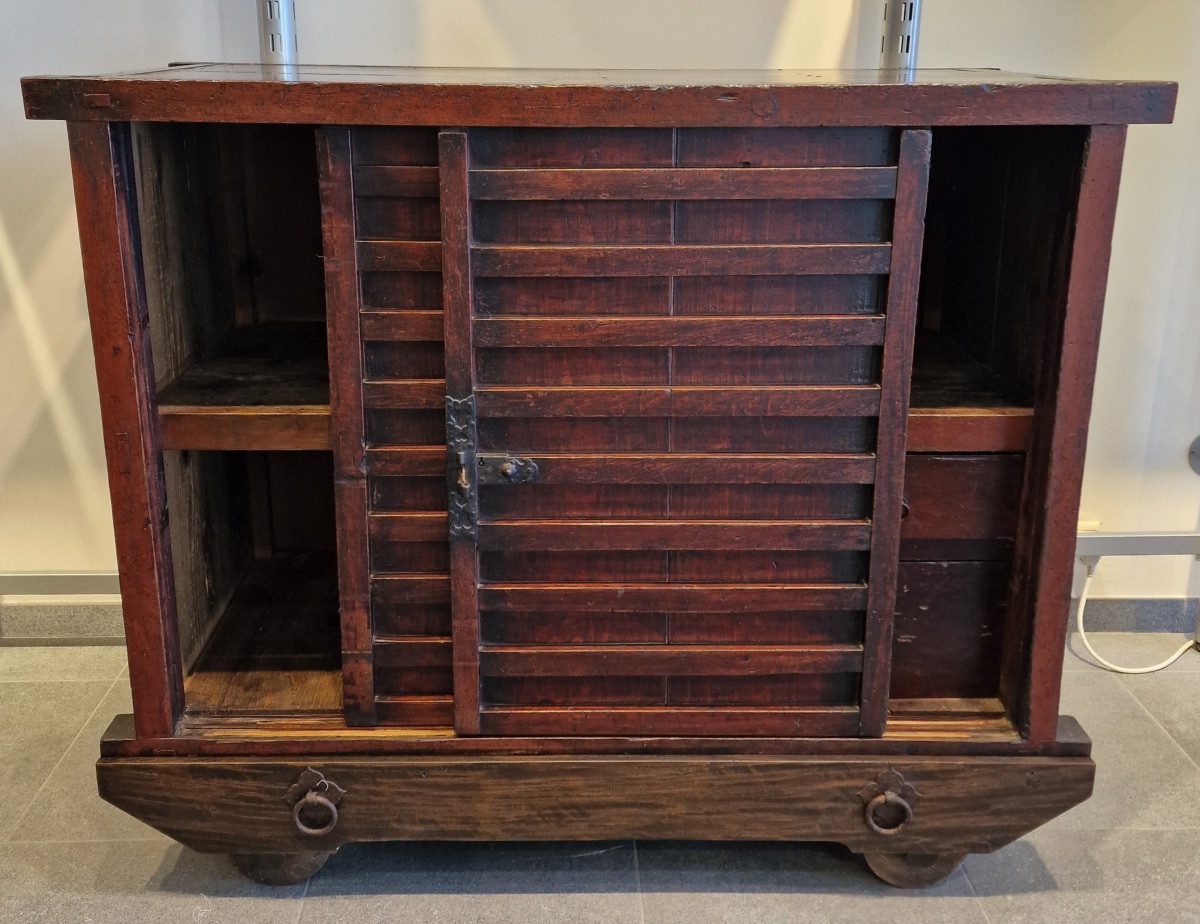
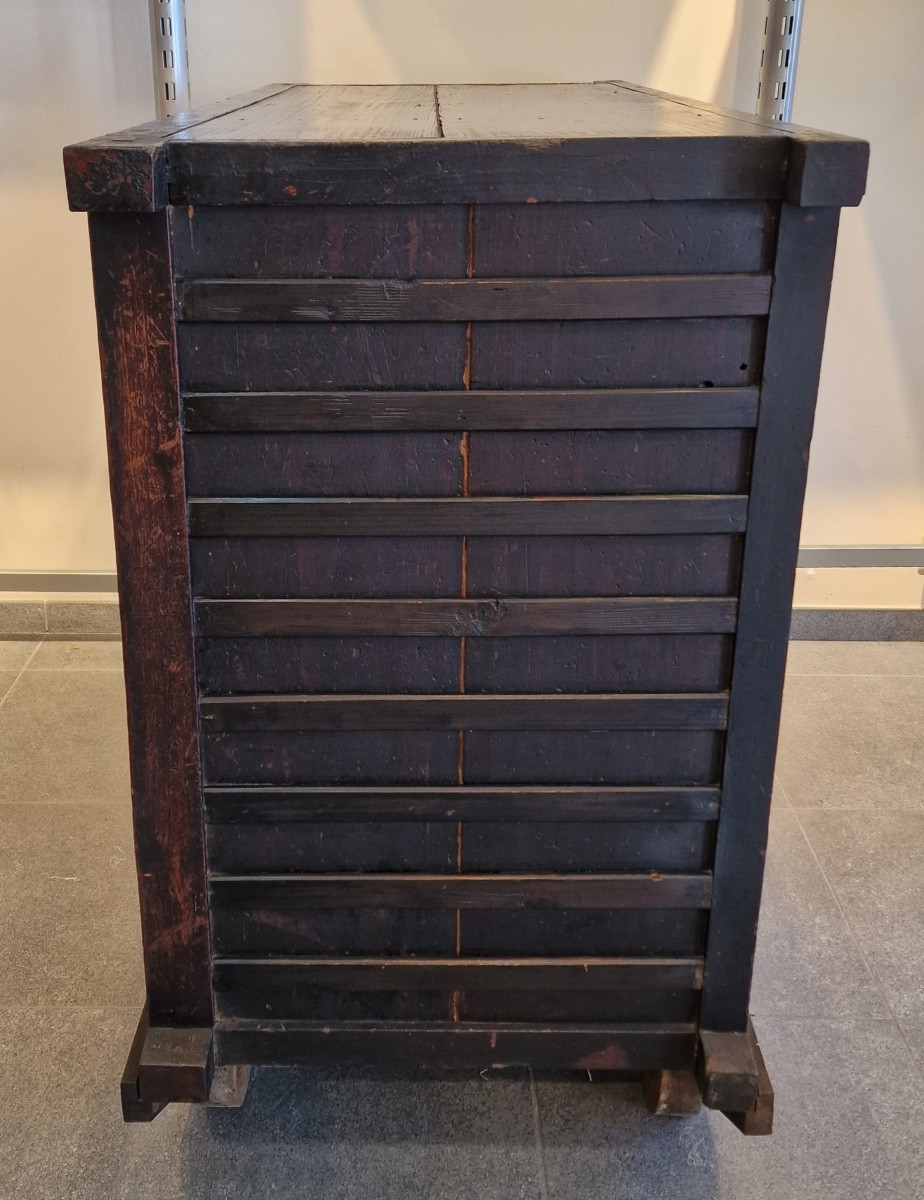
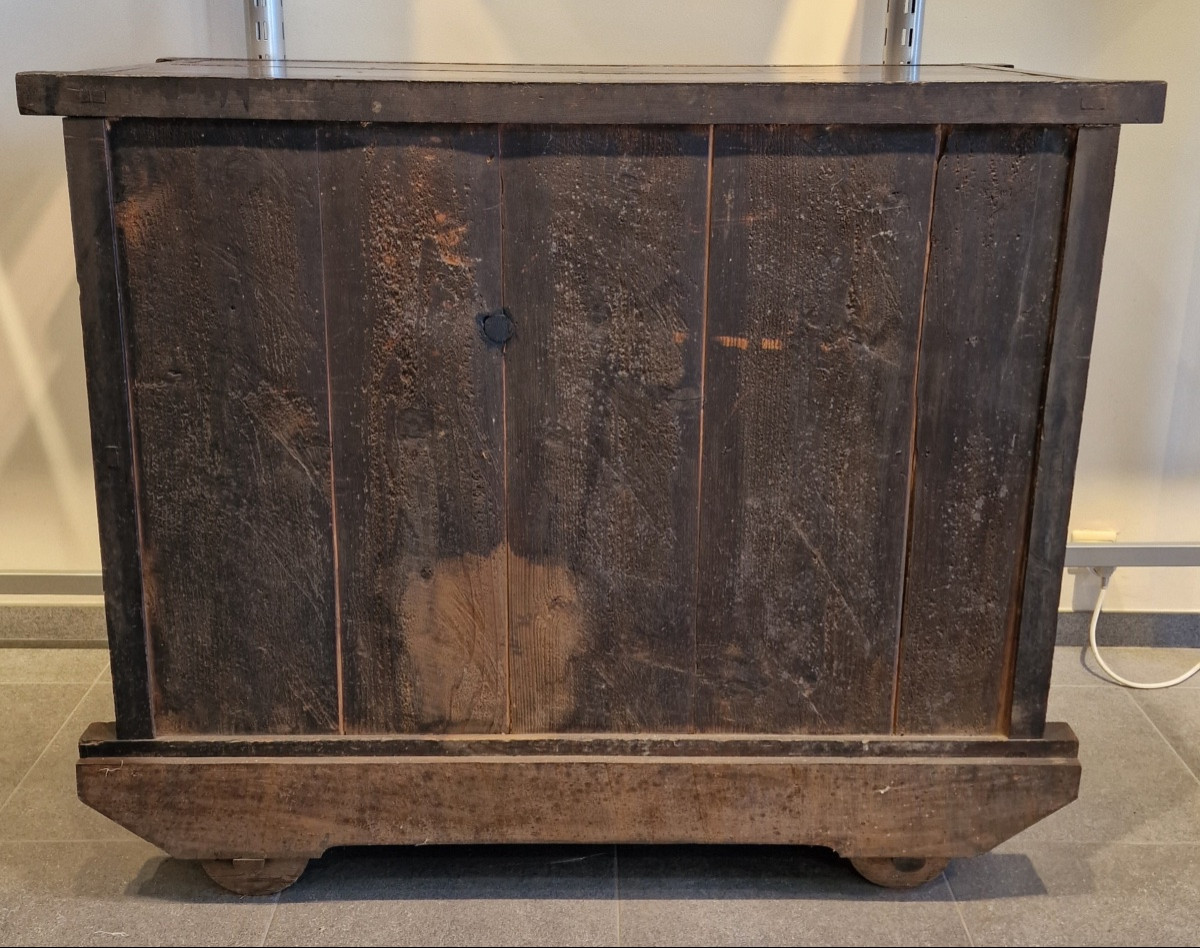
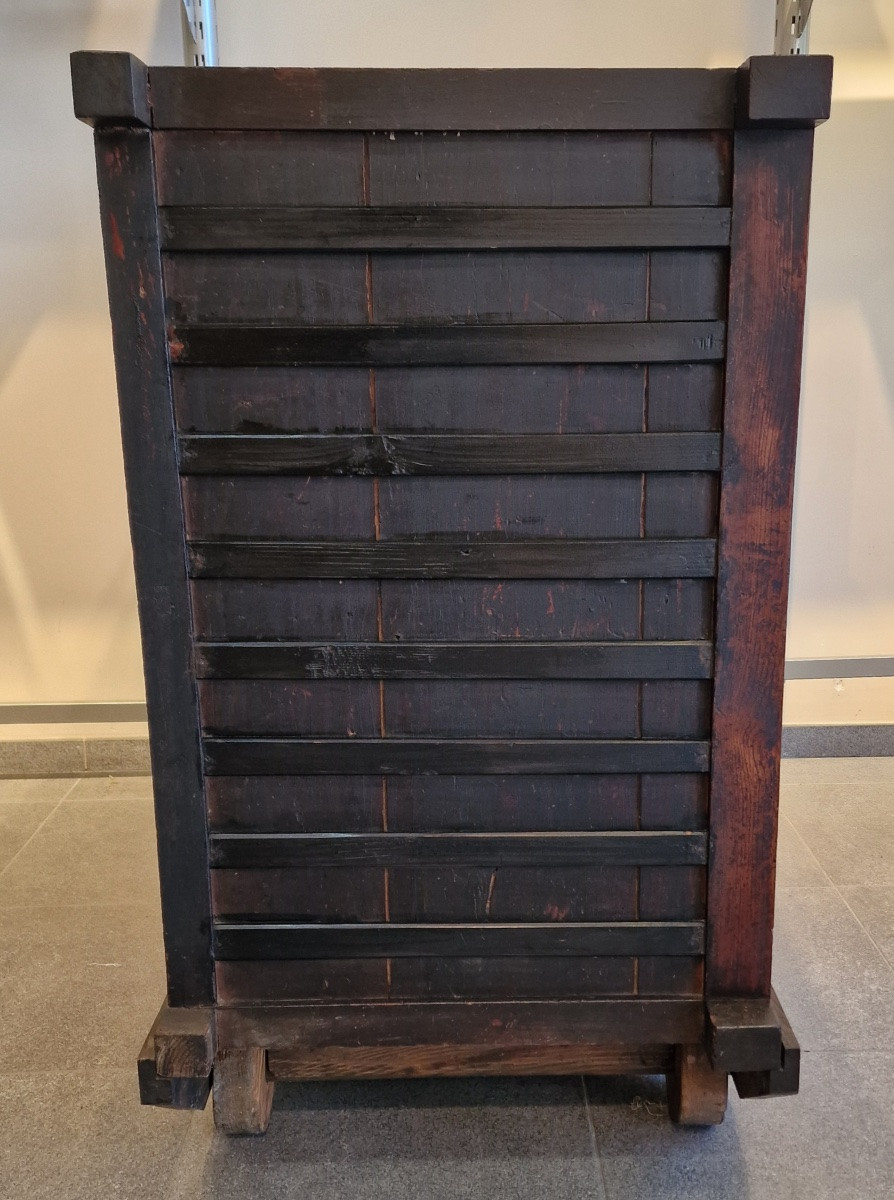
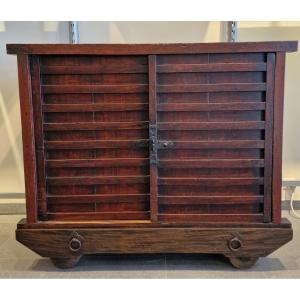
Kuruma Dansu, (merchant's rolling chest), made of keyaki wood (elth). Two drawers below the top are held in place by a locking bar. The upper part has a large compartment. Closed by two sliding doors with horizontal slats. Original wrought iron hardware. Missing key.
Origin: Japan - Yonezawa.
Era: Meiji (1868-1912 )
Dimensions: Height: 106 cm; Length: 128 cm; width: 60 cm.
Conditions: Very good condition, pretty patina.
The nagamochi kuruma, which were banned in large cities some time after the Meirecki fire, did not prevent a plethora of rolling box designs made for small town customers. Many beautiful examples of sophistication in development have survived in the ledger trunks with wheels and in the cabinets at the origins of the trunk. The town of Yonezawa Castle is an excellent illustration of this by the large number of rolling chests it has produced. Although most of the examples date from Meiji, the style goes back to the rolling chests of the Edo period. Noted for their beautiful use of keyaki and their simple but elegant design, these mobile chests were similar to sea chests by providing a merchant with a status object. The analogy with the sea chests is intentional, because we know that the carpenters of the Mikuni region along the Lapan Sea coast, have migrated to the region, largely because of the local daimyo support of the craft and farm industries.
Origin: Japan - Yonezawa.
Era: Meiji (1868-1912 )
Dimensions: Height: 106 cm; Length: 128 cm; width: 60 cm.
Conditions: Very good condition, pretty patina.
The nagamochi kuruma, which were banned in large cities some time after the Meirecki fire, did not prevent a plethora of rolling box designs made for small town customers. Many beautiful examples of sophistication in development have survived in the ledger trunks with wheels and in the cabinets at the origins of the trunk. The town of Yonezawa Castle is an excellent illustration of this by the large number of rolling chests it has produced. Although most of the examples date from Meiji, the style goes back to the rolling chests of the Edo period. Noted for their beautiful use of keyaki and their simple but elegant design, these mobile chests were similar to sea chests by providing a merchant with a status object. The analogy with the sea chests is intentional, because we know that the carpenters of the Mikuni region along the Lapan Sea coast, have migrated to the region, largely because of the local daimyo support of the craft and farm industries.
2 800 €
Period: 19th century
Style: Asian art
Condition: Excellent condition
Material: Solid wood
Length: 128 cm
Width: 60 cm
Height: 106 cm
Reference (ID): 1620071
Availability: In stock
Print