



Robin Clockmaker To The King – Hippocrates, Greek Physician
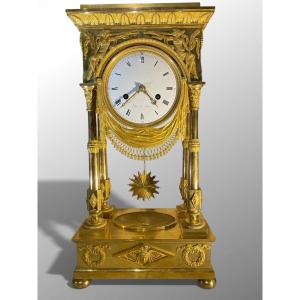
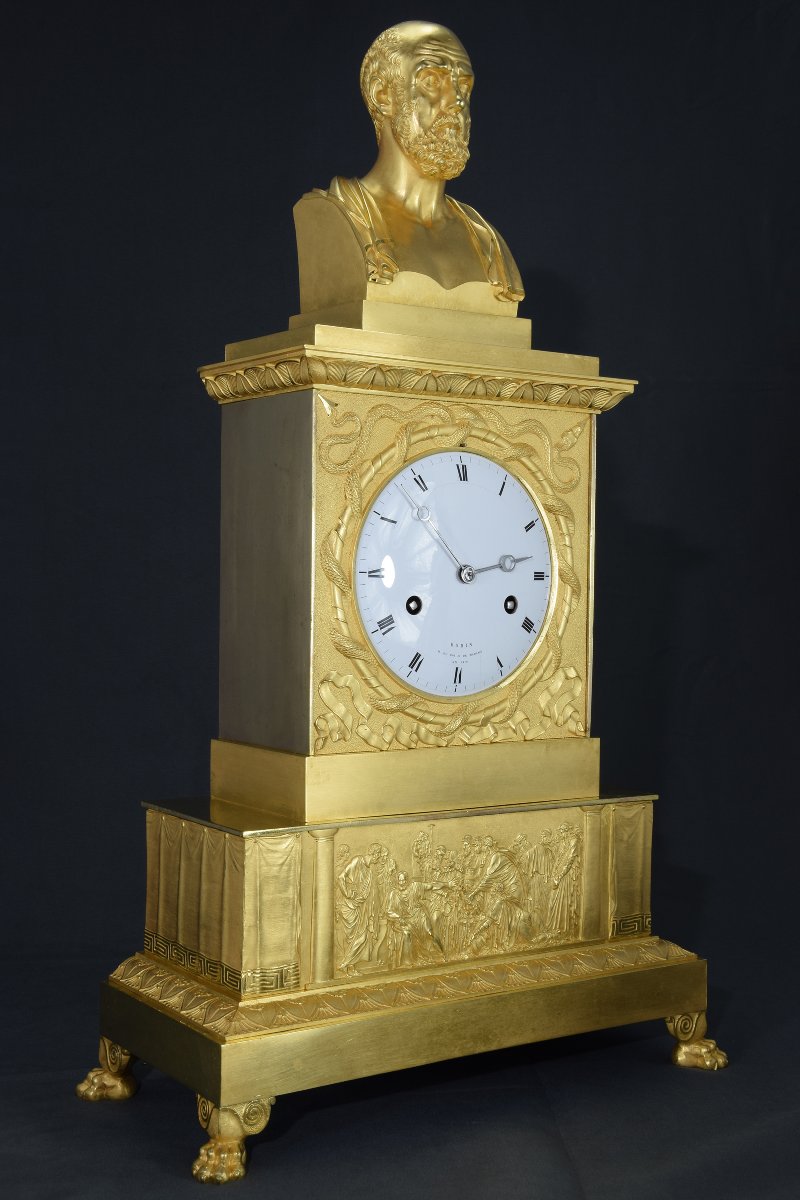
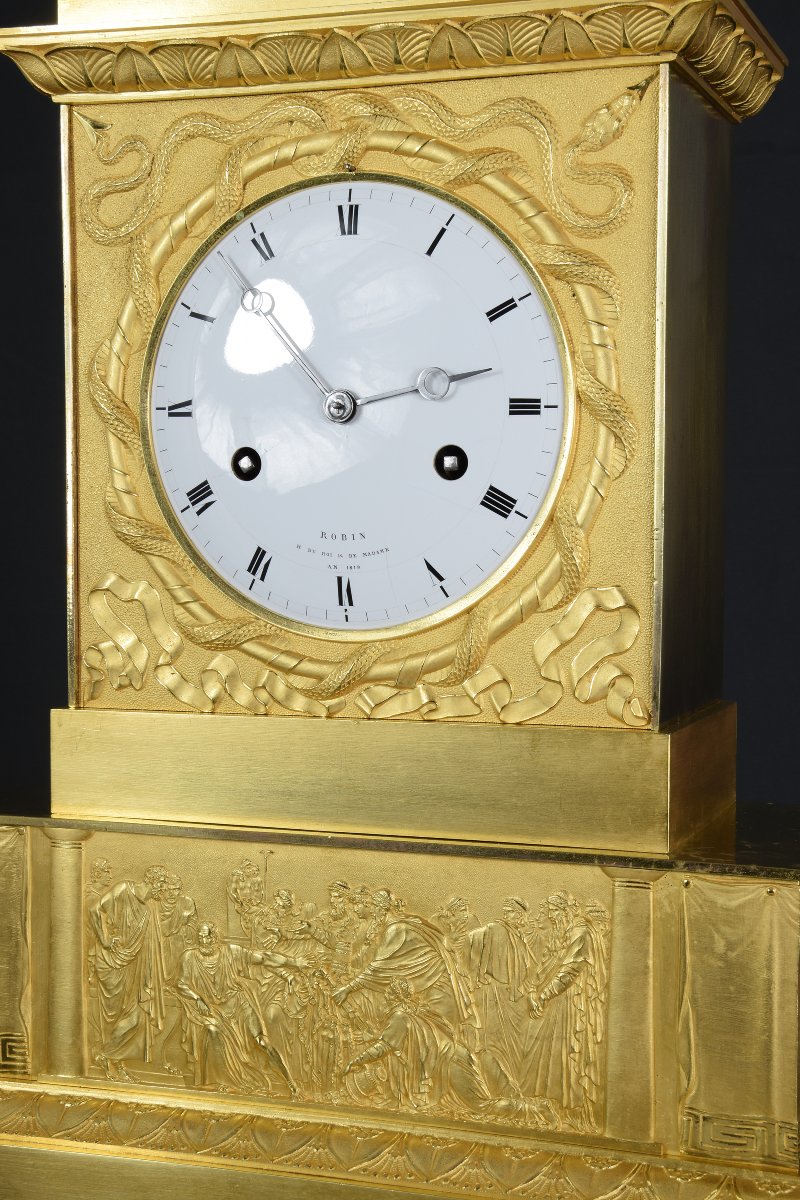
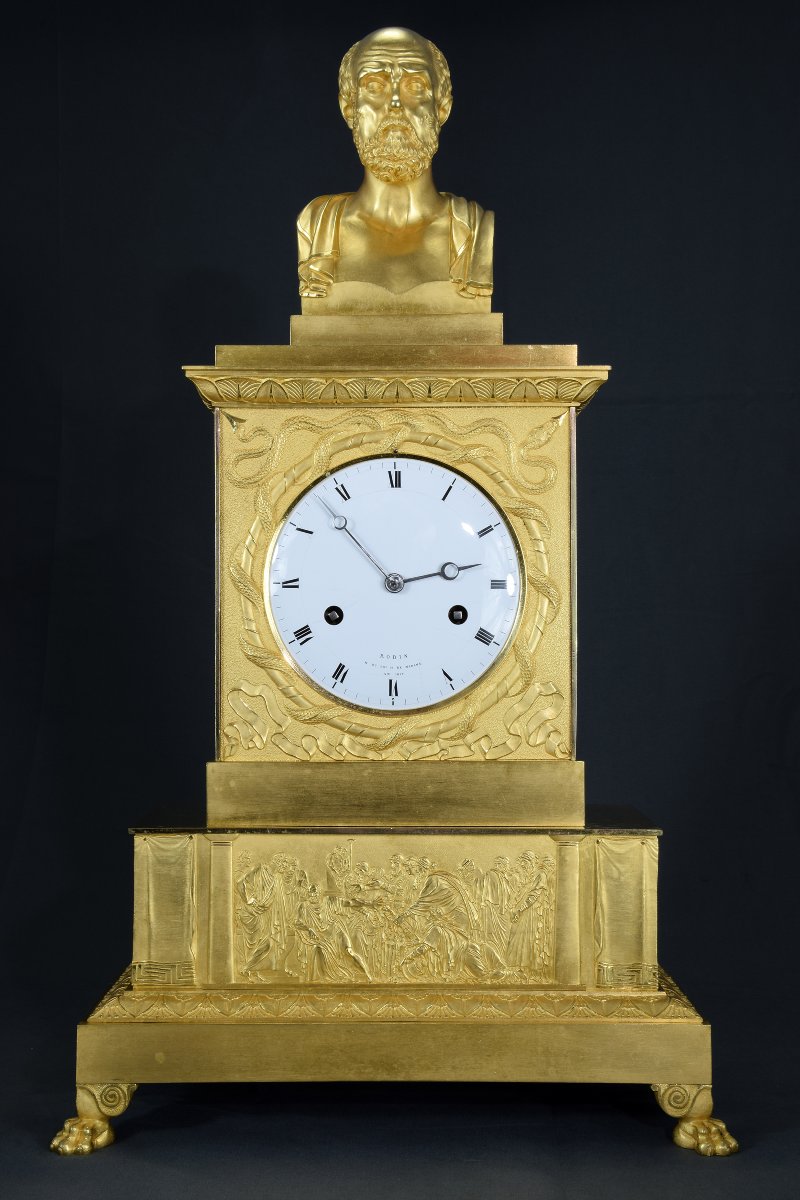
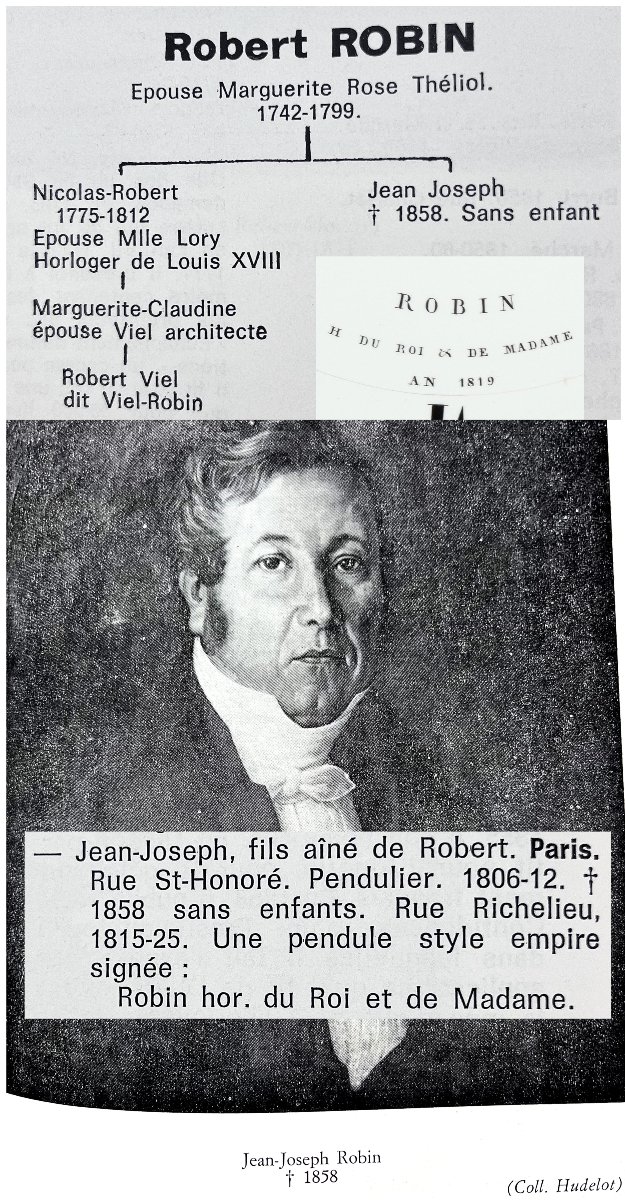
A large and rare mantel clock in finely chased bronze with mercury gilding, dating to circa 1819, illustrating a major episode in the history of ancient medicine: Hippocrates refusing the gifts offered by Artaxerxes. Rich in iconographic detail, this composition celebrates the figure of the father of medicine and the fundamental values that remain at the heart of medical ethics: the independence of the practitioner, moral integrity, dedication to the patient, and the refusal to subordinate medical knowledge to political power or personal gain. The white enamel dial, with Roman numerals and finely crafted hands, bears the inscription “ROBIN H. DU ROI & DE MADAME AN 1819”. This signature identifies Jean-Joseph Robin (1781–1856), son of the celebrated clockmaker Robert Robin and a member of an illustrious Parisian horological dynasty. Active particularly between 1815 and 1825, he practised during the Bourbon Restoration and held the title of clockmaker to King Louis XVIII and Madame la Dauphine.
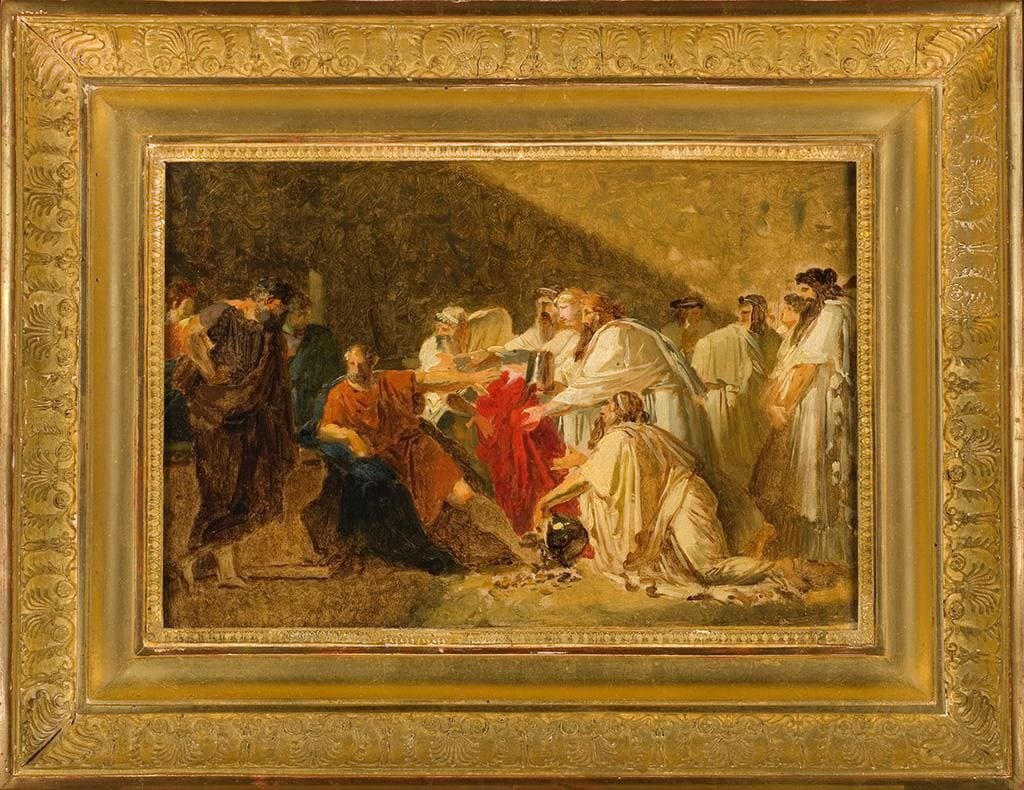
At the summit, a majestic bust of Hippocrates crowns the composition. His solemn expression, high forehead, abundant beard and classically draped garments lend the figure an air of wisdom and dignity, evoking the intellectual authority of the celebrated Greek physician. Beneath the bust, the imposing rectangular body of the clock features an exceptional decoration of intertwined serpents surrounding the dial. Their sinuous bodies, meticulously rendered with finely detailed scales, create a sculptural frame of remarkable originality. The serpent is one of the oldest symbols associated with medicine, notably linked to Asclepius, the Greek god of healing, whose staff entwined by a serpent became the traditional emblem of the medical profession. Evoking renewal, regeneration and knowledge of medicinal remedies, this motif establishes a direct symbolic connection with the Hippocratic tradition. The dial is surmounted by a frieze of palmettes and visually rests above ornaments inspired by the decorative vocabulary of classical antiquity, while the finely stippled surfaces emphasise the contrast between the matt backgrounds and the gilded reliefs. Lower down, the main register of the plinth features a superb bas-relief depicting Hippocrates refusing the gifts offered by Artaxerxes, King of Persia. According to tradition, the Persian ruler attempted to recruit the Greek physician into his service, particularly during an epidemic, but Hippocrates refused to place his art at the service of the Persian court. This scene powerfully expresses the physician’s independence and the primacy of his conscience over political or material inducements. It echoes the ethical ideal traditionally associated with the Hippocratic Oath, the symbolic foundation of Western medical ethics. The scene is framed by pilasters and accentuated by ornamental friezes inspired by antiquity. Finally, the architecturally designed base, supported by four sculpted lion-paw feet and embellished with palmettes, volutes and meander patterns, lends the entire composition a monumental presence. The finely modelled forms, precise anatomical and sartorial details, and exceptionally rich chasing reveal a highly accomplished level of craftsmanship, enhanced by the depth and warm lustre of the mercury gilding.
This clock stands out for the remarkable coherence of its decorative programme, in which every element contributes to celebrating medicine as an art founded on knowledge, dedication and moral independence. The bust of Hippocrates, the symbolic serpents and the historical scene depicting his refusal of the gifts form an ensemble of rare evocative power, extending far beyond the clock’s purely horological function. Jean-Joseph Robin’s signature, together with the date of 1819, adds considerable historical and horological interest to this high-quality work. Its balanced architecture, richly sculpted reliefs, finely executed chasing and luminous gilding make it particularly appealing to collectors of antique gilt bronzes, prestigious clocks and Neoclassical iconography. Through the nobility of its subject, the subtlety of its references and the quality of its execution, this clock represents a remarkable testament to the French taste for historical and moral compositions inspired by antiquity. It is also a distinctive collector’s piece, ideally suited to a refined interior or a specialised collection.
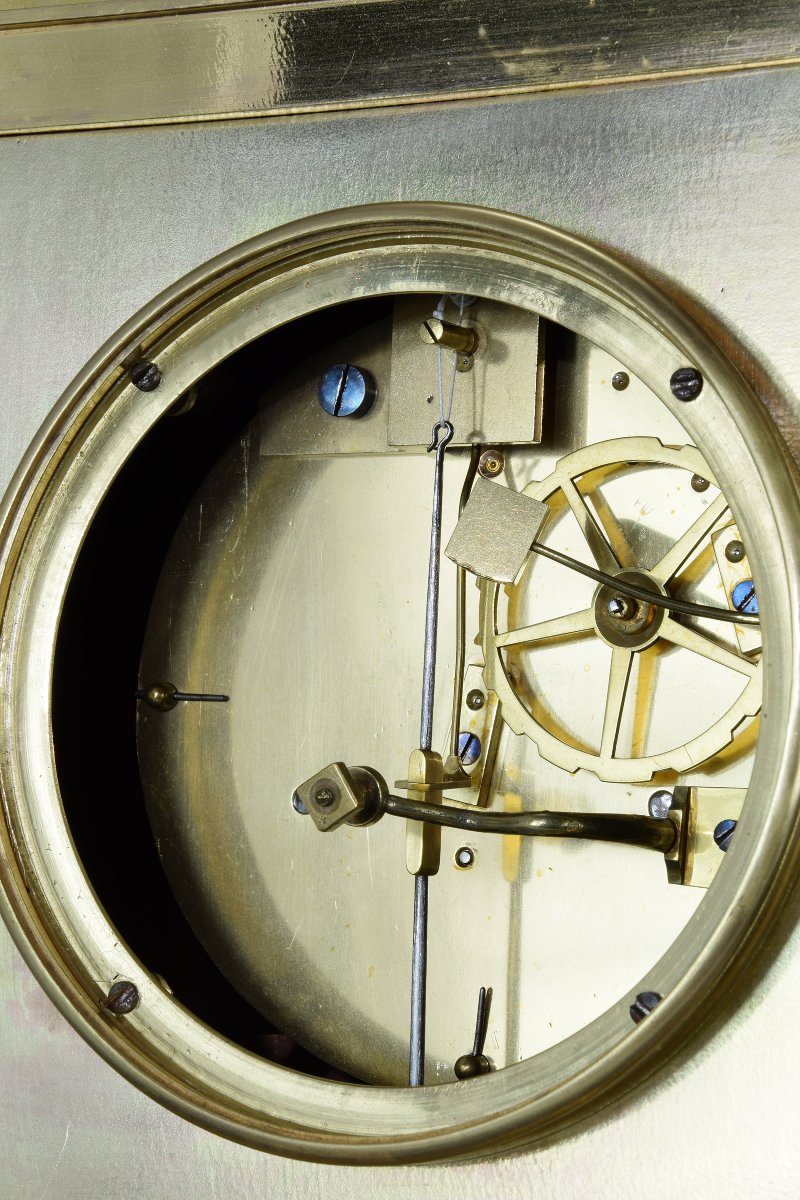
Movement: Original and intact, without modifications, with a silk-thread suspension. Strikes the hours and half-hours on an antique bell, producing a clear and authentic tone.
Period: 19th century
Style: Consulat, Empire
Condition: Fully restored in our whorkshop
Material: Bronze
Width: 30 cm
Height: 52 cm
Depth: 15 cm
Reference (ID): 1852224
Availability: In stock