


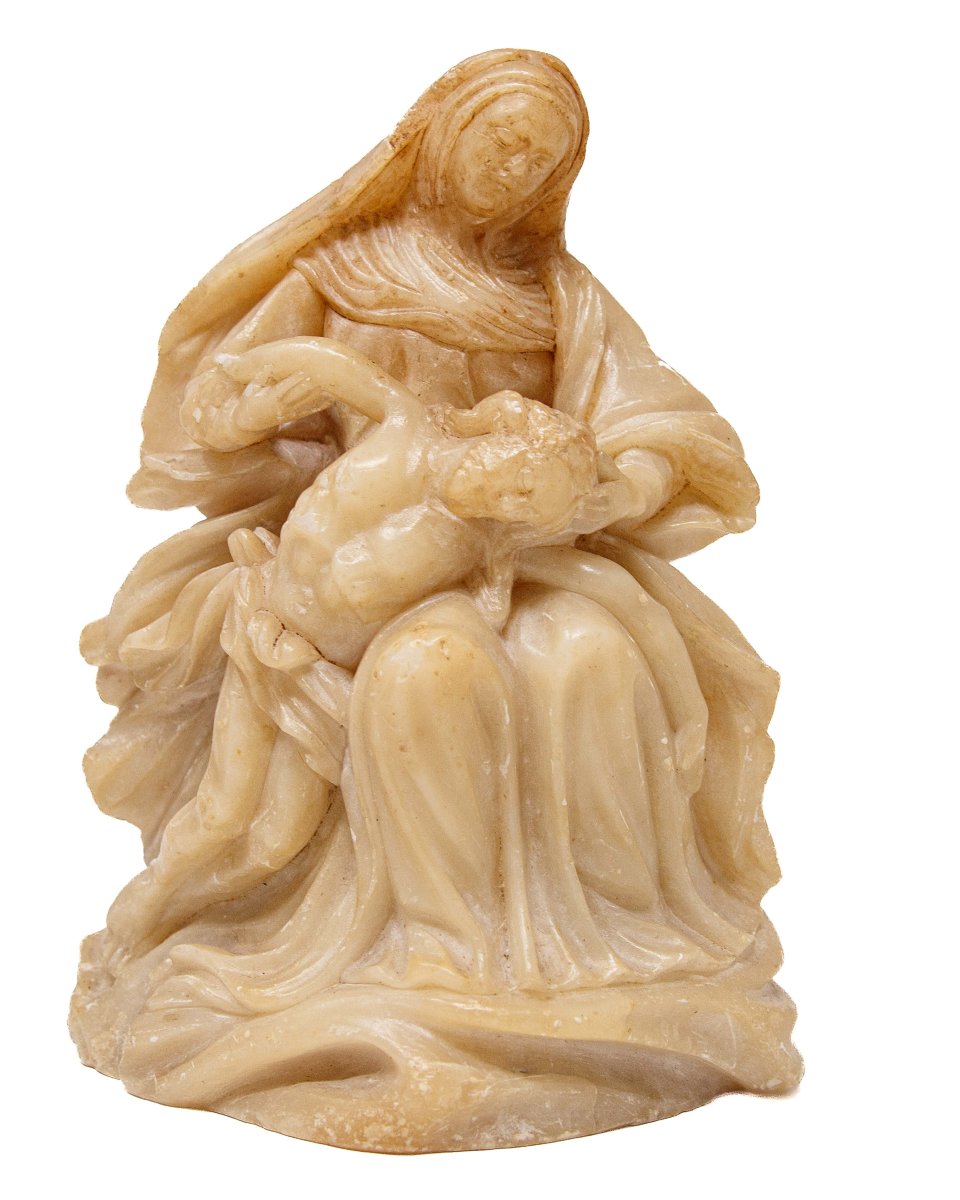


17th Century, Pietà
17th century
Pietà
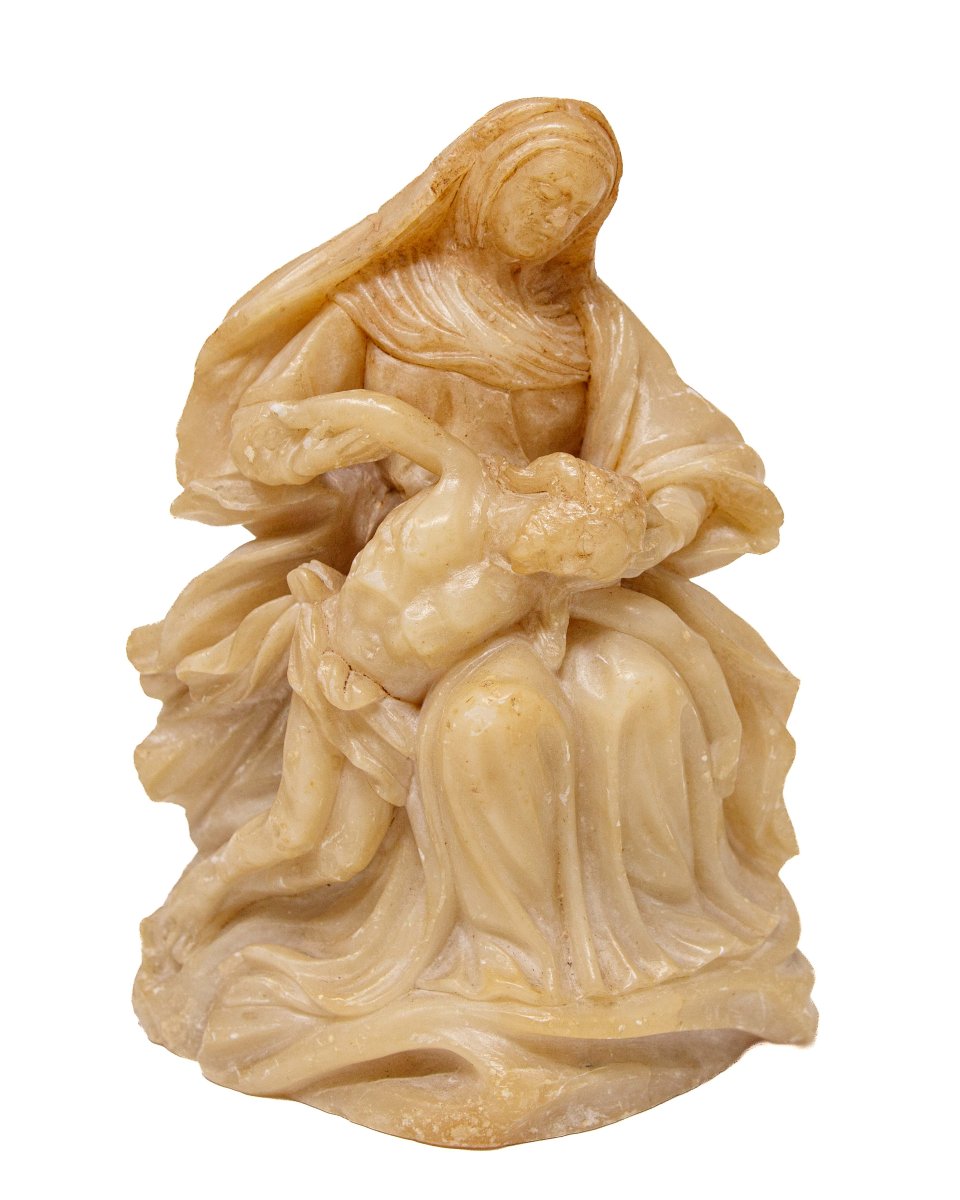
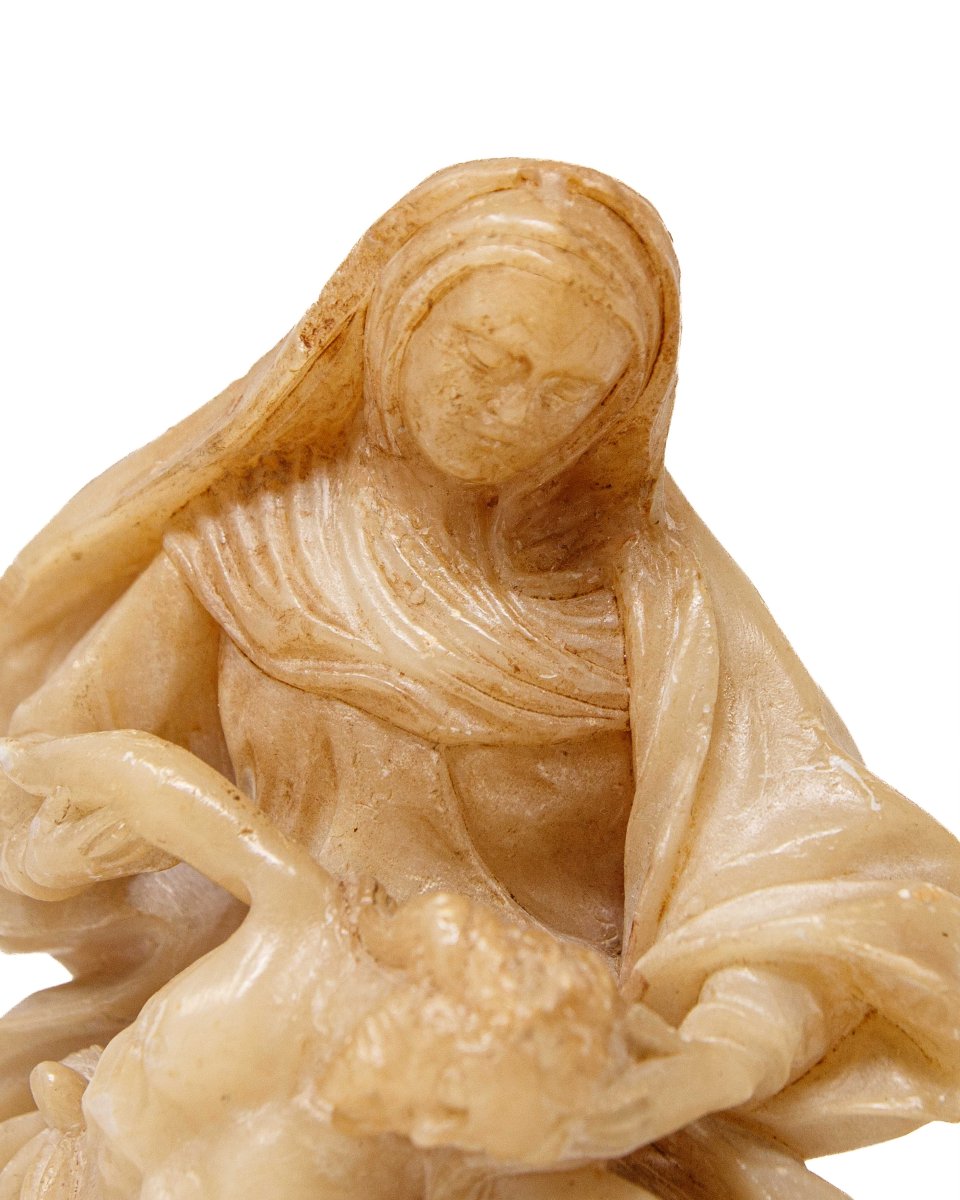
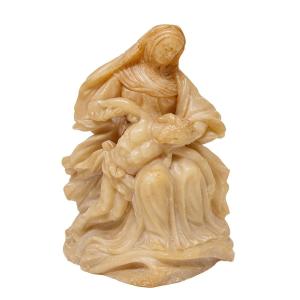
Alabaster, height 15 cm
With base, 26 x 25 cm
The sculpture in question is part of the rich and centuries-old iconographic tradition of the Pietà, a subject that, in the 17th century—that is, at the height of the Baroque and Counter-Reformation eras—acquired renewed emotional intensity and a powerful impact on popular devotion.
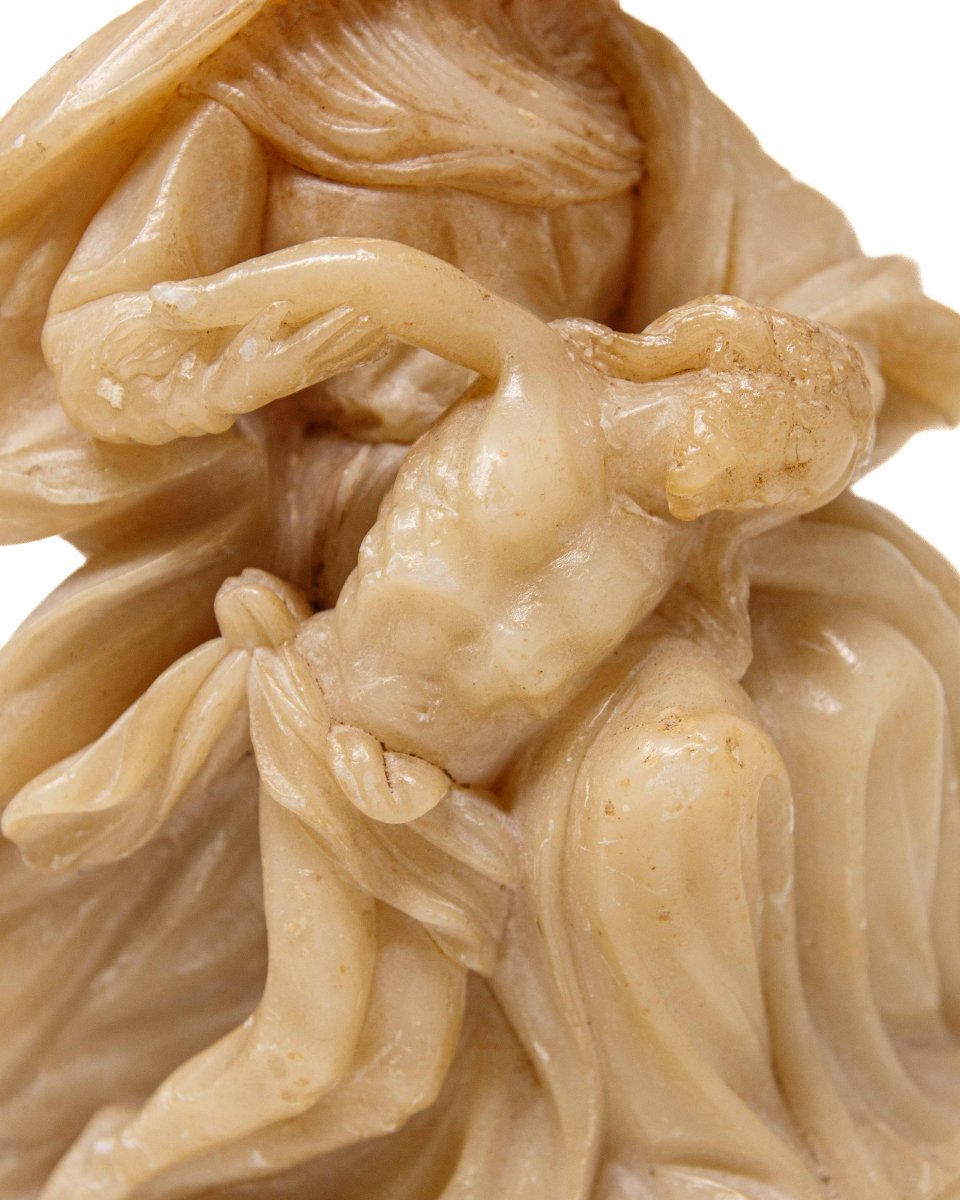
The iconography of the Virgin Mary cradling the lifeless body of Jesus—taken down from the cross—on her lap has its roots in the devotional sculpture of Northern Europe. This specific subject is known as the Vesperbild (literally “image of Vespers”), a genre that originated in 14th-century Germany, particularly in the Rhine region. The earliest Vesperbilder were characterized by an intense and at times raw pathos, intended to evoke a profound pietas (compassion) in the faithful through the depiction of the extreme suffering of mother and son. This need for an immediate, visceral, and affective devotion—characteristic of Gothic sculpture—found fertile ground for continuity even in the Baroque period of the 17th century, which sought to move and emotionally engage the faithful in accordance with the dictates of the Council of Trent. The work depicted here, crafted in alabaster—which lends it a certain luminosity and softness typical of more evolved forms (such as the late-Gothic “Belle Pietàs”)—recovers the compact and dense composition of the Northern model. The figure of the Virgin is seated, and Christ’s body lies diagonally across her lap—a composition that amplifies the sense of inert weight and surrender to grief. The development of this iconography in Italy is inextricably linked to the figure of Michelangelo Buonarroti, who, at the end of the fifteenth century, had revolutionized the theme. His famous Vatican Pietà (1498–1499) established a standard of formal perfection and idealization in the true spirit of the Renaissance: the Virgin is depicted as young, and Christ’s body possesses a sculptural and composed beauty, transcending Gothic drama in favor of sublime harmony.
In the 17th century, however, Baroque art—while acknowledging the formal authority of this early masterpiece—often strayed from that serene idealism. Seventeenth-century sculptors sought greater dramatic tension and a more palpable rendering of pathos. In this sense, they drew inspiration not so much from the composure of the Vatican Pietà as from the raw emotional realism inherent in the origins of the Vesperbild, or from the spiritual suffering and fusion of the figures that characterize Michelangelo’s later, unfinished works, such as the Rondanini Pietà.
Period: 17th century
Style: Other Style
Condition: Good condition
Material: Alabaster
Height: 15
Reference (ID): 1847449
Availability: In stock