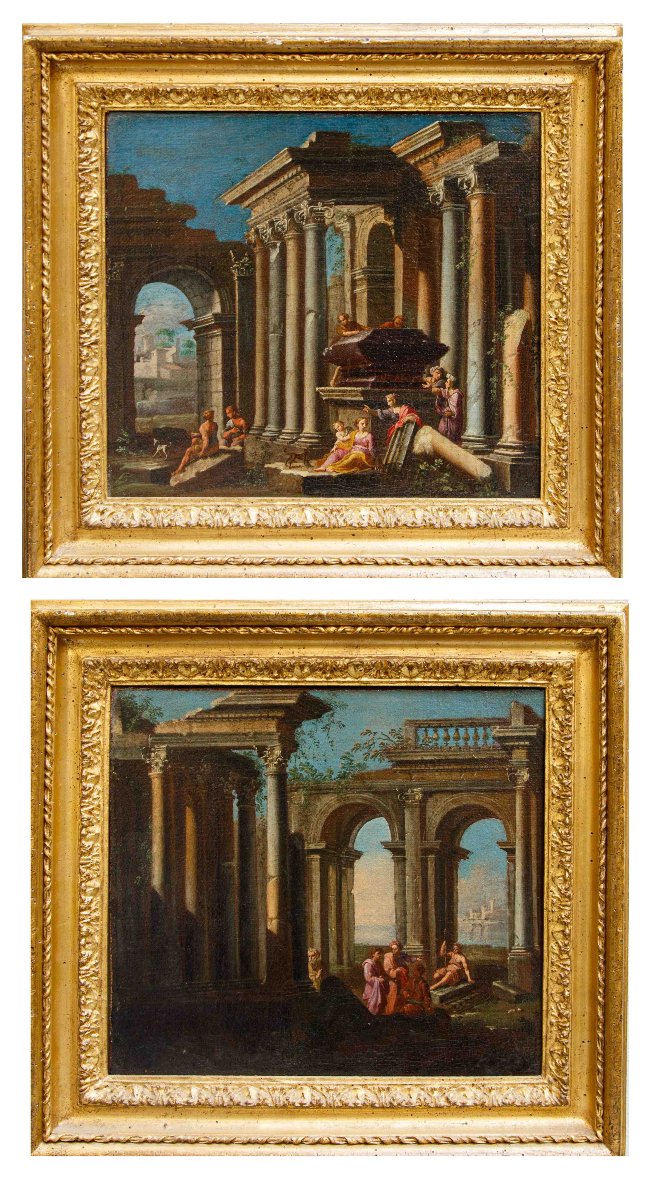
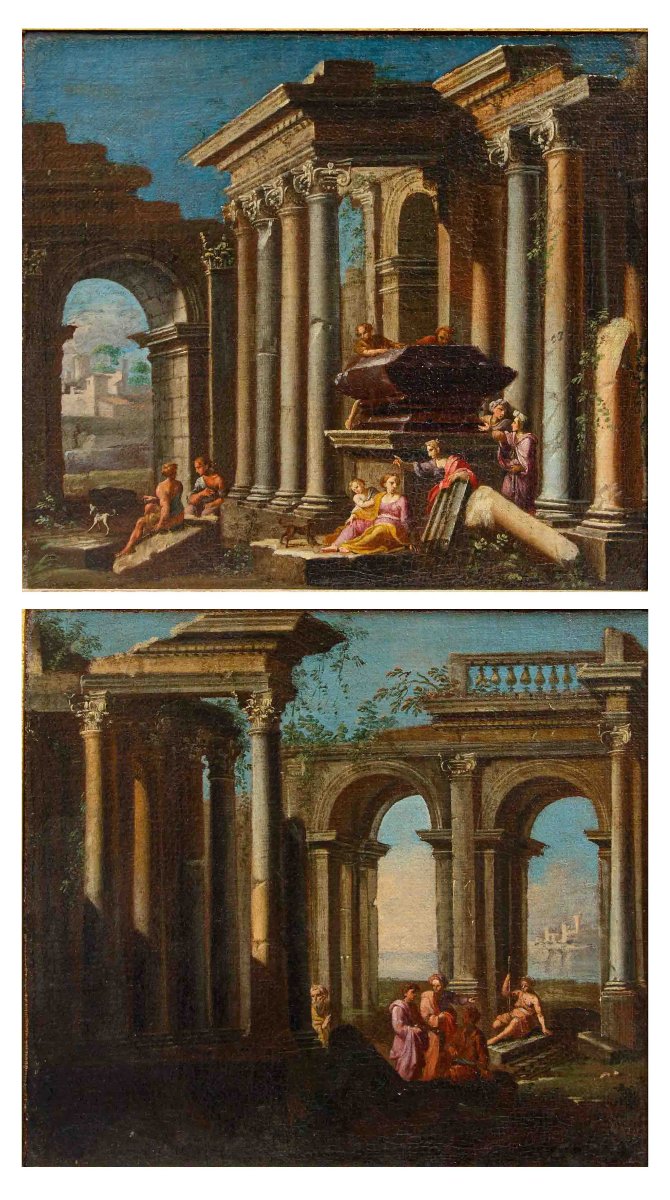




Alberto Carlieri (rome, 1672 – C. 1720), Capriccios With Figures
Alberto Carlieri (Rome, 1672 – c. 1720)
Capriccios with Figures
Oil on canvas, (2) 27 x 30 cm
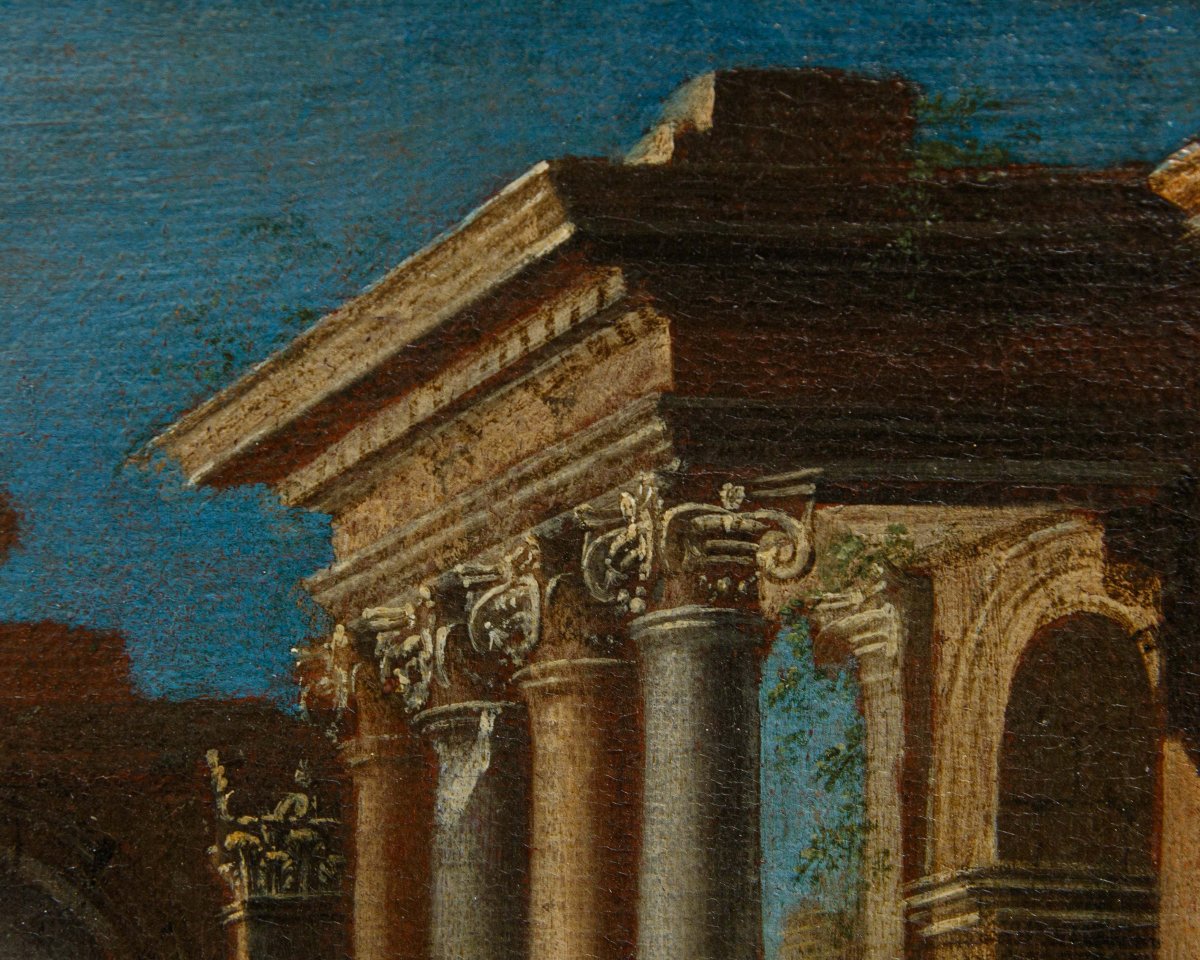
In Alberto Carlieri’s architectural capriccios, ruins are never the true subject of the painting, but rather a backdrop used to construct space and control light. The frontal composition is at times reminiscent of Viviano Codazzi and Giovanni Ghisolfi, but in Carlieri’s work, archaeological interest gives way to a lucid design of open and enclosed spaces—in the style of Pozzi—that is quite different from Ghisolfi’s design philosophy: his architectural works naturally blend interior and exterior. Truncated columns, Corinthian capitals, and projecting cornices are enveloped by wild vegetation, as in the *Capricci* at the Museum of the Abbey of Montecassino, including *The Sermon of an Apostle*, *Capriccio with a Bacchanal*, and *Capriccio with Pasce oves meas*. The double-row arcades in the *Capriccio with a Sermon* (in a private collection) reappear here, and the “pendant” concept—with mirror-image compositions that echo one another—is the same as in the *Capriccios with an Allegory of Autumn*, also in a private collection.
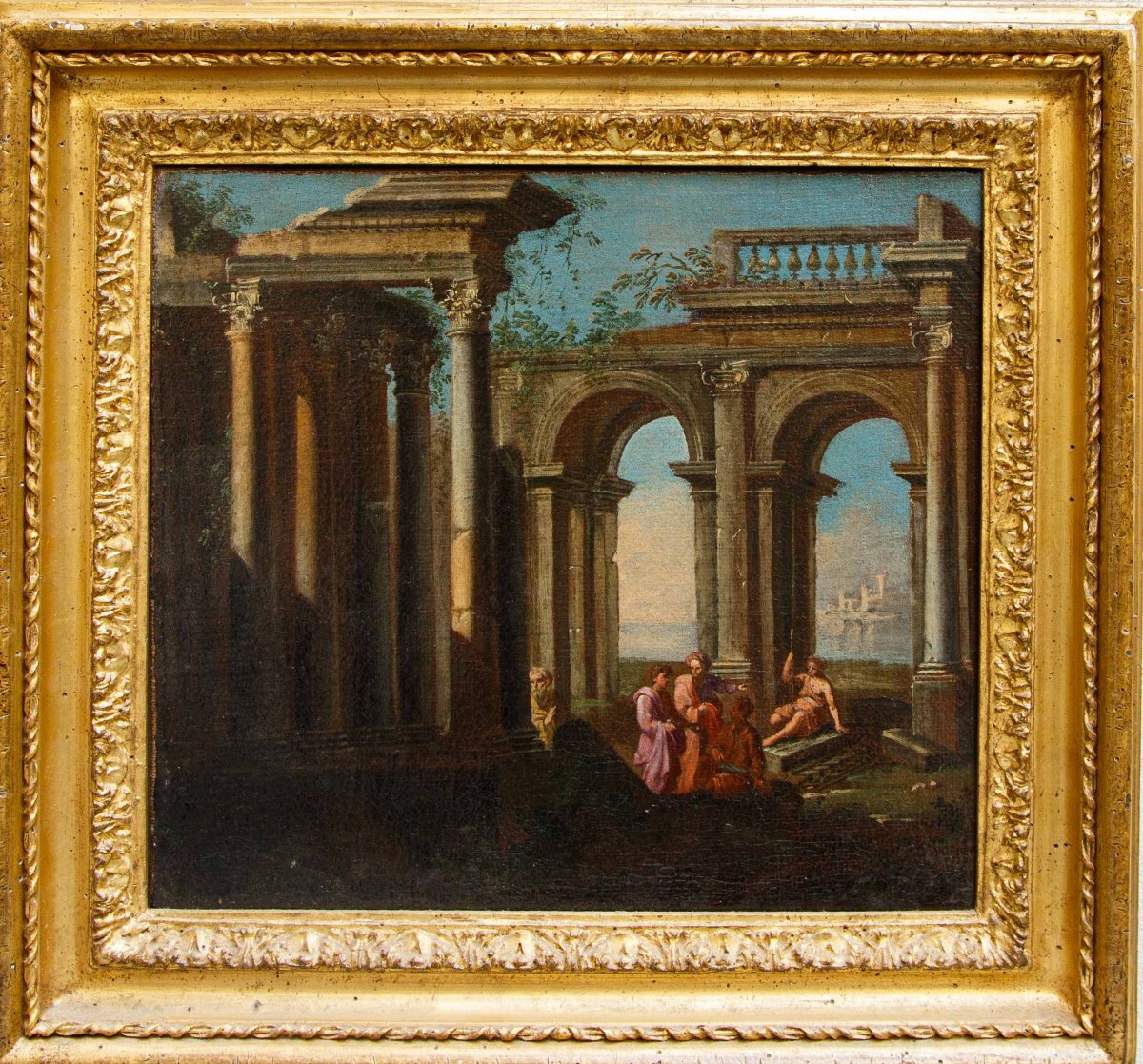
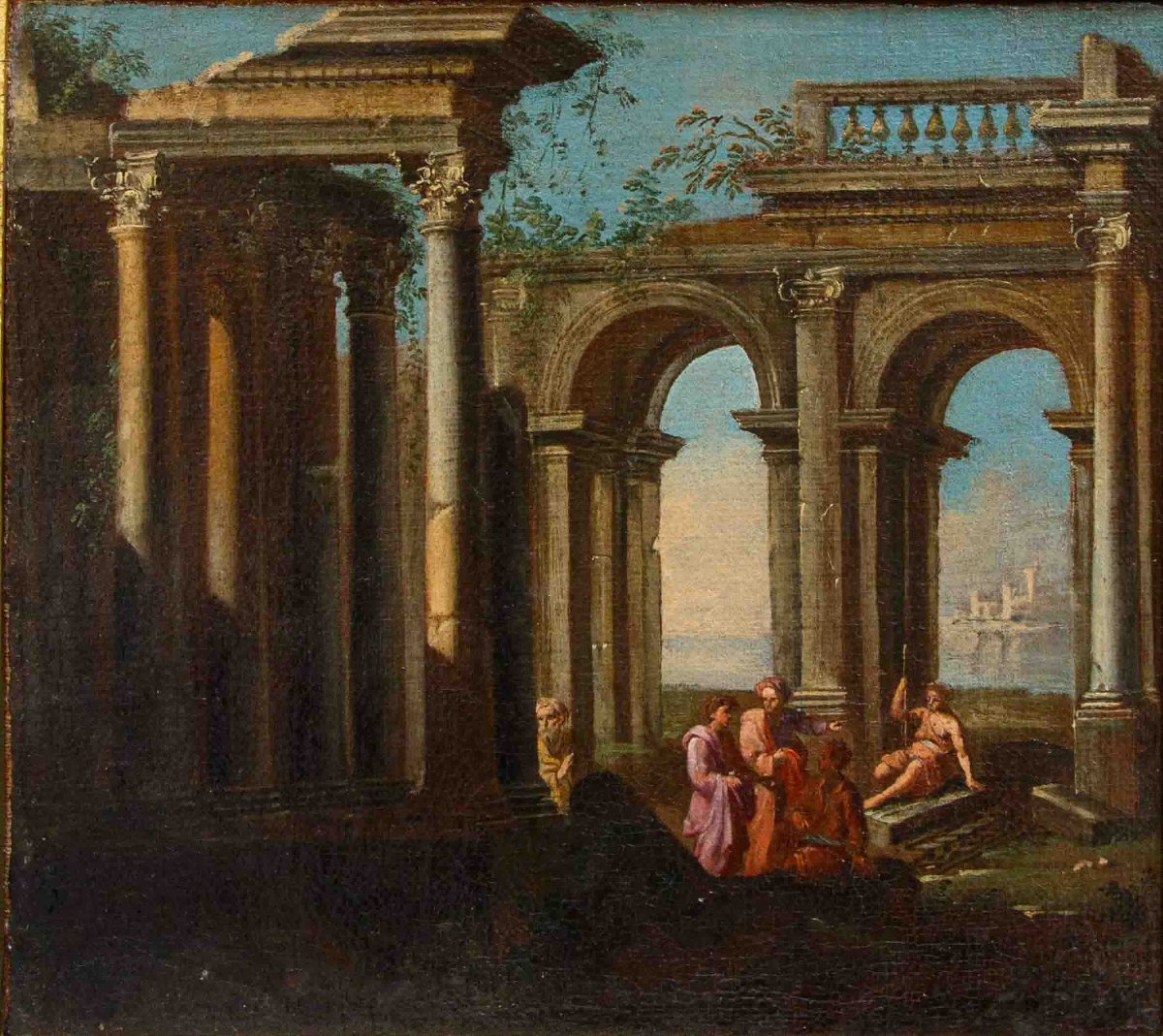
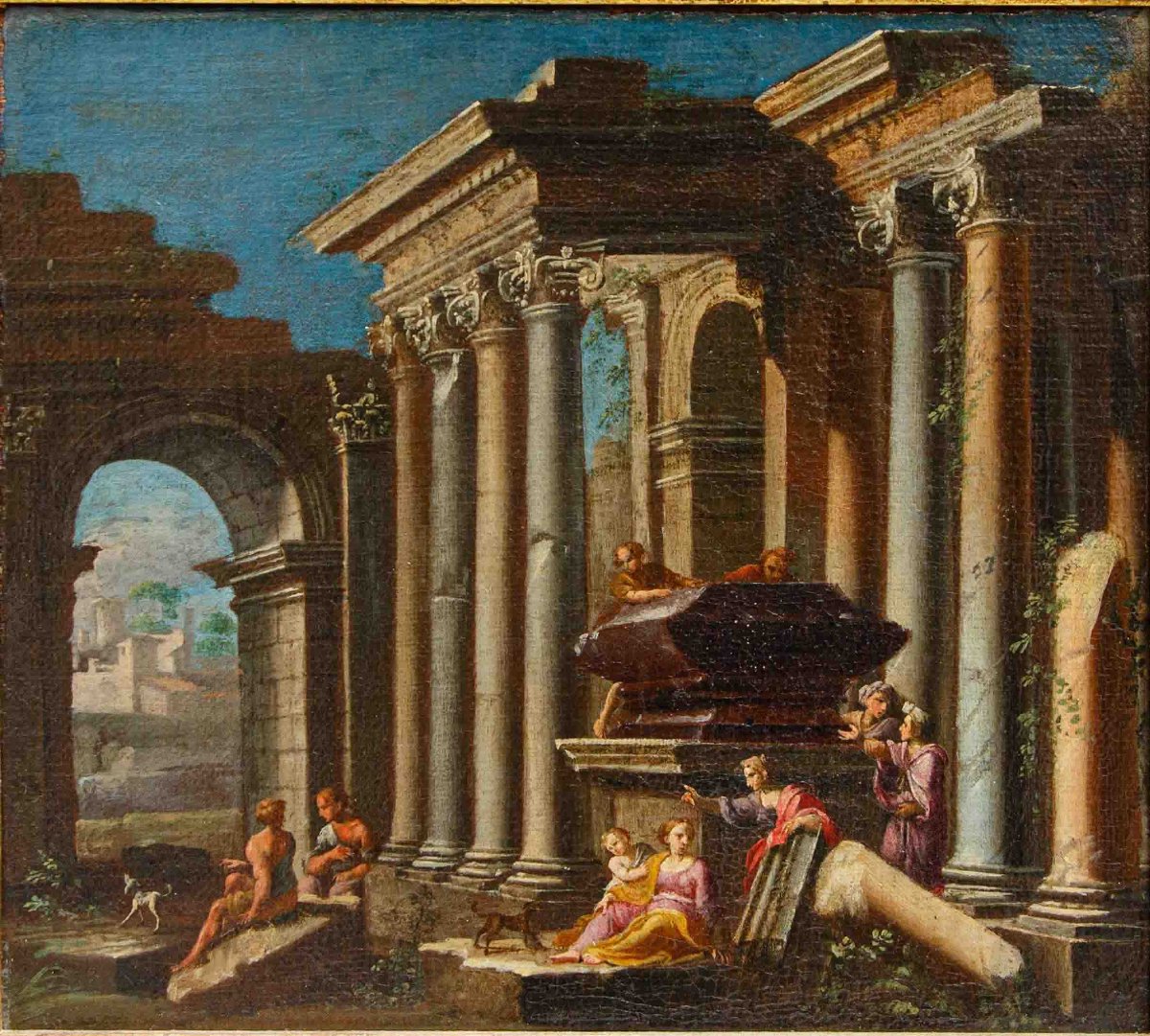
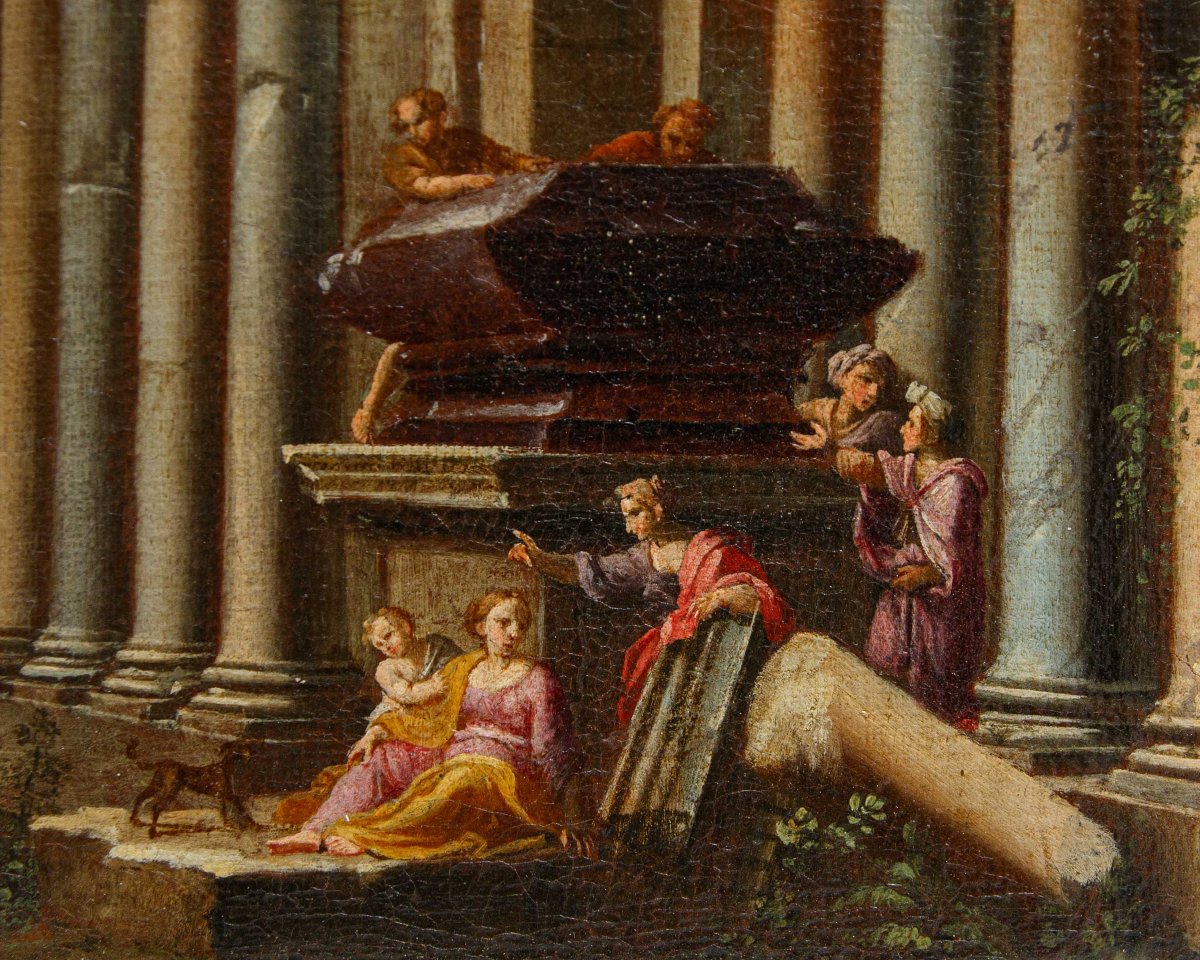
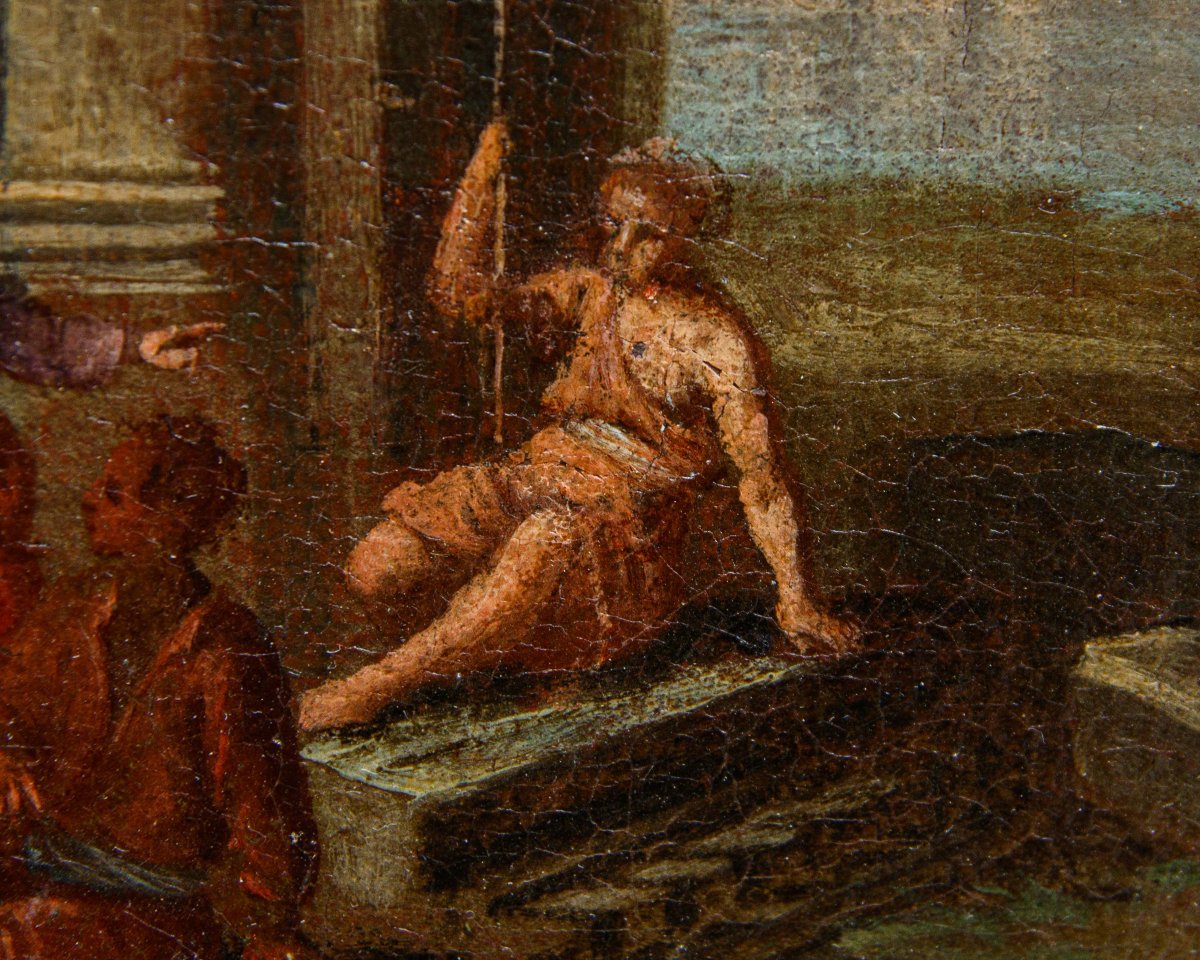
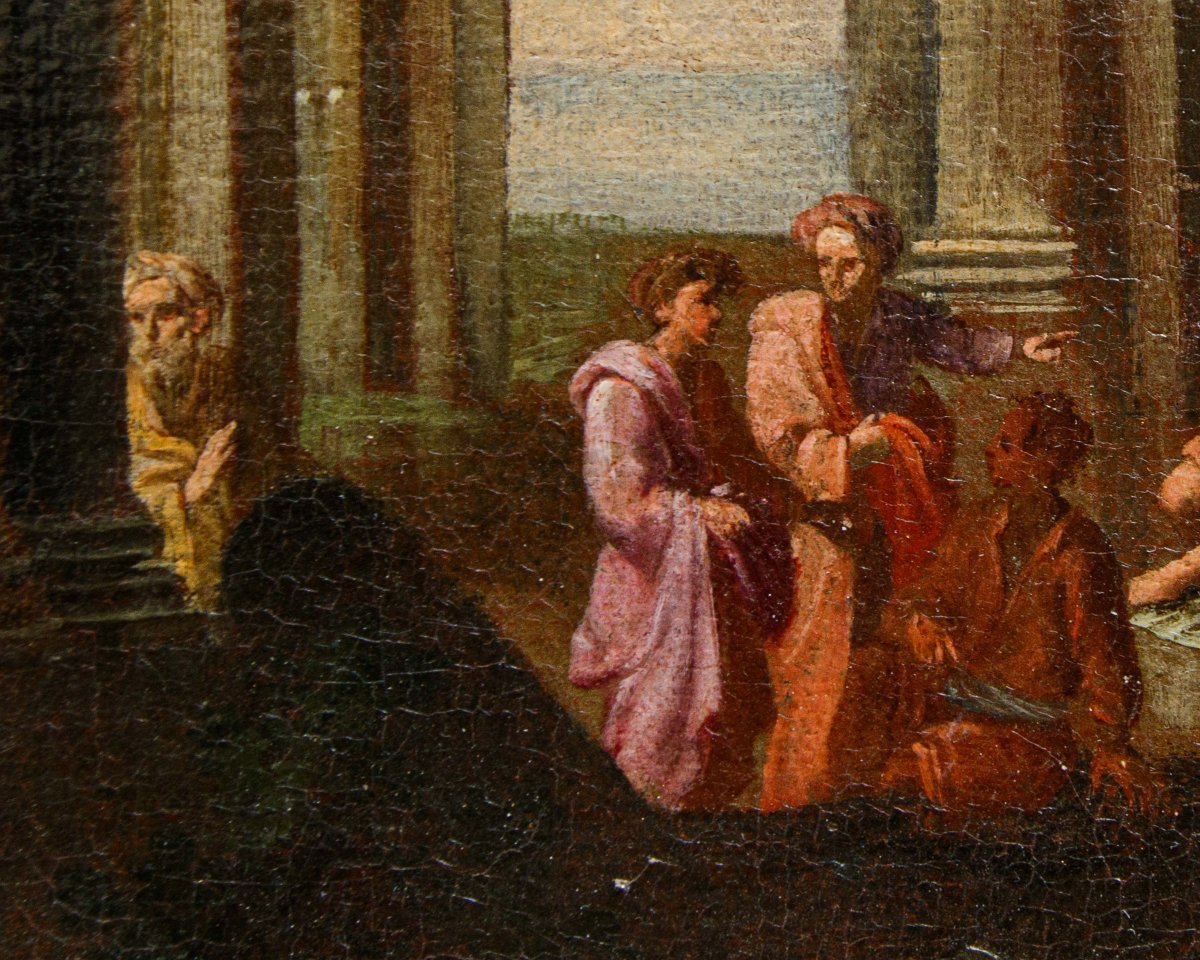
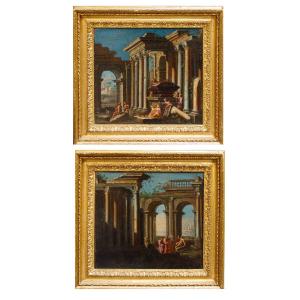
The two paintings under consideration fit naturally into this context. In the first, a double-arched colonnade with a balustrade opens onto a seascape where a turreted city gleams; in the foreground, three figures are conversing, and a young man with a staff sits on the steps. In the second, the composition is reversed: the emphasis is on the right, where a colonnade supports a massive entablature in front of a large dark sarcophagus overlooked by two figures, while on the left a monumental arch opens onto a distant village. The anecdotal scene is more crowded: a woman in red points upward, a mother with a child sits on the ground, and two men rest with a small dog. In both paintings, the contrast between the deep shadows and the illuminated areas—with their almost enamel-like colors—and the lively figures, which enliven the space without overwhelming it, convey that composed elegance that is the master’s most recognizable trait: these are the “vague little stories of well-composed, well-colored figures” praised by ancient sources.
Carlieri trained in Rome under Giuseppe de Marchis, at the school of the Rovinist painting style, and later became associated with Andrea Pozzo, of whom he was a student and collaborator. From Pozzo—author of the treatise *Perspectiva pictorum et architectorum*, which would become the theoretical reference for 18th-century architects and artists—he learned the principles of perspective and the art of enlivening compositions with anecdotal scenes. He enjoyed great success during his lifetime and was appreciated for his luminous and brilliant architectural works: his pieces were featured in Rome’s major galleries, from the collection of Filippo II Colonna to the Rospigliosi family and Cardinal Valenti Gonzaga. Together with Alessandro Salucci, he served as an early influence on Giovanni Paolo Panini, so much so that his works were often mistaken for those of the great master.
Period: 17th century
Style: Other Style
Condition: Good condition
Material: Oil painting
Width: 30
Height: 27
Reference (ID): 1841120
Availability: In stock