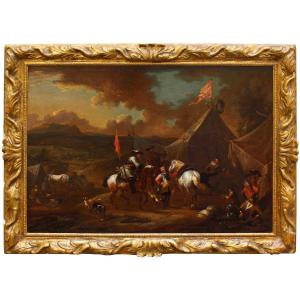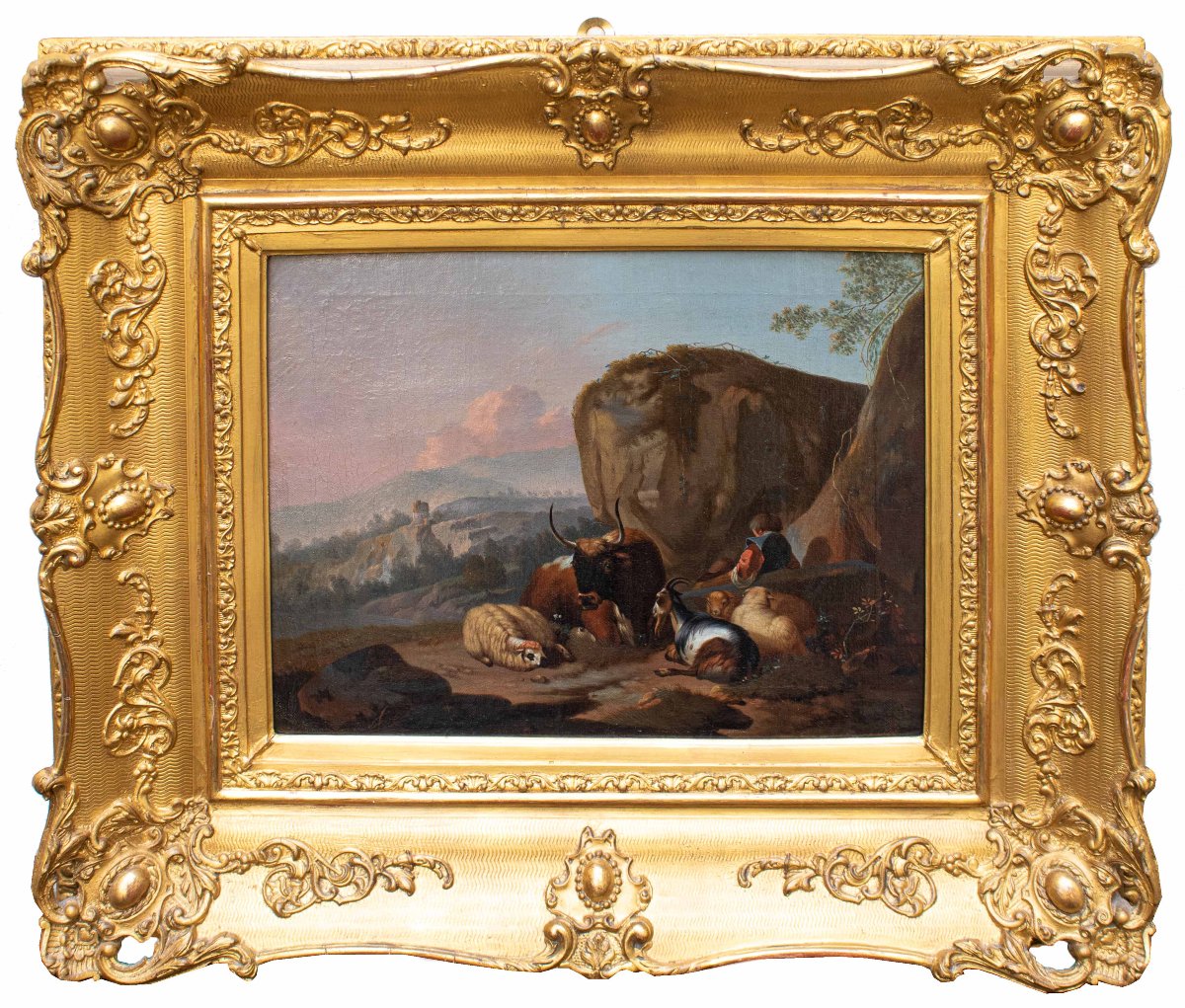
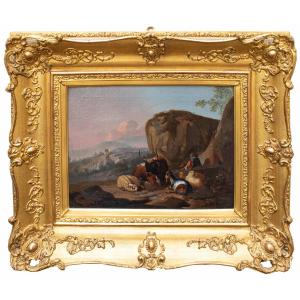


Circle Of Nicolaes Berchem (1620, Haarlem – 1683, Amsterdam), Scene With Herds
From the circle of Nicolaes Berchem (1620, Haarlem – 1683, Amsterdam)
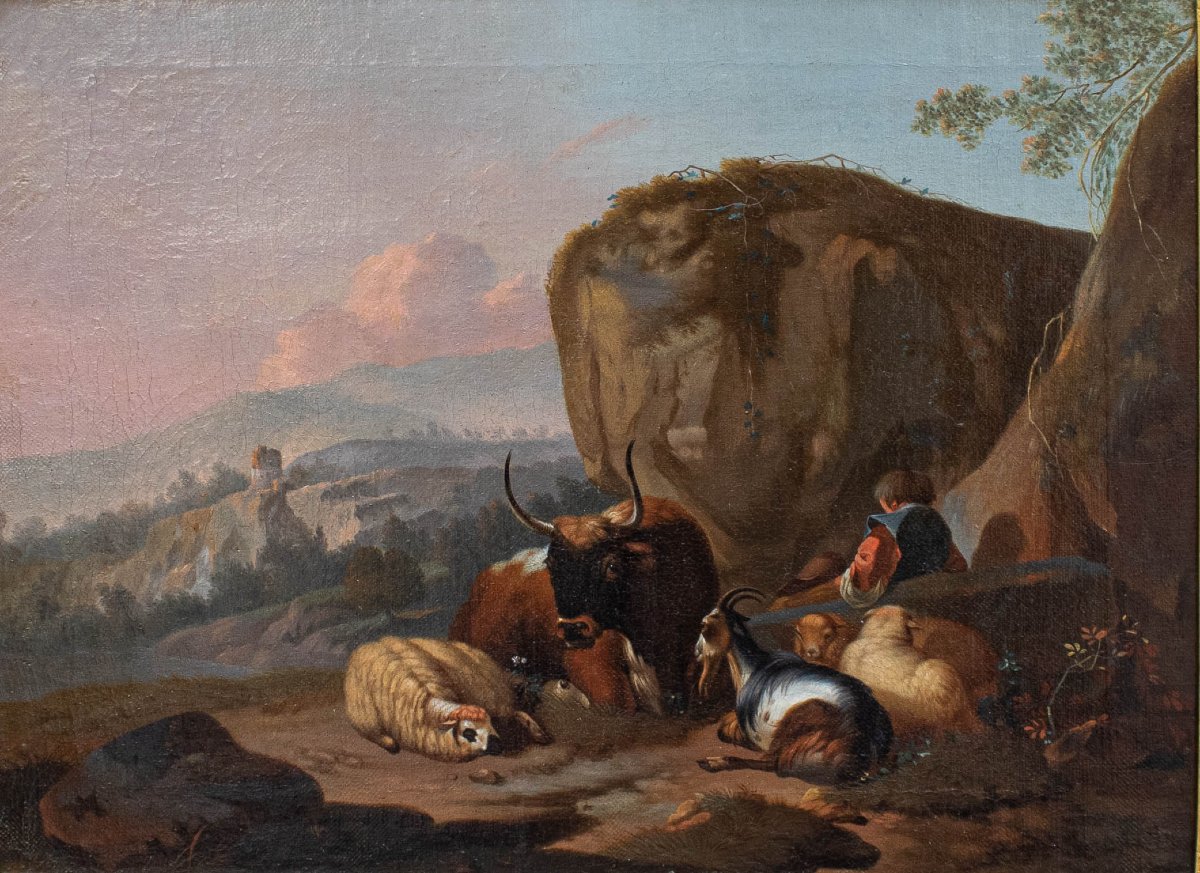
Scene with Herds
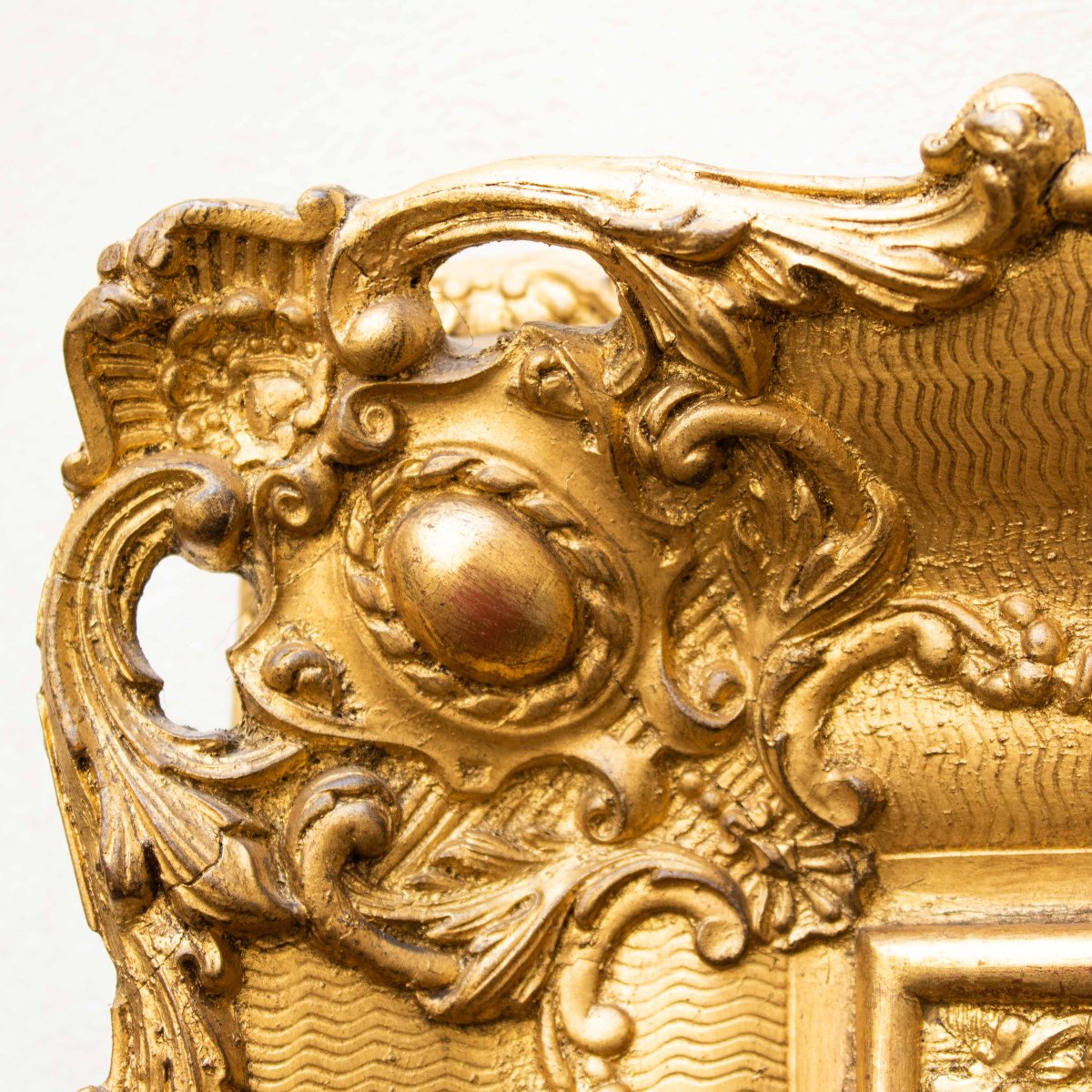
Oil on canvas, 30 x 39 cm – Framed: 56 x 65 cm
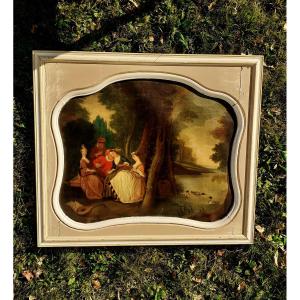
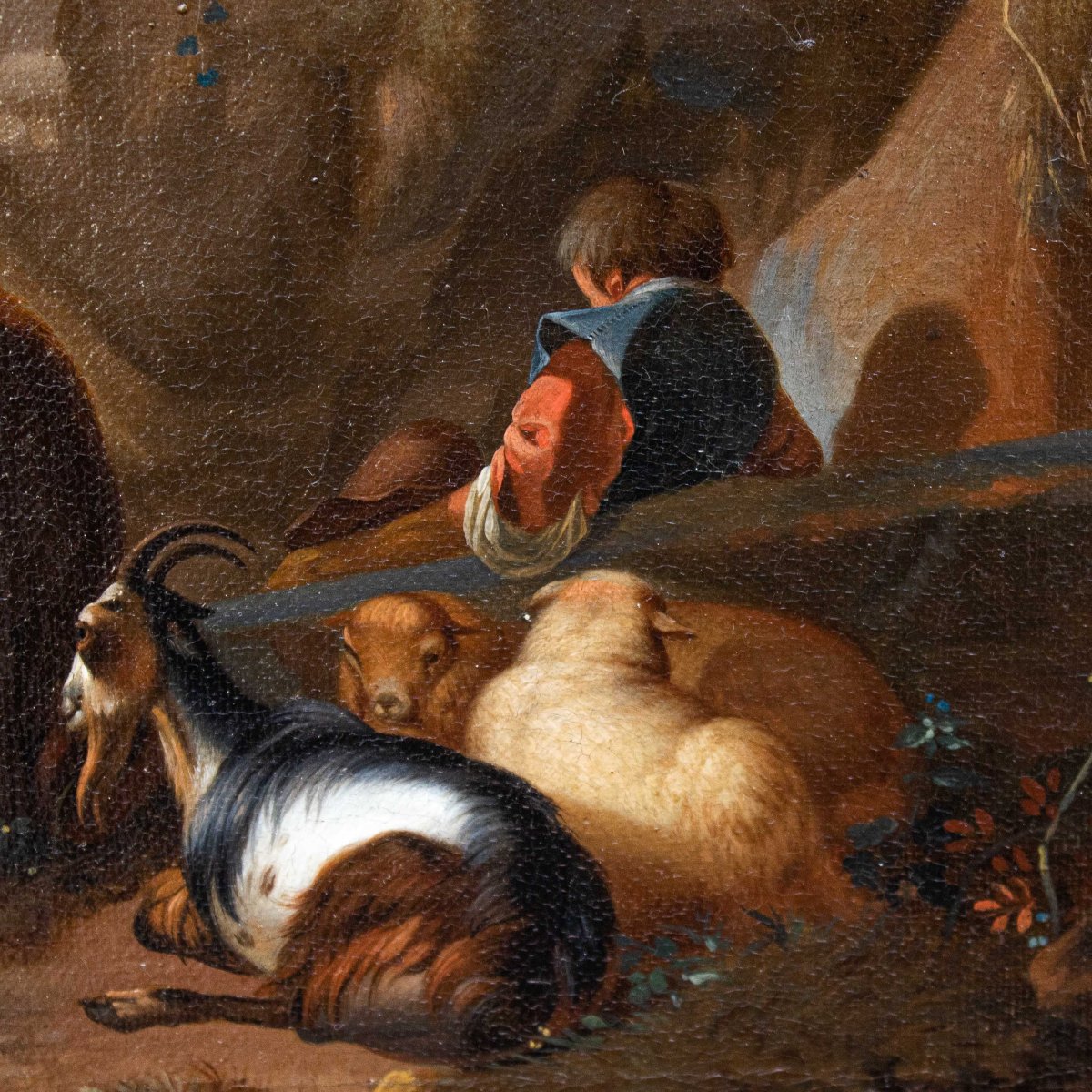
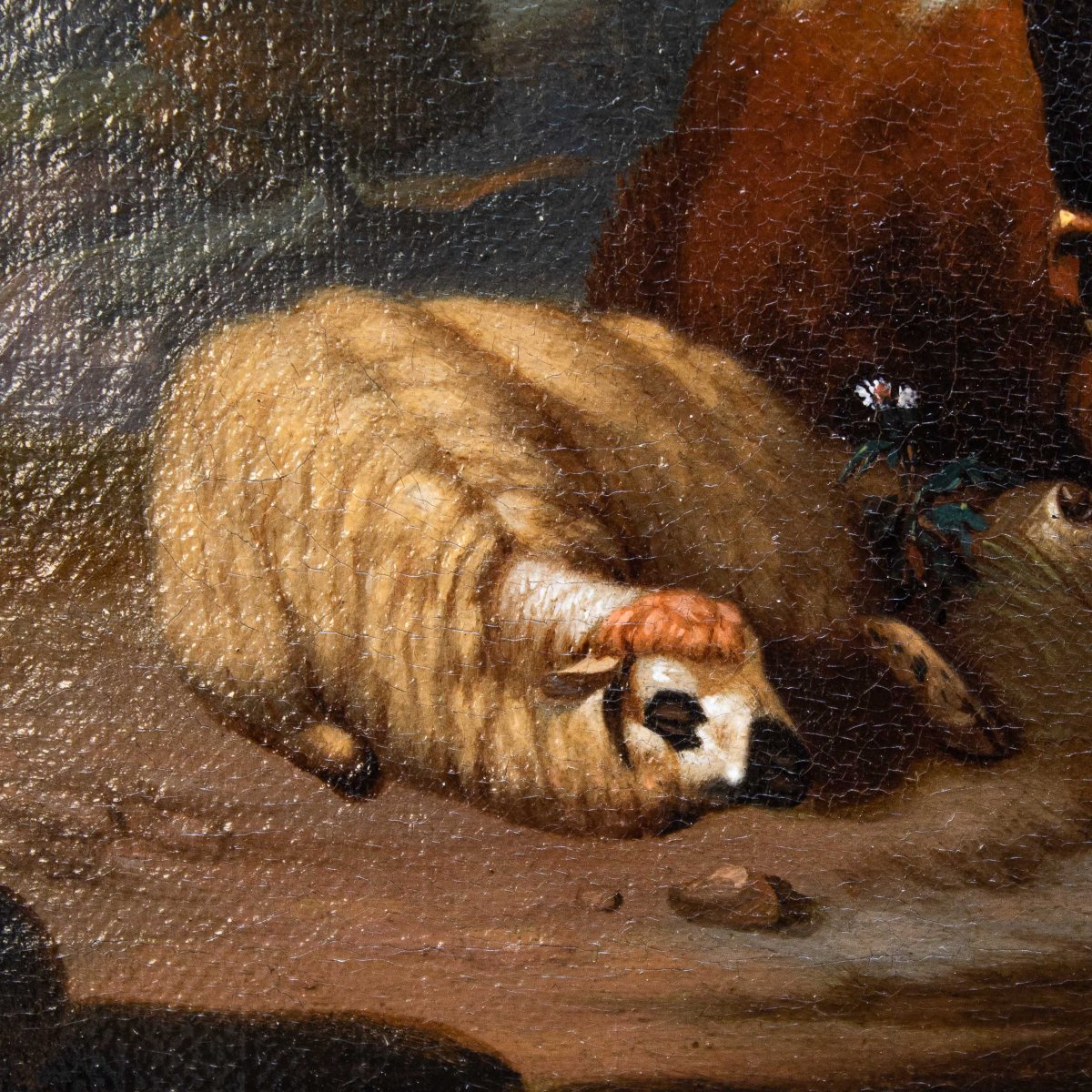
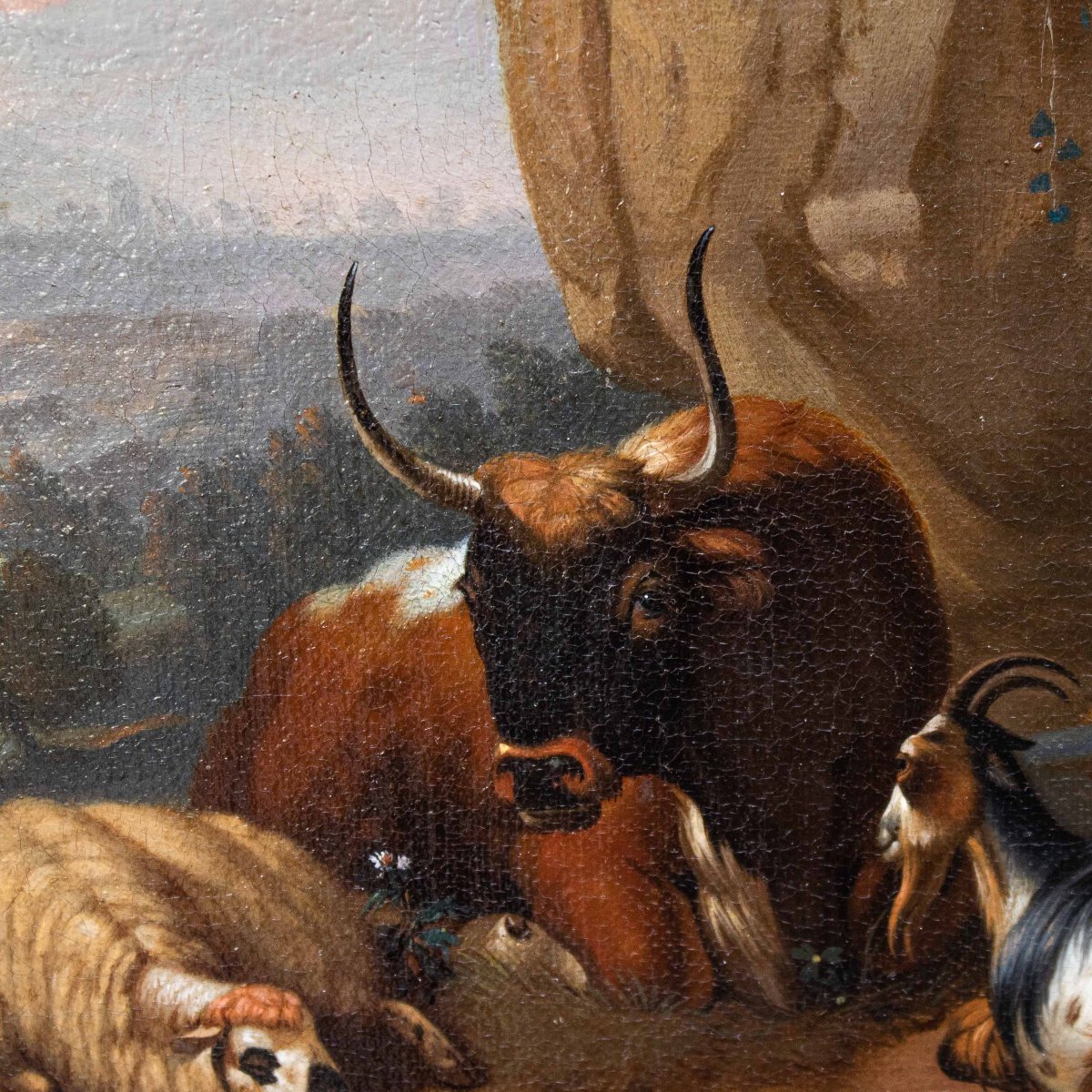
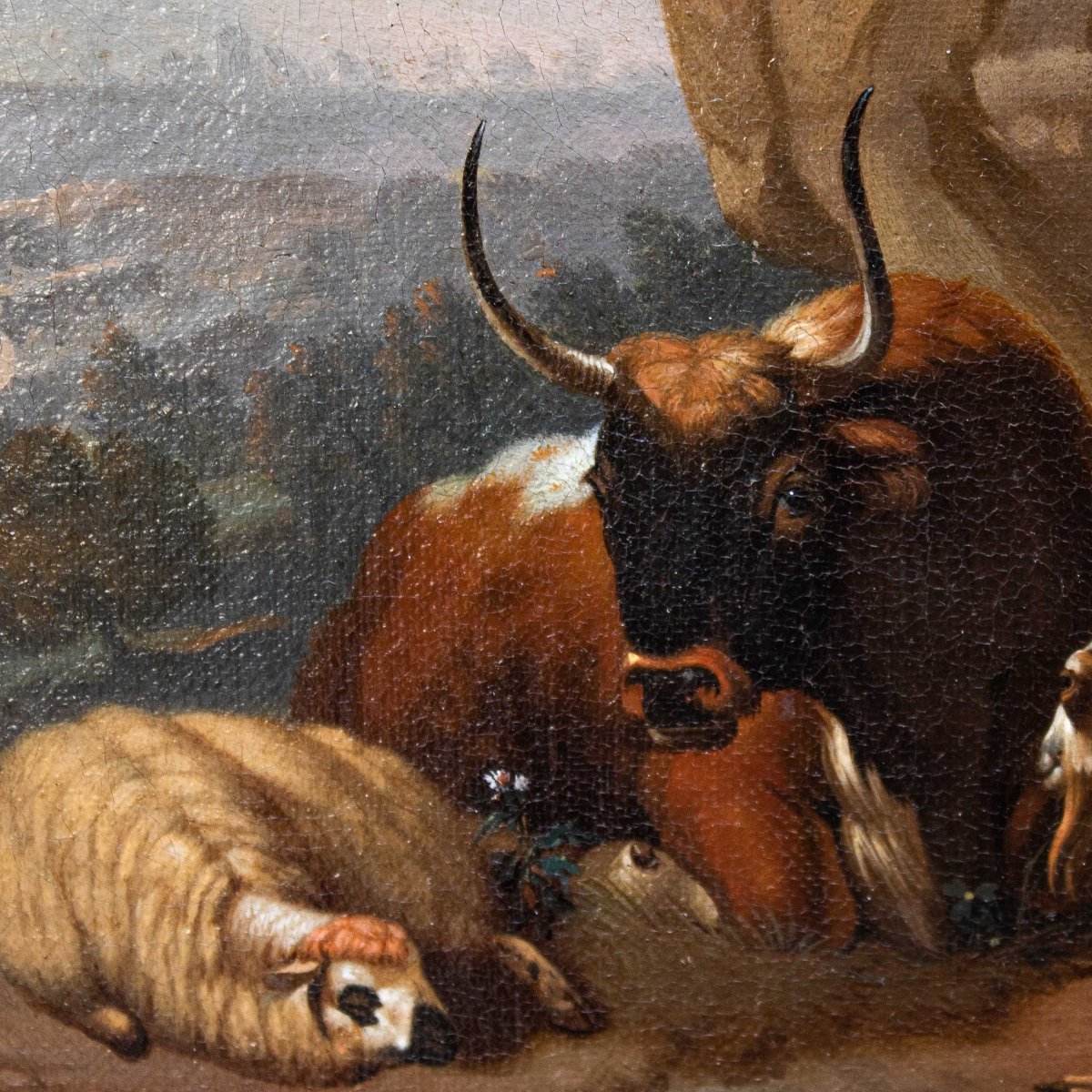
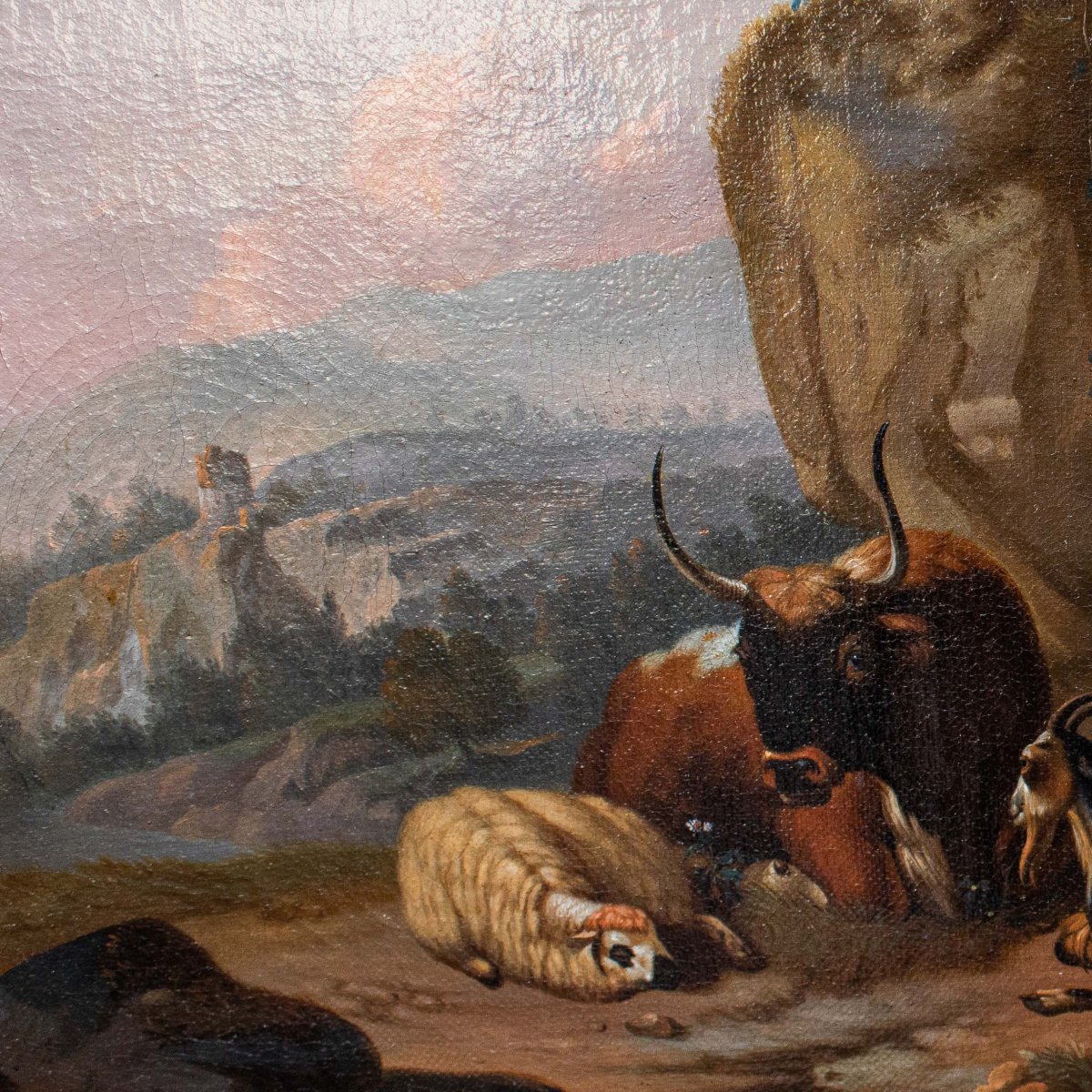
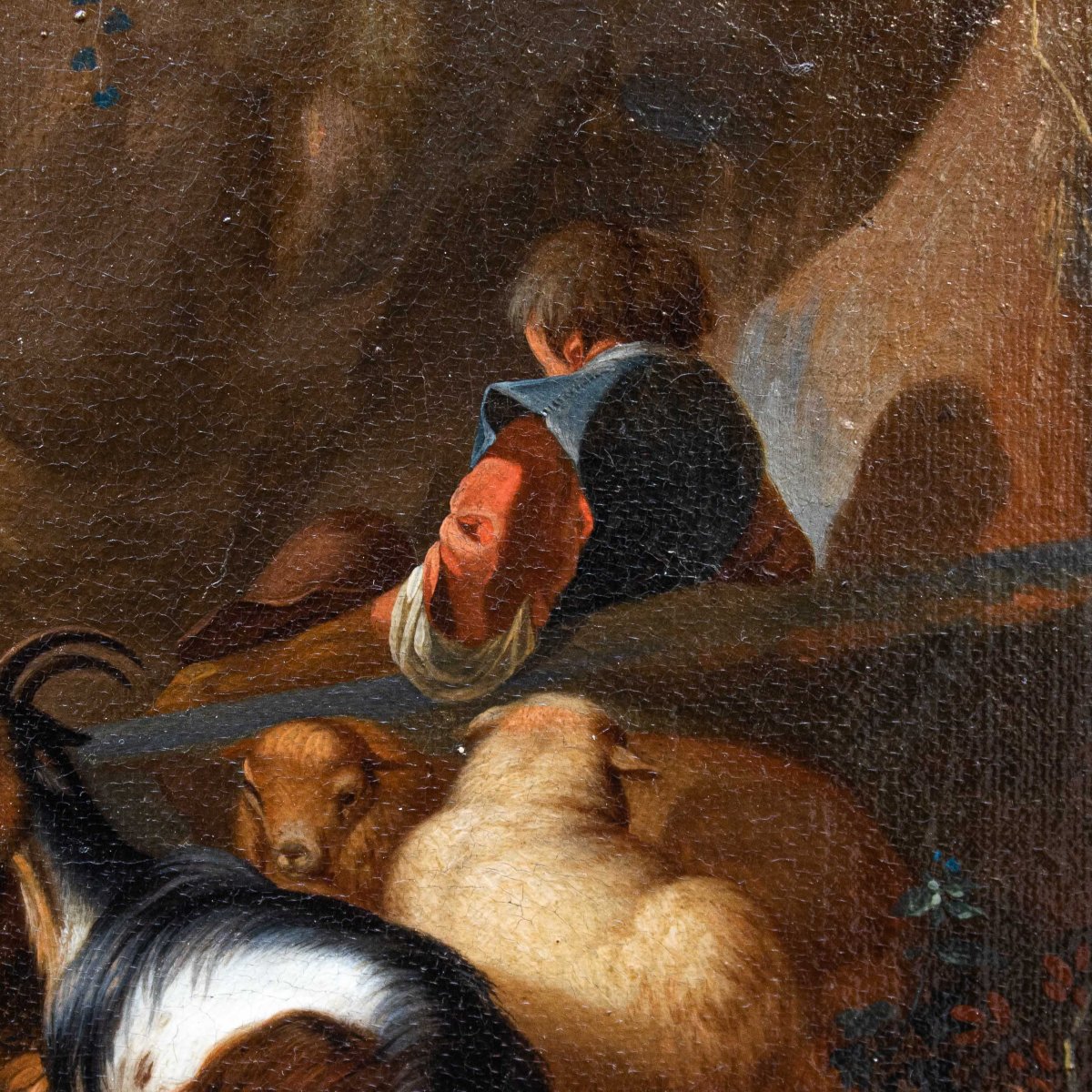
This painting, depicting a Scene with Herds at Sunset, bears the mark of a painter who had direct access to the works and models of Nicolaes Berchem (1620, Haarlem – 1683, Amsterdam), one of the most renowned painters of Italian landscapes.
The son of still-life painter Pieter Claesz (1598–1661), he was introduced to the art world by his father, who taught him the basics of painting; It is not known exactly why he adopted the surname Berchem instead of Claesz; perhaps it was due to his father’s place of birth. According to the most recent studies, the young Nicolaes Pietersz Berchem continued his apprenticeship under the guidance of the landscape painter Jan van Goyen (1596–1656) and Claes Cornelisz Moeyaert (1590–1655), representing the second generation of the “Dutch Italians.”
None of Berchem’s travels are well documented, but, according to many sources, he may have traveled with his cousin Jan Baptist Weenix (1621–1663), with whom he also shared his time in Moeyaert’s workshop prior to 1642, when his membership in the Guild of St. Luke in Haarlem is documented.
He stayed in Rome twice, in 1642 and 1653; there he fell in love with the Roman countryside, which became the main inspiration for his landscapes, drawing on the Roman countryside for the subjects of his successful landscape paintings. He visited Westphalia together with Jacob van Ruisdaele and then returned to Amsterdam, where he worked for Jan de Visscher.
In his early years, Berchem’s paintings were heavily influenced by the style of his master, Claes Cornelisz Moeyaert, and by biblical and mythological figures with powerful foregrounds, three-dimensional figures set in landscapes bathed in clear, warm light. Later, during his full artistic maturity, he favored works centered primarily on harbor scenes, hunts, ruins in Latin and Roman landscapes, battles, and, of course, pastoral landscapes, as seen in the work under consideration. His style was strongly influenced by his stays in Italy and is characterized by depictions of idealized rural settings—hilly or mountainous, as the case may be—enriched by human and animal figures (he was also an engraver, and his studies of animals were of considerable importance).
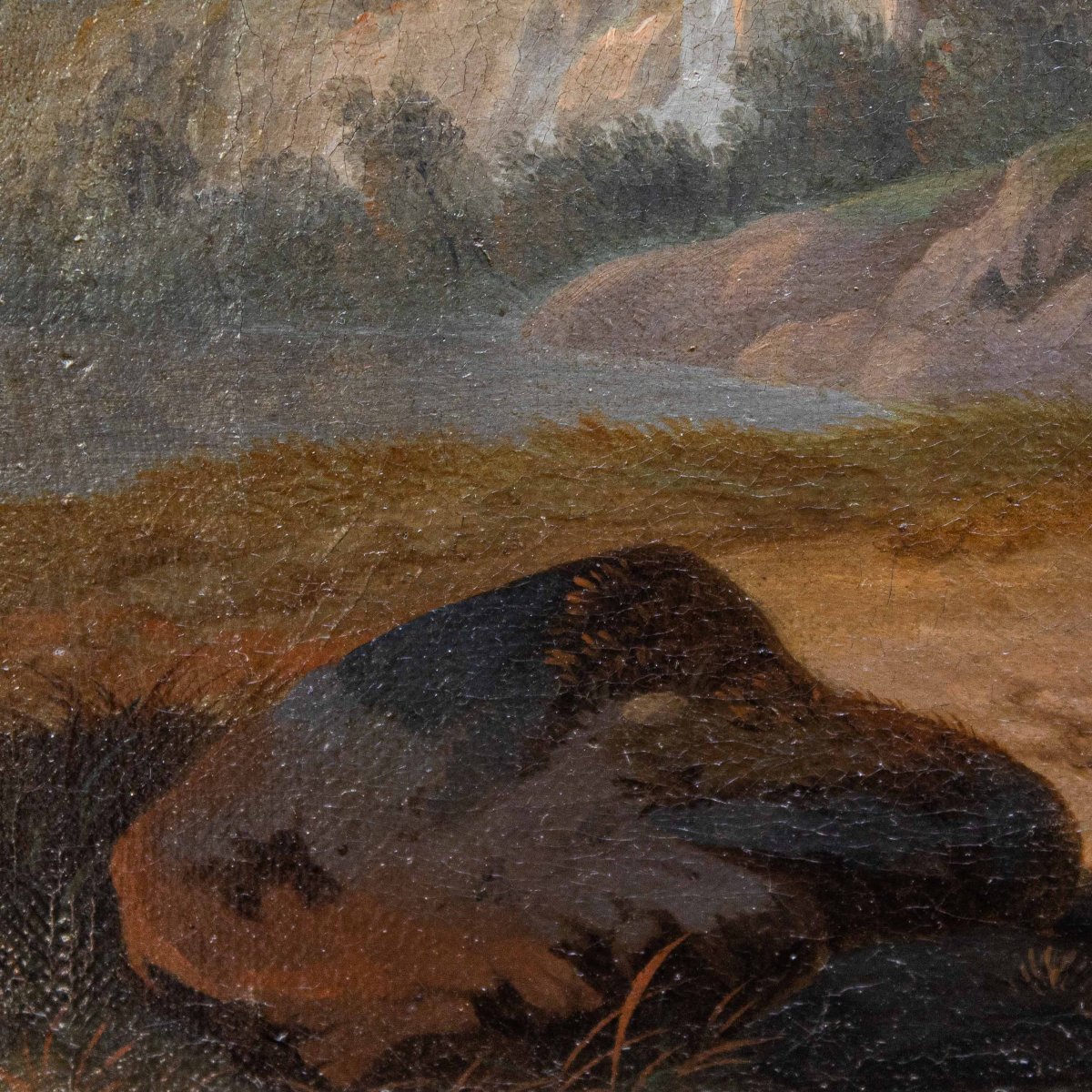
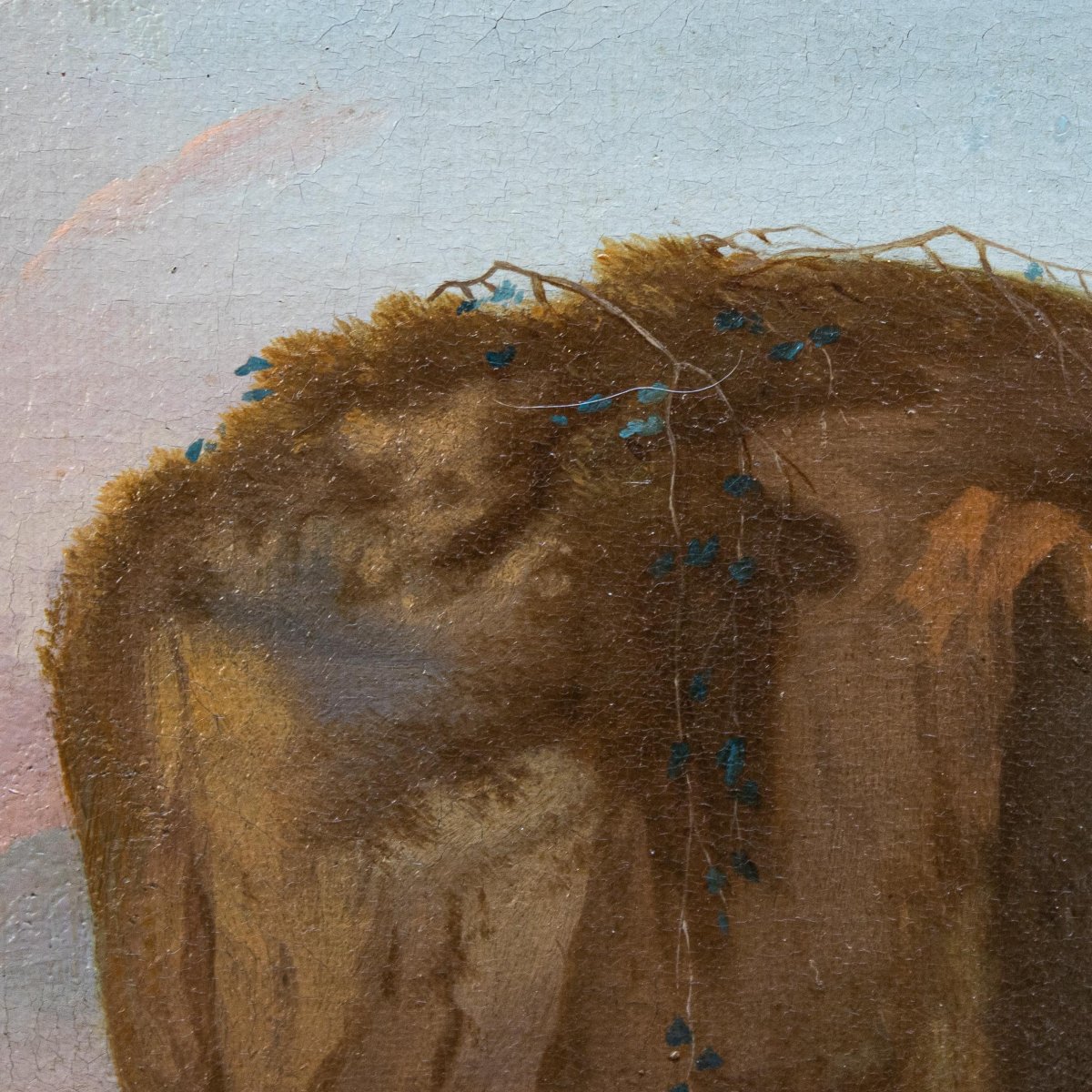
The painting under consideration evokes the compositions of the Dutch artist, depicting an Arcadian-style landscape characterized by a delicate, lyrical atmosphere with subtle yet at the same time vivid and prominent tones. In this rich and balanced composition, the landscape is rendered with great attention to detail and light, while the gentle fading and softening of the colors in the distance creates a sense of delicate depth. The warm hues and refined tonal transitions, bathed in this unique light, lend the work an atmosphere in which time seems to have stood still.
In relation to this painting, see the pastoral scenes housed at the National Gallery in London, the Vienna National Gallery, and the Getty Museum.
Period: 17th century
Style: Other Style
Condition: Good condition
Material: Oil painting
Width: 39
Height: 30
Reference (ID): 1796991
Availability: In stock