


Pair Of Large Candlesticks Signed Gérard-jean Galle "1788–1846," Early 19th Century
Artist: Gérard-jean Galle (1788 -1846)
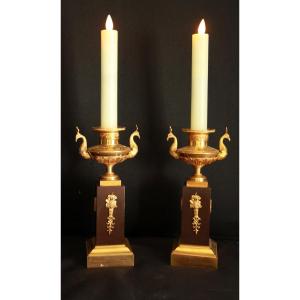
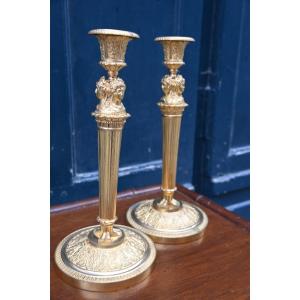
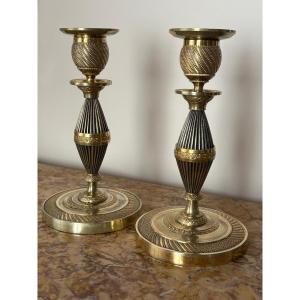
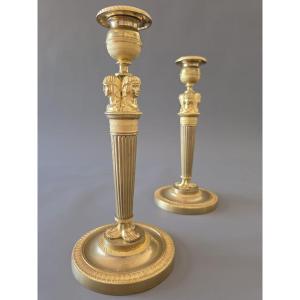
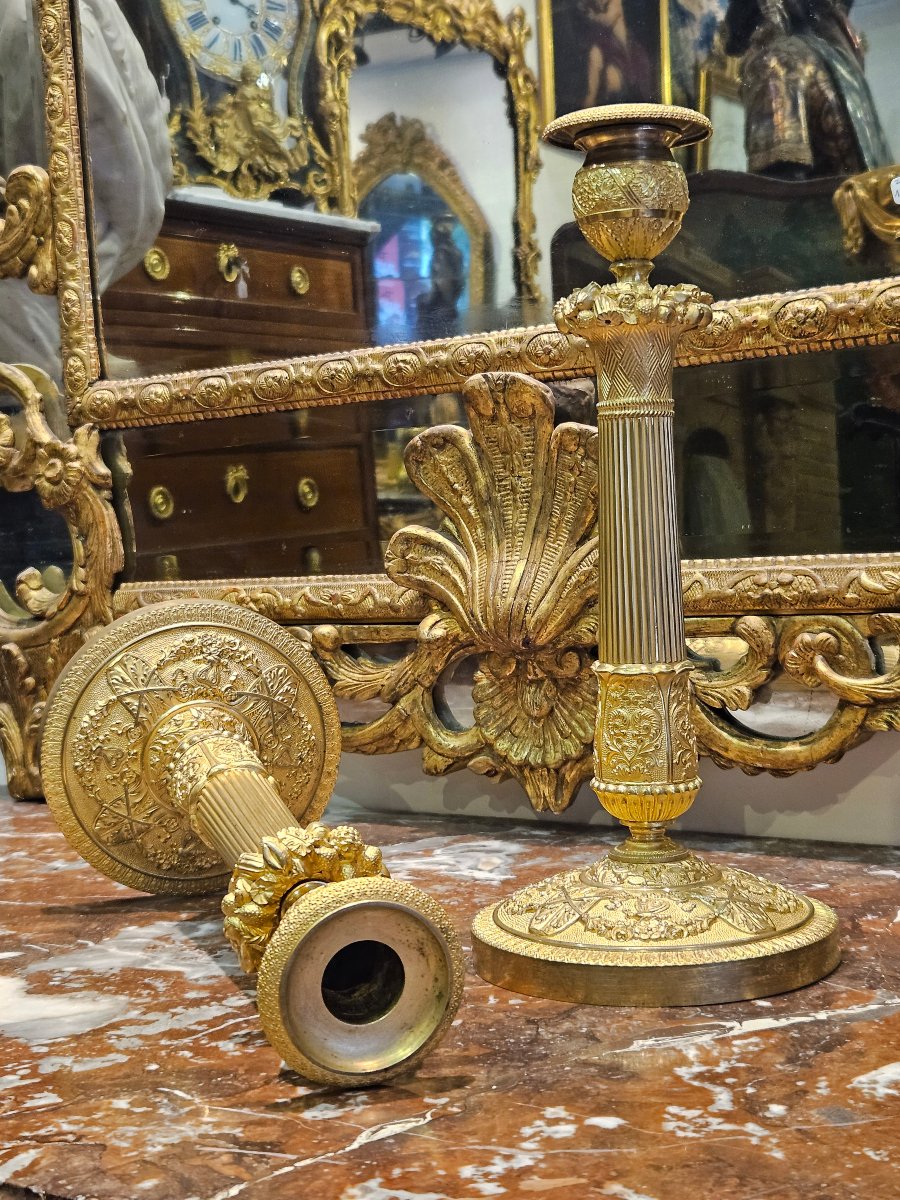
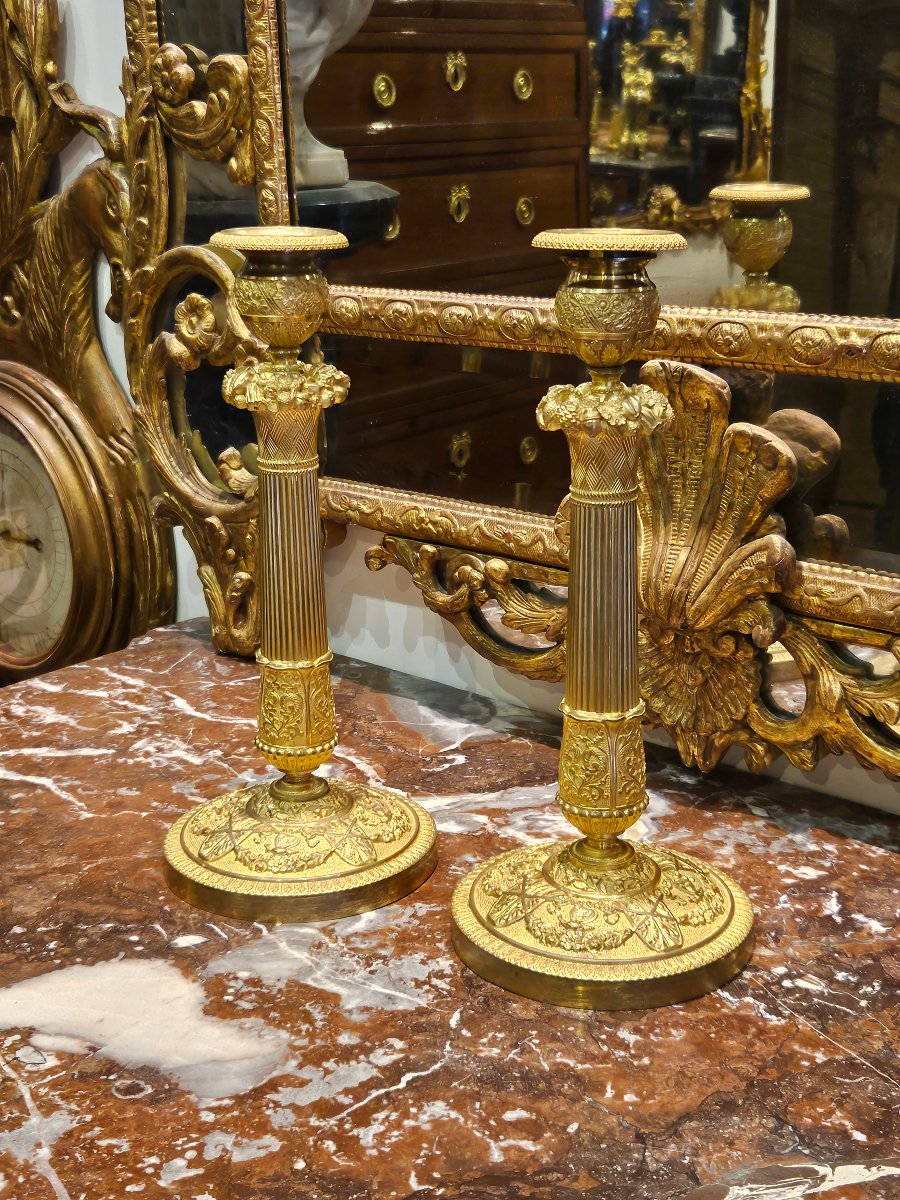
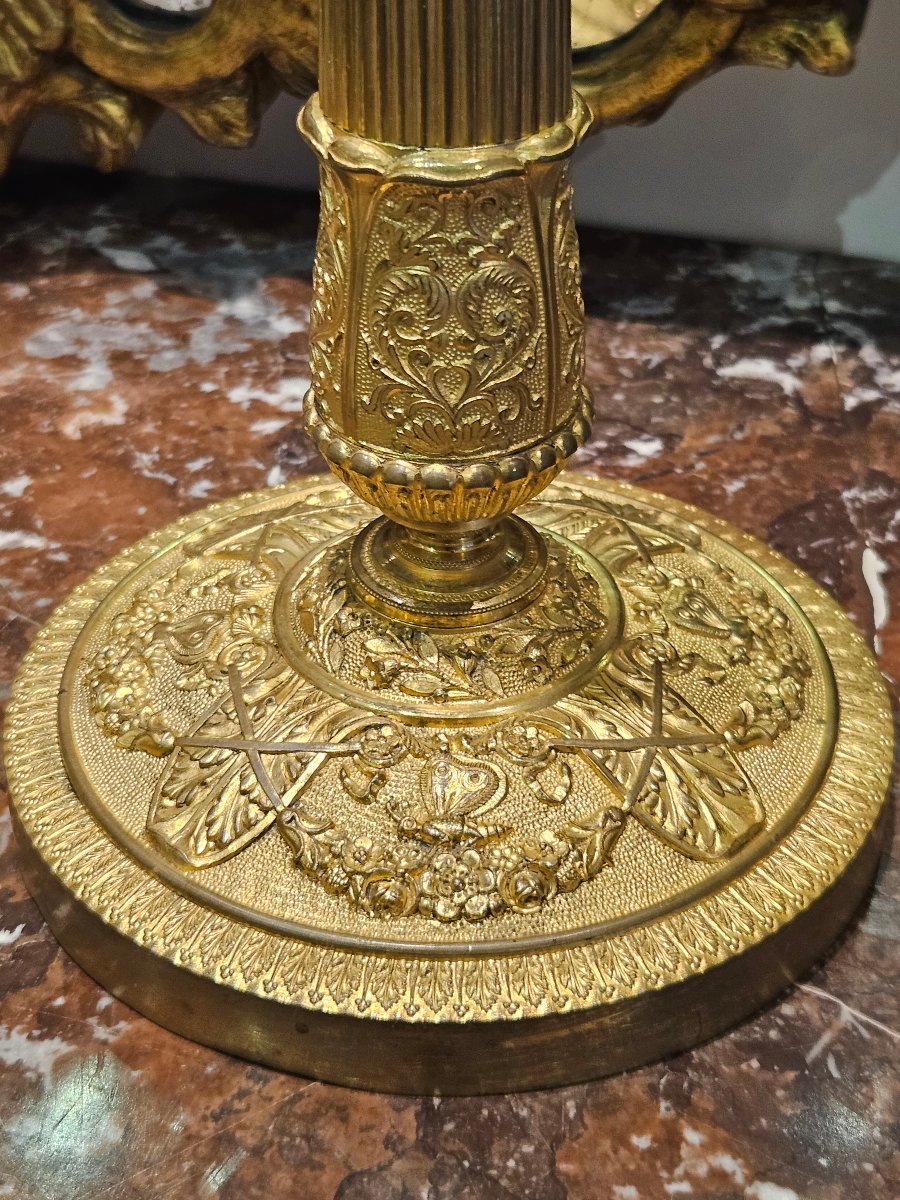
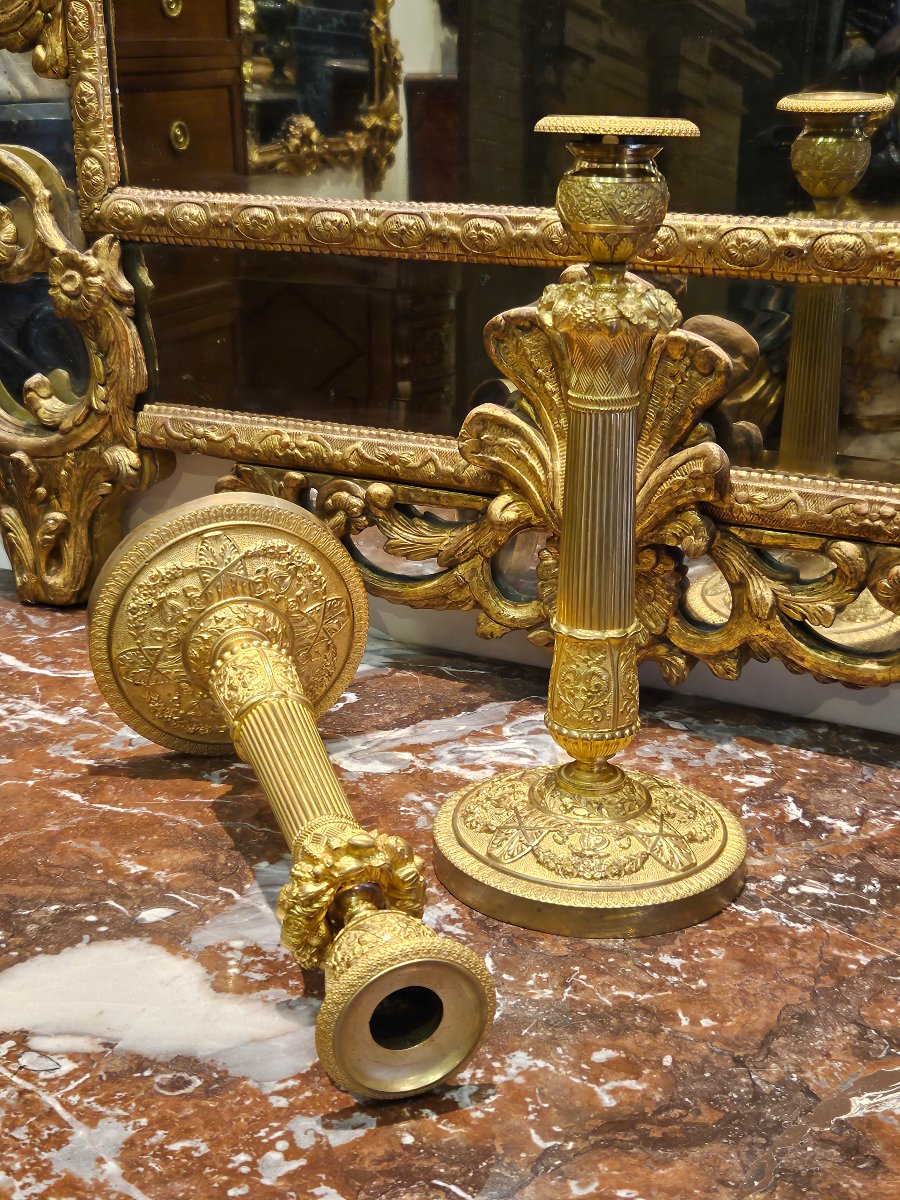
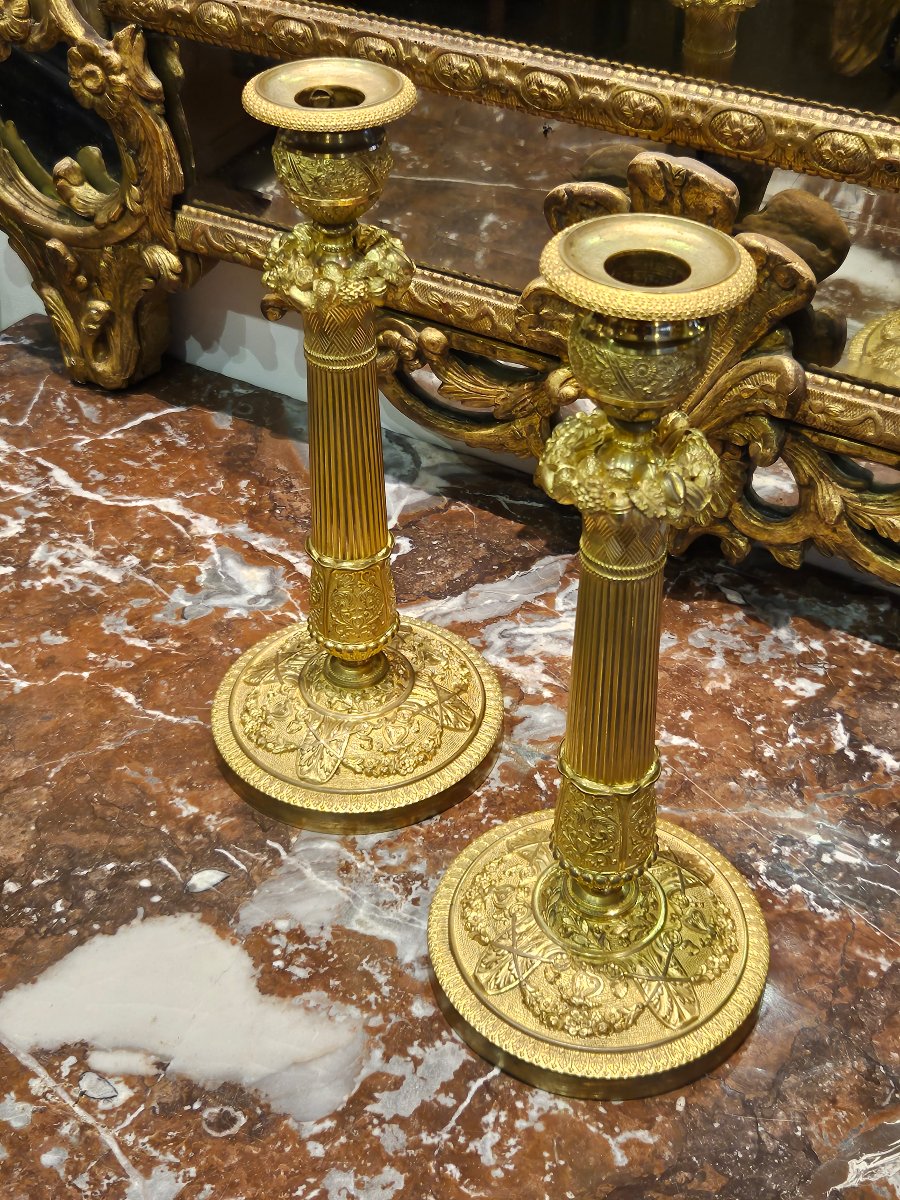
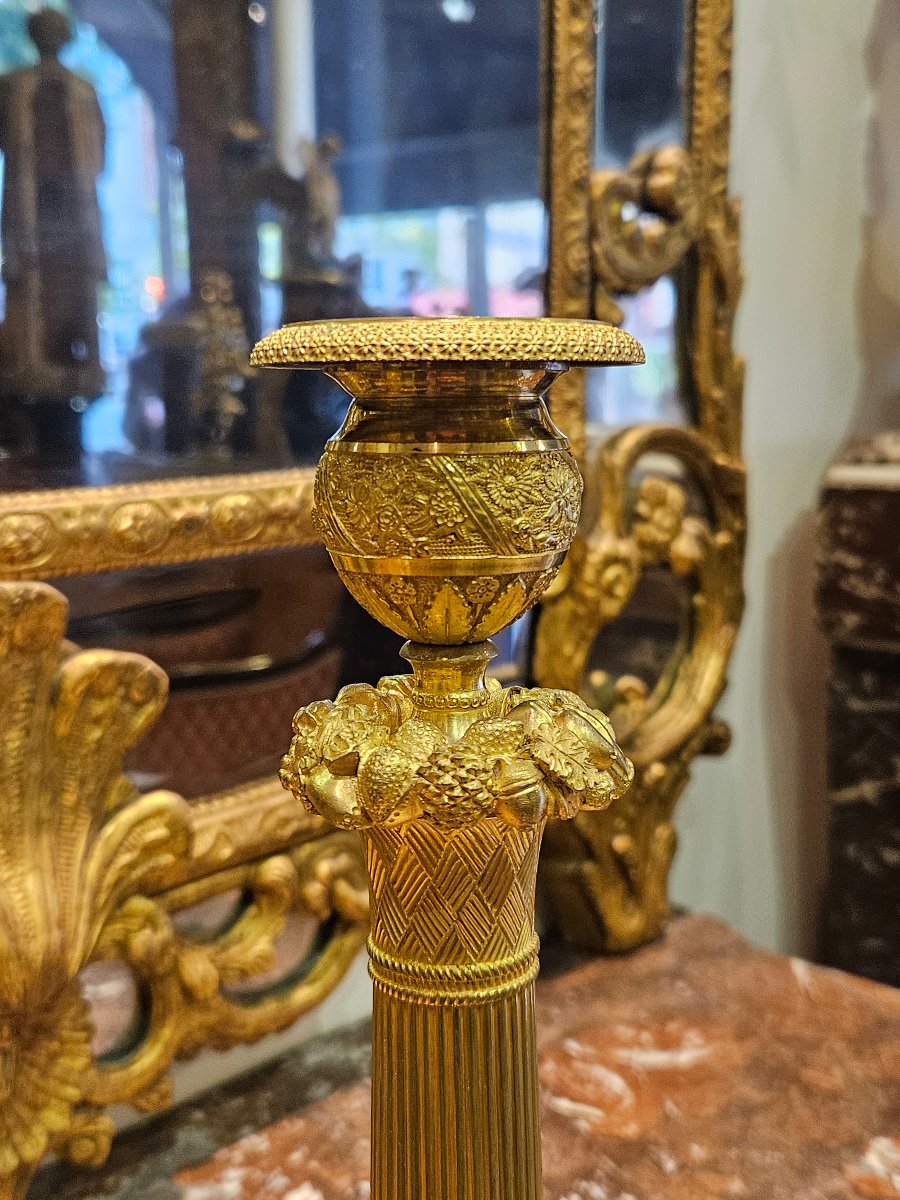
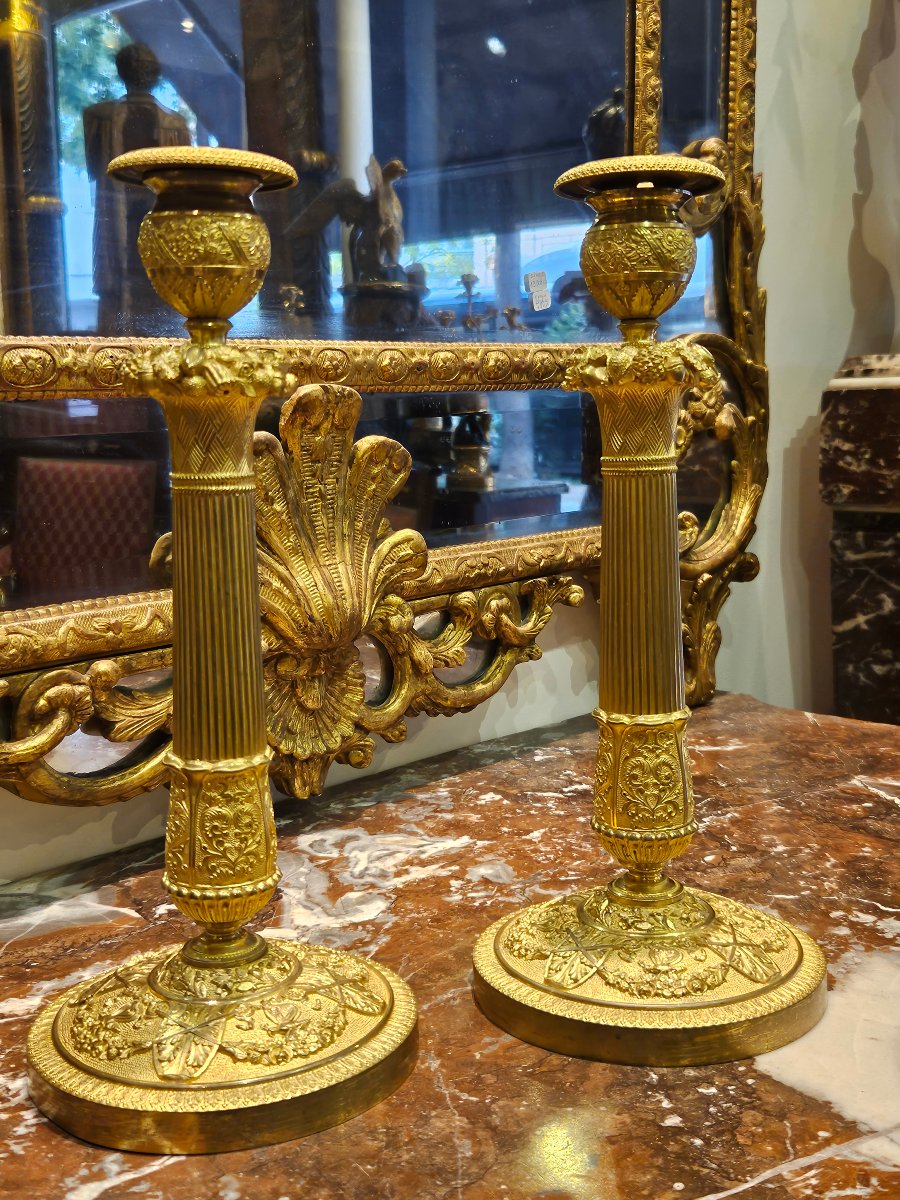
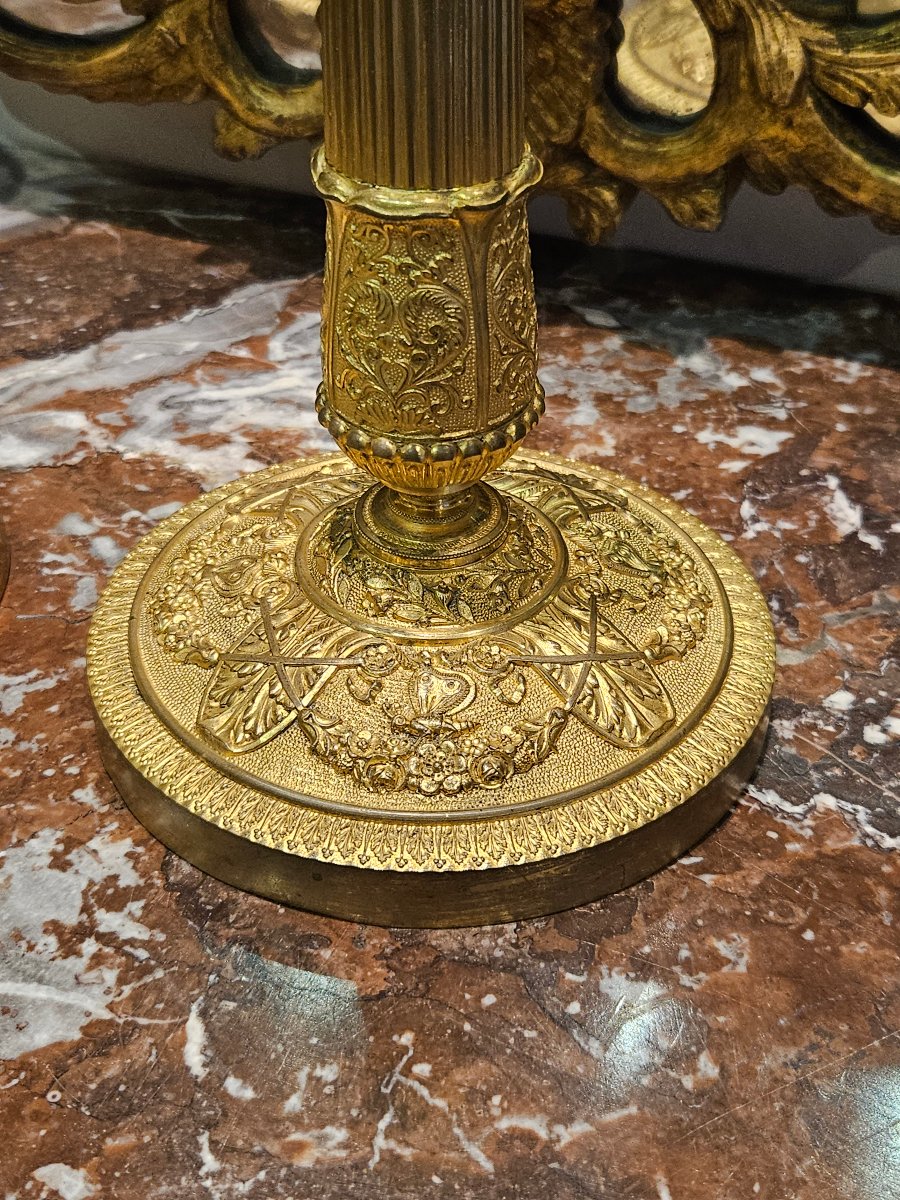
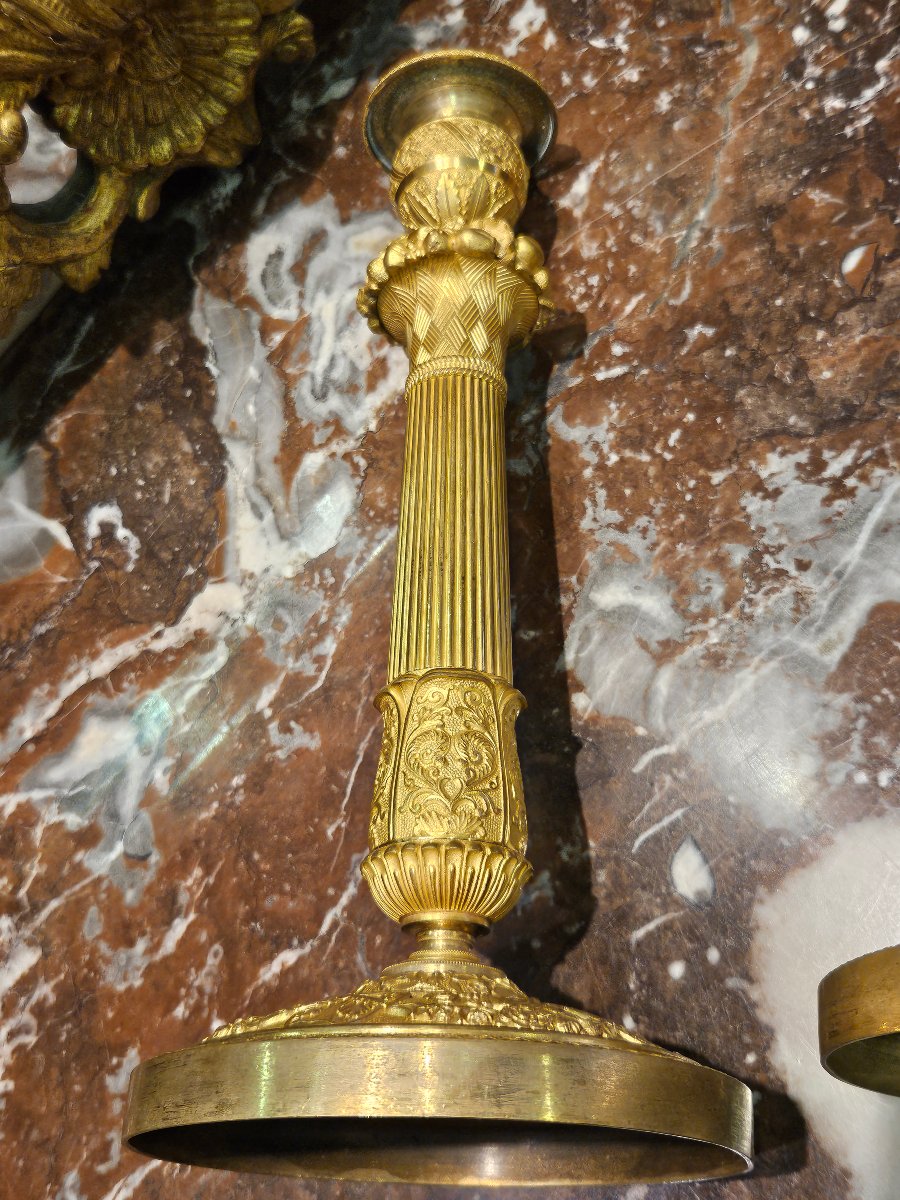
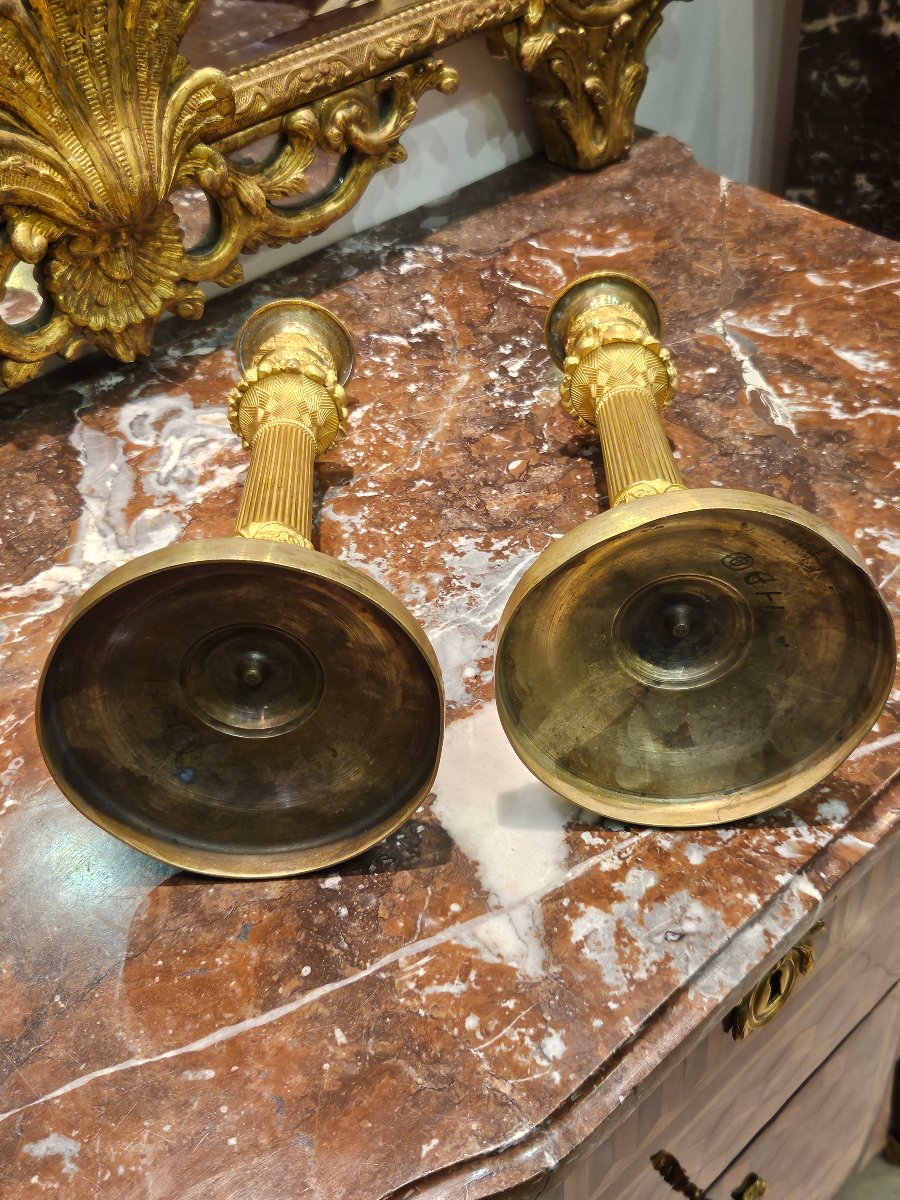
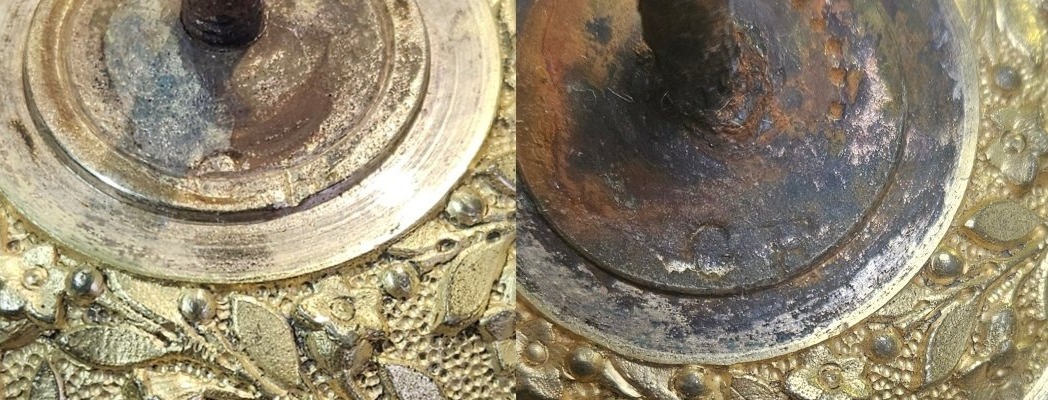
A pair of large gilded bronze candlesticks signed "G.F." for *Gérard-Jean Galle, early 19th century, circa 1820. The vase-shaped shafts are finely chased with small flowers and water lilies. The fluted, baluster-shaped shafts are topped by a fruit basket that ends in delicately chased arabesques. They rest on circular bases richly decorated with acanthus leaves and dragonflies perched on floral garlands, the whole encircled by a frieze of water lilies. Original double-patina mercury gilding in very good condition, cleaned by our workshop (slight wear). Both bases bear the mark “G.F.” for *Gérard Jean Galle.
*Gérard-Jean Galle (1788–1846) was the son of Claude Galle (1759–1815), one of the most important Parisian bronze casters of the late 18th century and the Empire period. After a distinguished military career in Napoleon’s army, Gérard-Jean took over his father’s workshop in 1815. He created exceptional bronze works, often based on originals made by his father. In 1819, at the Exhibition of Industrial Products held at the Louvre Museum, he won a silver medal for his bronze clocks and lighting fixtures. He subsequently became a supplier to the crown and the high aristocracy, notably the Duke of Richelieu, the Marquis de Martel, and the Viscount de la Rochefoucauld. However, the July Revolution of 1830 and the Orléans’ rise to power led to a decline in his business; the craftsman went bankrupt and died in 1846. Today, some of the bronze artist’s works are part of major private and public collections, notably those at the Château de la Malmaison—the former residence of Joséphine de Beauharnais—and at the Musée Marmottan in Paris.
*Gérard-Jean Galle (1788–1846) was the son of Claude Galle (1759–1815), one of the most important Parisian bronze casters of the late 18th century and the Empire period. After a distinguished military career in Napoleon’s army, Gérard-Jean took over his father’s workshop in 1815. He created exceptional bronze works, often based on originals made by his father. In 1819, at the Exhibition of Industrial Products held at the Louvre Museum, he won a silver medal for his bronze clocks and lighting fixtures. He subsequently became a supplier to the crown and the high aristocracy, notably the Duke of Richelieu, the Marquis de Martel, and the Viscount de la Rochefoucauld. However, the July Revolution of 1830 and the Orléans’ rise to power led to a decline in his business; the craftsman went bankrupt and died in 1846. Today, some of the bronze artist’s works are part of major private and public collections, notably those at the Château de la Malmaison—the former residence of Joséphine de Beauharnais—and at the Musée Marmottan in Paris.
1 680 €
Period: 19th century
Style: Consulat, Empire
Condition: Excellent condition
Material: Bronze
Diameter: 14 cm
Height: 32,5 cm
Reference (ID): 1845235
Availability: In stock
Print