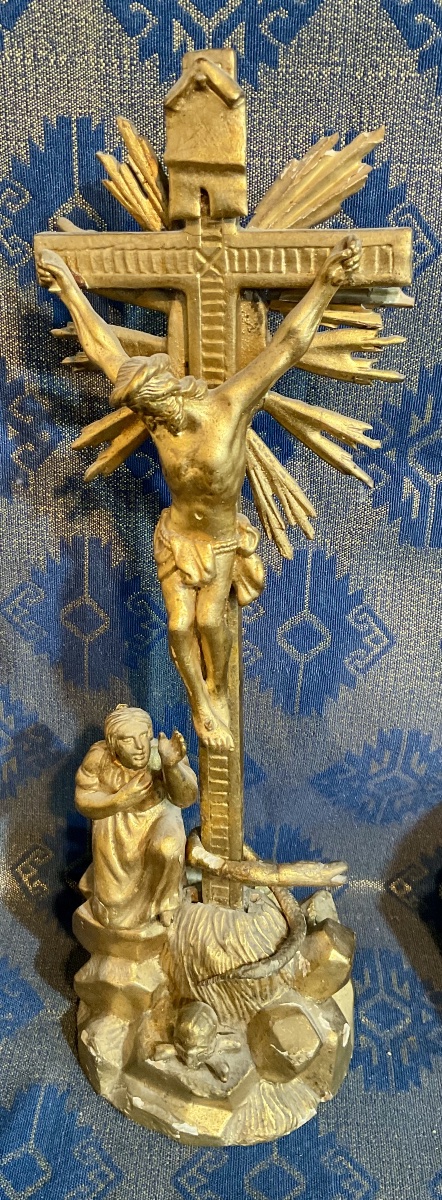
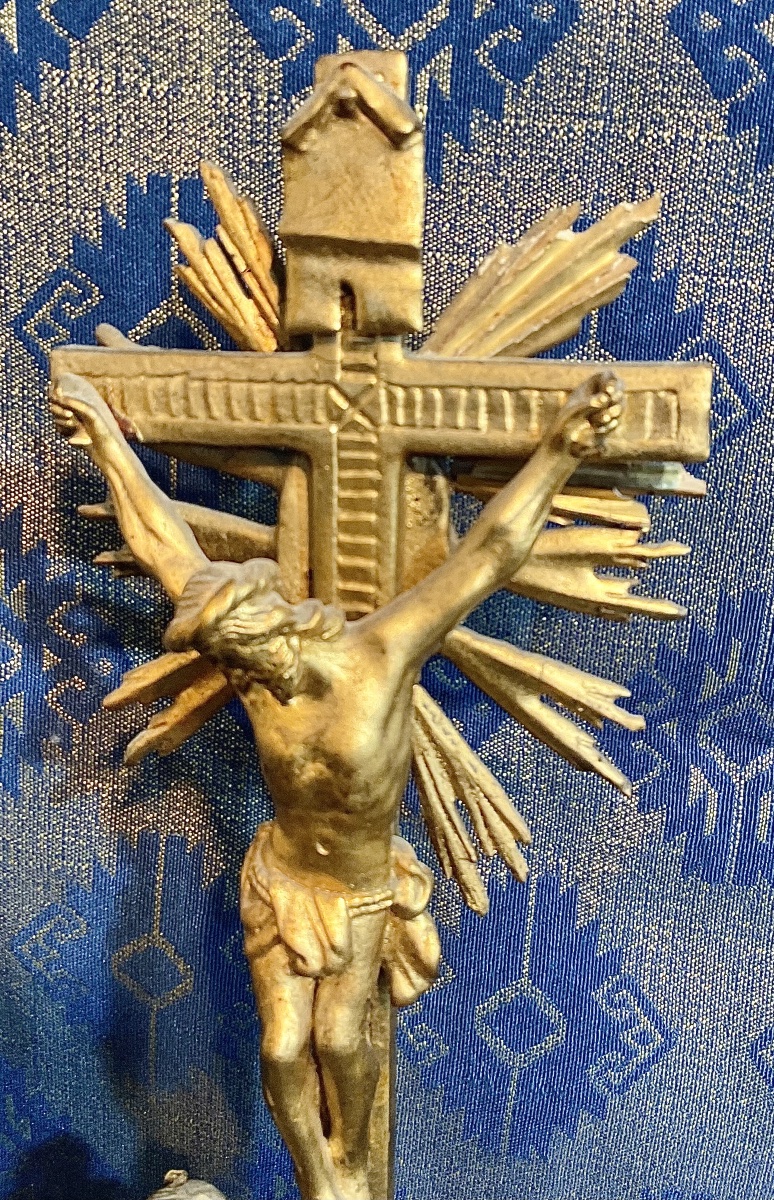
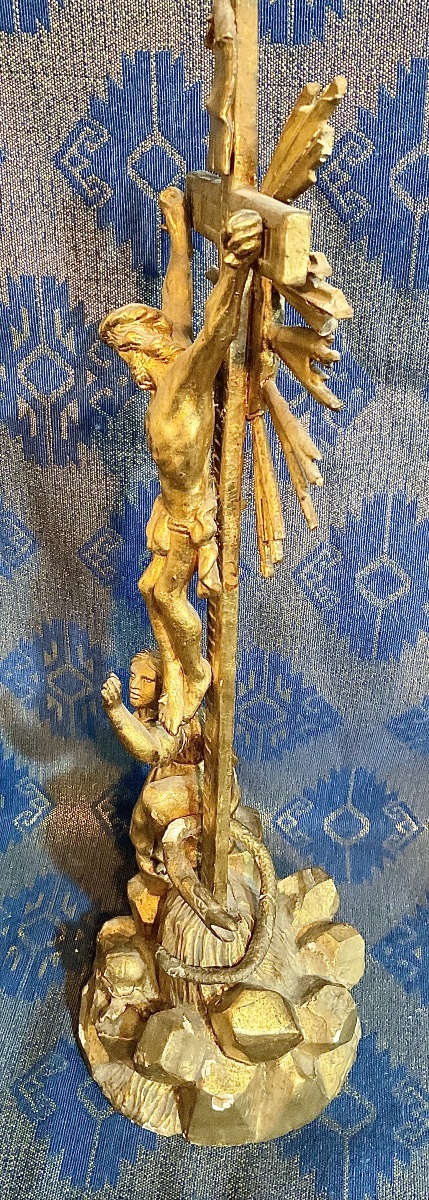
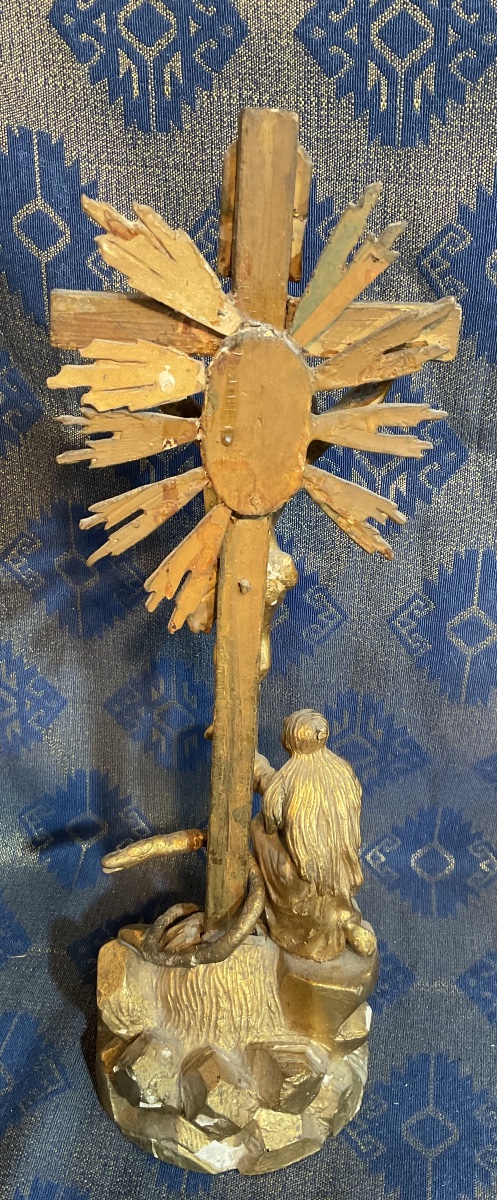


“calvary,” Carved And Gilded Wood; Mary Magdalene Mourning The Crucified Christ, Tyrol, 18th Century
CALVARY WITH SAINT MARY MAGDALENE
Circa 1800, in the Baroque tradition.
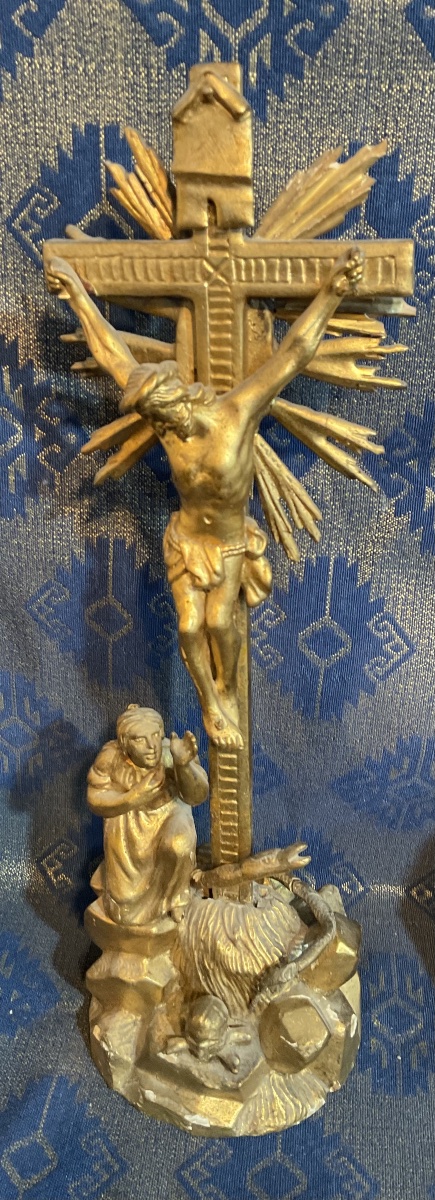
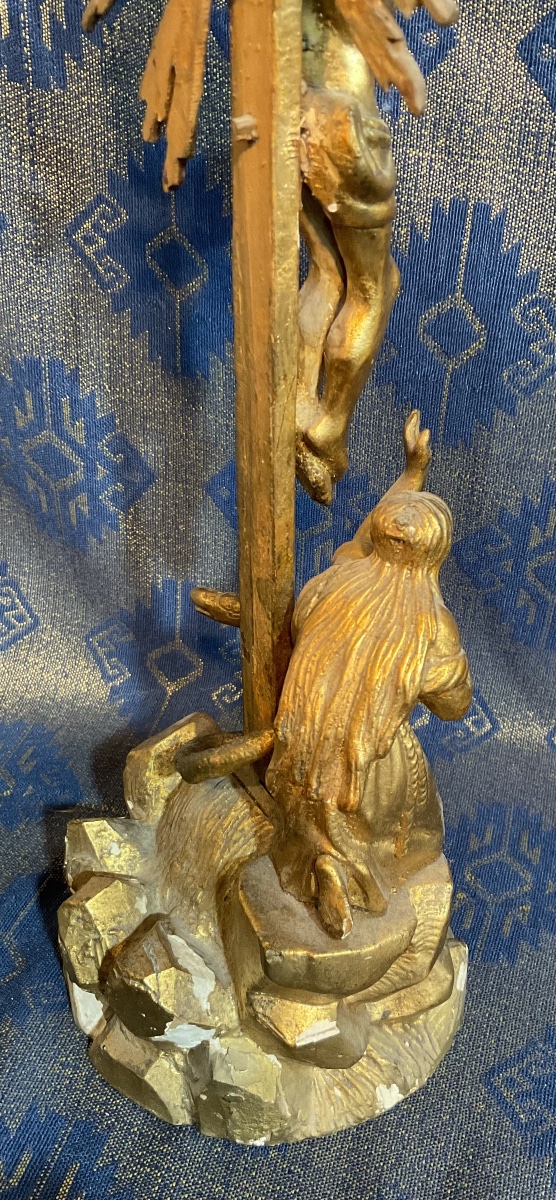
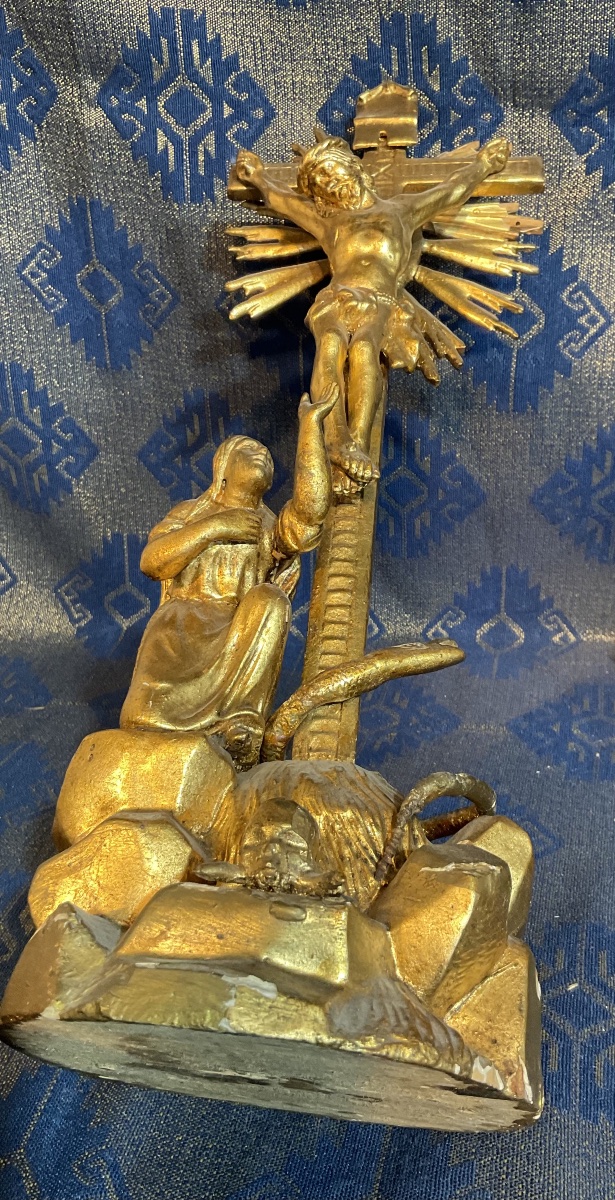
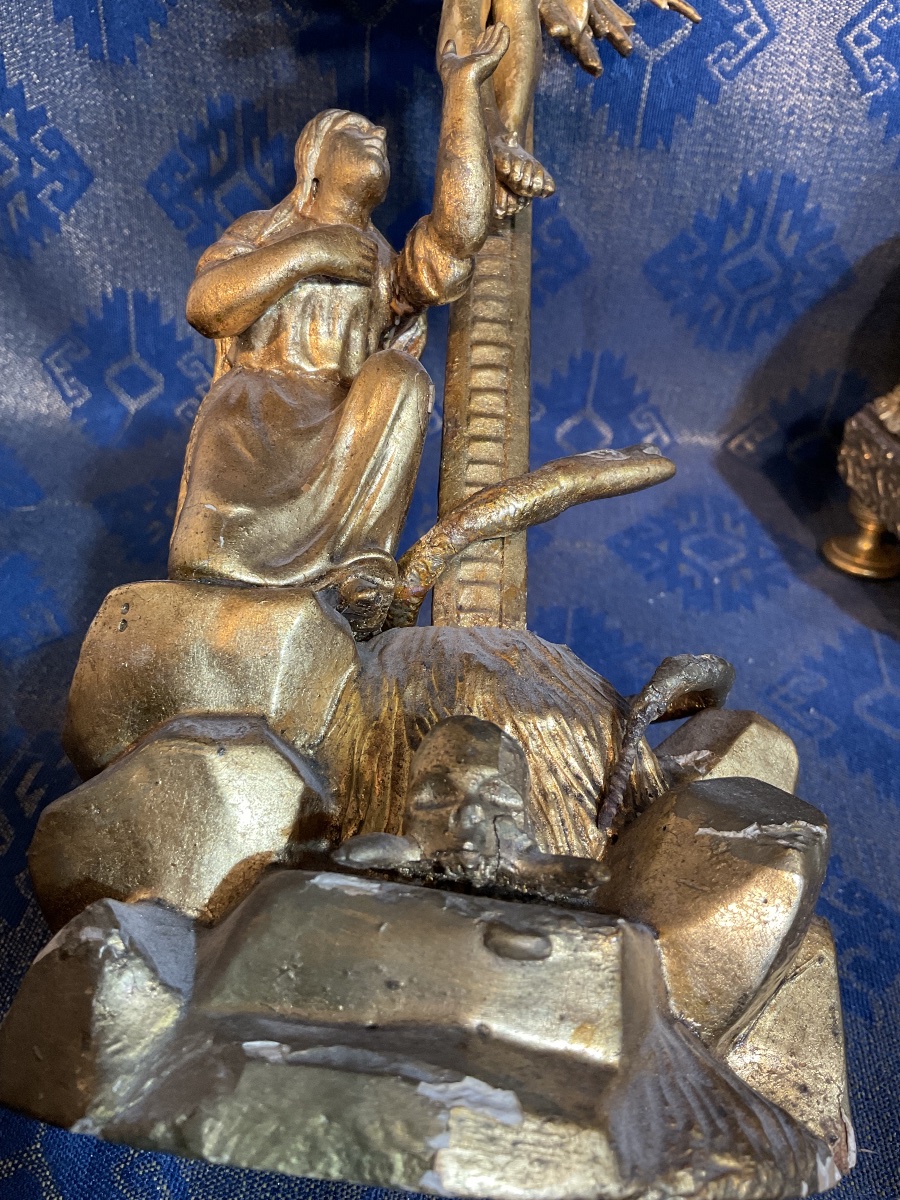
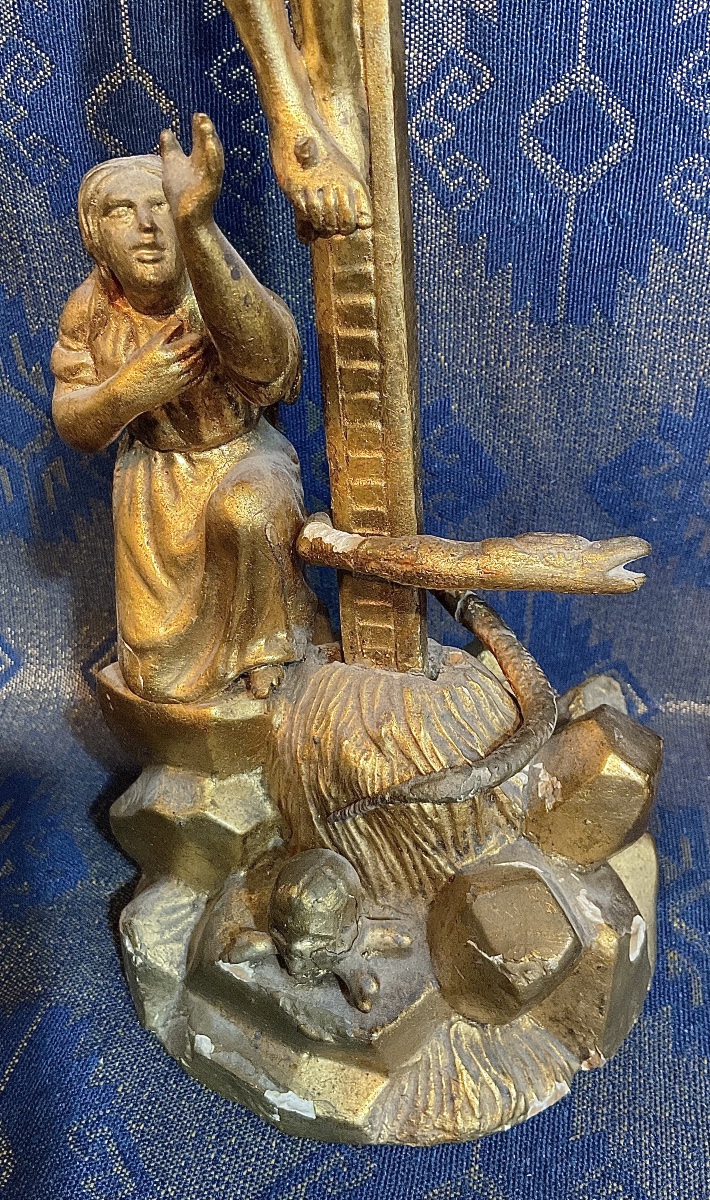
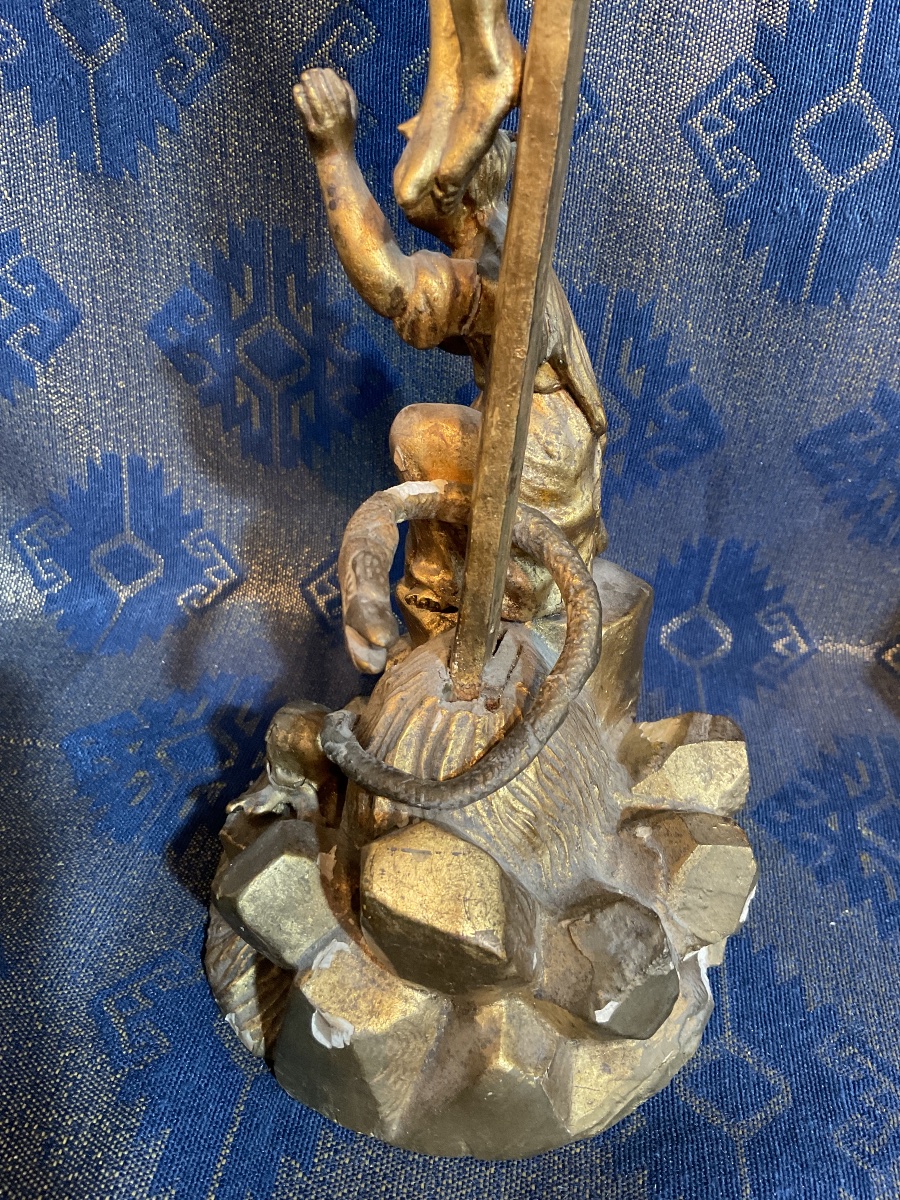
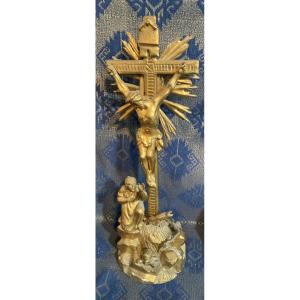
A carved and gilded wooden group depicting Christ on the cross before a radiant halo, accompanied by a kneeling figure, likely Saint Mary Magdalene. The saint, with long, loose hair, holds one hand to her chest and raises the other toward the Crucified One in a gesture of lamentation. The ensemble rests on a rocky base representing Golgotha, adorned with a skull, bones, and a serpent coiled at the foot of the cross.
The serpent alludes to the temptation of Adam and Eve in the Garden of Eden and symbolizes original sin as well as the power of evil. Its presence at the foot of the Crucified One serves as a reminder that Christ’s sacrifice delivers humanity from sin. The cross, the new tree of life, thus stands in contrast to the tree of knowledge associated with the Fall. Although not depicted as being crushed, the serpent placed beneath Christ contributes to the evocation of the Savior’s victory over evil.
The skull and bones recall the name Golgotha, “Place of the Skull,” but also a Christian tradition that locates Adam’s burial site at the site of the Crucifixion. Christ, regarded as the “new Adam,” redeems the sin of the first man through his death. The skull also serves as a memento mori, a reminder of the fragility of earthly existence. Gathered at the foot of the cross, the serpent and the skull thus form a symbolic composition linking the Fall, death, and Redemption.
Signs of wear and areas where the gilding and ground layer are missing, as well as cracks and minor imperfections.
Period: 18th century
Style: Louis 16th, Directory
Condition: Condition of use
Material: Gilted wood
Width: 12,5 cm
Height: 39,5 cm
Depth: 11,5 cm
Reference (ID): 1844936
Availability: In stock