

Art Tribal Bengal, India, 17th Cty Important Terracotta Bas-relief Ganesh
Artist: Art Tribal Bengale 17e Ou 18e S
CIVILIZATIONS / TRIBAL ART
Bengal (India)
17th or early 18th century
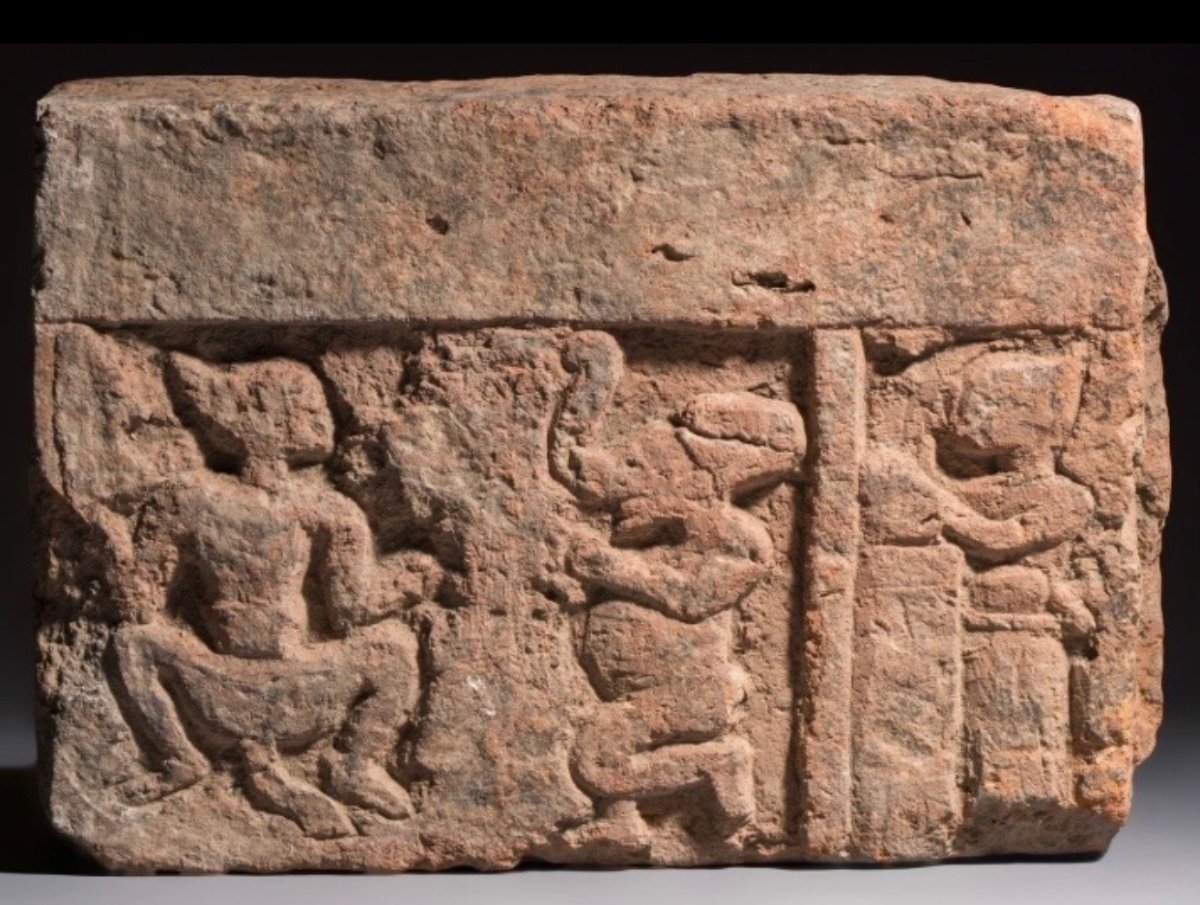
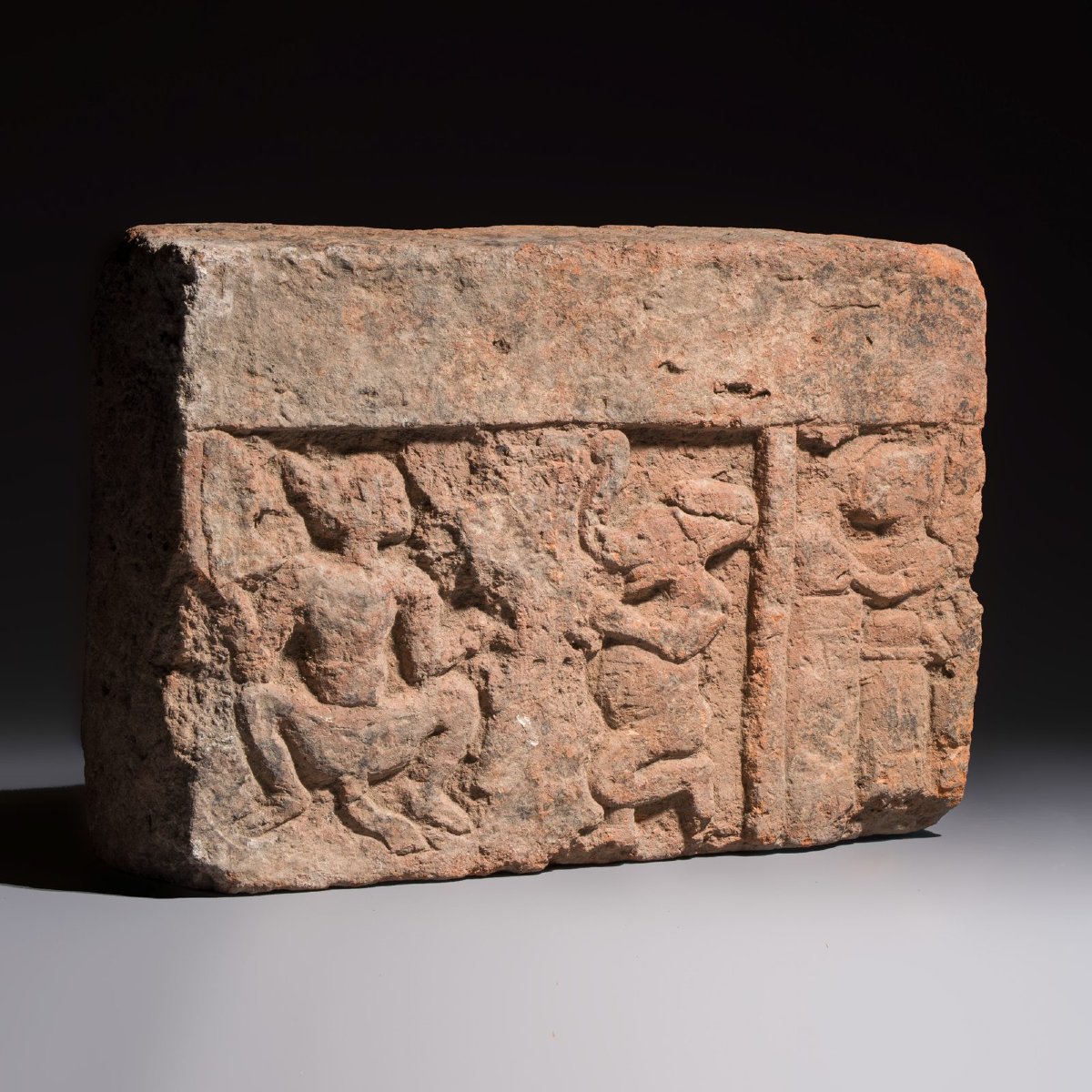
A large bas-relief frieze depicting the deity Ganesha in the center, surrounded by two musicians and dancers, and an architectural column
This thick and rare piece was likely part of a larger temple façade. This carved panel perfectly illustrates the traditional art of Bengal’s terracotta temples.
Made from the abundant alluvial clay of the Ganges Plain, this panel once adorned the facade of a
brick temple. Due to the scarcity of stone in this region, Bengali artisans developed exceptional mastery of fired terracotta.
The reliefs from this period (primarily from the 17th to the 19th centuries) depict religious scenes as well as numerous depictions of daily life, musicians, dancers, and animals.
* The central figure here appears to be Ganesha, with his easily recognizable elephant trunk and prominent belly; he seems to be dancing and is certainly holding a musical instrument in front of him.
He is surrounded by two other figures shown in profile:
* on the left, the figure is depicted in a very expressive crouching posture, legs spread apart in a dancing position, with a tail. His hands seem to be keeping time with the rhythm.
* On the right, a figure stands in profile, arms brought forward, a posture that traditionally symbolizes respect, an offering, or holding a percussion instrument: can we make out what looks like a large vertical drum in front of him?
Dimensions :
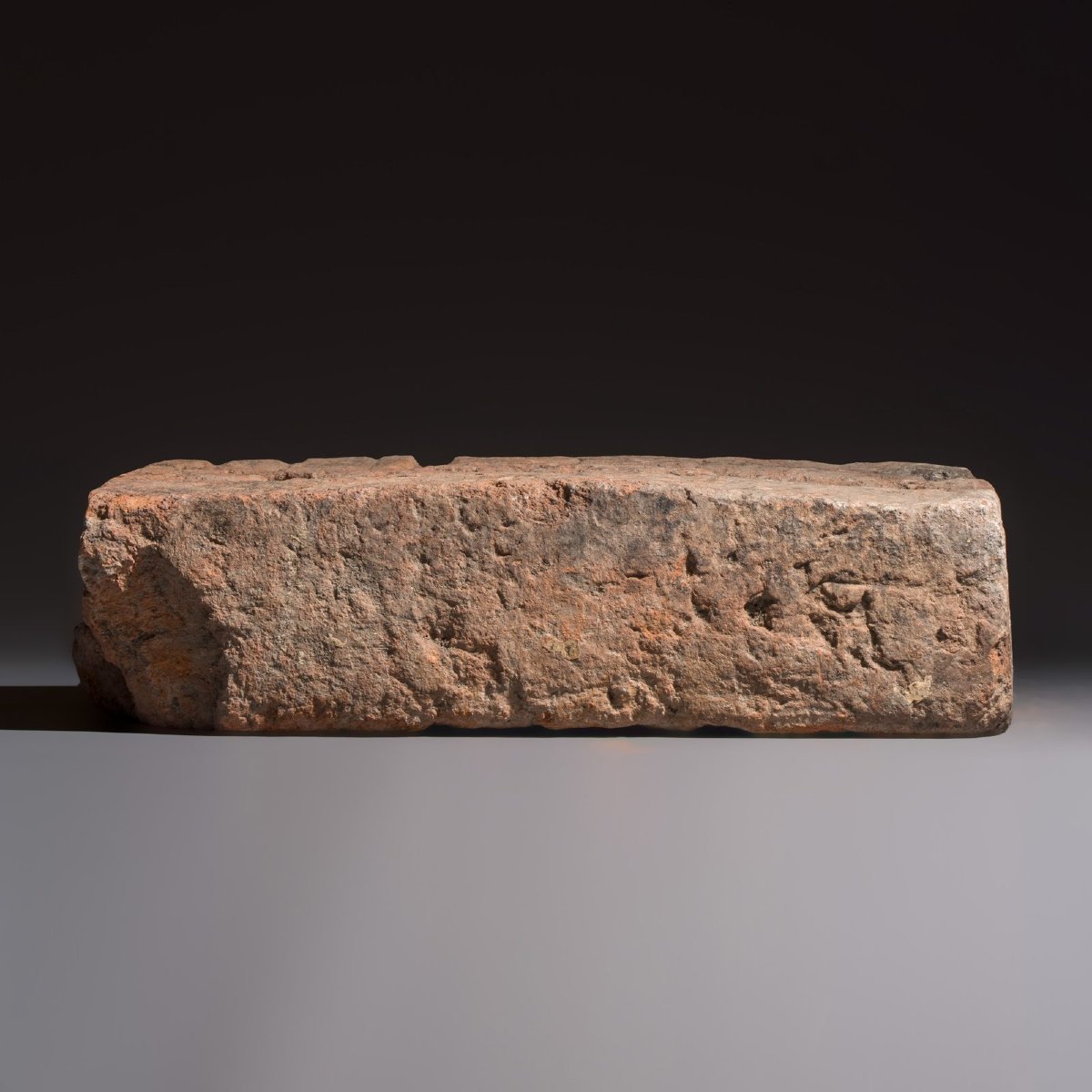
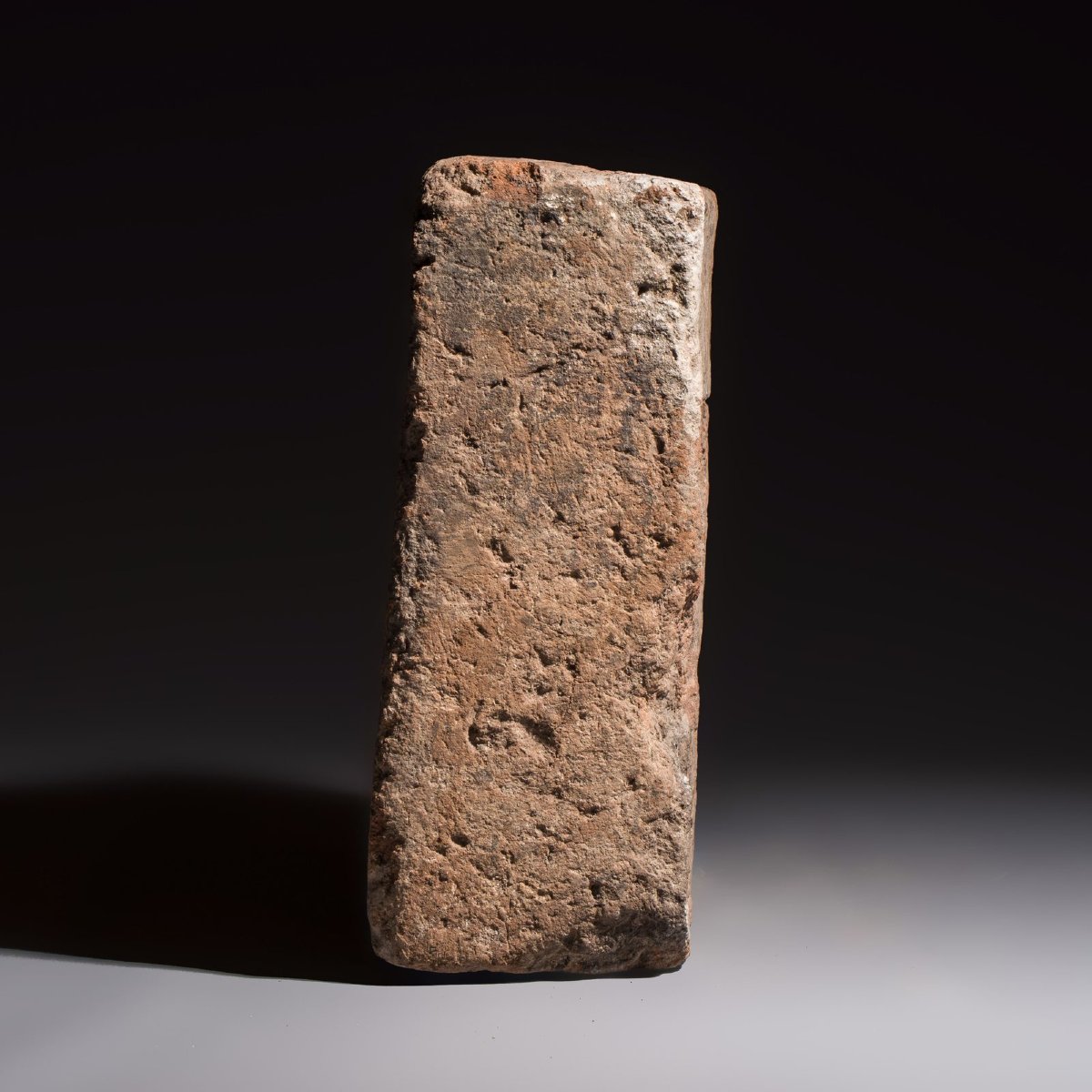
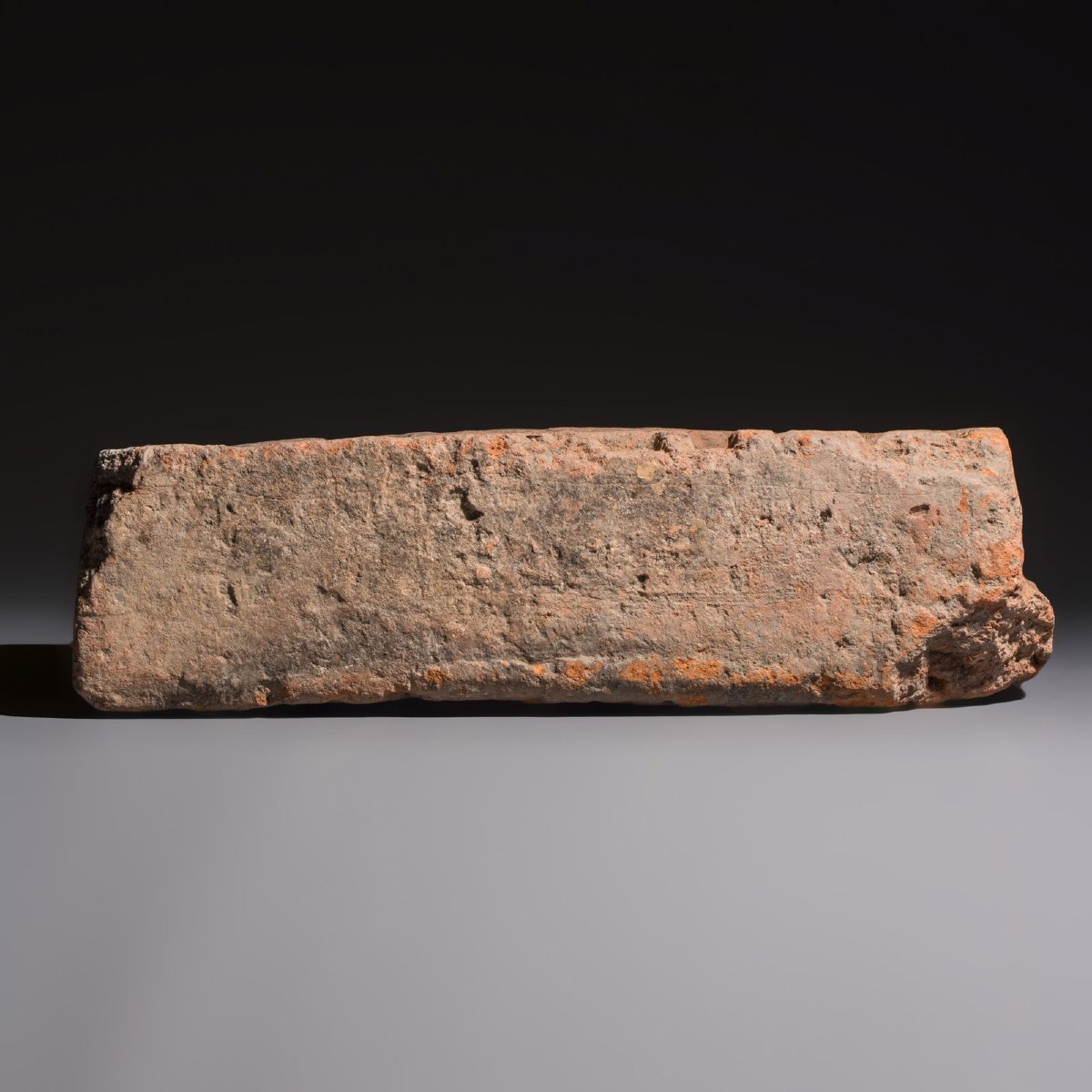
35.5 cm long
23.3 cm high
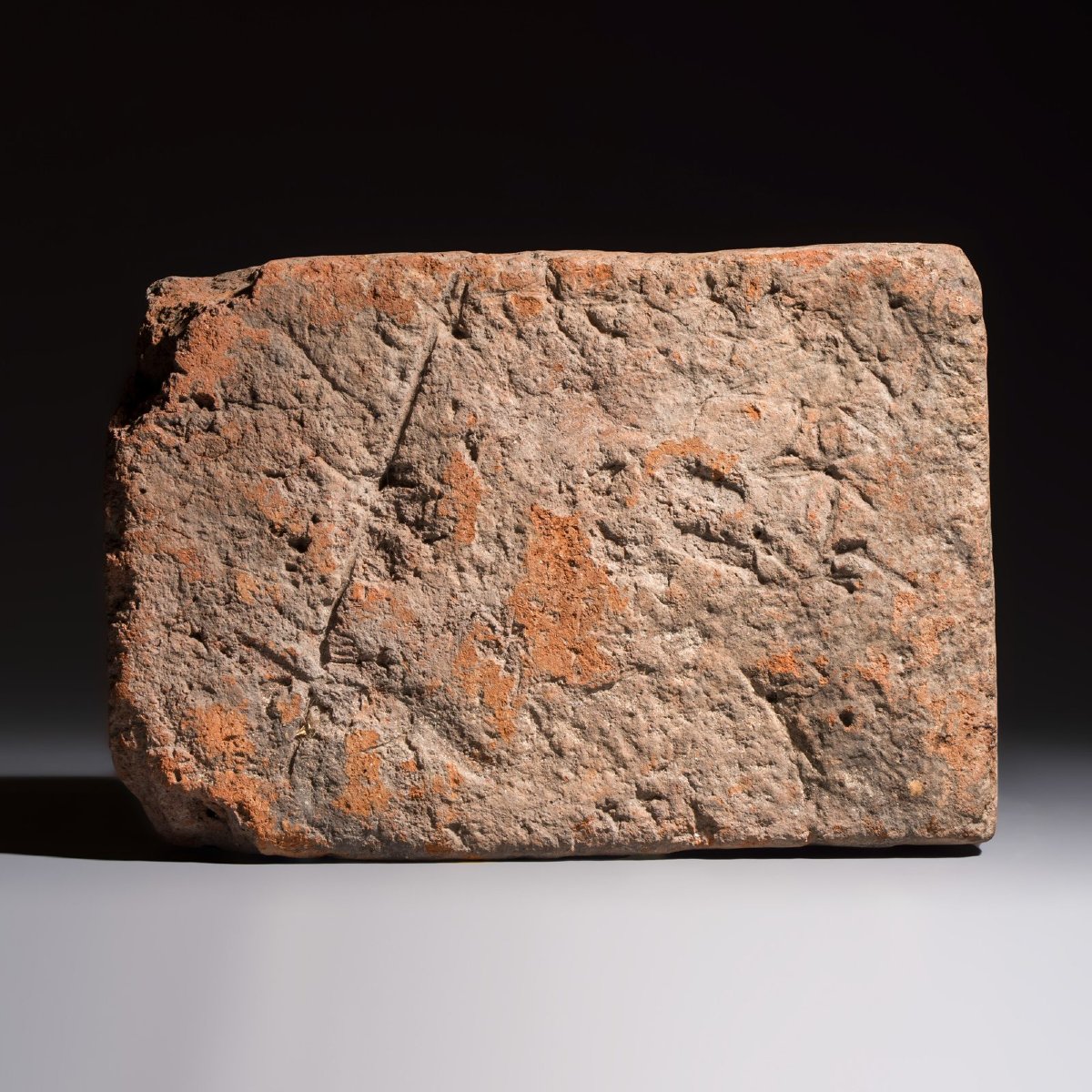
and 10.1 cm thick (very heavy!)
A superb section of a narrative fresco that once adorned the walls of Bengali temples.
1 200 €
Period: 17th century
Style: Tribal Art
Condition: Excellent condition
Material: Terracotta
Length: 35,5 cm
Height: 23,3 cm
Depth: 10,1 cm
Reference (ID): 1842858
Availability: In stock
Print