

Museum - Decagonal Bronze Mortar – Medieval Islamic Art – Persia – High Period
12th–13th century
Persia (Iran)
Medieval Islamic art – Seljuk or post-Seljuk period
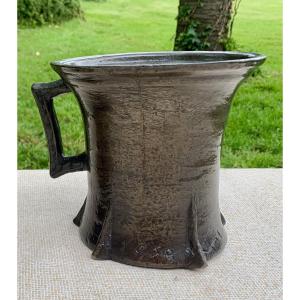
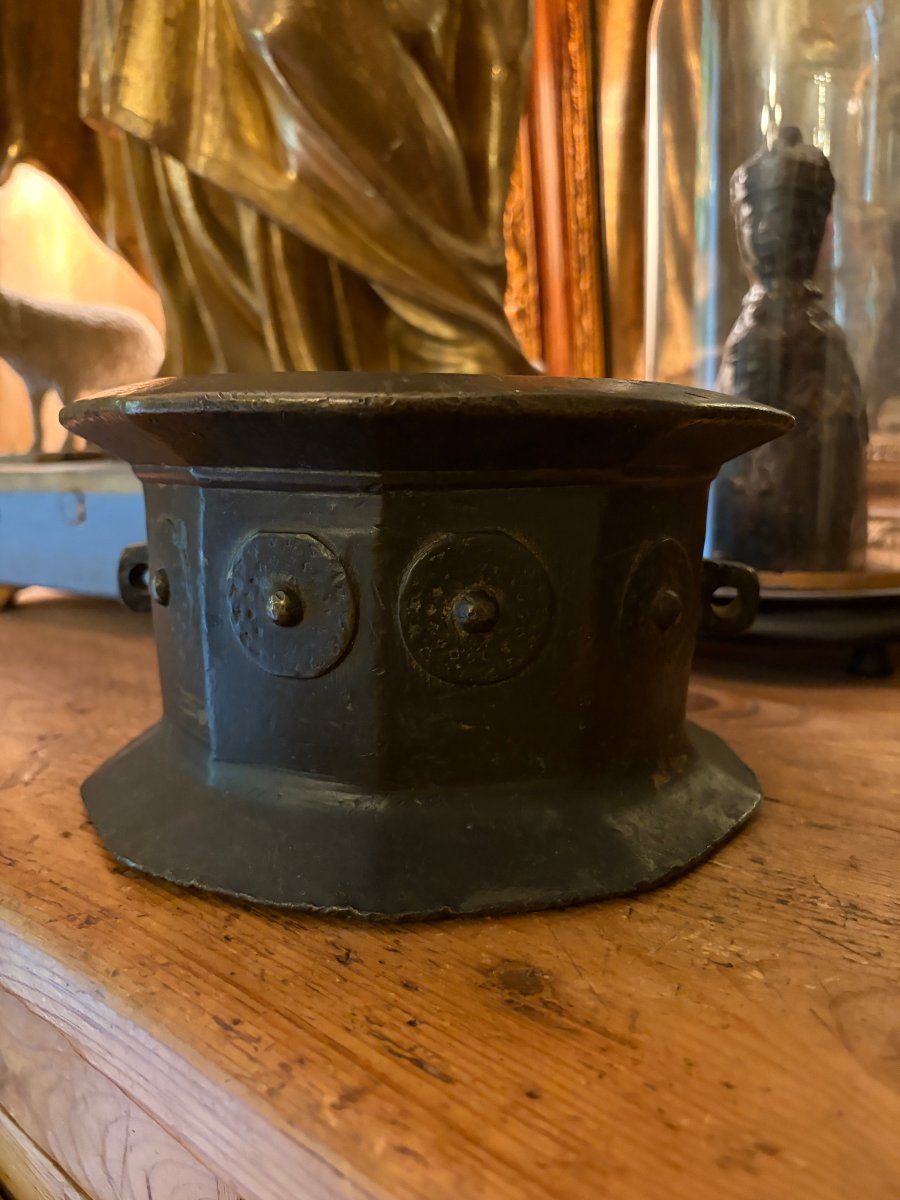
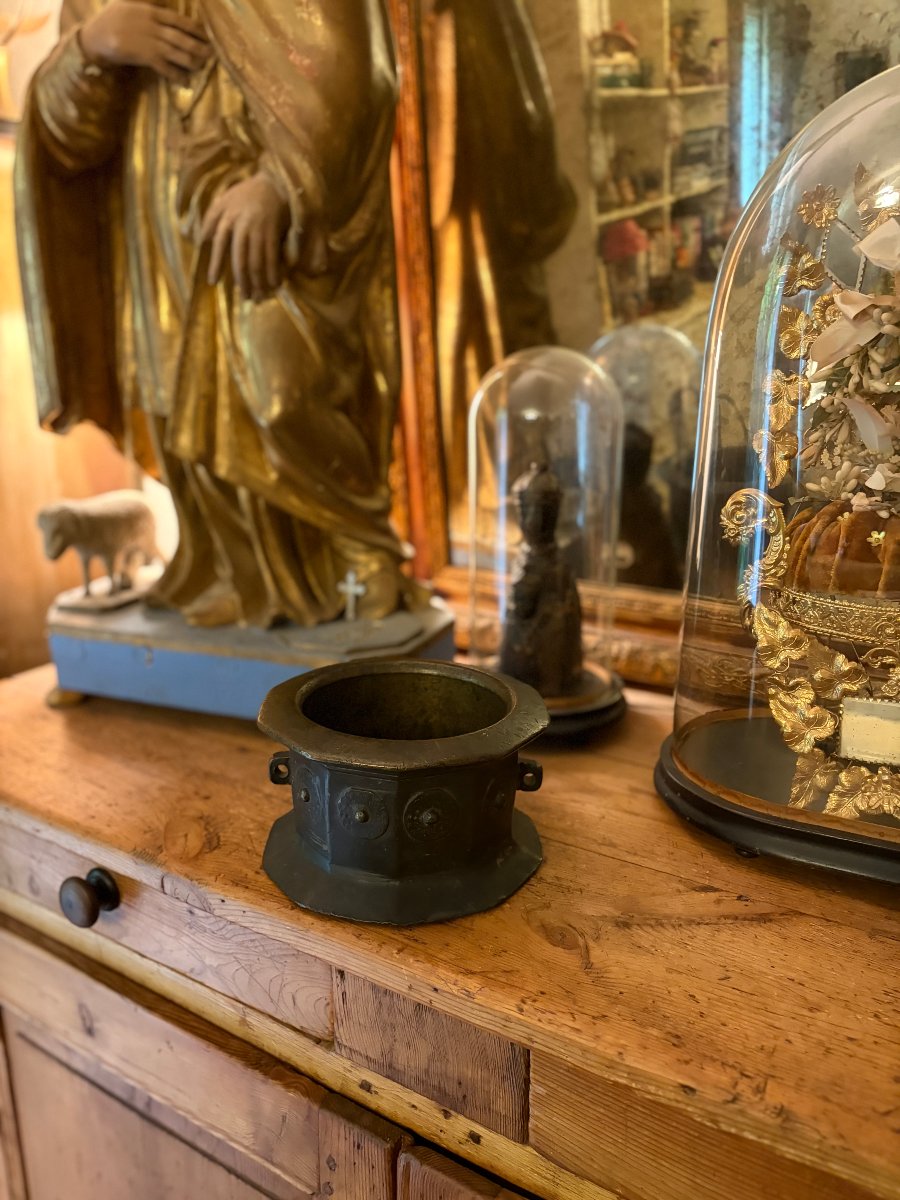
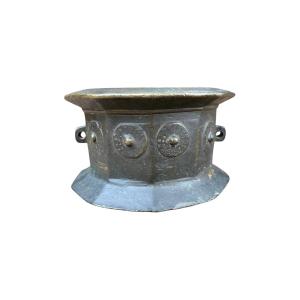
A rare and remarkable decagonal bronze mortar, attributable to 12th–13th-century Persian metalwork, featuring an architectural design particularly characteristic of medieval mortars from the Islamic world.
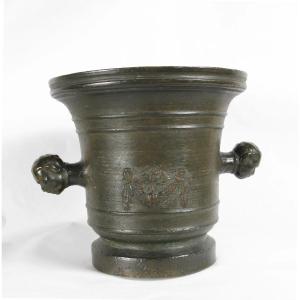
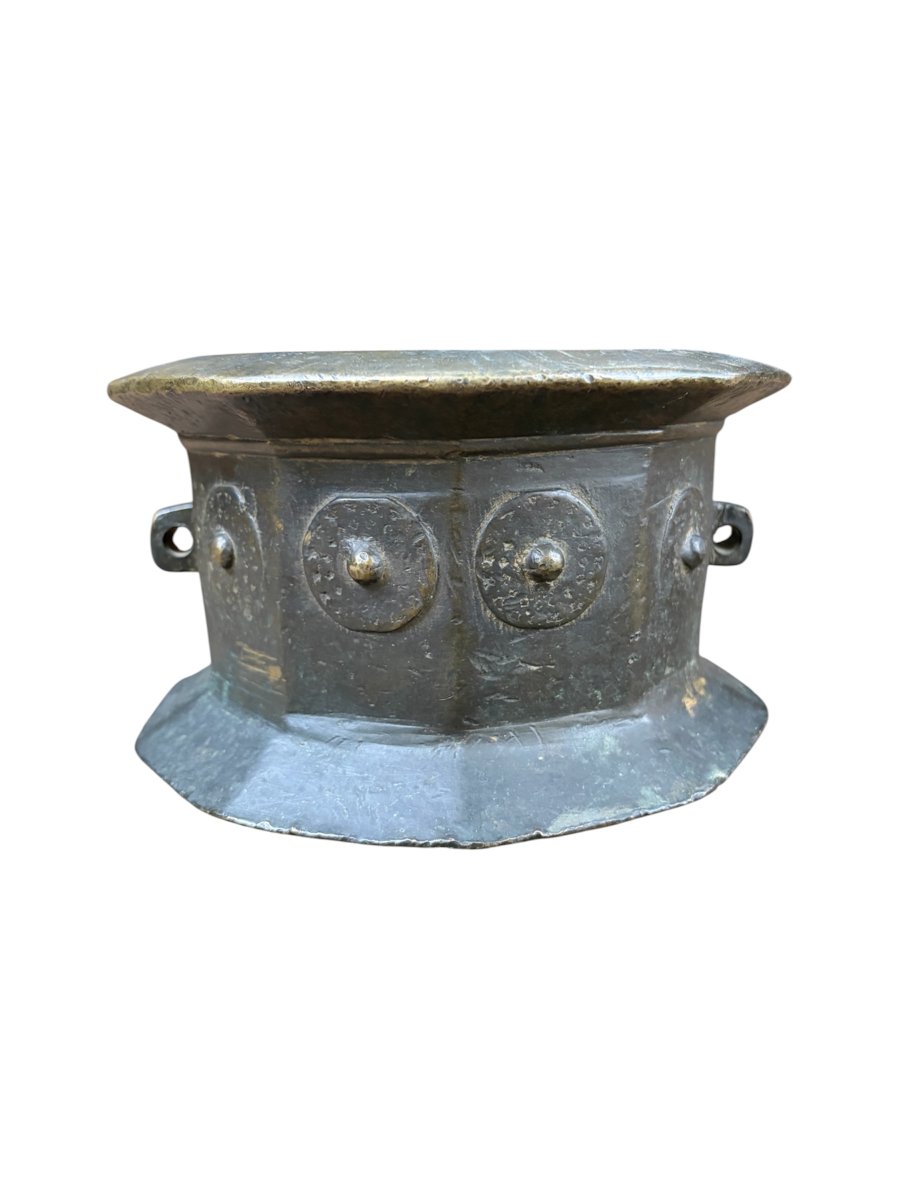
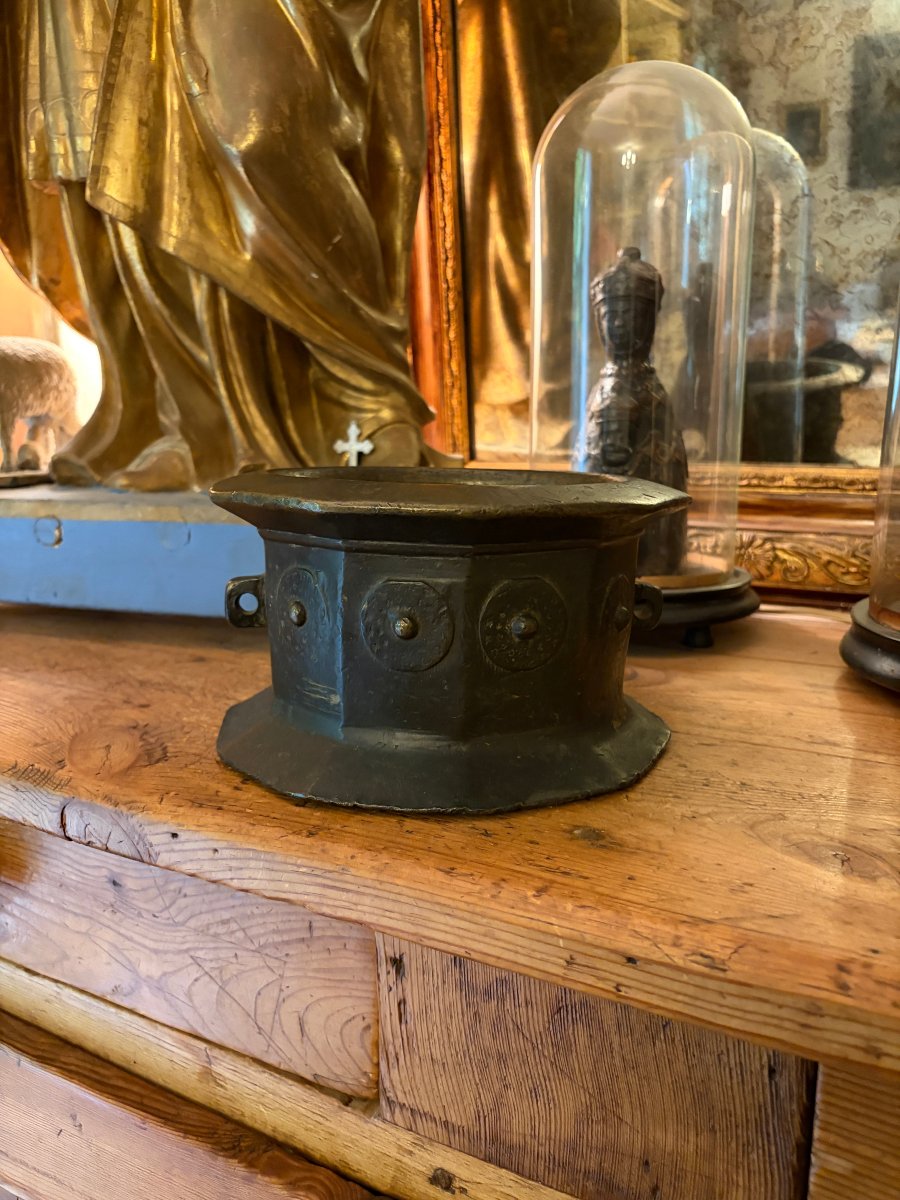
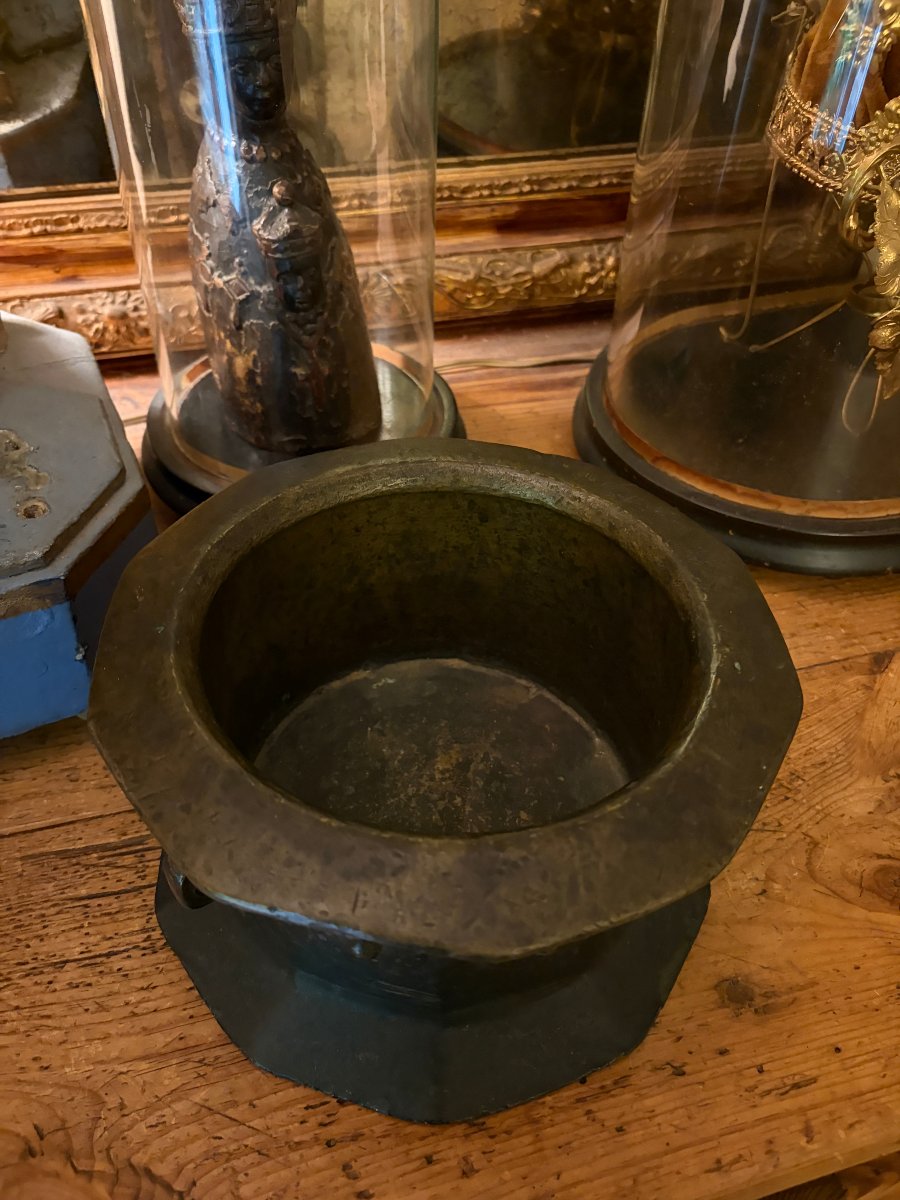
This significant mortar is distinguished by its ten-sided polygonal shape, framed by two broad, flared rims—one at the top and one at the bottom—giving it an architectural silhouette that is both powerful and balanced.
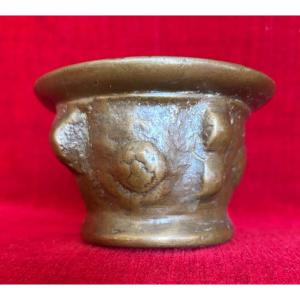
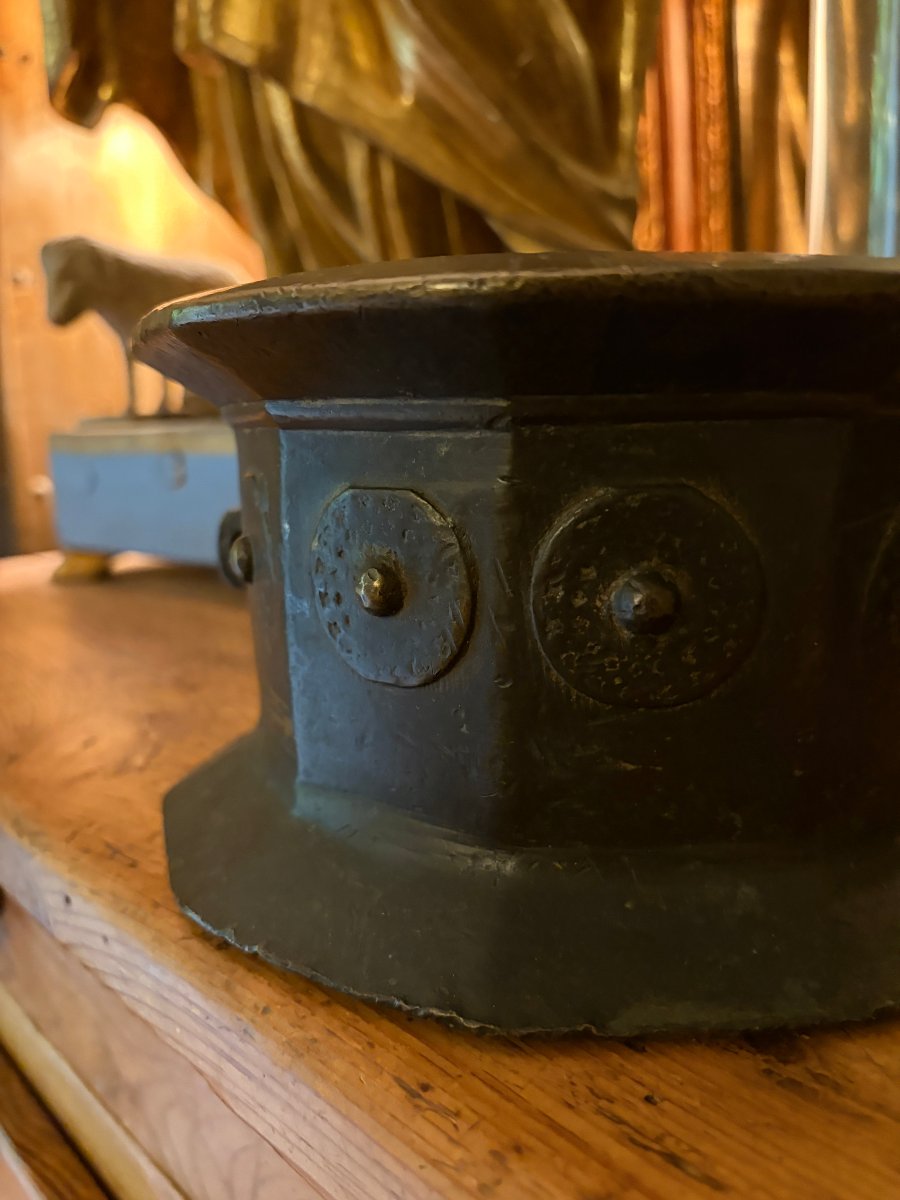
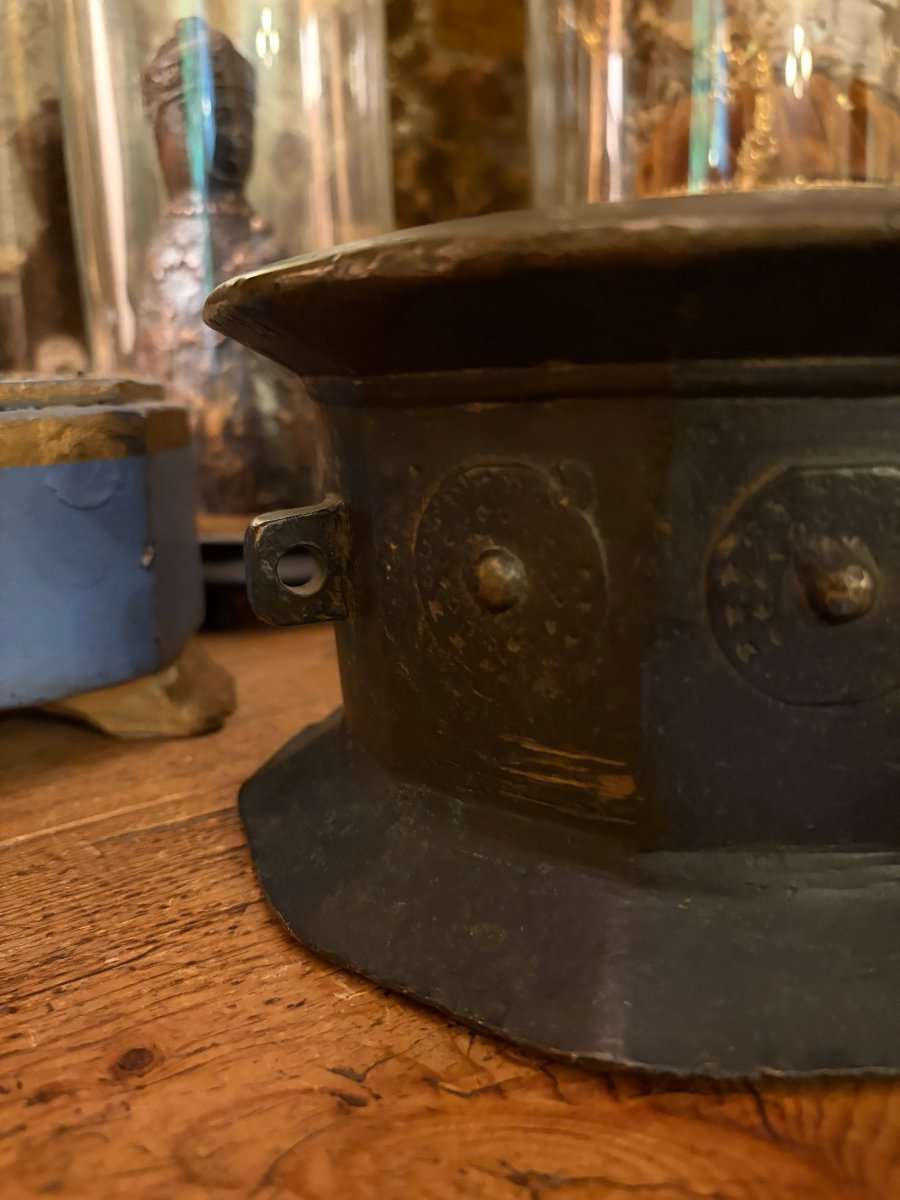
Eight of the ten sides are adorned with circular medallions in relief, reminiscent of round shields with a central umbo. Each medallion features a protruding knob, set in the center of a slightly irregular disc, whose surface retains traces of the casting and ancient metalworking.
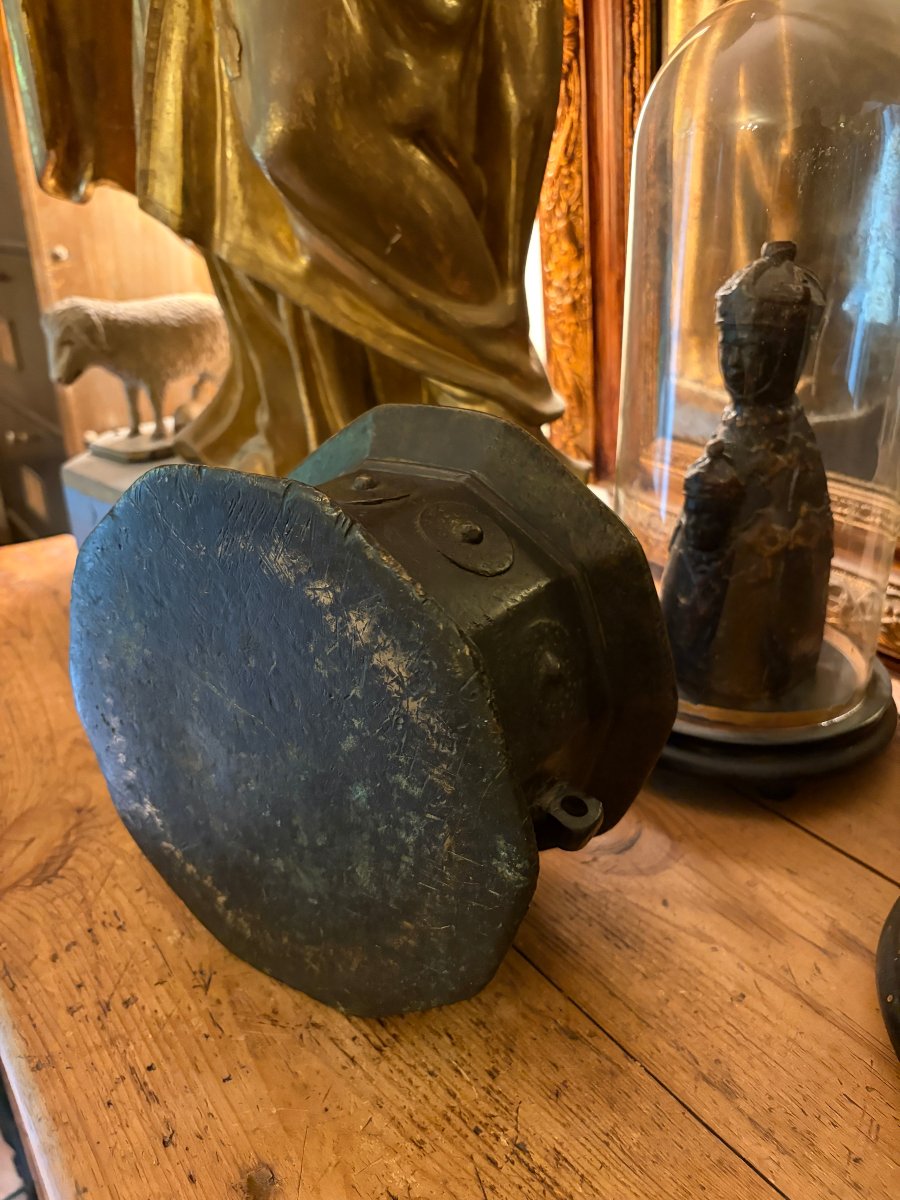
The two opposite panels are fitted with small perforated handles, designed to facilitate gripping and handling the object.
The piece as a whole displays remarkable decorative simplicity, in which the repetition of circular motifs and the geometric precision of the body constitute the primary ornamental elements.
The upper part opens into a deep cylindrical cavity, intended for grinding and preparing various substances, particularly for pharmaceutical, medicinal, or domestic purposes.
The mortar retains a beautiful antique patina—brown-black in color—with subtle greenish hues as well as signs of wear and handling that attest to its use.
The quality of its cast iron, the balance of its proportions, and the uniqueness of its decoration make it a particularly interesting example of medieval Persian metallurgy.
Provenance and Historical Documentation
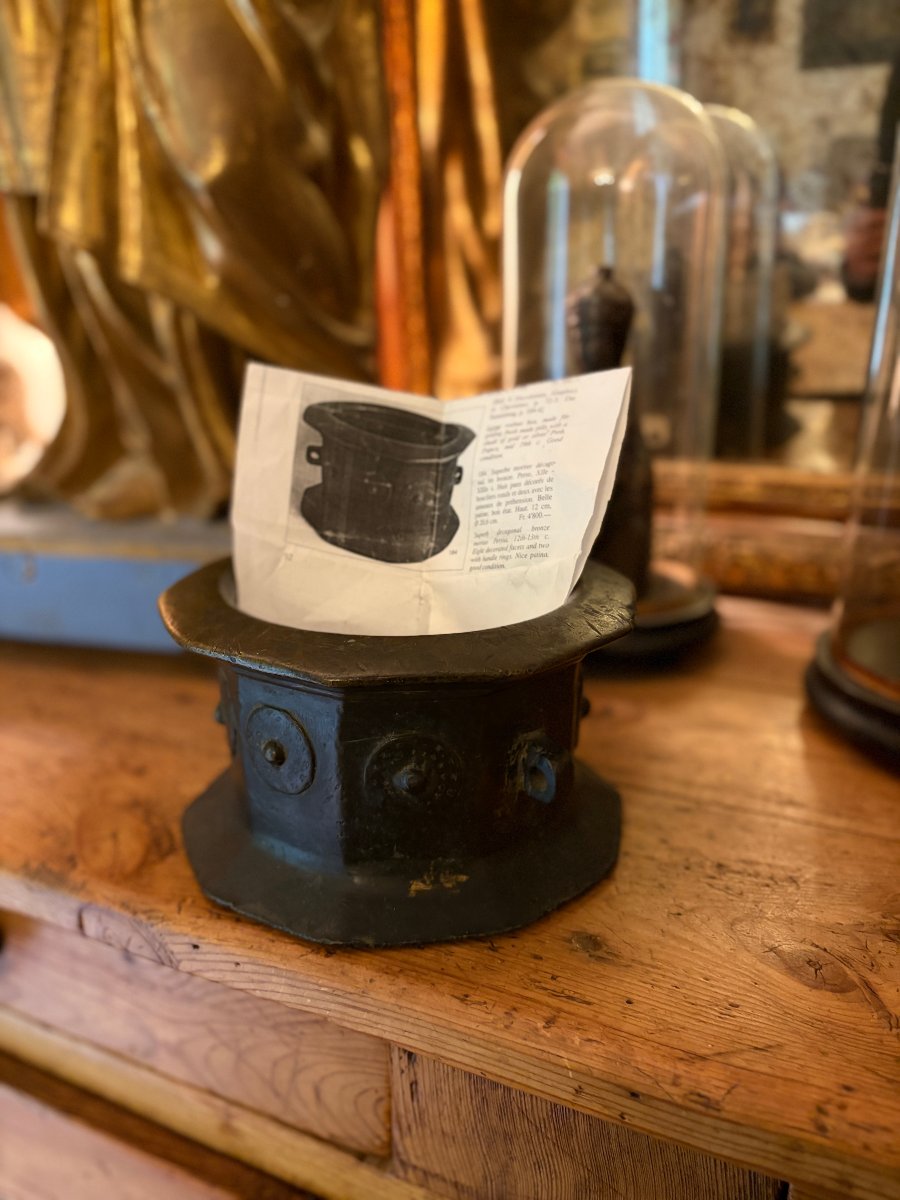
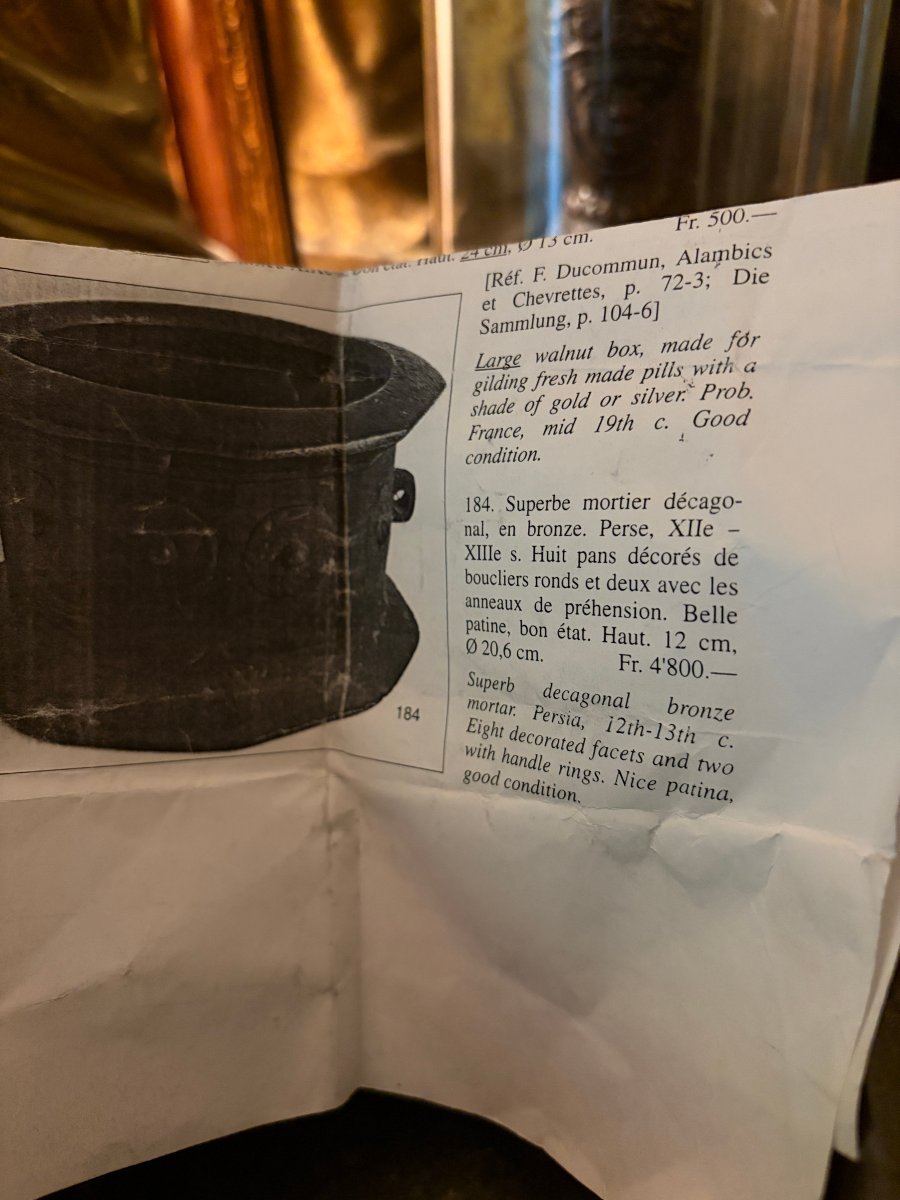
This example is reproduced and described under number 184 in an old auction or specialist dealer’s catalog.
The entry, accompanied by a photograph that allows for the precise identification of this mortar, describes it as follows:
“Superb decagonal bronze mortar. Persia, 12th–13th centuries. Eight sides decorated with round shields and two with grip rings. Beautiful patina, good condition. Height: 12 cm, Ø 20.6 cm.”
This documentation is particularly significant for the history of the object, confirming its identification and its long-standing presence on the art market.
The correspondence between the historical reproduction and this specimen is notably established by its decagonal silhouette, the distinctive arrangement of its eight circular medallions, and its two perforated side handles.
Documentary References and Comparisons
1. Mortar with pestle and floral relief decorations – Iran, 12th–13th century
Lempertz, Cologne, Auction No. 1174, Bedeutende Mörser der Sammlung Schwarzach III, June 4, 2021, Lot 501.
2. Medieval Persian mortar – Museum für Islamische Kunst, Berlin
Staatliche Museen zu Berlin, Museum für Islamische Kunst.
Inventory number: I. 1286.
Condition and dimensions
Condition: In good overall condition considering the object’s age. Very beautiful antique brown-black patina, with some greenish hues. Signs of wear, minor casting irregularities, and old signs of use. The eight decorative medallions and the two side handles are intact.
Dimensions:
- Height: 12 cm.
- Diameter: 20.6 cm.
Documentation: Accompanied by a reproduction of its original description, catalog no. 184.
Shipping: ALL SHIPMENTS ARE MADE EXCLUSIVELY VIA DHL EXPRESS, WITH SIGNATURE REQUIRED
Period: Before 16th century
Style: Renaissance, Louis 13th
Condition: Good condition
Material: Bronze
Reference (ID): 1842614
Availability: In stock