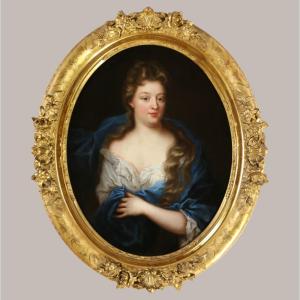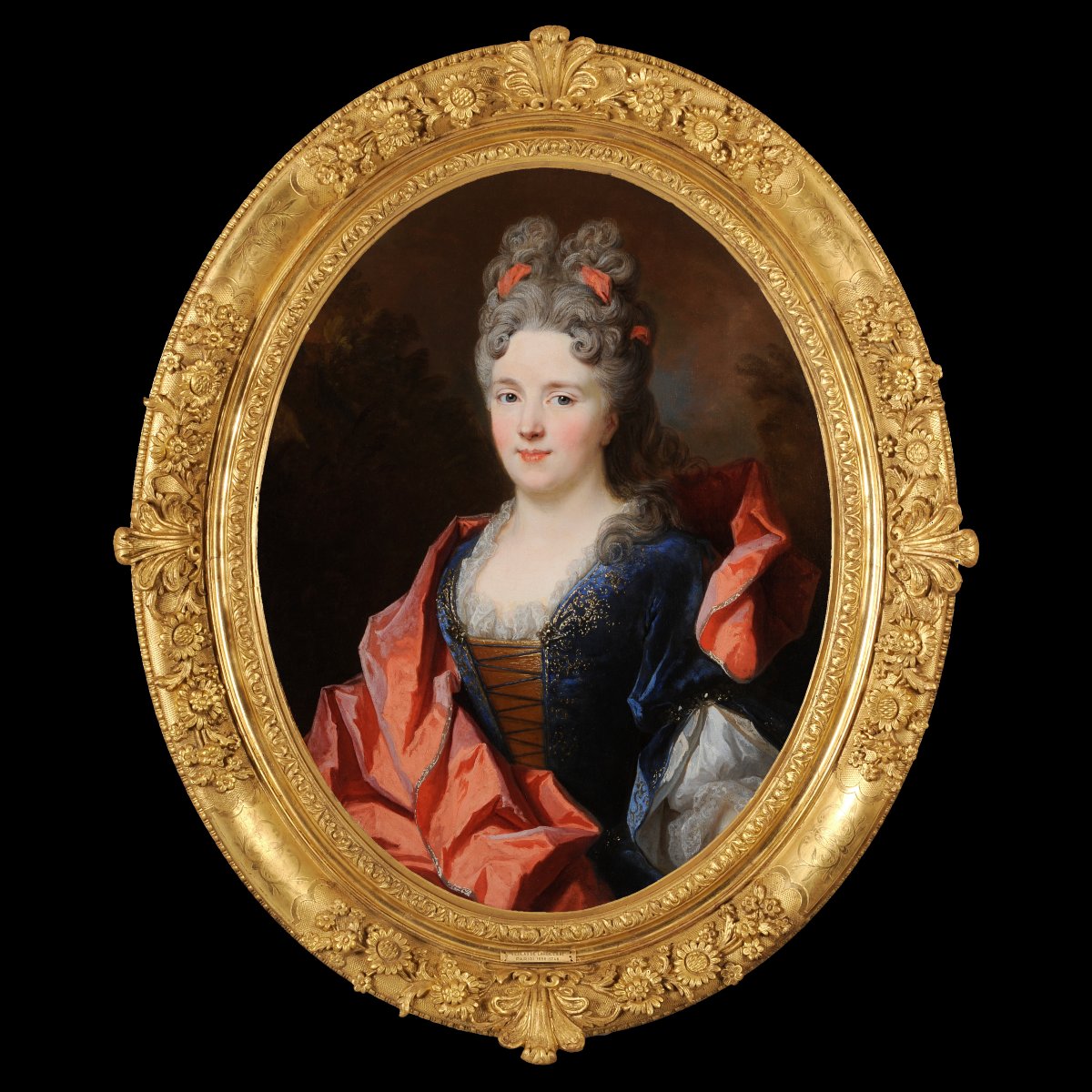
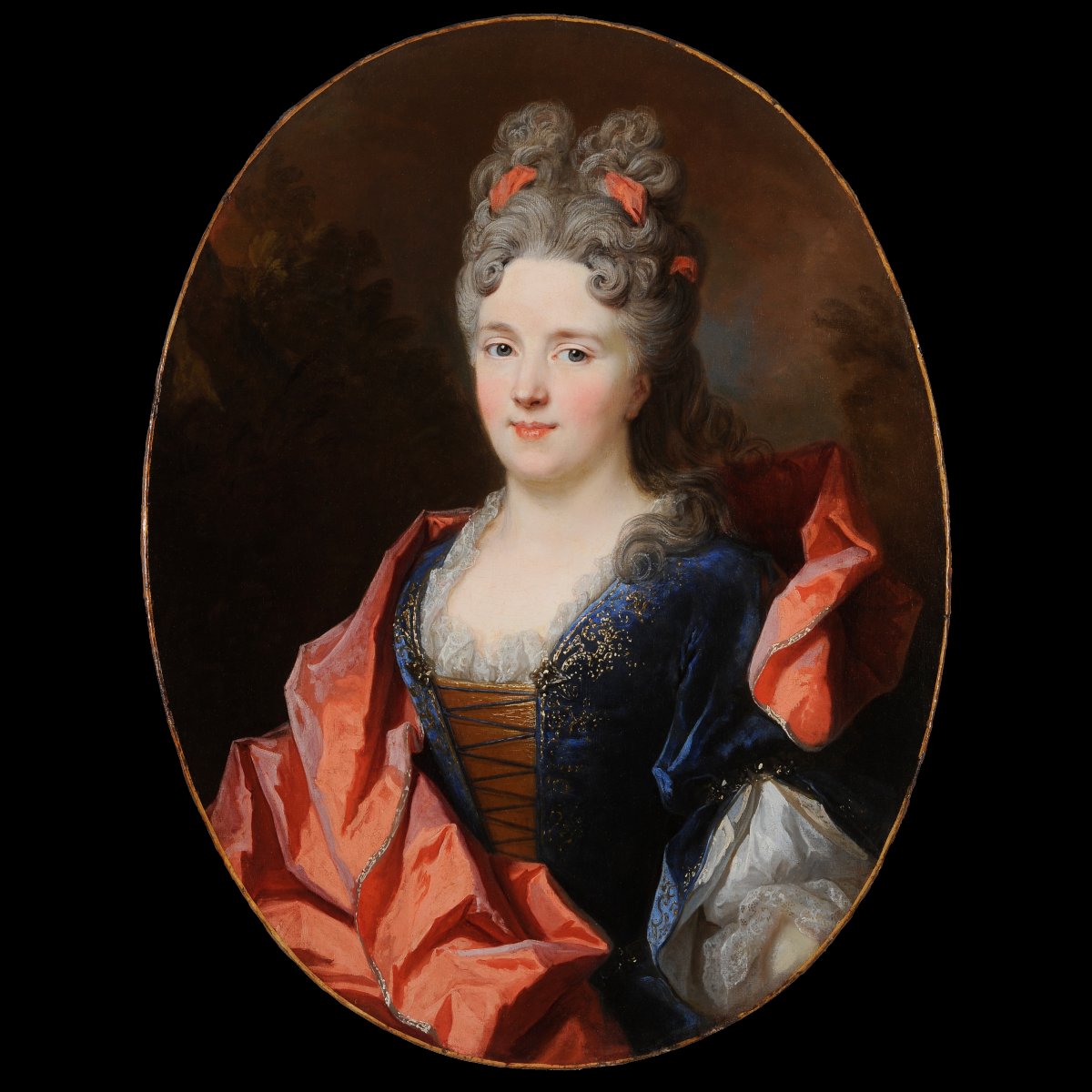
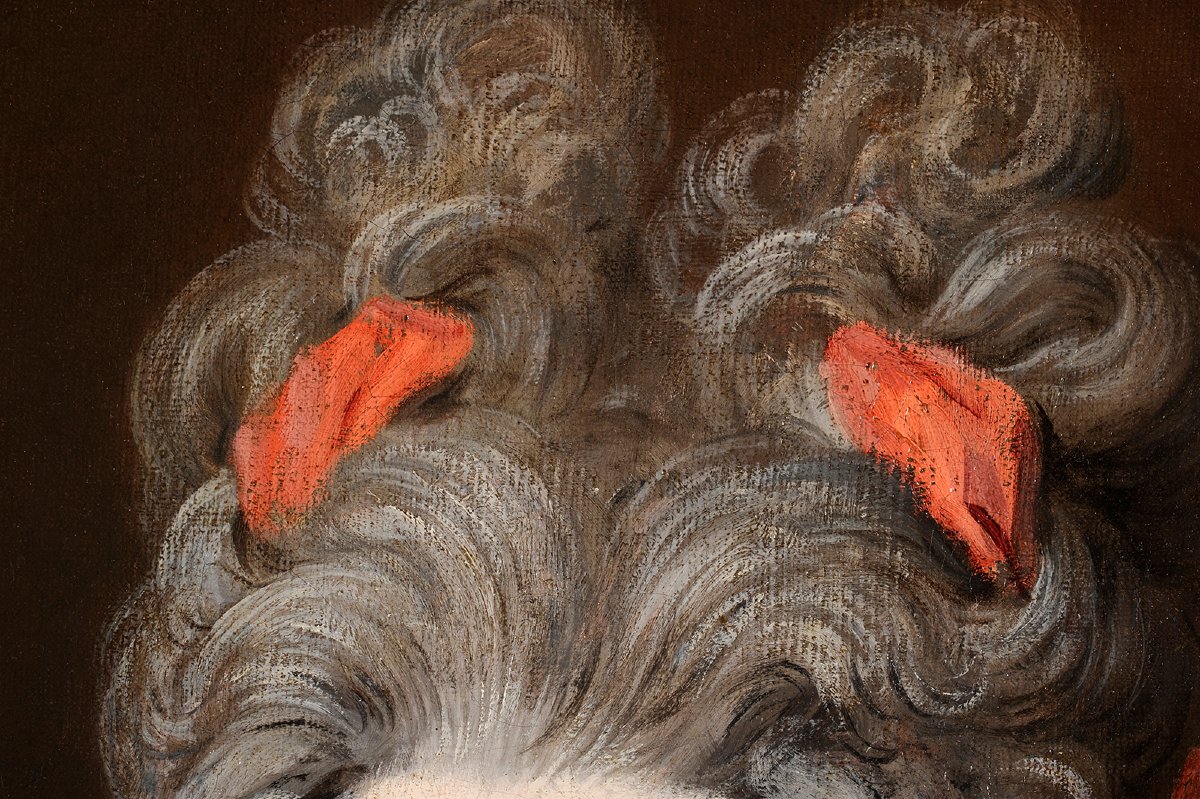
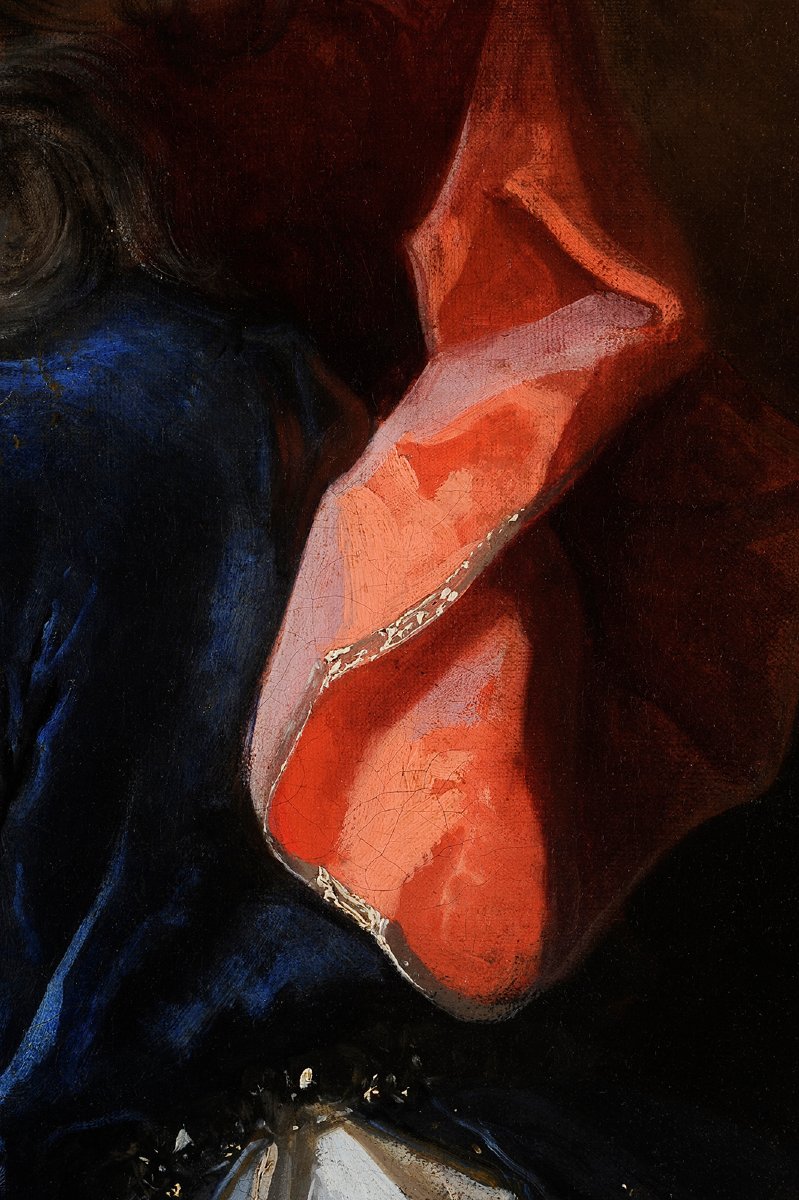
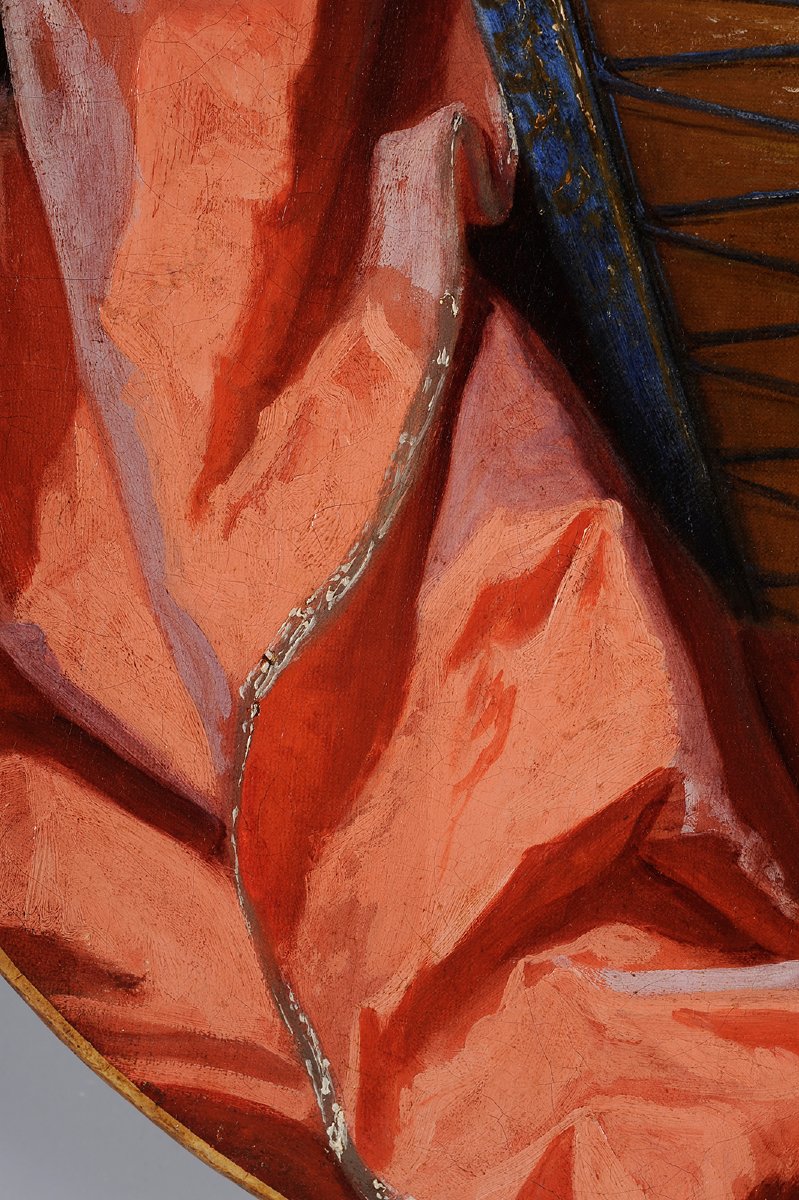
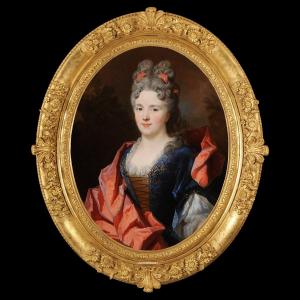


Nicolas De Largillierre (1656–1746) Presumed Portrait Of Marie-anne De Bourbon
Artist: Nicolas De Largillierre
Nicolas de LARGILLIERRE
(Paris 1656 – 1746)
Portrait of a Woman, Presumed to Be Marie-Anne de Bourbon, Princess of Conti (1666–1739)
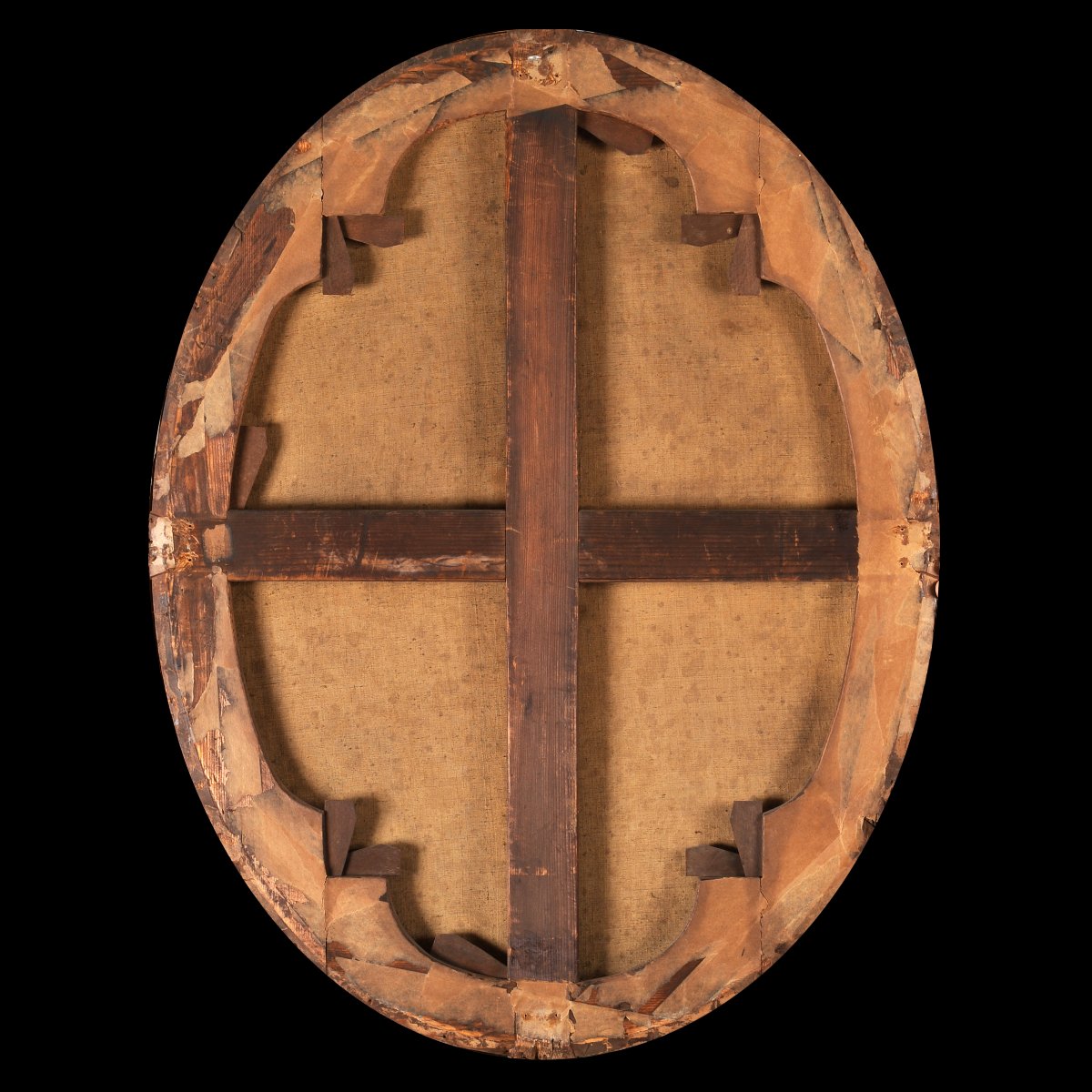
Oil on oval canvas
H. 80 cm; W. 61 cm (107 x 91 cm with frame)
Provenance: French family settled in Italy
The son of a Parisian hatmaker, Nicolas de Largillierre moved to
Antwerp with his parents at the age of three. After spending about twenty months in London in 1665–1666,
he was apprenticed to the Antwerp painter Antoon Goubau (1616–1698), who specialized in bambochades. He soon began collaborating on his master’s works—who allowed him to paint piles of fruits and vegetables—and Largillierre refined his training through exposure to the works of Peter Paul Rubens and his circle. A second stay in London, between 1675 and 1679, allowed him to deepen his knowledge of Flemish still lifes and to master Van Dyck’s style. After Sir Peter Leley (1618–1698), First Painter to King Charles II, entrusted him with some restoration work on paintings by the portraitist, Largillierre assisted the Italian painter Antonio Verrio (1639–1670) with the decorations for the royal apartments at Windsor Castle. Despite protective measures taken on behalf of Verrio and his team (including a certain “Nicholas de Lauzellier,” a pseudonym for Largillierre), the persecution of Catholics prompted the French painter to leave England and settle in Paris. Introduced to the powerful Charles Le Brun (1619–1690), the portraitist enjoyed immediate success: admitted to the Royal Academy of Painting and Sculpture on March 6, 1683, Largillierre was admitted on March 30, 1686, upon presentation of his famous Portrait of Charles Le Brun (Paris, Louvre Museum). Private commissions then poured in, bringing with them official commissions, notably from the aldermen of the City of Paris.
At the same time, the portraitist enjoyed a brilliant teaching career at the Academy, having been successively appointed professor in 1705, rector in 1722, chancellor in 1733, and then director from 1738 to 1742. It was not until the following year, at an advanced age, that Largillierre laid down his brushes for good.
At the turn of the 18th century, Nicolas de Largillierre, along with his rival Hyacinthe Rigaud (1659–1743), was the most famous portrait painter in France. The interest his work generates today among the public, art lovers, and art historians perfectly reflects his former popularity. His body of work consists of several hundred portraits, religious subjects, still lifes, and rare drawings, primarily of academic subjects. Throughout his career—and even today—the artist continues to fascinate.
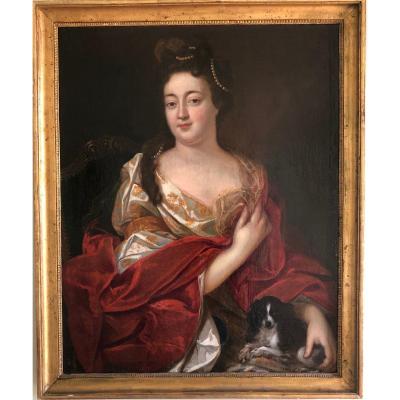
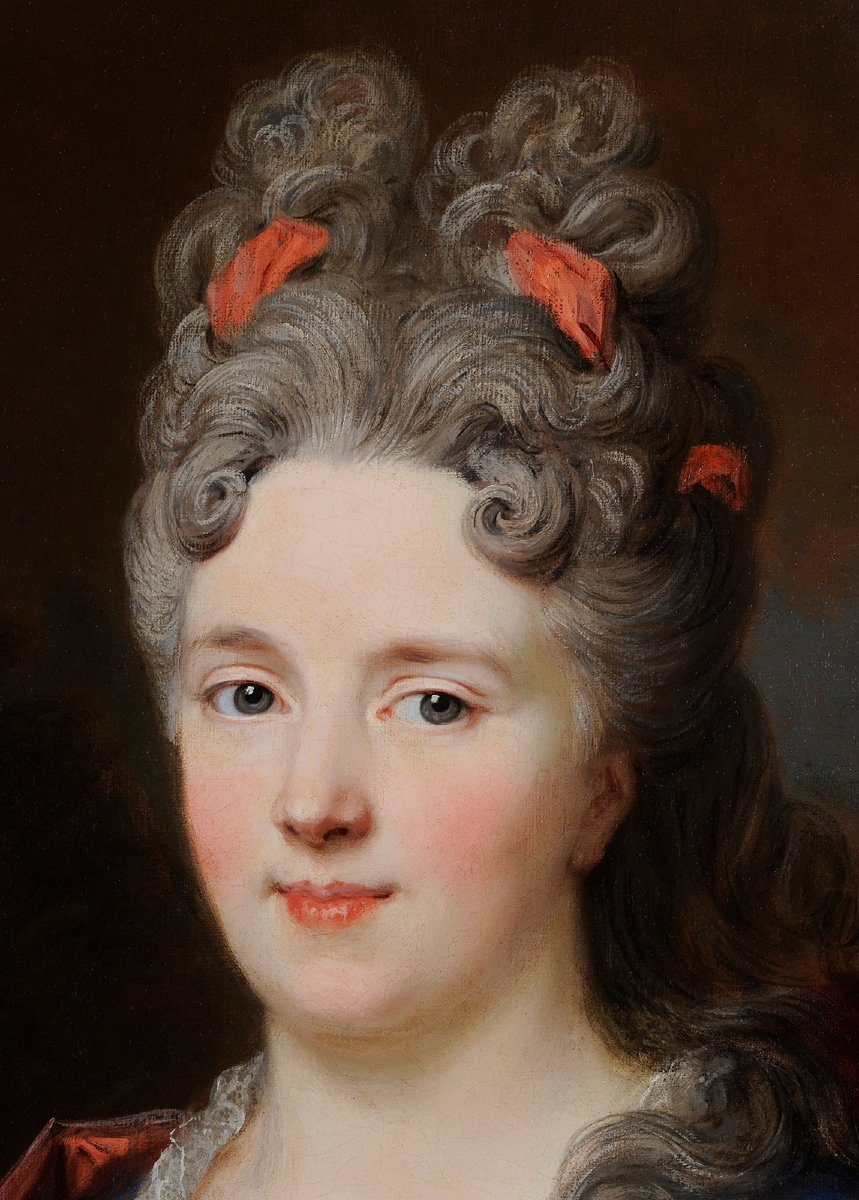
According to family tradition, this portrait is believed to depict the Princess of Conti, Marie Anne de Bourbon, also known as Mademoiselle de Blois. She was a legitimized daughter of Louis XIV and Louise de La Vallière, and her father’s favorite… A portrait of Mademoiselle de Blois by François de Troy bears a certain resemblance to our subject. However, it remains strange that a princess of the blood should be portrayed by the great Largillierre in such a simple oval, without hands, without embellishments, and without objects surrounding her.
42 000 €
Period: 18th century
Style: Louis 14th, Regency
Condition: Perfect condition
Material: Oil painting
Length: 107 cm cadre inclus
Width: 91 cm cadre inclus
Reference (ID): 1842415
Availability: In stock
Print